Final Blog: Singapore & the Maldives

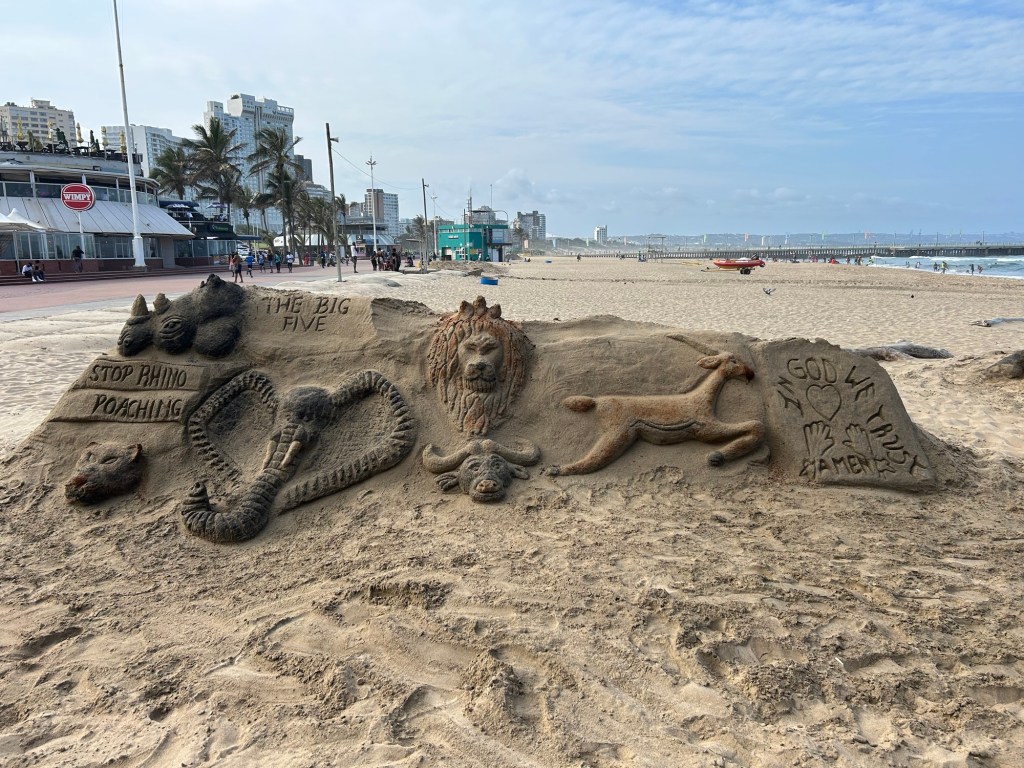
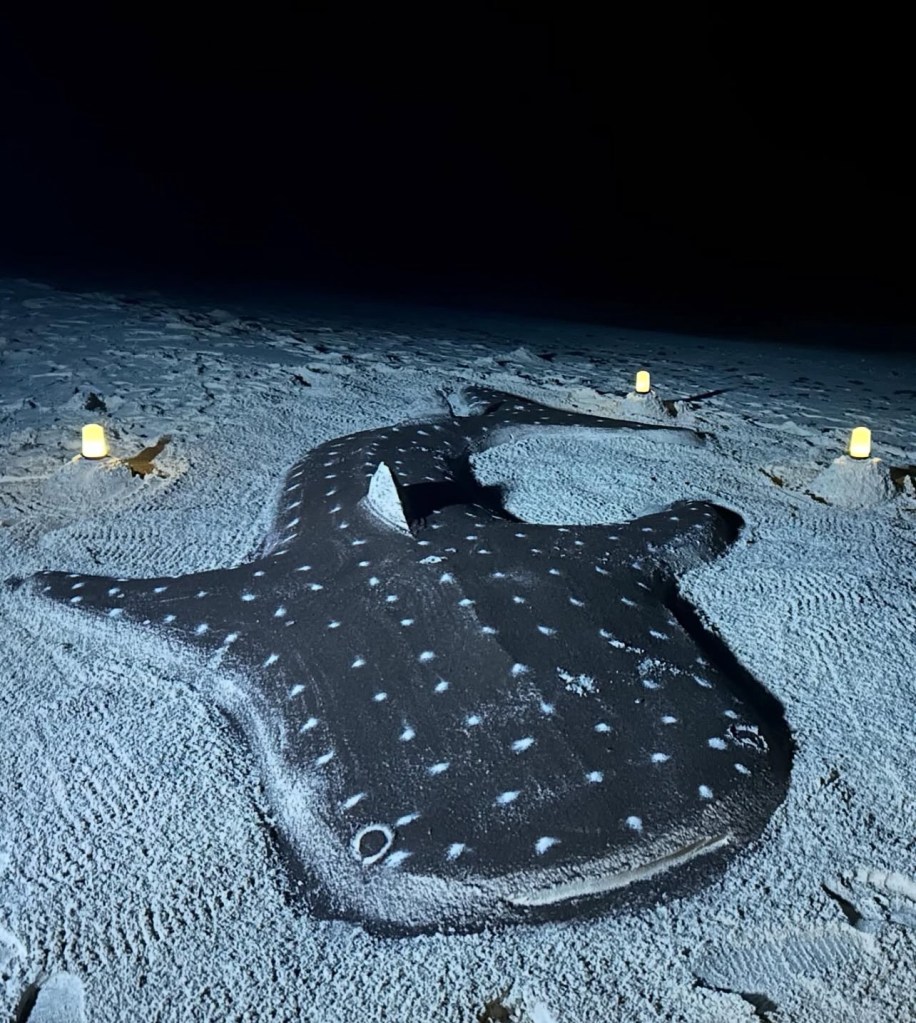
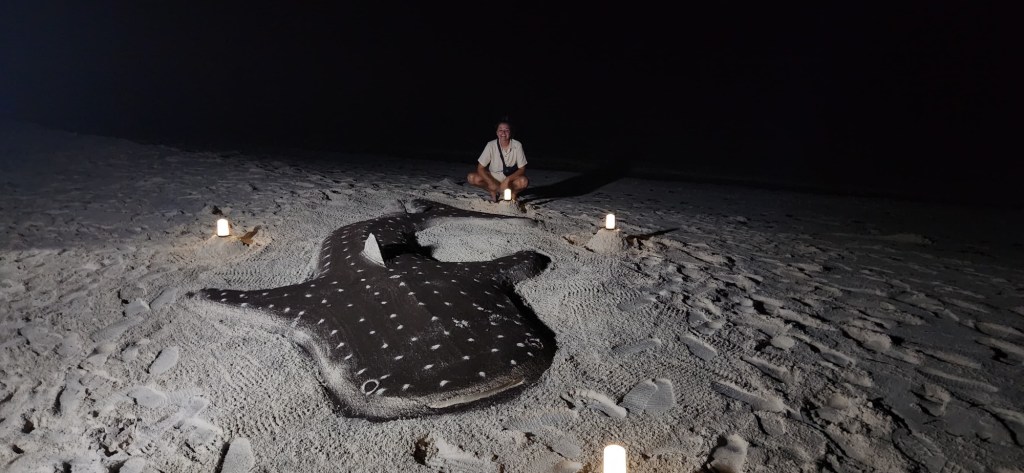
A whale shark made of sand in the Maldives

After having looked forward to and planned this trip for four years, it is hard to imagine that our year-long adventure has come to a close. BUT, it is time to reflect on all of the amazing memories, experiences, life lessons and things we’ve learned along the way. This has truly been a remarkable year, in so so many ways. We were blessed to visit new places, arrive home safe & healthy, with amazing memories, including making shared memories with friends and family along the way, and meeting new friends. 
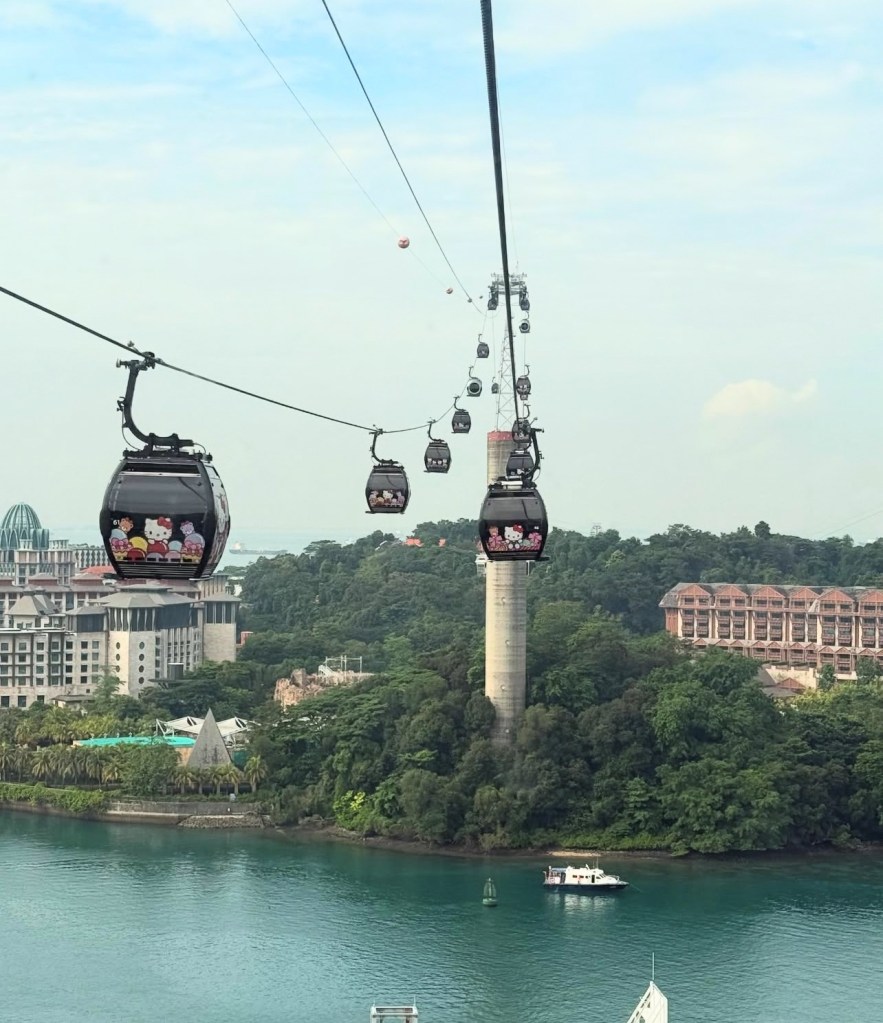
Singapore Cable Car

As we conclude our incredible 9-month journey abroad, we’re taking a moment to reflect on the highlights, memorable experiences, and travel tips we’ve collected along the way. 

But before we jump into our final reflections, first, a look back at our final two stops: Singapore and the Maldives.
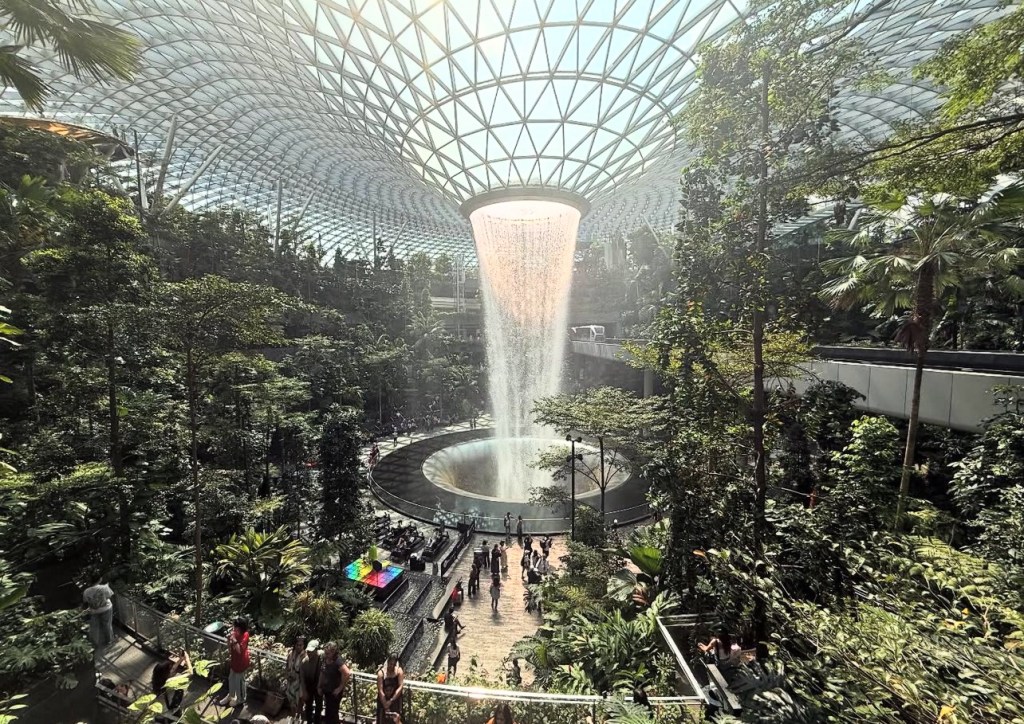
Singapore Changi Airport, Rain Vortex

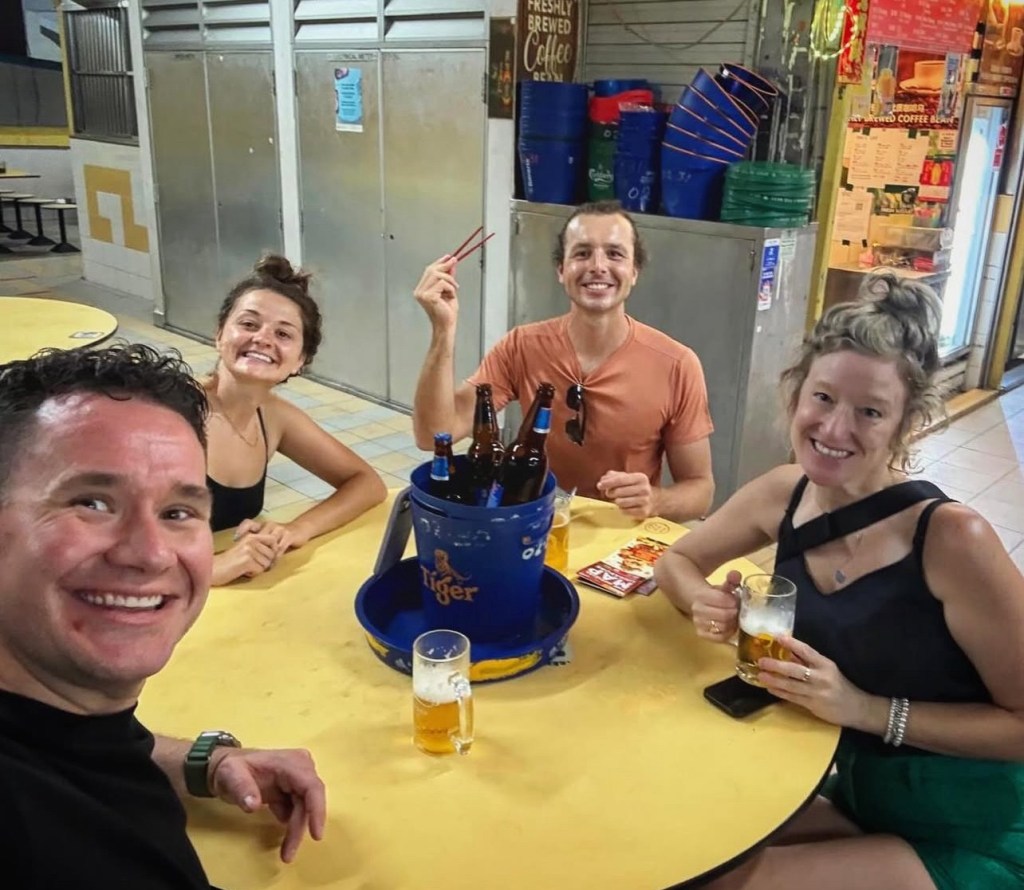
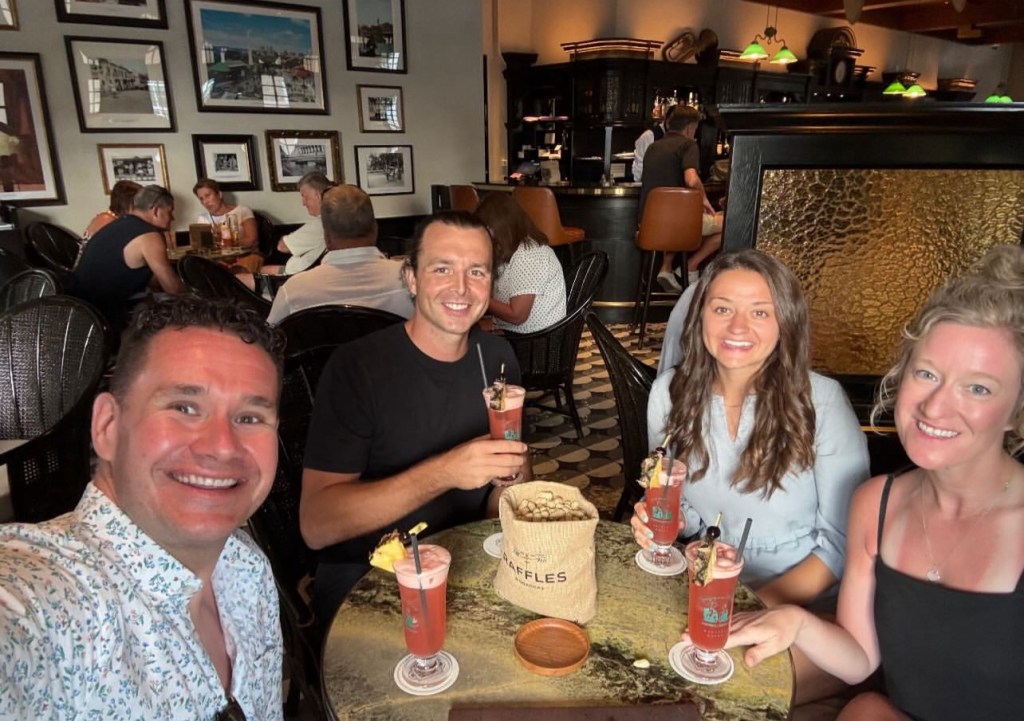
After having travelled through Southeast Asia, we were able to budget our expenses quite nicely. However, Singapore was by far the most pricey destination we had visited in Southeast Asia. We spent 8 days in Singapore, and were joined by 2 friends from our home in Iqaluit. Our time in Singapore was spent enjoying the amazing city, dining in food markets & lavish rooftop restaurants and bars, sampling Raffles famous Singapore Sling, and mixing in a little hiking and outdoor time. It’s quite amazing to have friends who are willing to tackle a 20+ hour travel journey to join for 8 days of fun! 

Singapore: Small Island, Big Energy
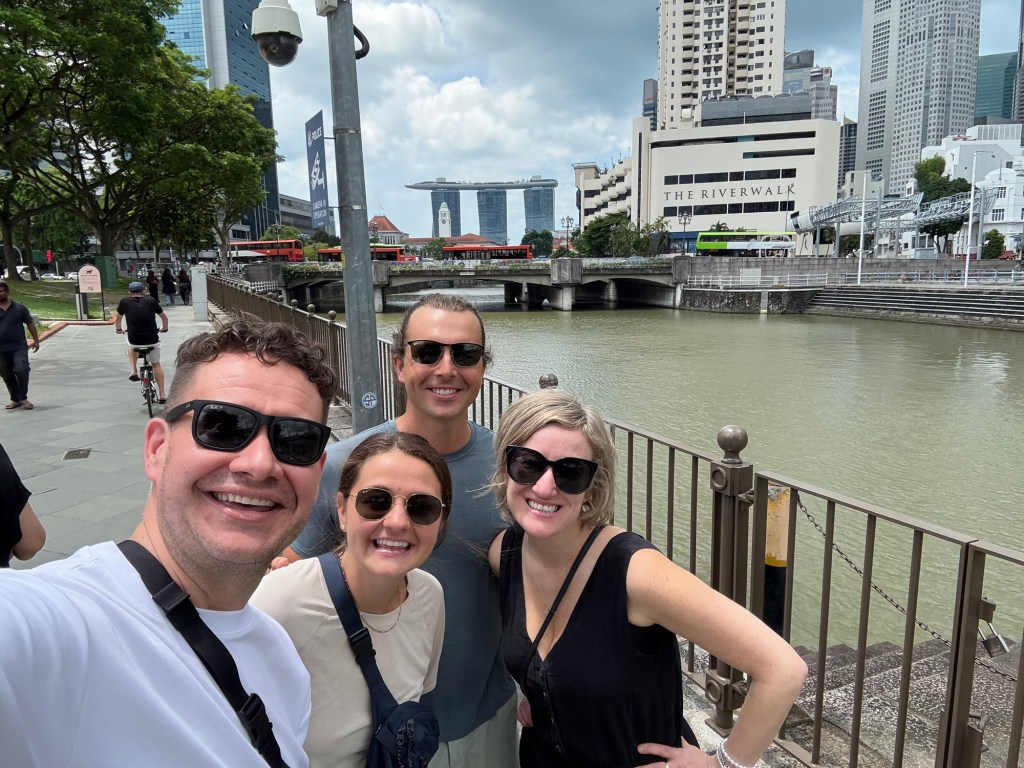
Our time in Singapore was a mix of exploring the city, green spaces, tasty food markets, and learning about the city’s past and the people who shaped it. Singapore’s public transit system made getting around very easy —we hopped on the MRT, buses, and did plenty of walking. We stayed in Clarke Quay, a lively spot by the river that turned out to be a great base. Its proximity to a several neighborhoods like Chinatown, and right near some of the best hawker centres (which quickly became one of our favorite parts of the trip), were a highlight! 
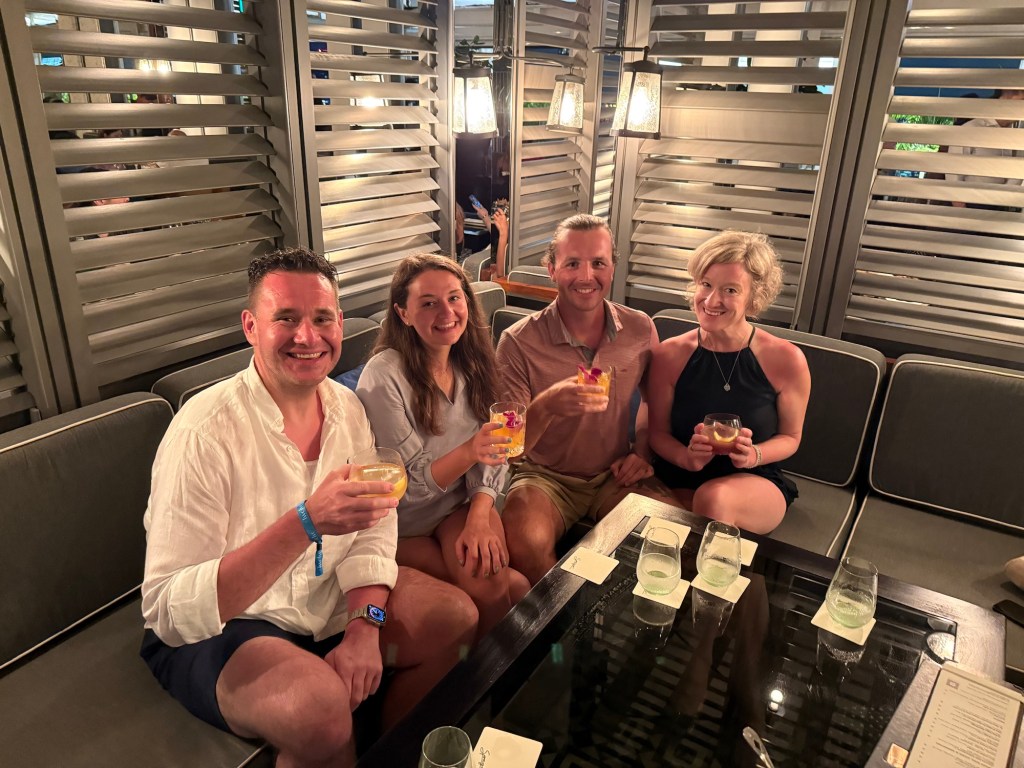
CUT restaurant by Wolfgang Puck

Mat and I got there a day early, and the next day our friends Craig and Patricia joined us. Even after a long travel day, they showed up in great spirits—and we pretty much hit the ground running! First stop: Gardens by the Bay, a huge, futuristic park right by Marina Bay. We strolled through the outdoor gardens, but as dark clouds rolled in, we ducked into two of the main attractions.
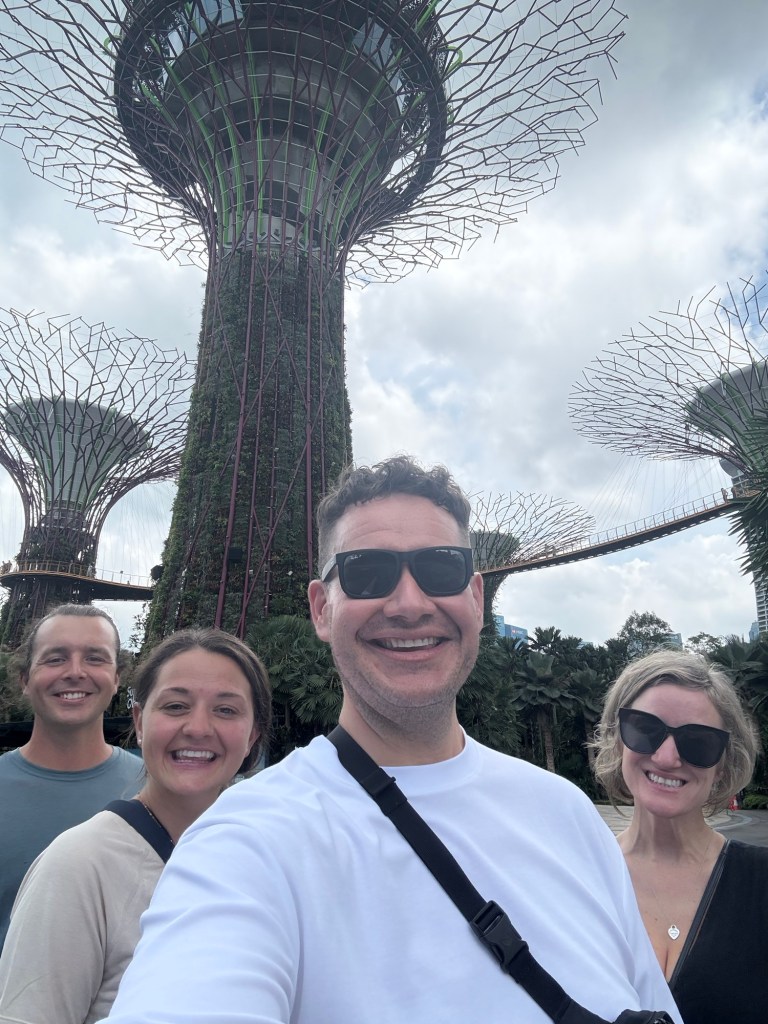
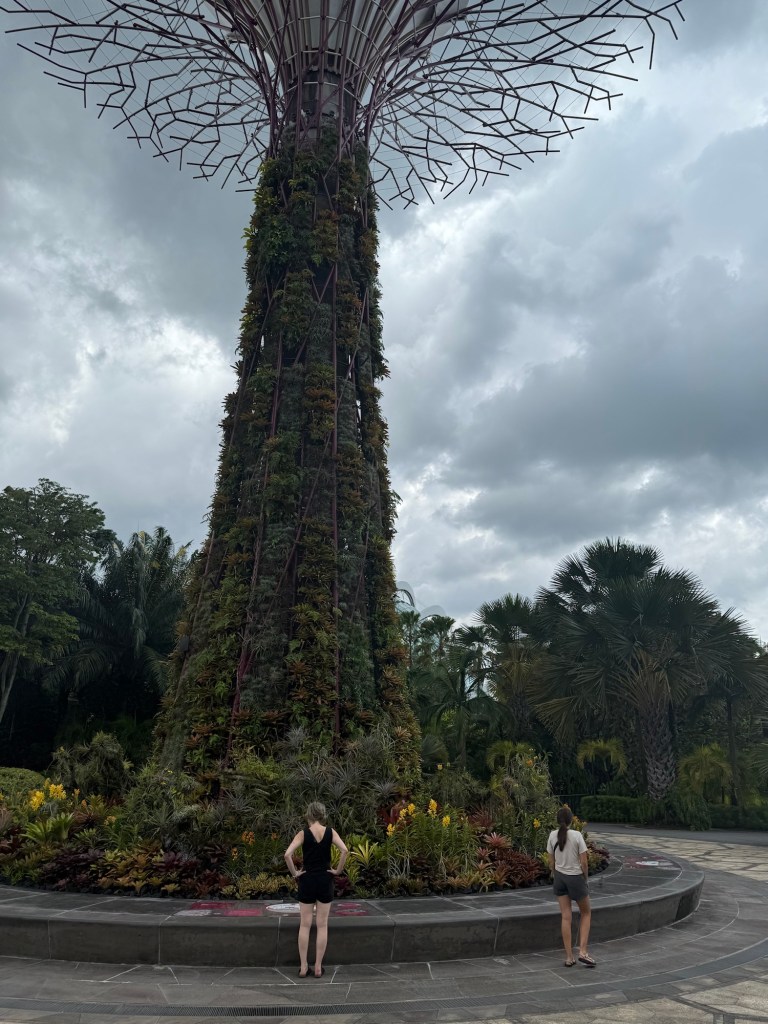
Gardens by the Bay

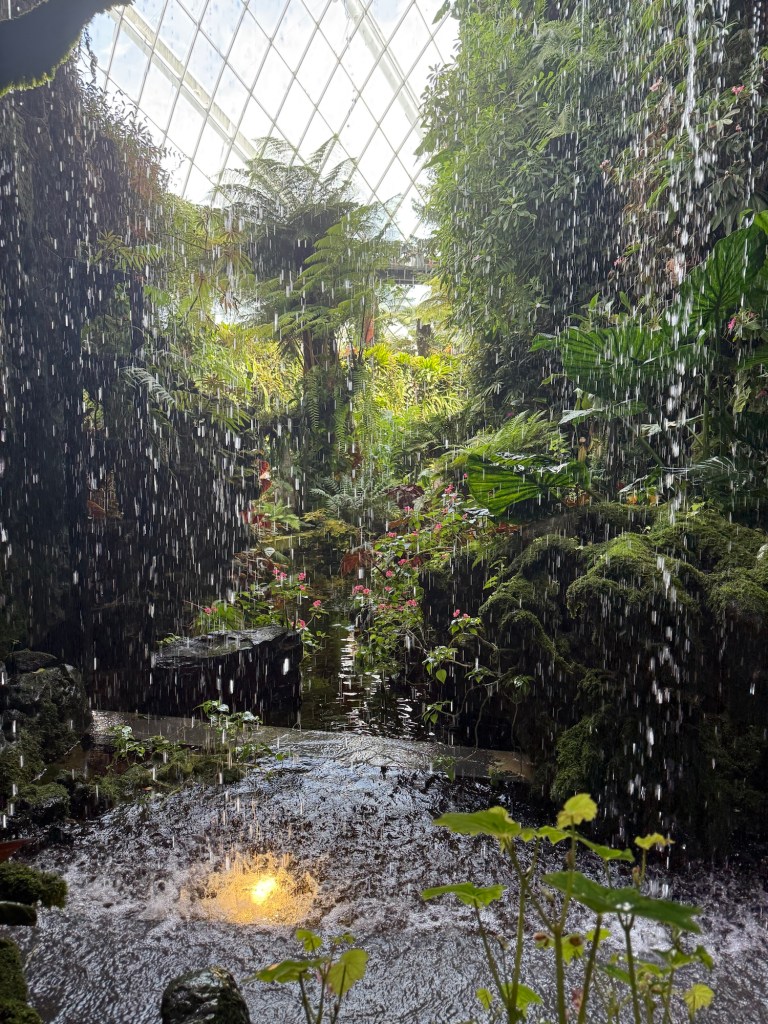
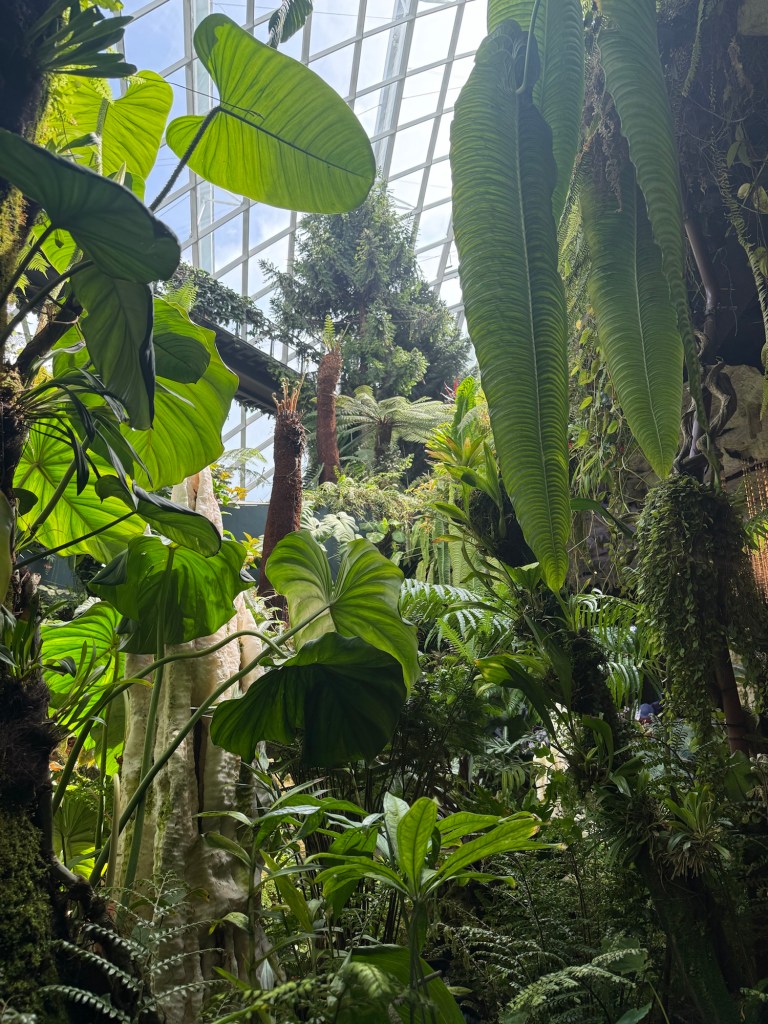
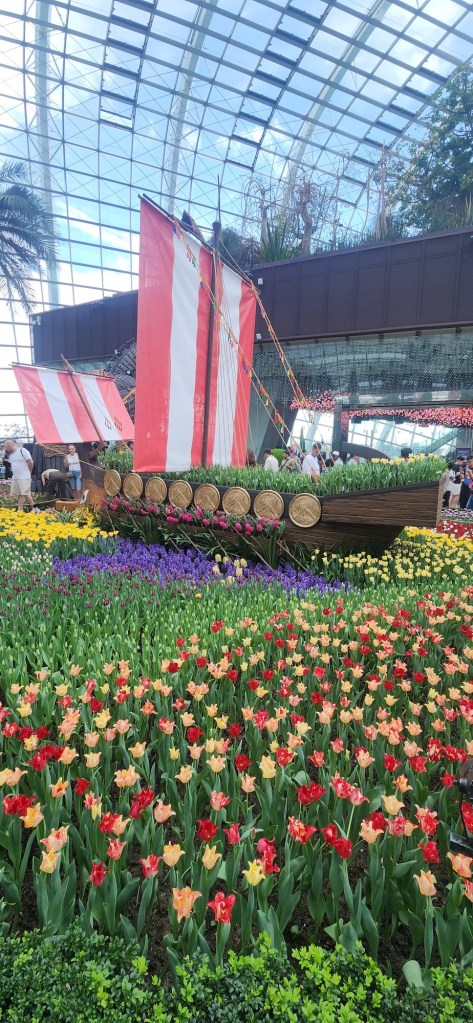
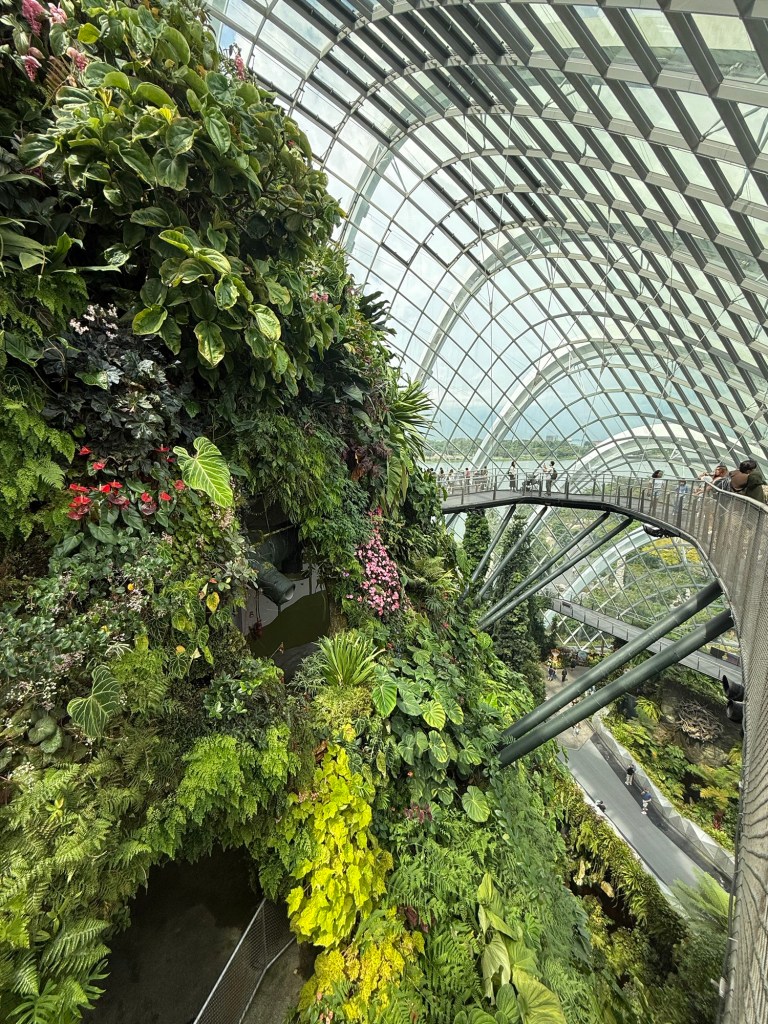
The Flower Dome was up first—the world’s biggest glass greenhouse, filled with plants and flowers from all over. We got lucky and caught Tulipmania, with tulips blooming in every color you can imagine. Then we moved on to the Cloud Forest, a beautiful indoor garden, with the world’s tallest indoor waterfall! We took an elevator to the top of the garden, and began to make our way down along walkways that wrapped around a mountain of lush greenery.
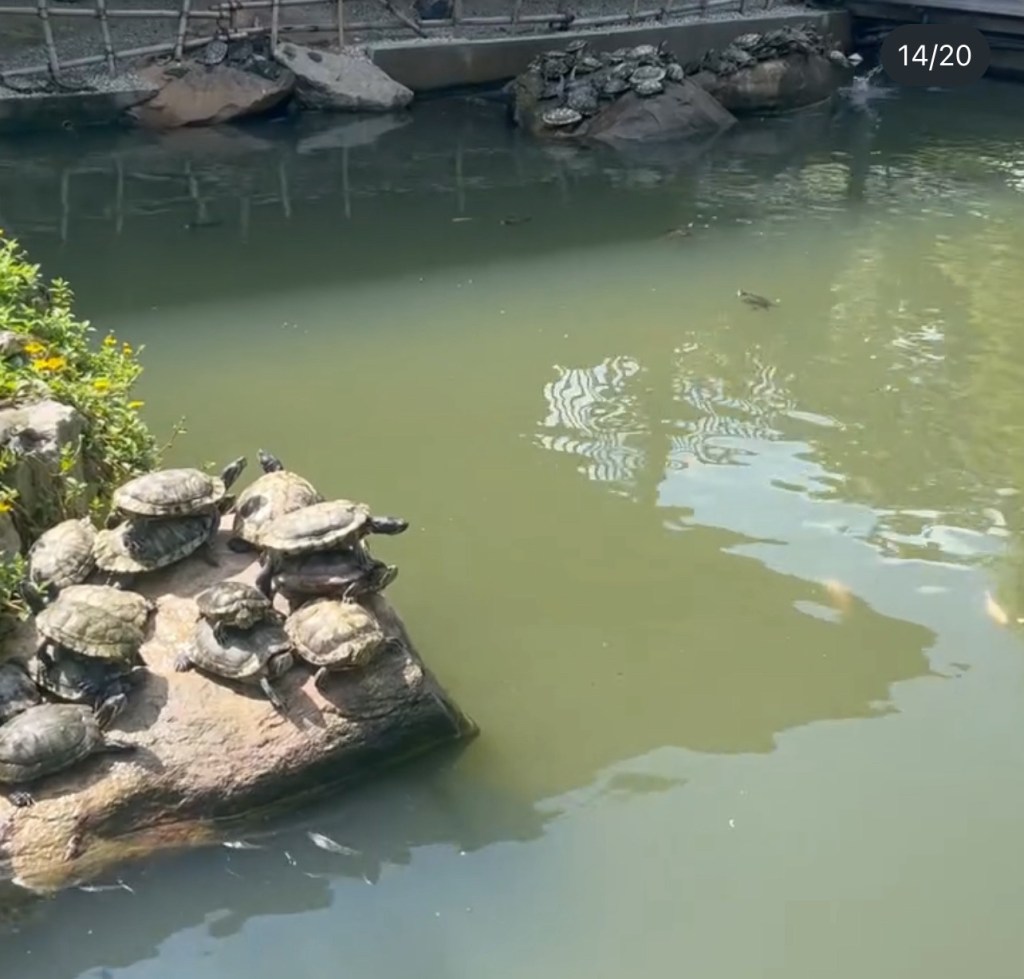
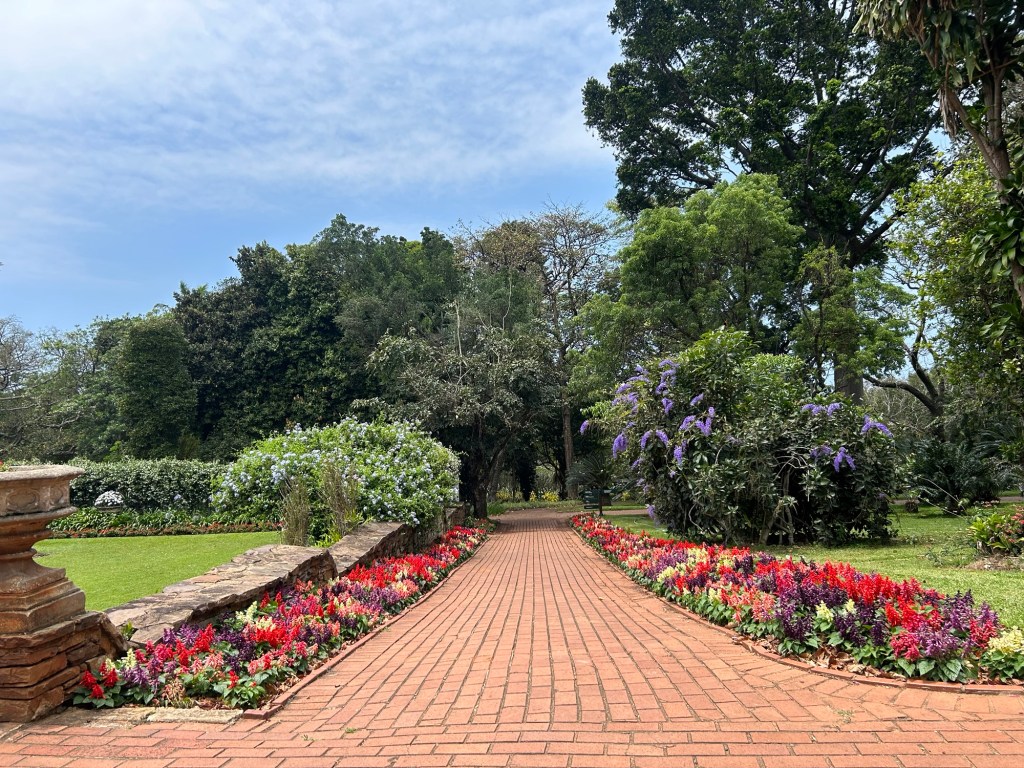
One morning, we wandered through the Singapore Botanic Gardens, enjoying a break from the hustle & bustle of the city and soaked in the lush greenery and peaceful vibes. We spotted turtles sunbathing, swans gliding across the water, and early risers practicing Tai Chi under the trees. And we were fortunate to get breakfast at what’s been called one of the most beautiful McDonald’s in the world—a surprisingly scenic (and tasty) little detour.
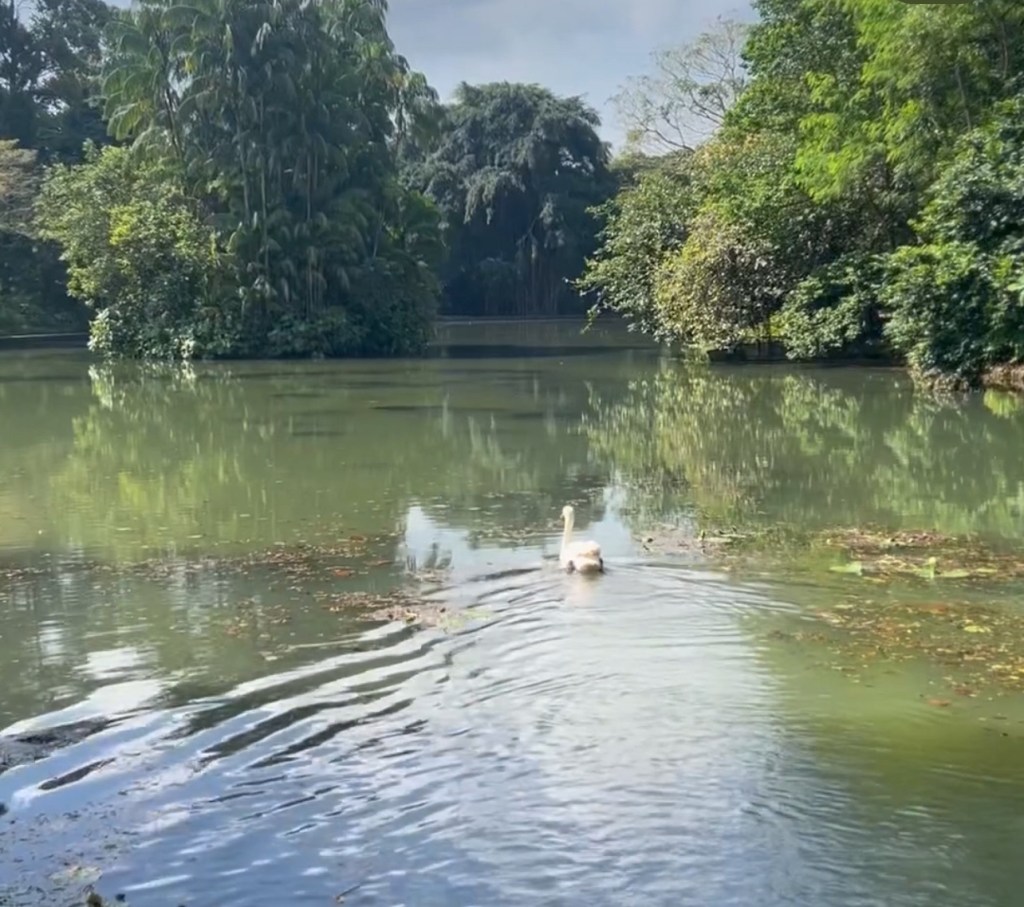
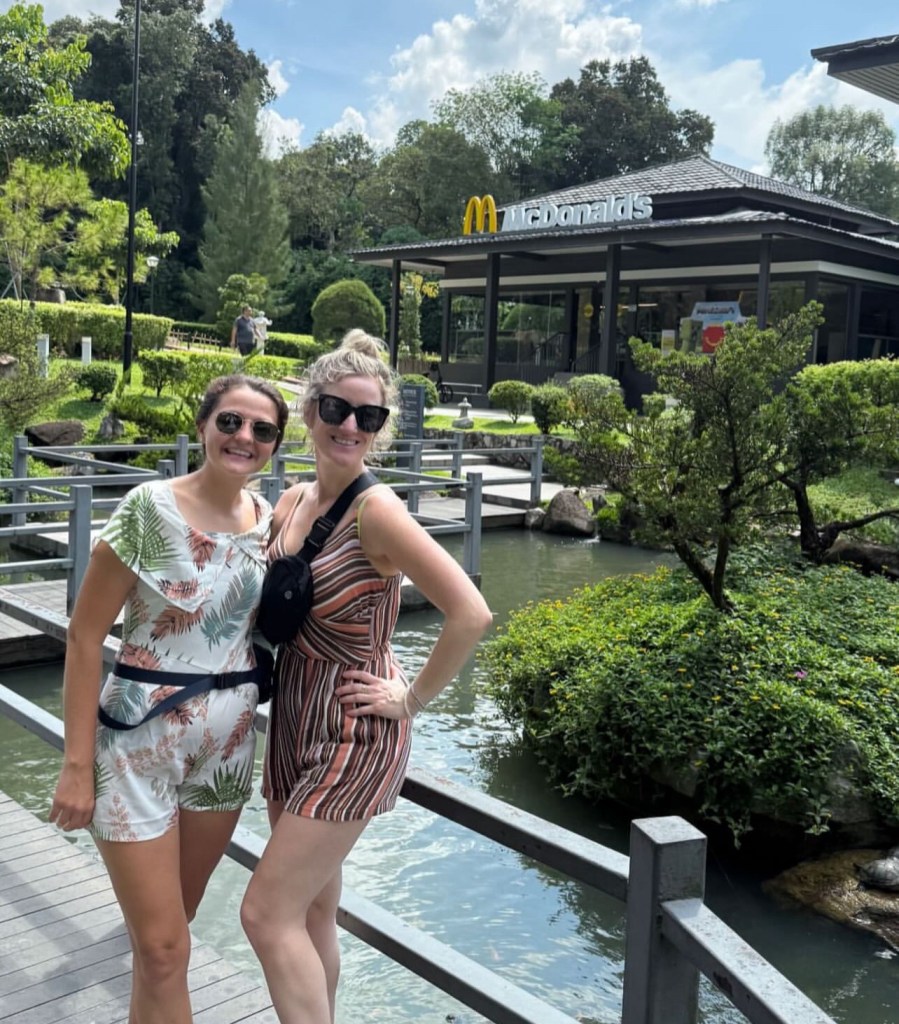
Singapore McDonalds situated in the
Ridout Tea Garden
Turtles in the McDonald’s garden

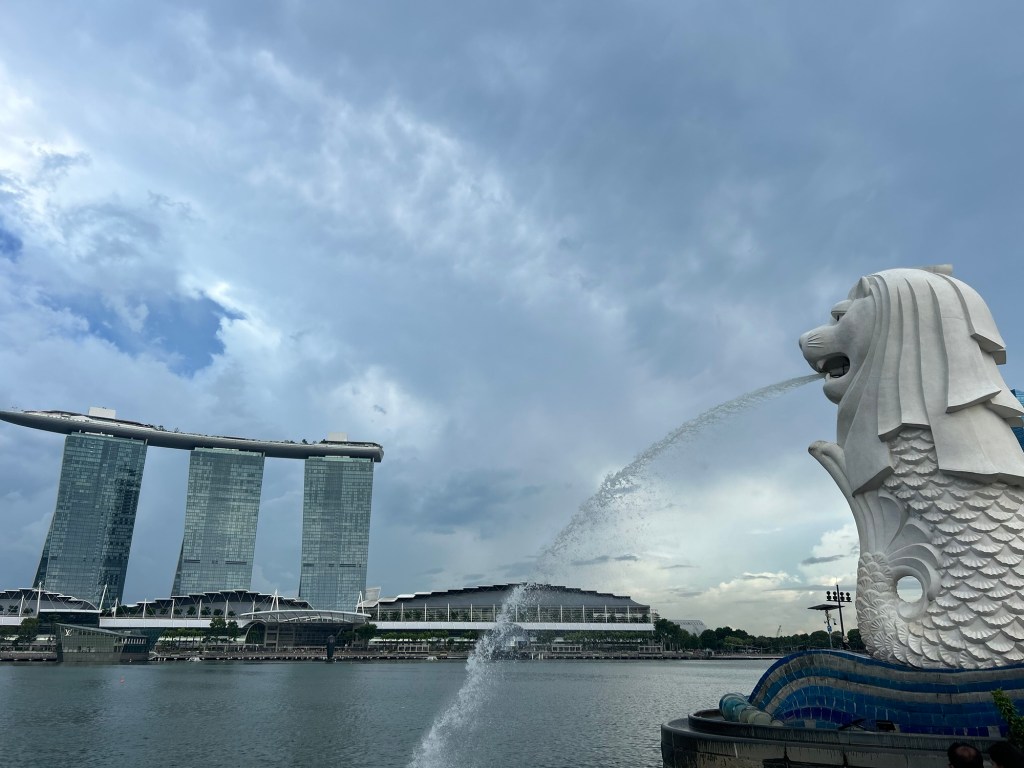
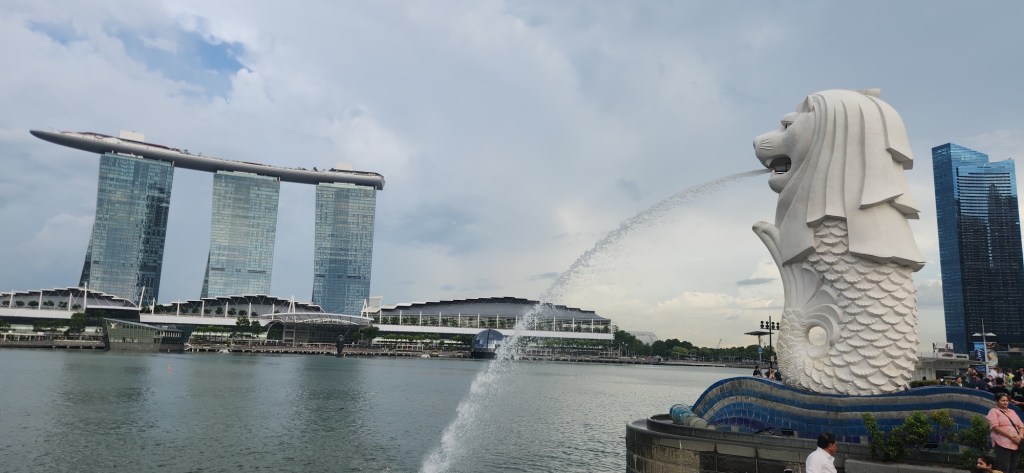
No trip to Singapore would be complete without a few must-do sights. We crossed the stunning Helix Bridge, a DNA-inspired structure with amazing views over Marina Bay. We also stopped by the iconic Merlion statue, joining the crowds to grab the classic tourist photo with the city’s famous half-lion, half-fish mascot.
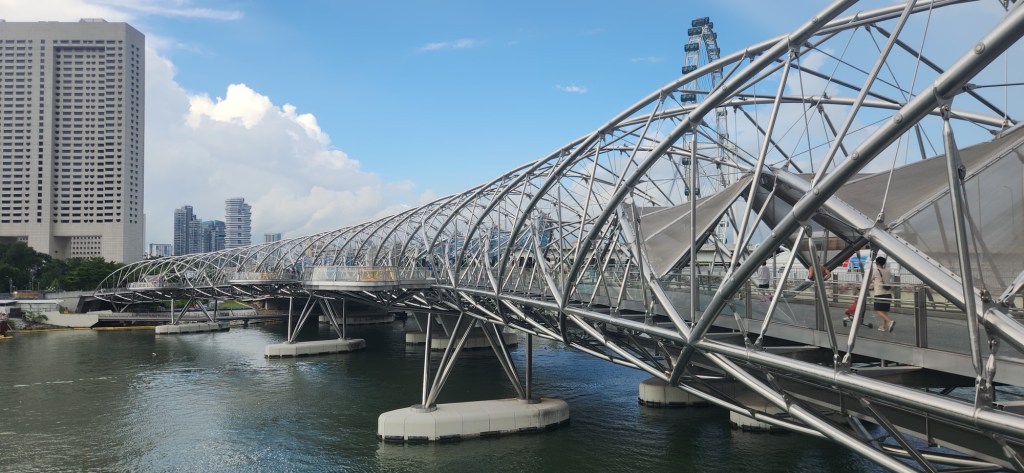
Helix Bridge
Merlin statue

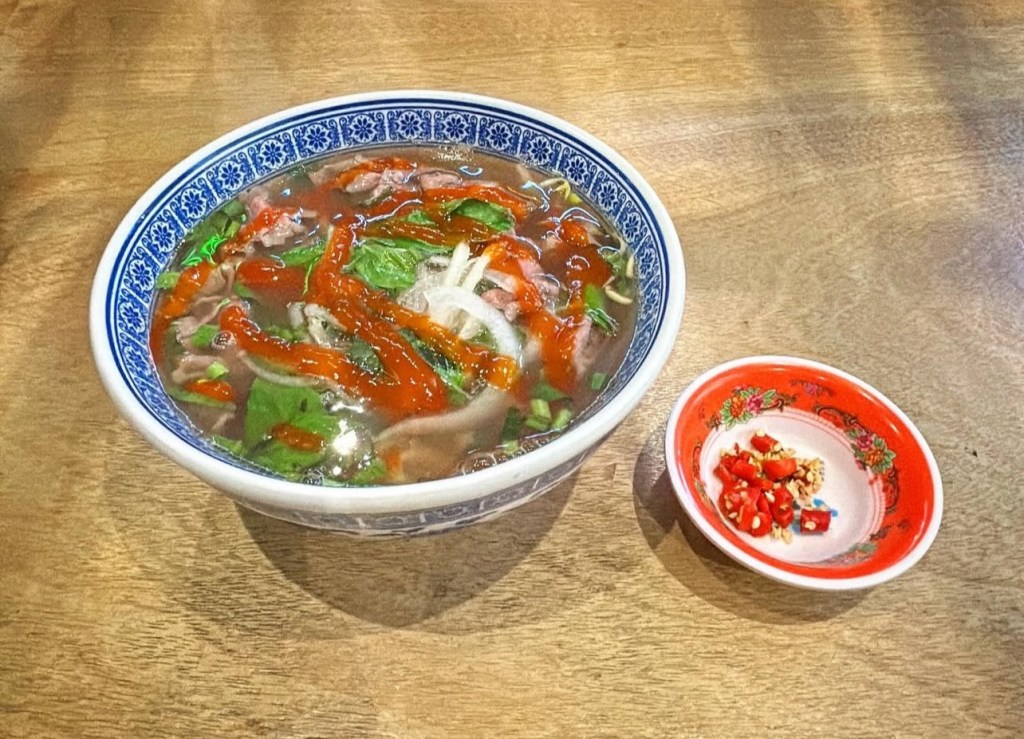
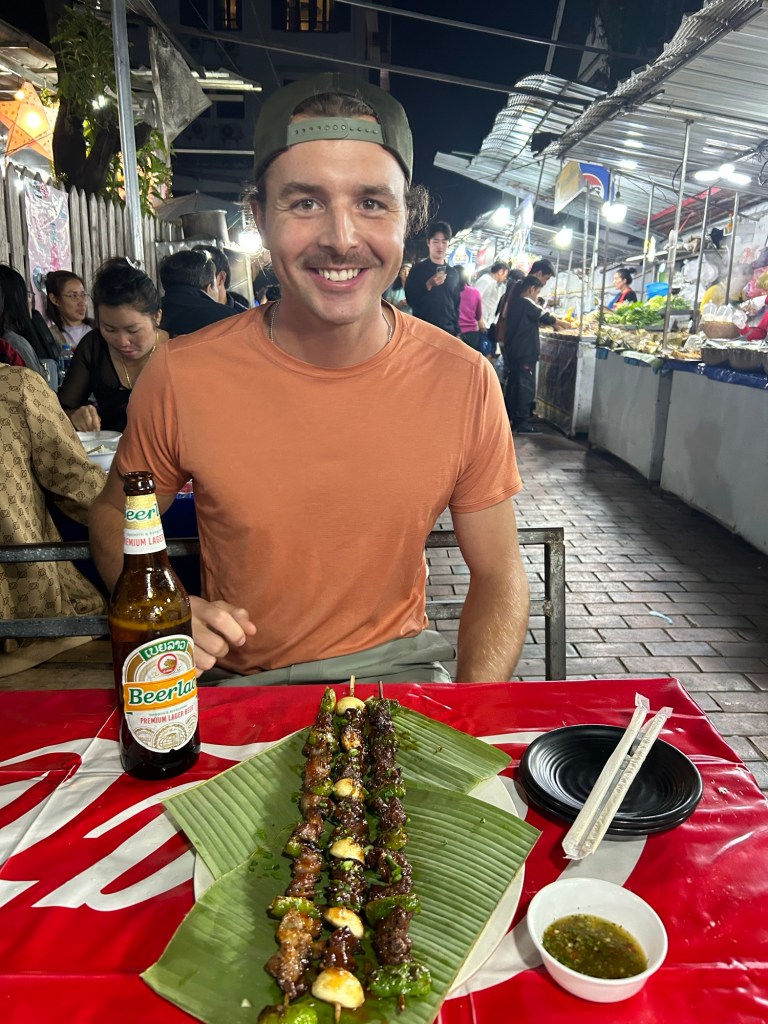
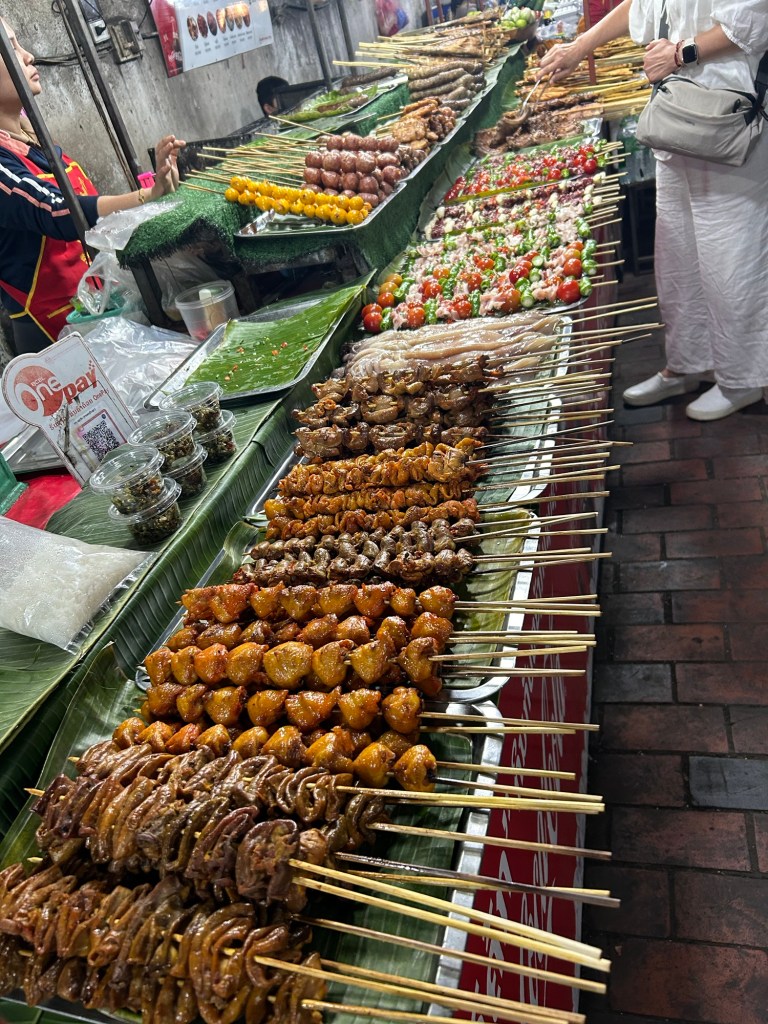
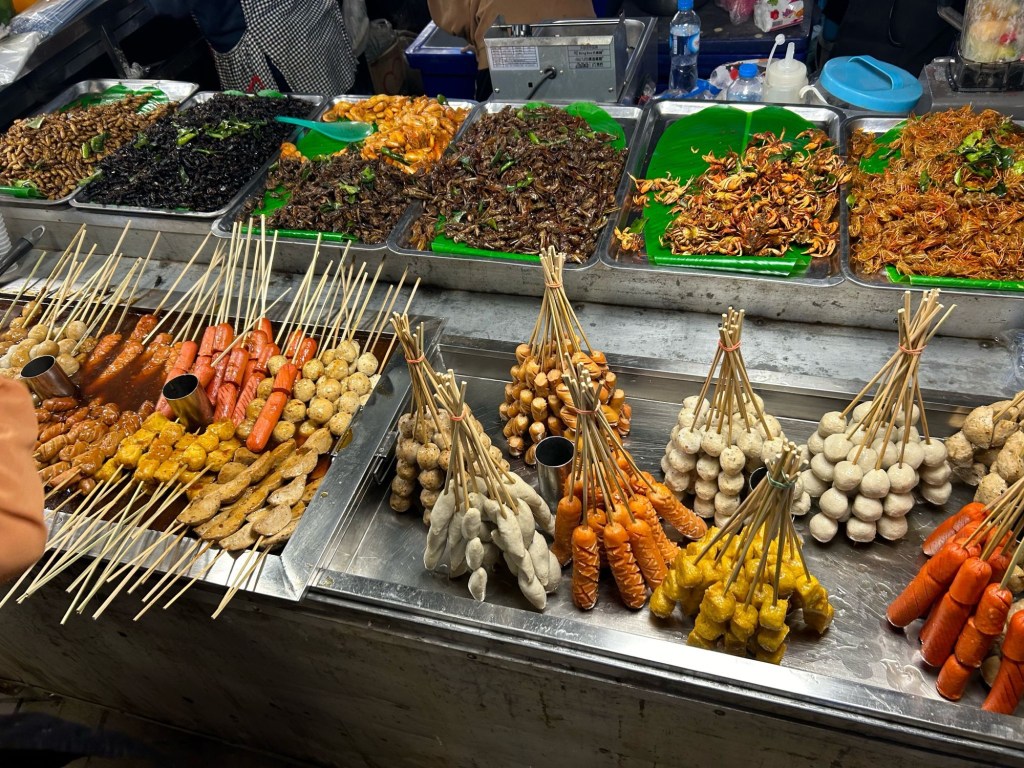
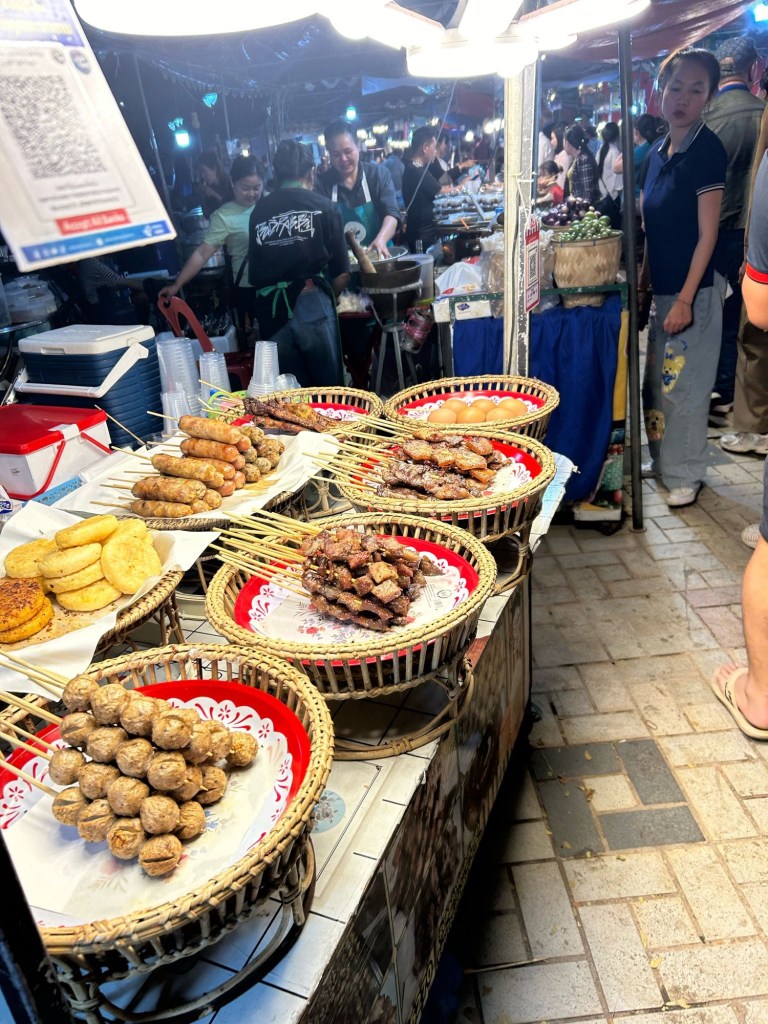
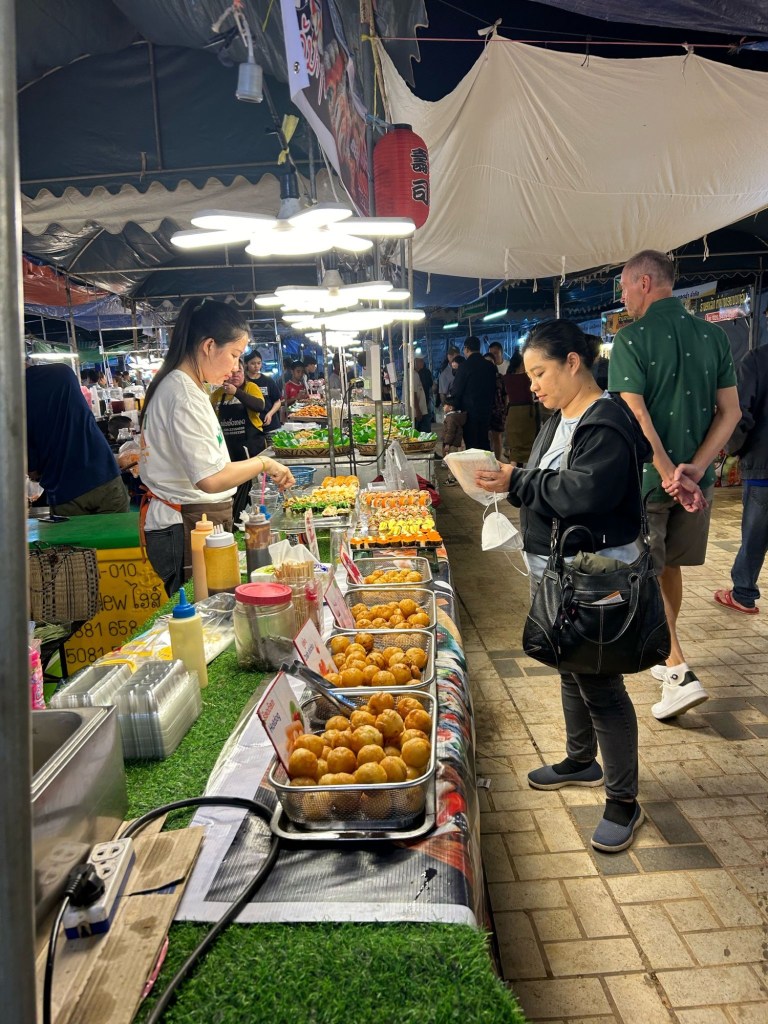
Singapore’s food scene is on another level, and the hawker centres totally stole the show. These open-air food halls are packed with stalls serving up every kind of local dish imaginable. Each centre had its own specialties—Lau Pa Sat was a highlight, especially the stretch known as Satay Street. Mat enthusiastically ordered 40 satay skewers (yes, 40), and may or may not have been full for the next two days. We also visited Maxwell Food Centre, made famous in Crazy Rich Asians, and tried dishes like the famous Carrot Cake from Lau Goh Teochew Chye Thow Kway, (which is actually radish cake) and—yes—more satay.
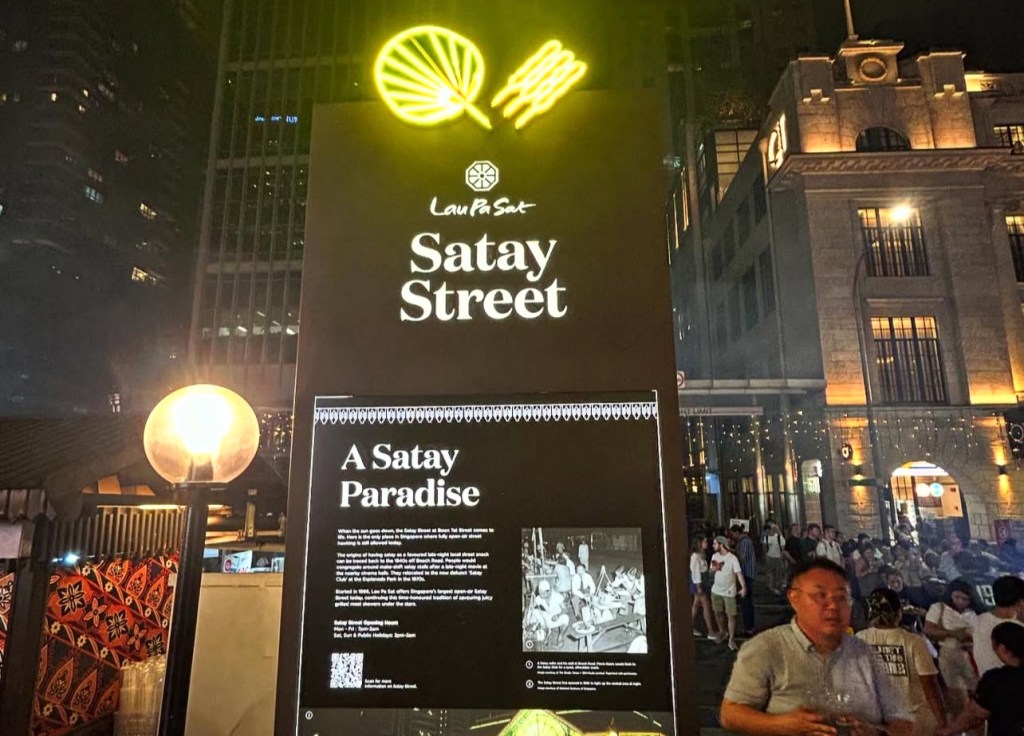
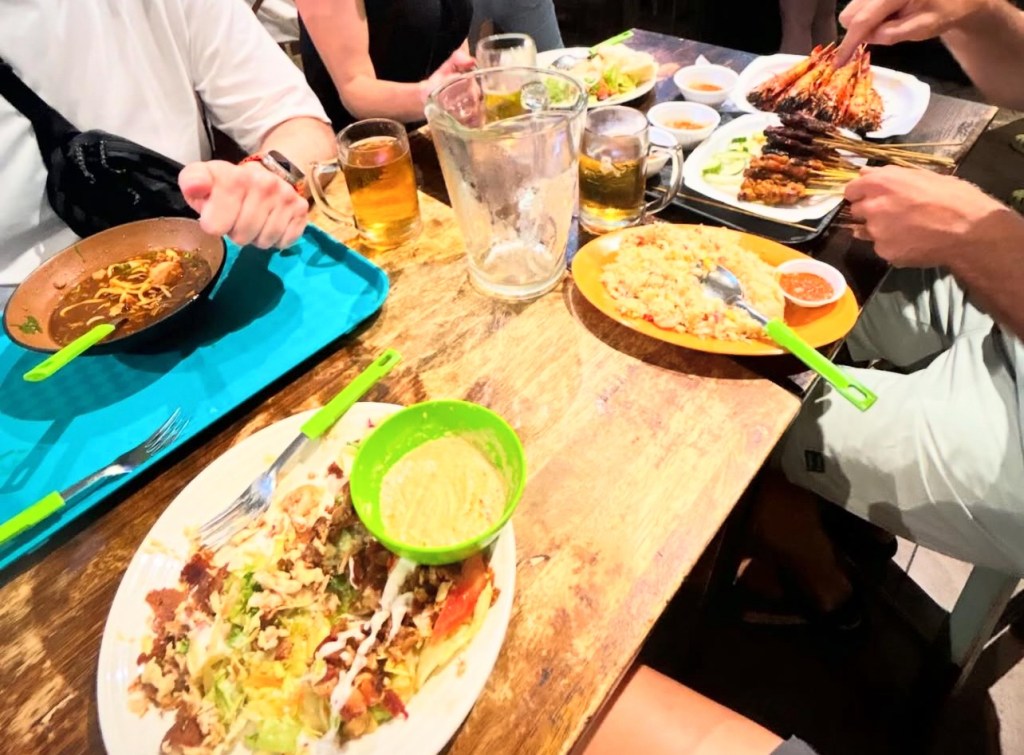
Satay street
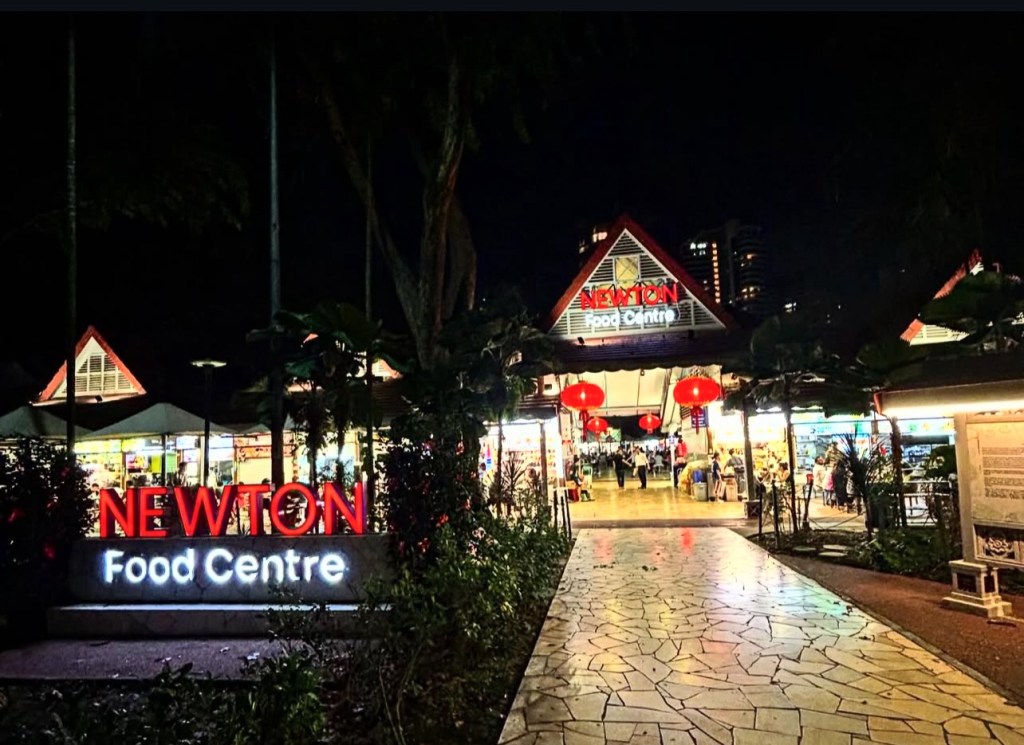
Newton Food Centre, shown in the film Crazy Rich Asians

We also spent a day on Sentosa Island, Singapore’s man-made island escape with beaches, attractions, and even Universal Studios. We relaxed, and rented a couple of beach chairs at a seaside resort, and had some drinks by the water. It was the perfect reminder of how Singapore balances the buzz of city life with green spaces and peaceful waterfronts.
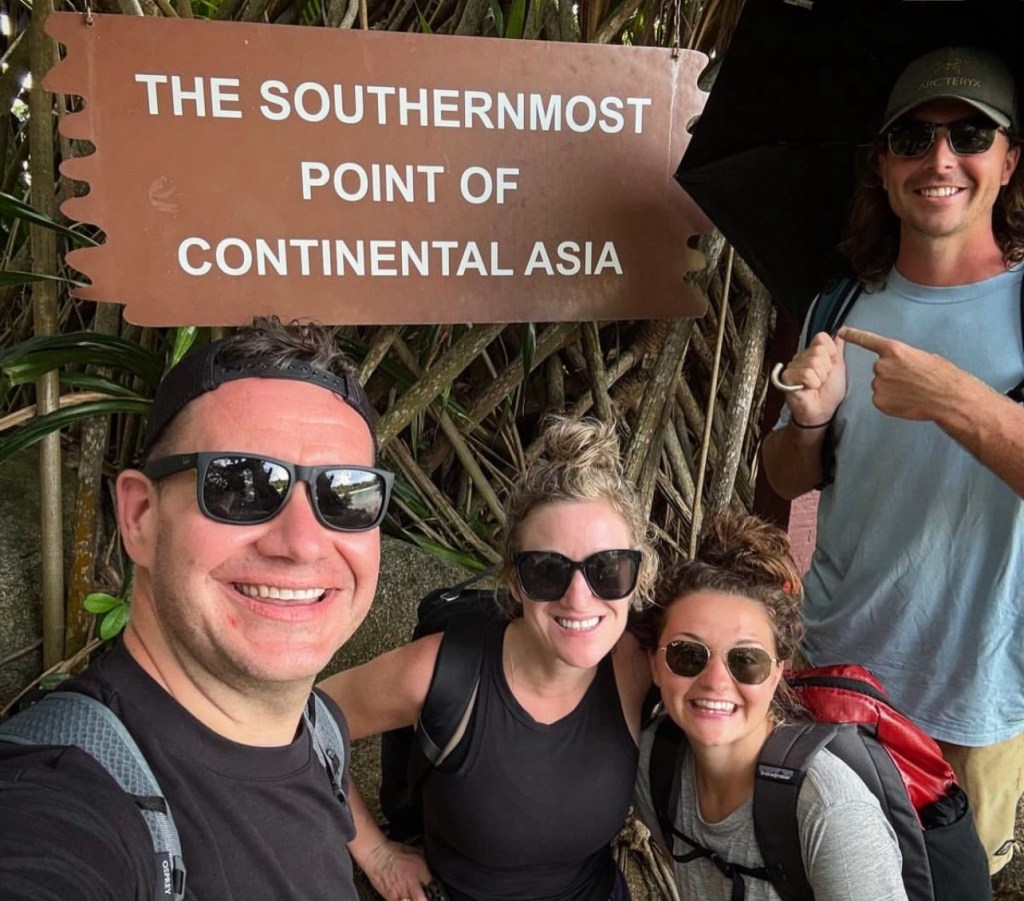
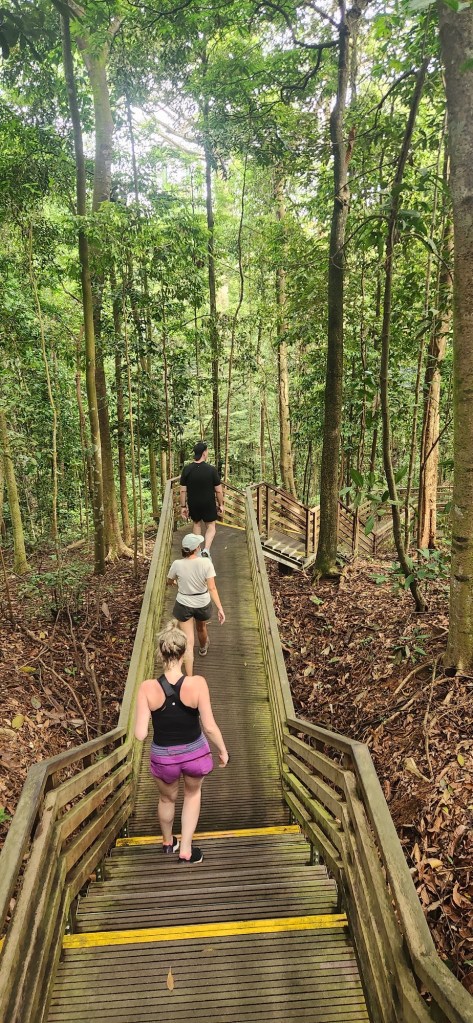
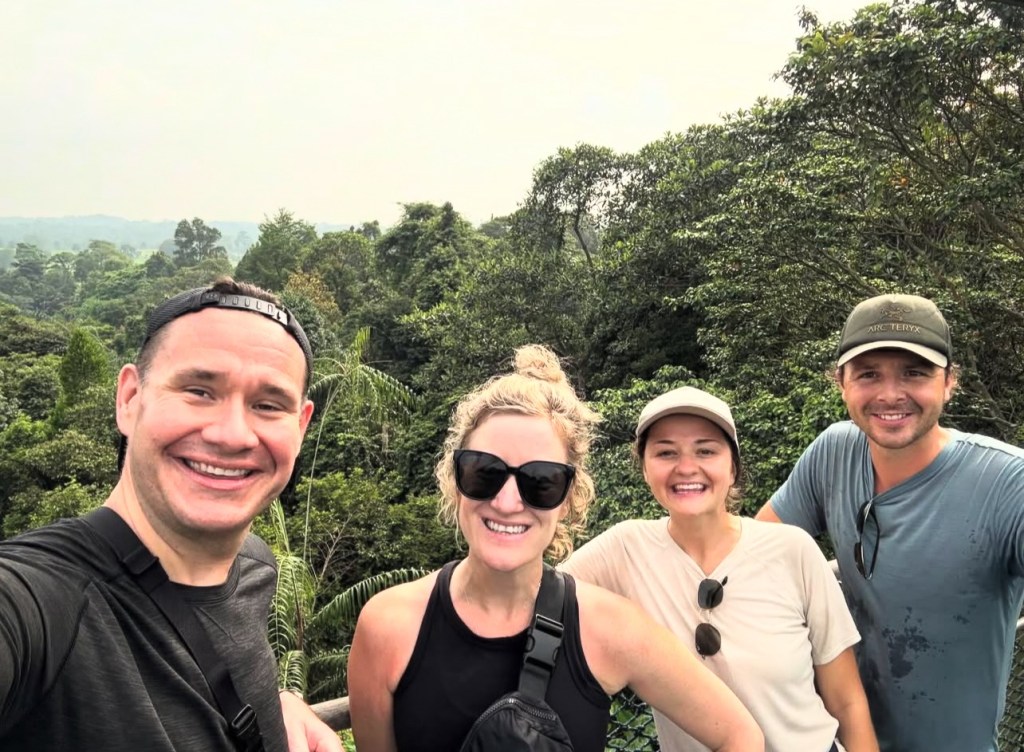
We spent a morning hiking the MacRitchie Reservoir Treetop Trail, a beautiful nature park right in the city. The park is full of winding trails that loop around a lake, through the forest, and even behind a golf course. We walked along wooden boardwalks surrounded by thick greenery—and a few bold monkeys. At one point near the start of the trail, we had to pass a group of monkeys along a raised walkway. One monkey stood its ground on the railing, baring its teeth as we approached, making that section of the walk a bit more adrenaline-pumping than we expected! The elevated canopy walk gave us amazing views over the treetops, and a nearby lookout tower offered even more stunning views of the surrounding forest and city skyline.
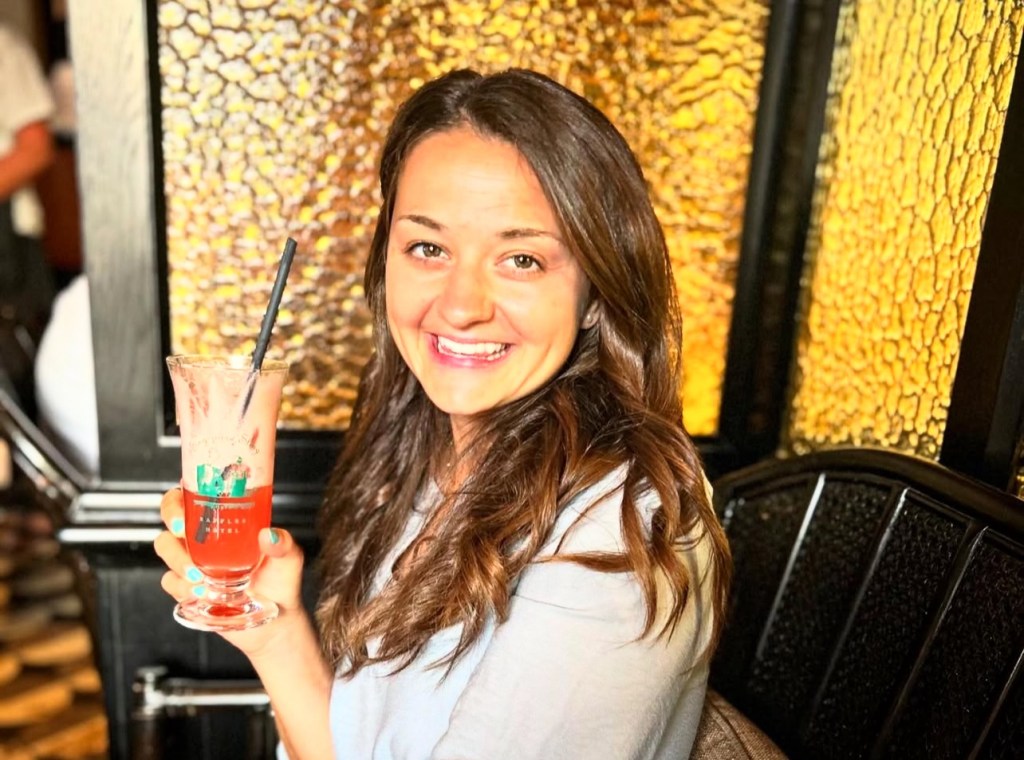
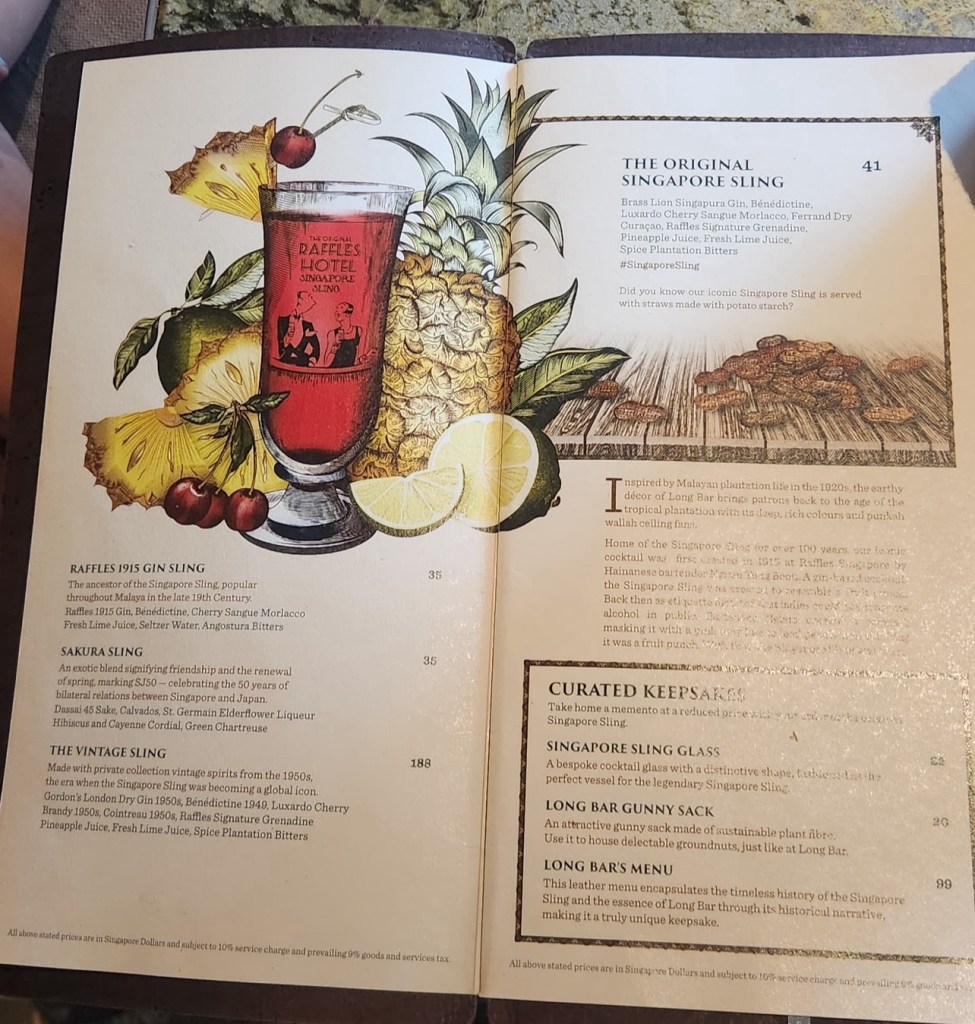
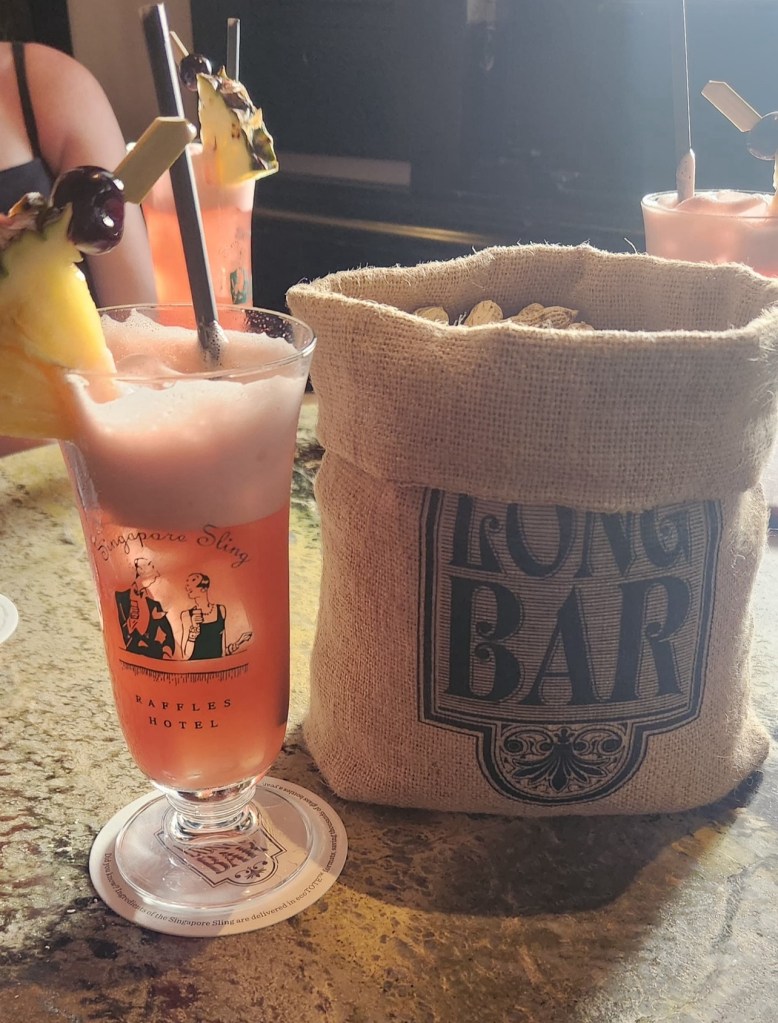
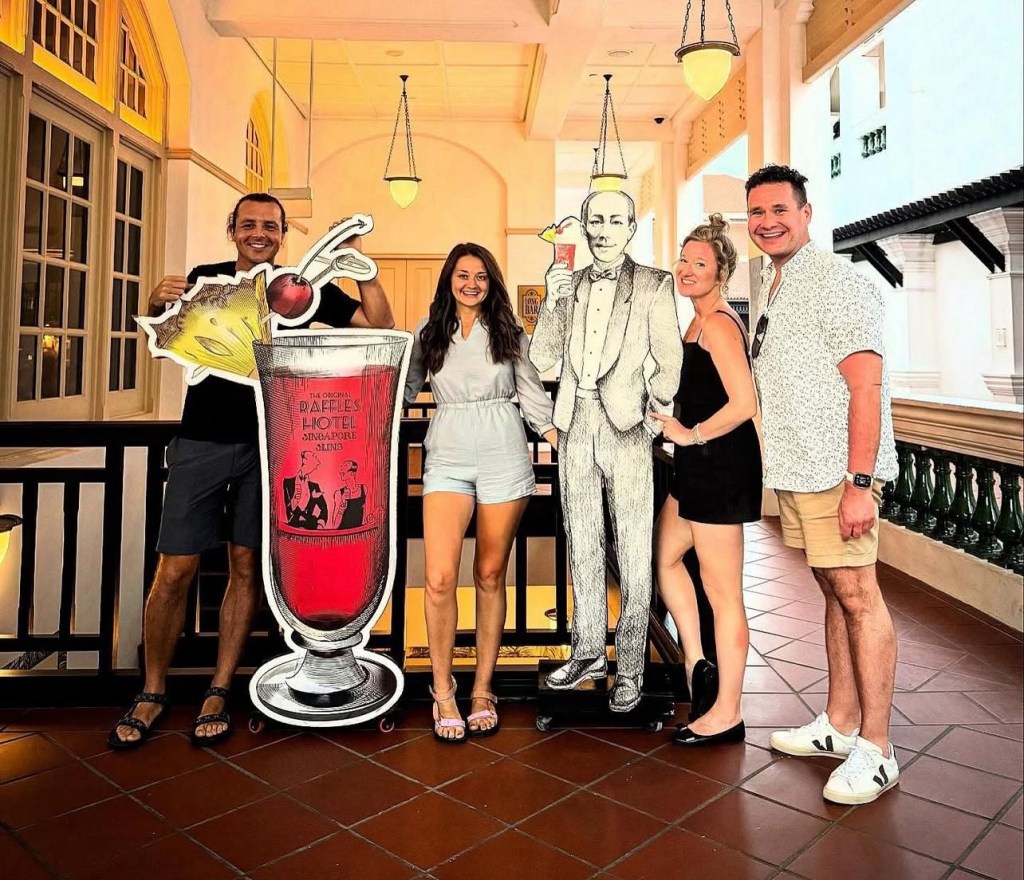
Later that day, we cooled off by the pool before heading to the iconic Raffles Hotel to try their famous Singapore Sling—the classic cocktail created there in 1915. The historic Long Bar had an old-world charm that made it feel like stepping back in time, and sipping the drink in its birthplace made the whole experience even more special. So did cracking the peanuts, eating them, and throwing their shells on the ground!
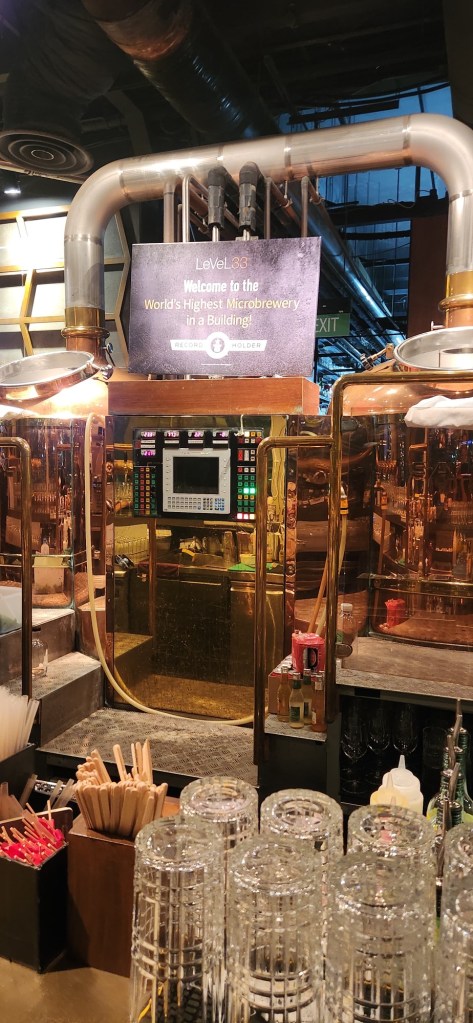
That evening, we had dinner at Level33, the world’s highest microbrewery, perched above the Marina Bay skyline. Our reservation was timed perfectly to watch the city’s famous light and water show, with unbeatable views of Gardens by the Bay glowing in the distance.
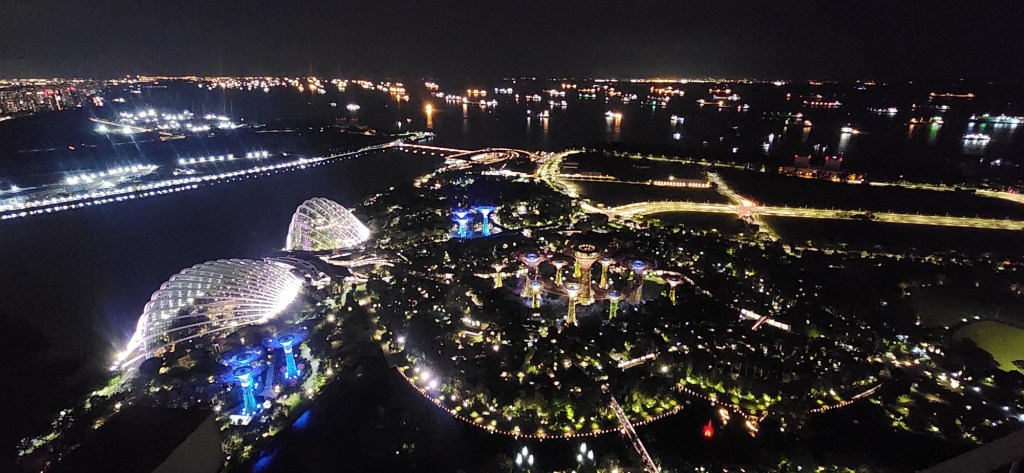
The next day, we all went our separate ways, catching different flights—Craig & Patricia back to Iqaluit, and Mat & I onto the Maldives.

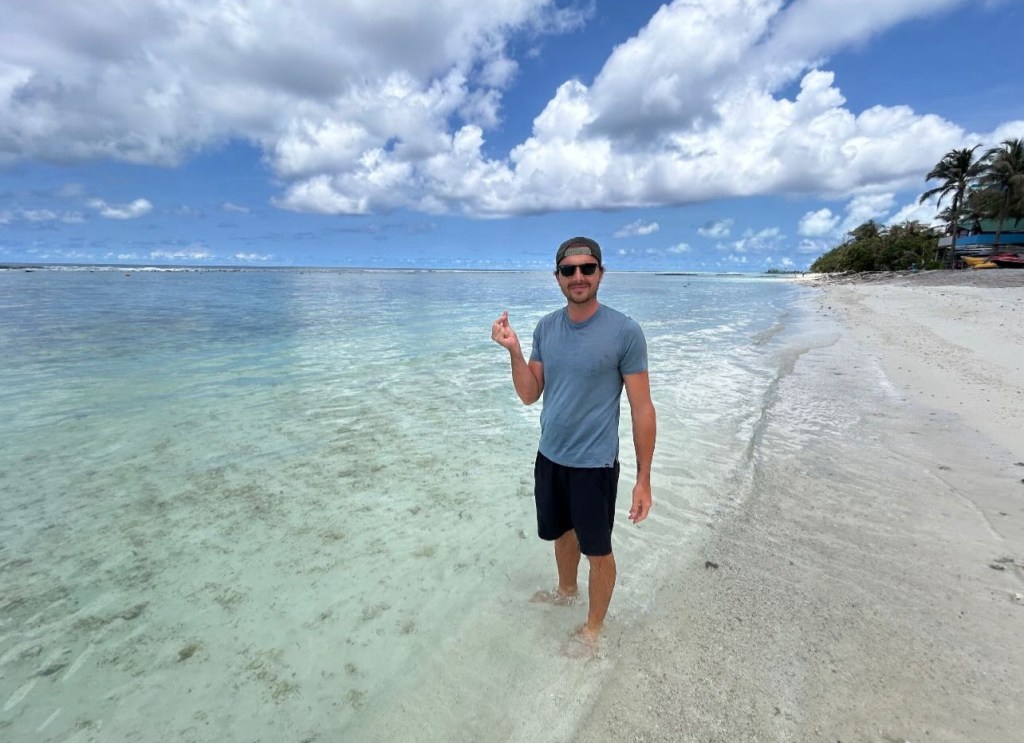
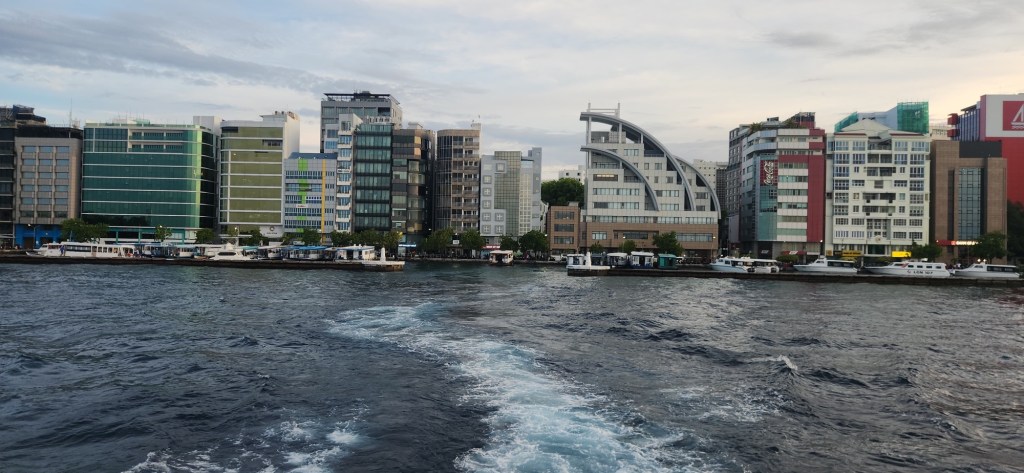
From Singapore, we flew into the Maldives, landing in Malé—which surprised us with its unexpected built-up skyline.  After a late-night hotel check-in and some much-needed sleep, we were ready to kick off the next chapter of the trip.

Maldives
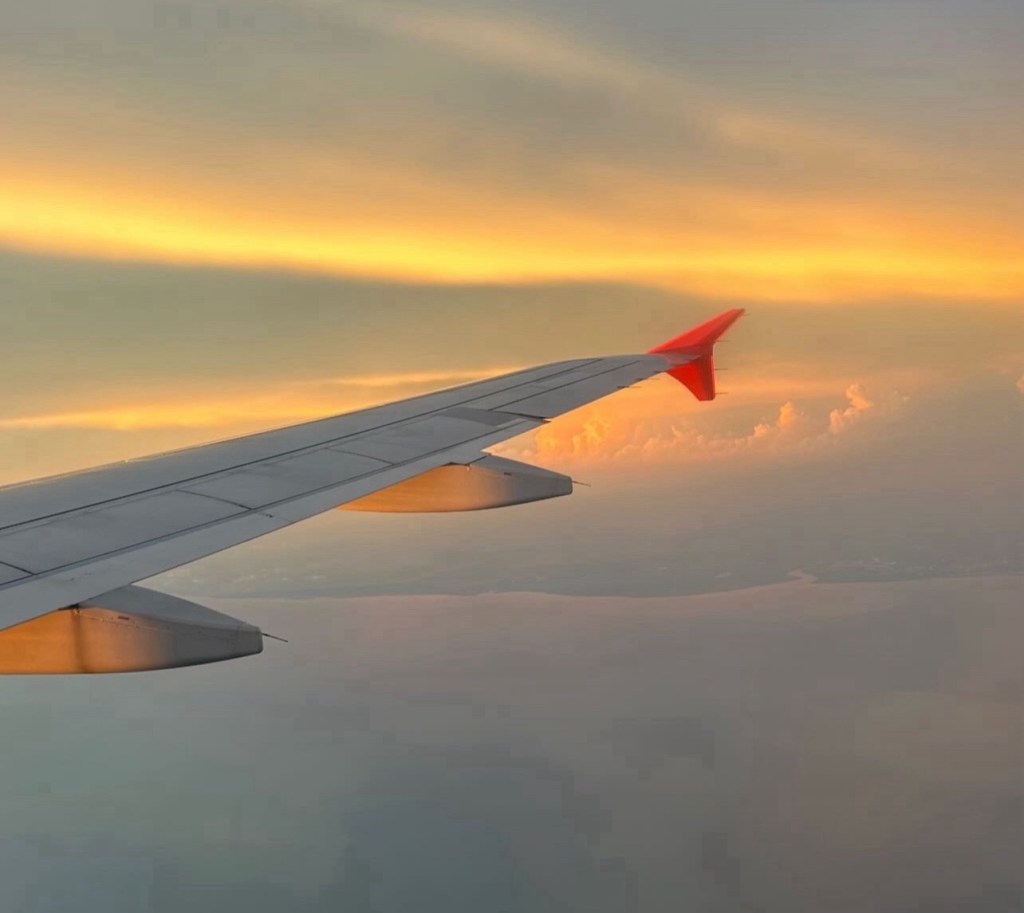
We spent some time debating where to go for our final destination. Both of us have really enjoyed the diving portions of our trip, so we agreed the best way to wrap things up was with one last diving adventure—and what better place than the Maldives? The Maldives has always been my dream beach getaway, and honestly, I wasn’t sure if I’d ever get here. So this was a huge bucket list check for me, and I’m so grateful we made it happen!
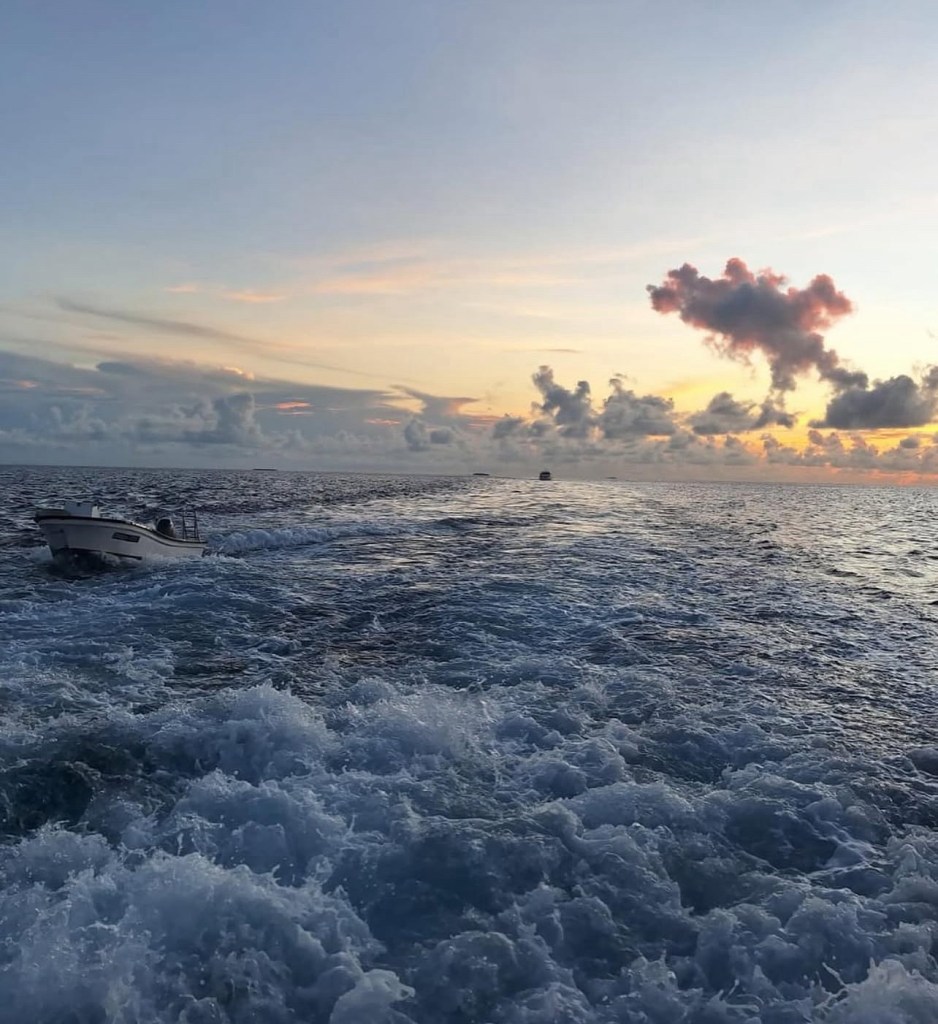
We flew from Singapore to Kuala Lumpur, Malaysia for a quick layover, then hopped on our next flight to the Maldives. When we landed in Malé—the bustling, surprisingly urban capital—it was late into the evening and we were quickly whisked off to our hotel. 
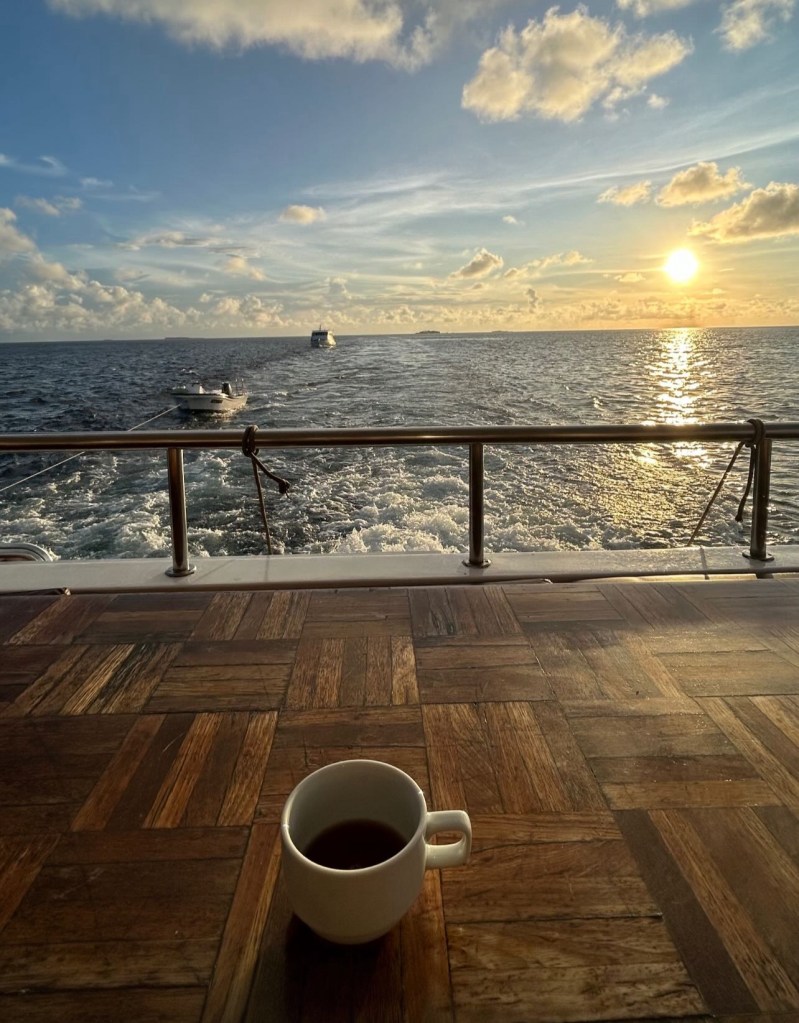
The next day, we took some time to explore Malé Island. Mat had been dealing with an ear infection and wanted to get it sorted before our dives, so he made a quick stop at the hospital where he picked up some ear drops—just in time to be cleared for our upcoming adventure.
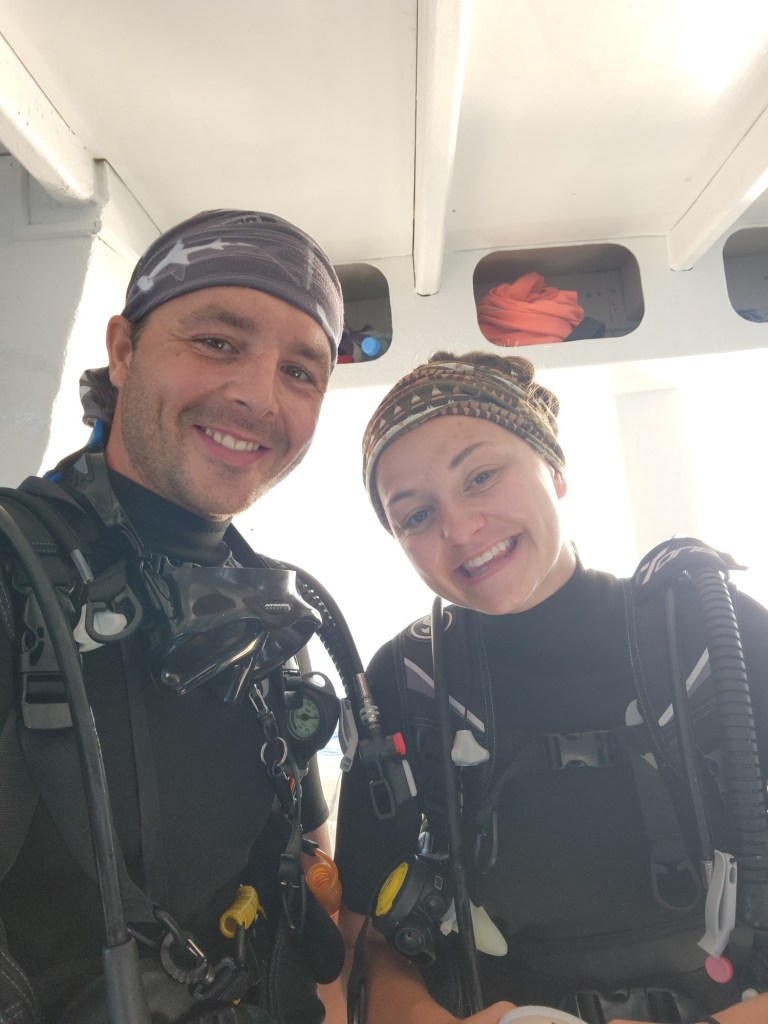
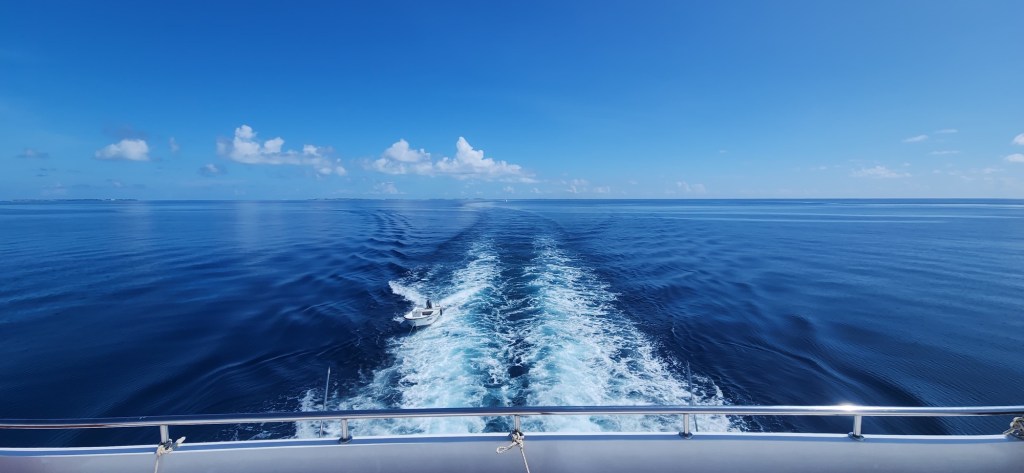
Our liveaboard journey kicked off the following morning. We met the group at our meeting spot, feeling a mix of excitement and nerves before our first check dive at Fish Tank (Kandi Oiy Giri). This site used to be home to a fish factory that released fish scraps into the sea, attracting loads of marine life. Even though the factory is currently closed, there was still plenty of marine life there—moray eels, lionfish, reef sharks, a massive napoleon wrasse.
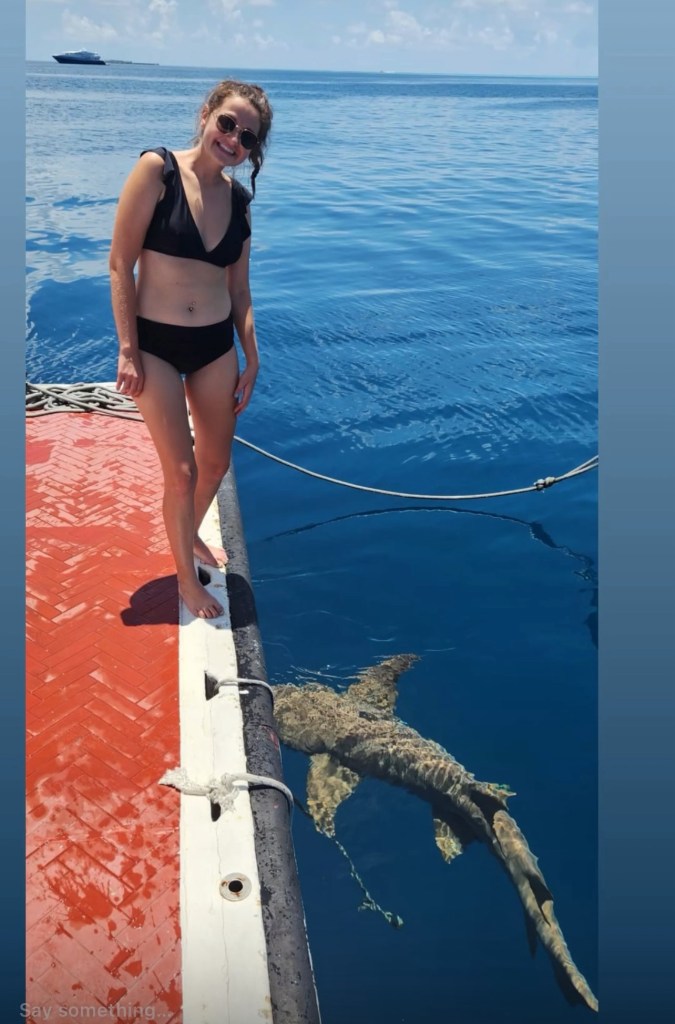
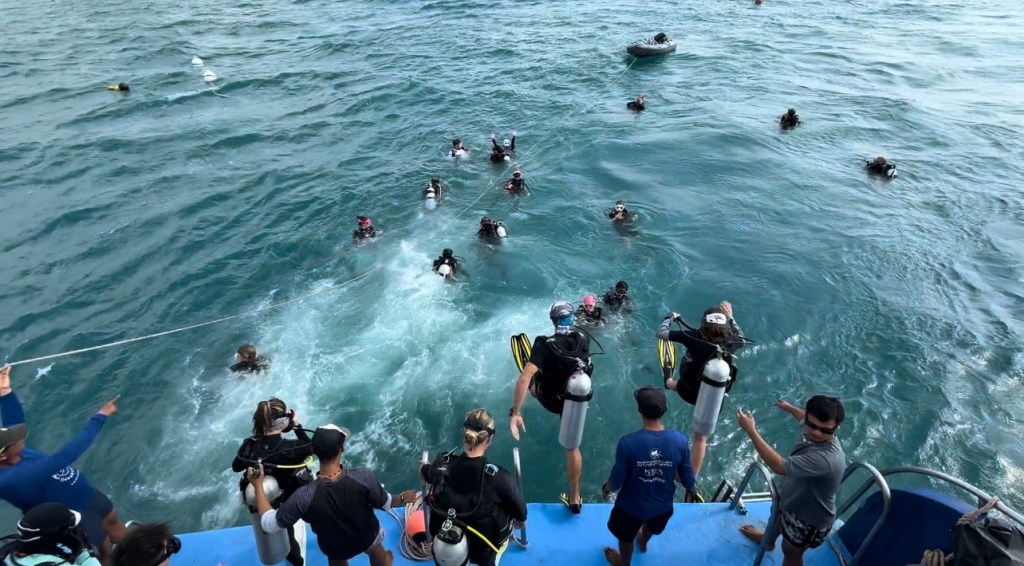
The next morning set the tone for the rest of the trip with two unforgettable dives at a site called Shark Tank. As the name suggests, things got intense fast—bull sharks, tiger sharks, rays, spinner sharks—all drawn in by a chummed-up feeding frenzy. We started the trip with two dives at this spot, and were instructed to sit on our knees at the bottom of the sea floor. As we did, tiger sharks cruised past us, rays glided in massive groups like birds in formation, and we sat there watching our backs as big sharks swam around us. 
Currents, Channels, and Coral Kingdoms

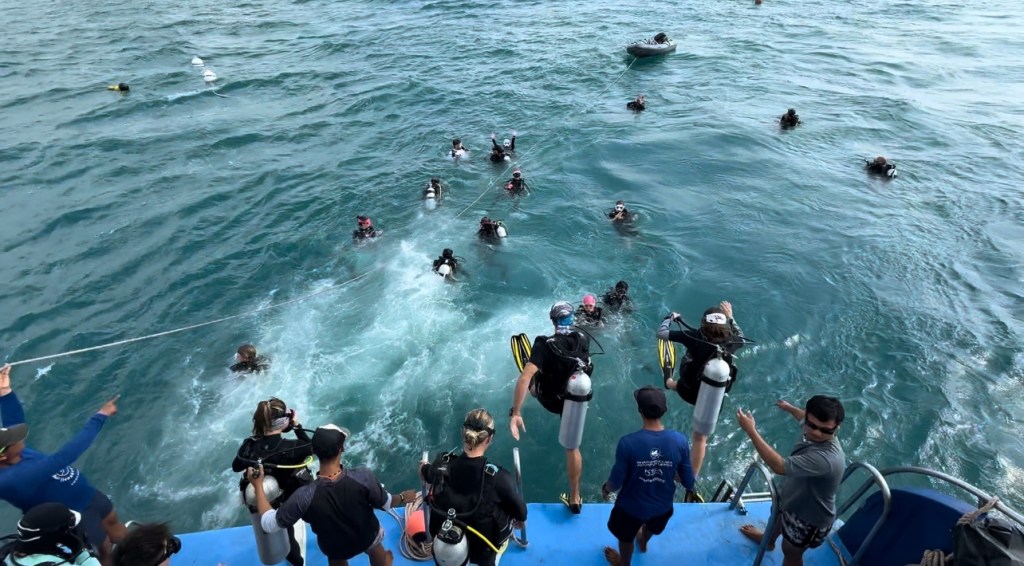
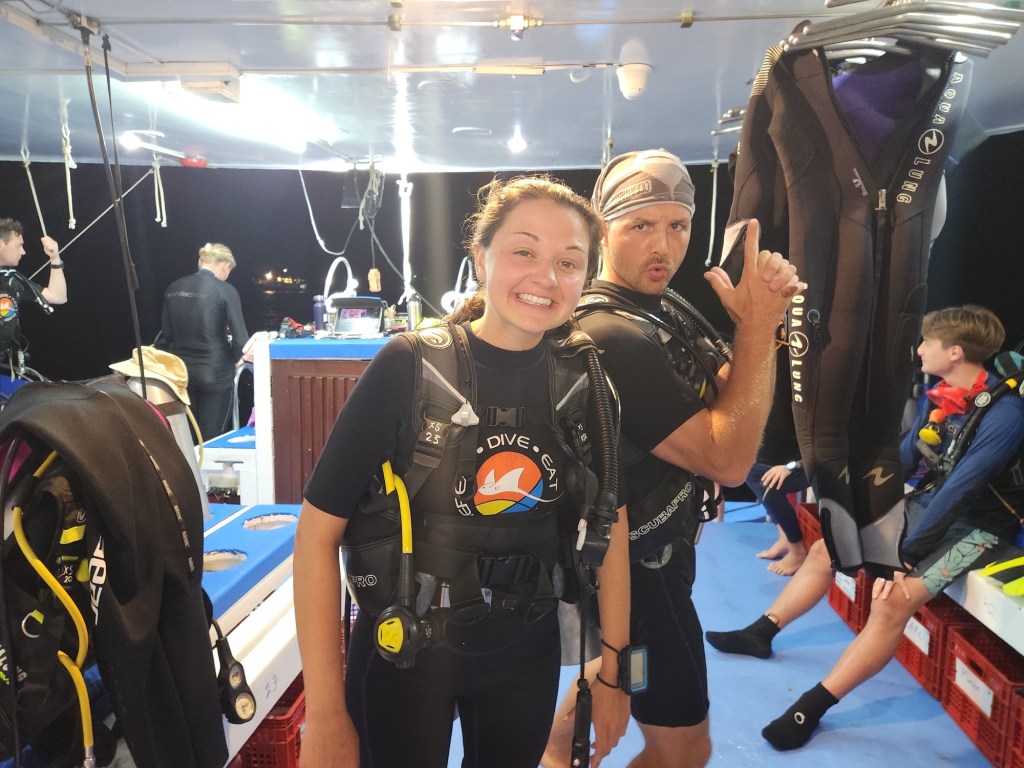
Our days unfolded in a rhythm of dive briefings, gearing up, giant strides into the blue, and post-dive chats over fresh fruit and coffee. Each site brought new underwater adventures and unique challenges:
  • Kandooma Thila: A thrilling drift with reef hooks, batfish, eagle rays, and a farewell wave from a turtle.
  • Miyaru Kandu: A channel dive that tested our buoyancy and air consumption. We took our fins off and “ran” across a sandy channel barefoot and found garden eels swaying with the current. Putting our fins back on to continue the dive. 
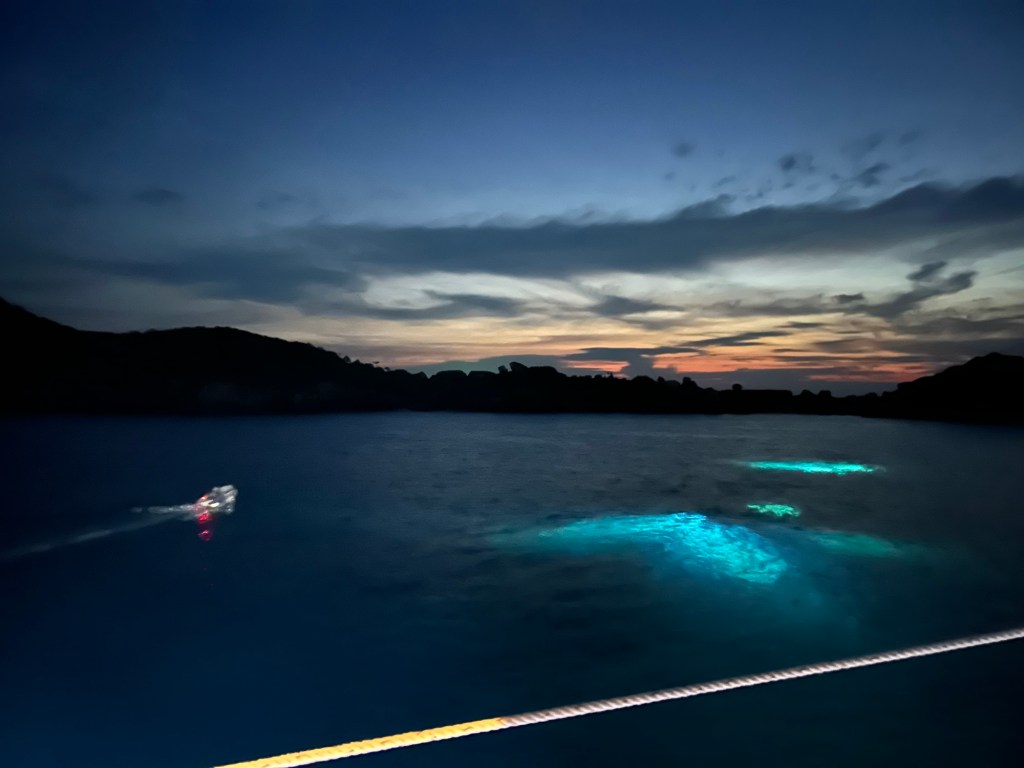
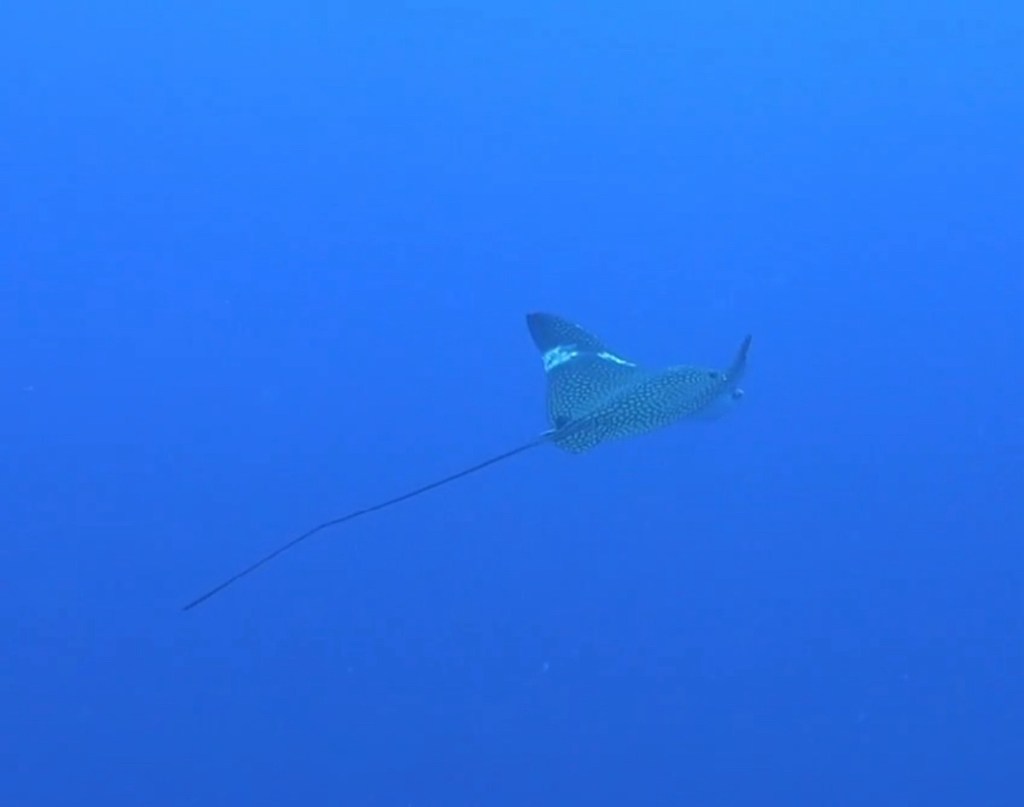
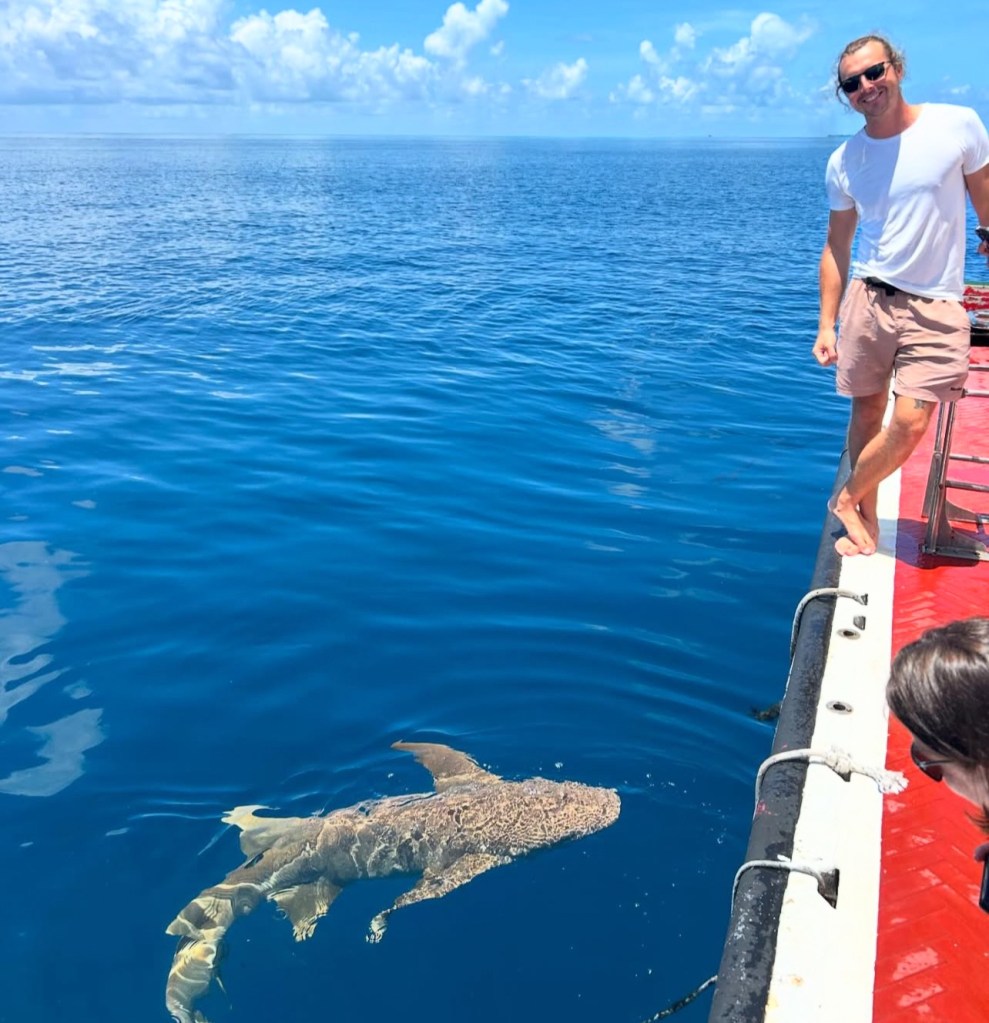
  • Alimatha Jetty: A night dive like no other. Surrounded by nurse sharks in a glowing circle of flashlights, we were nudged, bumped, and awed as the gentle giants swam right over and under us.

Manta Moments
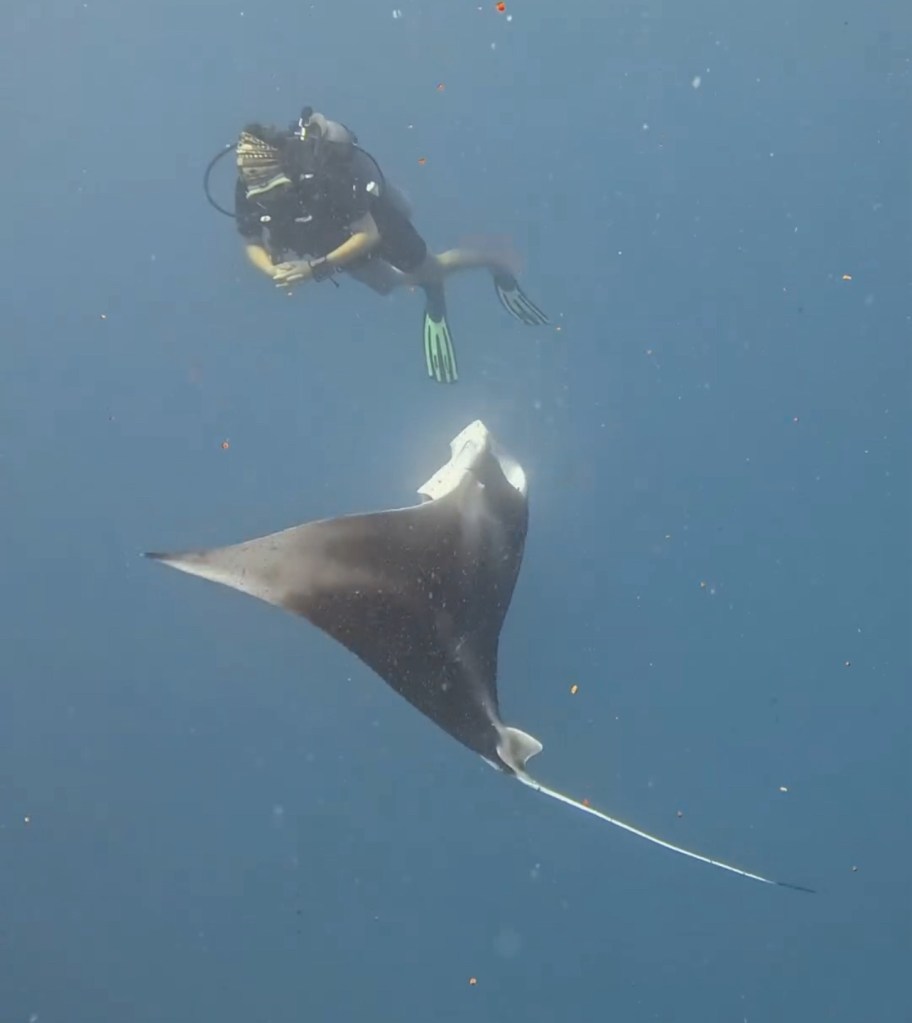
Despite some manta dives not delivering the swarms we’d hoped for, we had memorable encounters:

  • Fesdhoo Lagoon (Night Dive): Sitting in a flashlight ring, mantas glided inches above us in ghostly elegance while a stingray stirred the sandy stage.
  • Moofushi Block & Maavaru Bay: We saw fewer mantas than expected, but the reef life—sharks, triggerfish, and a curious octopus—kept our attention.

Wrecks, Pinnacles & Final Thrills
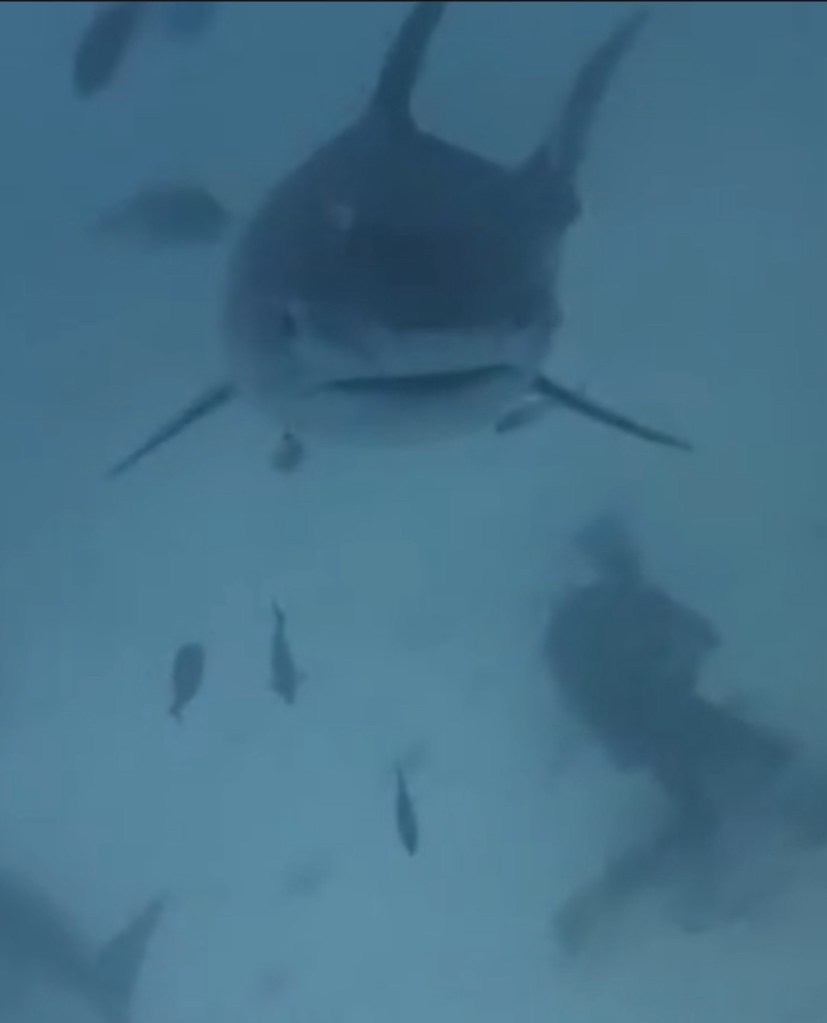
The Kudima Wreck offered an eerie exploration through ship corridors, while Bathala Thila brought strong currents and schools of barracuda. But our last dives were pure adrenaline.

In our final Shark Tank dive, we descended with seven 55 gallon drums of fish guts being dumped into the water, which made us feel very uncertain about our safety. As we descended and swam through tuna droppings, rays and smaller fish feasted, two tiger sharks made repeated, close passes. The guides were vigilant, and while the experience was intense, it was unforgettable.

Life Above the Surface
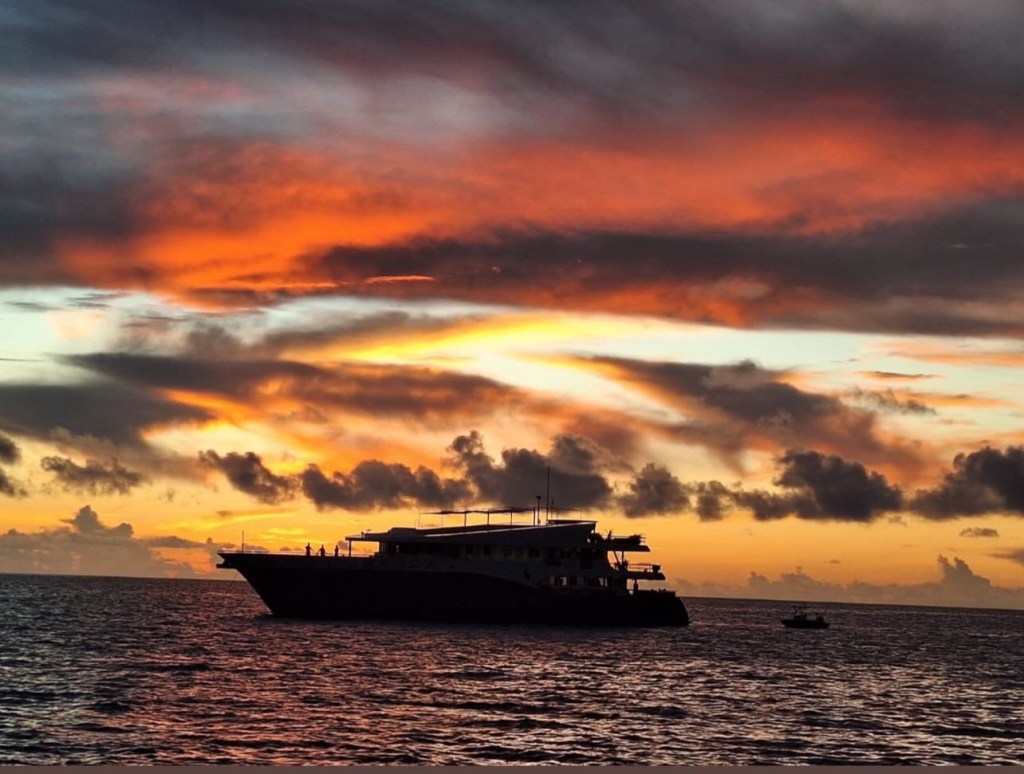
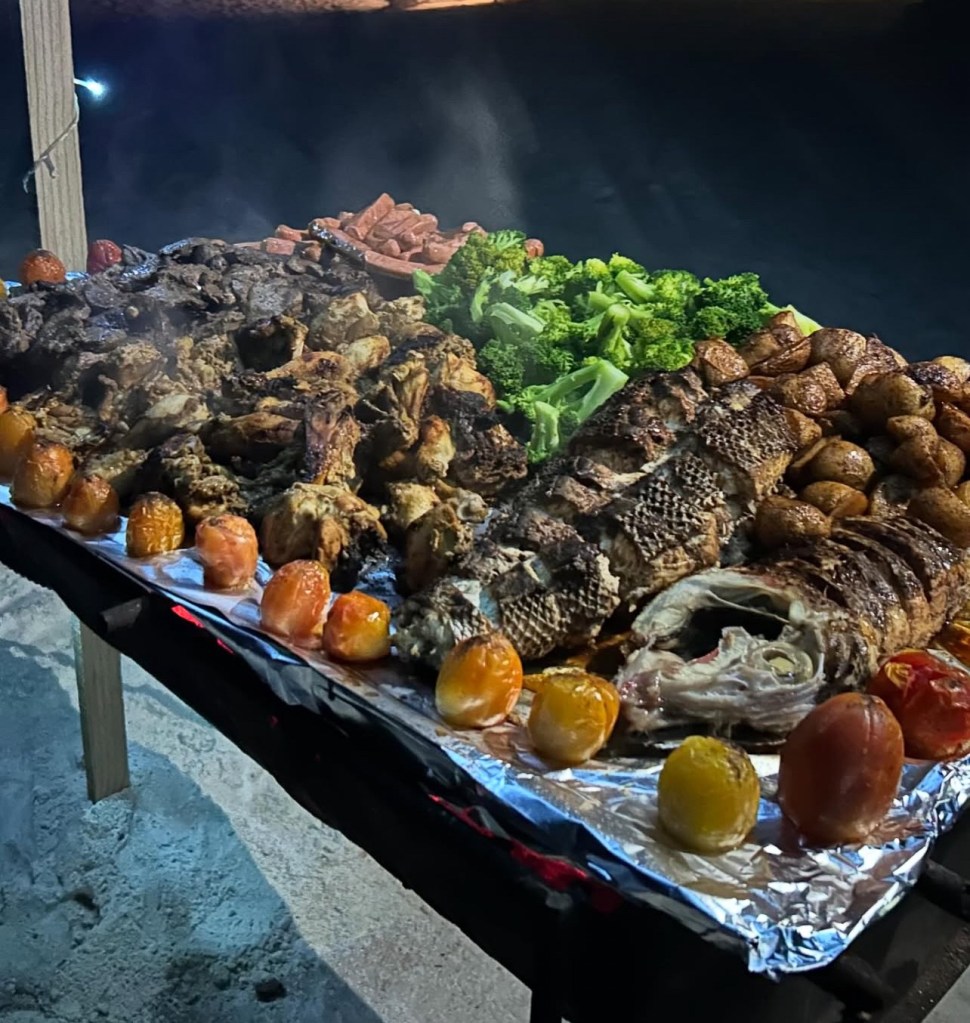
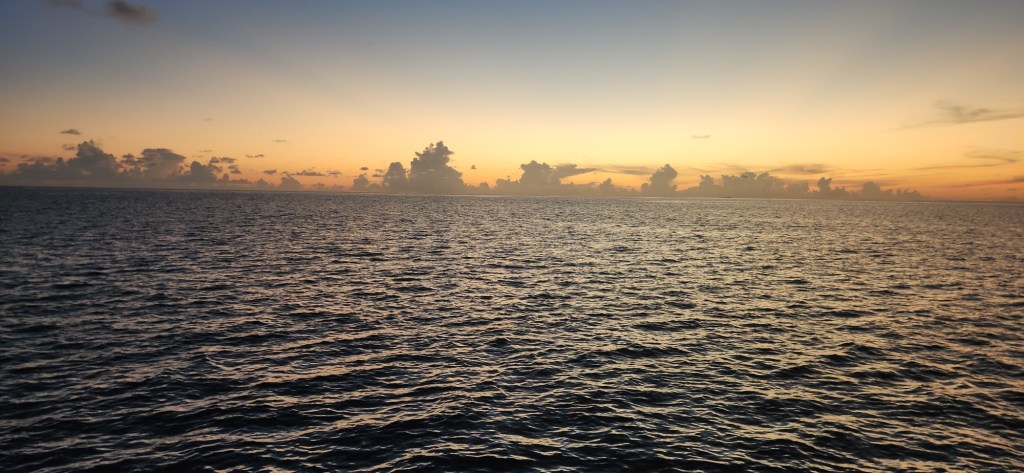
One night during our trip, we anchored at a local island for a special beach BBQ—and it ended up being one of the most memorable evenings of the whole liveaboard. We dined under the stars on freshly grilled local fish, toes in the sand and warm breeze in the air. The crew had even sculpted a whale shark out of sand, complete with fins and a massive tail, which made the night feel even more special. After dinner, we wandered the beach by foot. It was a beautiful evening.
After days of diving, we took a walking tour of Malé, visited local markets, and watched stingrays circle the pier. Our final night on the boat was filled with laughter, gratitude, and quiet reflection.
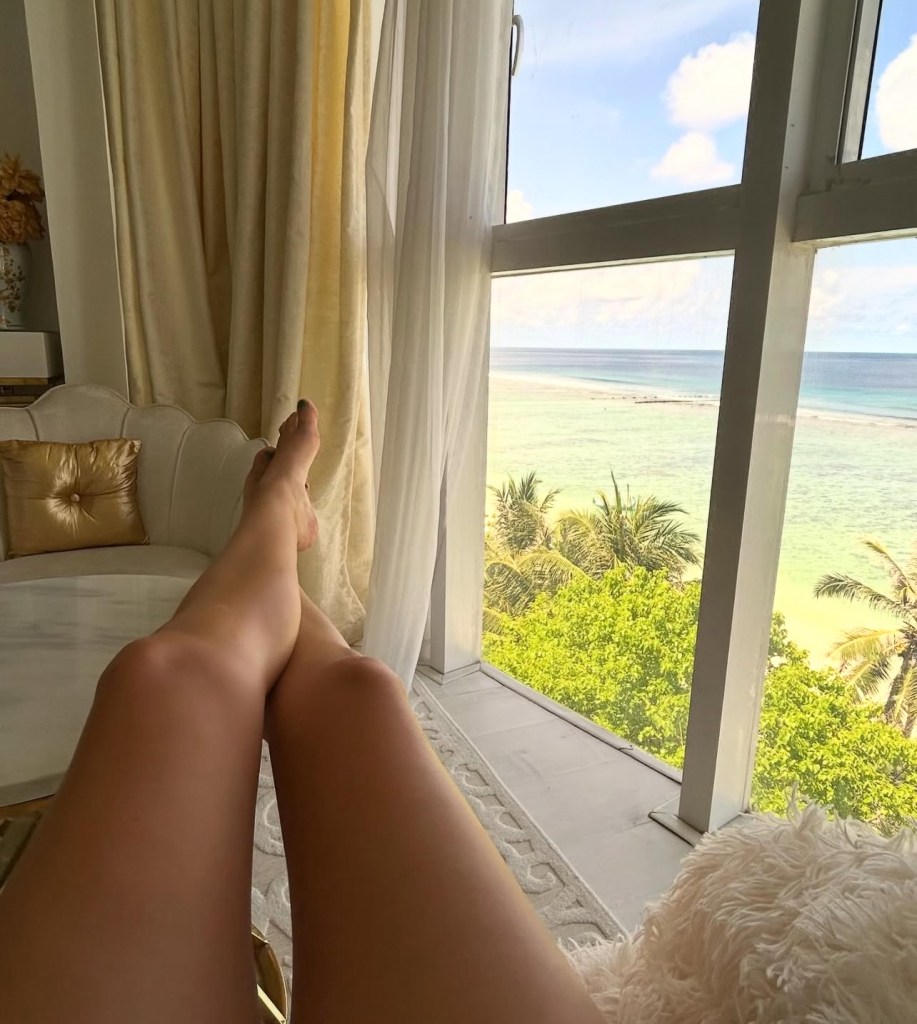
We ended the trip with a city day in Hulhumalé. We checked into an amazing Airbnb, got Balinese massages, and met up with Kun, a friend from the boat. Over dinner and ice cream, we shared highlights and stories from a trip we’ll never forget.
The Journey Home

Mat and I actually took separate flights home. I had booked mine using points (feeling pretty proud of that at the time), while Mat went the full-price route. The catch? My itinerary came with three layovers—each over 11 hours. Mat left 10 hours after me but still managed to arrive a full day earlier. I definitely saved money, but let’s just say I’ve learned my lesson: sometimes it’s worth paying a bit more to avoid turning your trip home into a multi-day airport tour. Direct flights > bragging rights.

Lisa & Mat’s Travel Tips/Things We’ve Learned Along the Way:

  • Download the Wanderlog Travel Planner to help you keep your long term & short term travels organized. You can add people to your trip itineraries and ensure everyone is on the same page during your travels. 
  • As you travel, create a file in your phone to save the names/recipes of your favourite foods while abroad. This way, when you arrive home you can try and remake them!
  • If you’re travelling, look into the Wise card. It was a very good travel companion for avoiding hidden fees and getting real exchange rates while spending or withdrawing money in over 40 currencies worldwide.
  • If you’re at a museum and they offer an audio option, always take it. 
  • Don’t leave your debit card in the ATM machine (…twice 🙄)
  • Be willing to wake up early to beat the crowds. 
  • Use Uber, or similar apps whenever possible! It will save you a ton of money and headaches in negotiating prices, especially with language barriers.
  • Always book the earlier flight, delays are inevitable.
  • When in Egypt, be nice to people at the airport (LOL), we have witnessed many angry outbursts among passengers (who then proceeded to be let on the plane together). 
  • Keep ALL food in the refrigerator, especially in tropical & warm climates. 
  • Cash is still king – especially when travelling Africa – airtel / MoMo pay – ATMs won’t let you withdrawal cash
  • Never trust baboons.
  • Is Strava on??
  • Always, always double check for your visa requirements and once you know your port of entry, OBTAIN THE VISA EARLY.
  • Taxi/lyft/grab/indrive will always be cheaper than hiring a driver in person.
  • Mat says: US Dolla dolla bills y’all – and preferably small bills – 5 10 20’s. I also carried a $100 USD on me just in case.
  • Travel insurance: we used the World Nomads travel insurance. Never had to actually use it, but it’s way better to be safe than sorry.
  • Meet with a travel nurse before your travels to bring an assortment of appropriate medicines with you. The antibiotics we had with us saved us a time or two.
  • Don’t book flights until you are guaranteed to be there. For example, if you haven’t gotten your visa approved, wait!
  • People live too much on their phones when at an event. Everything is recorded or dozens of pictures taken. CARPE DIEM. Live in the moment.
  • Only buy packing cubes that are solid, not mesh because Beatles and ants love oats, and when the said food is in your bag with mesh packing cubes……they are also in your clothes (and you will be awake until late hours of the night removing Beatles from your bags while your partner sleeps).
  • If you have a lock on your bag and it’s not being used, make sure it is not on the actual unlock code pattern.

One Incredible Year

And just like that, our year of travel comes to an end.

We visited 11 countries (Egypt, Tanzania, Uganda, South Africa, Thailand, Laos, Cambodia, Vietnam, Indonesia, Singapore, Maldives). We took dozens of flights (26 to be exact), trains, boats, and bumpy rides. Countless meals shared, maps misread, new words learned, and sunsets watched from places we once only dreamed of. From diving with tiger sharks in the Maldives to wandering the streets of Singapore, climbing volcanoes in Indonesia, chasing waterfalls in Laos, road tripping across South Africa, safari’ing in the Serengeti and tasting everything in between—this year gave us more than we ever expected.

We didn’t just visit places. We met people, got lost (a few times), slowed down, sped up, and learned what it means to feel at home in unfamiliar corners of the world. We learned how to pack lighter (sort of), how to be more patient (mostly), and how to appreciate the little things—like a good coffee (or chai latte), clean laundry, or a familiar face on a video call.

There were challenges, of course. Travel isn’t always glamorous, and not every day felt like a postcard. But even the hard moments taught us something. And when we look back, we don’t remember the delays or the discomfort—we remember the joy, the laughter, the awe, and the sheer wonder of it all.

We’re coming home with tired feet, full hearts, and stories we’ll be telling for the rest of our lives.

Thank you for following along on our journey!

Here’s to the next adventure, whenever it comes. 🌍✈️💛
Blog # 8: Indonesia

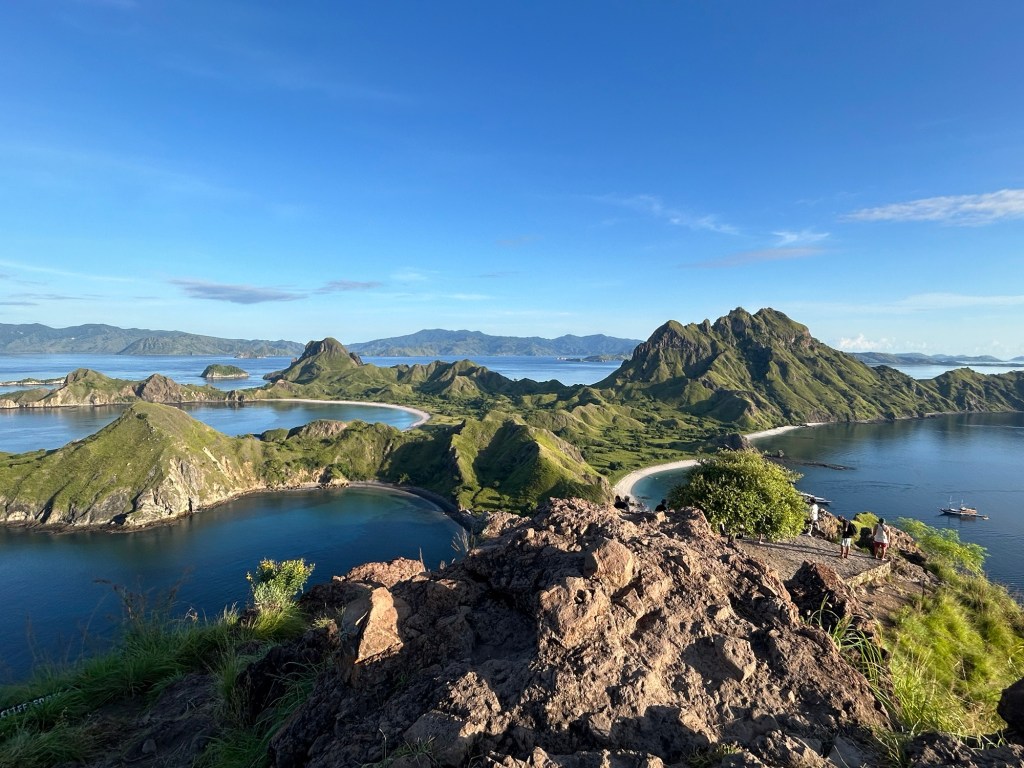
Padar, Indonesia

It is hard to pick a destination that has been our “favourite,” so far, as each place has been vastly different. However, Indonesia is incredible and if you ever get the chance or are deciding if you should go, we say do it! We spent 43 incredible days exploring Indonesia, a vast and diverse archipelago made up of over 17,000 islands. Our journey began in Jakarta, the bustling capital on the island of Java, and took us through some of the country’s most beautiful and unique destinations. 

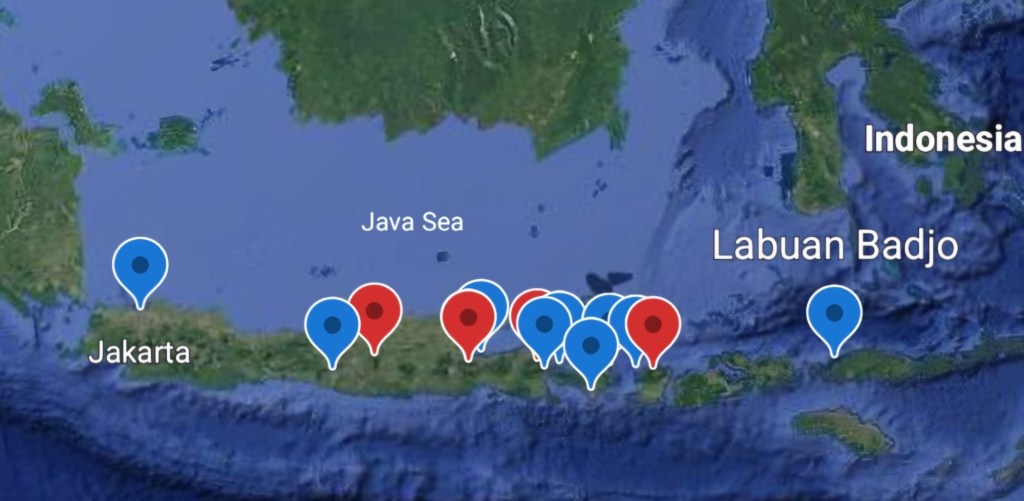
This is a map showing the cities we visited (blue) and the mountains we climbed (red).

Referencing the map above, we started our journey on Java, learning about Indonesia’s rich history and climbing a few volcanoes. From there, we headed to Bali for some diving, then flew to Flores for two unforgettable liveaboard adventures in Komodo National Park. After that, we headed to Gili Air for some laid-back island time before ending our trip on Lombok, where we capped it all off with a challenging hike up Mount Rinjani.

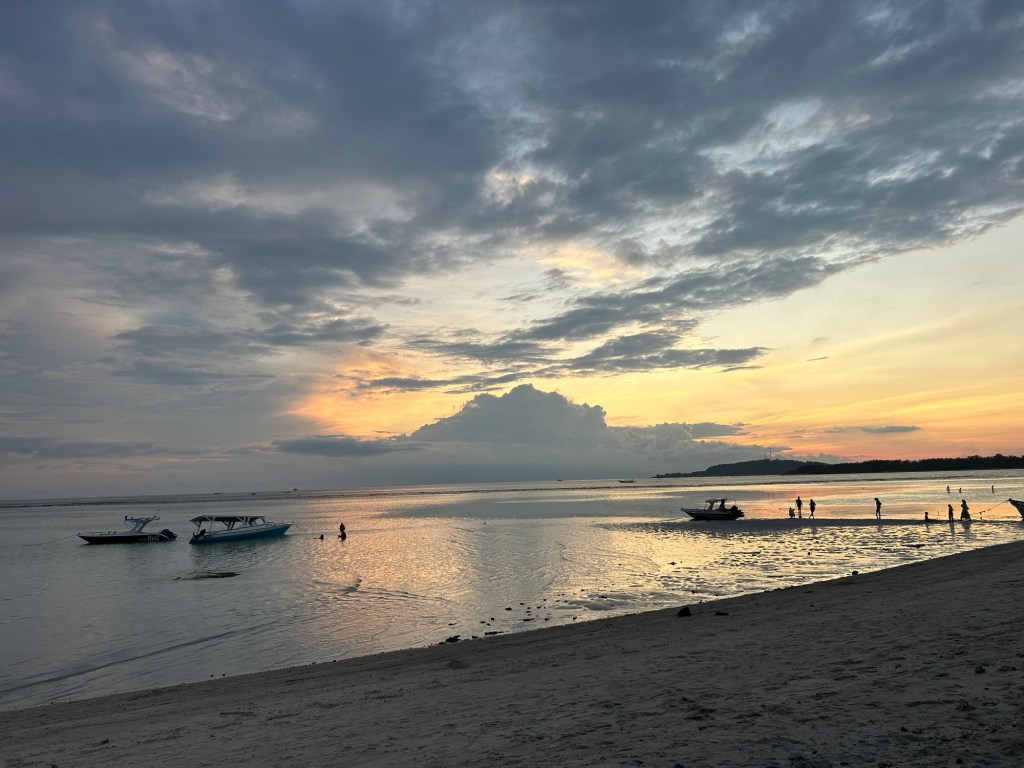
Gili Air, Indonesia
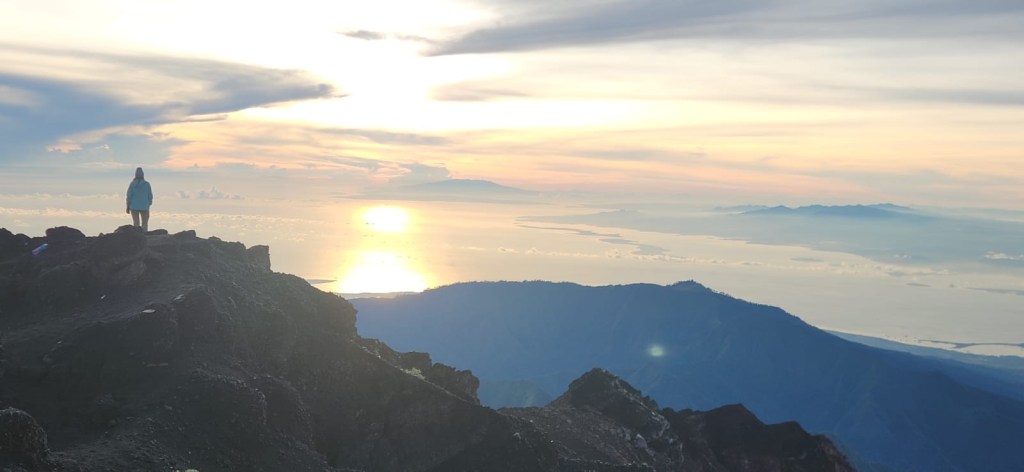
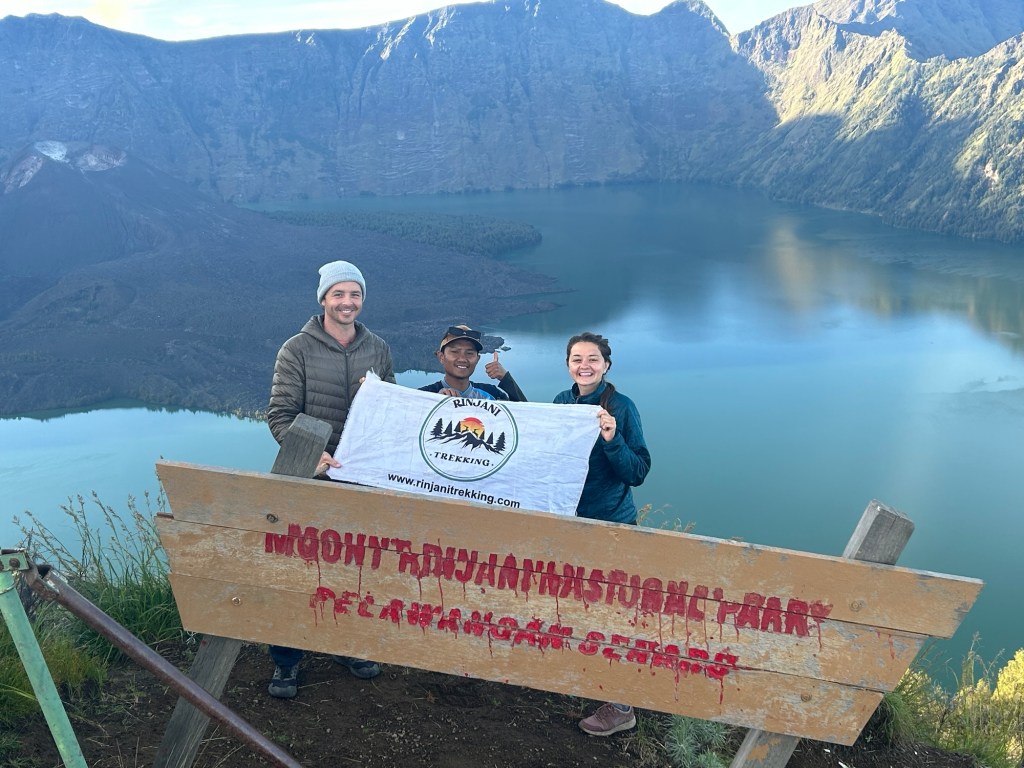
Mount Rajini, Indonesia

Keep reading to discover the highlights, challenges, and unforgettable moments from our 43-day adventure through Indonesia—from volcano treks and vibrant dives to island life and cultural insights.

Java — Exploring Indonesia’s Past & Hiking Volcanoes

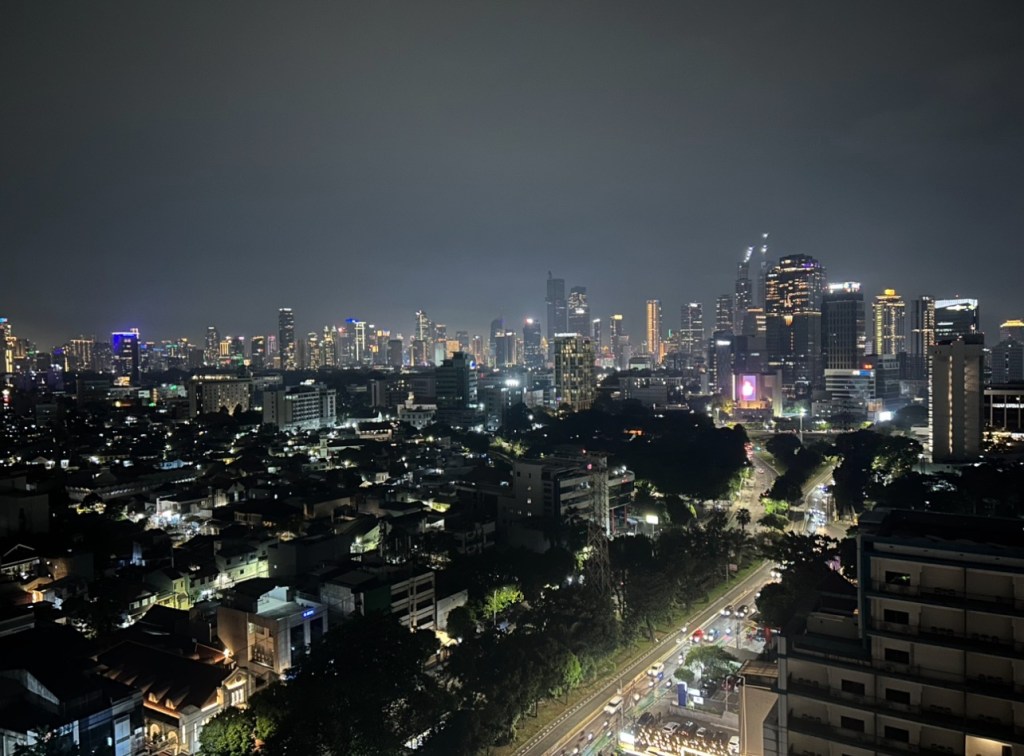
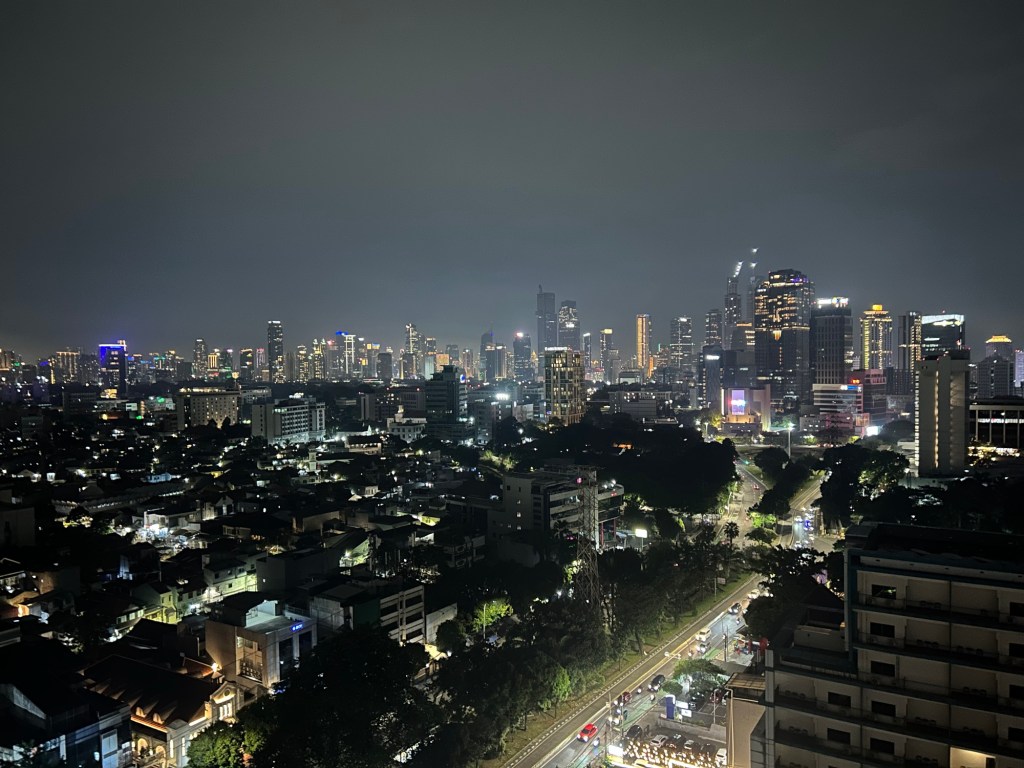
Our adventure in Indonesia began in Jakarta, the bustling capital city, home to over 30 million people—approximately 10 million less people than the entire population of Canada. The city was a chaotic mix of overcrowded roads and limited pedestrian infrastructure, making it challenging to get around on foot.

Views from our hotel room balcony overlooking the city of Jakarta.

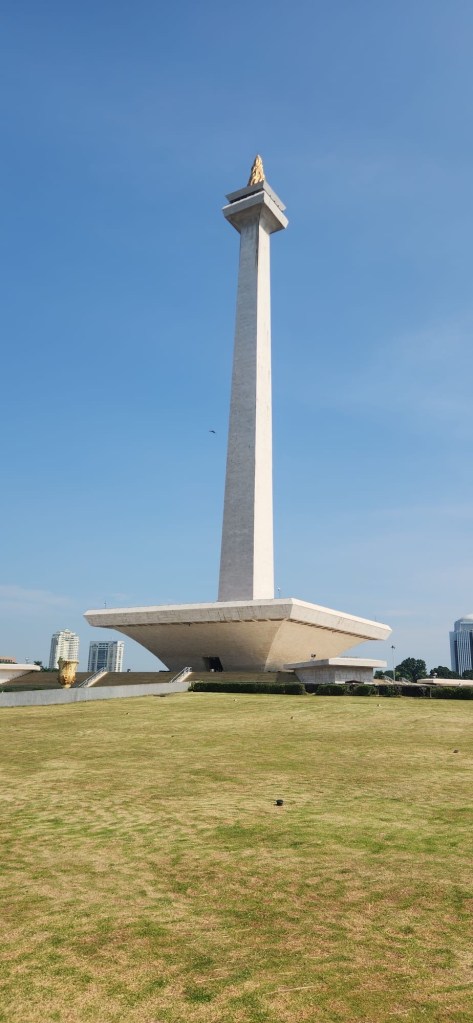
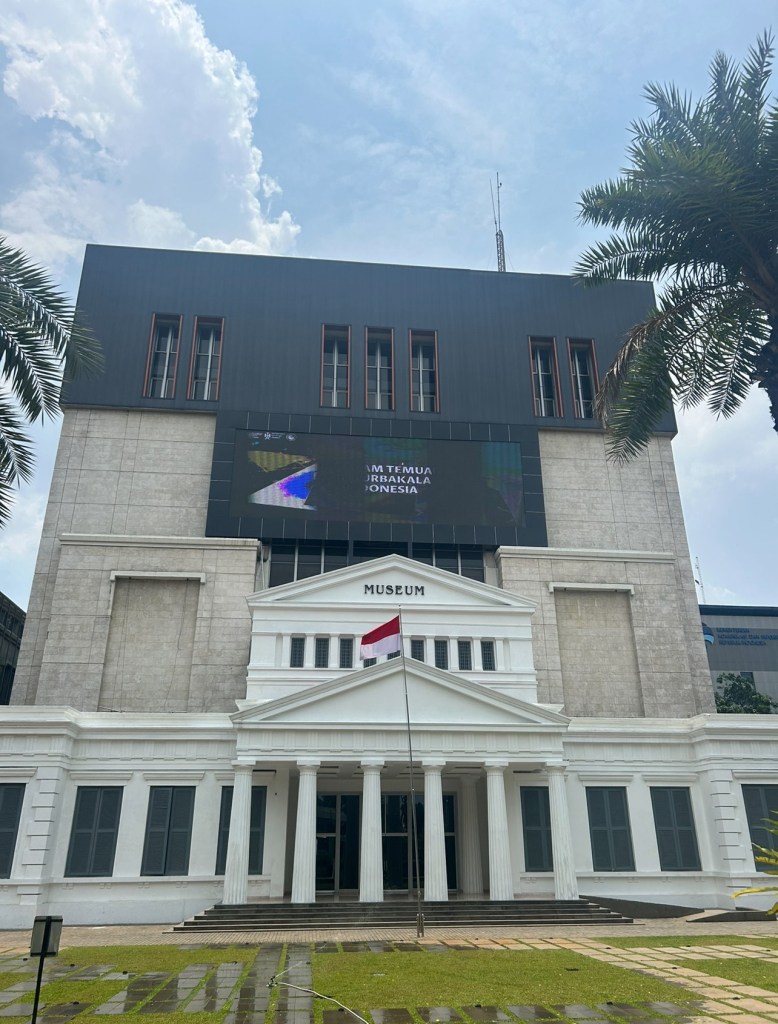
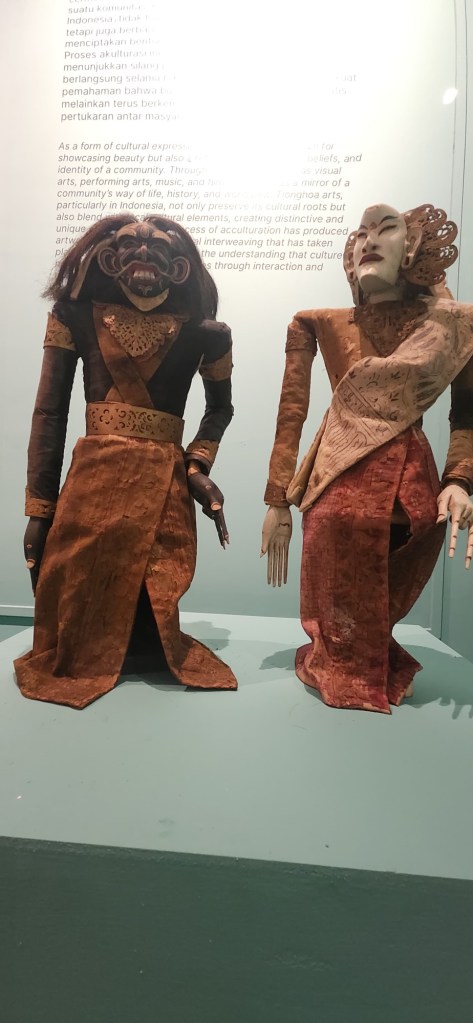
However, we made the most of our short stay by immersing ourselves in the country’s history, visiting the Monas, (short for Monument Nasional or National Monument) which is a monumental obelisk commemorating Indonesia’s independence. Here, we learned about the nation’s struggle for sovereignty against Dutch colonial rule. We also visited the National Museum of Indonesia, which showcased artifacts from around Indonesia and explored the countries rich cultural heritage.

The Monas, Jakarta.
National Museum of Indonesia, Jakarta.

Due to recent flooding which occurred on Java, we changed some of our travel plans for, and headed to Yogyakarta in Central Java.

We arrived during Ramadan, the holiest month in the Islamic calendar, observed by Muslims worldwide as a time of fasting, prayer, and reflection. We observed locals participating in Ramadan from dawn to dusk, abstaining from food, drink, and other physical needs to focus on spiritual growth and self-discipline. Some of our guides were fasting for Ramadan, which meant they climbed mountains with us without eating or drinking during daylight hours—a truly humbling show of strength and dedication.

But as the sun set, the city came alive. The evening call to prayer signalled iftar — the breaking of the fast — and streets filled with the aroma of food as night markets opened and people.

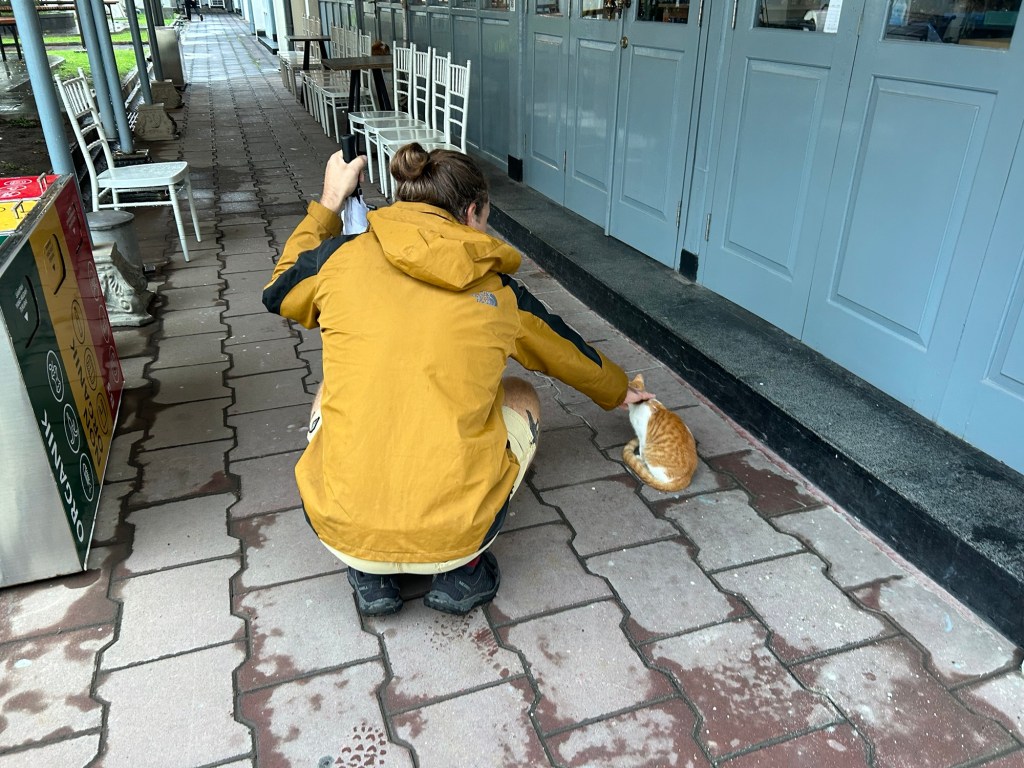
Mat making time to pet all the cats.

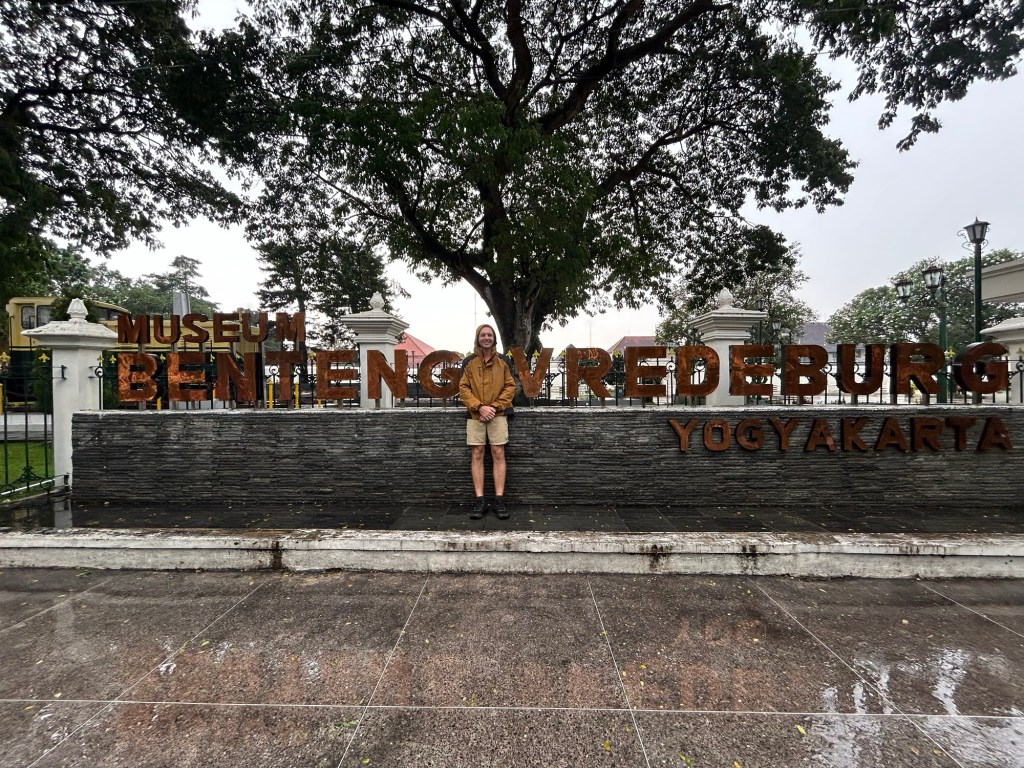
In Yogyakarta, we experienced some heavy rains, so we decided to stay inside and visit the Benteng Vredeberg Museum. Here, we continued our learning journey of Indonesia’s struggle for independence, highlighting important events around the region of Yogyakarta.

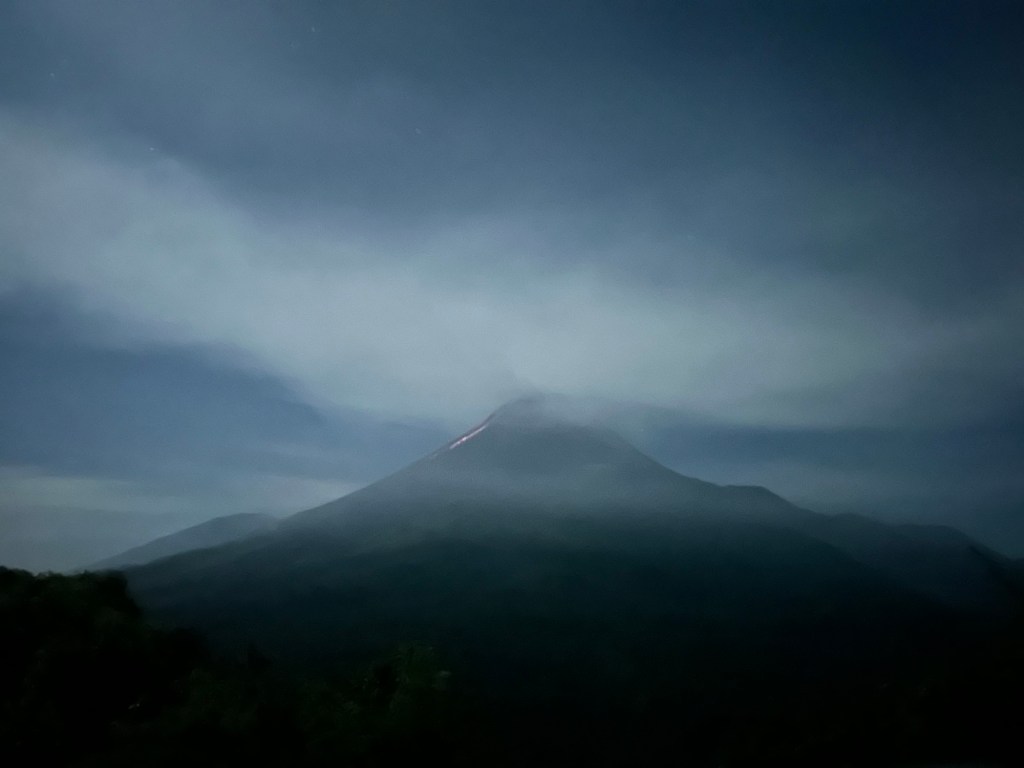
Mount Merapi, located 30km from the city centre of Yogyakarta is one of the countries most active and closely monitored volcanoes. Since December 2020, the mountain has experienced ongoing daily eruptions, which are shared on a 24/7 livestream on YouTube (found here https://m.youtube.com/watch?v=YIZiJxwCDW0). We trekked after dark with headlamps up to a viewpoint across from Mount Merapi, hoping for a glimpse of the daily eruptions, and were lucky enough to witness lava flows rolling down the side of the mountain.

Mount Merapi eruption, and lava flowing.
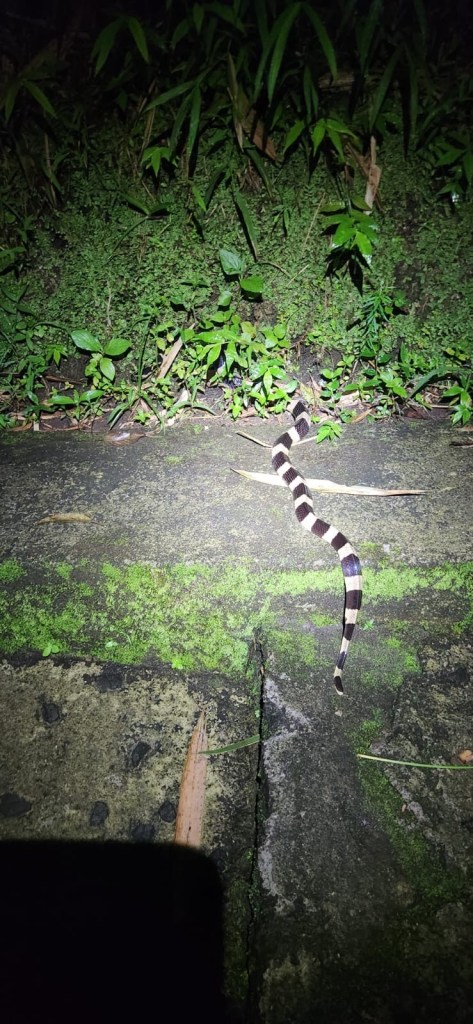
We also passed by this extremely venomous banded krait along our climb!

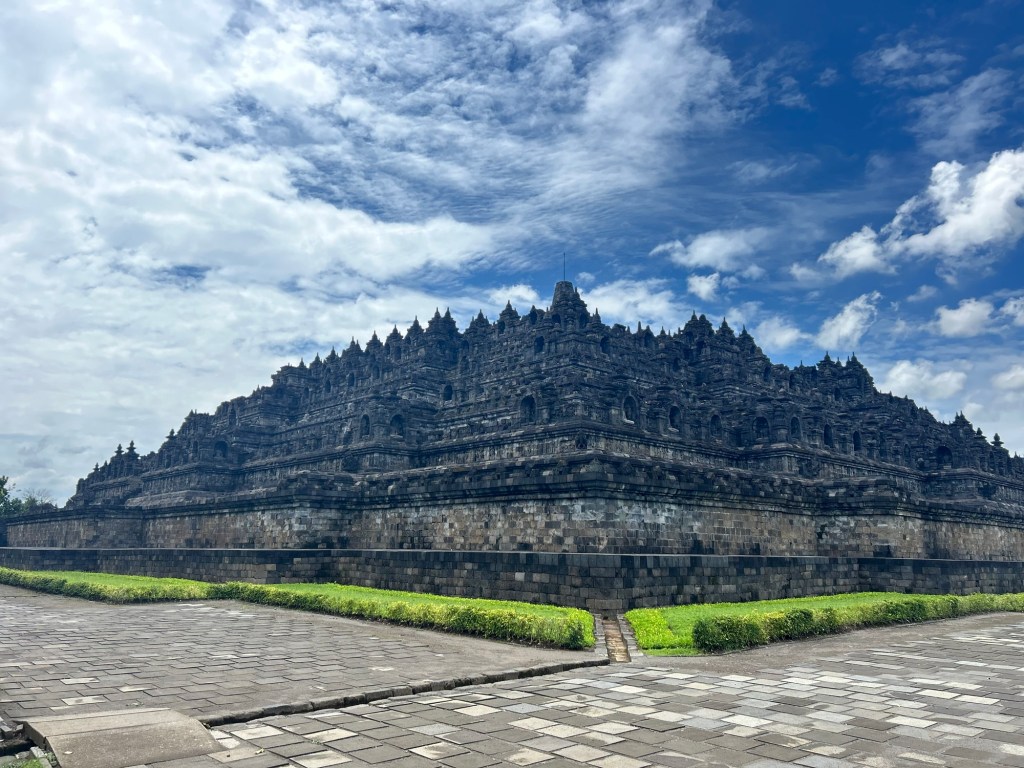
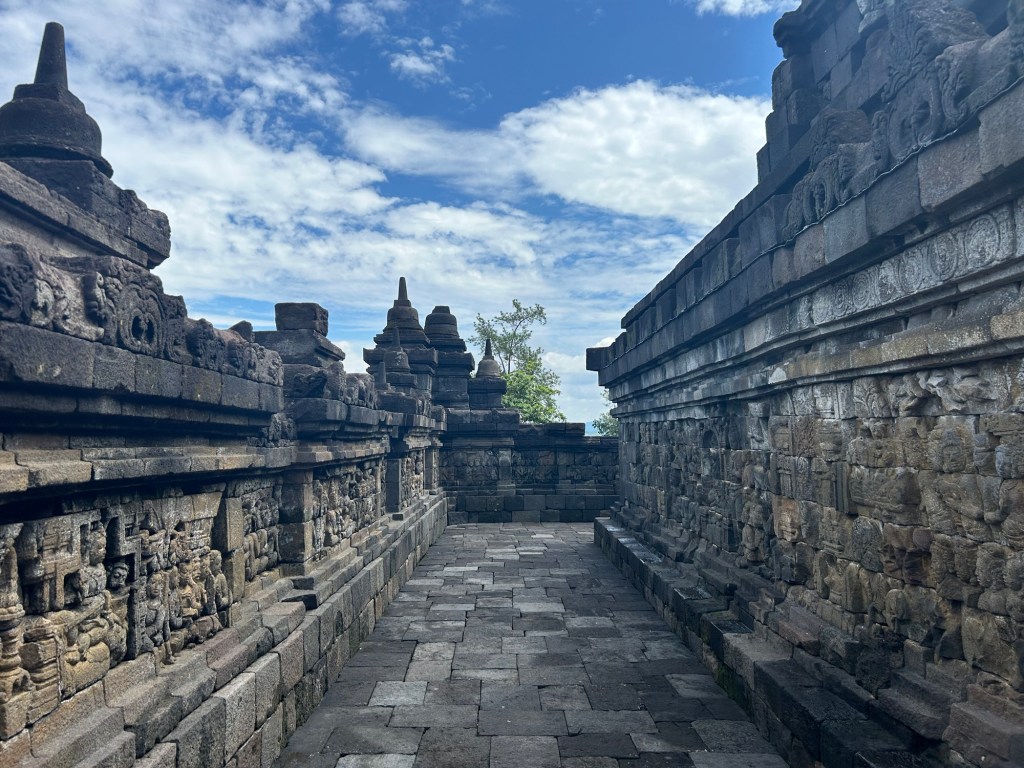
The city also introduced us to Borobudur, the largest Buddhist temple in the world, and a UNESCO World Heritage Site built in the 9th century.

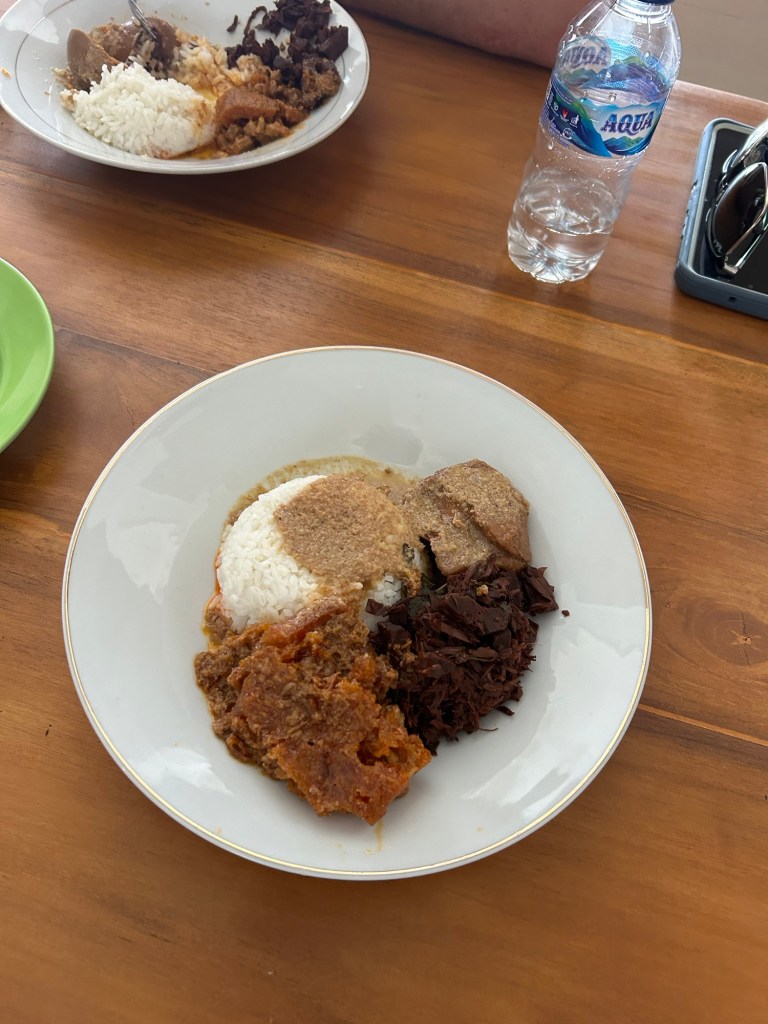
Our local guide mentioned a few traditional restaurants that we made our way to, where we sampled Gudeg, Yogyakartas signature local dish made from fermented jackfruit, served with rice. It was quite tasty!

Gudeg, local Yogyakarta signature traditional dish made of fermented jackfruit.

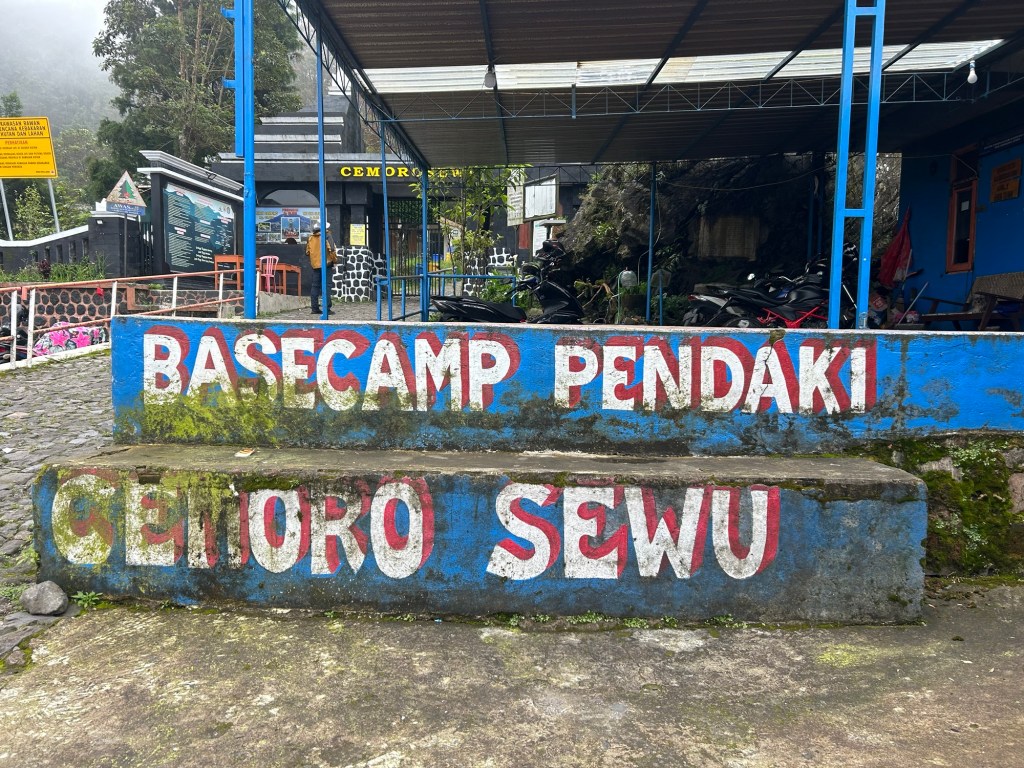
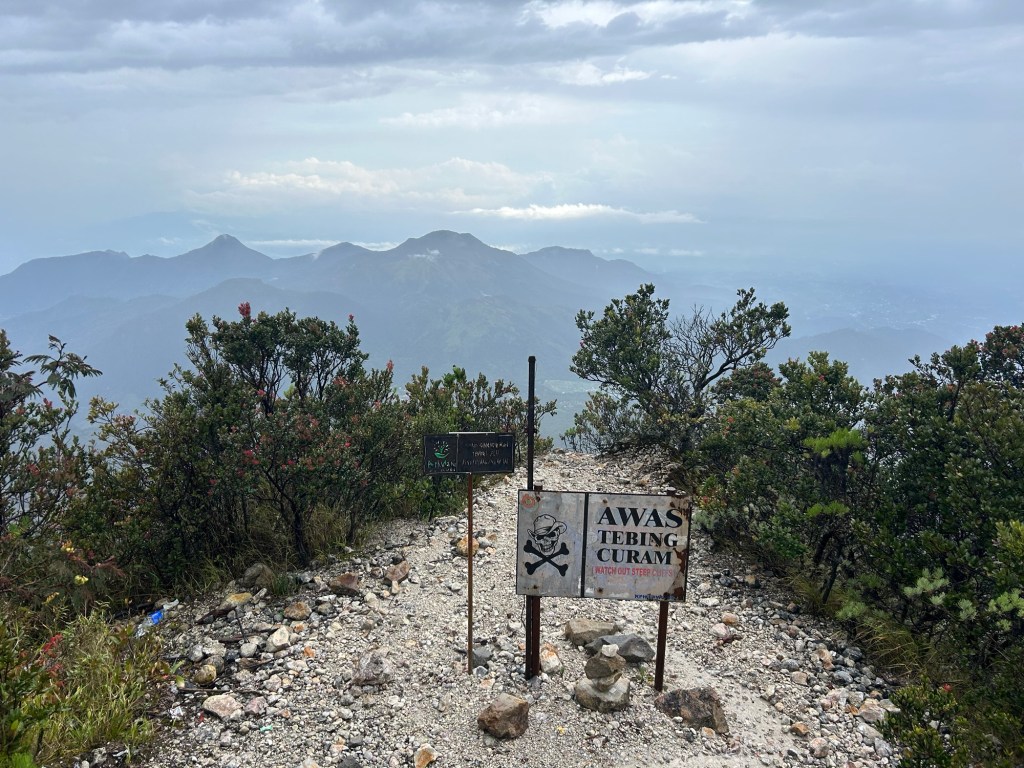
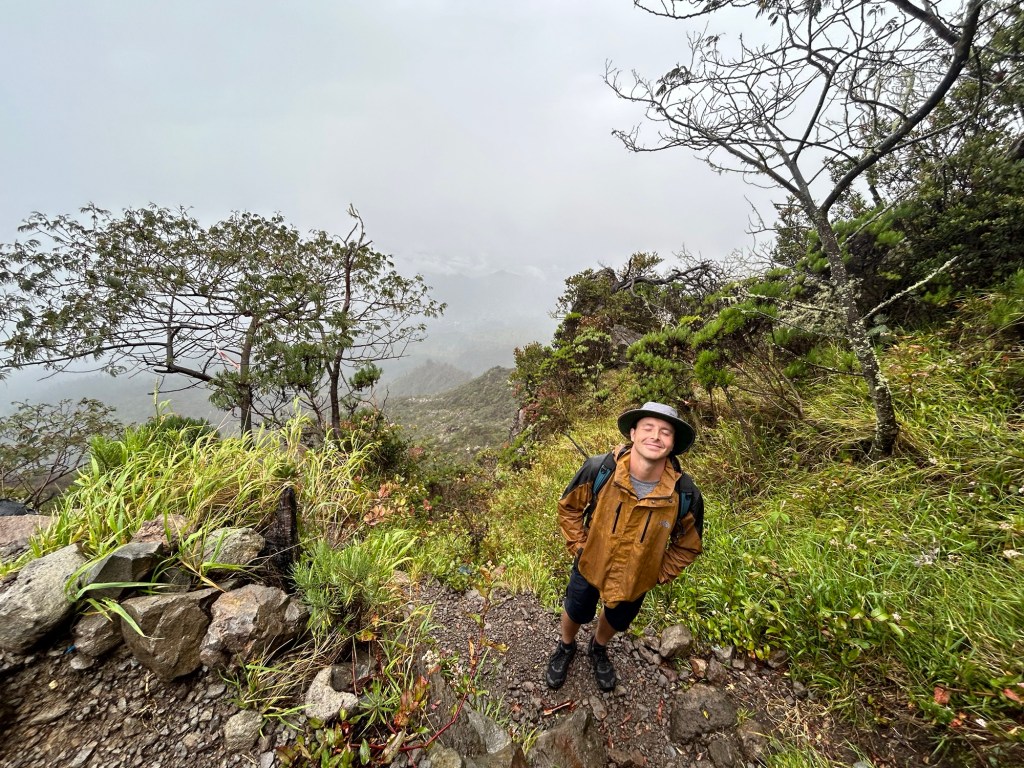
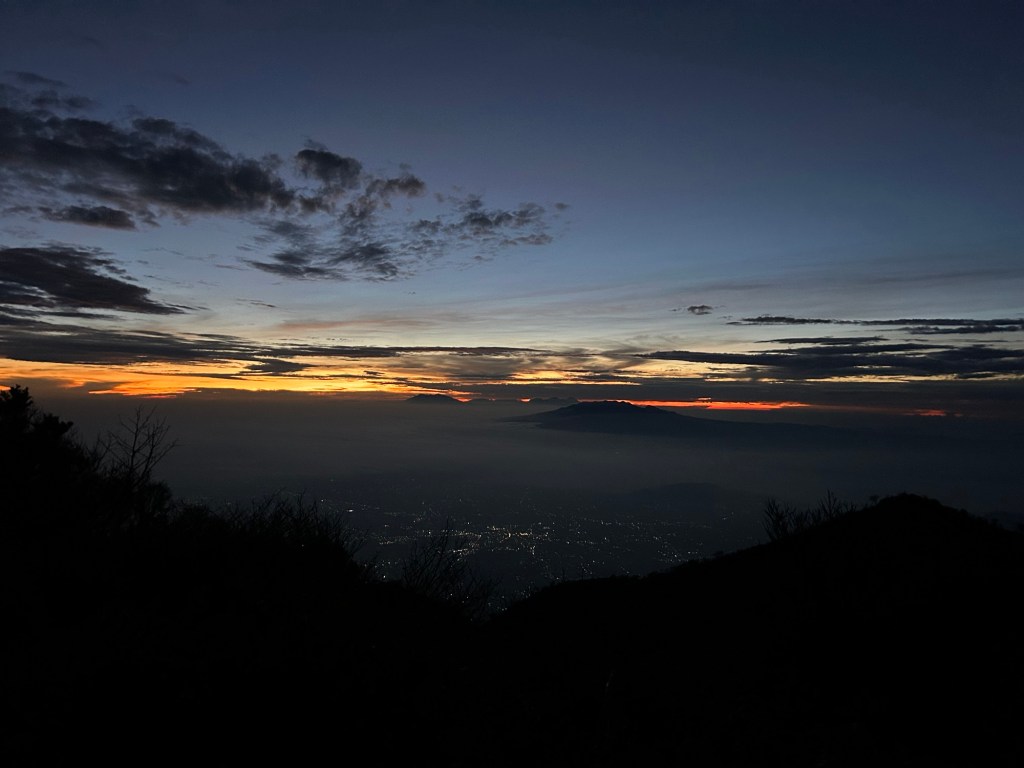
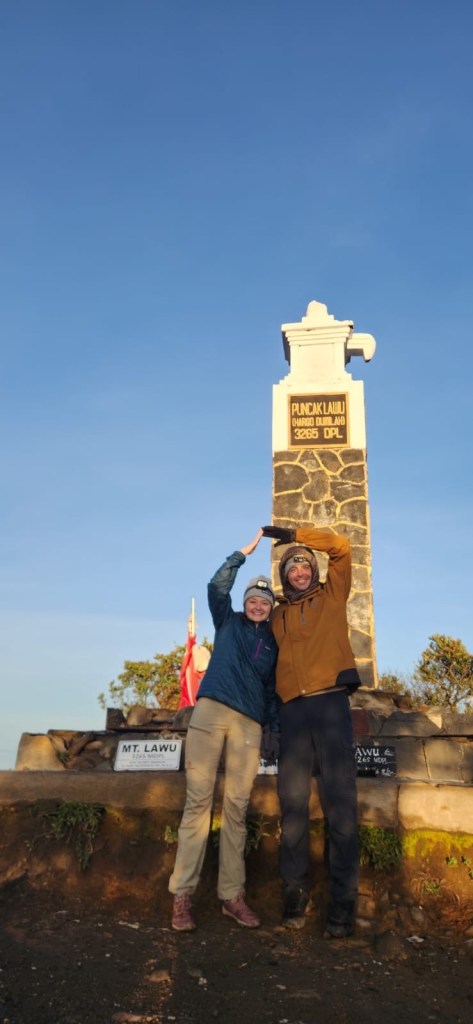
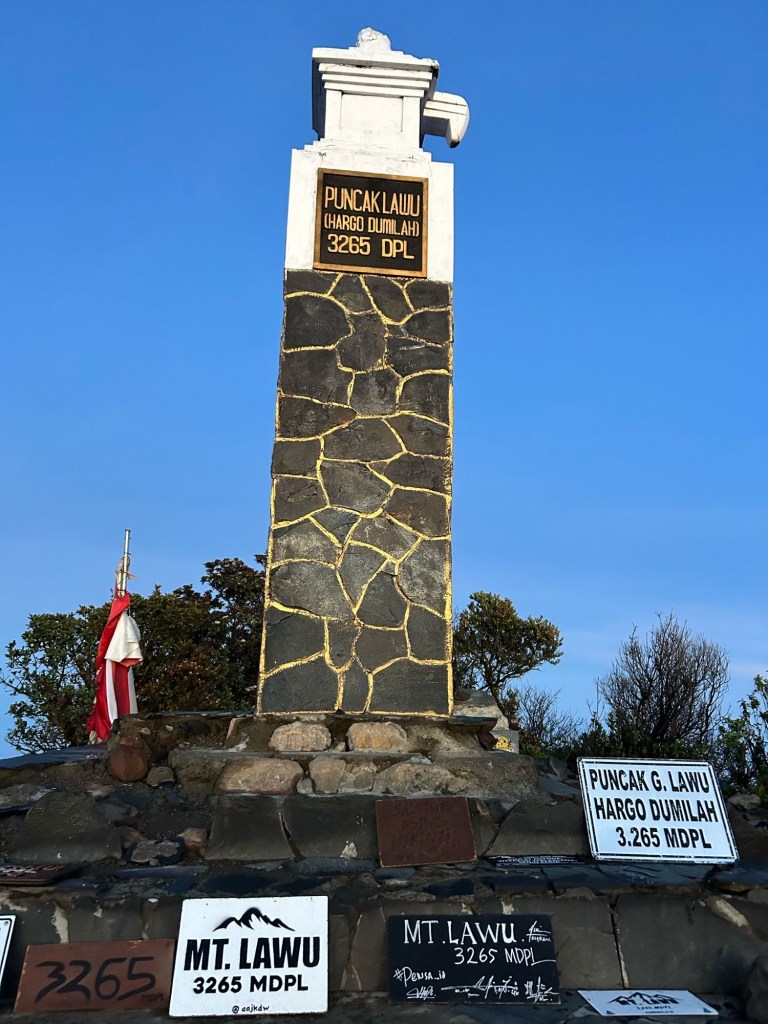
On Java, we also endeavoured on a 3 hour drive east of Yogyakarta to hike Mount Lawu. This was an overnight trip to the summit and back. We were informed this is more of a local’s hike, and we were lucky enough to be the only foreigners on the trail. We ventured through a forest trail and up the steep dormant volcano, experiencing torrential rains near the top. We camped near the summit and in the morning, finished the final stretch where we reached the final summit at 3,265m, and caught an incredibly beautiful sunrise.

Mount Lawu base camp.
Post rainstorm and soaking wet, but still all smiles.
Mount Lawu sunrise.
Summiting Mt. Lawu for sunrise.
Mount Lawu summit marker.

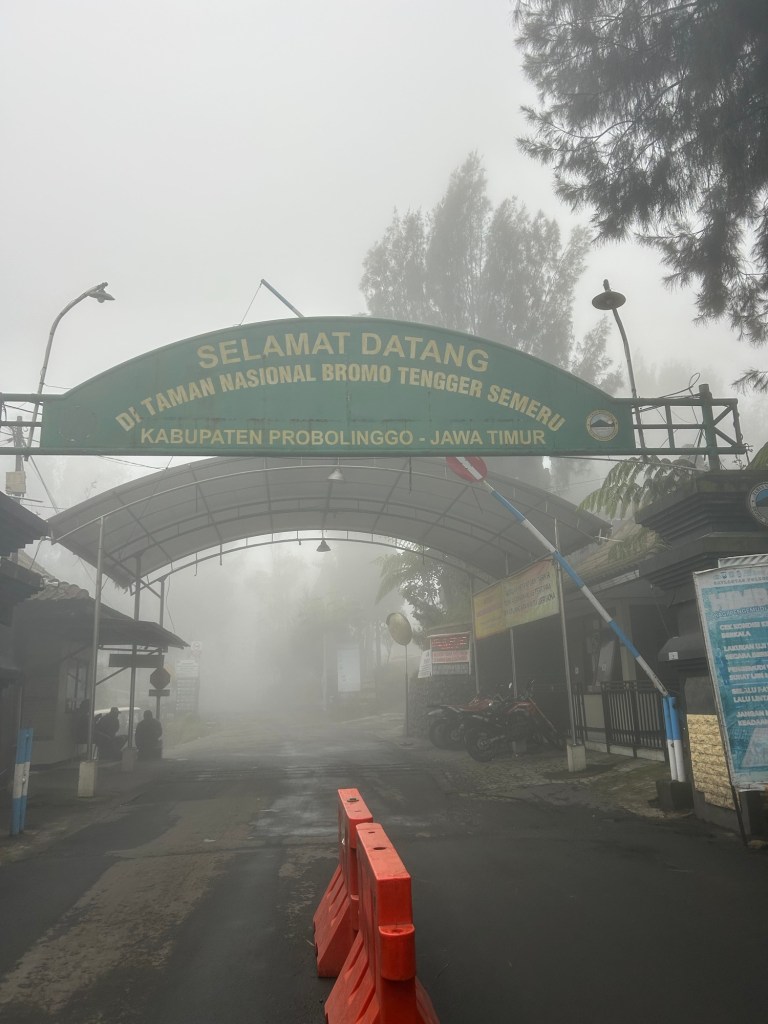
We continued our journey to another one of Indonesia’s most famous active volcanoes, Mt. Bromo which lies within the Bromo Tengger Semeru National Park. We trained to a local town called Probolinggo, where we rented scooters and drove the approximately 45kms to Bromo. On the drive, we endured epic thunder claps, pouring rain, fog so dense you could not see more than 10m, and drove by several fresh landslides on the roadway, all while increasing in elevation from sea level up to the volcanic caldera, getting progressively colder, and damper.

The clouds roll in very fast around Mt. Bromo.
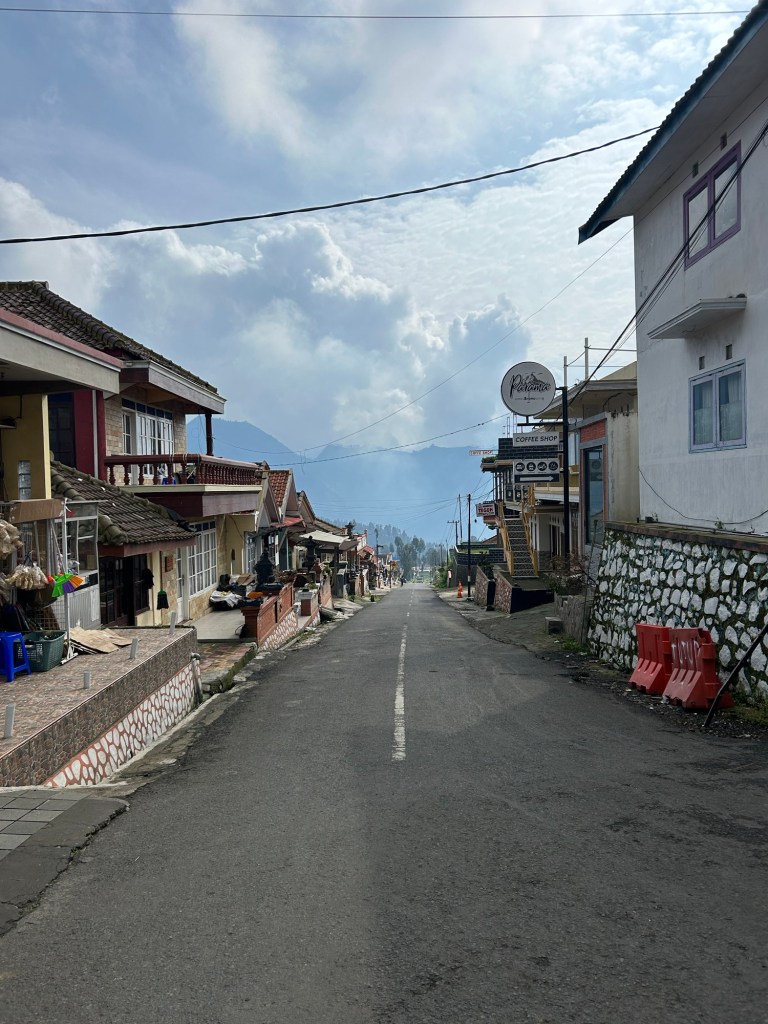
The quiet town of Bromo.

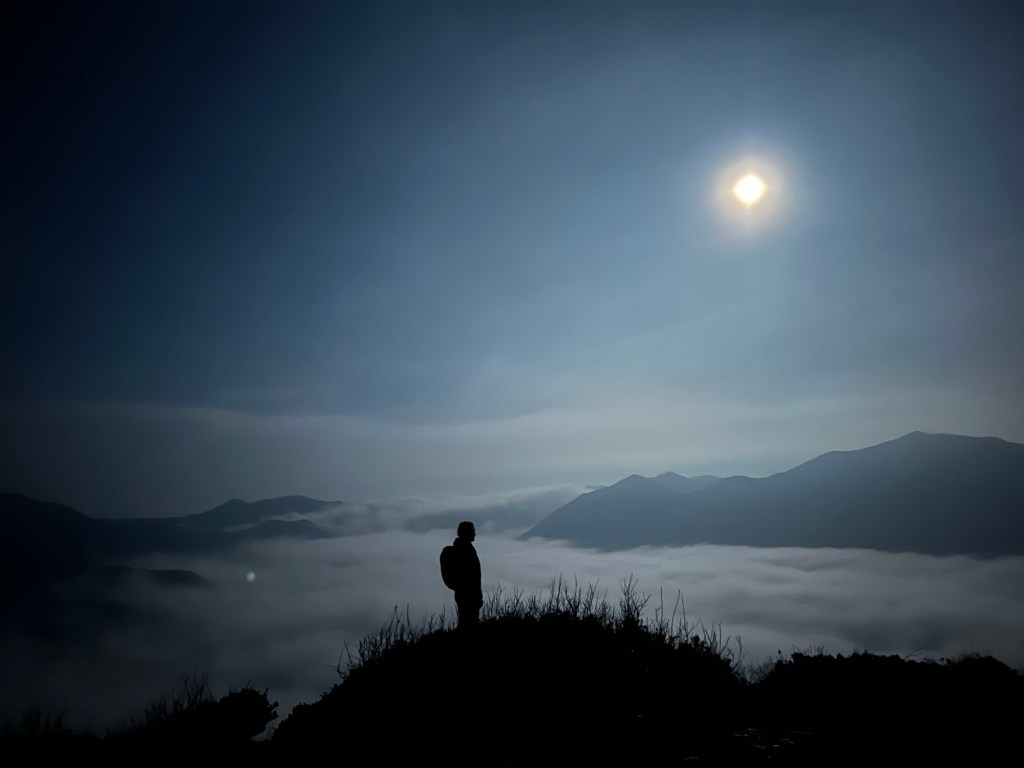
Most people walk from the town, however, we opted to wake at 3:00am, to gain access to a side entrance which takes you down a forested path in the dark lit by headlamp. We decided to do 2 hikes, the first, Mt. Batok, neighbouring Mt. Bromo. We made it to the base guided by headlamp and the All Trails map, after walking the 2km “sea of sand,” which is a large plain of volcanic ash. We were the only ones on the mountain going up and down, and summitted at 5:45am waiting to view the most surreal sunrise we’ve ever experienced. We could see the jeeps and lights of other travellers and hikers in the distance at other viewpoints, but had Mt. Batok all to ourselves!

Waiting for the sunrise on top of Mt. Batok.
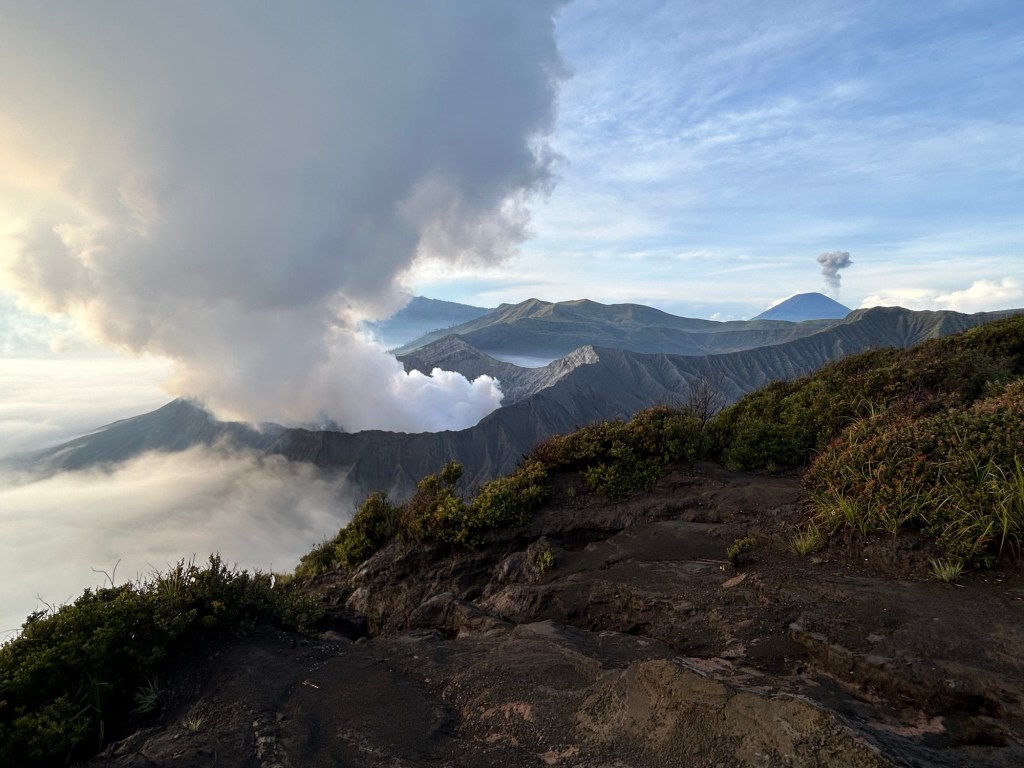
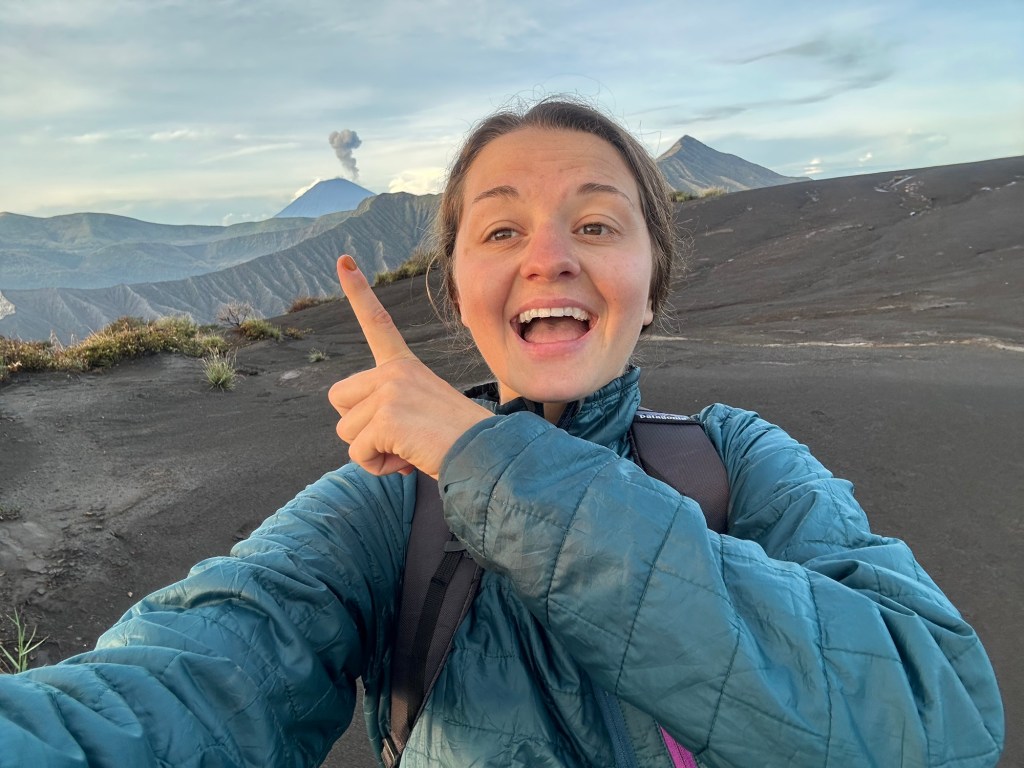
Views of Mt. Semaru, Indonesia’s largest volcano, erupting.
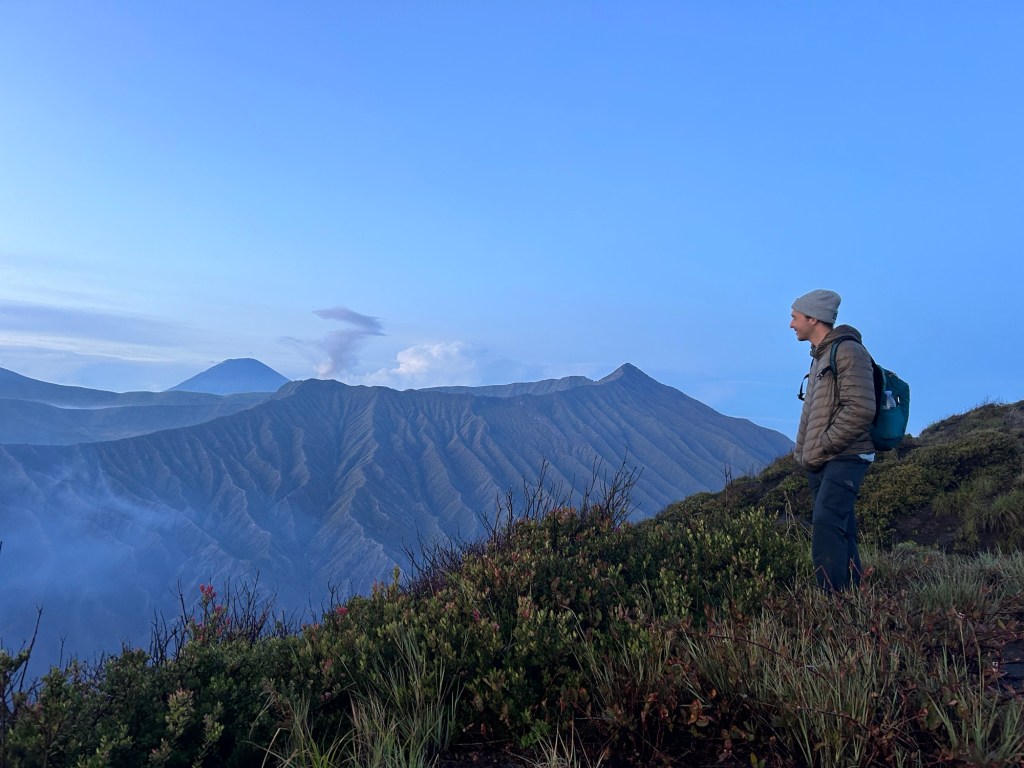
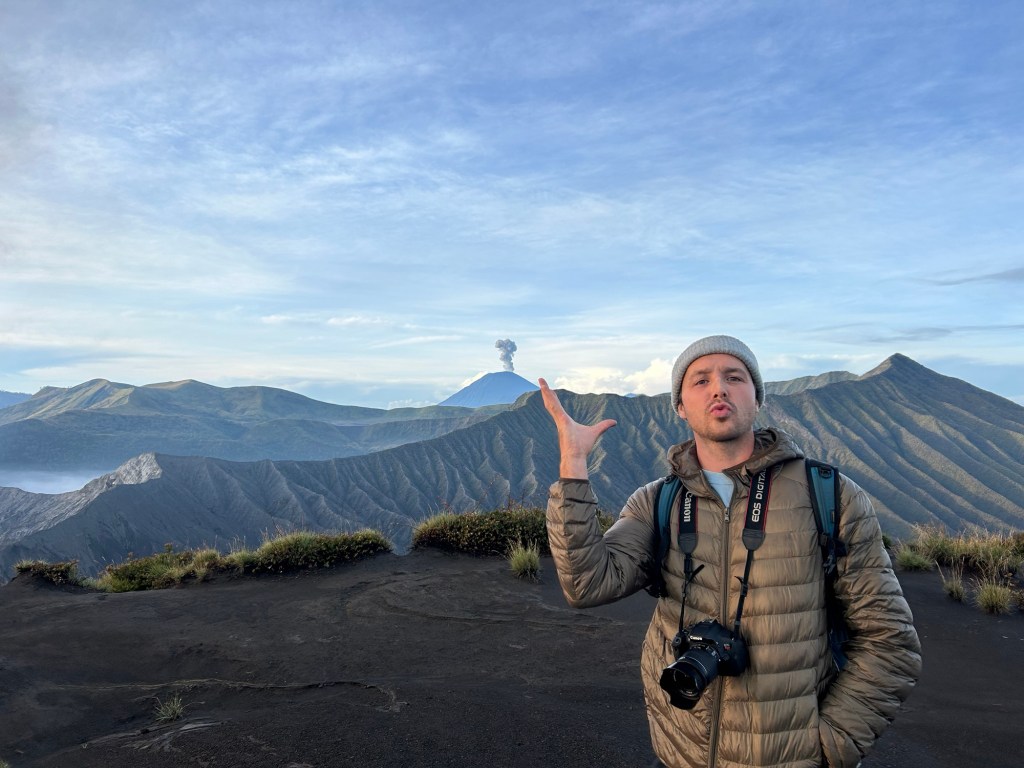
Mt. Bromo with its constant stream of sulfuric smoke, and Mt. Semeru erupting in the distance.
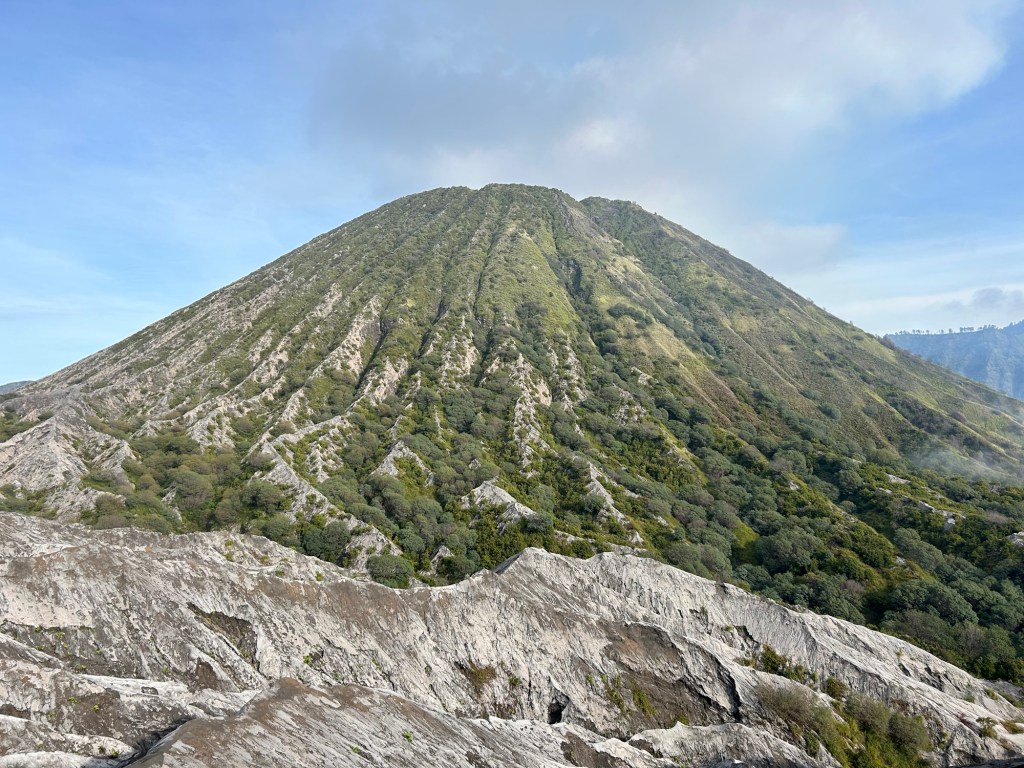
Looking up at our hard work & Mt. Batok from the base!

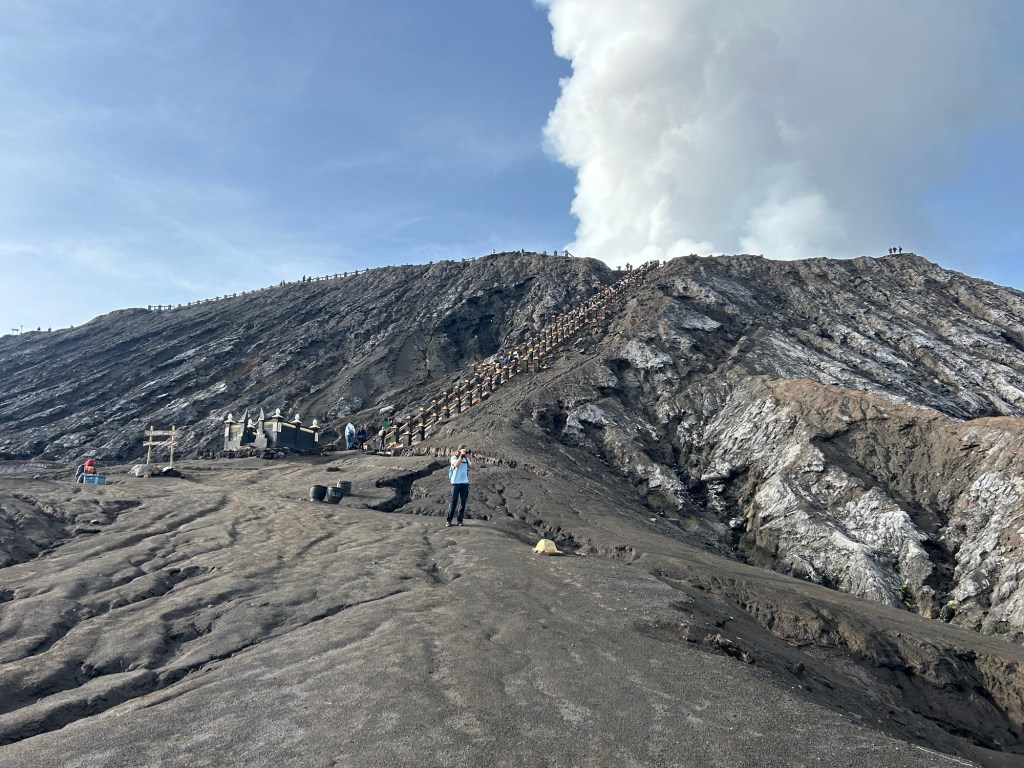
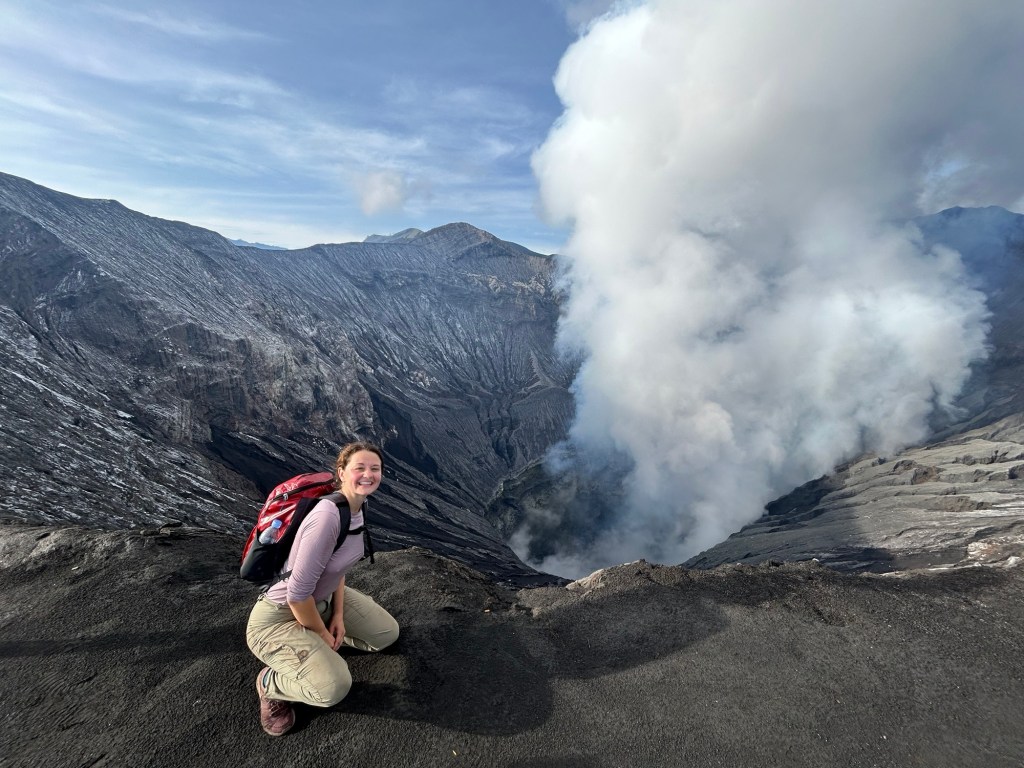
We descended and started our trek to the neighbouring Mt. Bromo, which draws huge crowds directly after sunrise. But since we arrived so early, we were one of the first groups to reach Mt. Bromo. With our legs a little shaky, we climbed the approximately 250 steps to reach the crater rim, able to look directly down into the crater, seeing smoke & steam, while hearing the almost jet like engine sounds of bubbling fluids and gasses.

Stairs heading up to the crater rim.
On top of the Mt. Bromo crater rim looking into the crater.
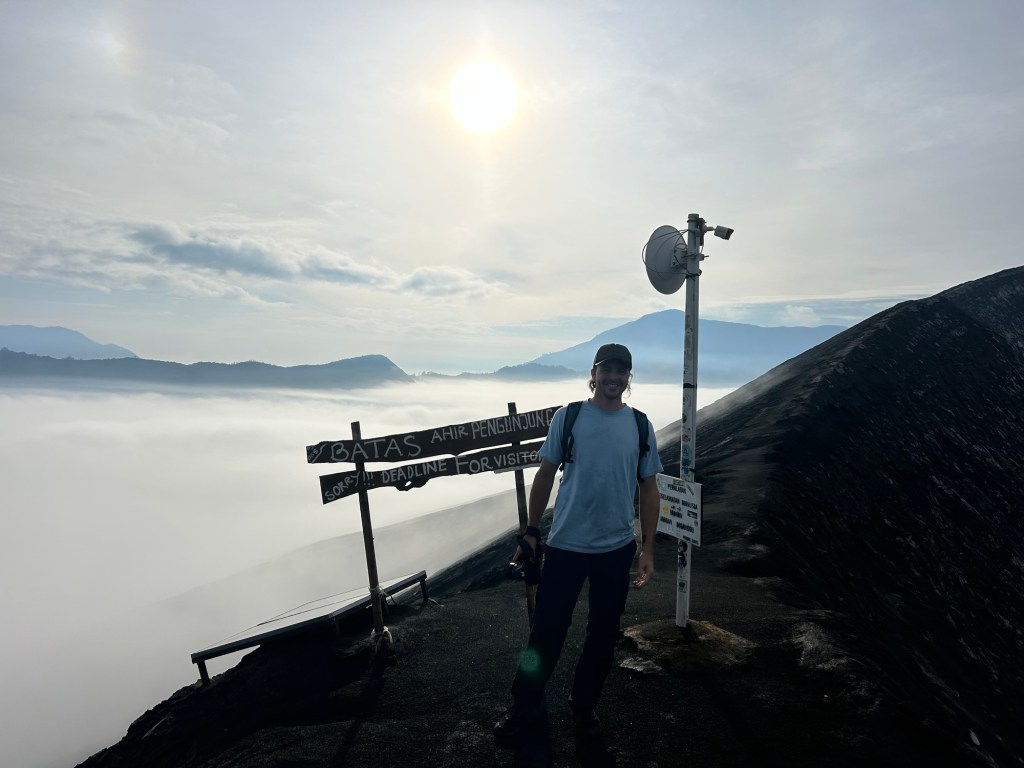
On the Mt. Bromo crater rim, at the “deadline for visitors,” sign.
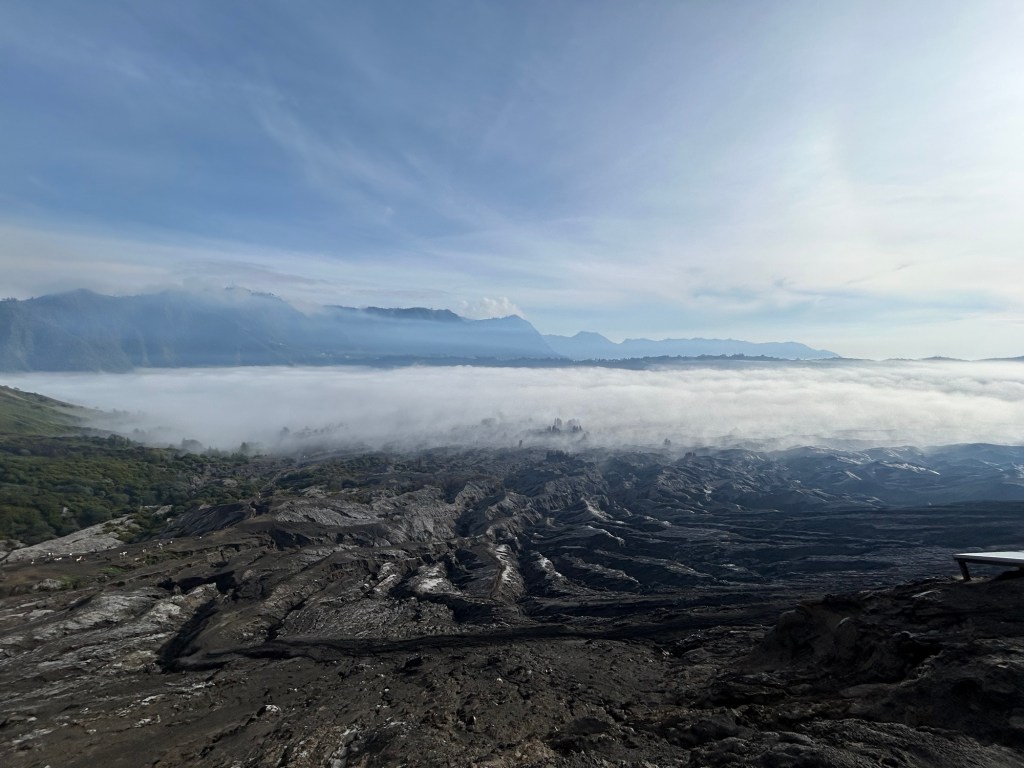
Surrounding views from the crater.

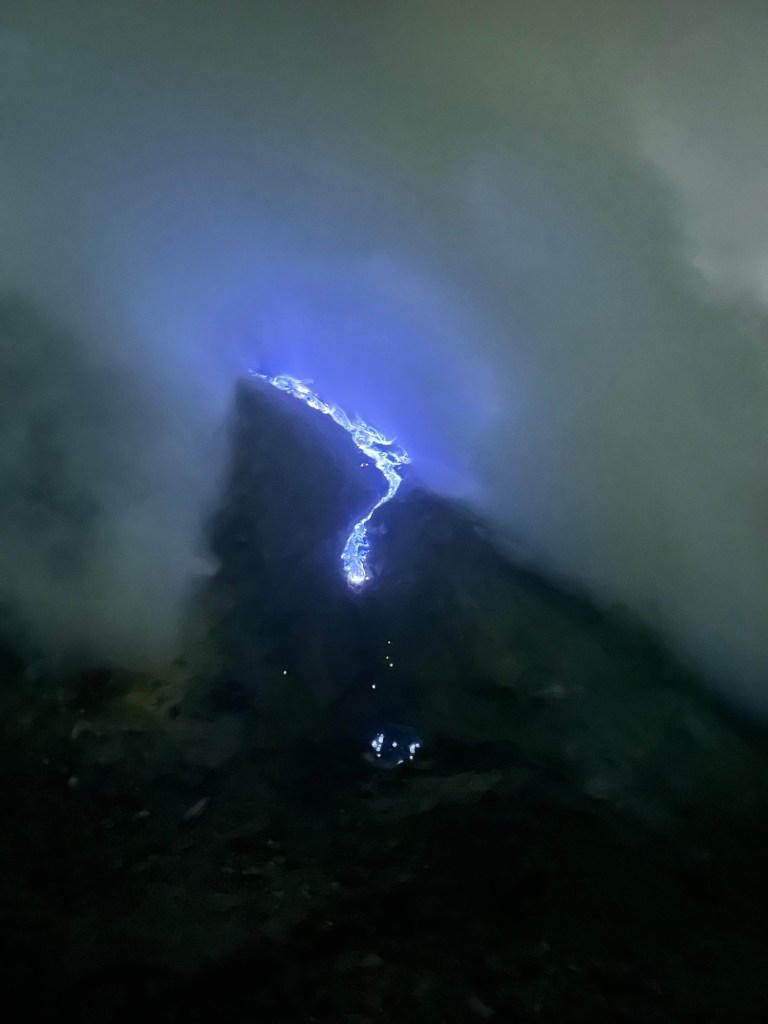
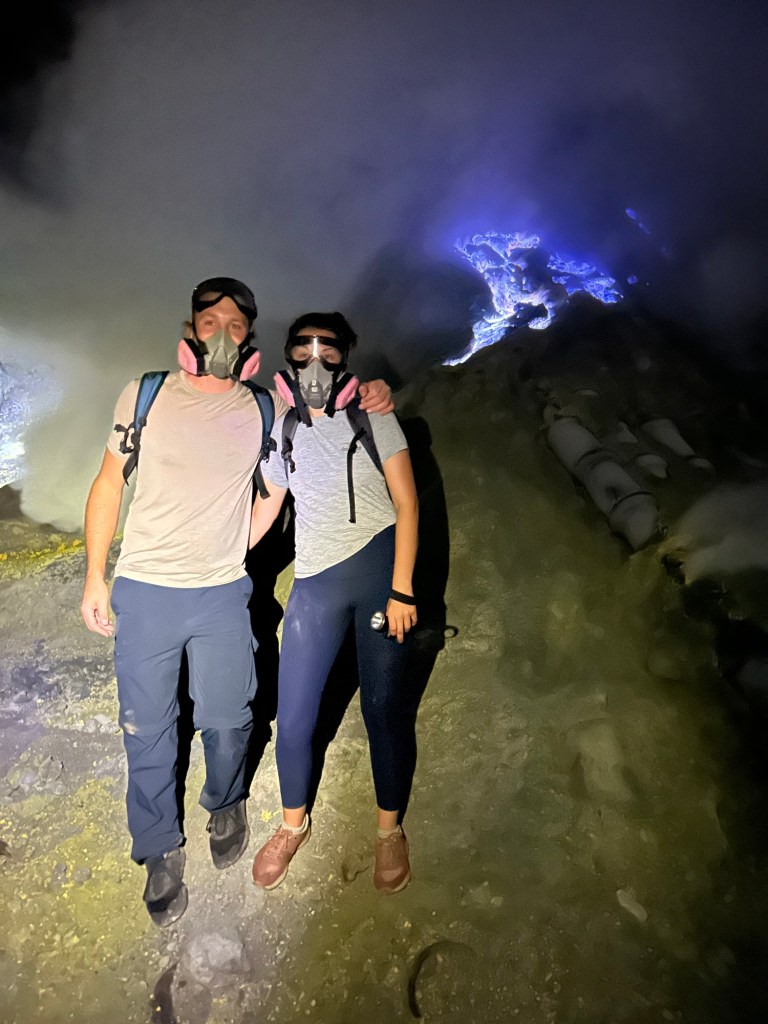
The next evening, we capped off our hikes on Java with a stunning adventure to Mount Ijen, famous for its blue flames and sulfur miners who endure harsh working conditions.

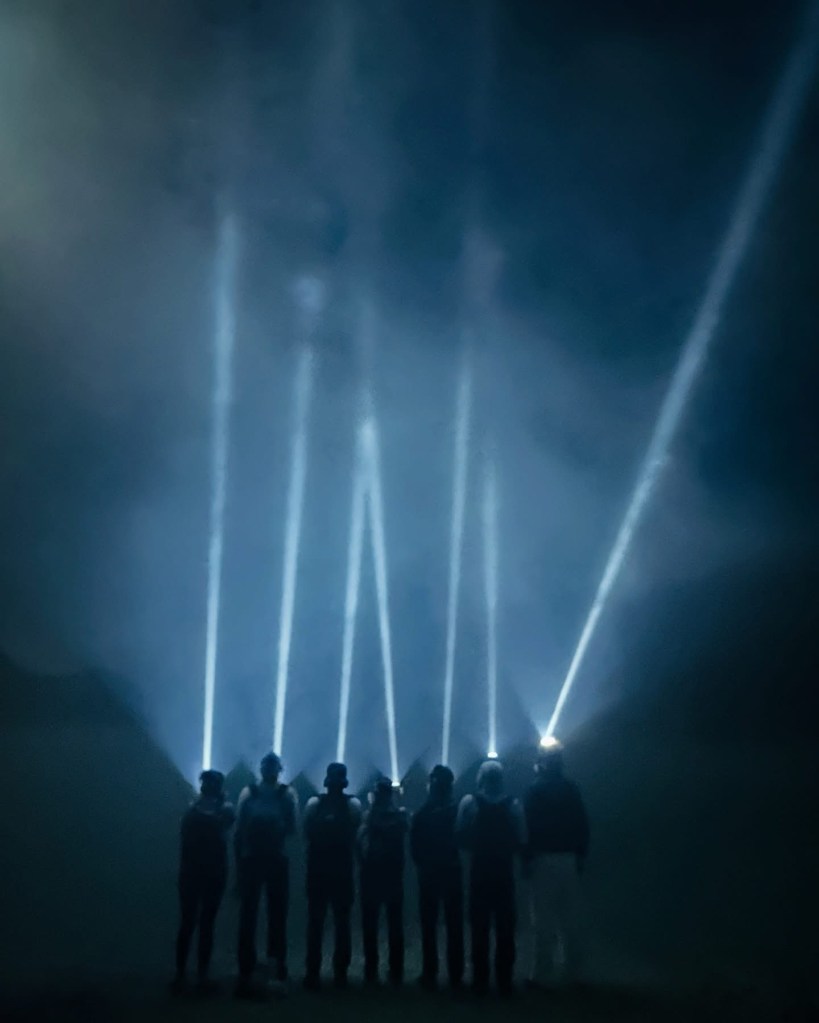
We trained to the neighbouring city of Banyuwangi, where we had a quick 1 hour nap and were picked up at 11:00pm to start our adventure. We arrived at the base and began the 3km hike to the crater rim at 2:00am. There were approximately 500 people doing the hike on this day. We were very fortunate to get a guide who was very energetic, and we were able to finish the uphill push to the crater and ascend into the crater at least 30 minutes before any other groups had arrived. The trek was tough, but we made it to the blue flames without any other tourists and were able to see it and get some great photos.

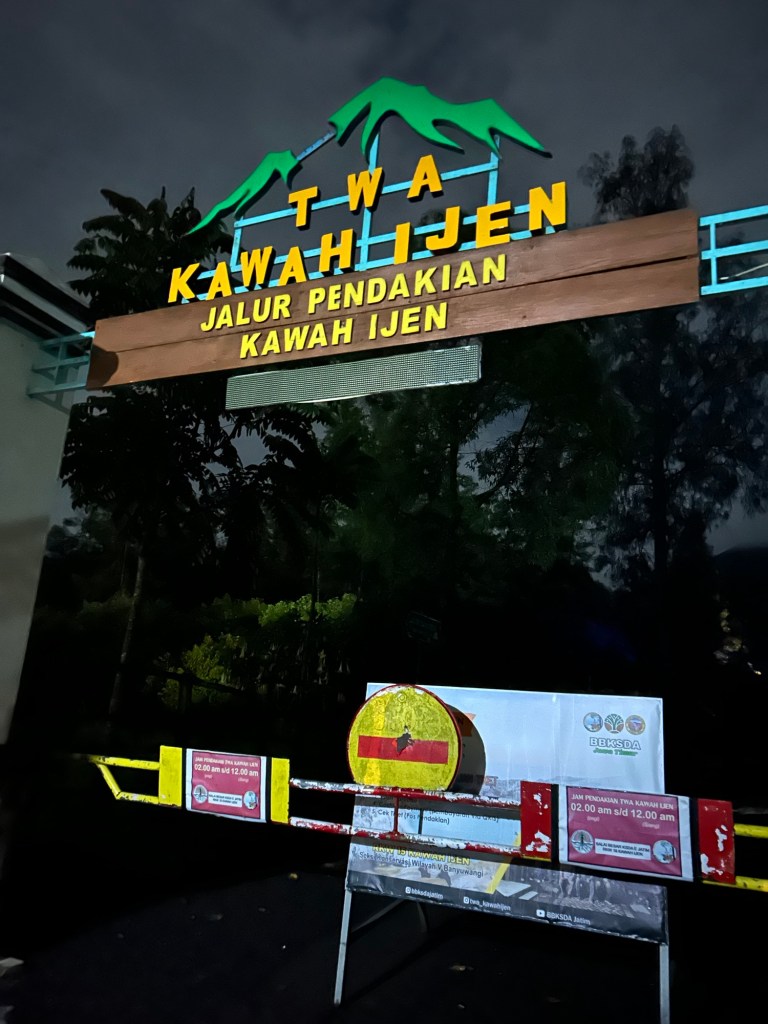
Base camp for Mt. Ijen.
The Mt. Ijen blue flame occurs when sulfur gases emitted by the volcano ignite spontaneously in the air, creating a vivid blue glow.
Group headlamp shot at the blue flame.

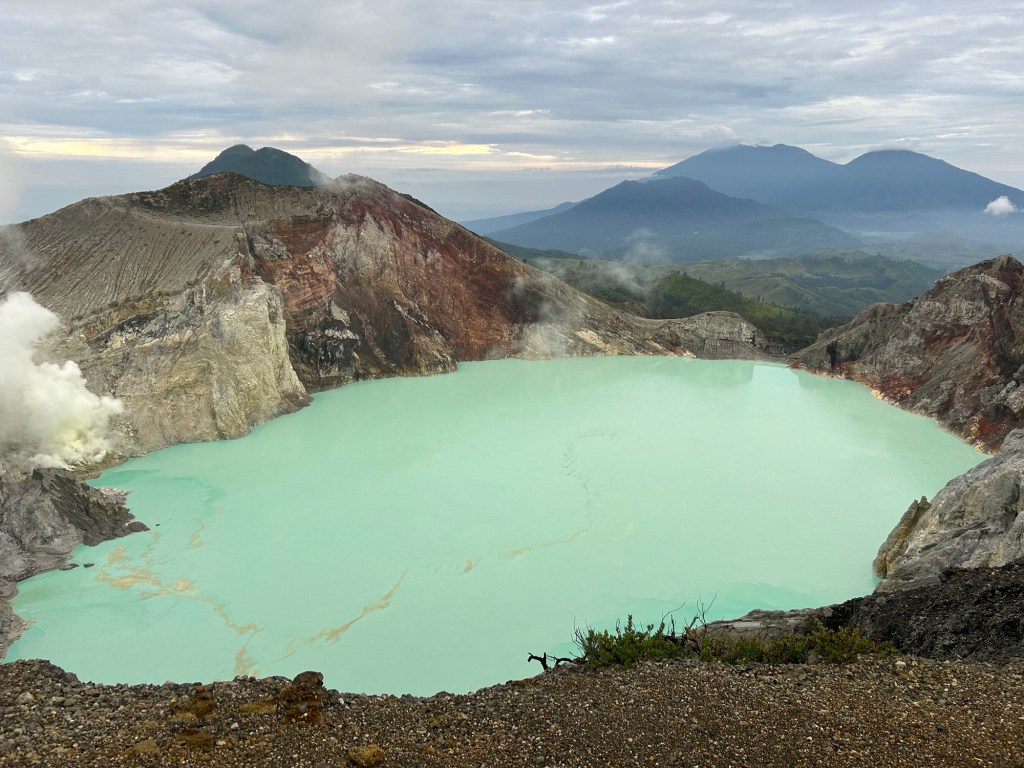
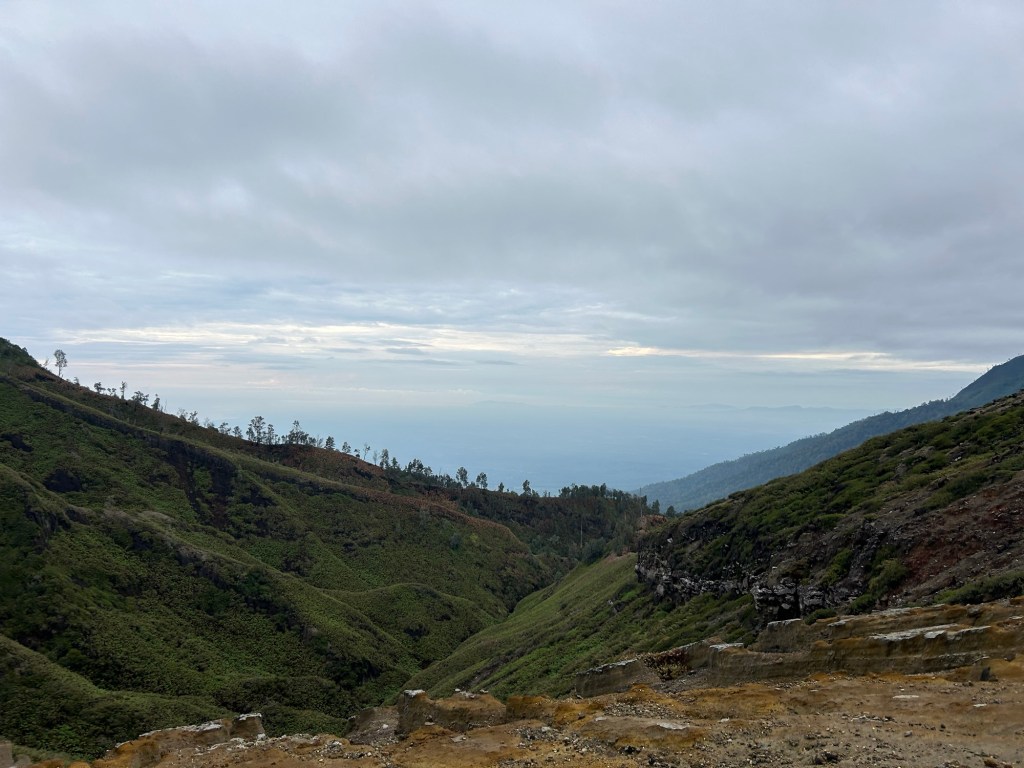
After approximately 30 minutes, others arrived and we could see a sea of headlamps coming into the crater. While we ascended, we had to pass by and get around people on narrow rocks. Once we made it out of the crater, we continued the hike to the summit, and made it in time to catch the beautiful sunrise, and look into the crater.

Views from the crater rim into Mt. Ijen crater.

Bali — Beach Days & Exploring the Outdoors Above and Below the Water

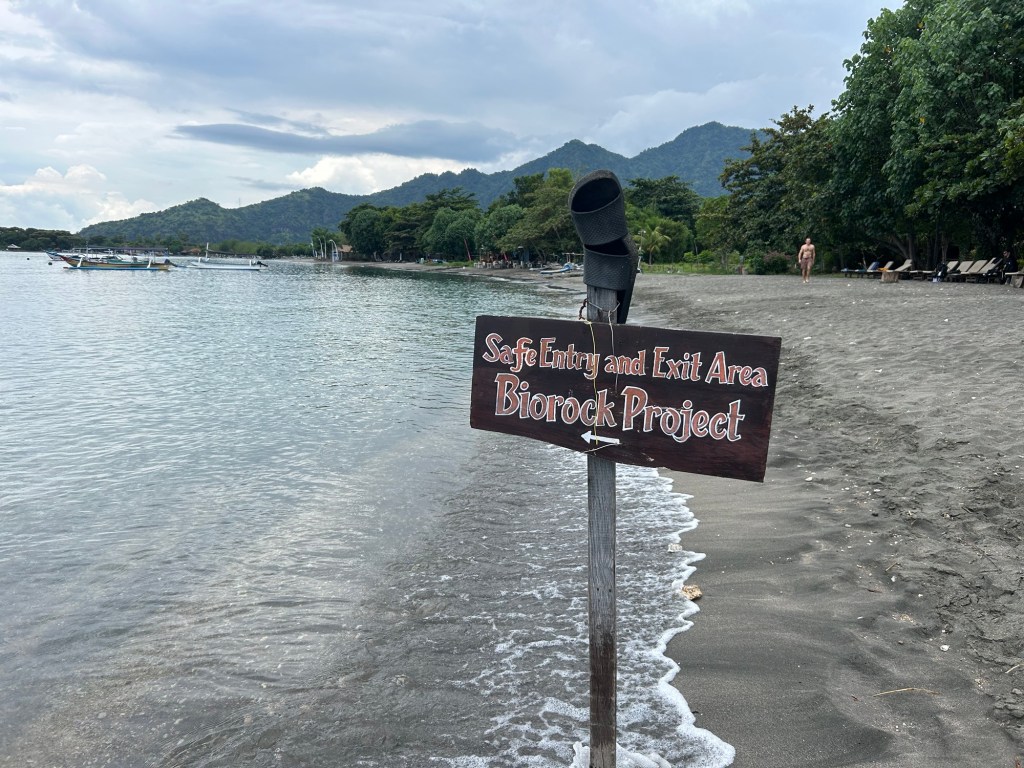
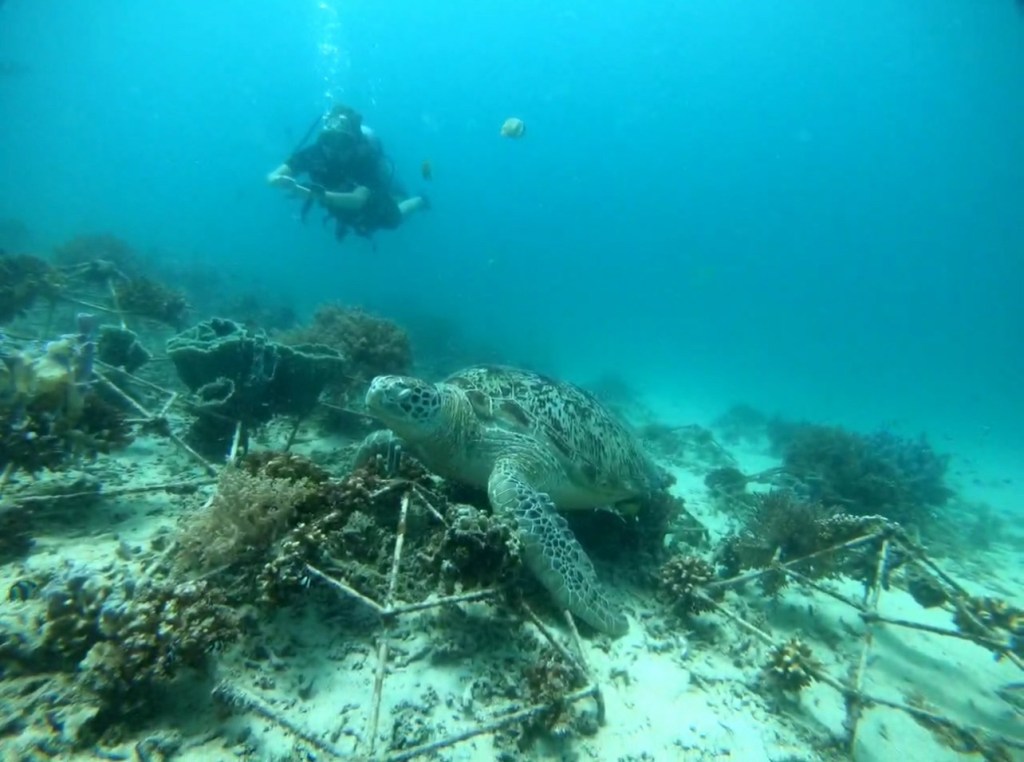
In the 1990s, local Indonesian fisherman were participating in dynamite fishing. Efforts began in the 2000s to restore the reefs, and the Biorock Regenerative reef project is one of those efforts. This project is a coral restoration technique that utilizes low-voltage electrical currents to stimulate the growth of limestone structures, providing a foundation for coral reefs to thrive.
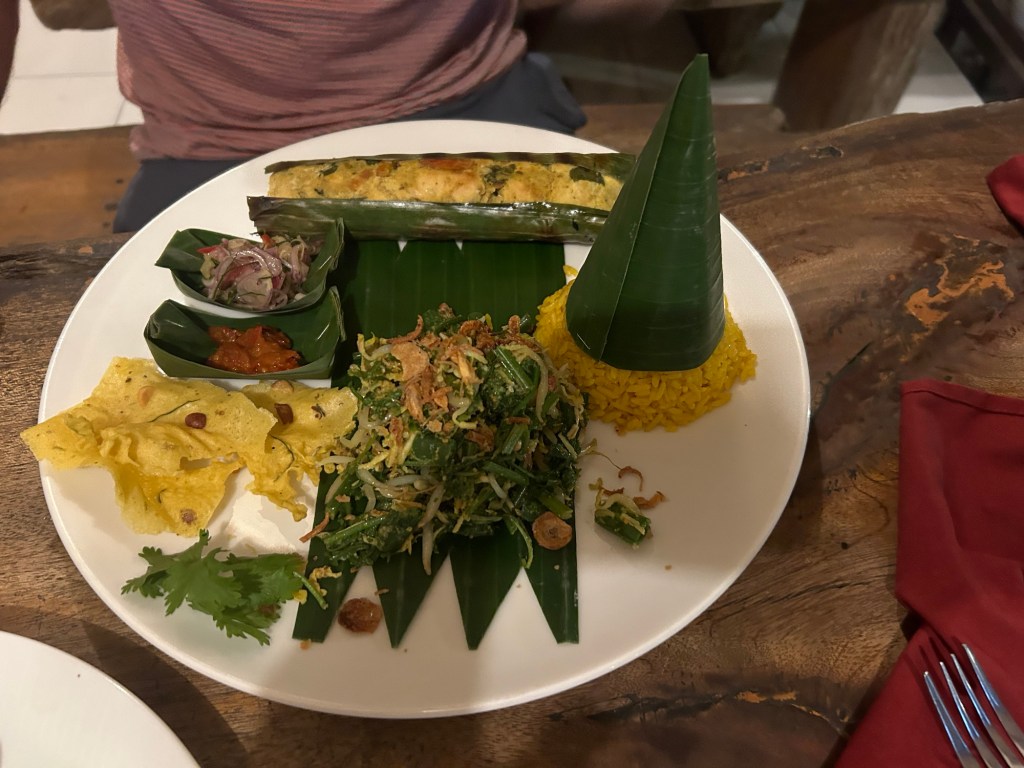
Enjoying a local dinner of
Nasi Tumpeng.

We took the ferry from Java to Bali, and spent our time exploring the island by scooter, diving, and spending time outside in nature. We started our time on Bali in the small coastal village of Pemuteran. We spent the majority of our days diving, mostly off of Menjangan Island, which is a small uninhabited island and is part of the Bali Barat National Park, known for its crystal-clear waters, vibrant coral reefs, and rich marine biodiversity. We were able to do 5 dives in the park, and enjoyed the calm waters and stunning marine life, some highlights being turtles, eagle rays, and octopuses.

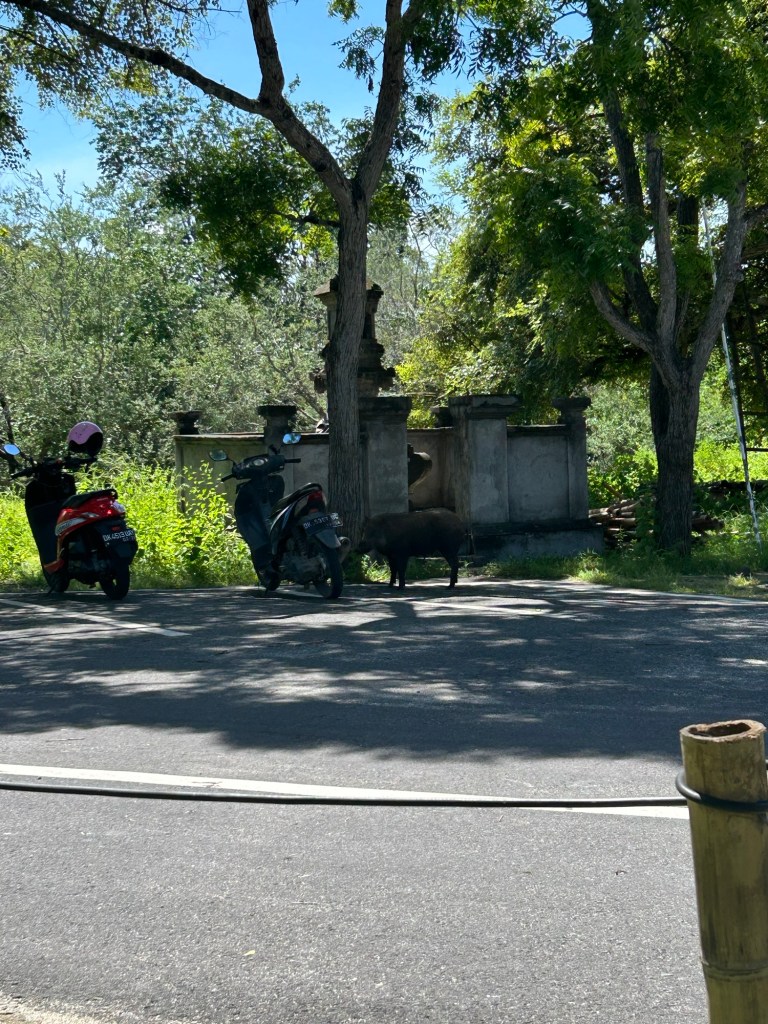
Wild pig sighting on our scooter safari.
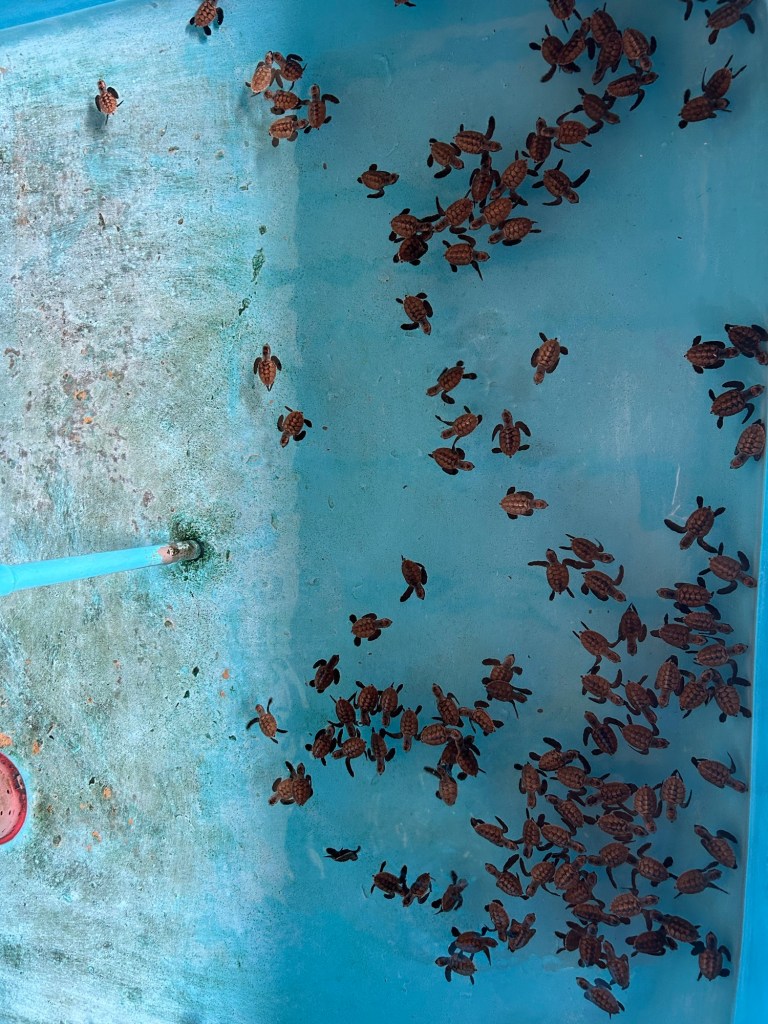
Pemuteran turtle hatchery is a community-based conservation initiative aimed at protecting endangered sea turtles.

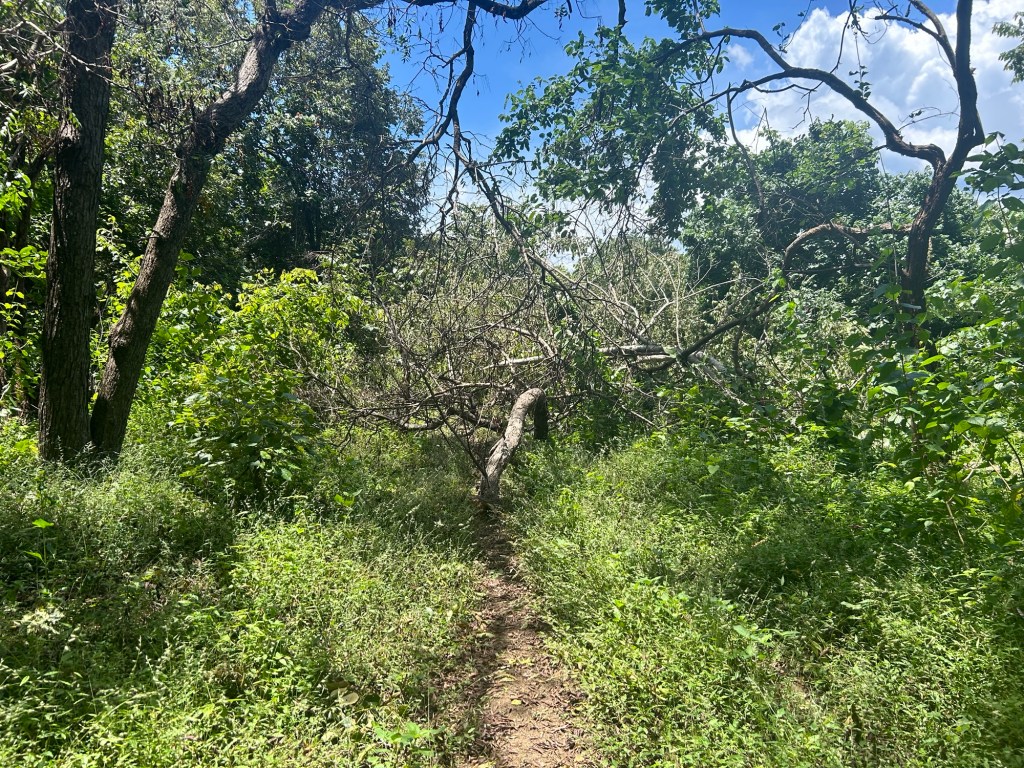
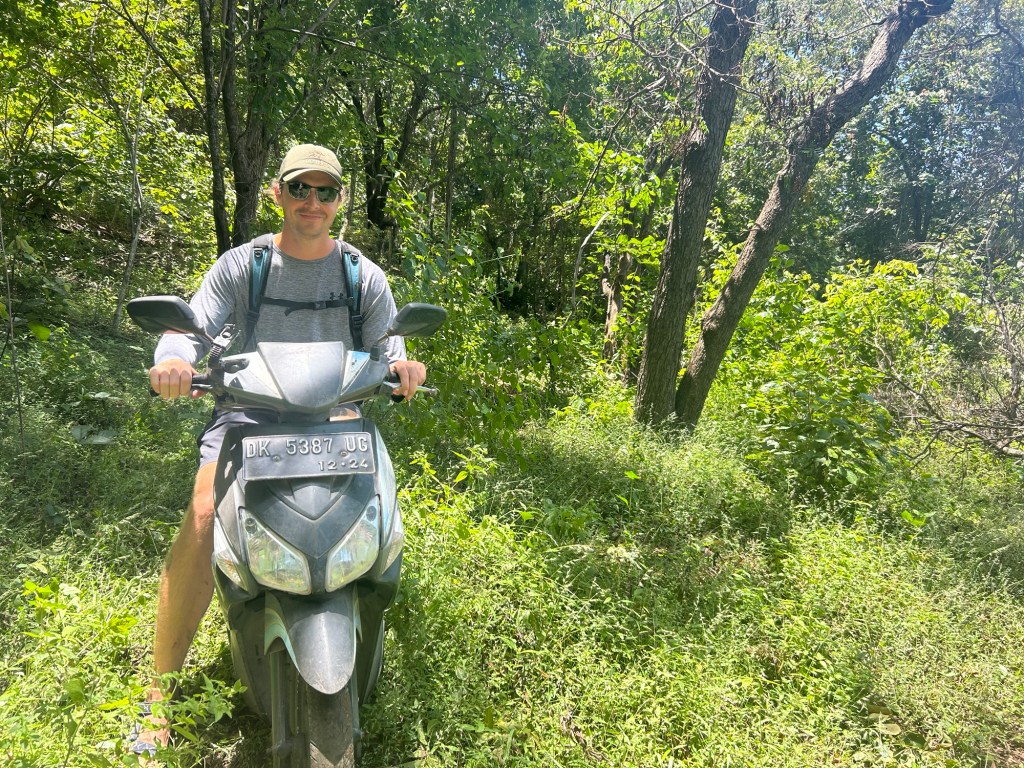
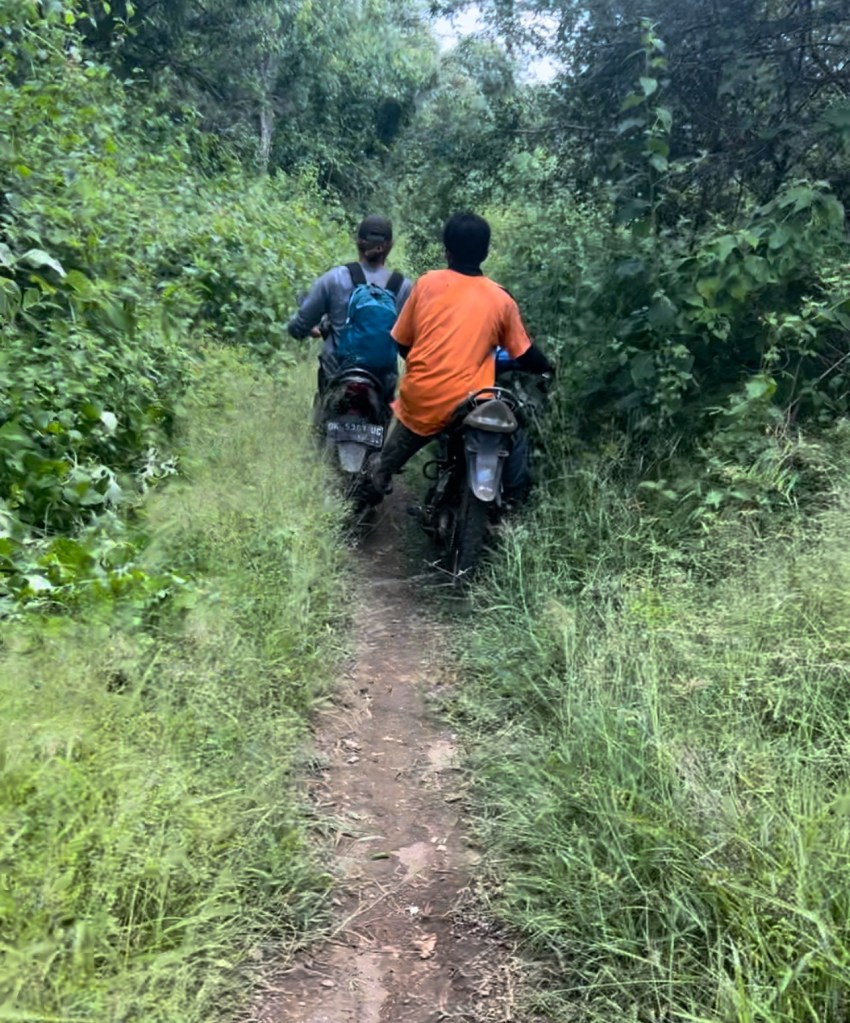
We also ventured to the West Bali National Park, where we rented scooters and went on a wild safari. Prior to our drive, we arranged the route, and our guide checked both of our rental scooters and confirmed we had enough gas (we indeed, did not for the route he had planned). Along the way, we encountered monitor lizards, wild pigs, and elusive black monkeys. The day turned into quite an adventure as we left the safari cement path, and navigated on scooter through thick brush, battling fallen trees and (I’m certain snake infested) tall grasses.

As our guide continued to tell us “we’re almost there,” and that we just needed to proceed to drive deep into the brush on our rented scooters to avoid the fallen trees. I can confirm, I drove with my feet on the dashboard for the thick grasses.
Mat maintaining high spirits.

As we continued, our guide pressed that we must go on because we are “almost there,” to which we asked, “almost where,” because as we thought the trail was going to get better, it progressively got worse and worse, and steeper, and required us to drive deep into the forest at times and through taller grasses with less or no road. We decided it was time to turn back, but our guide continued to press us to continue, we said no and turned back, which is where Mat ran out of gas deep in the jungle. With monitor lizards crossing, high grasses and knowing we were surrounded by exciting reptiles and snakes, our guide offered to leave us while he went for gas, to which we replied no, and we finally made it out, unscathed, while he drove off to get us gas and we swam in the ocean.

Mat getting guided out of the jungle the local way when folks run out of gas – using the foot to push, while driving the scooter.

Afterward, we hiked up Bukit Kursi Temple for a beautiful sunset, making it a memorable day.

The end of day hike at Bukit Kursi Temple.

Moving to the eastern coast of Bali, in Tulamben, we rented a hotel directly on the water, which allowed us the opportunity to participate in our first real shore diving experience. We explored both shore and boat dives, diving on the famous USD Liberty wreck, where we saw our very first shark, a white-tip reef shark and electric clams. We were able to walk from the hotel, gear up and enter the water, which had a beautiful home reef, where we spotted several barracuda, eels, and a black-tip reef shark. Visibility varied, but it was still an incredible experience. We also snorkeled in Amed, encountering turtles and colorful fish, acquired many jellyfish stings and had an afternoon driving through torrential rain on scooter – what an adventure!

Ocean views from our hotel.

We finally made it to Denpasar, which we used as a hub to travel to the other islands we visited throughout our trip. While we didn’t spend much time exploring the city itself, it served as a convenient base for diving into the more remote and adventurous parts of Bali.

Flores — Komodo Currents & Dragons: Diving Deep in Flores

We left Bali the evening before Nyepi, the Balinese New Year and Day of Silence, when the entire island shuts down—airport closed, no lights, no traffic, no sound. It was the perfect time to slip away quietly and begin our next adventure. A short flight brought us to Labuan Bajo, a bustling little port town that serves as the gateway to Komodo National Park.

We had signed up for a 4-day/3-night liveaboard with Blue Marlin Komodo, where we were scheduled to dive sites in the central and northern regions of the park. 

We were aware divers from around the world come to Komodo to experience the current.  Unbeknownst to us, we had scheduled our first liveaboard during a half moon, a lunar phase notorious for intensifying currents. Komodo sits between the Indian and Pacific Oceans, acting like a massive funnel that channels tidal flows between the two. This means wild conditions underwater—whirlpool-like flows, downcurrents, upcurrents, and drift dives that shoot you through coral canyons like an underwater roller coaster.

The currents tested us right away on our first liveaboard. Here is a summary and some highlights from trip 1 in northern & central Komodo:

Tatawa Besar was one of the wildest dives of them all. A full-on drift dive where currents changed directions mid-dive, visibility was low, and we were holding onto rocks as the surge tried to rip us away. At one point, Mat was dangling from our guide Harold and fellow dive partner Malow’s legs as they anchored themselves to the reef. Even the other guide, who’d logged over 1600 dives, said he’d never seen anything like it.

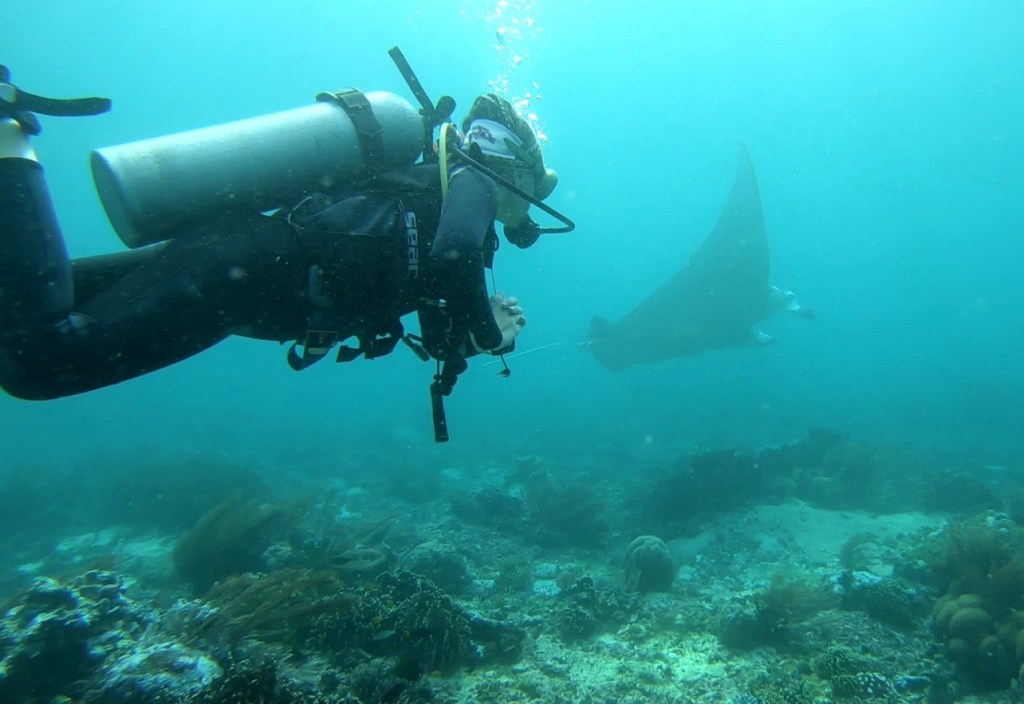
Mawan was magical in a different way. We dropped into the water and almost immediately met manta rays, massive and elegant, gliding overhead and circling us while we lay in the sand, trying to watch them as we navigated the current. One moment we were in awe, the next being pulled by a new current—only to spot more rays, and sharks.

Siaba Kecil delivered our first real taste of Komodo’s notorious drift dives, flying along a reef wall like underwater skydivers. We saw turtles, fought currents, and experienced the beautiful chaos of Komodo flow.

The Cauldron (a.k.a. Shotgun) was the ultimate current experience. After an above water briefing of what to expect, we did a quick descent, and immediately the visibility was poor. We were given the symbol we were entering the cauldron, where we were pushed upwards by the current, and the goal here is to choose a rock to hold onto to, to get the full experience of the current. As we elevated, we each were able to grab hold of a rock, and let the intense current coming into the channel hit us. Holding onto rocks while the current hit, my mask filled with water. We then all released and continued the dive to find the other group who had been separated from their guide. We made it through, saw rays and white-tip sharks, and felt like we’d passed some kind of diver rite of passage.

Crystal Rock, a pinnacle dive with a ripping current, was the most technically challenging. We had to climb along rock walls with our hands to reach a spot filled with big fish action—giant trevally, tuna, reef sharks swimming around us as we sat in the middle—and ended it with a safety stop surrounded by vibrant coral and a school of jackfish.

Every dive was unique, and every dive tested us.

So what did we do after surviving it all? We signed up for a second 4-day/3-night trip.

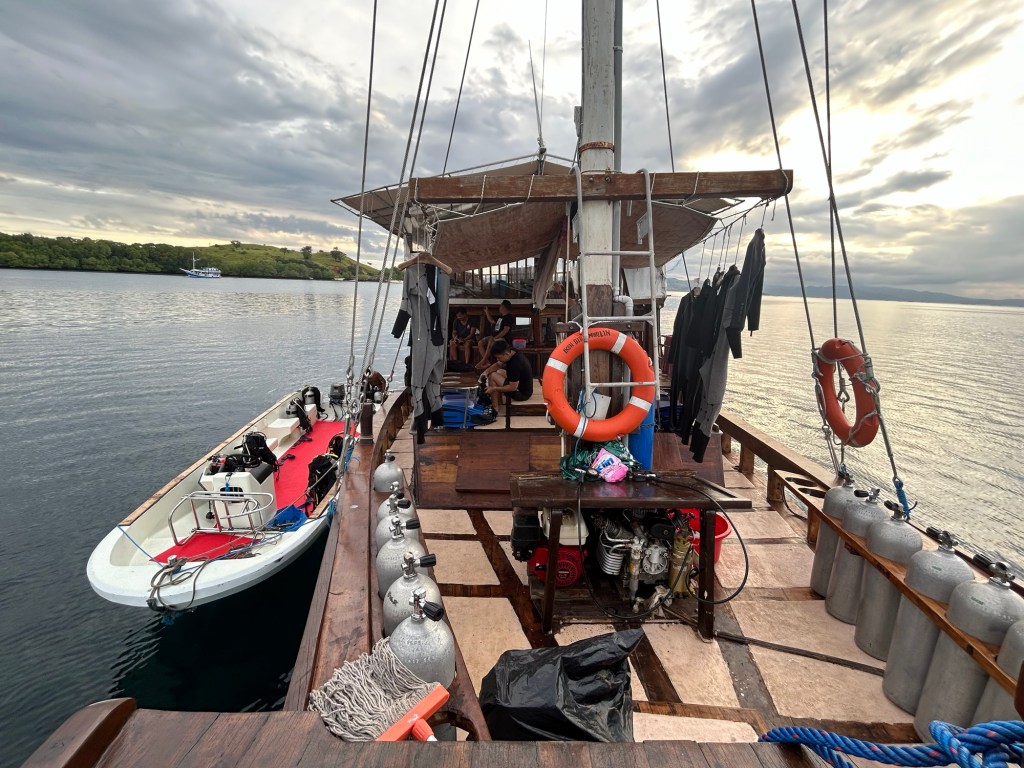
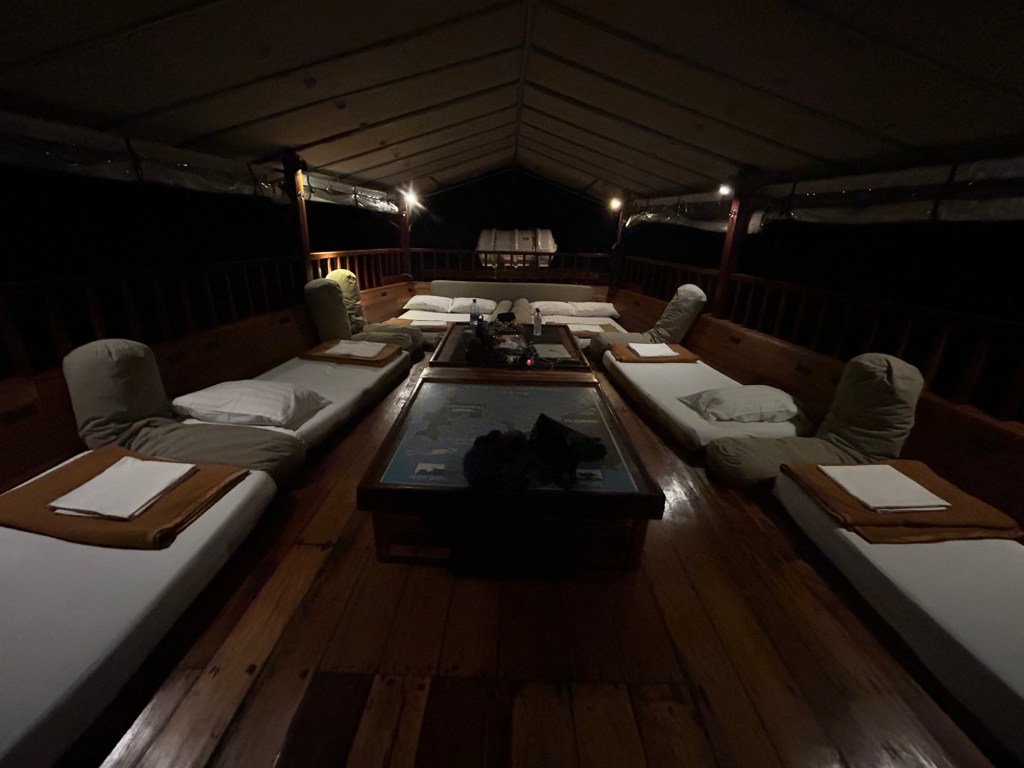
Sleeping arrangements above deck.

This time, we explored Southern Komodo, and the ocean offered us a completely different side of herself: calm, clear, and cool. The visibility was amazing, currents were nearly nonexistent, and we had two more unforgettable manta dives in much colder waters (thanks to the Indian Ocean influence). We revisited several of the same sites and experienced them in a totally new way. Same dive site, completely different dive.

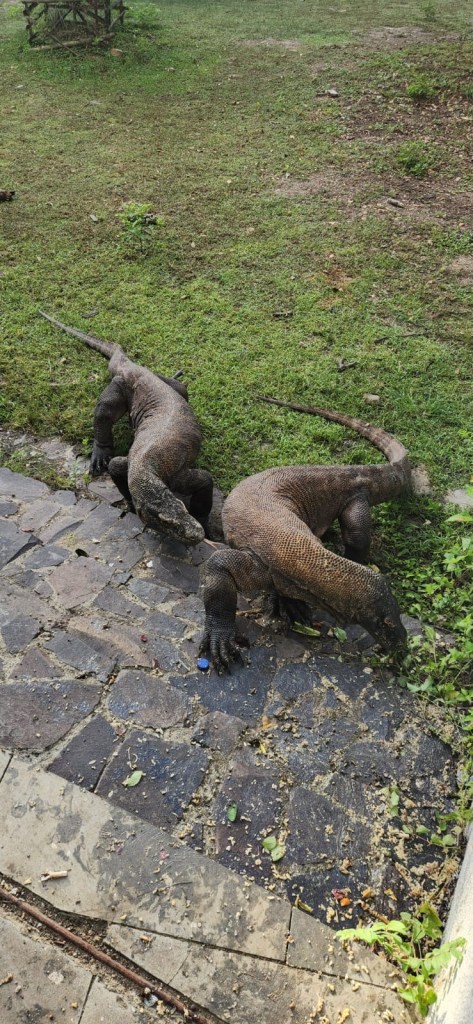
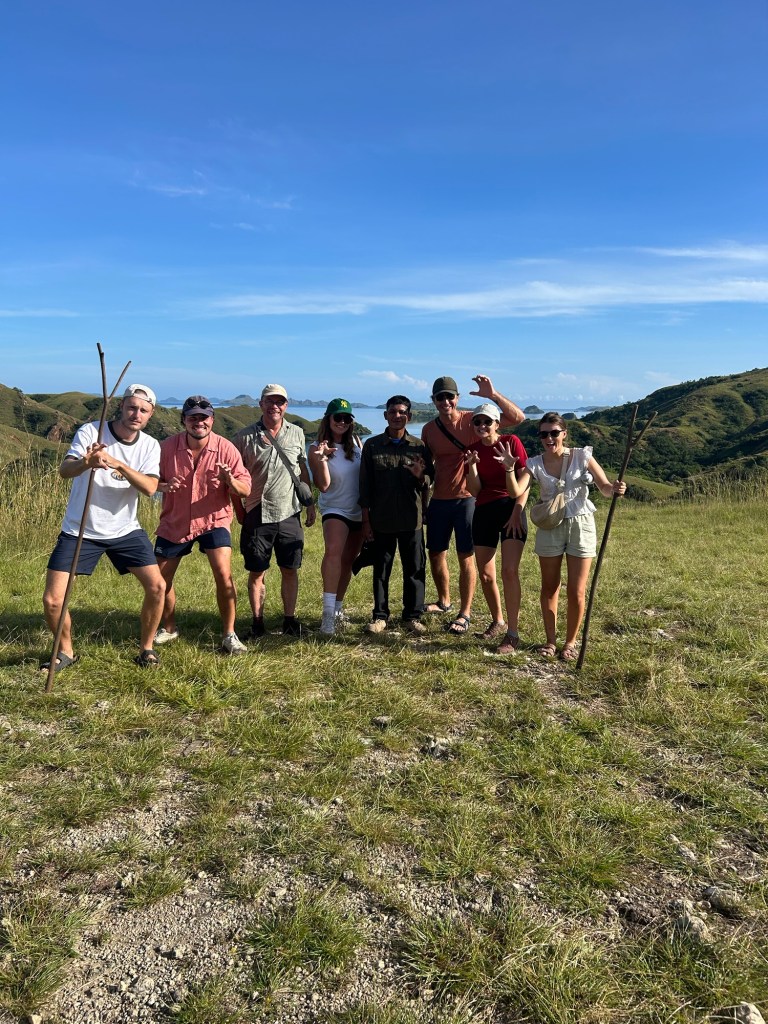
In between dives, we also explored above the surface: We trekked through Rinca Island twice to see Komodo dragons—the real-life dinosaurs that rule the region. On our second visit, they were actively feeding, giving us an up-close and thrilling look at their raw power. We also hiked to a hilltop for a panoramic view of the island.

Komodo dragons.

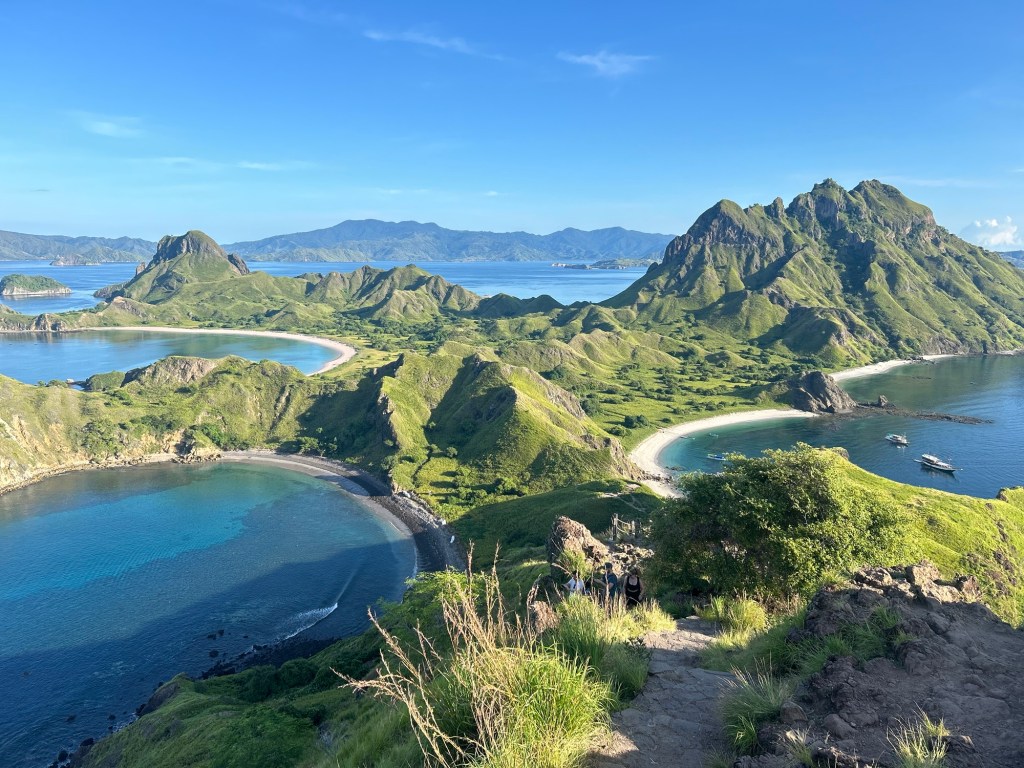
We also hiked the iconic Padar Island, a dream hike for us. From the top, the famous tricolor beaches (white, black, and pink sand) stretched out beneath us like something from a post card.

Gili Air — Our Time on Gili Air: Slow Island Living & More Underwater Exploration

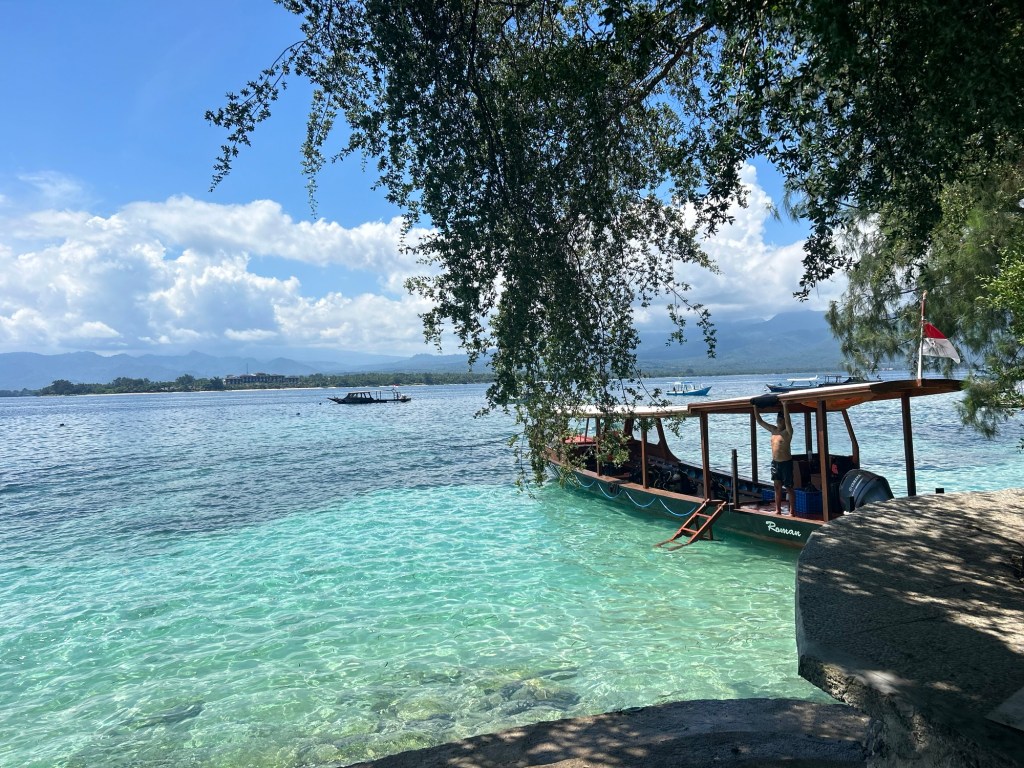
Gili Air was the perfect pause in our journey—a place where time slowed down, the roads were sandy, and barefoot mornings blended into breezy evenings. The island offered a quiet charm compared to its louder neighbor, Gili T, but still packed in plenty of memorable experiences.

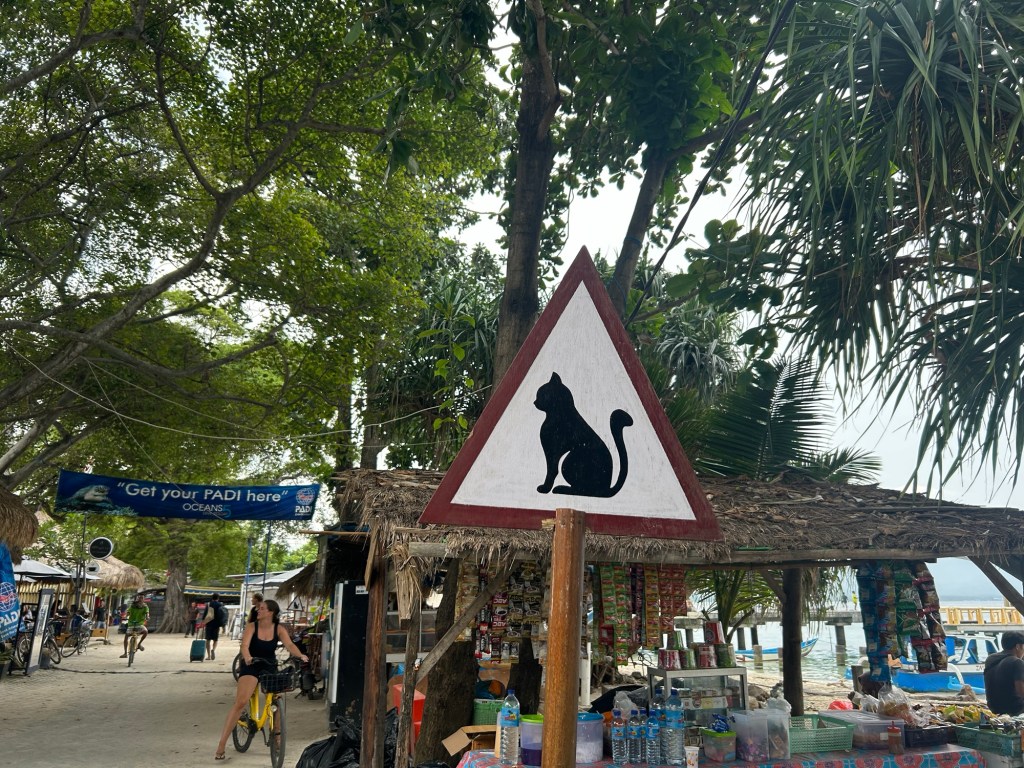
My favourite sign!
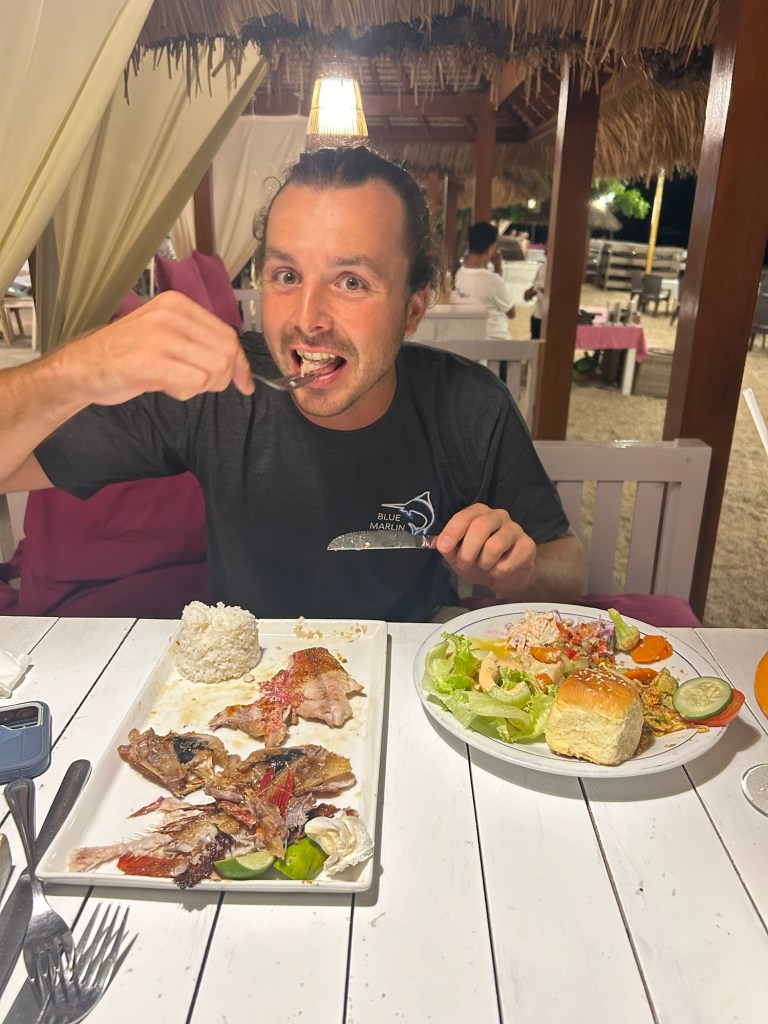
Mat’s favourite, a red snapper!

We spent our days diving vibrant reefs and swimming with white-tip sharks and sea turtles, wandering the entire island on foot (multiple times), and relaxing on beaches where sea snakes cruised the shoreline. The diving was beautiful, and we saw everything from ghost pipefish to the largest sea turtle we’ve ever encountered.

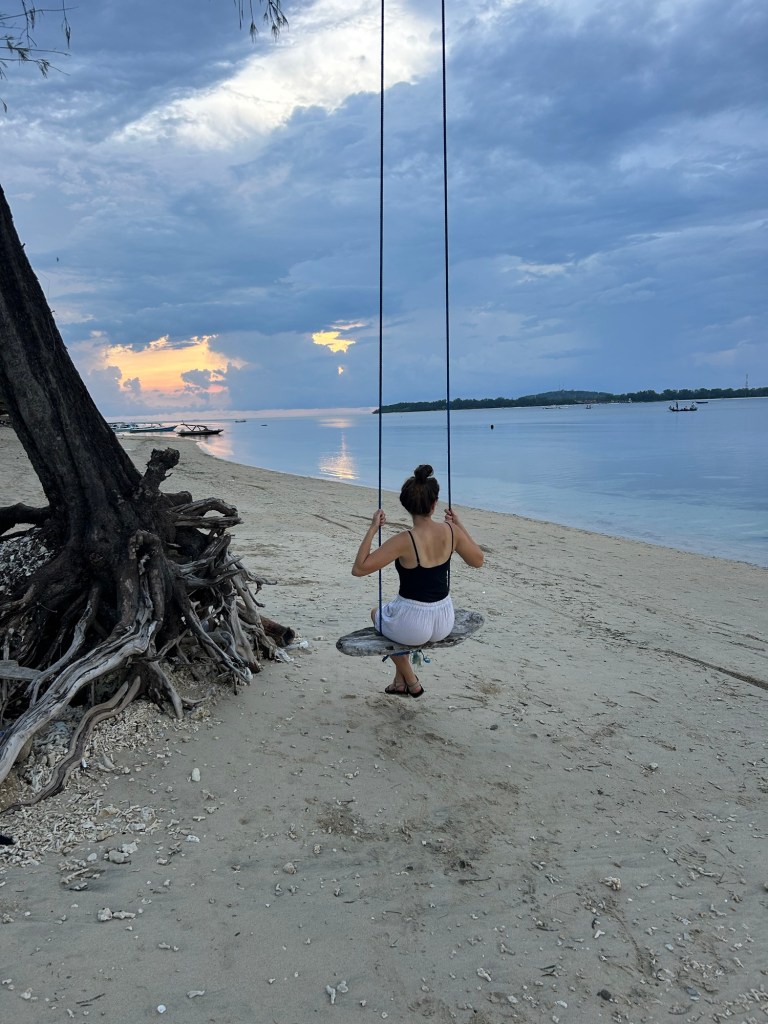
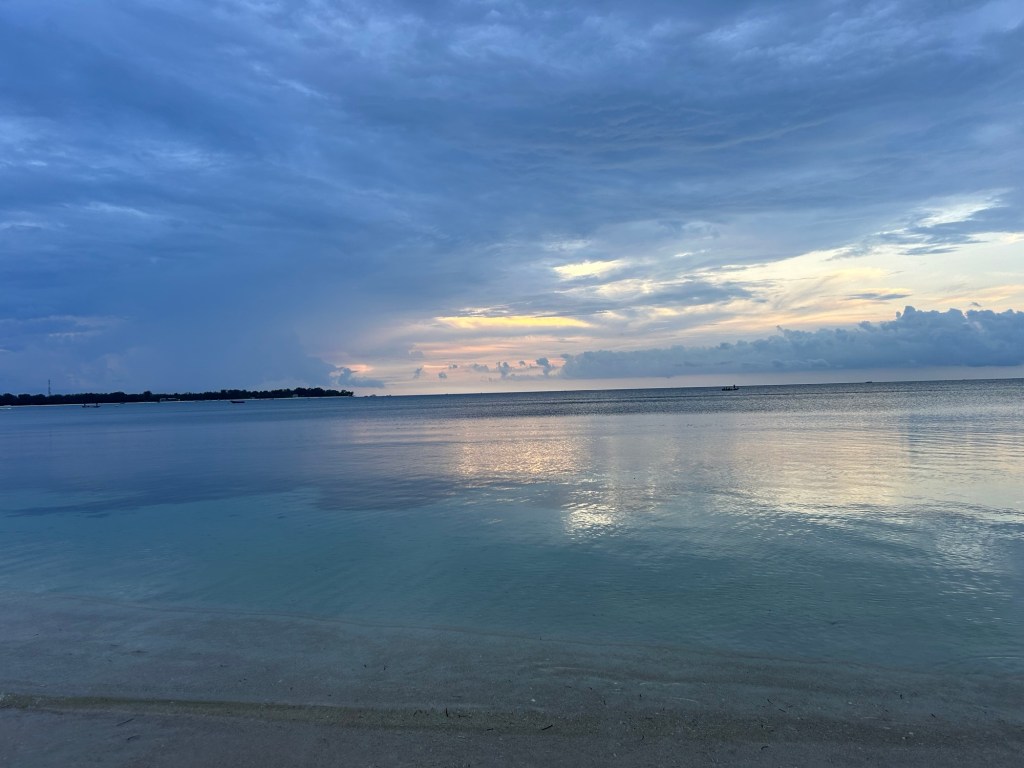
Gili Air.
Gili Air.

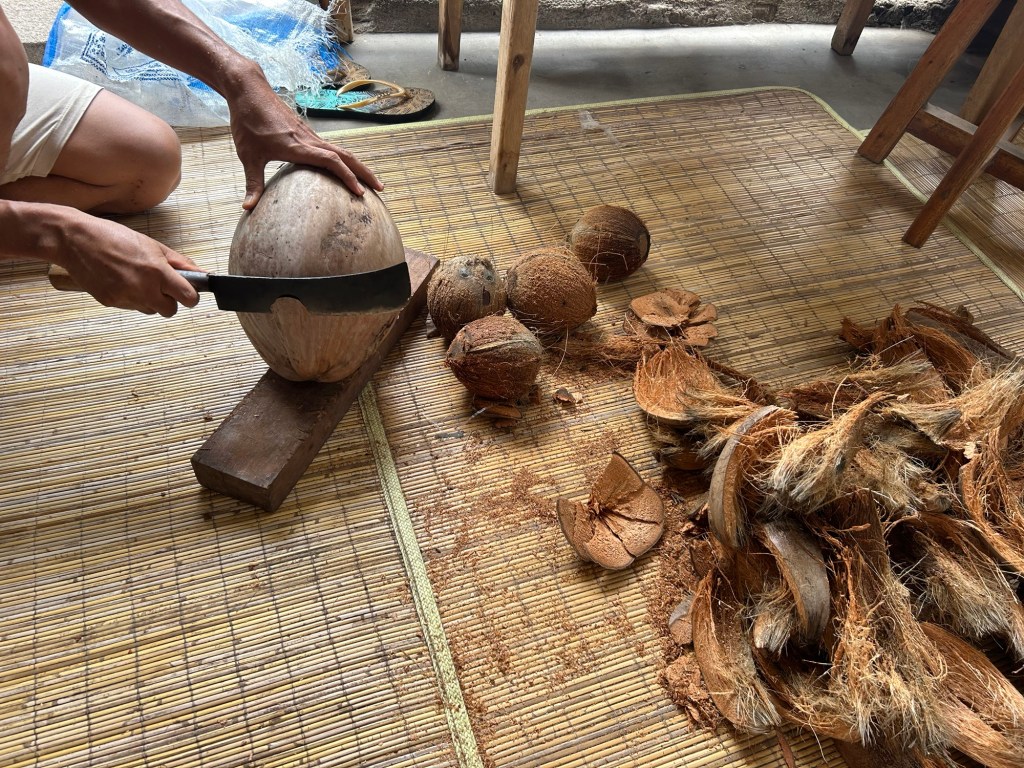
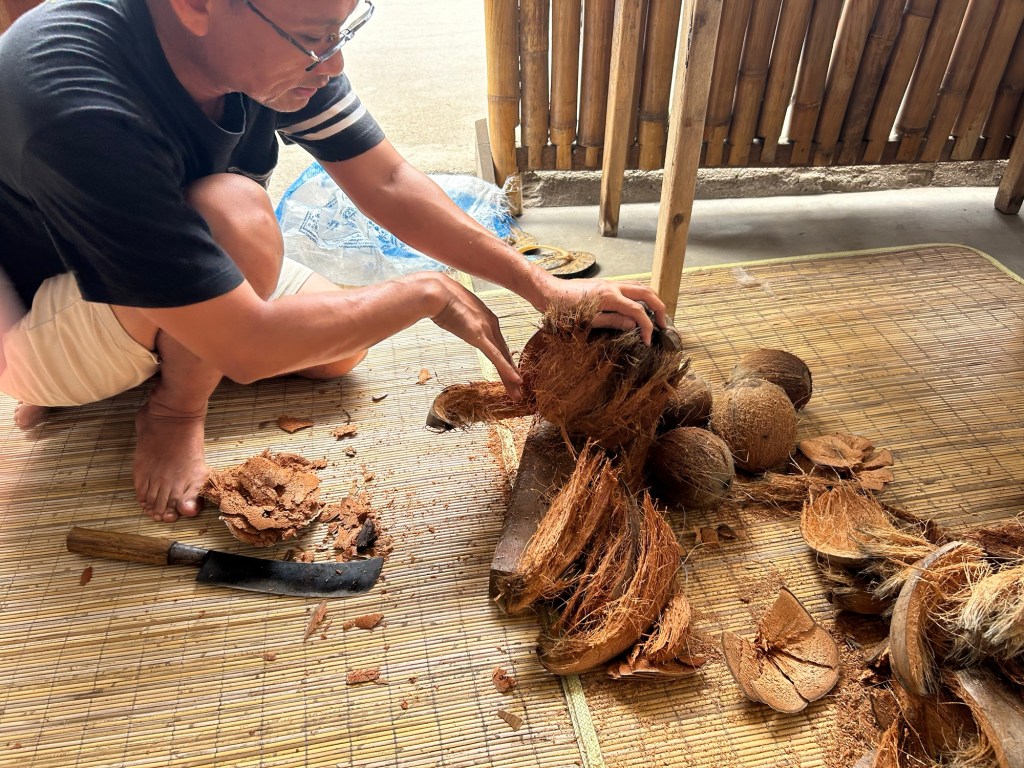
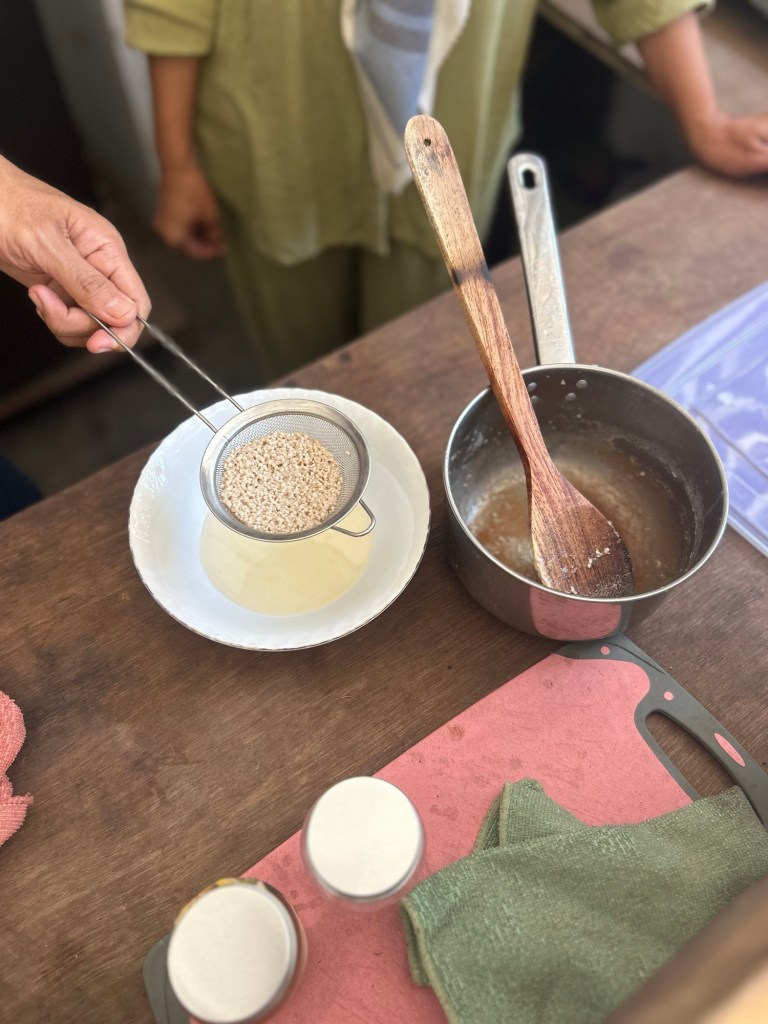
One day Mat went diving, and I participated in a coconut oil workshop, learning how to make coconut oil from scratch. This was an extensive process, and I now recognize why coconut oil is so expensive. I was shown by a local family using traditional methods and learned the older the coconut the better for making oil. I watched the coconut being husked, and went through each step until the final jarring step. It was incredible and I felt very fortunate to participate.

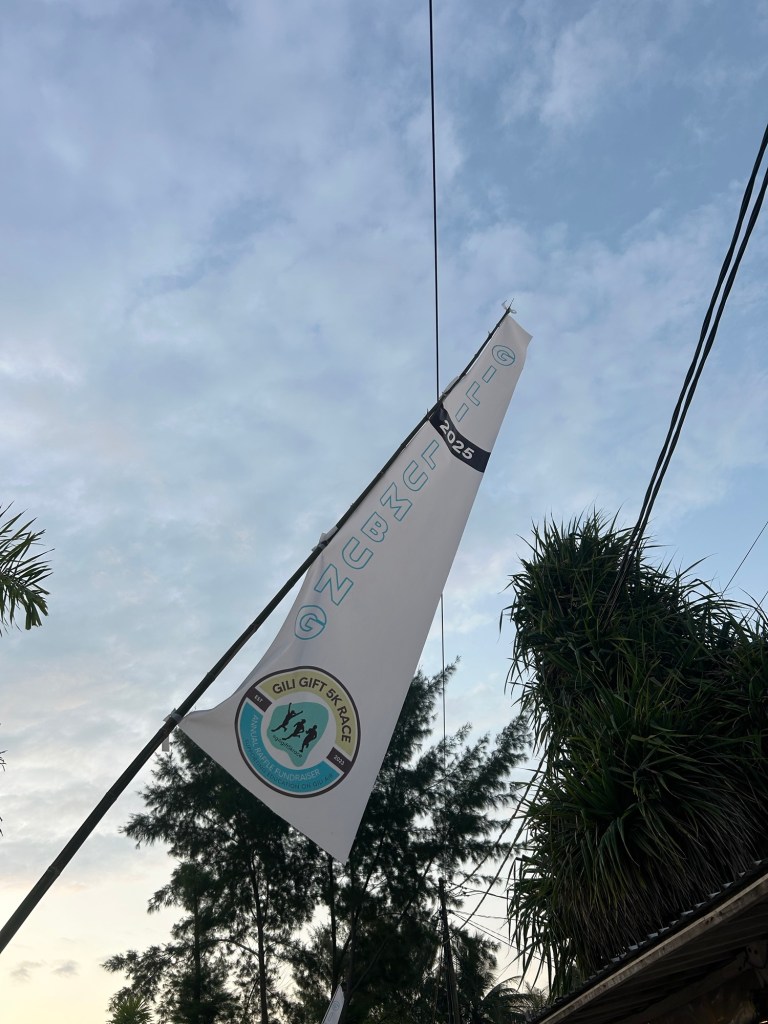
On our final evening, I found out about a 5K charity race around the island, and joined it. It was a lot of fun running through sand and alongside a great group of people.

Gili Air gave us a peaceful break — ideal for recharging before taking on the challenge of Mount Rinjani.

Lombok — Climbing Mount Rinjani: Our Final Mountain Summit in Indonesia

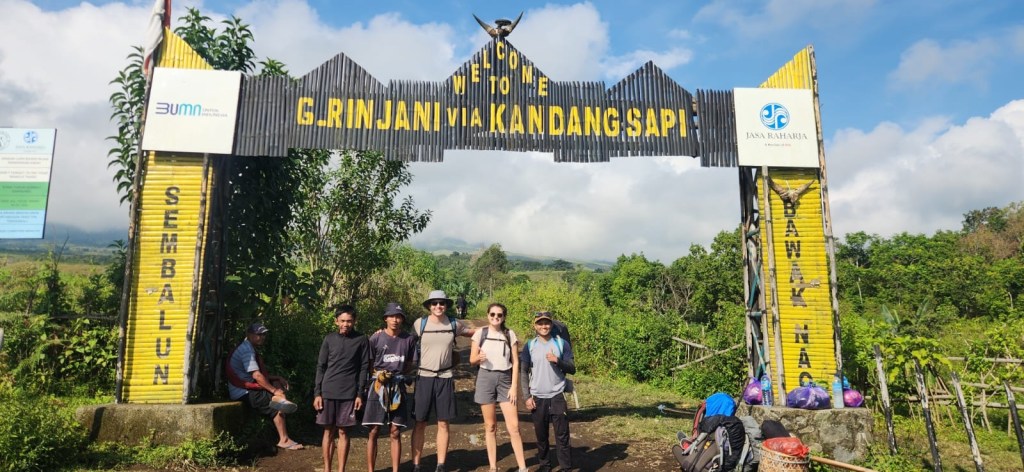
After a slow final morning on Gili Air, we boarded a ferry to Lombok and met the team who would guide us on the four-day trek climbing Mt. Rinjani.

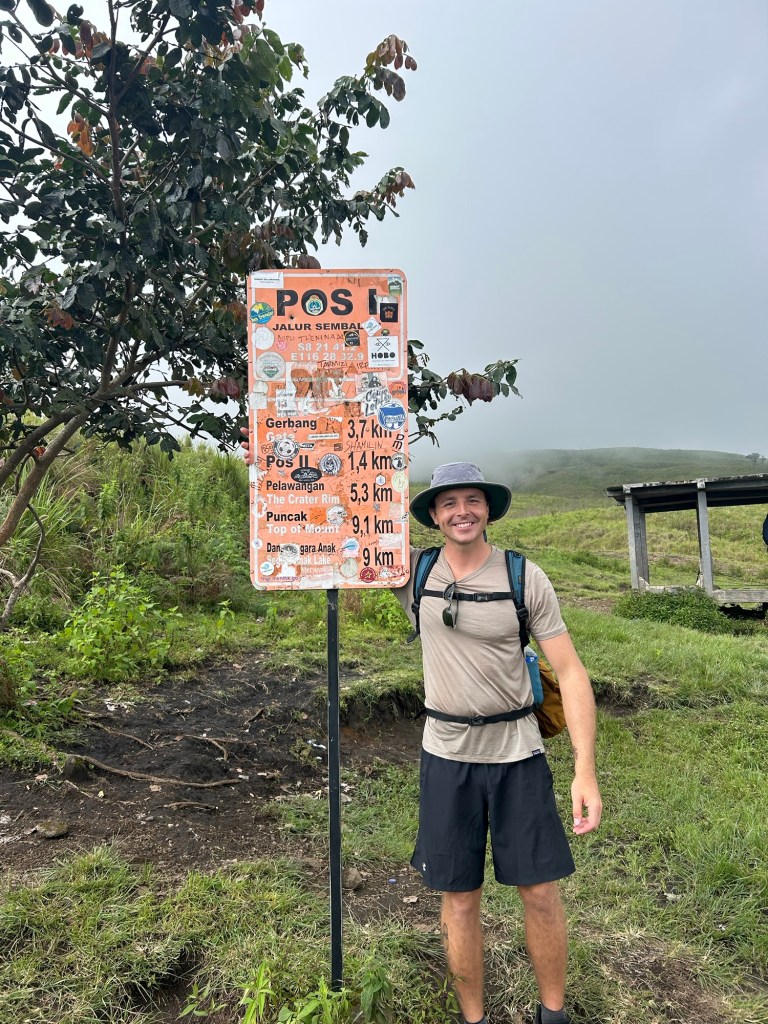
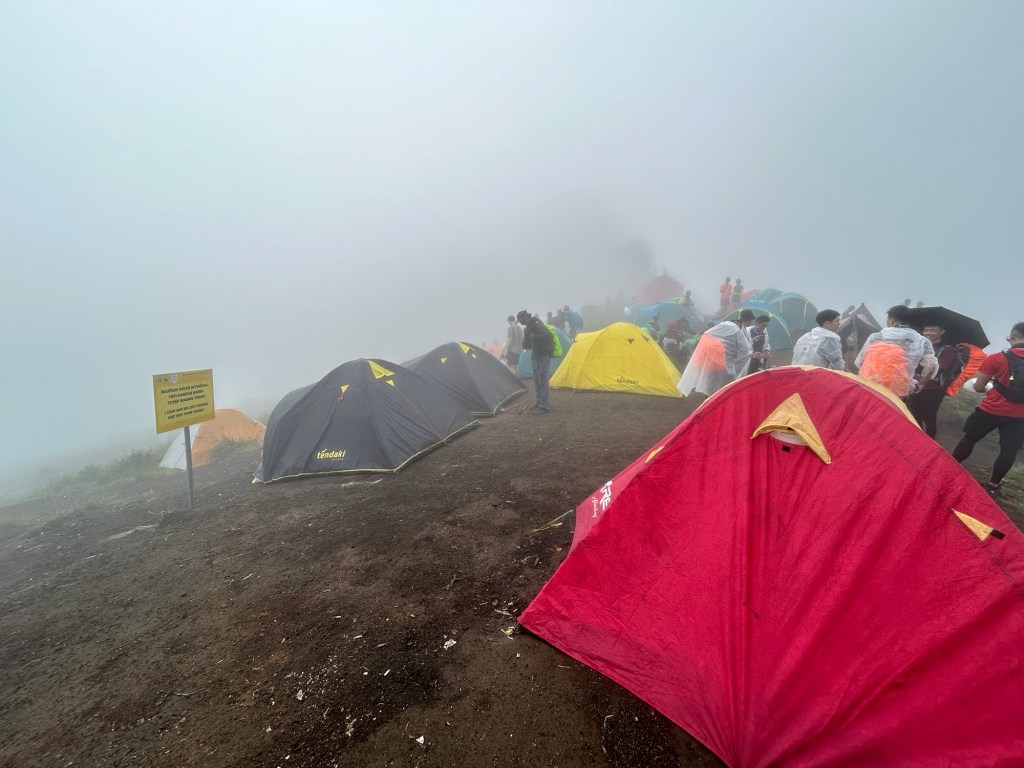
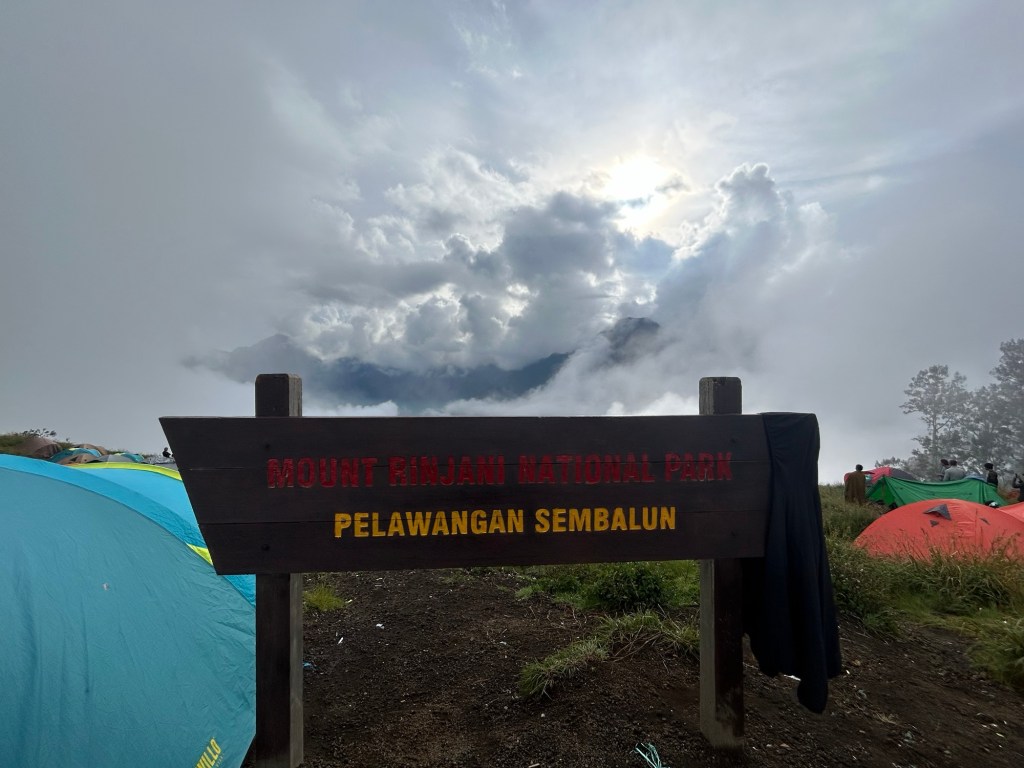
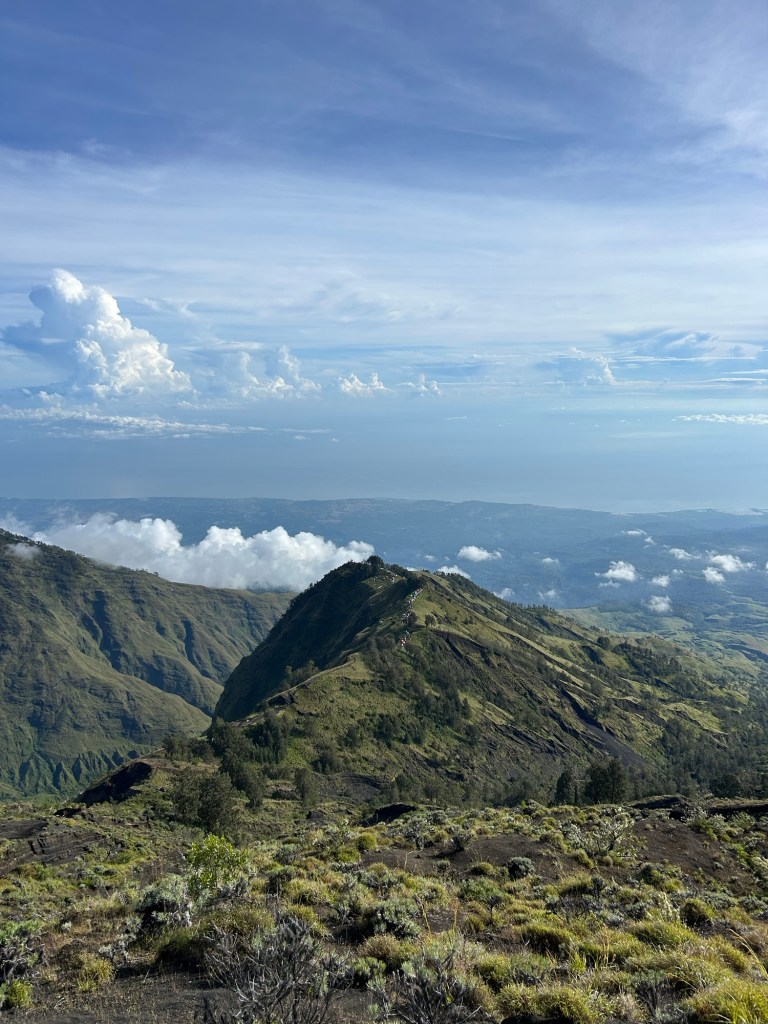
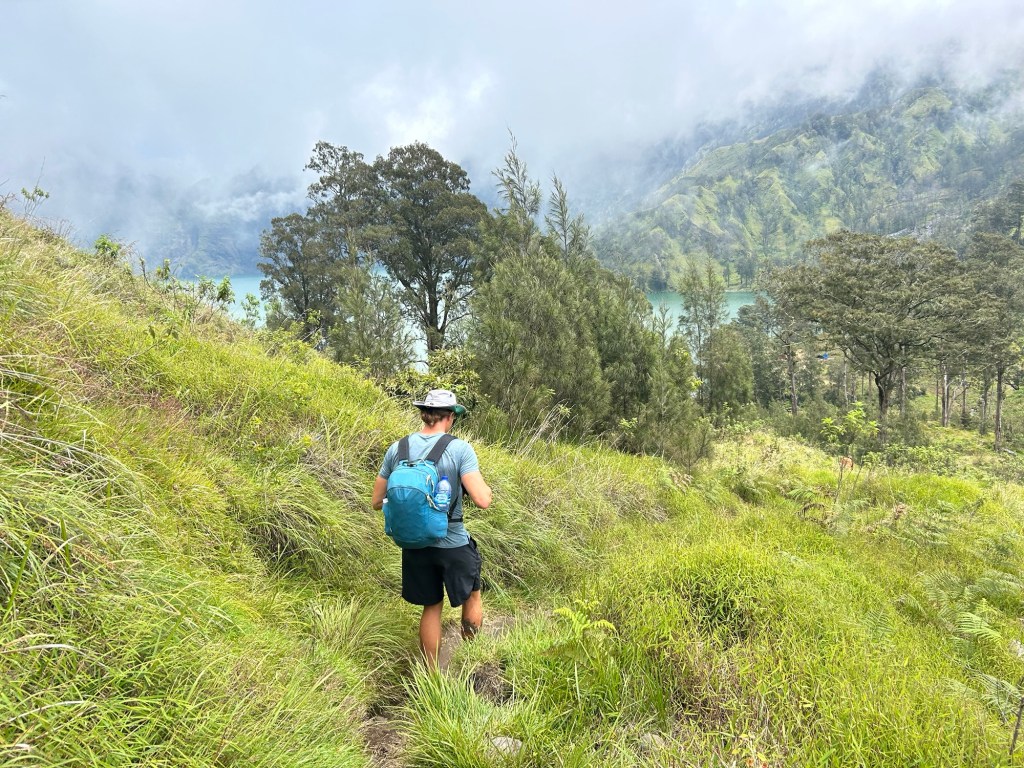
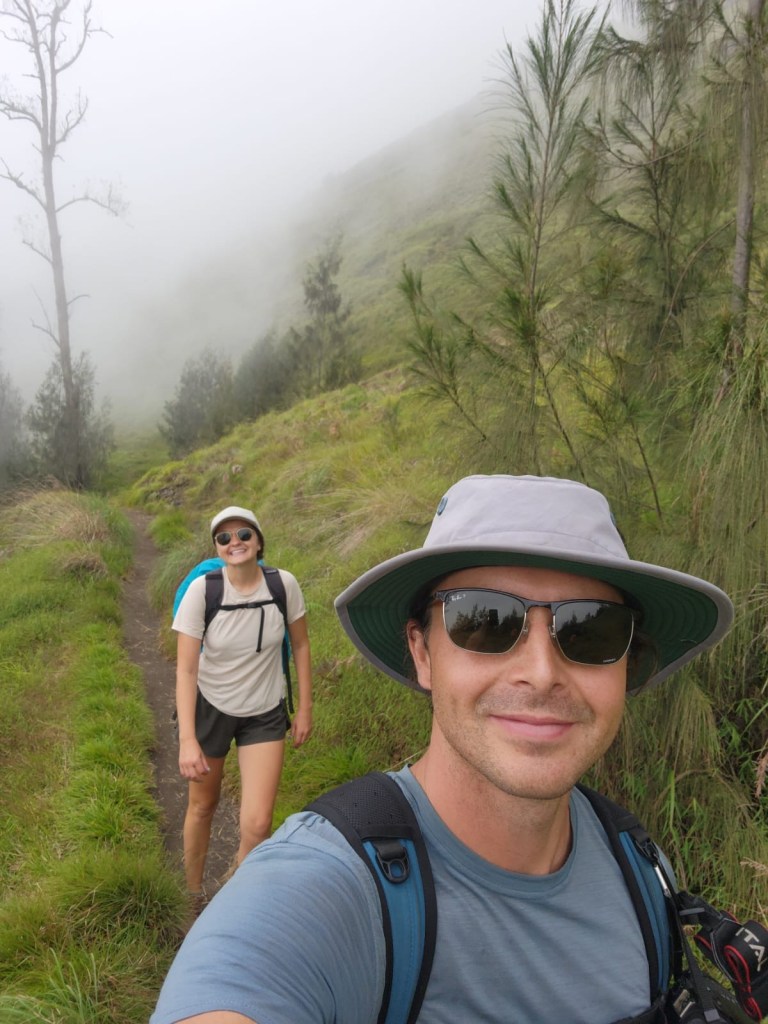
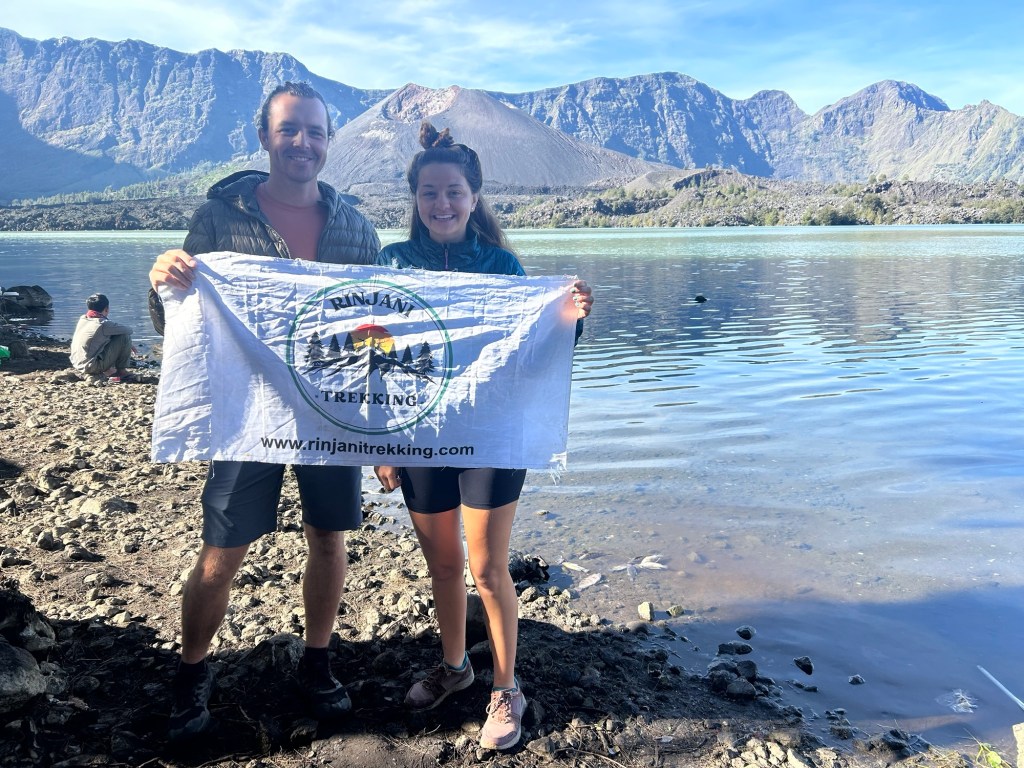
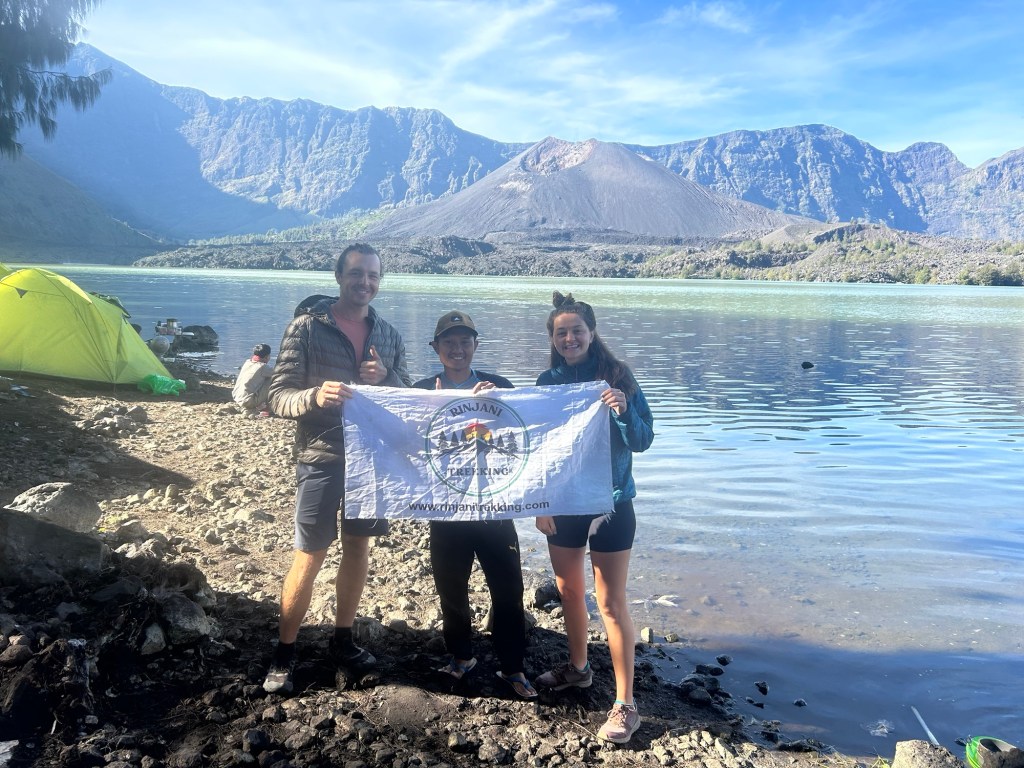
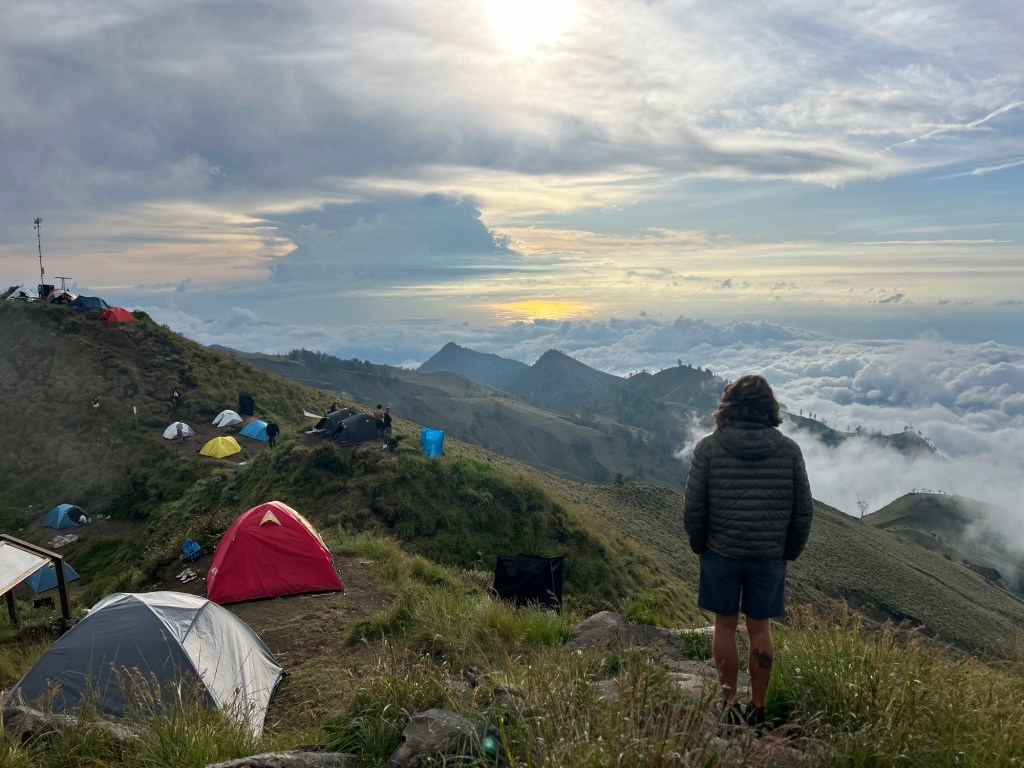
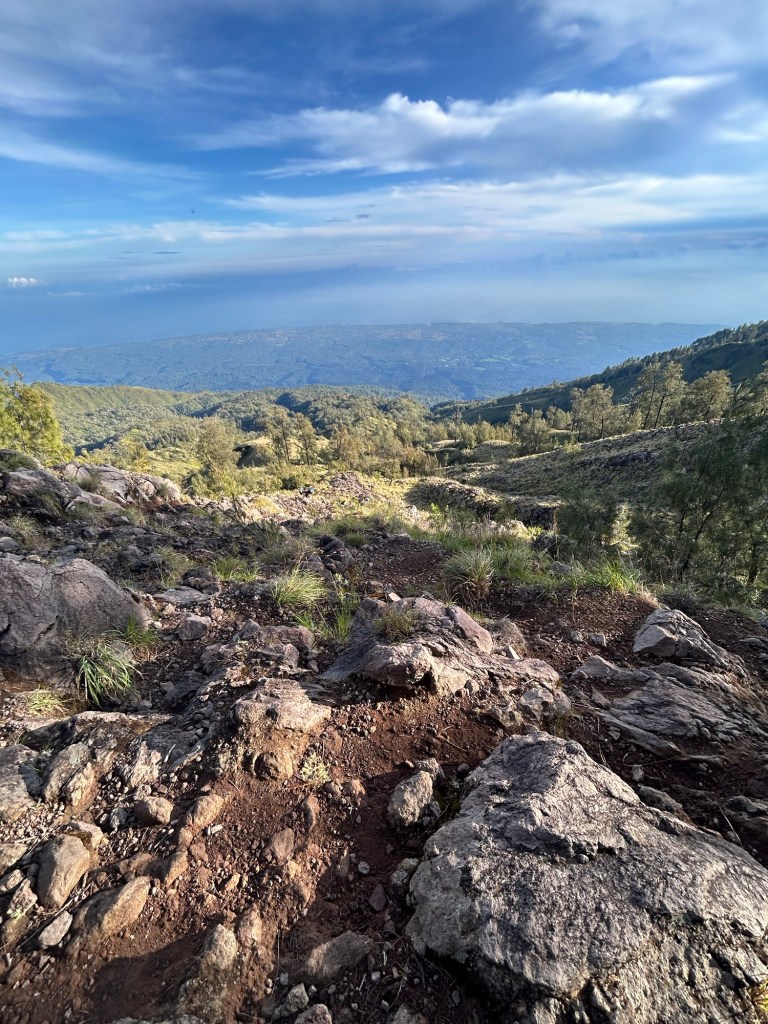
The Rinjani hike started at Sembalun Gate and quickly proved to be no easy feat. We trekked through grassy fields, forested paths, and monkey-dotted ridgelines, gradually climbing from 1,156 to 2,639 meters on day one. After a long, steep push—and a sudden thunderstorm—we reached the crater rim, soaked but feeling good! That night, we camped above the clouds, preparing for a pre-dawn summit attempt.

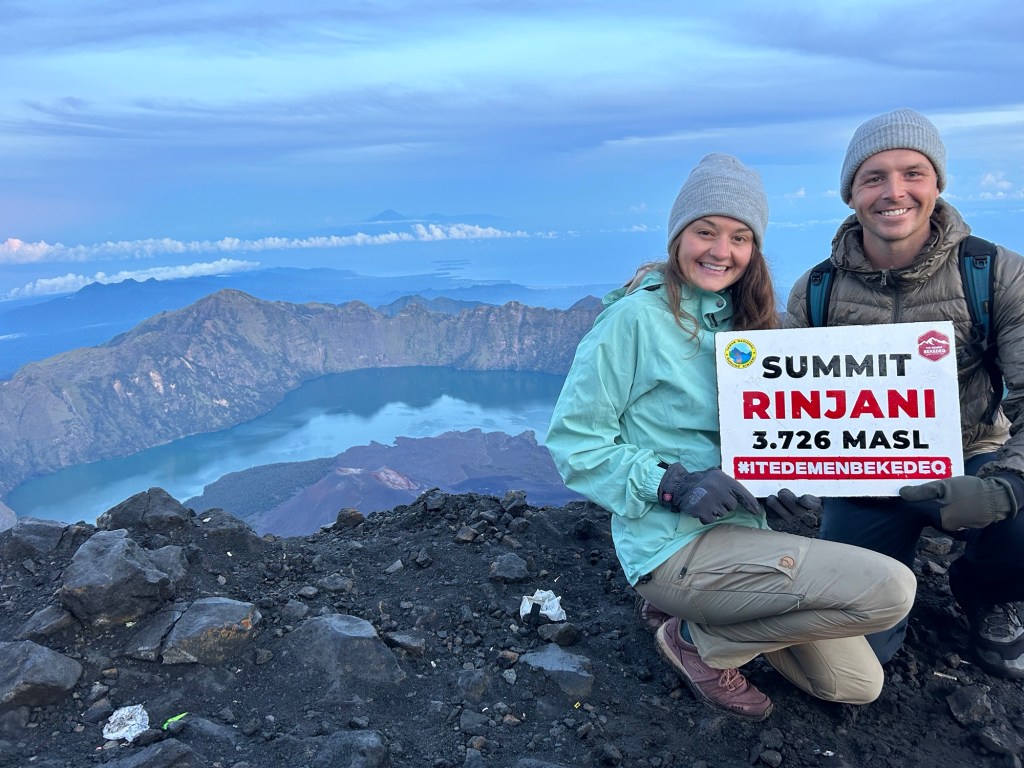
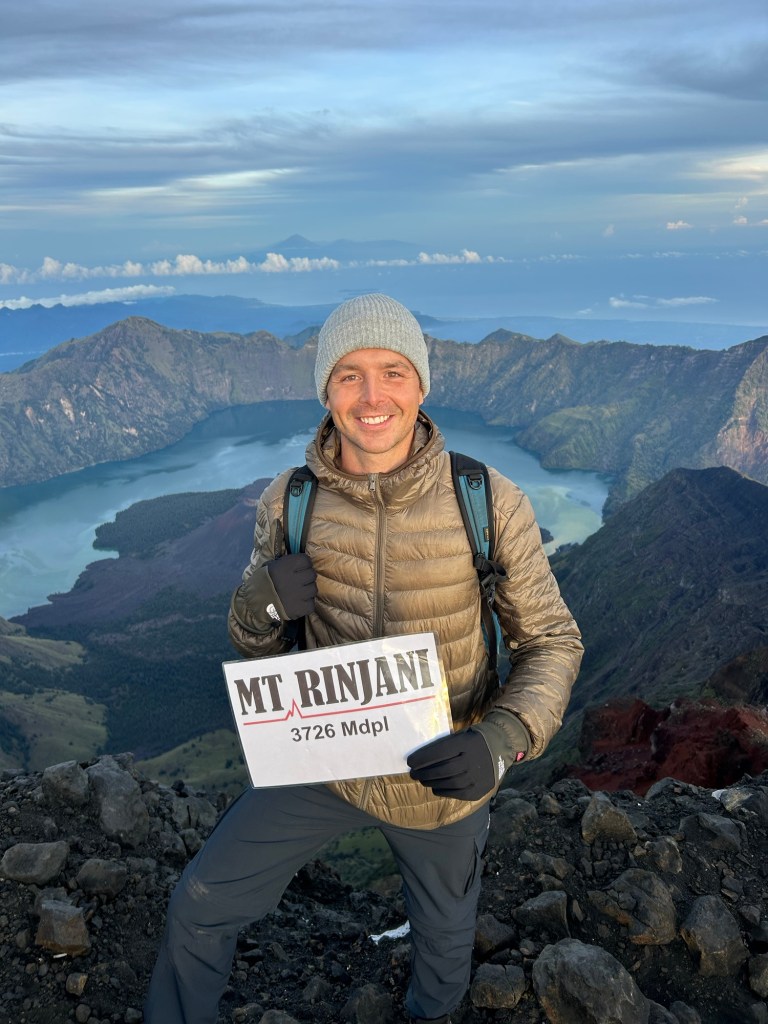
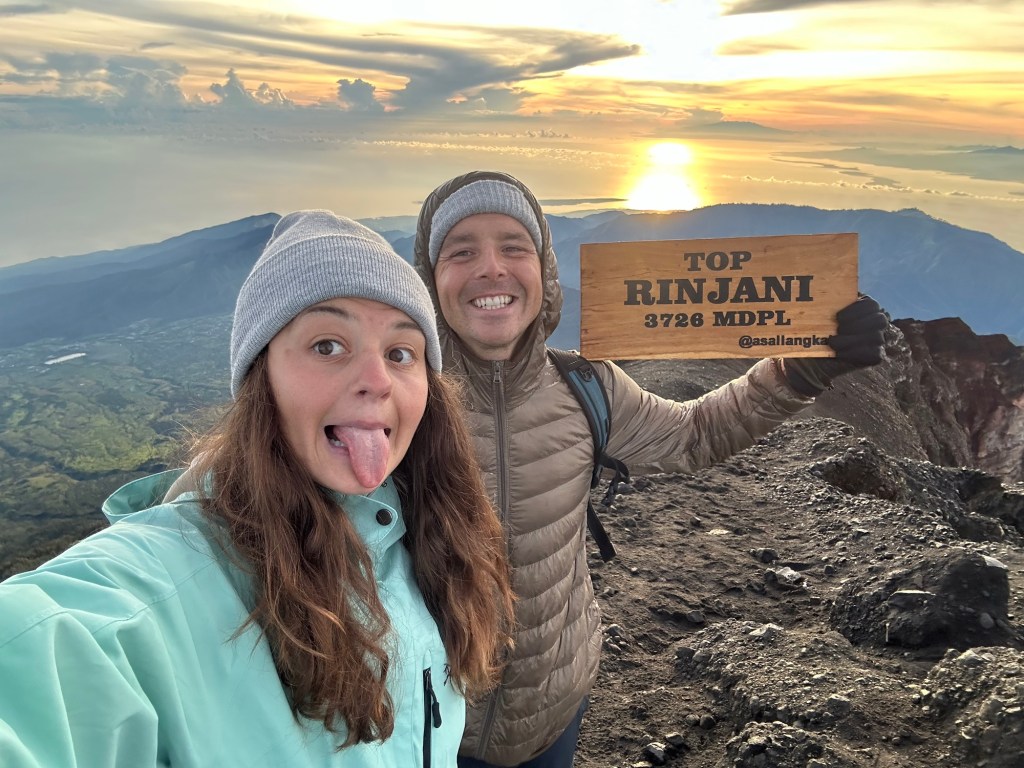
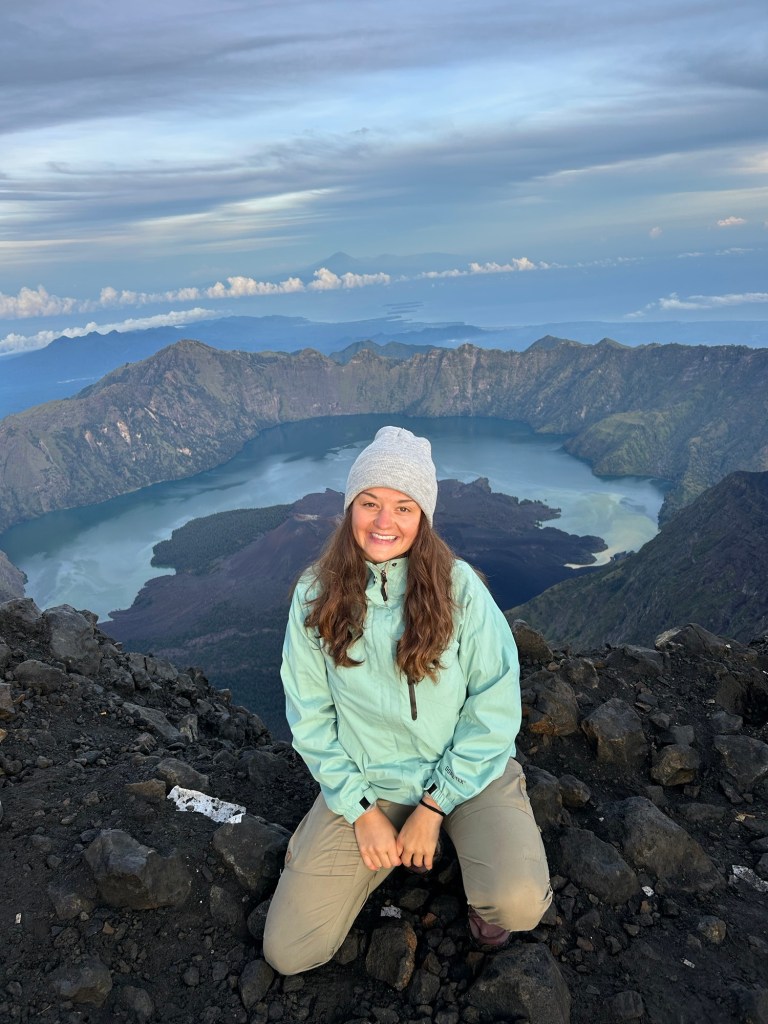
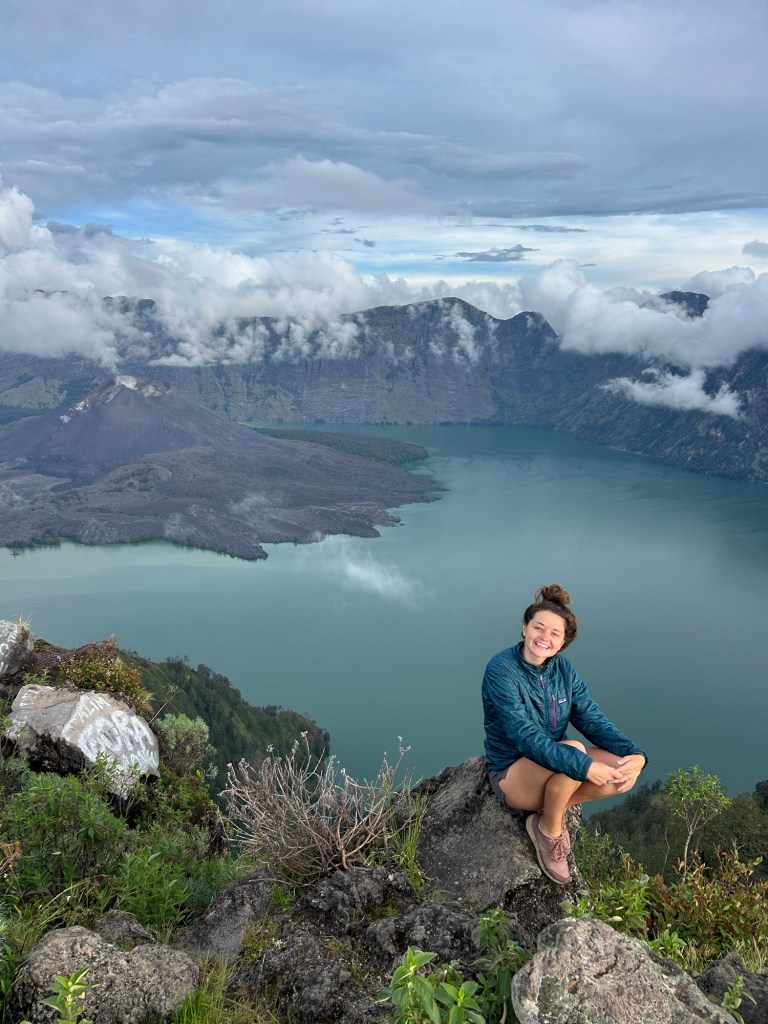
Summit day began at 2:30 AM. In darkness and guided by headlamp. The climb started on a sandy volcanic ash hill, interwoven with shrubs and trees. We made it to the first ridge, where we continued onwards, and the hike progressively got steeper as we neared the summit. The final push was the hardest of the entire hike, as we climbed the final 1,100 meters to the peak through steep volcanic sand. It was tough, but we made it just in time to watch the sunrise from 3,726 meters above sea level—an unforgettable 360° view of Lombok, the Gili Islands, Bali, and the crater lake below.

From there, we descended to Segara Anak, the crater lake. After a very long day hiking close to 15km, we went for a quick dip in the “hot spring” and finished off the night by watching locals fish.

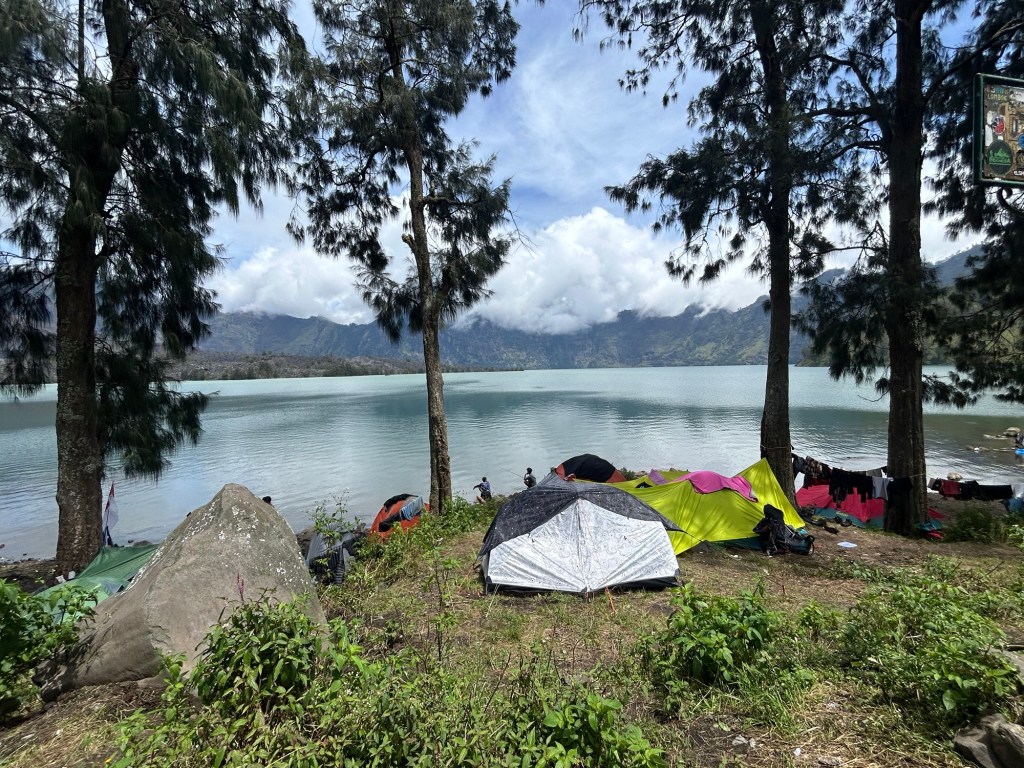
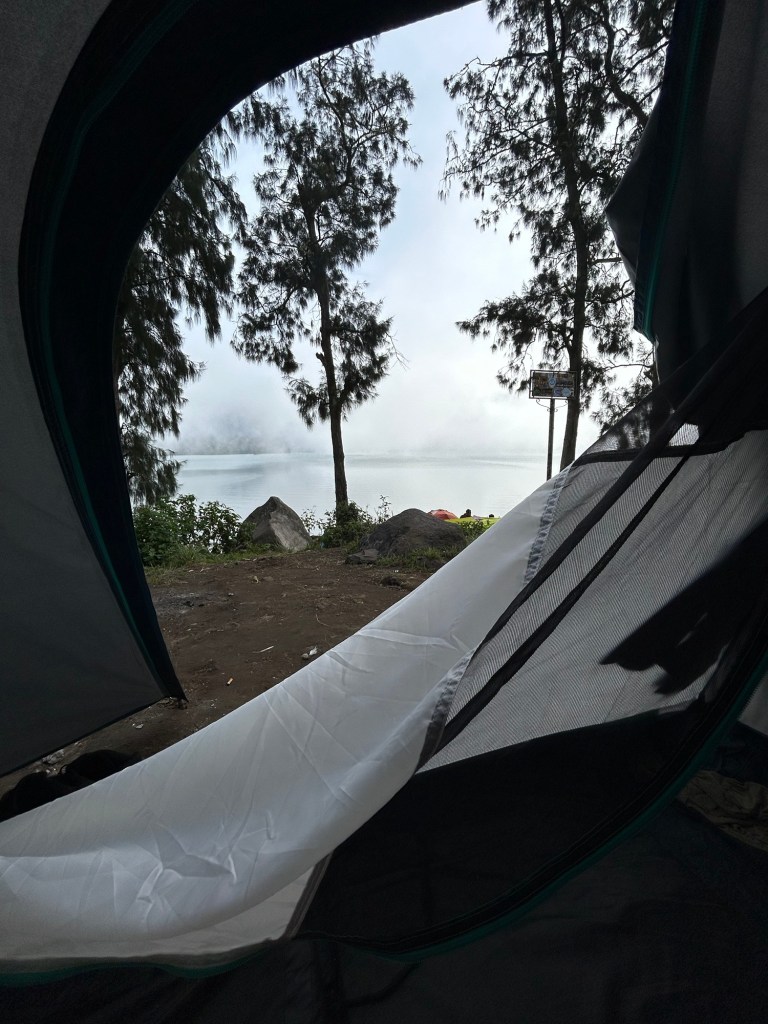
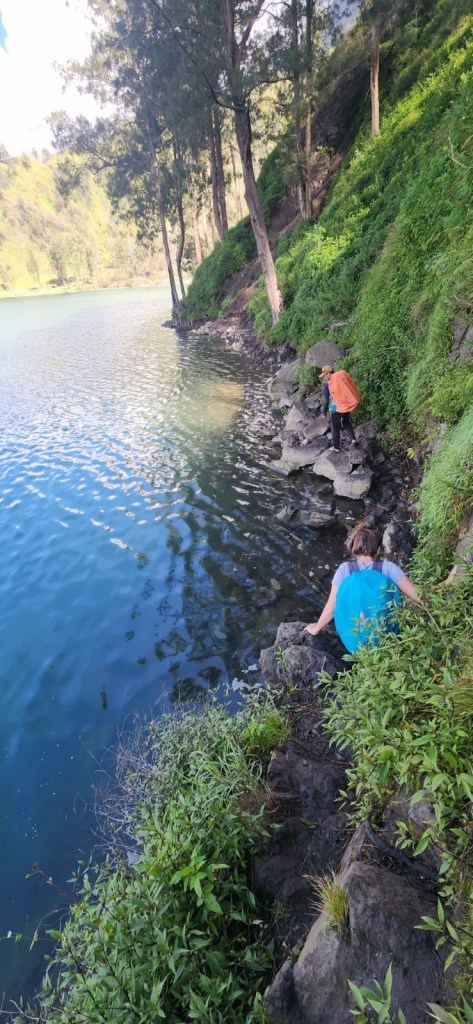
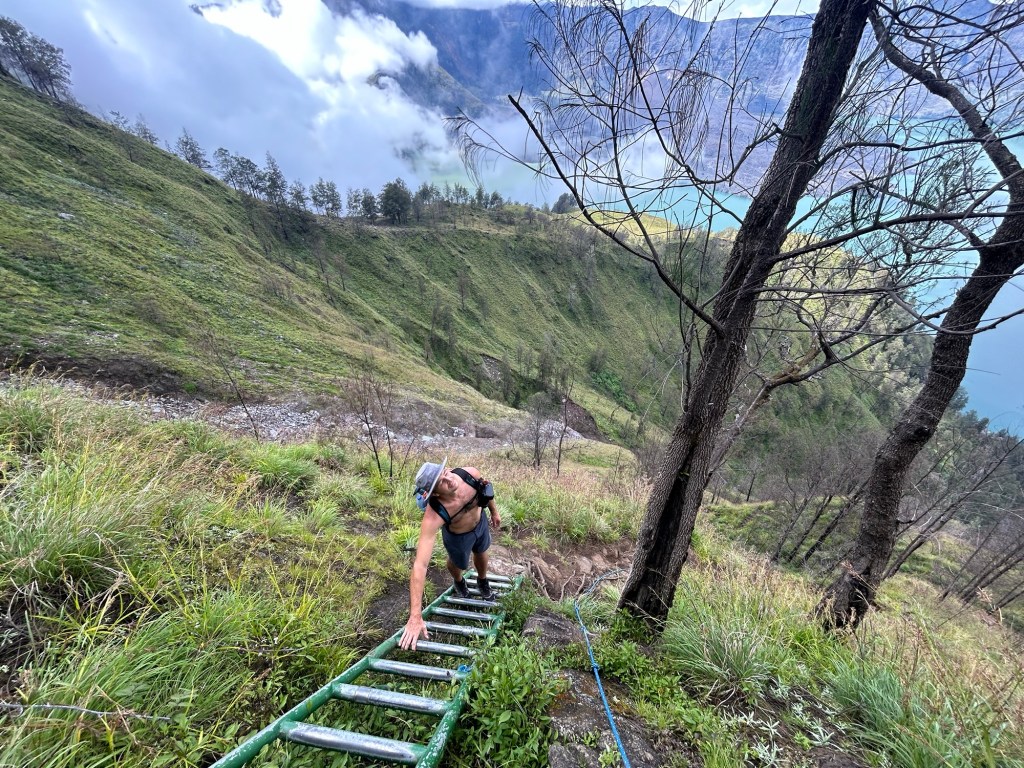
The following day brought another tough ascent to the Senaru Crater Rim, as we left the camp site, skirted around the lake, and began a steep climb upwards on a very very hot day. We made it to the first ridge and then the second part of the hike included climbing ladders and trails through exposed terrain and grassy plateaus. We were the first group to make it to the top (hikers come from both directions to camp here), so we were the first to choose our campsite, and we chose to be facing the lake. We watched as the clouds rolled in and the sun dipped behind the crater walls for a beautiful sunset.

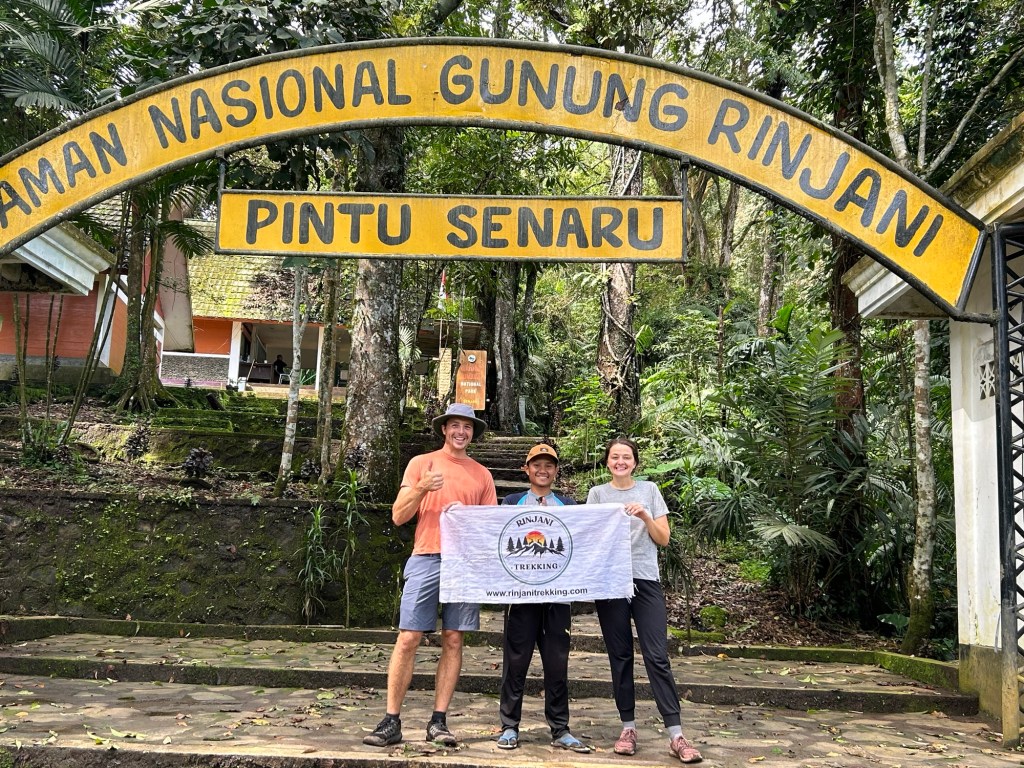
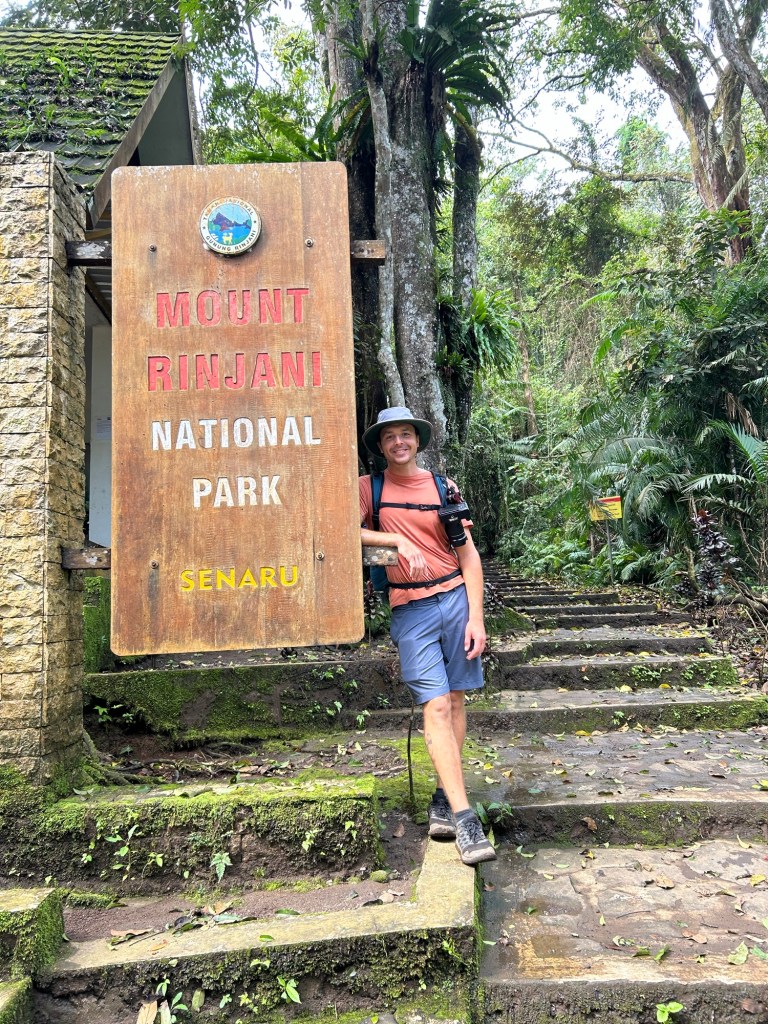
Our final day was a rapid descent—2,000 meters down in just under three hours—through dense jungle and mossy trails to the Senaru Gate. Tired and proud, we made our way back to Bali by speedboat from Lombok to rest for the night before catching a flight to Singapore where we met some friends from home!

The Rinjani trek was the perfect finale to our time in Indonesia—physically demanding, mentally rewarding, and absolutely breathtaking.

After 43 days in Indonesia, it feels like there is so much more to explore, that will be left for another time and another adventure. Indonesia is a country that has truly captured our hearts.

Next stop, Singapore!

The (almost) final leg of our journey.

Blog #7: Vietnam

Journeying South to North through Vietnam

Vietnam was a long-awaited bucket list travel destination for us for many reasons. I have a deep love for history and enjoy immersing myself in it, which was a major reason for my journey to Vietnam. Especially after having learned and read about the Vietnam war, and travelled through both Laos and Cambodia learning of the ongoing impacts and the resilience of the people in both countries, we were eager to continue our education once we arrived in Vietnam.

Other factors that brought us to this beautiful country included the terraced rice fields, breathtaking landscapes and views, incredible food, as well as the beautiful & friendly people, many of which we had the privilege of meeting along our journey.

We traveled during what felt unmistakably like peak tourist season, and it was surprising to arrive at places we had assumed would be secluded and relatively untraveled, but were heavily visited by fellow tourists. Despite the heavily touristed overlapping adventures, we made the best of our time in Vietnam.

Read below for our recap, venturing (and eating our way) from Southern to Northern Vietnam.

Ho Chi Minh City

Our time in Vietnam began in Ho Chi Minh City. We hadn’t realized that the visa application process was different than other countries in Southeast Asia, so we had an unexpected extra day in Phnom Penh Cambodia, and entered Vietnam via bus the following day, our first stop being Ho Chi Minh City (HCMC).

HCMC, formerly known as Saigon, is a very active city home to over 9 million people. When deciding where to stay, we explored our options and noted that HCMC is divided into several districts, which each have their own distinct characteristics. We decided to spend most of our time in districts 1 & 3, which are the more central areas of HCMC.

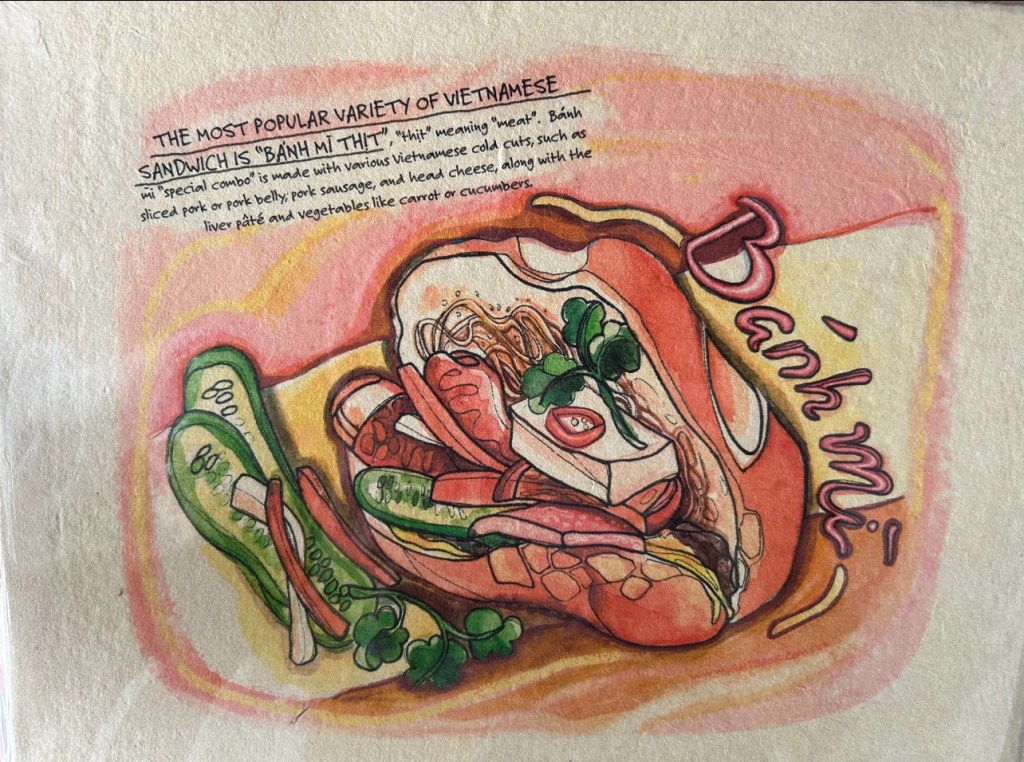
On day 1 we experienced our first, and probably the most well-known Vietnamese speciality called Bánh mì. You can see the photo of the poster below to find out what traditionally is in a Bánh mì. Mat proceeded to have Bánh mì almost daily as we moved our way through South to North.

One of the several posters we found, illustrating the famous Bánh mì .

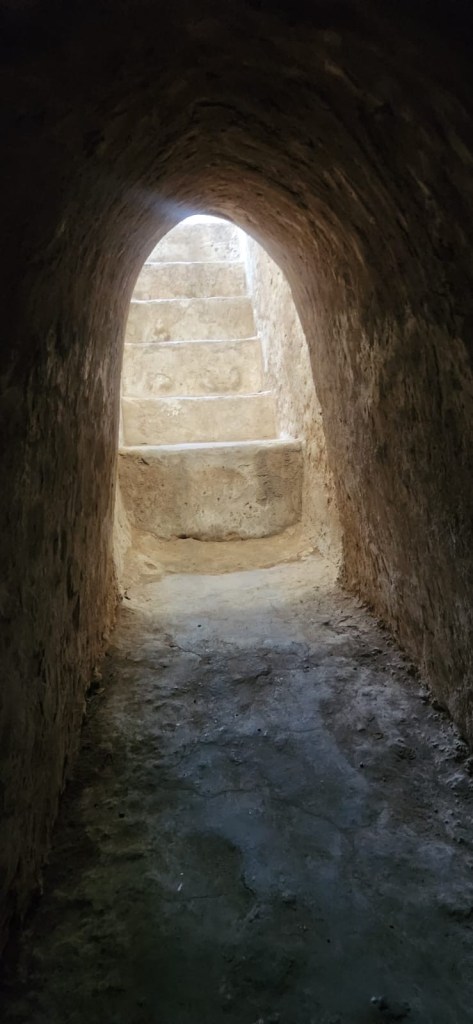
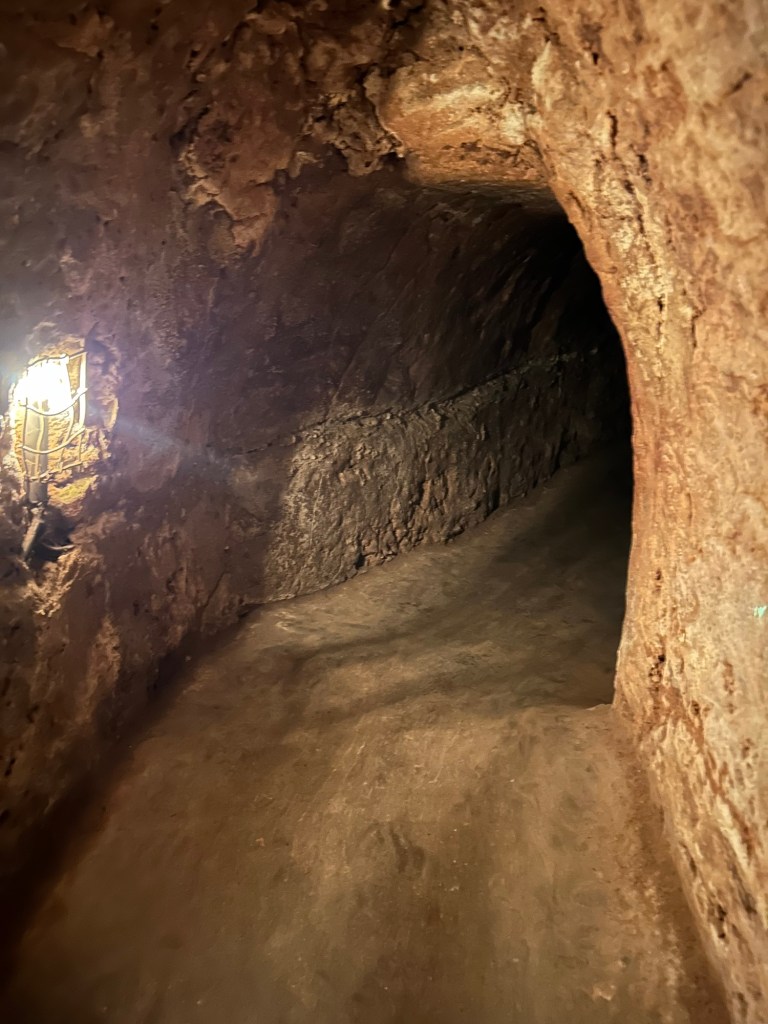
Visiting the Cu Chi Tunnels was a must on our Vietnam bucket list. Located in Cu Chi, Ho Chi Minh City, these underground tunnels were built by the Viet Cong during the Vietnam War and played a crucial role in their resistance. The tunnels served as living quarters, supply routes, and strategic hiding spots, allowing soldiers to move undetected and endure extreme conditions.

Cu Chi tunnel system in Ho Chi Minh City.
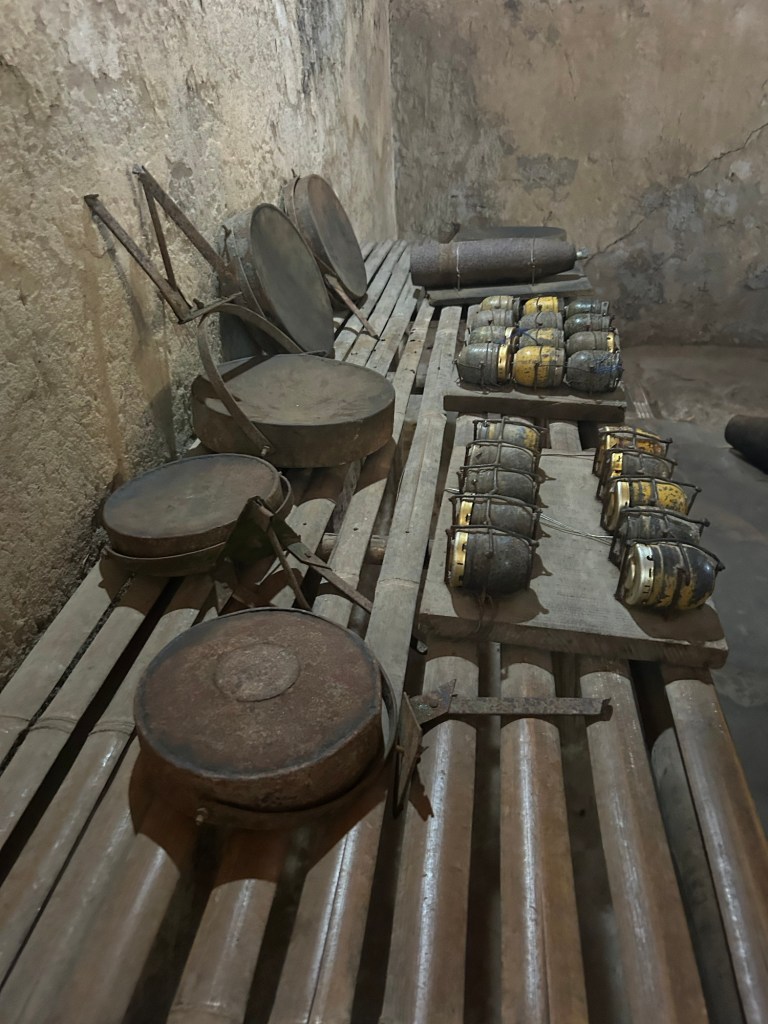
Weapons used by the Viet Cong during the Vietnam War.

Our guide, Phuong, provided deep insights into the Vietnam War, particularly the devastating use of Dioxin (Agent Orange) and its lingering effects on both Vietnamese civilians and American soldiers. He discussed the sheer scale of destruction, from contaminated soil to unexploded ordnance that continue to affect lives today of both Vietnamese and American soldiers and families.

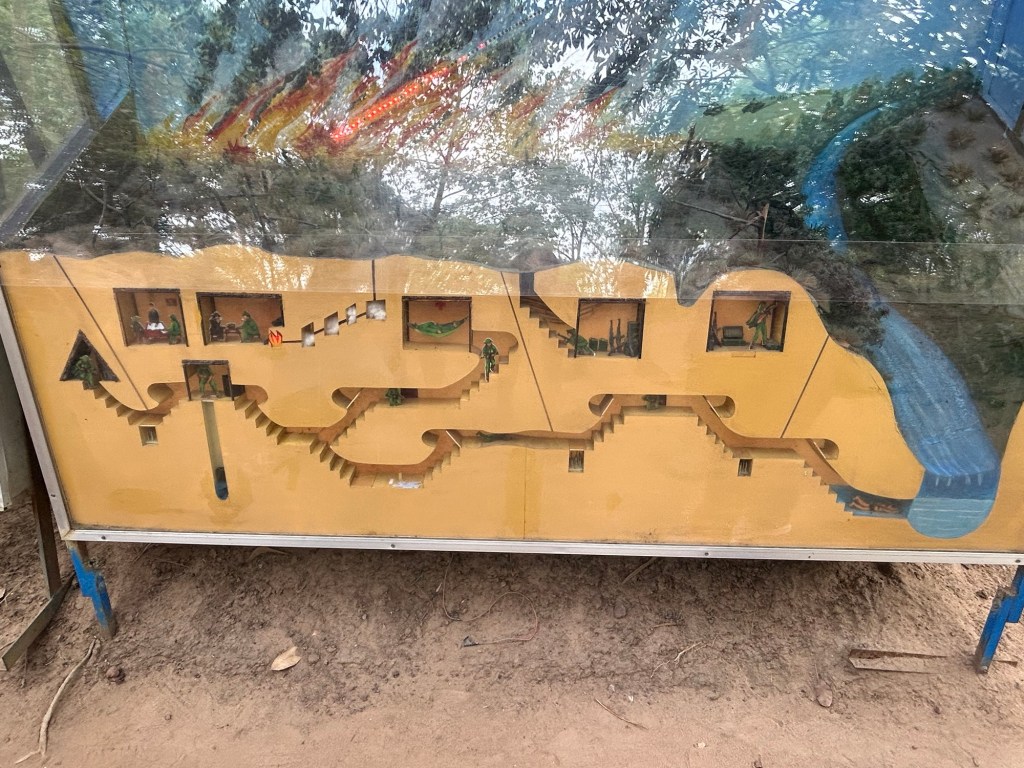
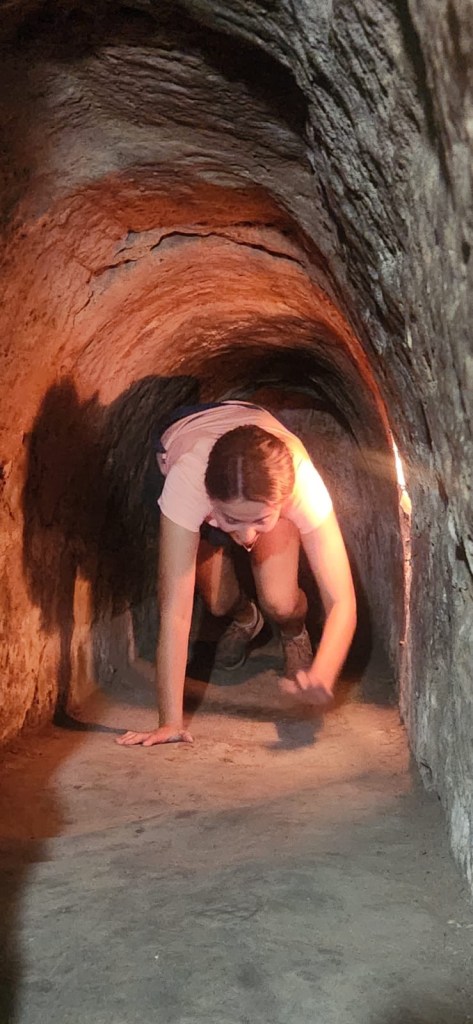
At the tunnels, we explored some of the intricate 230-kilometer underground network used by the Viet Cong to hide, transport supplies, and survive relentless bombings. The design was brilliant—multi-level tunnels with hidden entrances, trapdoors, and ventilation systems that allowed them to outmaneuver enemy forces. Crawling through the narrow, dark passageways gave us a sense of the conditions soldiers endured (and we even had lights to guide us).

Diagram of the Cu Chi tunnel system.
Crawling through the narrow & dark Cu Chi tunnels.

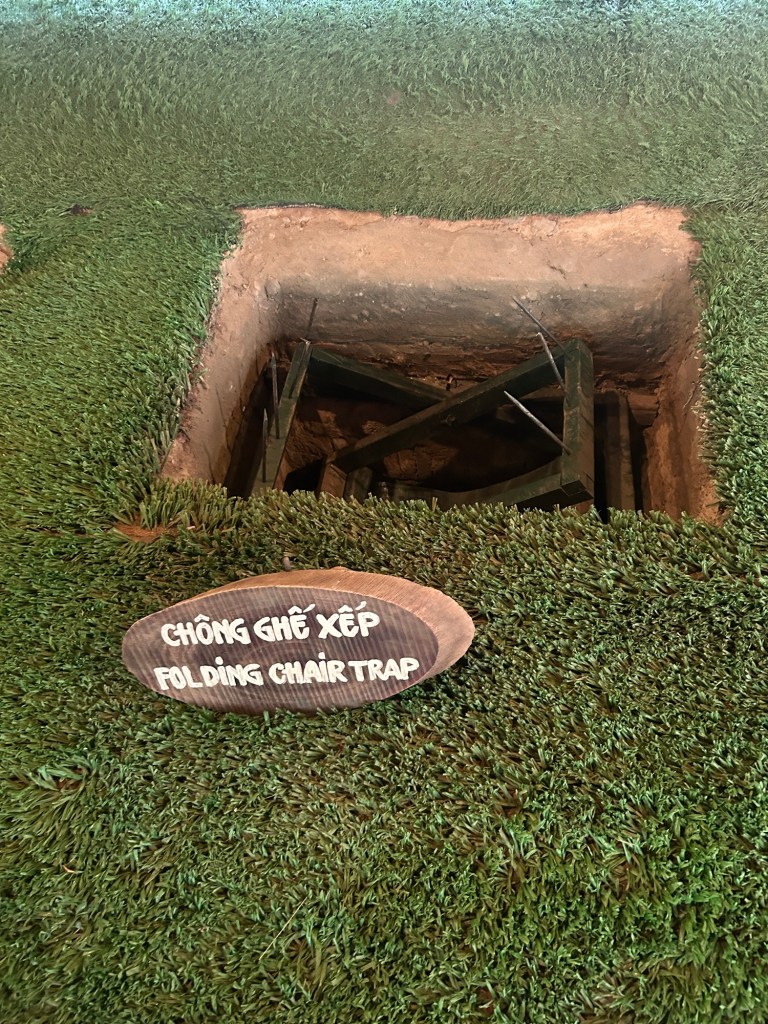
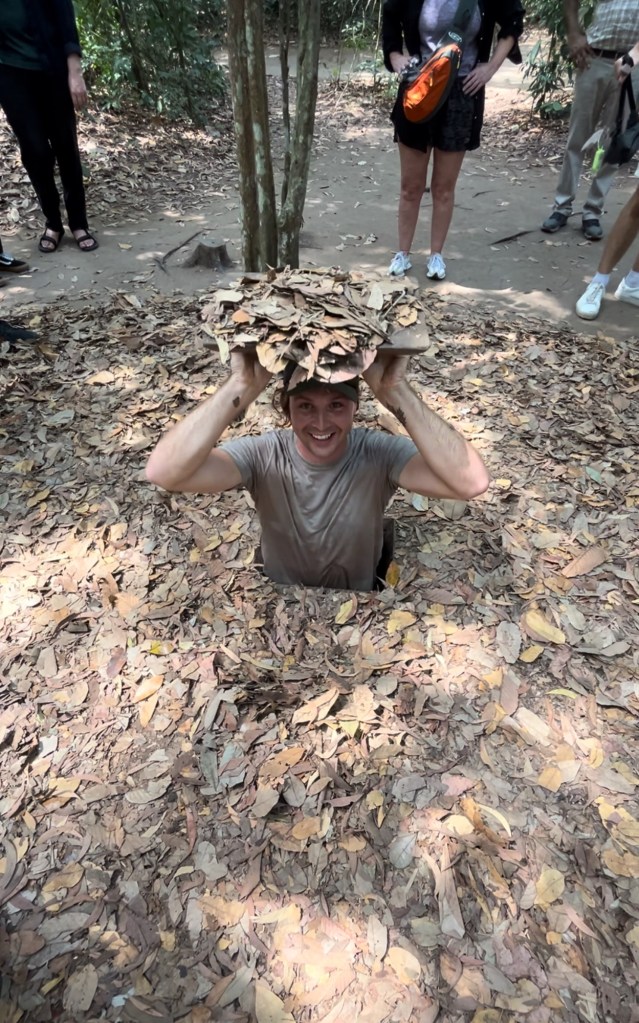
We also learned about the tactics the Viet Cong used to stay hidden, such as camouflaged cooking chambers that dispersed smoke through multiple vents and the booby traps set to defend against enemy forces. Small air holes, cleverly disguised, provided oxygen deep underground. The visit gave us a powerful insight into the resilience and resourcefulness of those who lived and fought here.

An example of the booby traps set by the Viet Cong to defend against enemy forces.
One of the hidden entrances into the Cu Chi tunnel system.

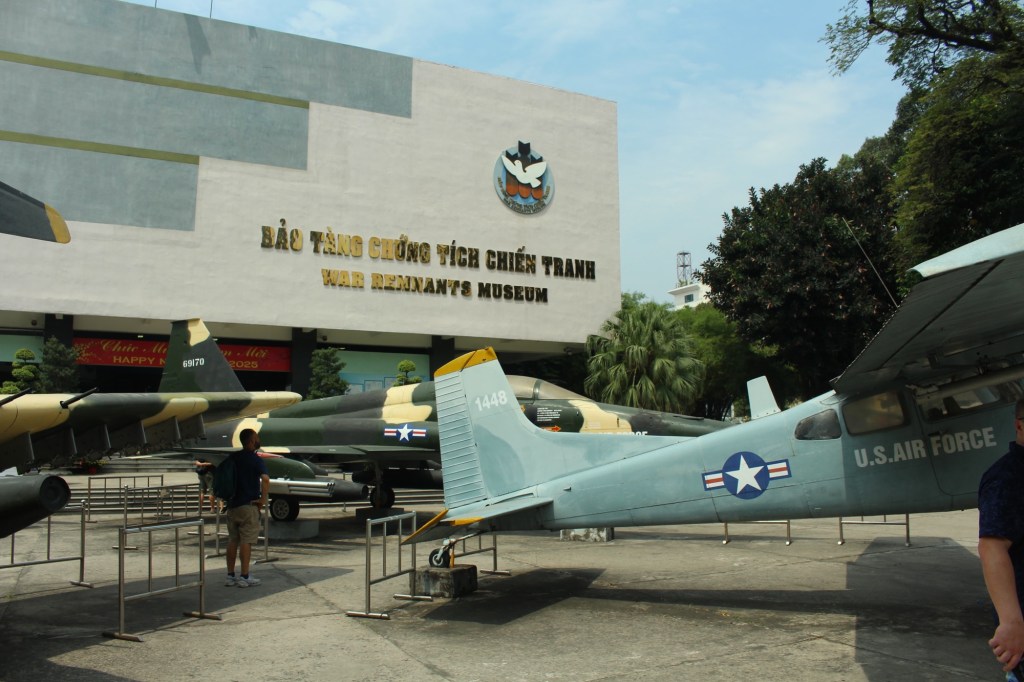
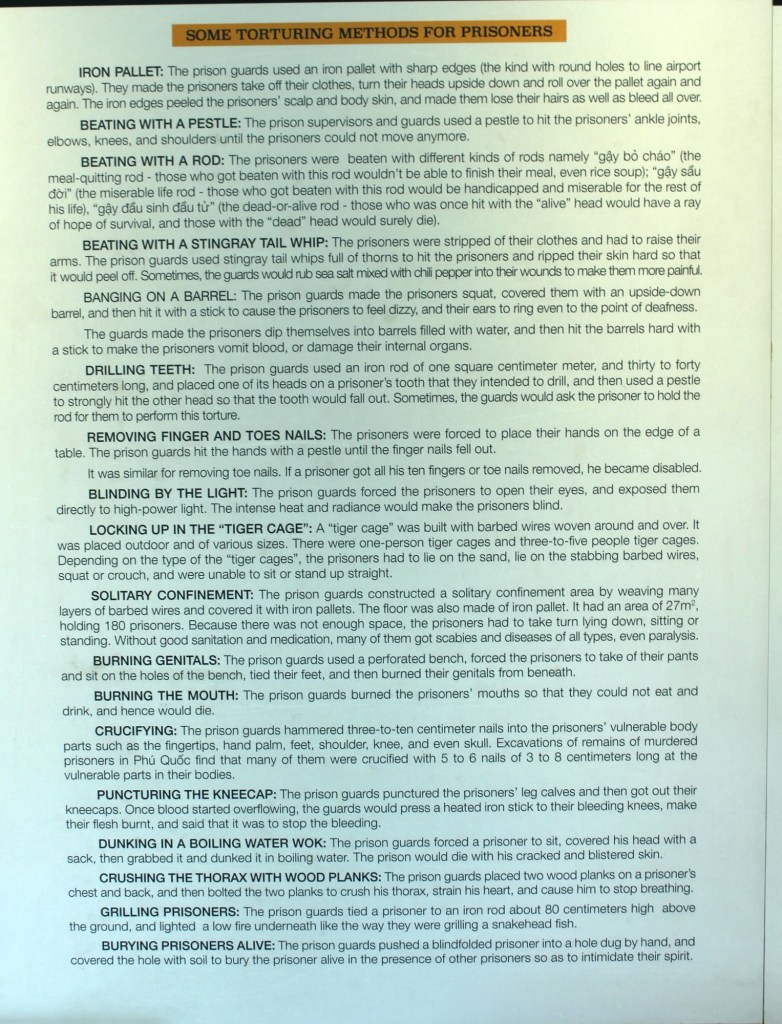
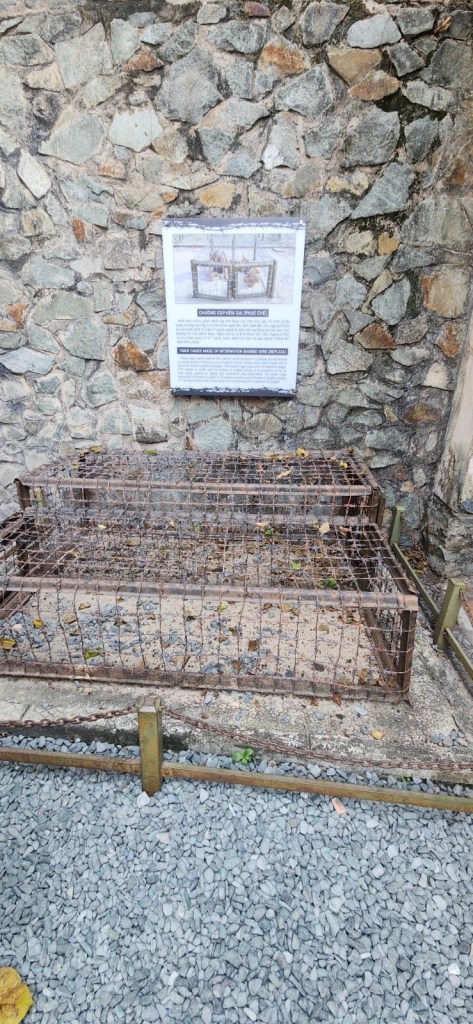
Visiting the War Remnants Museum and later the Cu Chi Tunnels gave us a sobering look at the Vietnam War and its lasting effects, particularly the devastation caused by Agent Orange. We left both sites with a deeper understanding of the Vietnam war’s impact on generations of Vietnamese people, and their continued perseverance to unify as a nation.

War Remnants Museum, HCMC
Vietnamese torture methods
Tiger cages

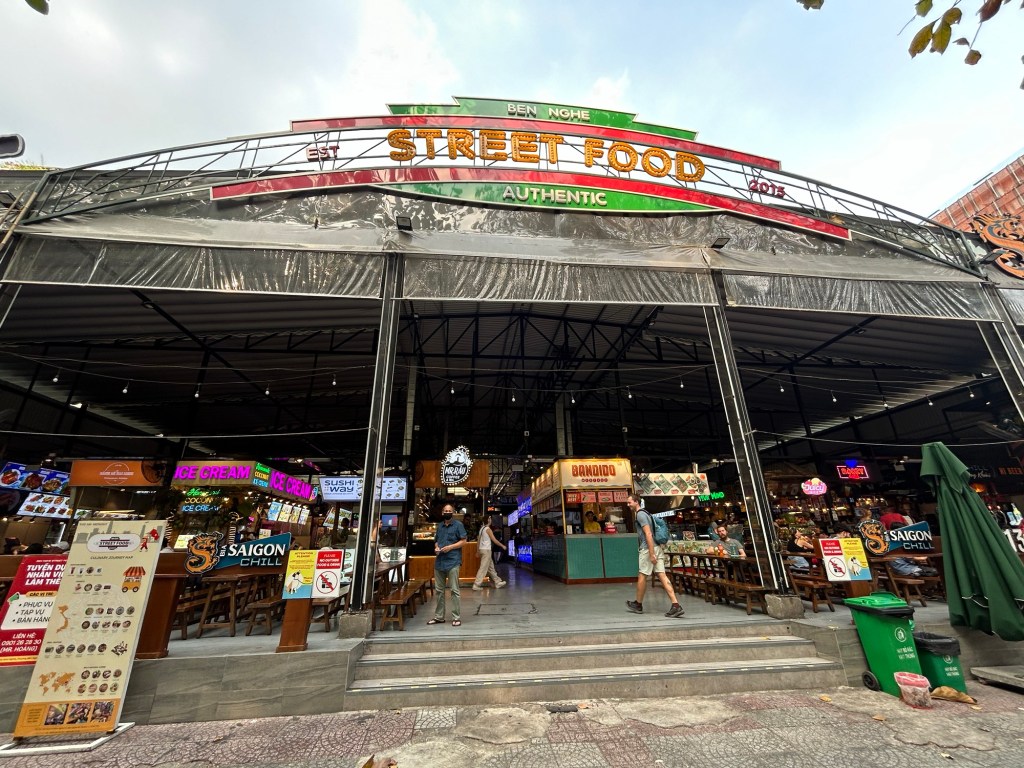
Beyond the history, we explored the vibrant markets of Ben Nghe and Ben Thanh, where we shopped and ate delicious street food.

Ben Nghe Street Food Market, HCMC

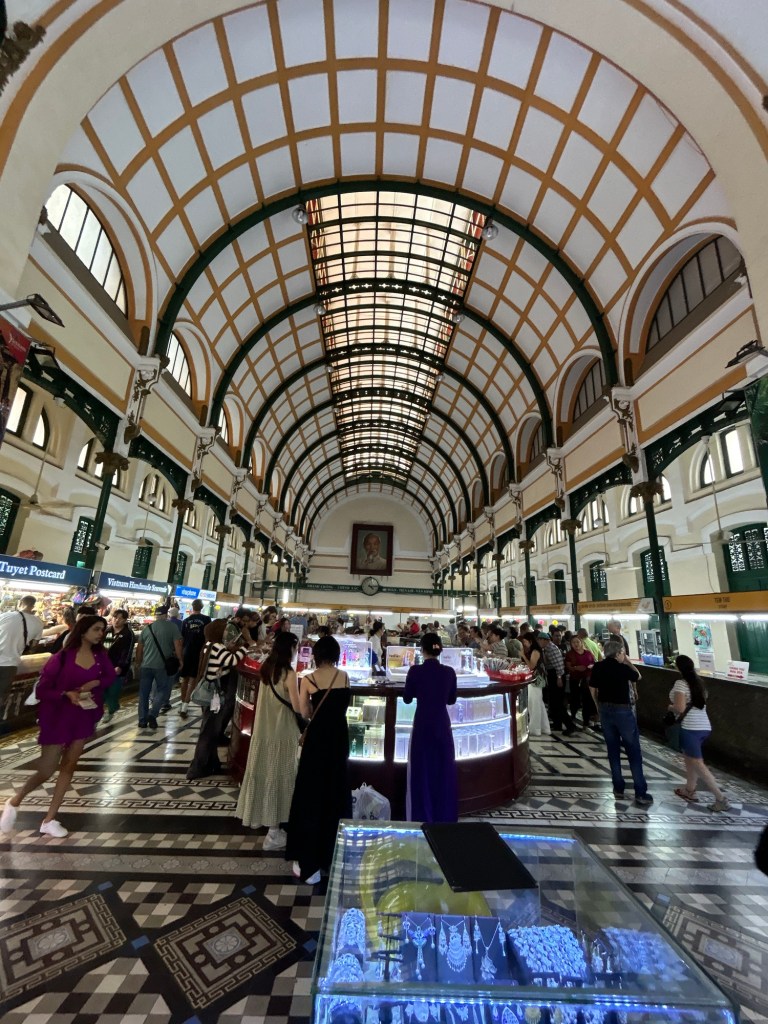
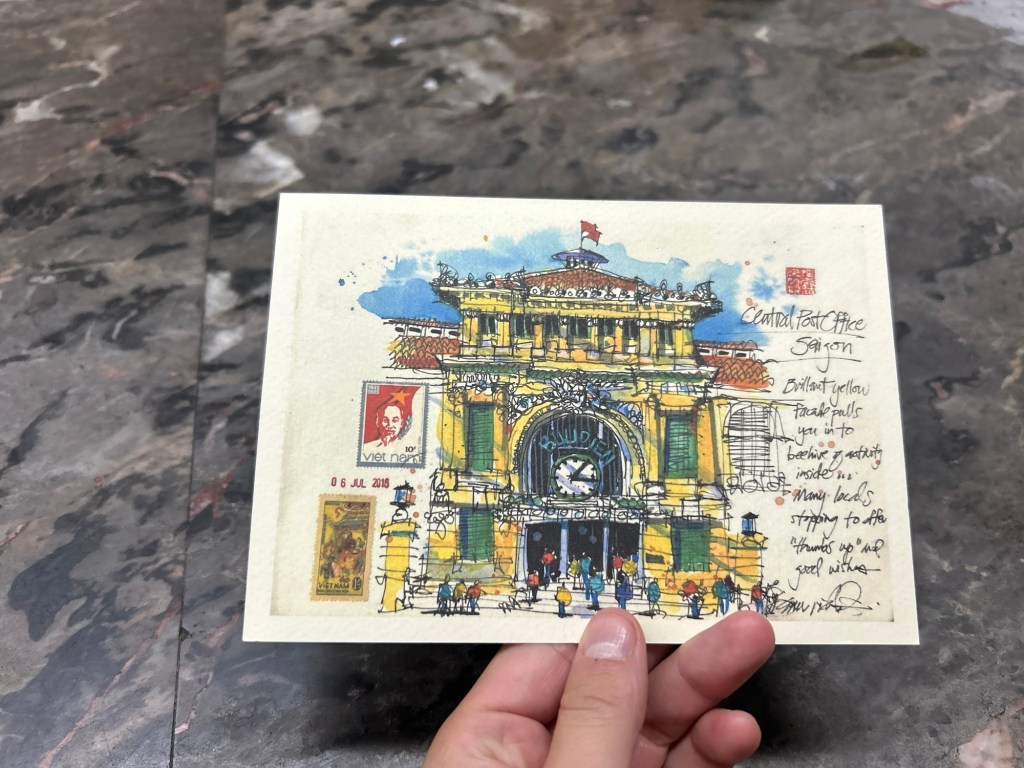
We also visited some of the iconic landmarks and main tourist attractions such as the Saigon Central Post Office, which was designed by Gustave Eiffel (the same architect behind the Eiffle Tower), where we mailed some post cards!

Inside the Saigon Central Post Office
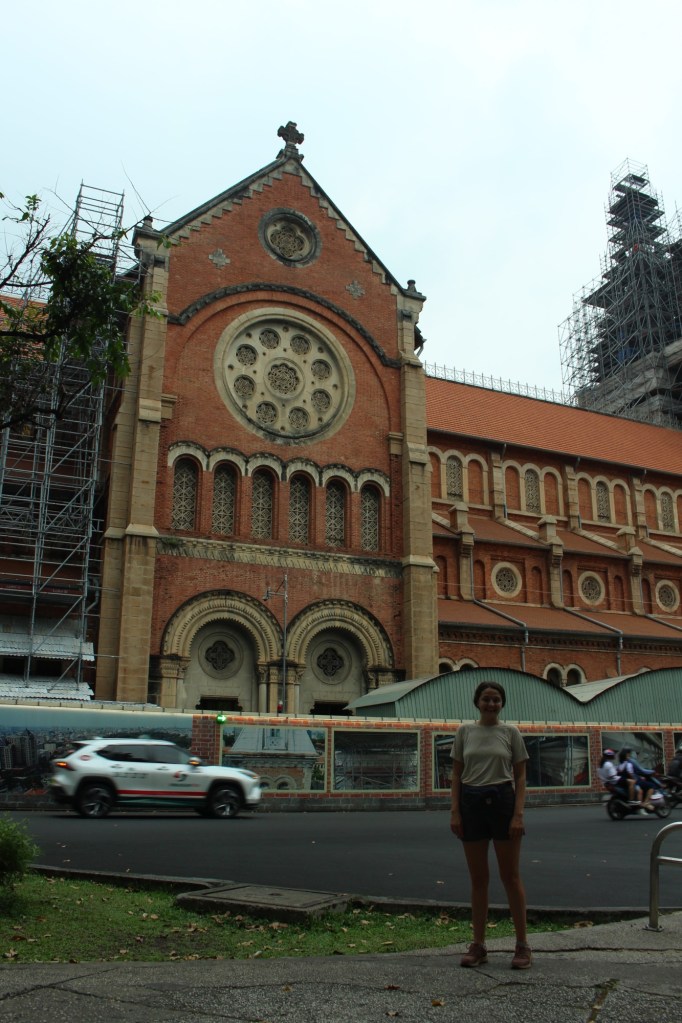
Notre Dame Cathedral of Saigon, HCMC

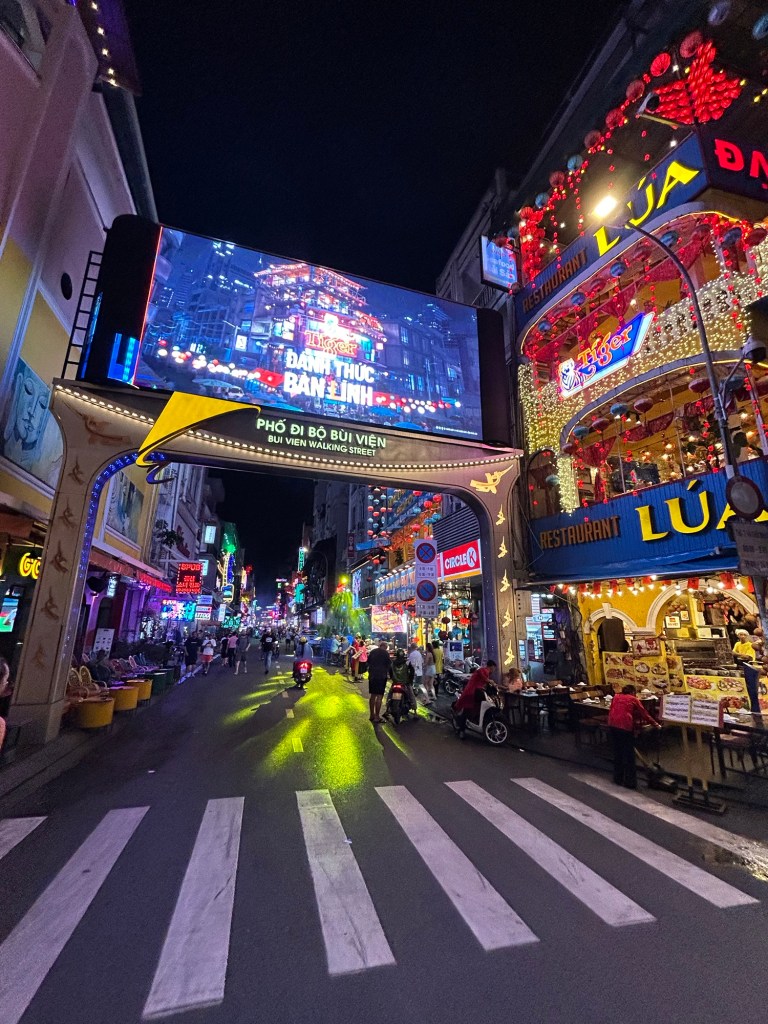
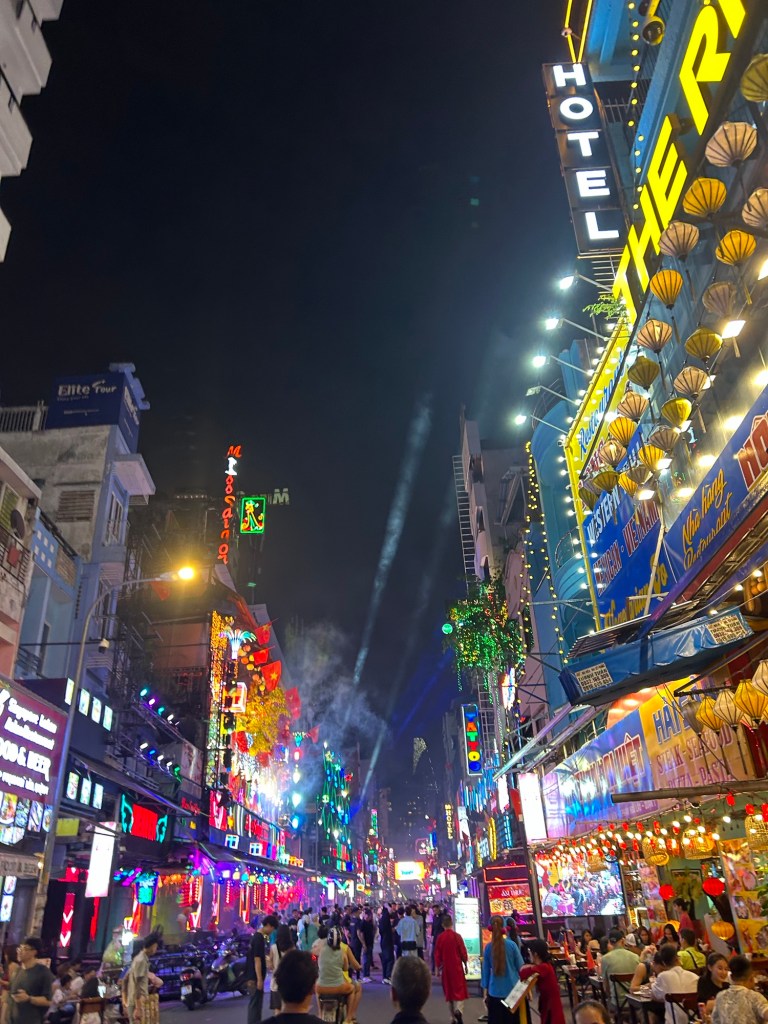
HCMC’s nightlife is an experience in itself. We headed to Bui Vien Walking Street, known for its neon-lit streets, bars, street food and live music. The street was already buzzing when we arrived for dinner, and then it transformed into a lively, packed hub of people, food, and flowing drinks—all while motorbikes and the occasional car navigated through the crowd.

We found a bar with a perfect view of the street, watching as more tables and chairs spilled onto the road, blurring the line between the bars and road as tables and chairs continued to be added deeper and deeper into the traffic area.

Bui Vien Walking Street

Da Nang

Having taken our first flight in nearly two months, we travelled from HCMC to Da Nang and were excited for some beach time!

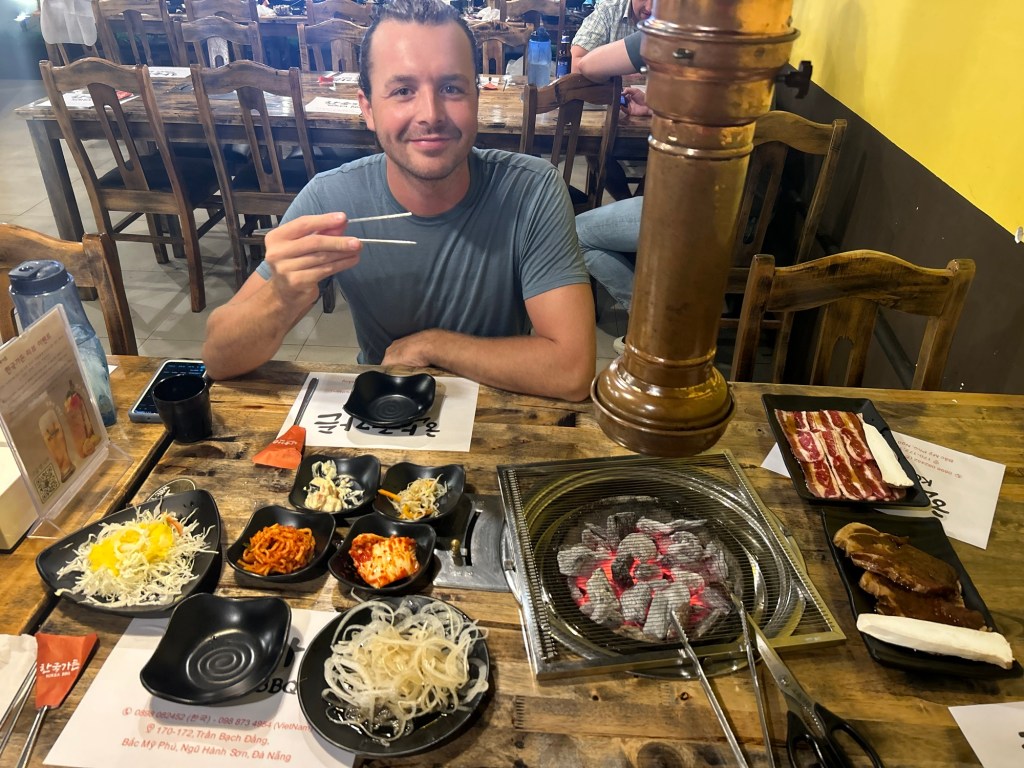
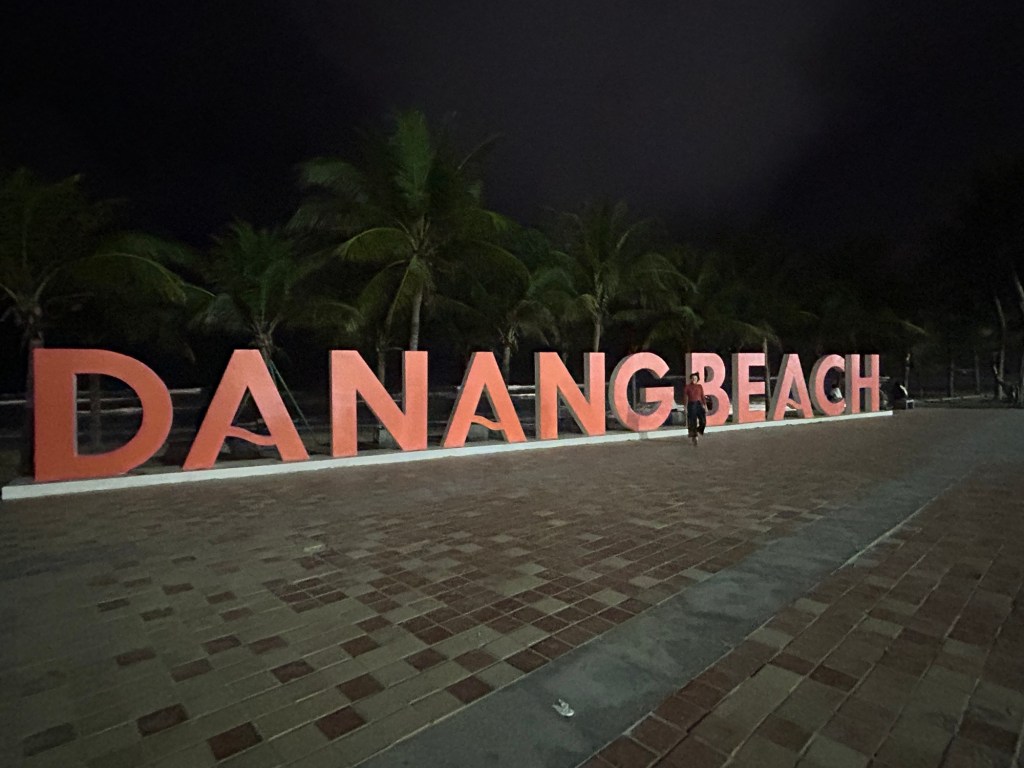
Our time in Da Nang was a mix of adventure, relaxation, and cultural exploration. The city’s coastline drew us in immediately, and we spent an entire day soaking up the sun at the beach. The waves were massive, and swimming was restricted in most areas due to the strong undertow, it was still very relaxing. The day ended with a Korean BBQ dinner, where we grilled our own meats over charcoal and ate some very flavorful Korean side dishes.

Da Nang beach at night.
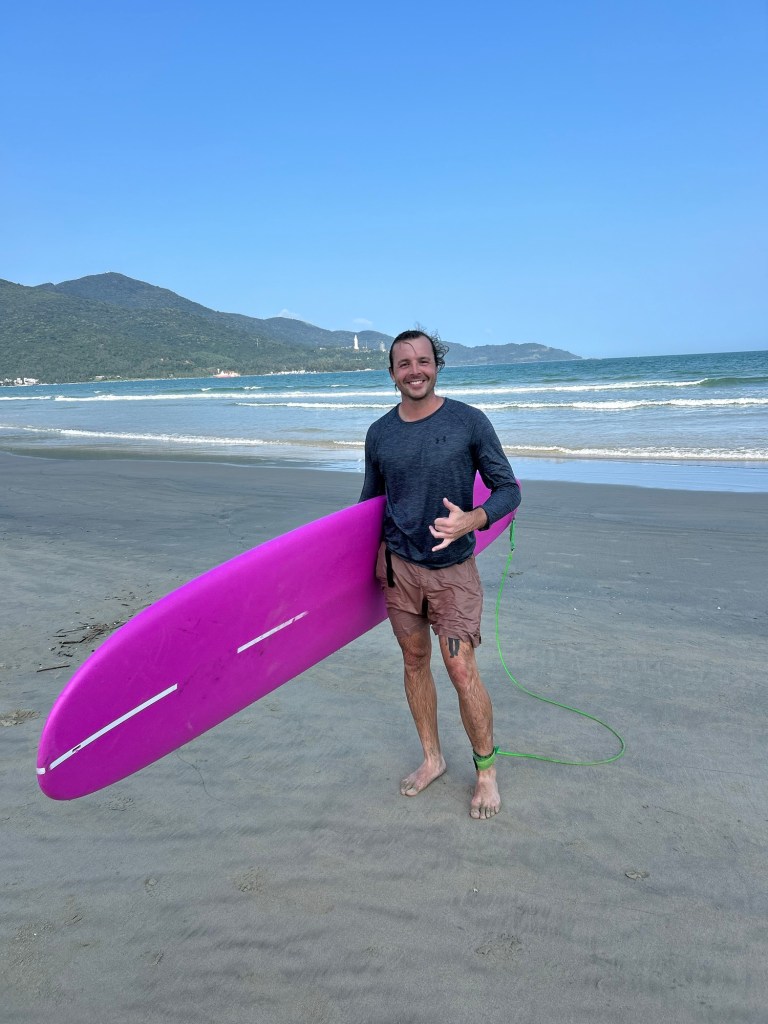
Mat’s first surfing lesson at Da Nang beach
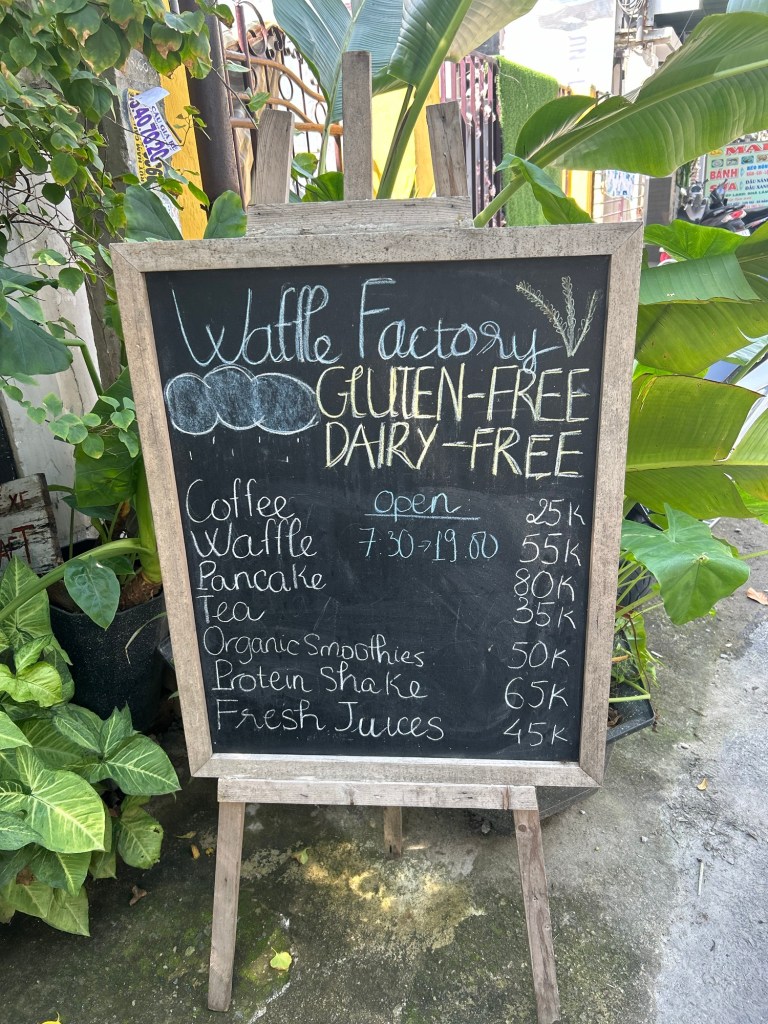
As Mat surfed, I enjoyed some downtime & drove to the waffle factory!

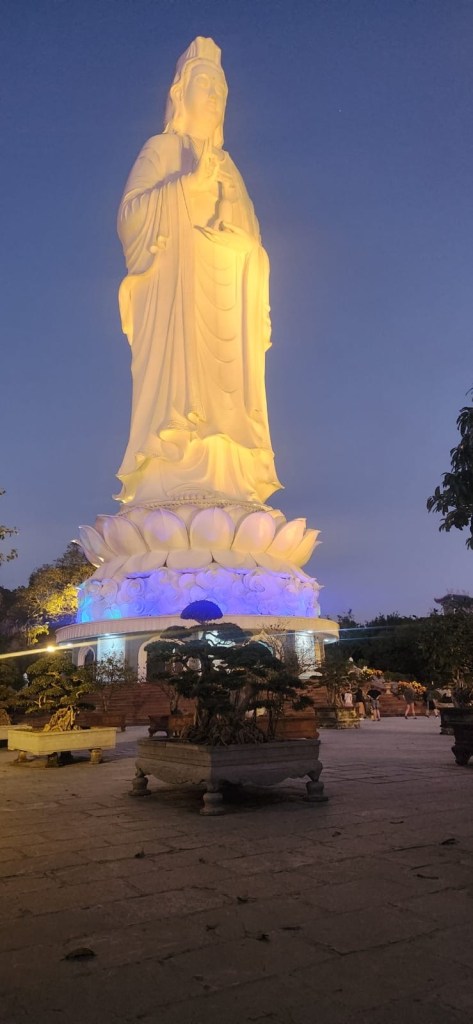
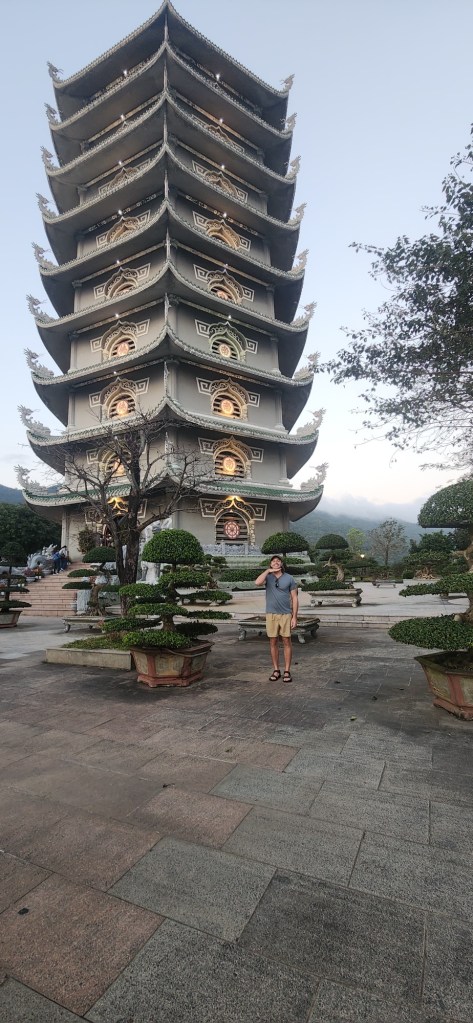
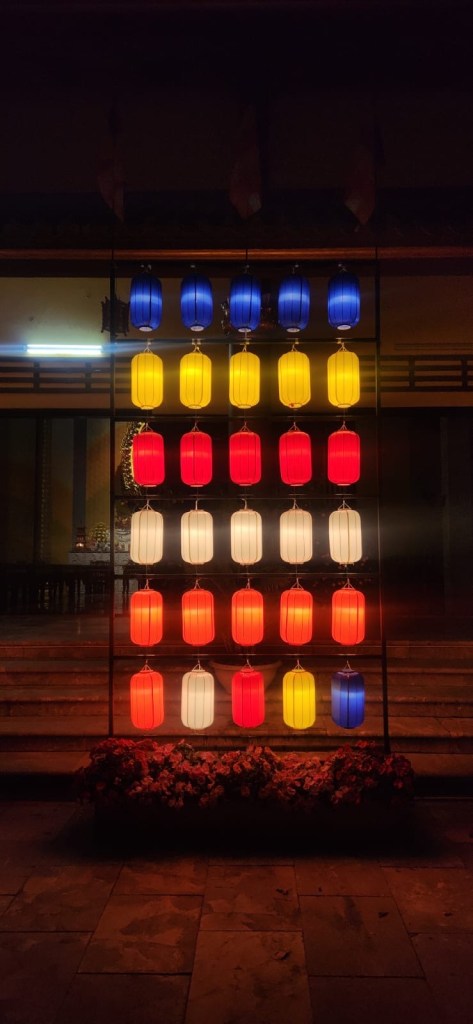
We also explored the city by scooter, travelling to the Marble Mountains, which was a cluster of five limestone hills filled with caves, temples, and panoramic viewpoints—offered stunning scenery but felt overwhelmingly touristy and crowded. In contrast, Lady Buddha and Monkey Mountain which were both further out of town provided beautiful lookouts of the city, had towering pagodas, bonsai trees, and glowing lanterns illuminating the sunset.

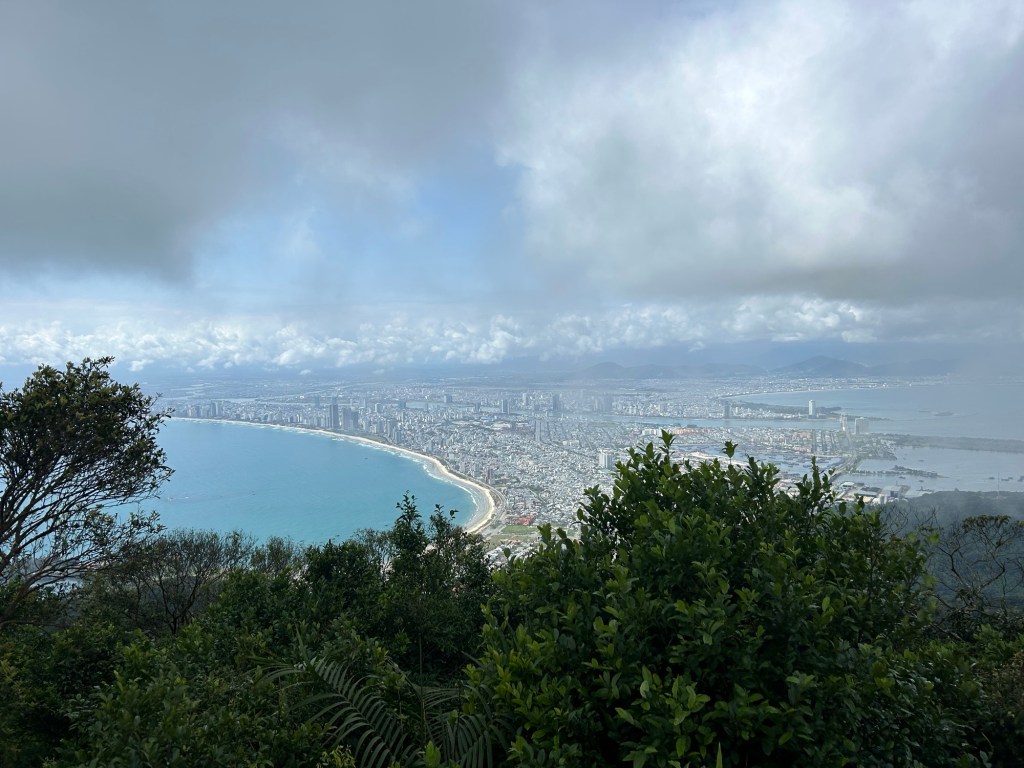
Our final scooter adventure in Da Nang had us driving up to Ban Co Peak, which was quite steep, with, sharp turns, and breathtaking views. The ascent was no joke—warning signs marked the increasing gradient levels, where halfway up, there was a checkpoint to ensure all scooters entering were manual (we had automatic scooters so we had to leave them behind and rent a manual one to continue our ride up). As we reached the upper peaks, the clouds rolled in, but we could still make out the endless ocean views and the city stretching along the coast. Monkeys greeted us along the way. Our detour into a restricted military zone—thanks to some questionable sign-reading—added an unexpected thrill before we made our way back down.

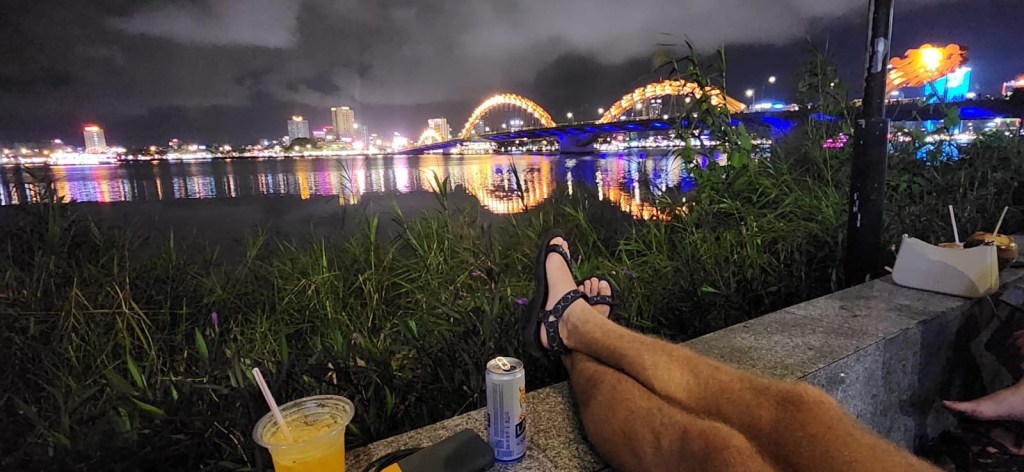
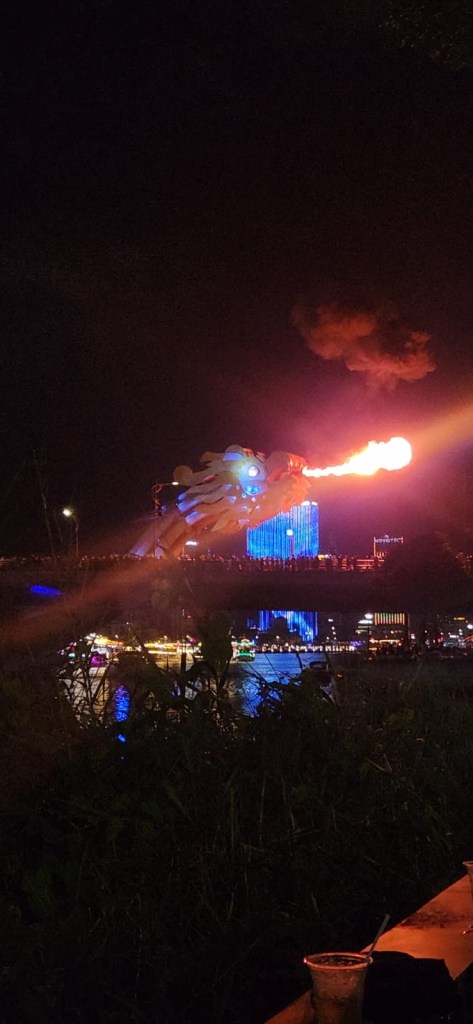
We also visited the Dragon Bridge in Da Nang, which is of the city’s most iconic landmarks. The bridge spans 666 meters over the Han River and is designed to resemble a golden dragon, a symbol of power, prosperity, and good fortune in Vietnamese culture. On weekends and holidays at 9pm, the dragon breathes Fire and Water. We were there on a Saturday and were lucky to catch the show!

Hoi An: The Land of the Lantern

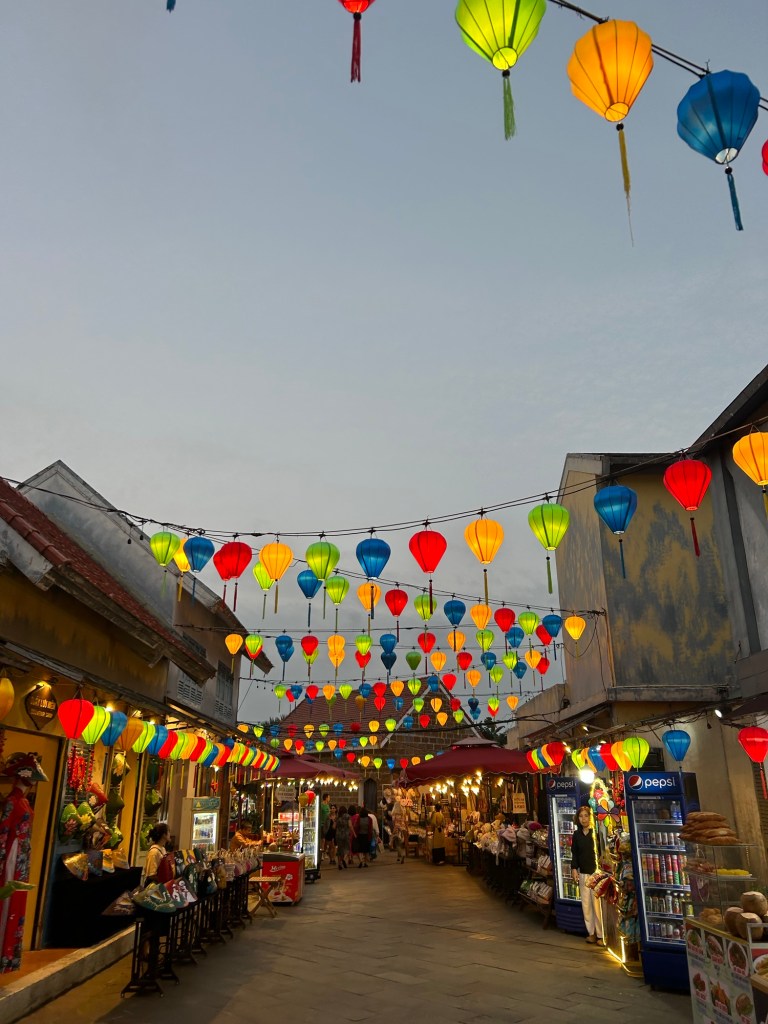
Hoi An, just down the road a 30 minute drive from Da Nang, is an ancient town known for its status as a UNESCO World Heritage Site. The streets are filled with lanterns, historic architecture and a beautiful blend of many cultures. In the 15th-19th centuries, Hoi An was a trading port.

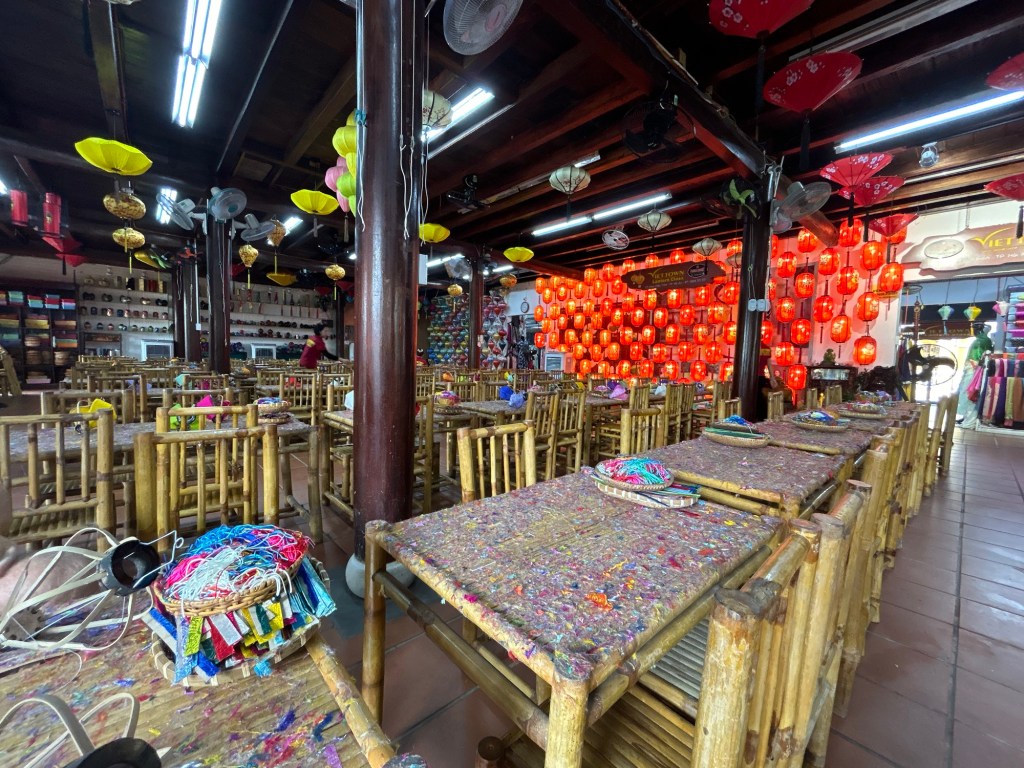
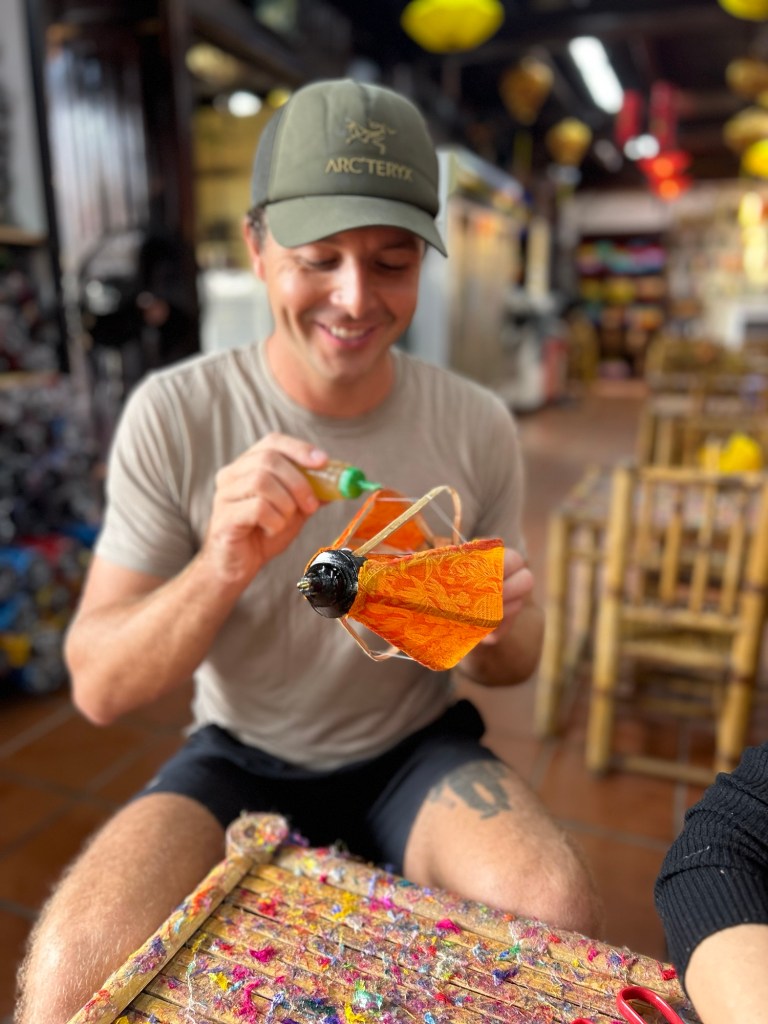
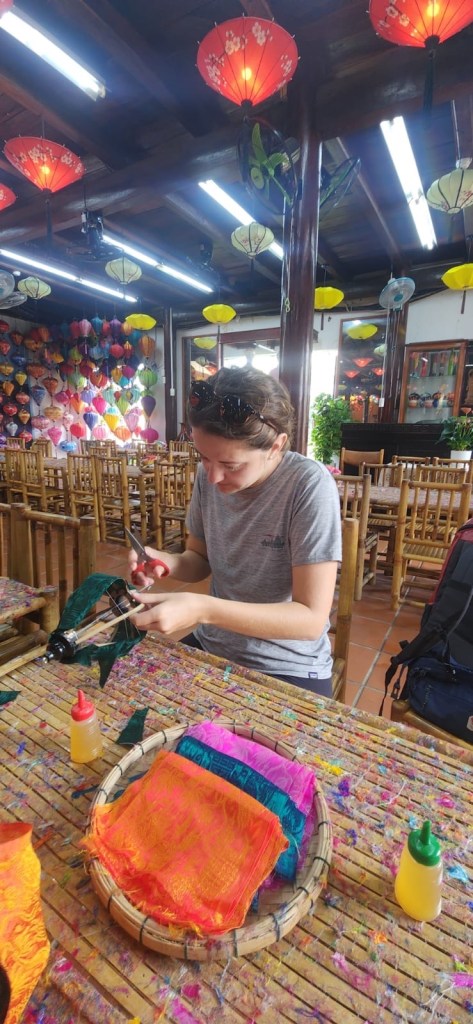
Walking through the UNESCO-listed Ancient Town, we were surrounded by beautifully preserved buildings that seemed to hold centuries of stories. We crossed the iconic Japanese Bridge (Chùa Cầu), admired the colorful lanterns that lined the streets, and even got hands-on with a lantern-making session, experiencing firsthand one of Hoi An’s oldest traditions.

Hoi An lantern making!

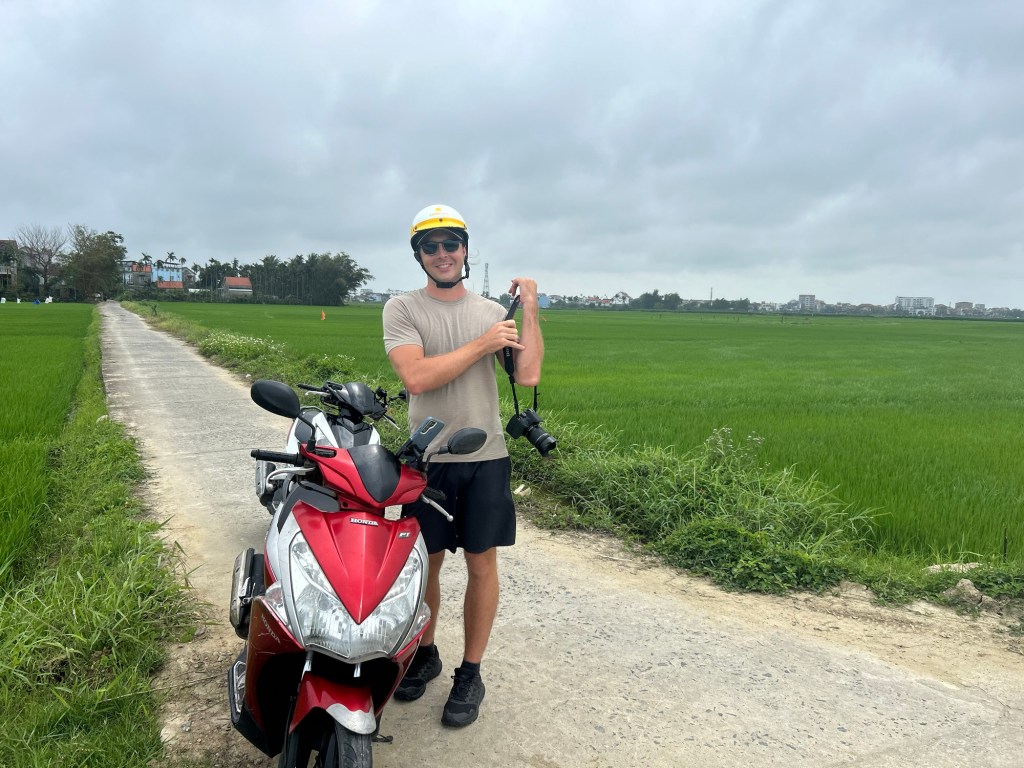
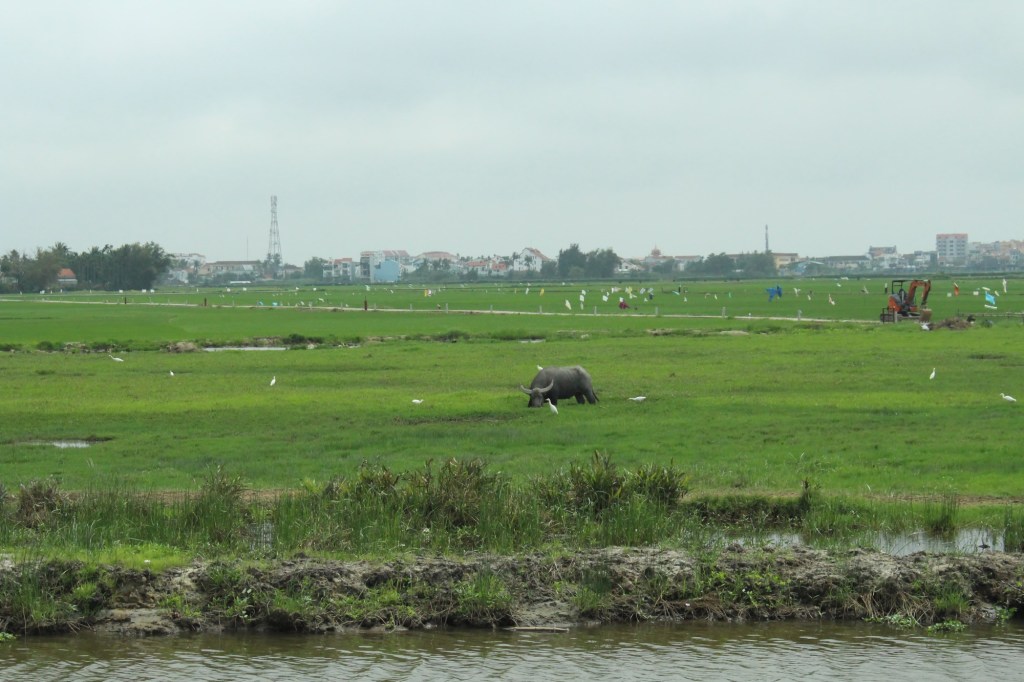
A visit to the Folklore Museum gave us deeper insight into Vietnamese legends before we set off on our scooters to explore the rice fields and coastal roads. When the rain set in, we took the opportunity to unwind and plan our next adventures.

Cruising through the rice terraces in Hoi An

We spent time on the beautiful beach’s, playing in the big waves, walking along the coast and just relaxing. Continuing the theme of eating our way through Vietnam, we tried a traditional dish unique to Hoi An called white rose dumplings (Bánh Bao Bánh Vạc), which are translucent dumplings filled with shrimp or pork, topped with crispy shallots, and served with fish sauce. They were delicious!

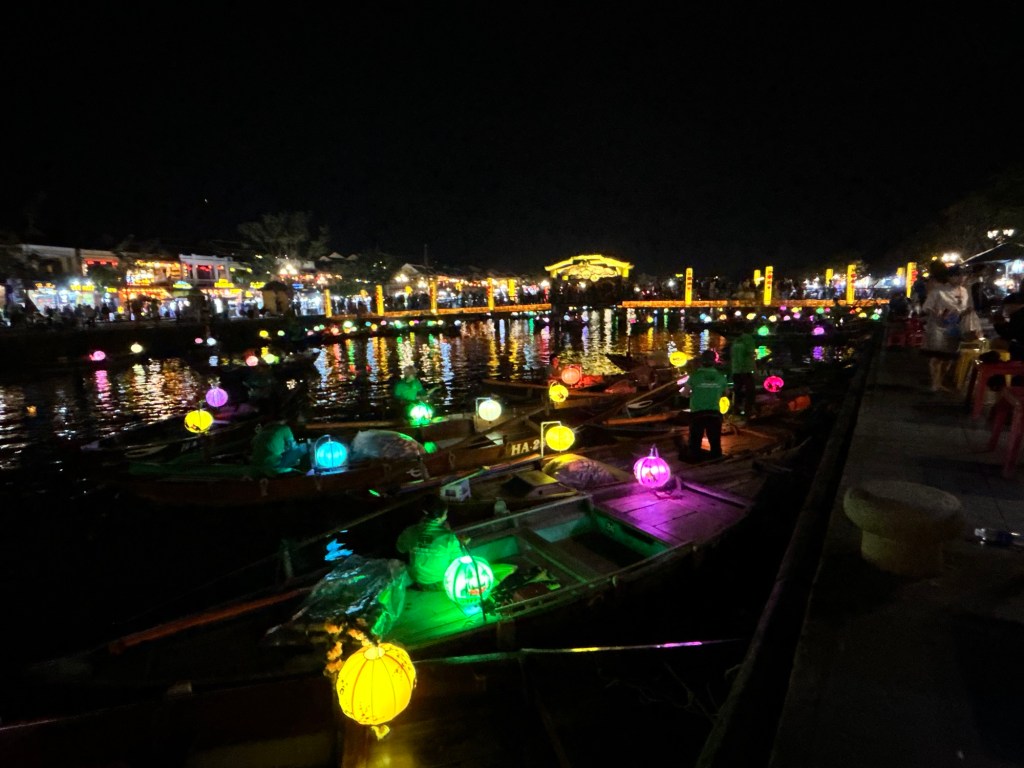
Lantern boats along Hoi An Ancient City.

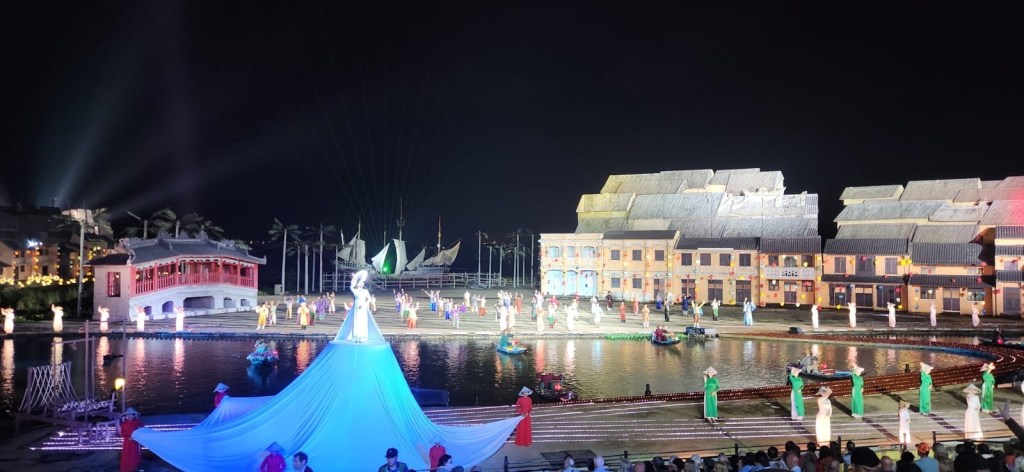
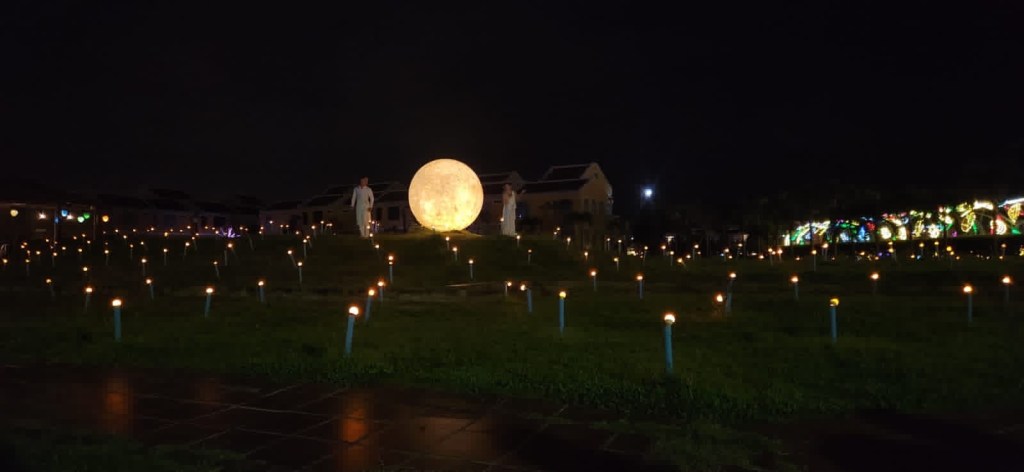
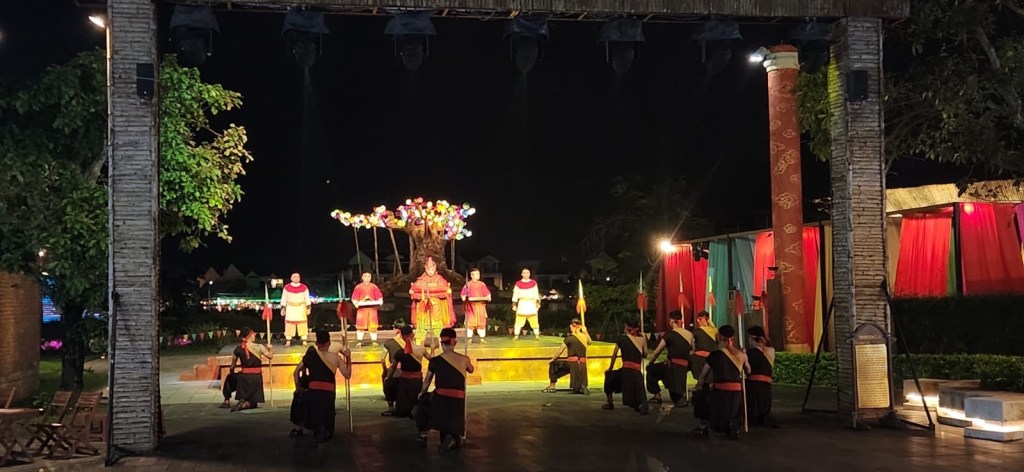
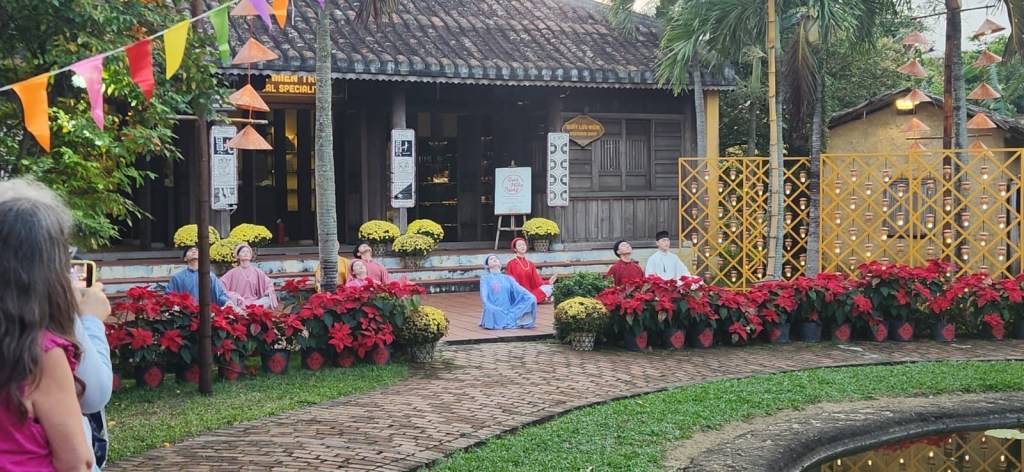
The highlight of our time in Hoi An was watching the Hoi An Memories Show, an immersive, large-scale performance set on its own island. We wandered through themed mini-performances throughout the night before experiencing the grand finale—an amazing show with 200+ performers telling the story of Hoi An from past and present through music, dance, and breathtaking visuals. It was a stunning show, bringing the city’s rich heritage to life in the most beautiful way.

Hoi An Memories Show
Hoi An Memories Show (pre-show)
Hoi A Memories Show (pre-show)
Hoi An Memories Show (pre-show)

Exploring Hue: Vietnam’s Ancient Capital

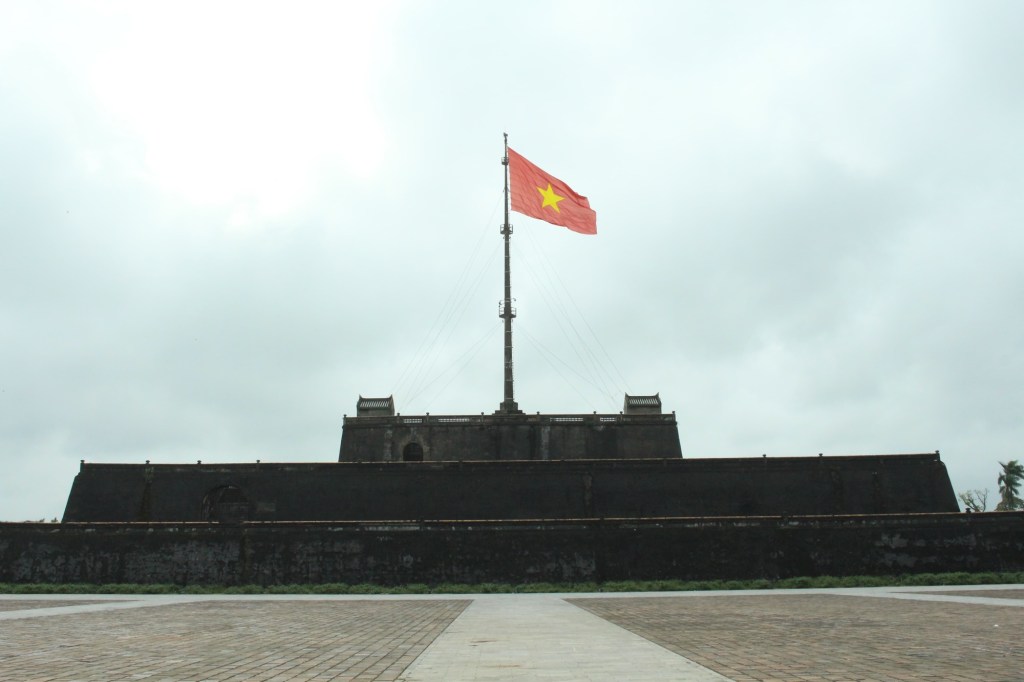
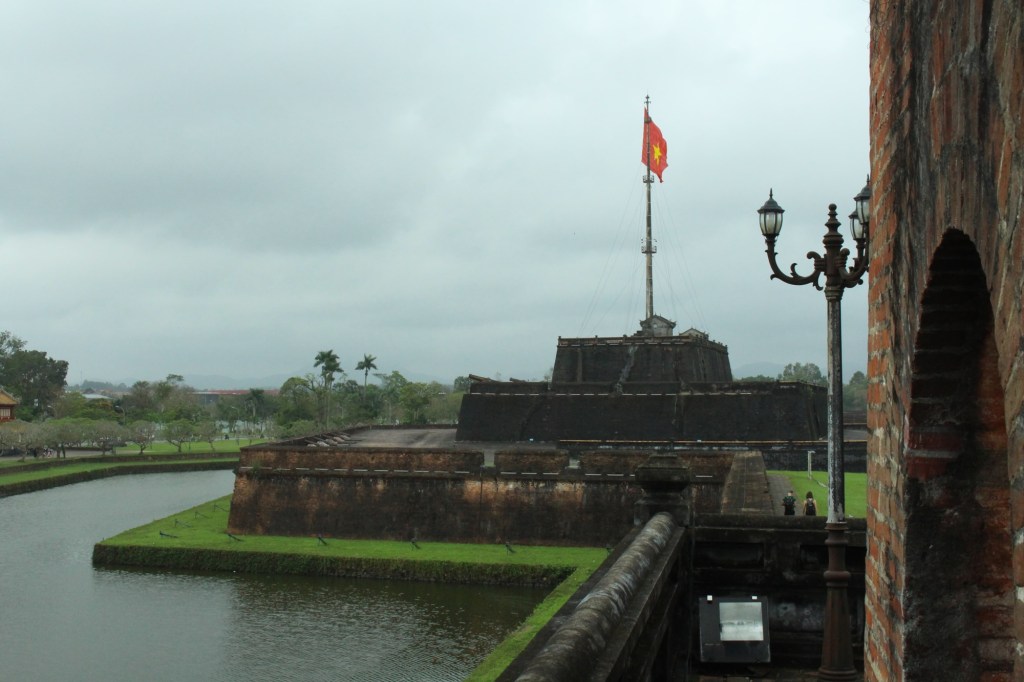
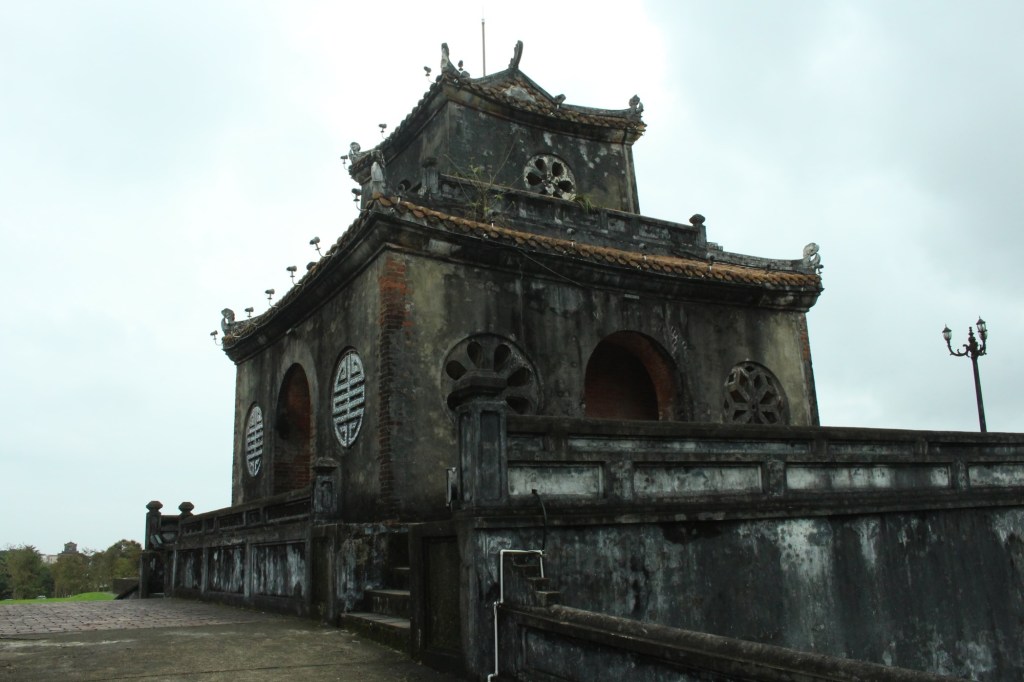
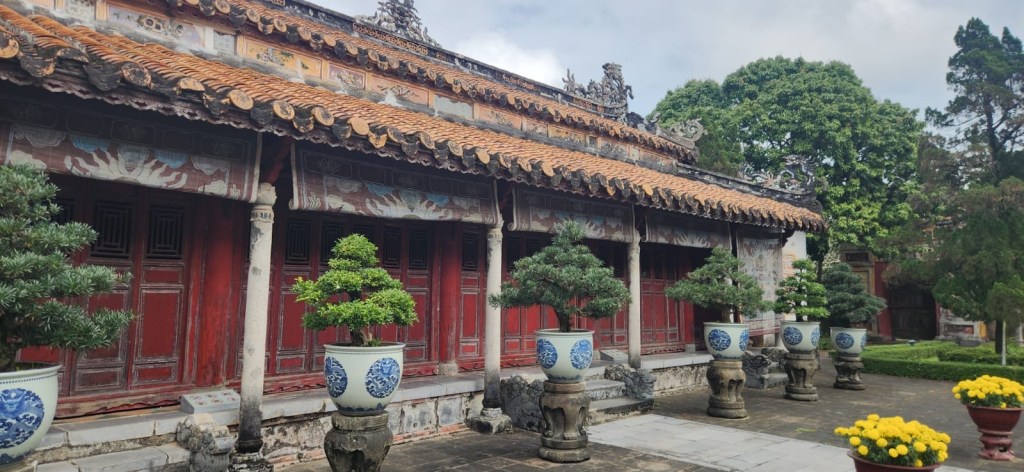
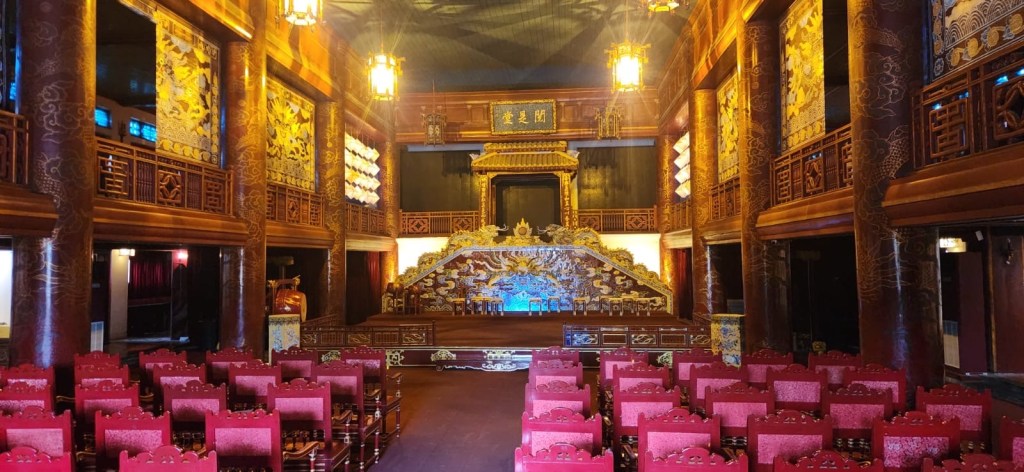
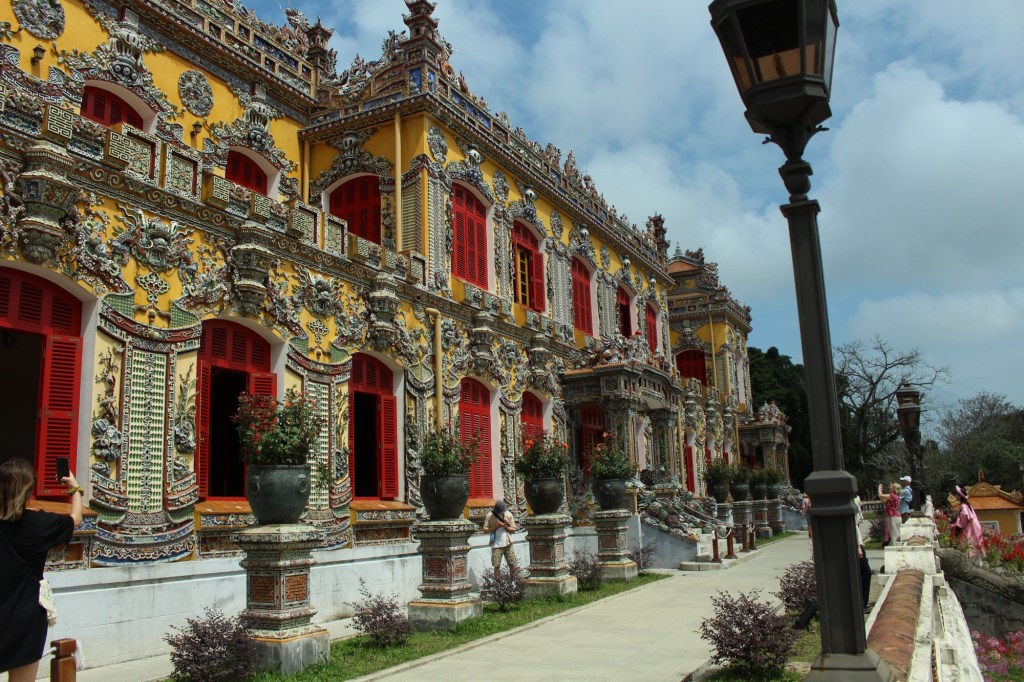
Stepping into Hue felt like stepping back in time. Once the imperial capital of Vietnam during the Nguyen Dynasty (1802-1945), Hue is a city rich in history, culture, and stunning architecture. Hue is the home to the grand Imperial City, a UNESCO World Heritage Site that was once the political and cultural heart of Vietnam. Within its ancient walls are palaces, temples, and royal courtyards that tell the story of Vietnam’s last emperors.

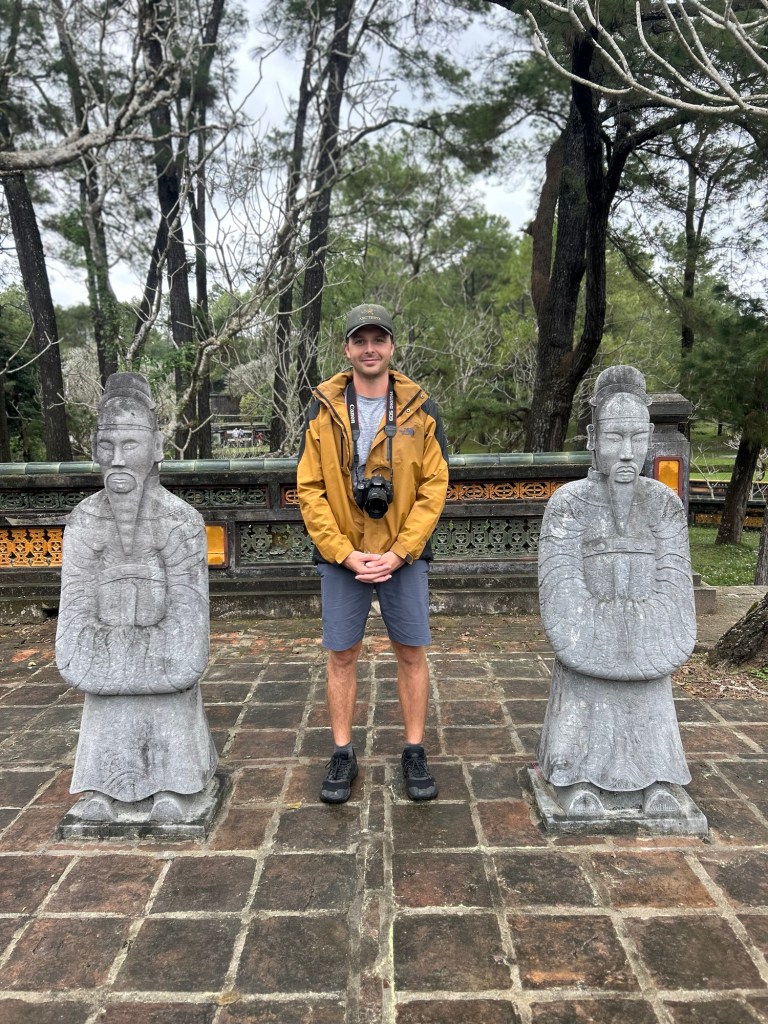
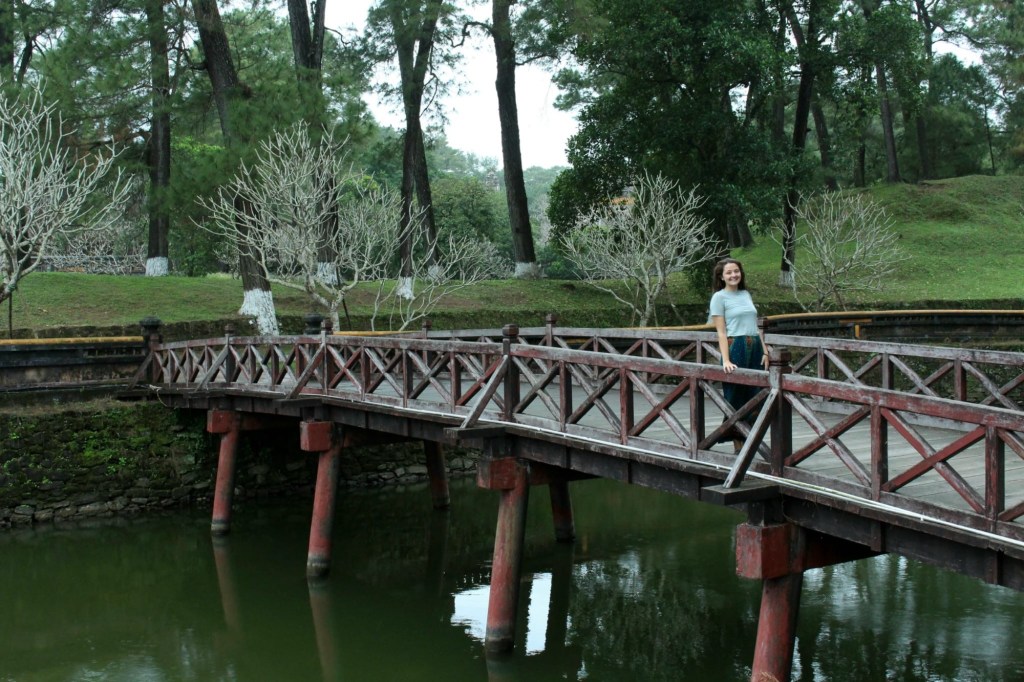
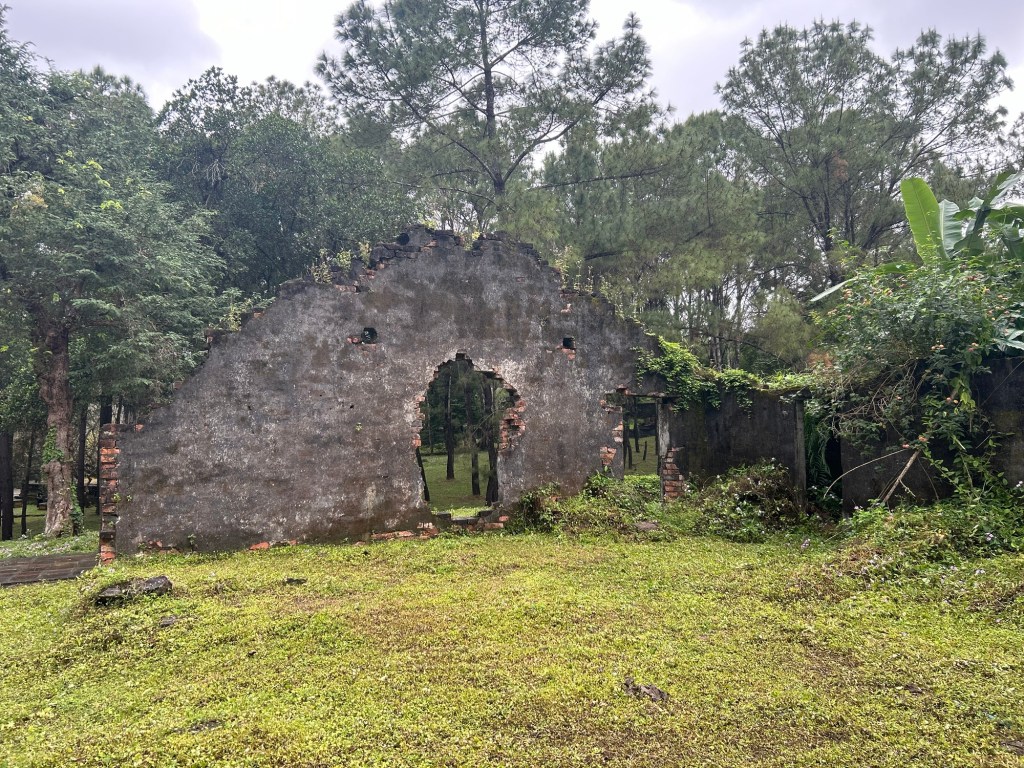
As Hue is the ancient capital of Vietnam, the history dates back thousands of year’s, and includes ancient relics, mausoleums of prior rulers and the remains of many buildings, several having been rebuilt after times of war and unrest. Hue is dotted with royal tombs, pagodas, and war relics, each offering a glimpse into the country’s past. We decided to get scooters to explore some of the tombs and pagodas further outside of town, however, we chose to do so on a day that poured rain, but as always, we made the best of the day!

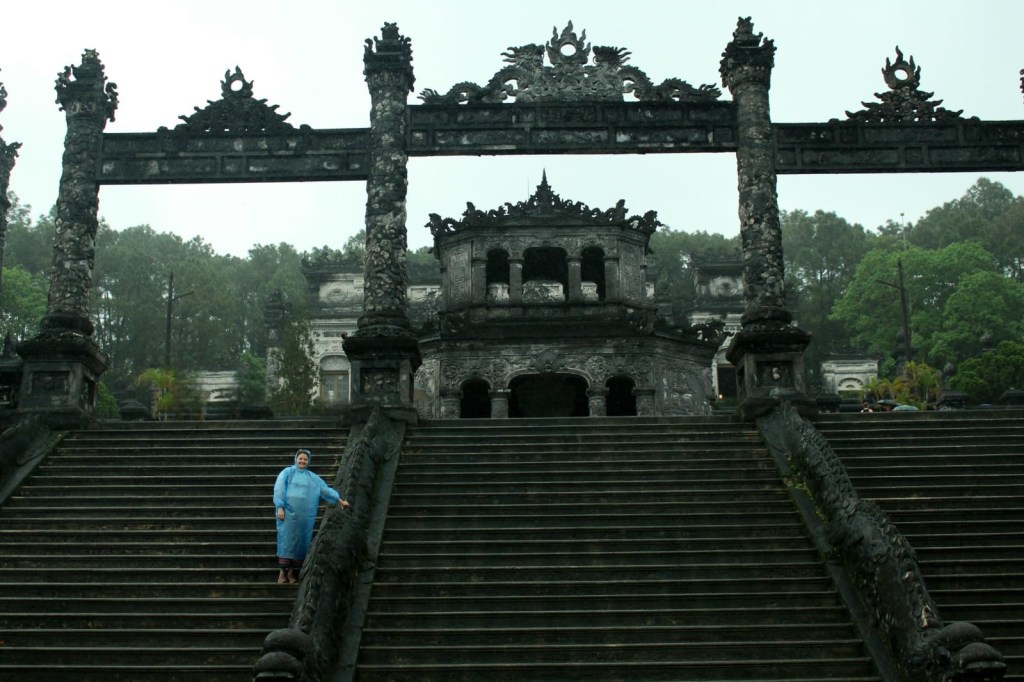
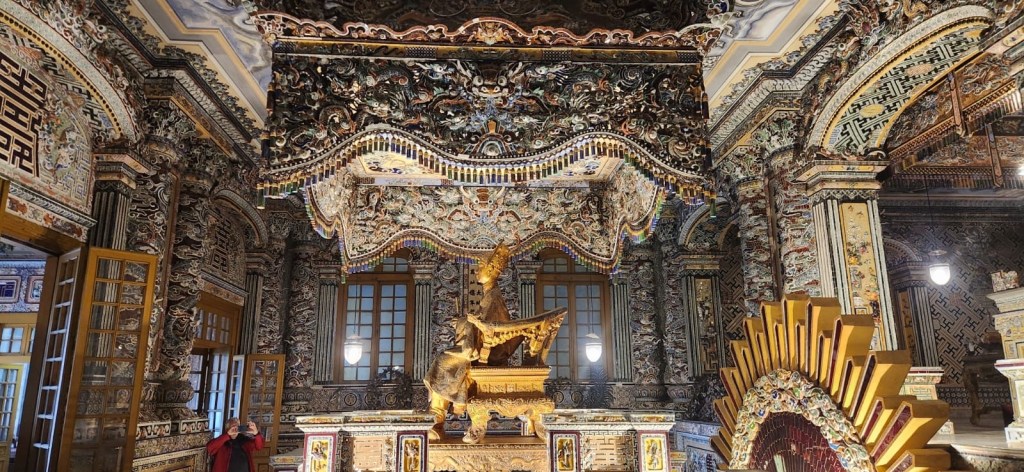
Mausoleum of Emperor Khai Dinh

We visited two separate areas, the first being the Mausoleum of Emperor Khai Dinh and the second Mausoleum of Emperor Minh Mang.

Mausoleum of Emperor Khai Dinh

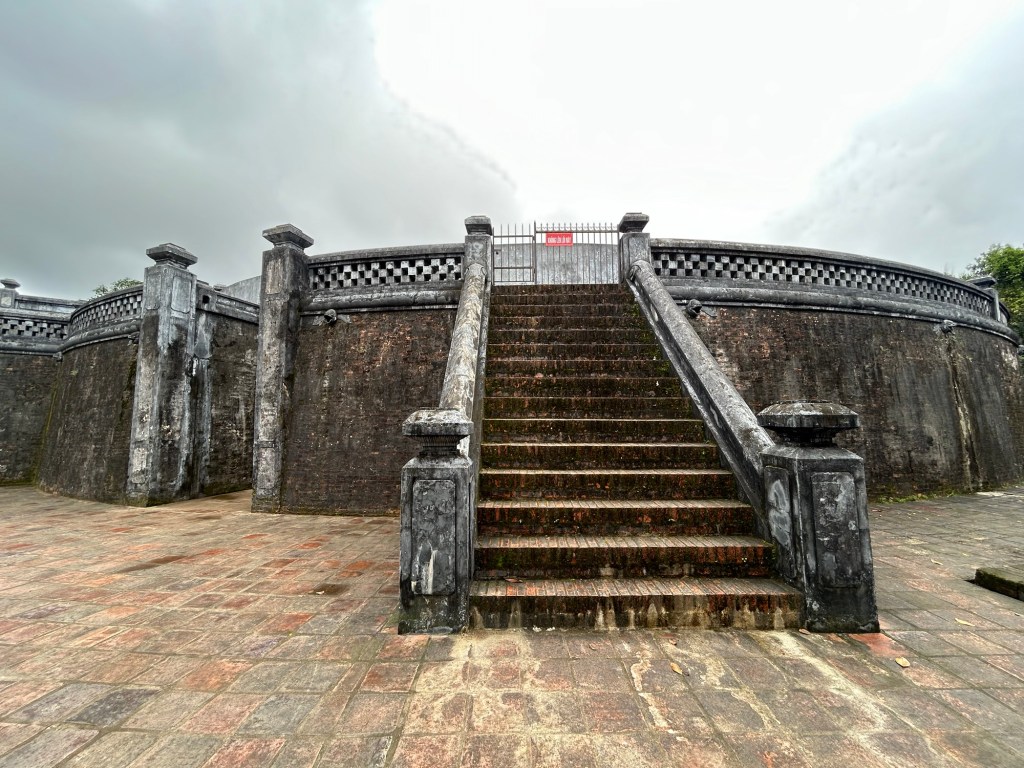
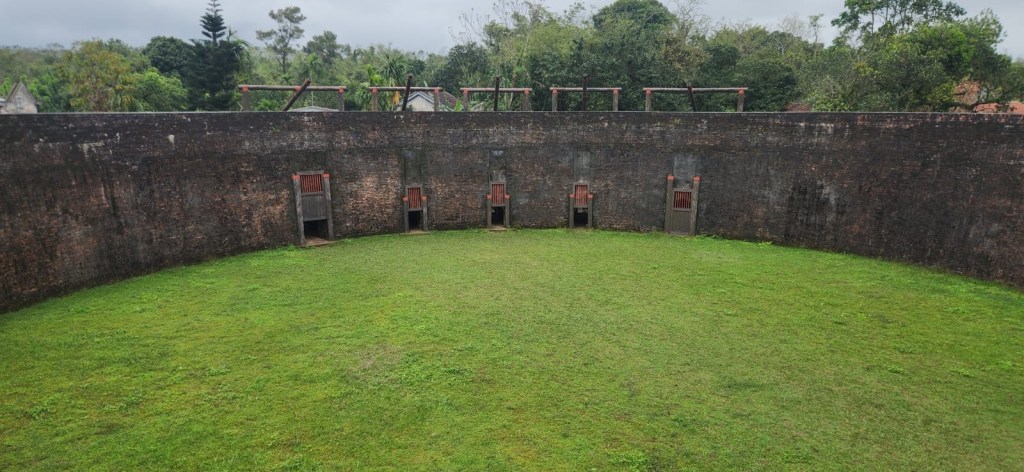
Tucked away in the heart of modern Hue, Ho Quyen Arena is a fascinating relic of Vietnam’s imperial past. Built in the 1830s, this stone amphitheater once hosted dramatic battles between elephants and tigers—but these weren’t ordinary fights. The elephants, who represented the Nguyen Dynasty’s power, were always meant to win. To ensure this, the tigers were de-clawed and drugged, symbolizing the suppression of rebellion.

Ho Quyen, Hue’s tiger stadium.

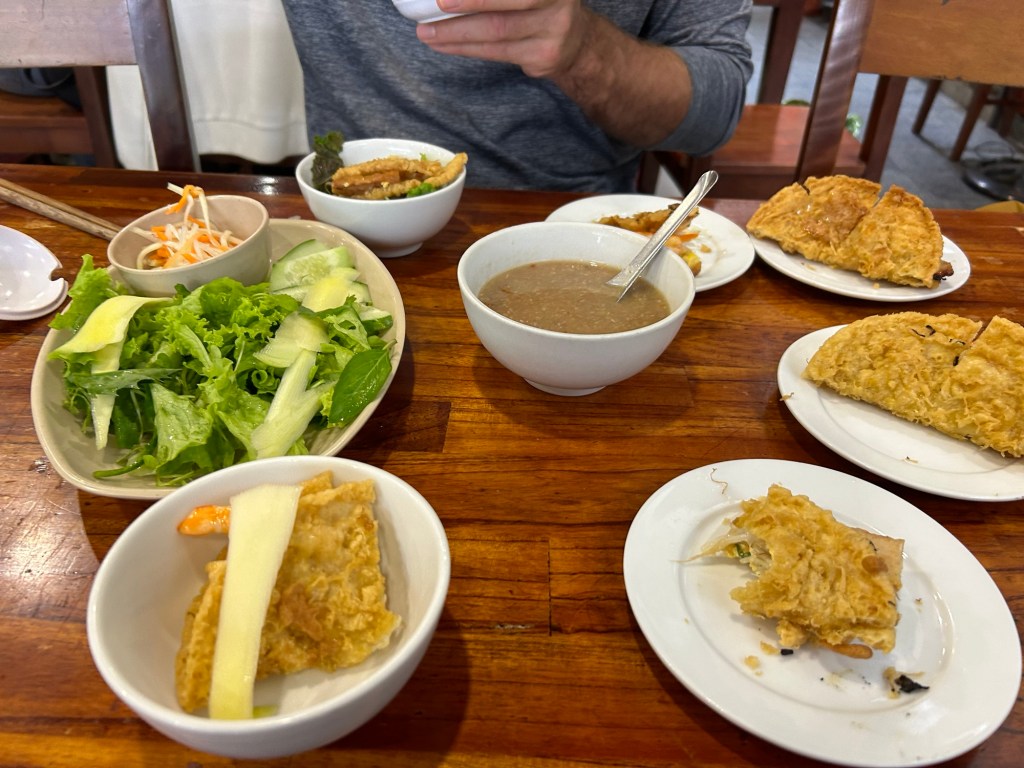
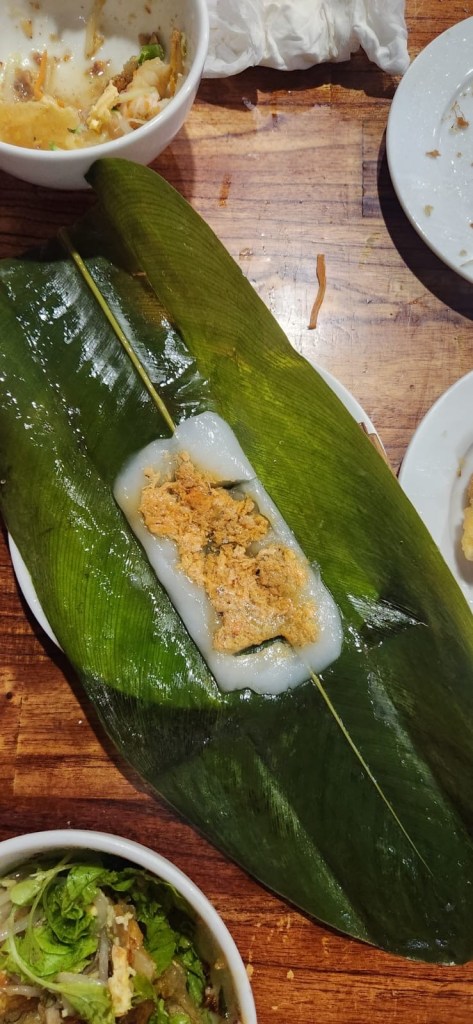
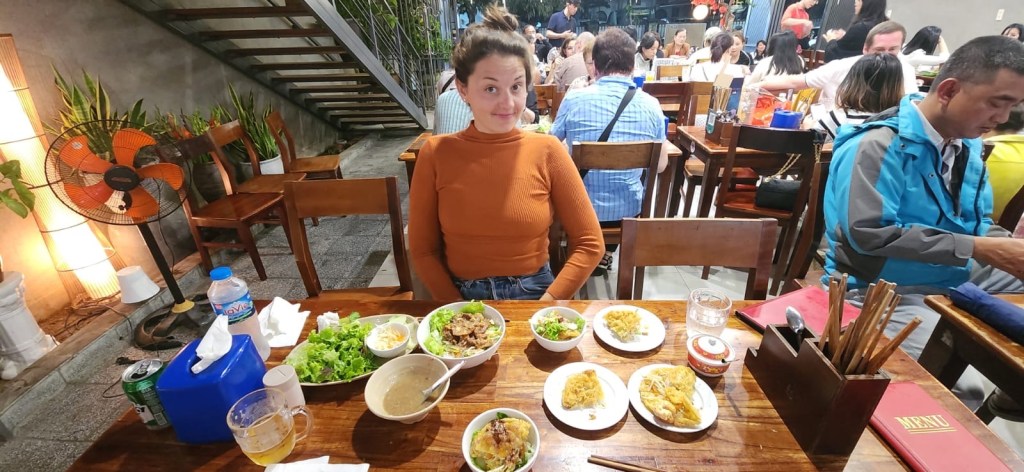
But Hue isn’t just about history—it’s also known for its unique cuisine. We found Hue had the BEST food we ate in Vietnam, and maybe even in Southeast Asia. When we checked into our hotel, we were provided a list of things mapped out and shared with us on Google maps ranging from viewpoints to restaurants, and these were the hot spots for restaurants, we were never disappointed. 

We tried the traditional dish Bahn Khoai, which is rice pancake with bean spouts, shrimp, chicken, and pork, served with lettuce and carrot and cabbage and a peanut sauce.
We came back for lunch the next day, it was that good!

Traveling from Hue to Hanoi by night bus was an adventure in itself. The 13-hour bus journey with no toilet on board and sporadic rest stops. We arrived earlier than expected, and booked an impromptu hotel for our 4:30 AM arrival, where we were able to crash until mid-morning before transferring to our next stay. While not the most glamorous journey, it was an efficient (and memorable) way to travel across Vietnam.

Hanoi part 1: History & More Food

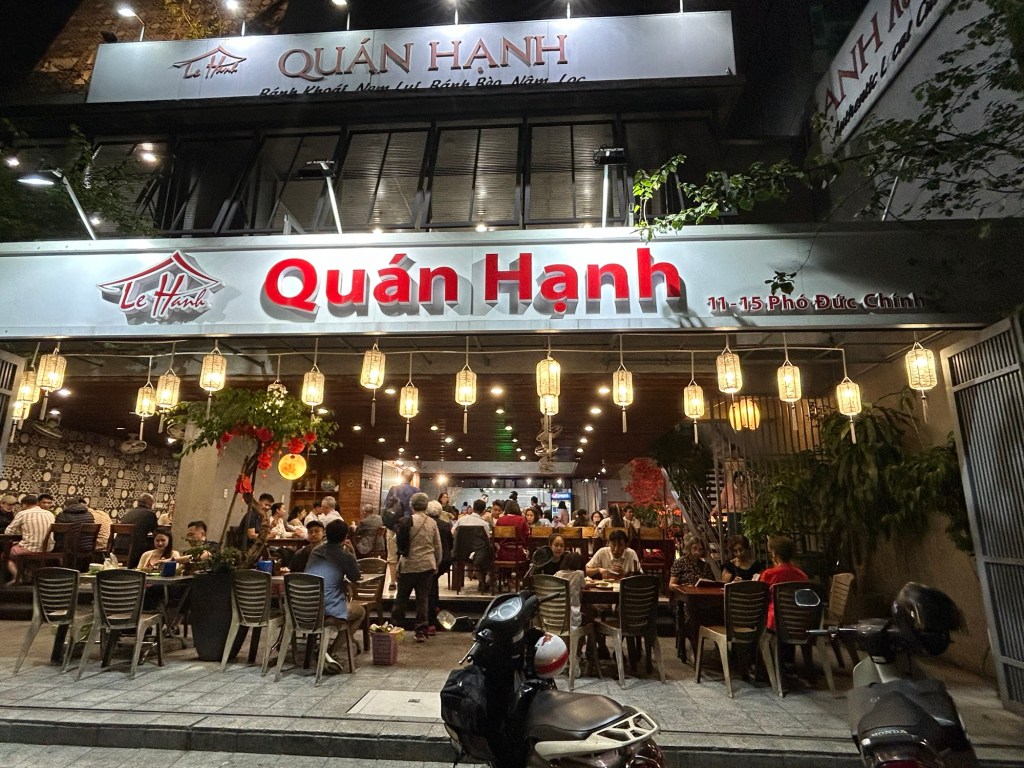
Hanoi is the modern day capital city of Vietnam. After having stayed in HCMC, we decided to stay in the Old Quarter, known for its bustling streets, historic architecture, and incredible street food. This district, which dates back over 1,000 years, is a maze of narrow streets, each traditionally named after the goods that were sold there, such as Hang Bac (Silver Street), Hang Gai (Silk Street), and Hang Duong (Sugar Street). Every city in SE Asia seems to come alive at night and Hanoi was no acceptation. At night, the Old Quarter transformed into a vibrant hub with night markets, street performances, and a mix of traditional and modern nightlife.

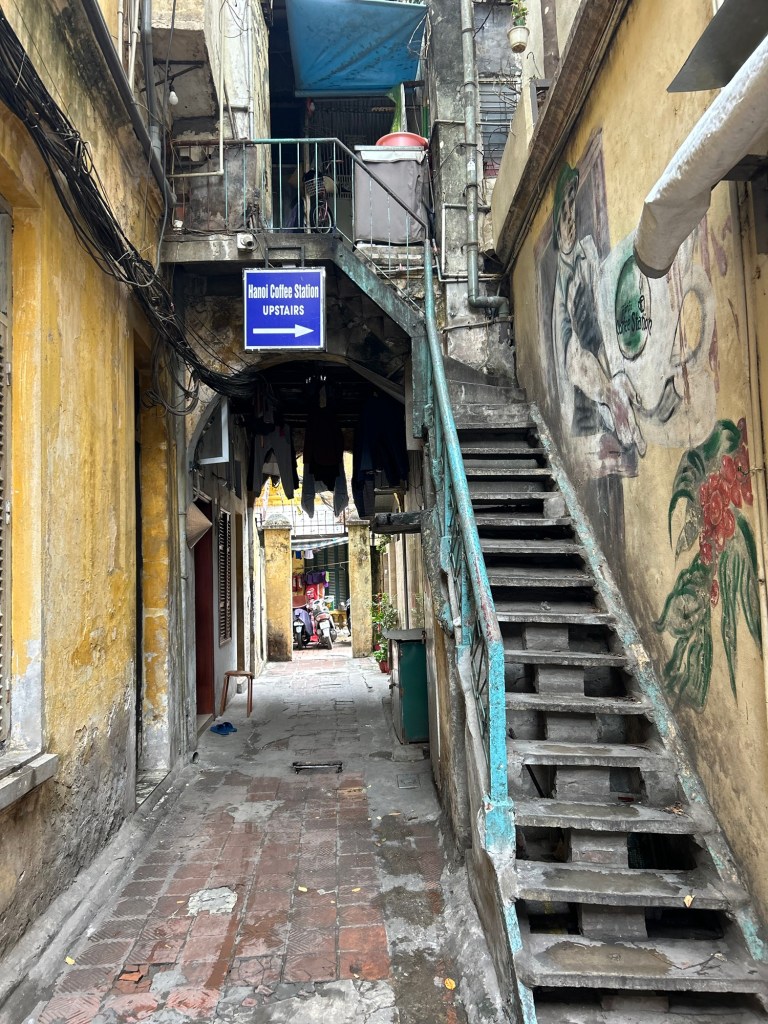
Coffee shop entrance.

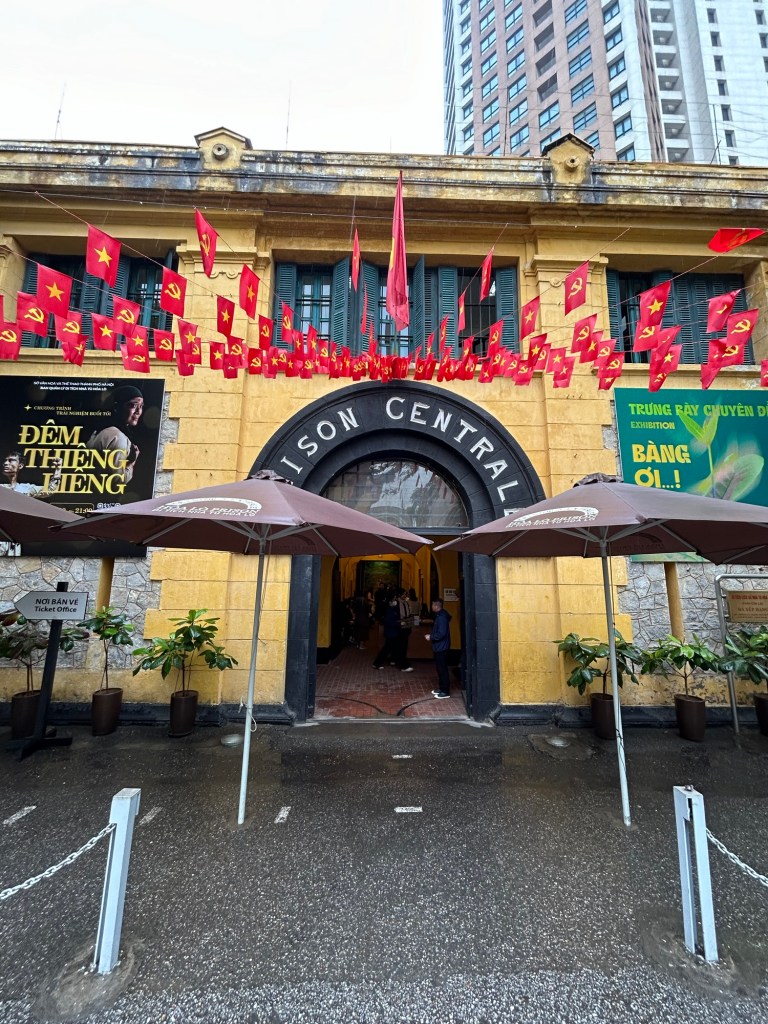
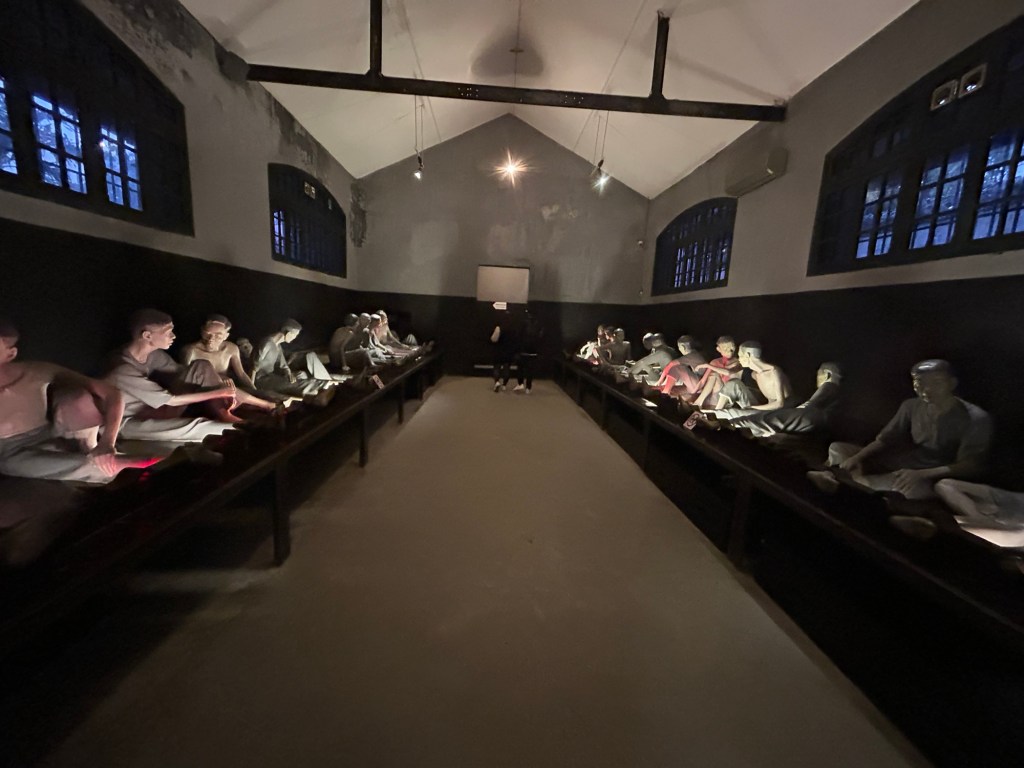
In Hanoi, we started with a walk to Hoan Kiem Lake, a peaceful spot in the heart of the city, and then a deep dive into Hanoi’s history and culture. We visited Hoa Lo Prison, expecting more insight into Vietnam’s view of the war with America, but instead, it focused primarily on the country’s struggle under French occupation, with a brief and overly positive (and very surprising) mention of the treatment of American POWs.

Hoa Lo Prison, Hanoi

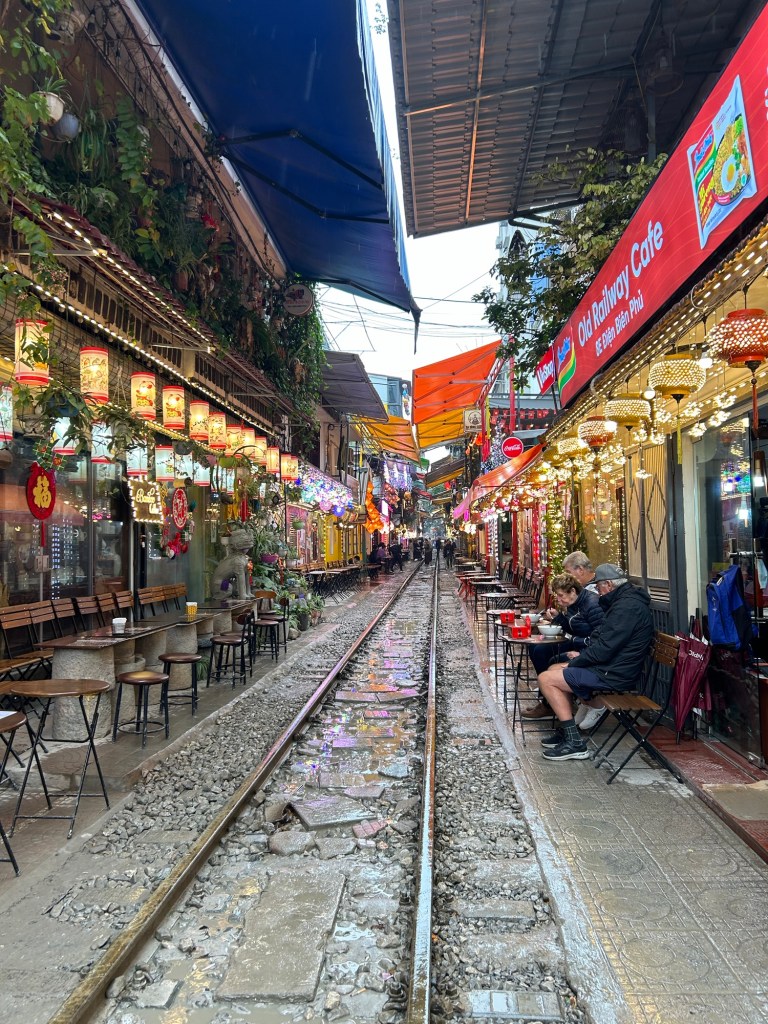
We wandered down Train Street, a narrow, lively alley where trains pass just several inches from buildings.

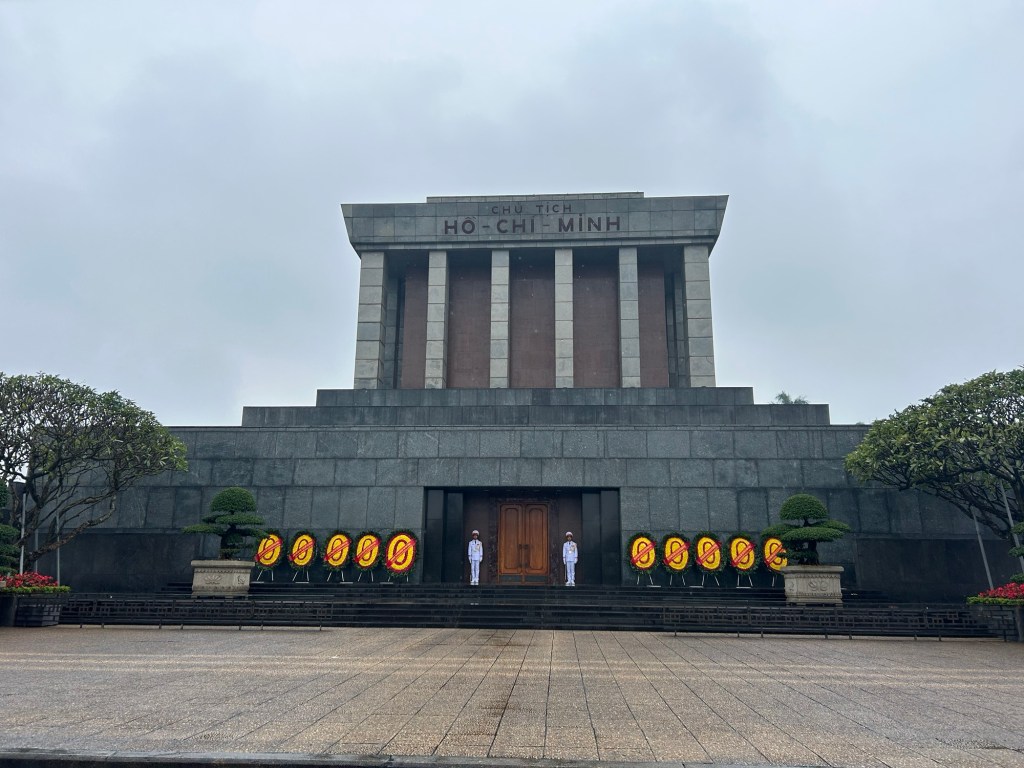
Our visit to the Ho Chi Minh Mausoleum and Museum was eye-opening, filled with strong communist propaganda that made it difficult to take in objectively.

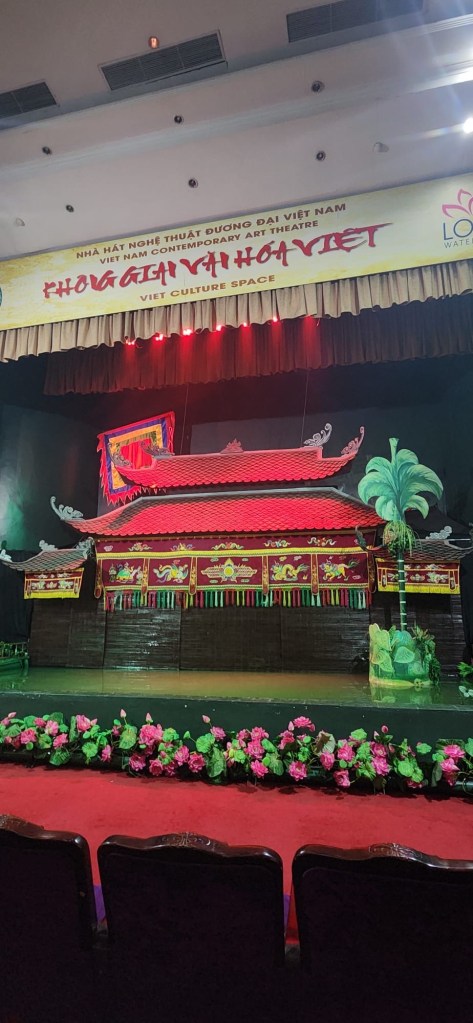
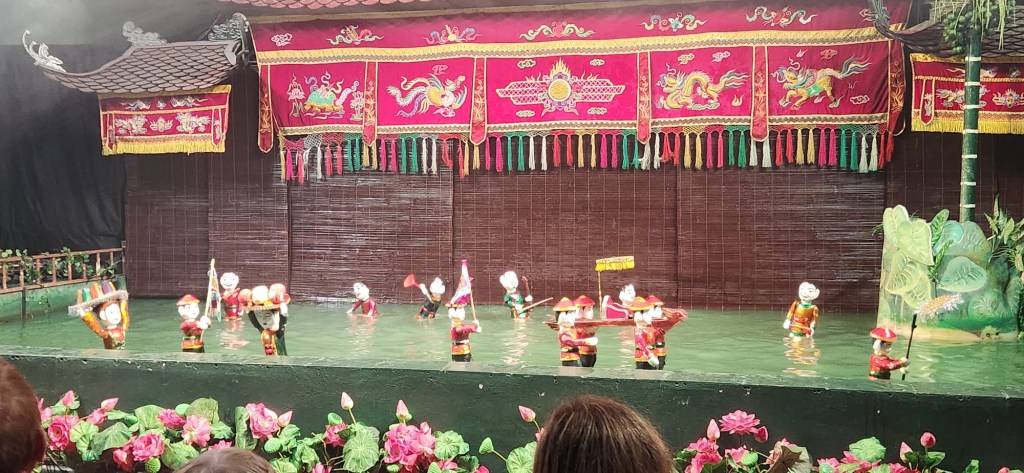
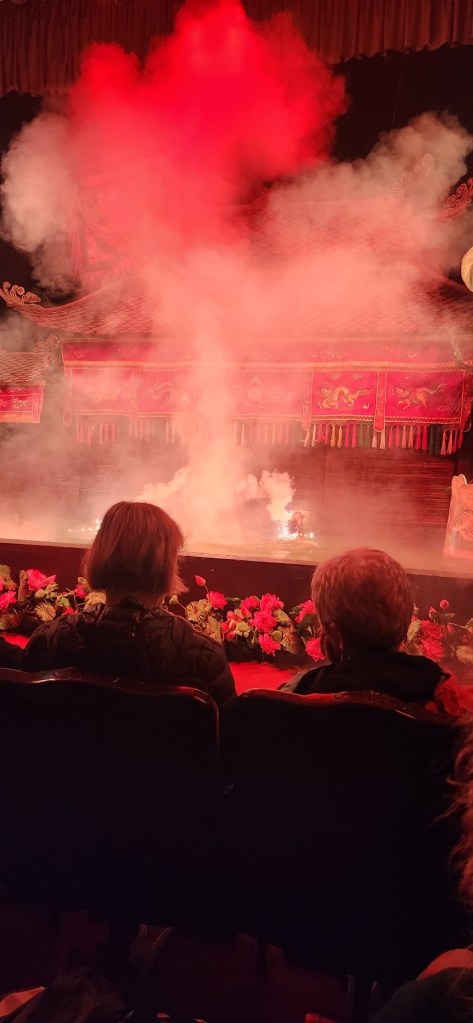
We treated ourselves to a Michelin-rated bowl of pho at Pho 10, where the only option was variations of beef pho—simple, but absolutely delicious. The night ended with a traditional water puppet show, a captivating performance with live music, intricate puppetry, and storytelling that left us thoroughly impressed.

Traditional water puppet show in Hanoi

4 Days of the Ha Giang Loop

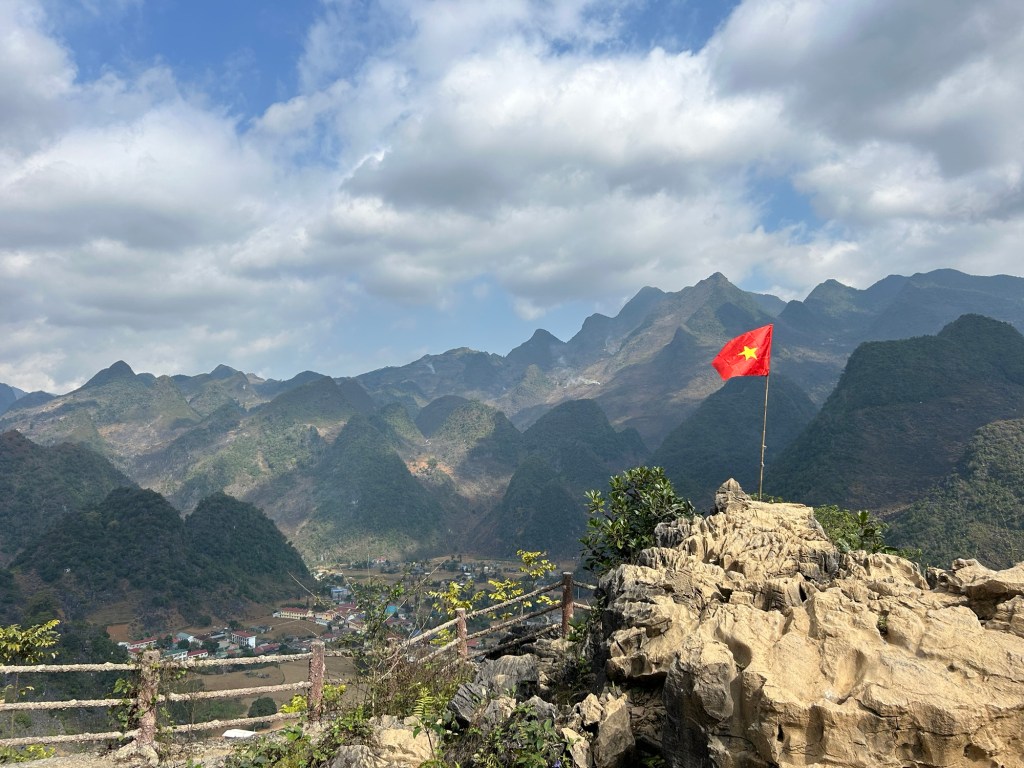
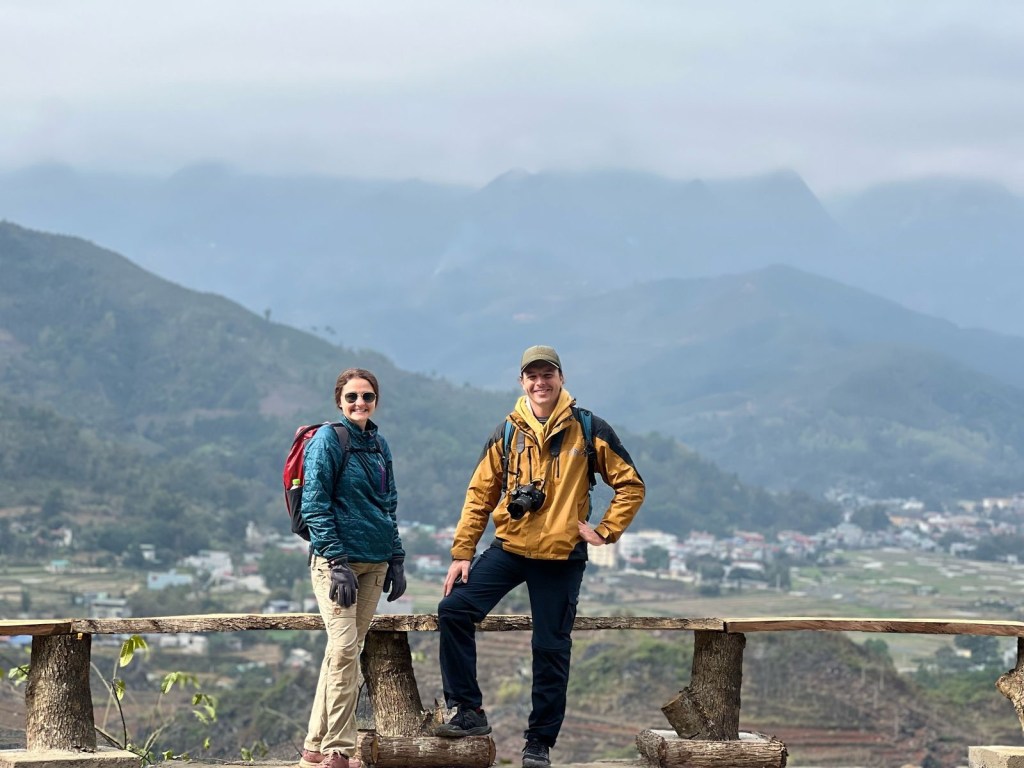
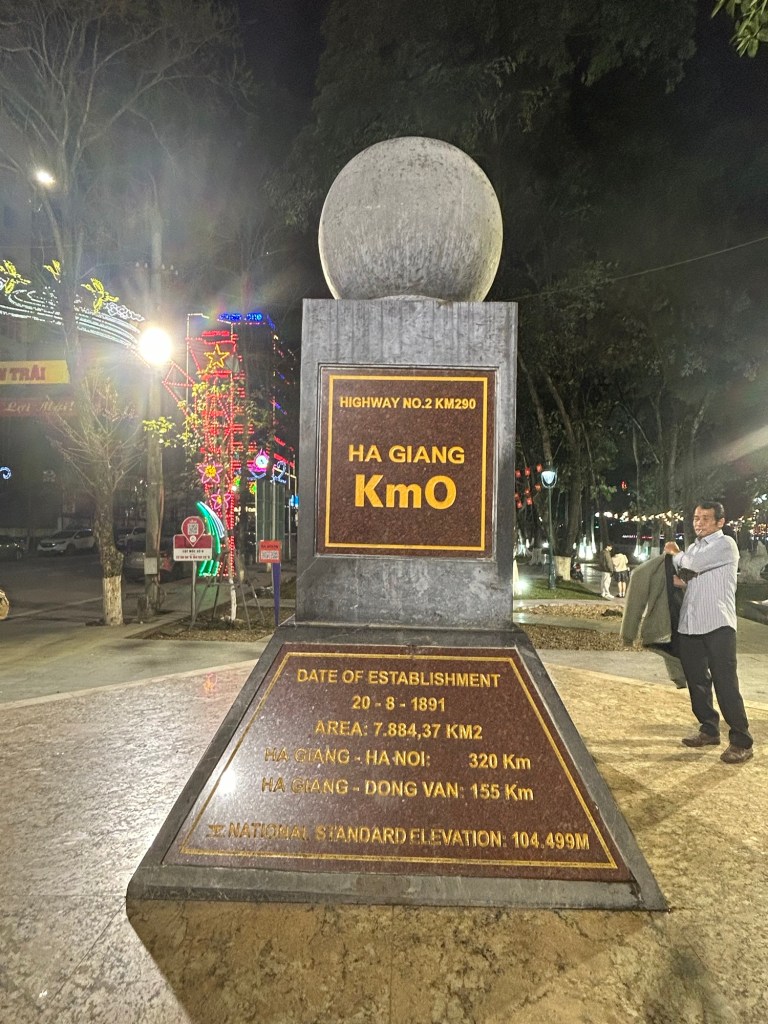
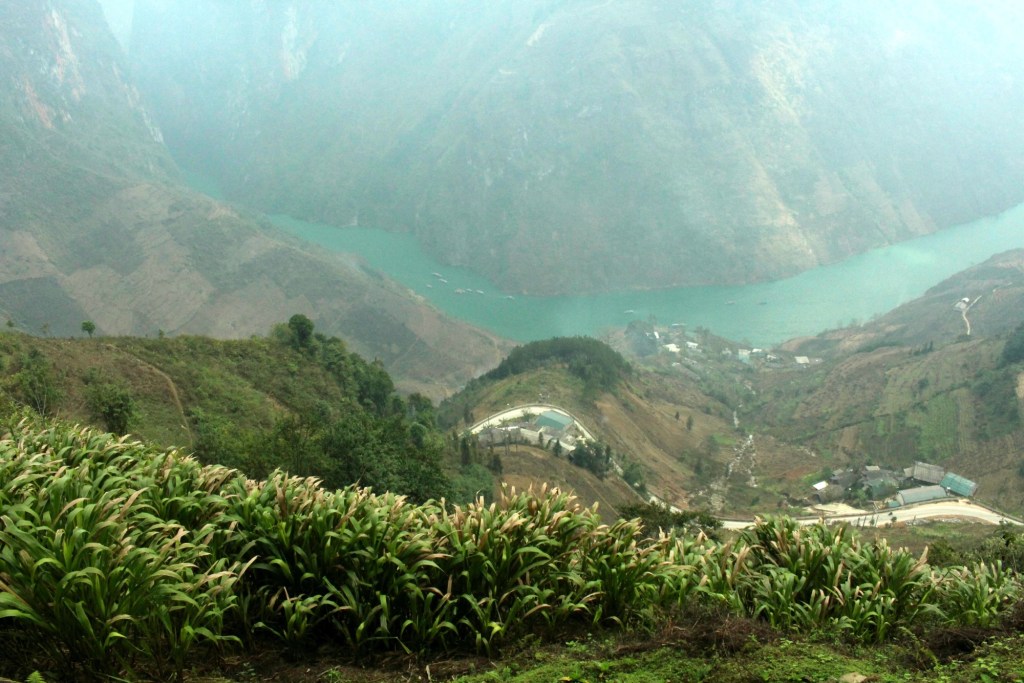
The trip we’ve been waiting for! We’ve prepared on scooters for months, excited to venture out on a solo journey. The Ha Giang Loop is one of the most breathtaking motorbike routes in Vietnam. The loop typically takes 3 to 5 days to complete, starting and ending in Ha Giang City.

Kilometre 0 of the Ha Giang loop.

Our journey to Ha Giang started with a seven-hour sleeper bus ride from Hanoi. The bus was cramped, with a single-seated layout, and had only one bathroom stop and a quick lunch break. Along the way, Mat had a bizarre run-in with the bus staff when they confiscated his Bánh mì due to a supposed “no food policy” (which wasn’t mentioned anywhere). After a brief argument—and almost getting kicked off—he managed to get it back.

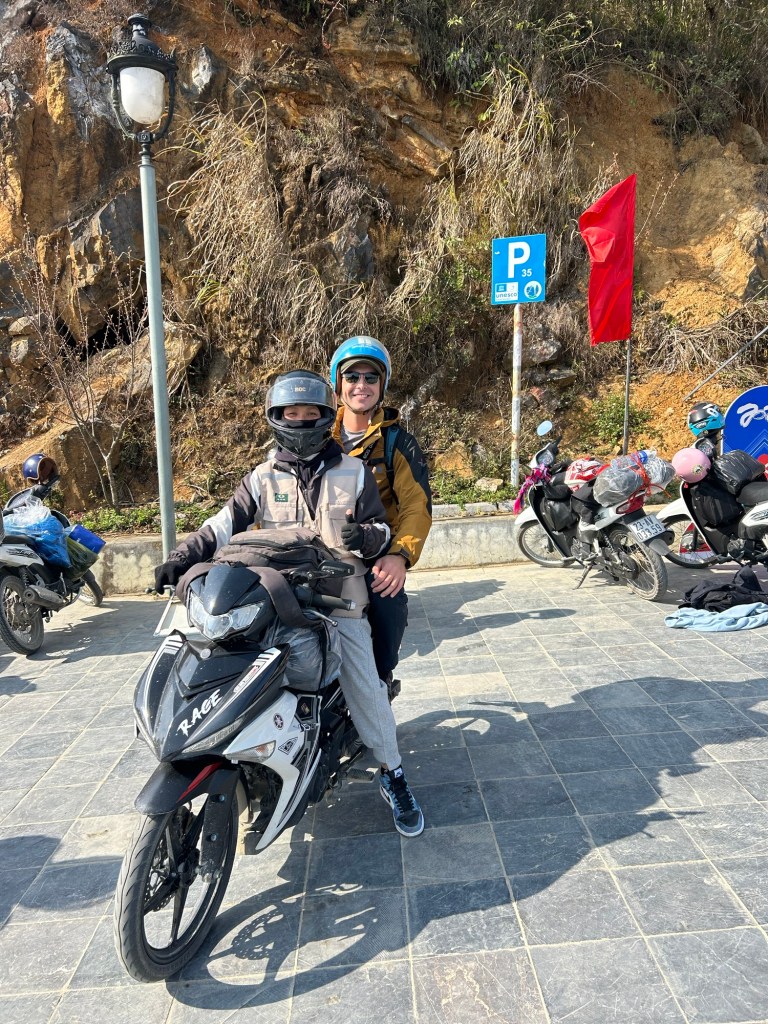
When we arrived at our hostel, we found out that although our motorbike rentals were solid, we couldn’t legally drive them due to Vietnam’s adoption of the 1968 International Driving Convention in January 2025, which didn’t recognize our international licenses we acquired before leaving Canada. So, we quickly pivoted our plan and hired easy riders—local guides who would drive us through the loop.

Ha Giang Loop – Day 1

Our adventure on the Ha Giang Loop officially began after a quick breakfast, where we met our easy riders, Hai and Thang, who would be guiding us for the next four days. After packing up, we fueled up in town and hit the road.

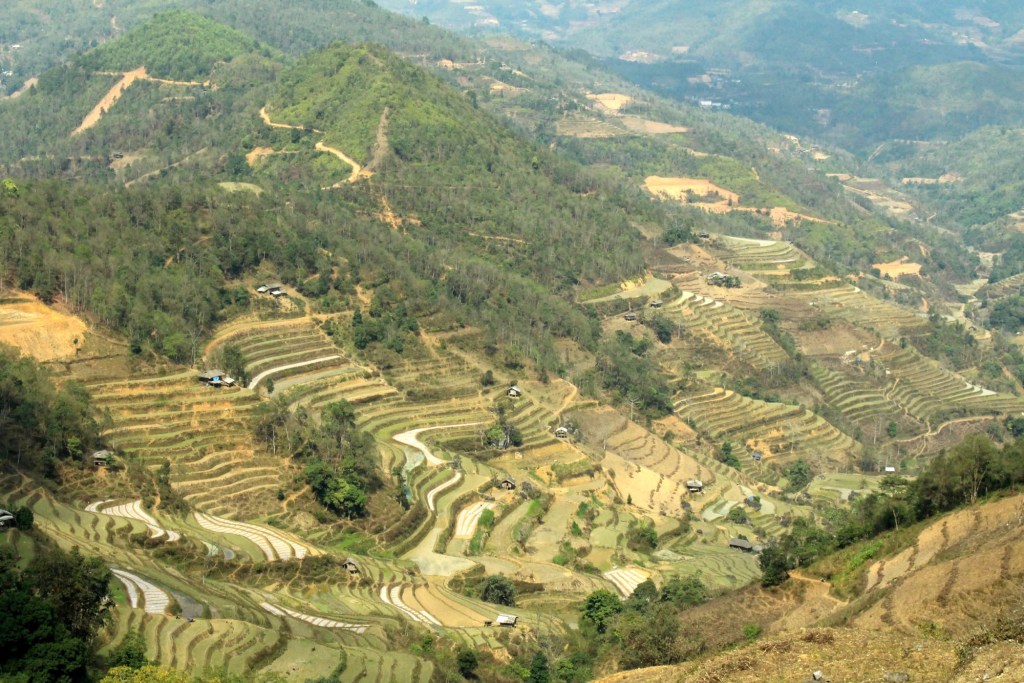
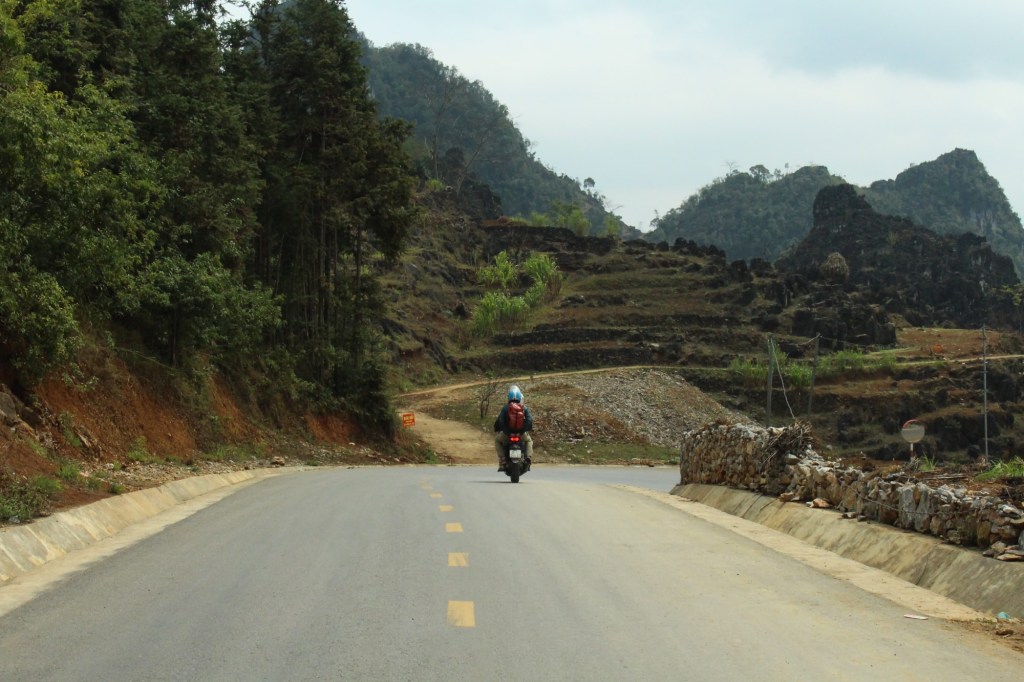
The scenic stops started about 30 minutes outside of town, each one offering increasingly breathtaking views of rice terraces, green valleys, and rugged mountains. We learned that in some areas, corn is grown instead of rice because the land is too dry. The morning started overcast, but by the afternoon, the sun broke through, lighting up the landscape beautifully.

Lunch was an unexpected feast—we thought we were ordering beef and chicken, but instead, they brought out eight dishes served family-style, including rice, fries, fried pork, chicken, beef, cabbage, soup, and a green vegetable we didn’t recognize. Needless to say, we left stuffed!

One of the highlights was visiting a locally run hemp workshop, where we saw the entire traditional process of making hemp fabric. The raw plant is stripped, pounded with wooden tools, boiled multiple times, dried, and finally woven into fabric. We even got to see how beeswax is melted and applied to create decorative designs.

Later in the afternoon, we reached a particularly steep and winding hill, which our drivers admitted they had never ventured before, so we took it—the views at the top made it totally worth it! From there, we could even see the border of China in the distance.

After a few more scenic stops, we arrived in Yen Minh, our stop for the night. Day 1 we covered about 100 km.

Day 2: Ha Giang Loop – Day 2 Summary (Yen Minh to Dong Van)

Another epic day on the Ha Giang Loop! We started at 9 AM, attempting to get gas but found the stations too crowded. Instead, we continued on, stopping briefly at a lookout to let the traffic pass. Along the route, we encountered packed viewpoints with bikes lined up, so we opted for a quieter spot off the main road, discovering a scenic side loop with almost no tourists—just locals going about their day.

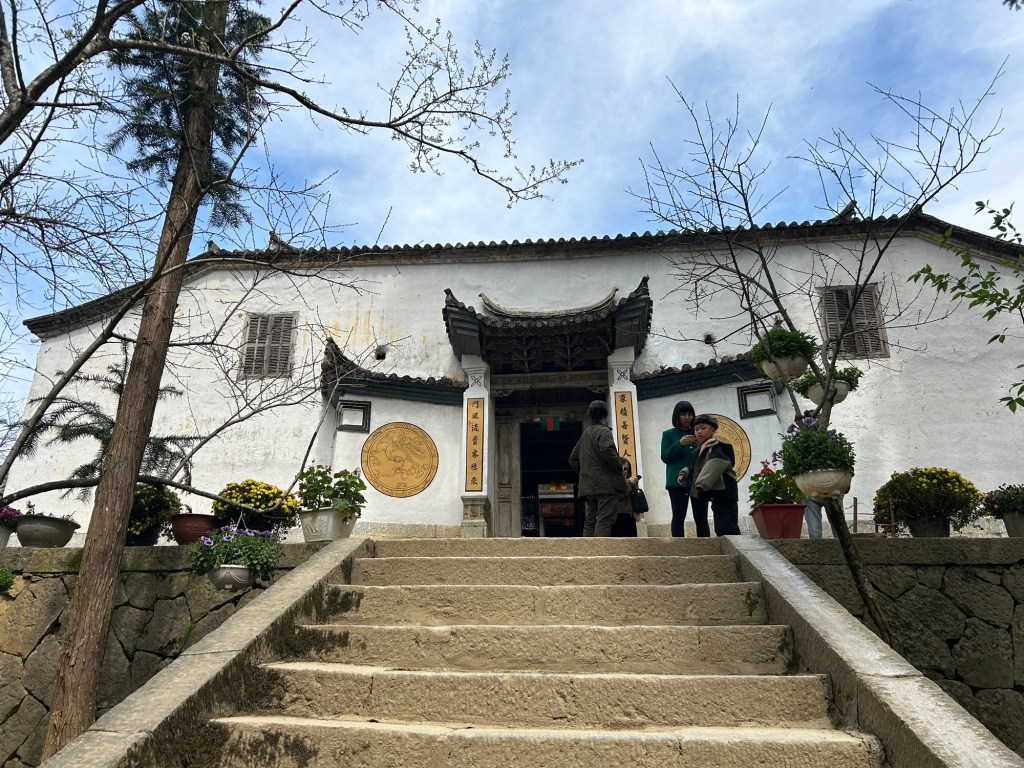
Back on the main road, we visited Dinh Vua Mèo (Hmong King’s Palace), built in the late 19th century by warlord Vuong Chinh Duc, who controlled the region through wealth from the opium trade. The palace, constructed over eight years with the help of Chinese artisans, symbolized the Hmong people’s cultural heritage and political influence, even featuring opium-shaped decor.

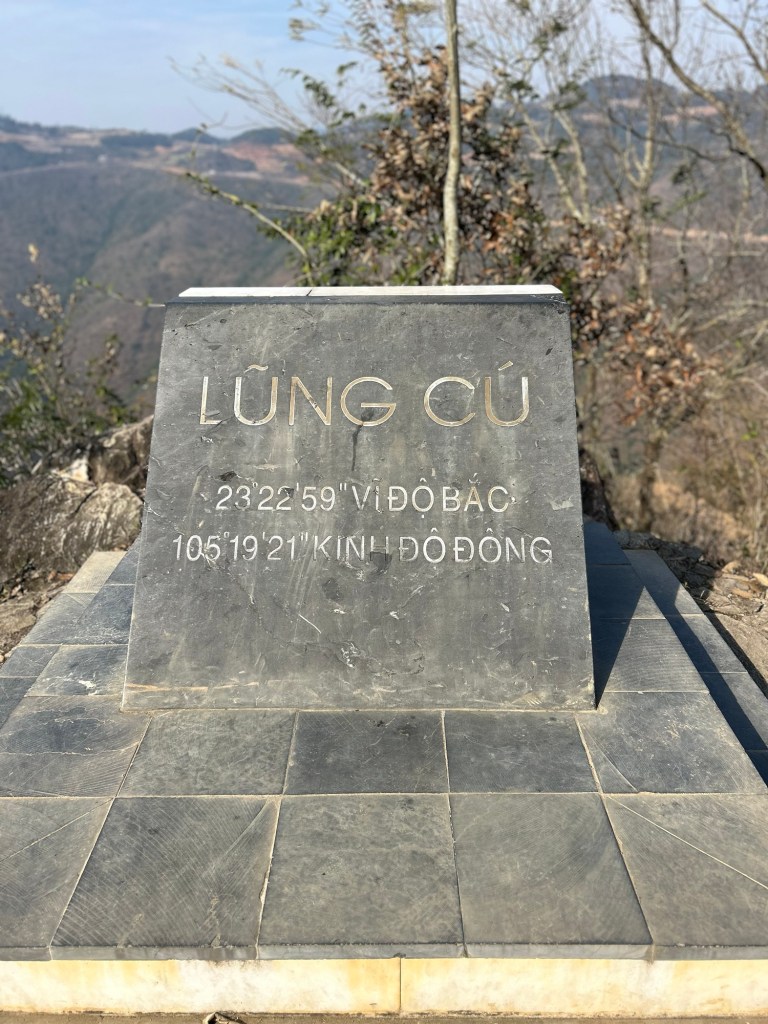
From there, we took a 4-hour(round trip) detour to Lung Cu to visit the flagpole and border marker. Along the way, we stopped at two Chinese-built border fences, reportedly erected around 2019 due to COVID or just before. Previously, locals on both sides freely traded, but the intense fencing now prevents cross-border interaction. We also saw Chinese writing and old border markers indicating past boundaries.

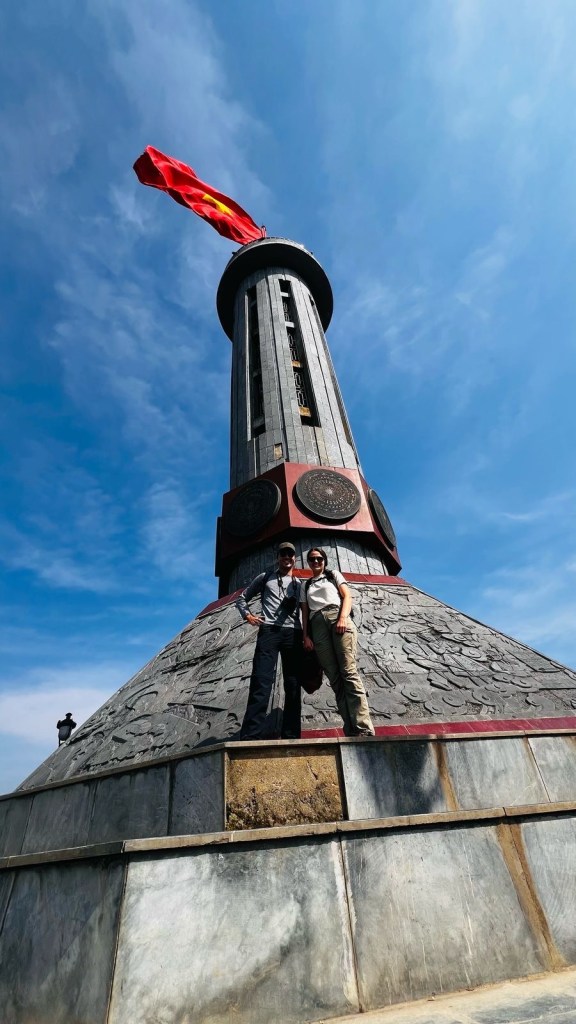
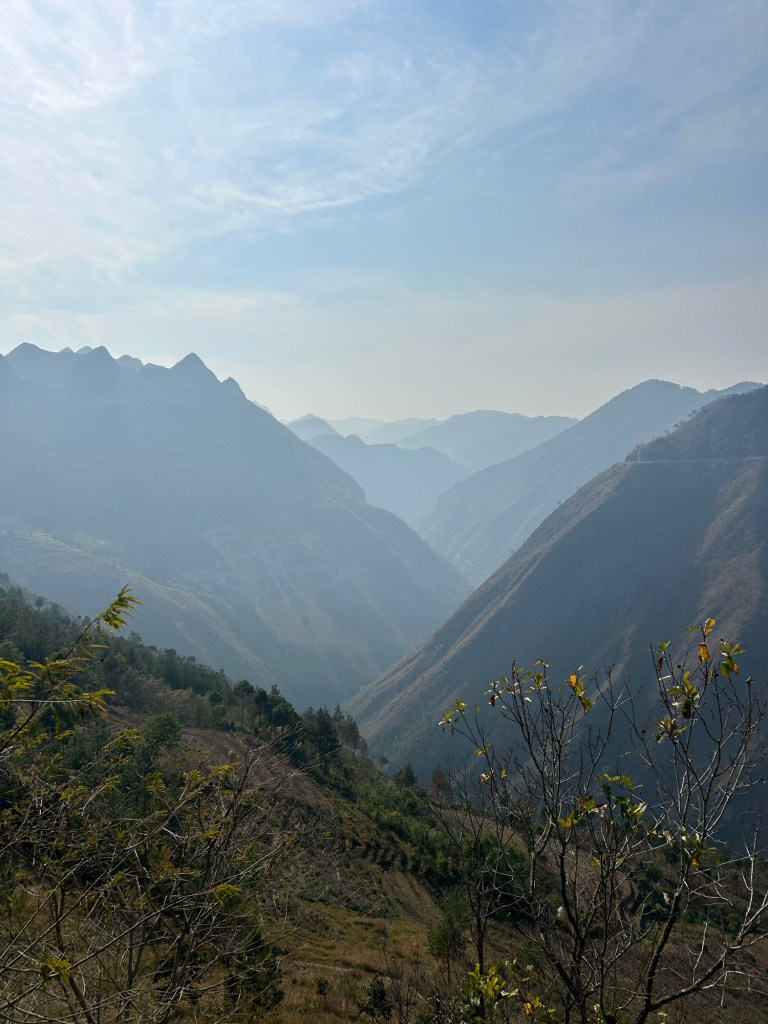
At Lung Cu Flagpole, we climbed to the top before heading further to Vietnam’s northernmost point. The route featured a steep valley and a large border wall with Chinese watchtowers. The views were breathtaking.

Vietnam on the left, China on the right. Notice the border fence near the top of the mountain.

Returning to Dong Van, we made another stop to soak in the stunning scenery before checking into our hotel, which had an incredible view.

Day 3: Ha Giang Loop – Day 3 Summary

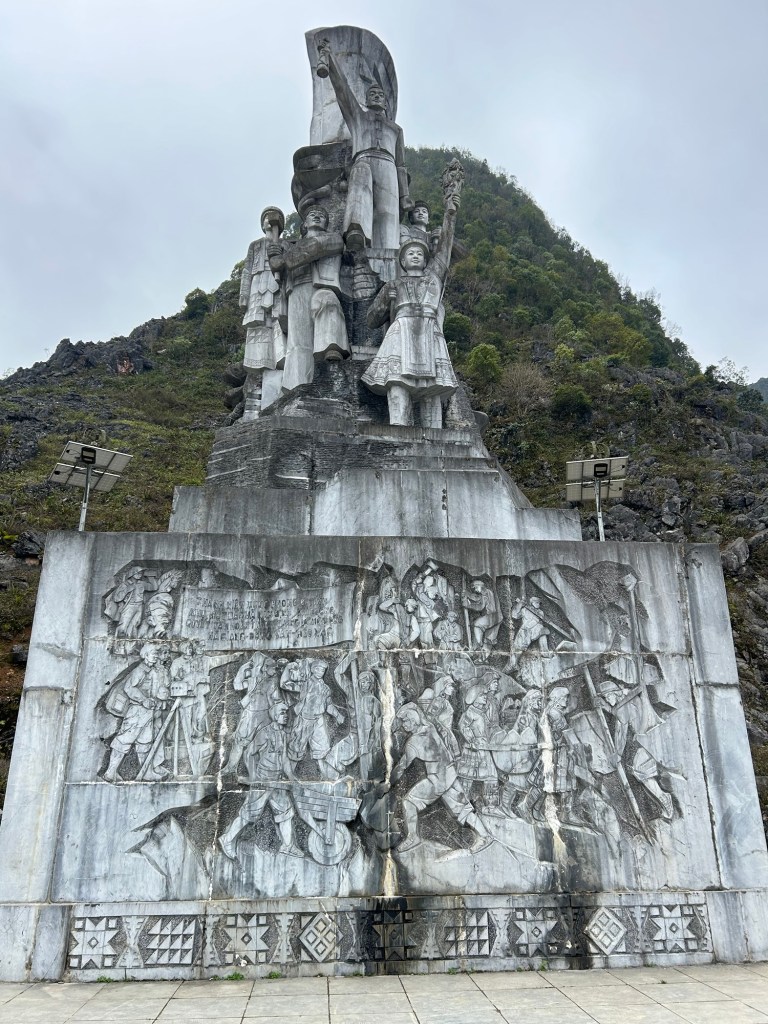
We kicked off the day by visiting the Youth Volunteer Monument, honoring the 1,000+ young people who built the Happiness Road (1959-1965), which connected remote ethnic communities and improved access to education, healthcare, and electricity.

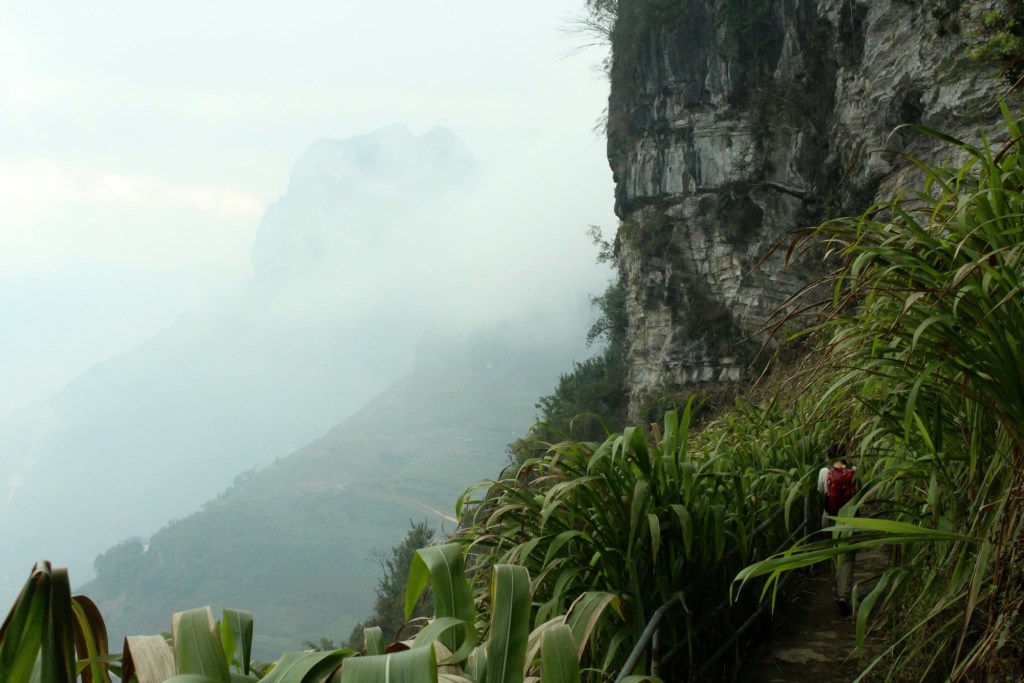
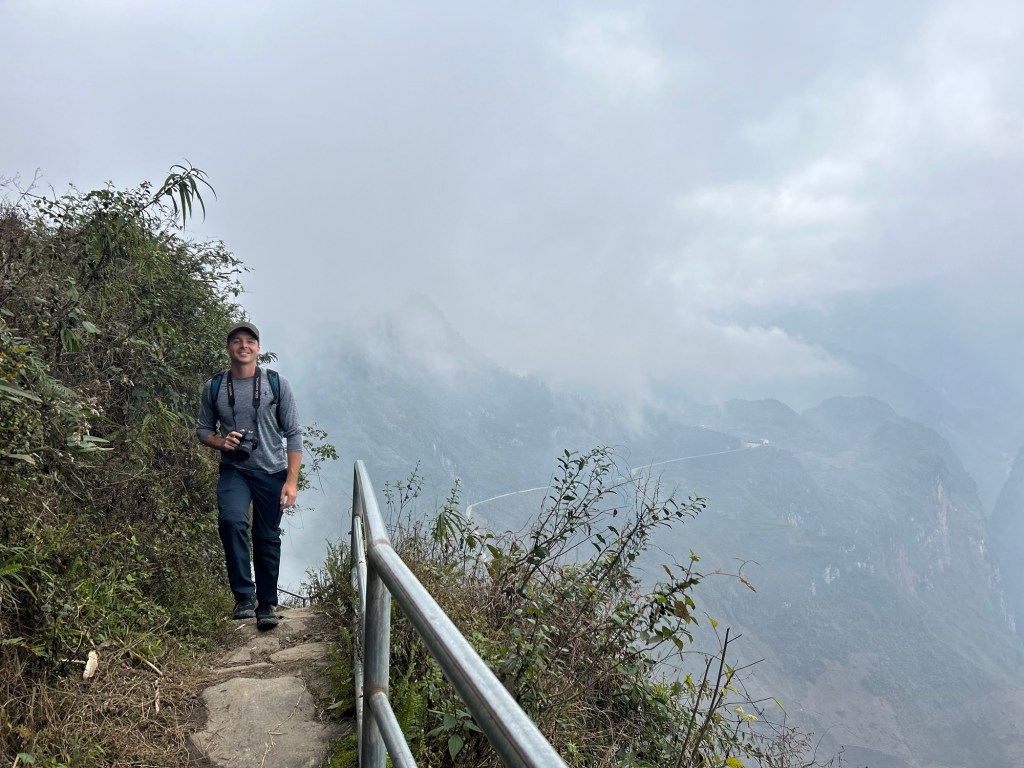
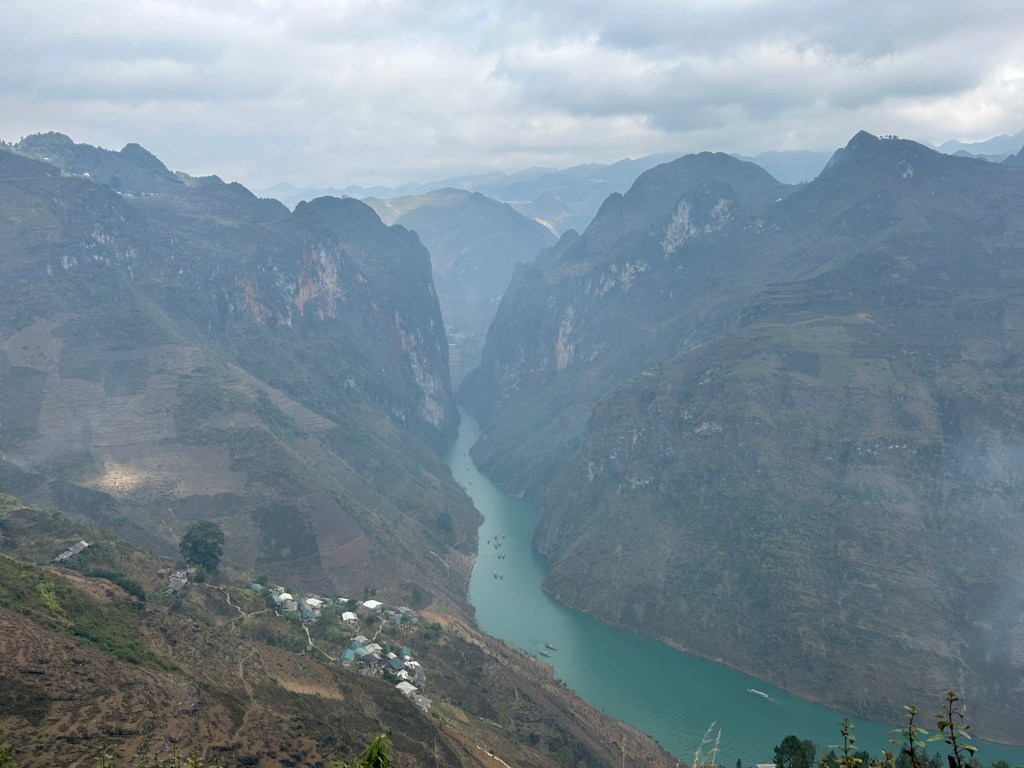
Next, we attempted to ride up to Ma Pi Leng Pass, the highest point on the Happiness Road. Since motorbikes weren’t allowed without payment, our guides took us the “local way”—a steep, switchback footpath. After reaching the top, we completed a 3km trek along the mountainside, passing through a village before continuing our ride.

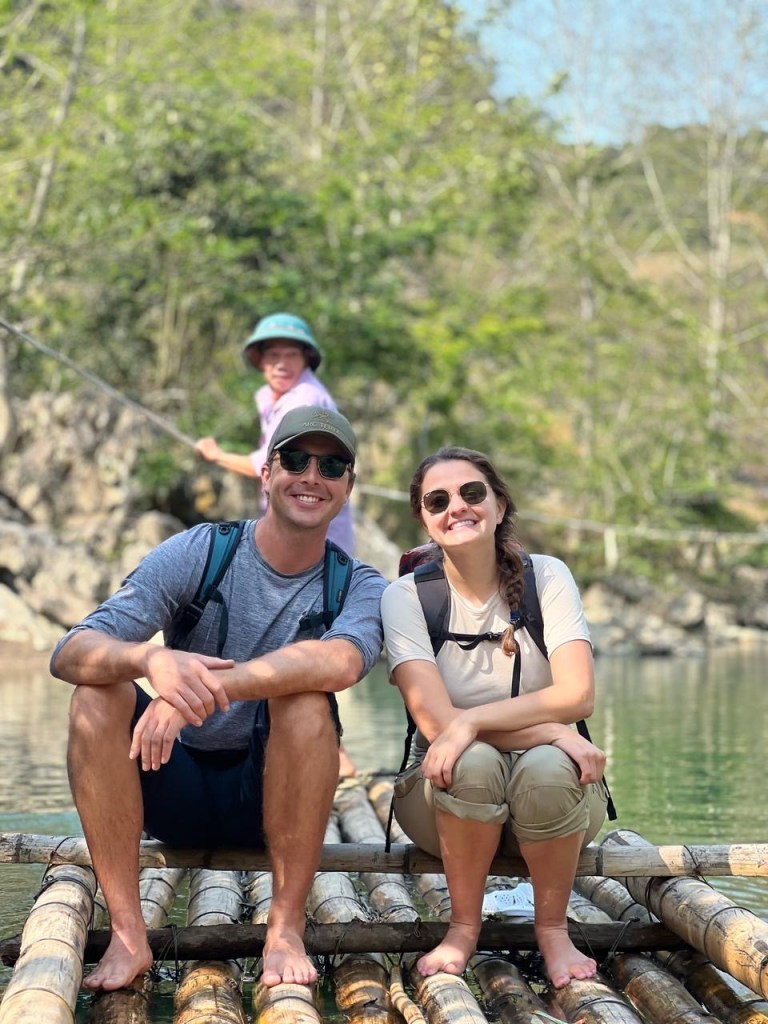
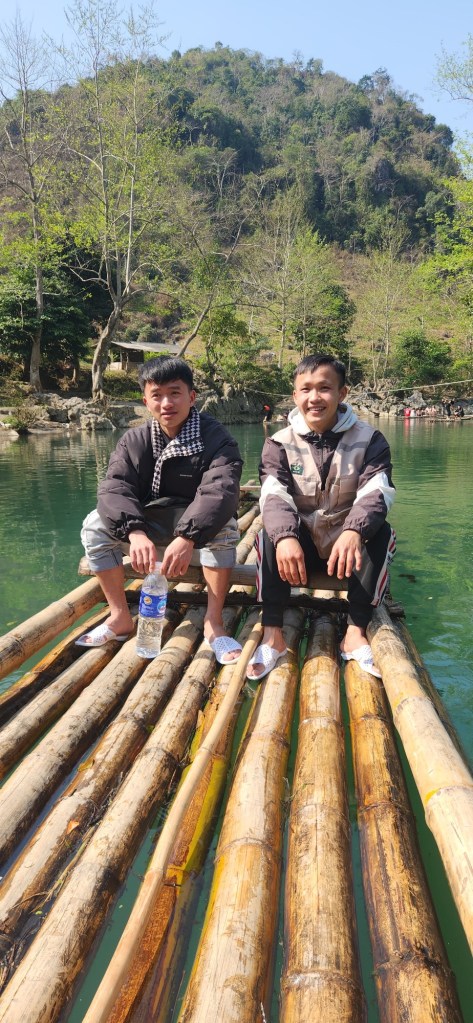
After lunch, our guides suggested swimming, leading us off the main road to a bamboo raft crossing that took us to a hidden swimming spot.

Hai and Thang

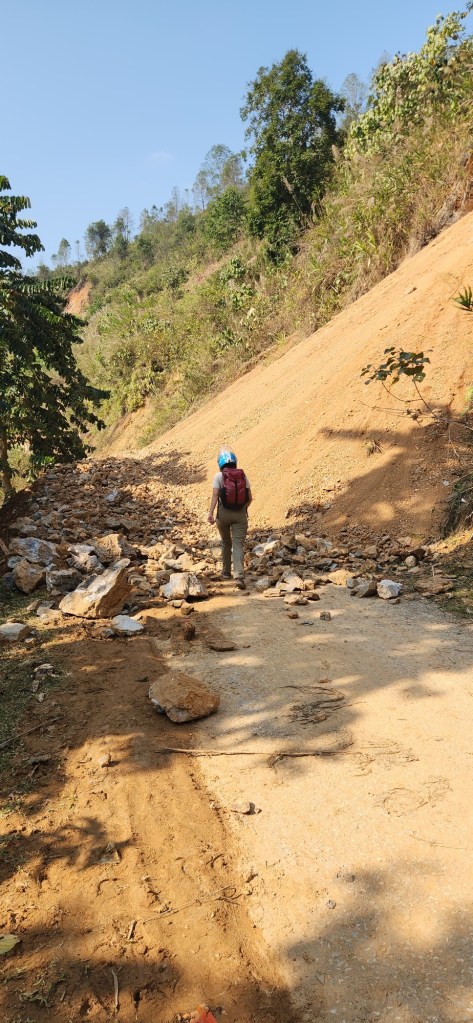
From there, we unknowingly took an unfamiliar path—both of our guides, despite each doing the loop 100+ times, had never driven it before (we were down)! The adventure continued as we navigated a landslide-covered road, following dirt bike tracks to push forward. We passed through remote villages with no other travelers, making for a peaceful and scenic ride.

By evening, we reached a mountainside homestay with stunning views overlooking the valley. At dinner, we met a Belgian traveler—someone I had unknowingly taken a photo/video for the day before! We spent the night chatting and ended the day with some karaoke alongside her driver.

Day 4: Ha Giang Loop – Day 4 Summary (Final Day)

After a rough night of rice wine (“happy water”), Mat was feeling the effects, and I had a late night. Despite this, our guides Hai and Thang arrived, and we set off at 9 AM. Along the way, we passed our Belgian friend, who wasn’t feeling well either.

We took a less popular route with minimal traffic, passing through a small Sunday market in a town center, bustling with locals selling clothes, food, and household items. The road conditions were rougher today, with a mix of cement, dirt, and rocks.

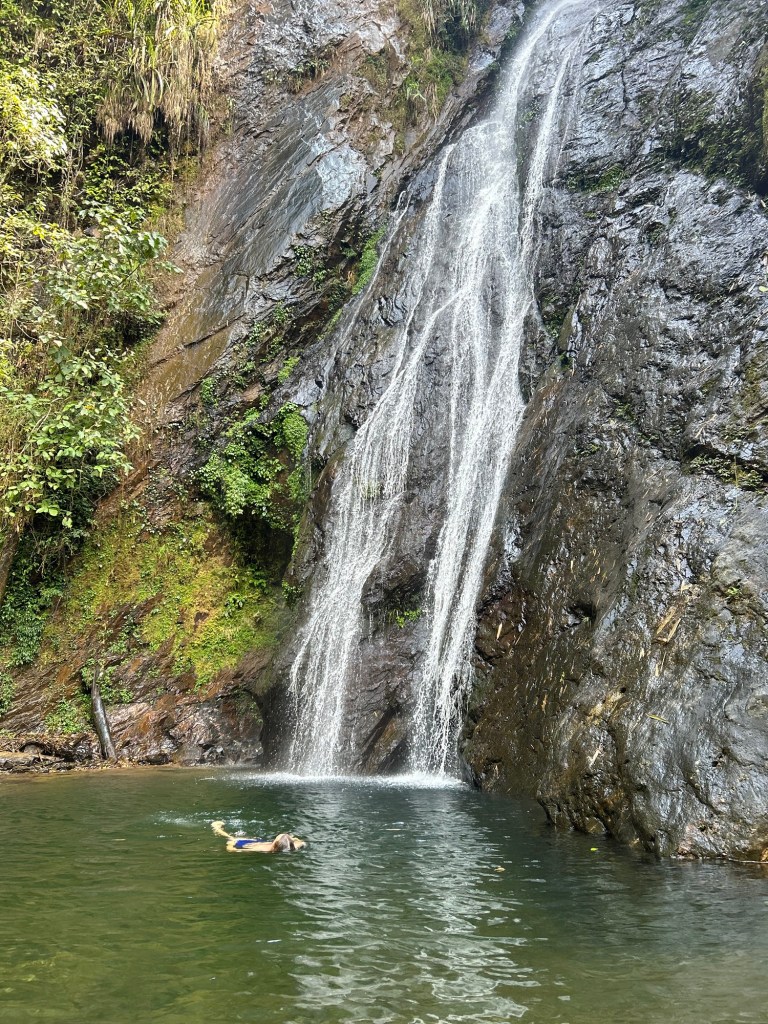
One of the highlights was stopping at a waterfall, where we climbed up 180 steps—Mat went for a swim while I just dipped my toes. We then wrapped up the loop with two final scenic viewpoints, the last being at a coffee shop overlooking Ha Giang city.

Back in Ha Giang, we said our goodbyes to Hai and Thang, checked into our hotel, showered, and then went next door for burgers to end the adventure on a satisfying note.

Cruising Halong Bay

After a frustrating bus journey from Ha Giang to Hanoi, which involved long delays, reckless driving, and an unexpected taxi transfer, we finally made it back to the Old Quarter, grabbed pizza, did some shopping, and settled in for the night.

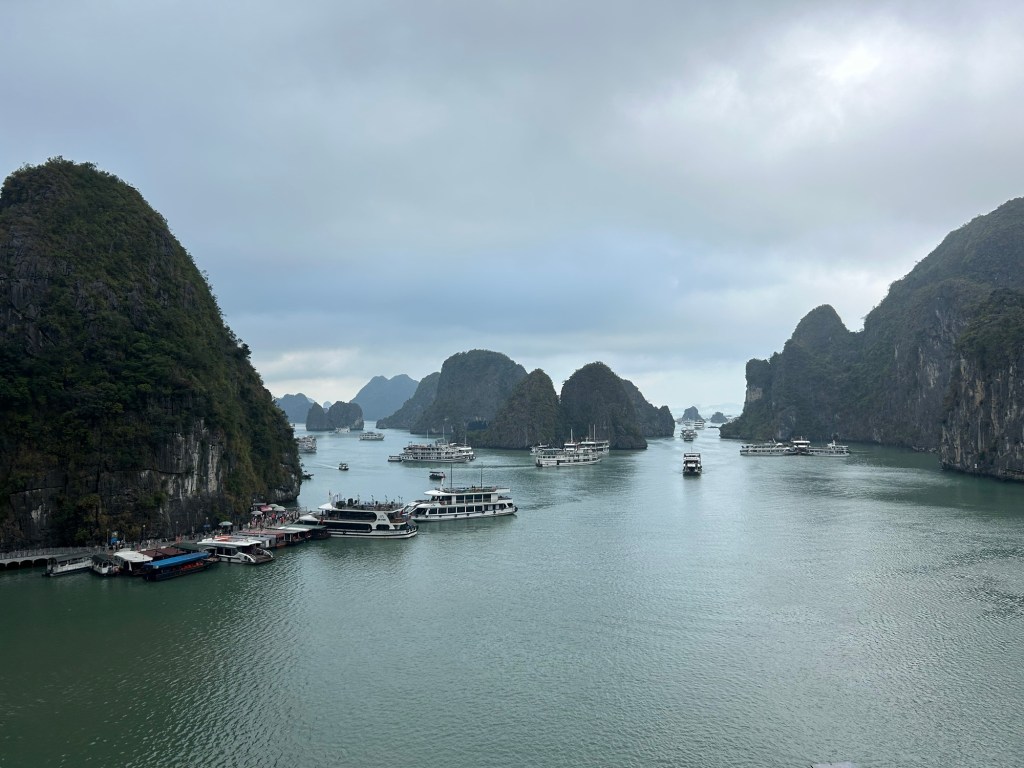
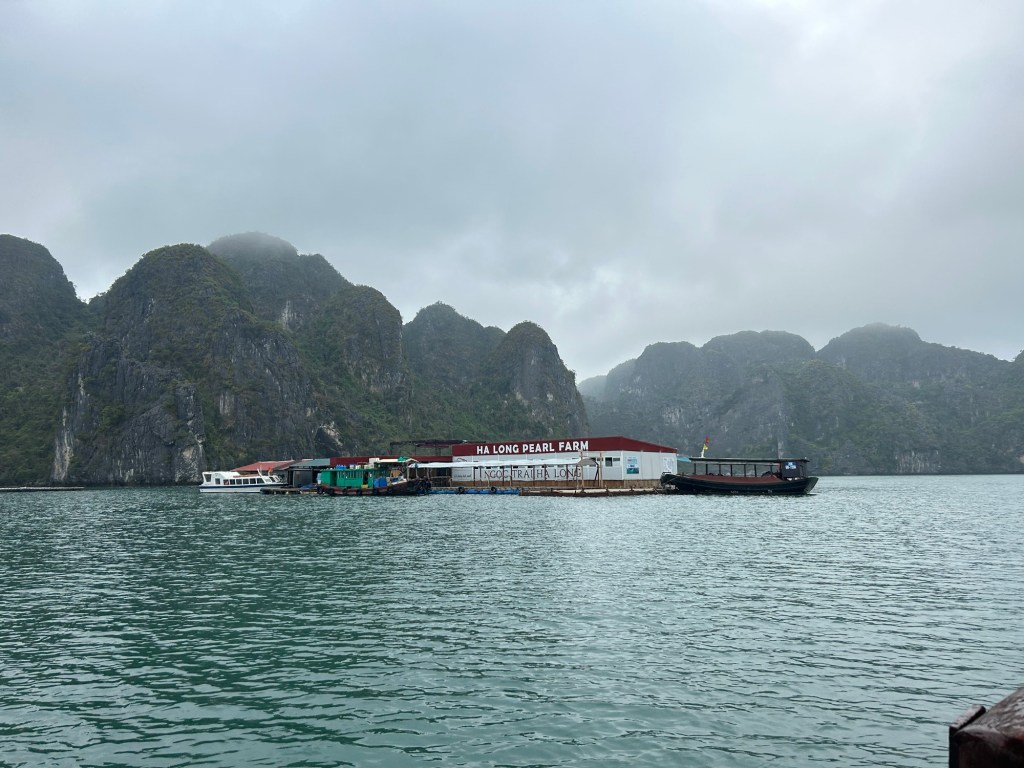
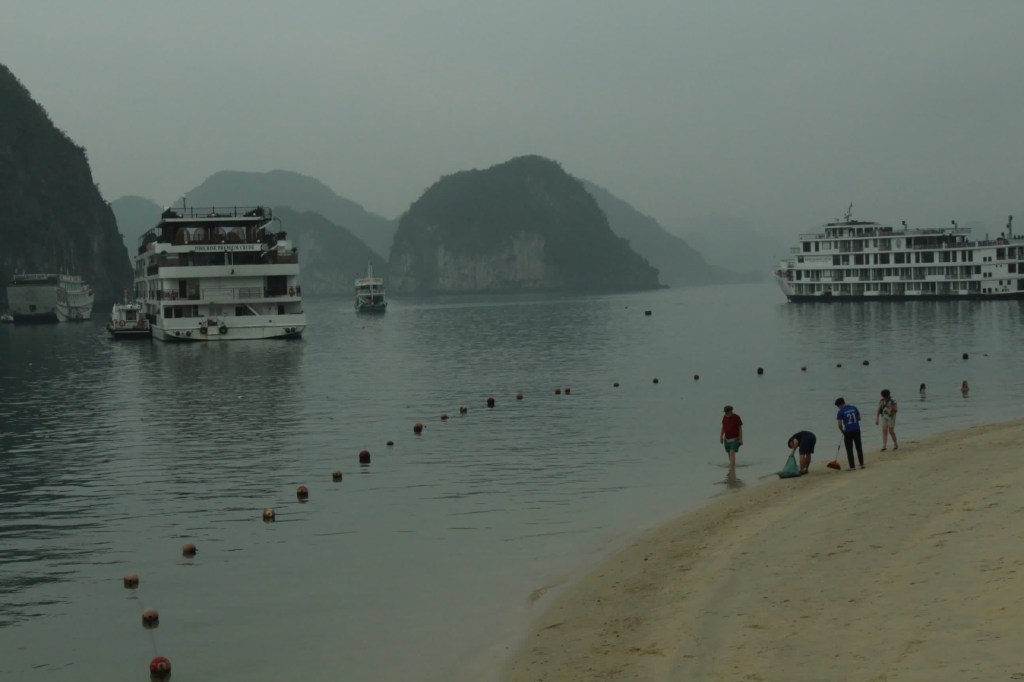
The next morning, we were picked up at 8:30 AM for our Halong Bay cruise. The journey included a stop at a pearl shop, highlighting the region’s pearl industry, and also counting as a massive tourist trap, corralling you through a maze of pearl shops. After arriving at the dock, we took a small transfer boat to our main cruise ship, joining about 20 other travelers. After checking into our rooms and having lunch, we were dropped off to walk through a large cave system before visiting a pearl farm, learning how oysters are seeded to cultivate pearls. We then kayaked around the farm, returned to the boat for snacks and dinner, and ended the night with squid fishing (no squid’s were caught).

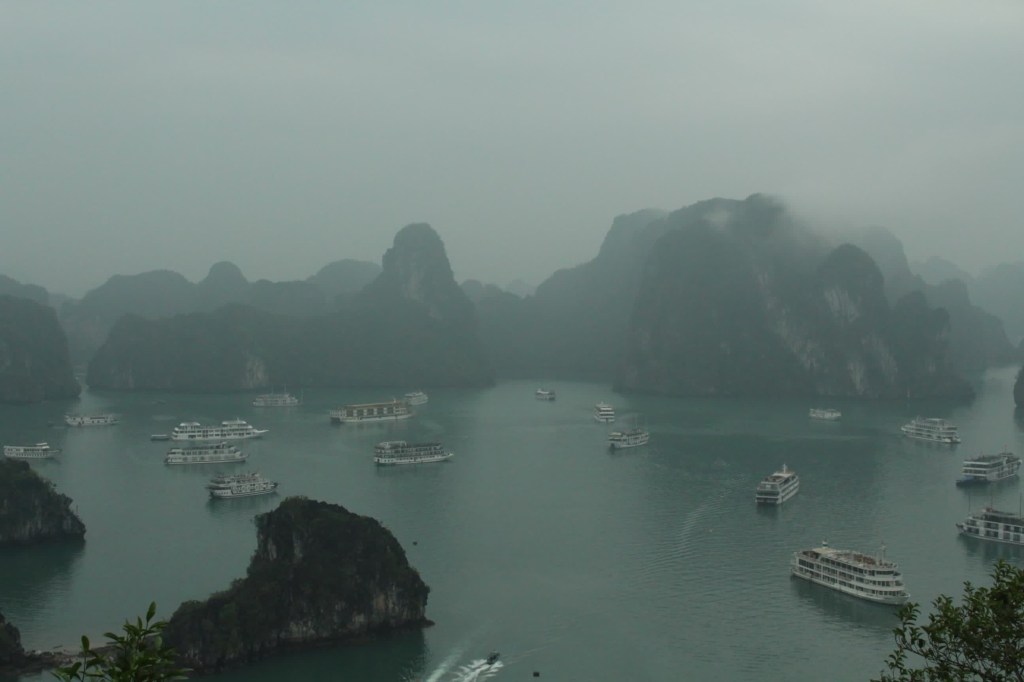
On our final day, we had an early breakfast at 7 AM before heading to Ti Top Island, where we hiked to a viewpoint for stunning bay views. Back on board, we packed up, joined a short spring roll-making session, had lunch, and then returned to the dock. A bus took us back to Hanoi, where we spent the evening walking around, and enjoying dinner. Taking the next day to relax and prepare for our flight out of the country, heading to our next stop, Indonesia!

Welcome to Jakarta!

Blog #6: Laos & Cambodia

Our Journey Through Laos

The Laos People’s Democratic Republic, pronounced “Lao” by locals, stole our hearts from the moment we arrived. Despite visiting many of the bigger and perhaps more “touristy” cities in Laos (Luang Prabang, Vang Vieng and Vientiane), we found our experience here felt very authentic, and much less touristy than some of the other destinations we’ve travelled. From boating down the Mekong River to exploring winding mountain roads on a scooter, Laos was unforgettable experience off the beaten path.

Our Slow Boat Journey down the Mekong River:

We planned to start our time in Laos with a two-day slow boat trip down the Mekong River, travelling from Huay Xai (on the border with Thailand) to Luang Prabang. I had been battling a case of food poisoning for a few days, which lingered as we prepared for our journey to Laos, but managed to pull things together for the journey.

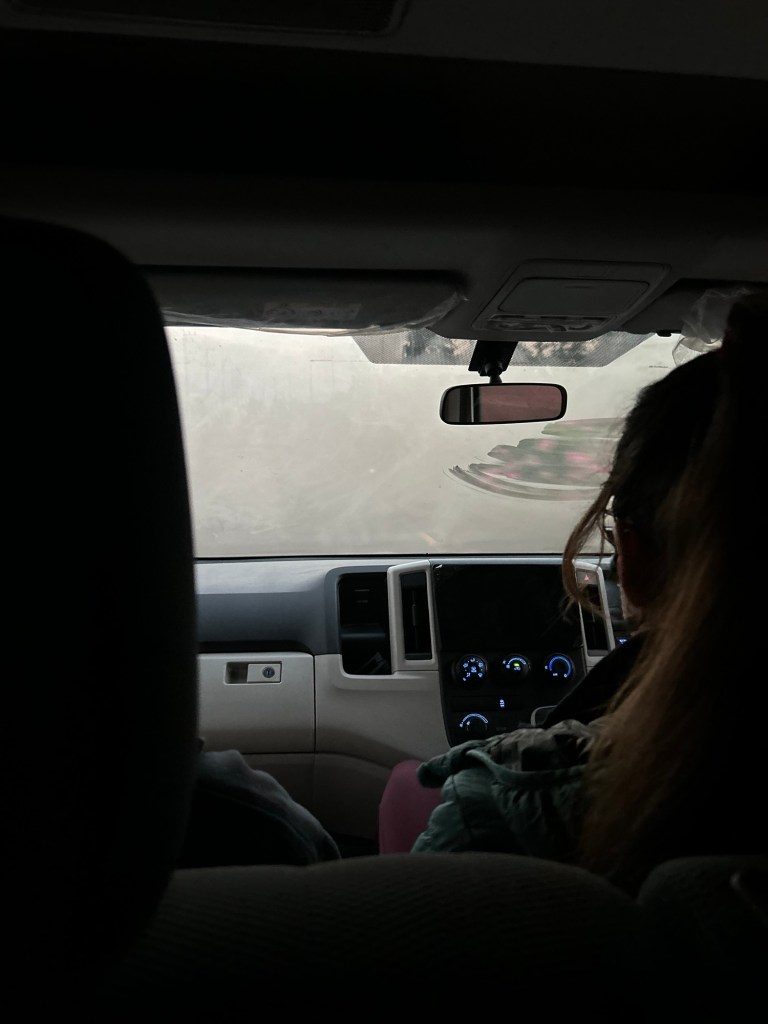
Our adventure began with an early morning pickup from our hotel in Chiang Rai, Thailand. It was a chilly morning, and the windshield of the van quickly became completely fogged over. Our driver, unfazed, sped down the road, occasionally scrubbing a small circle on the glass with his hand to peek through so he could see the road ahead. Despite our attempts to provide suggestions on how to defog the window properly, he seemed content with his improvised solution, leaving the rest of us gripping our seats and hoping for the best.

Our driving’s innovative approach to clearing the windshield on the highway to the Laos border from Chiang Rai, Thailand.

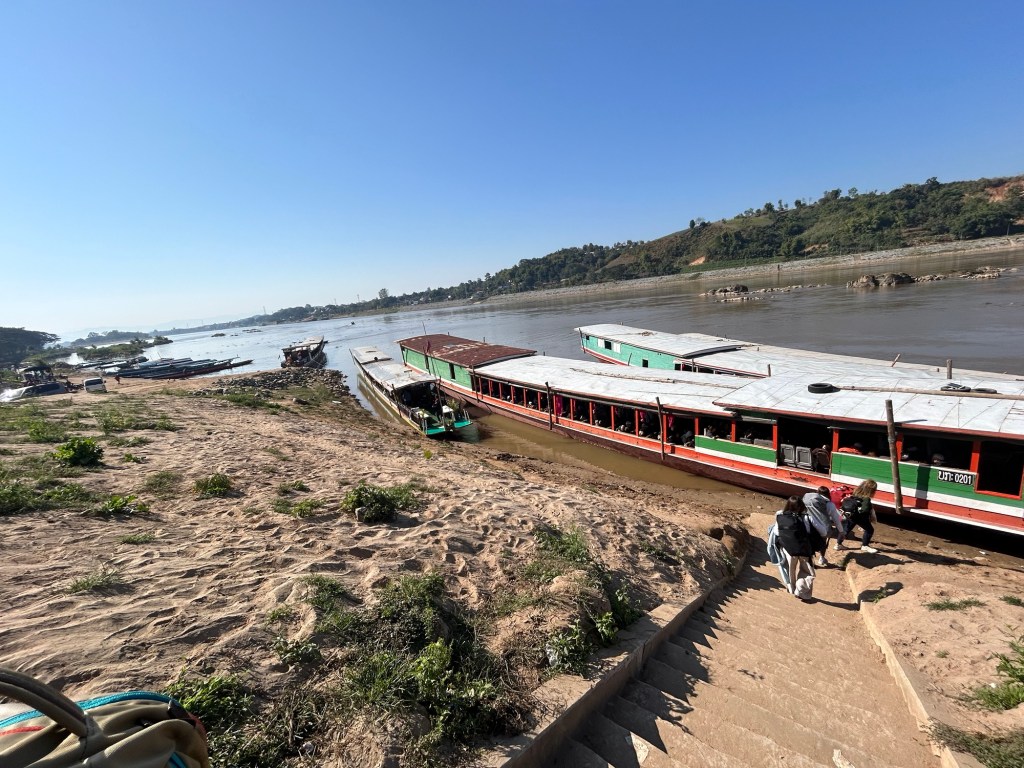
The journey to Huay Xai, Laos required us to take 3 separate buses before reaching the slow boat port. The first bus took us to the Chiang Khong border, where we disembarked, got our exit stamps, and boarded a shuttle to the Huay Xai border in Laos, where we got our visas, and hopped onto our third bus, which took us to the slow boat pier—our gateway to the next leg of our journey.

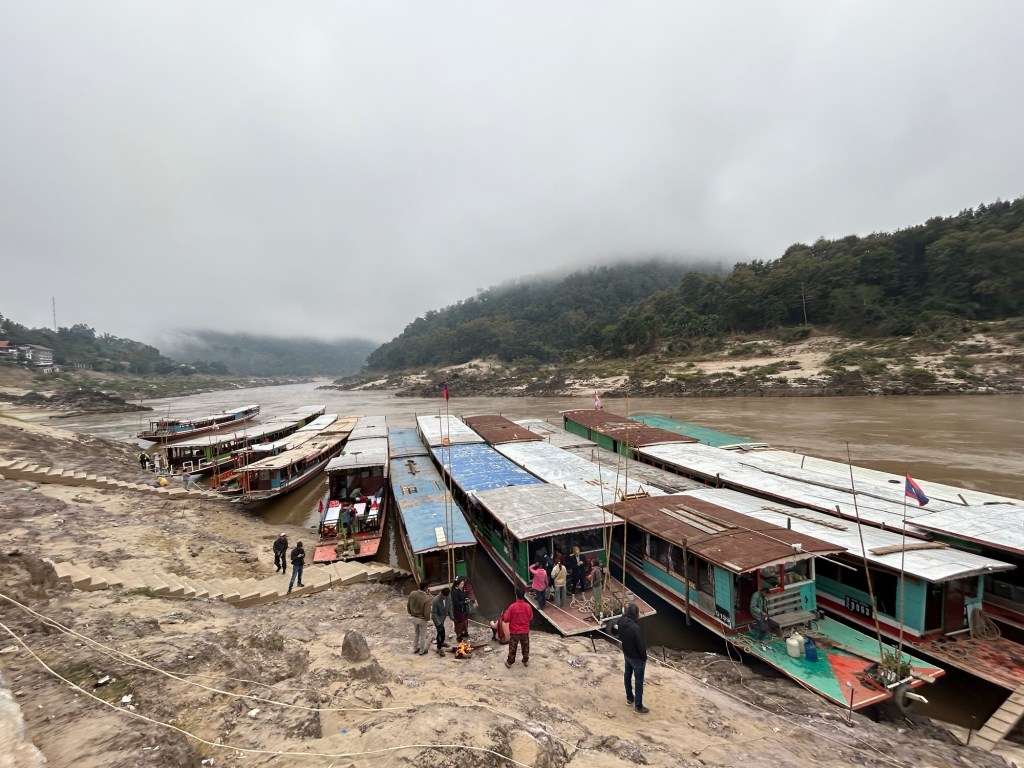
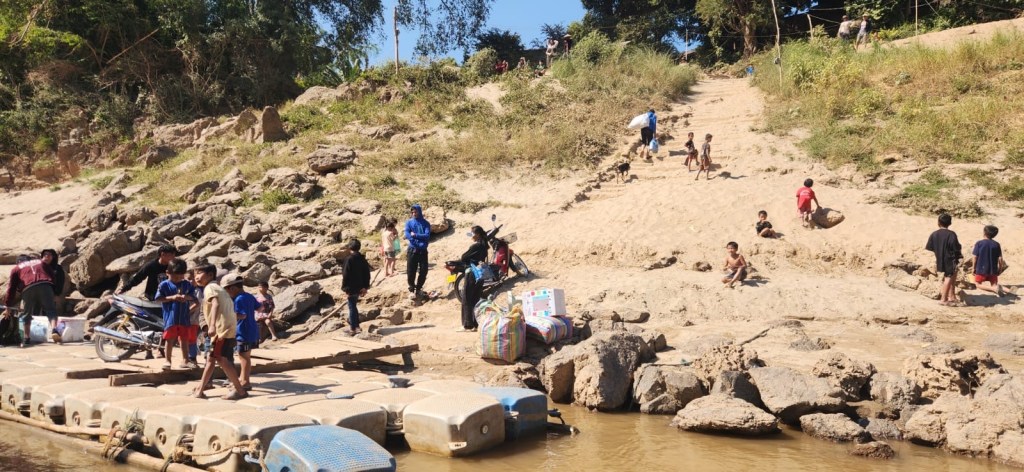
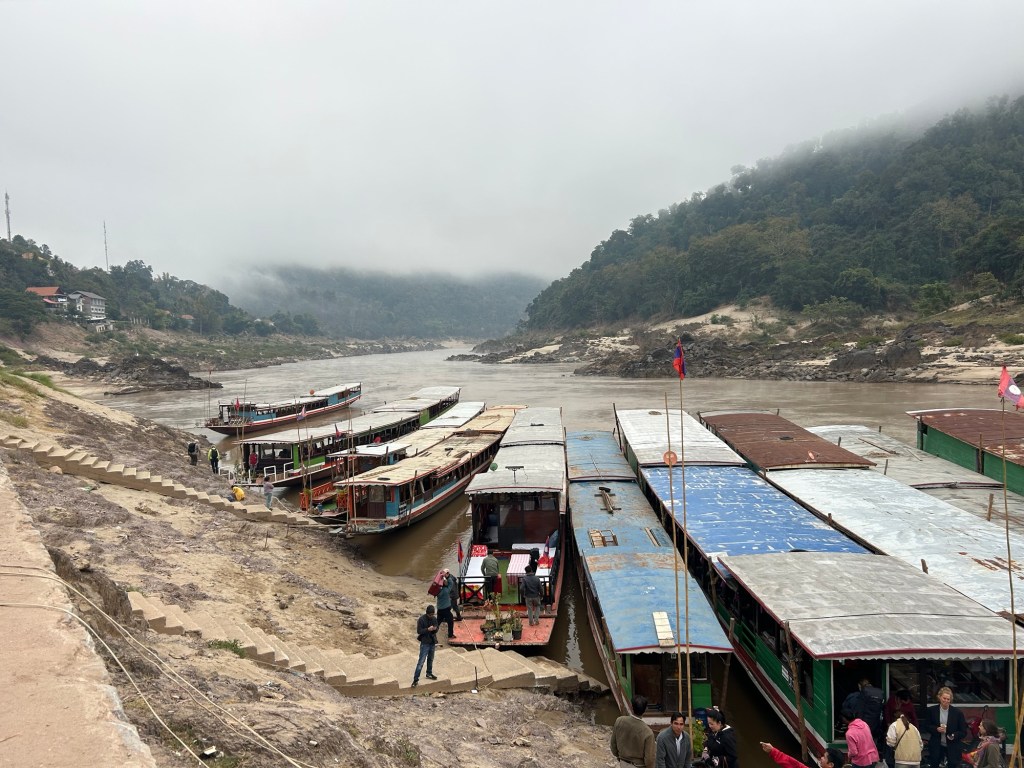
Arriving to the Huay Xai slow boat pier.

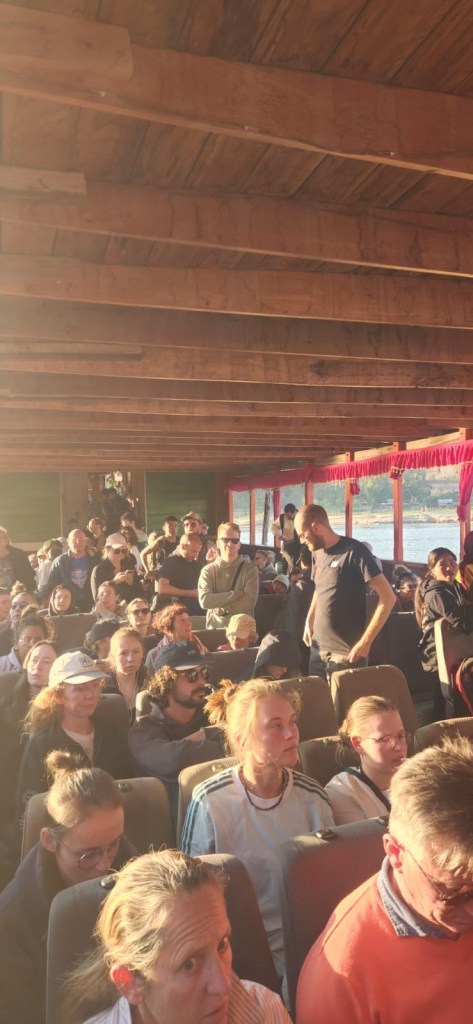
At the pier, we were given 10 minutes to collect some last-minute supplies before rushing to secure seats on the slow boat to Pakbeng, where we’d be staying for the night. When we arrived to the boat, it was nearly full, packed with people and repurposed car seats crammed closely together. 

Boarding the slow boat in Huay Xai, Laos.

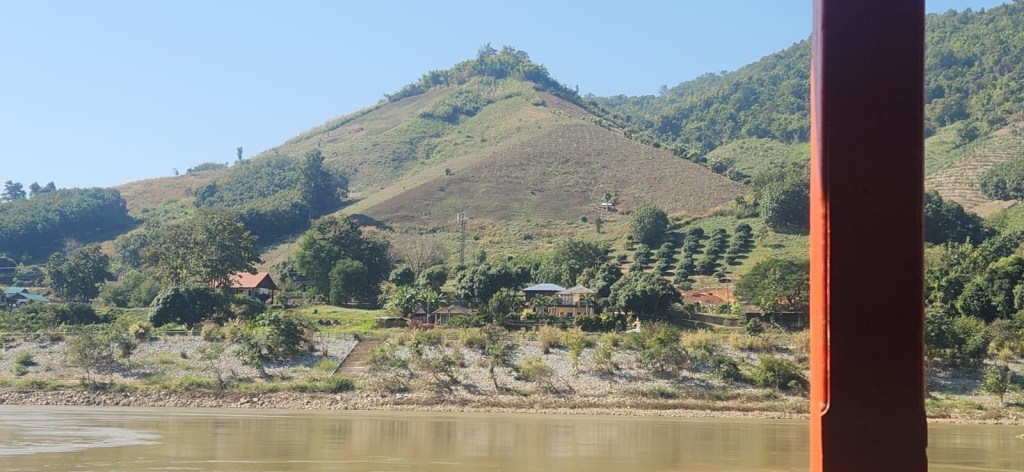
The six-hour ride took us through breathtaking scenery, past remote villages, and alongside locals using the Mekong River for their daily lives. It was very evident how the river (past and present) serves as a vital transportation route, carrying people, food, and necessities to communities that dot its shorelines. As we drifted down the river, we saw fishermen casting their nets, rods propped along the shore, and children playing at the water’s edge, some children even captaining small boats. Along the way, we stopped at villages where locals would quickly hop on, weaving through the narrow aisle to sell homemade treats, snacks, and drinks.

Views from the slow boat travelling down the Mekong River.

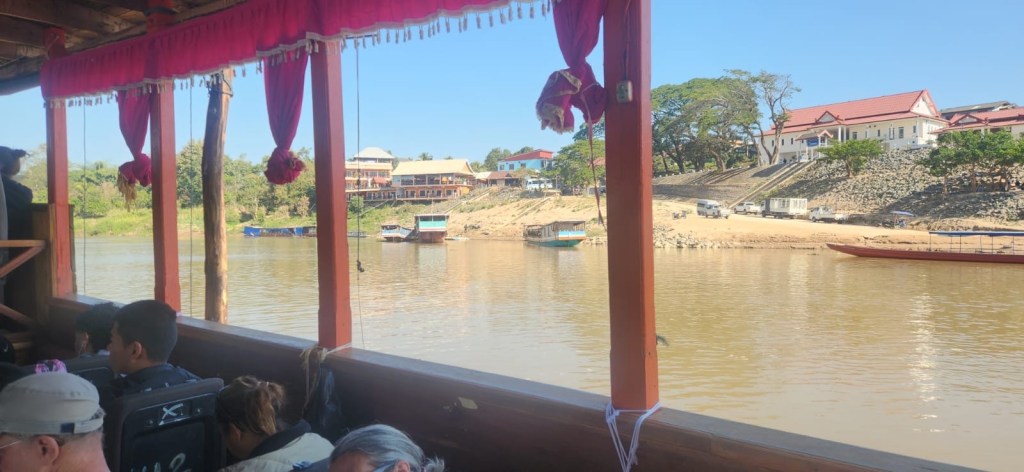
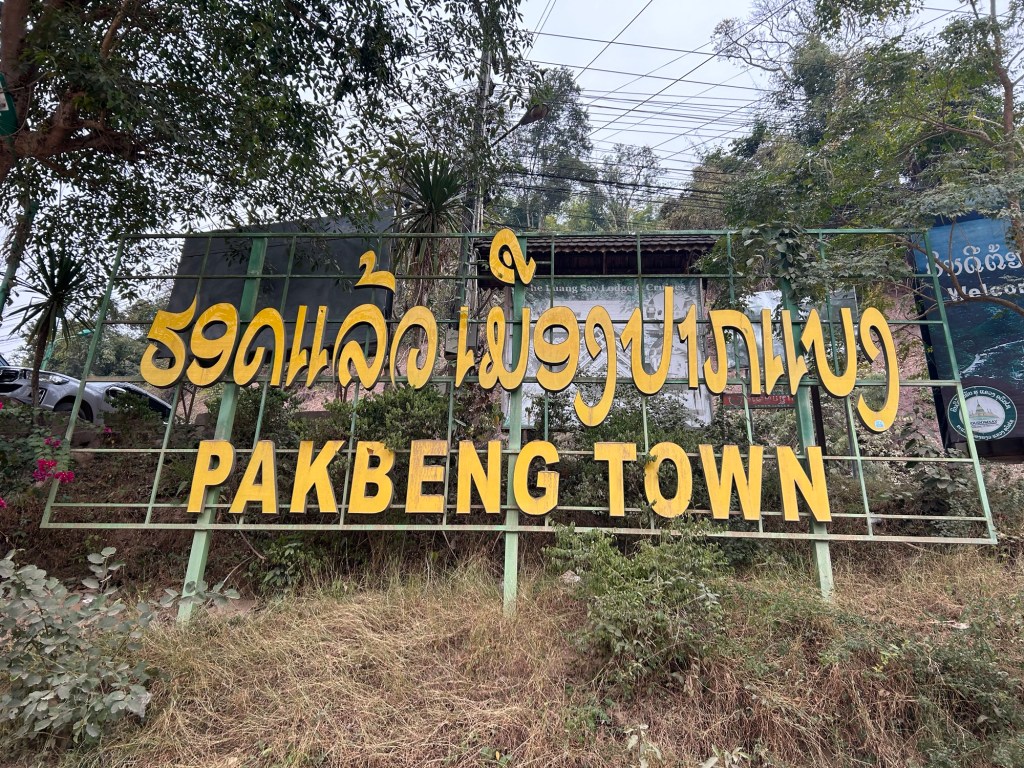
We reached Pakbeng, where we explored the small riverside town by foot, before resting for the night.

Pakbeng, Laos.
Pakbeng, Laos.
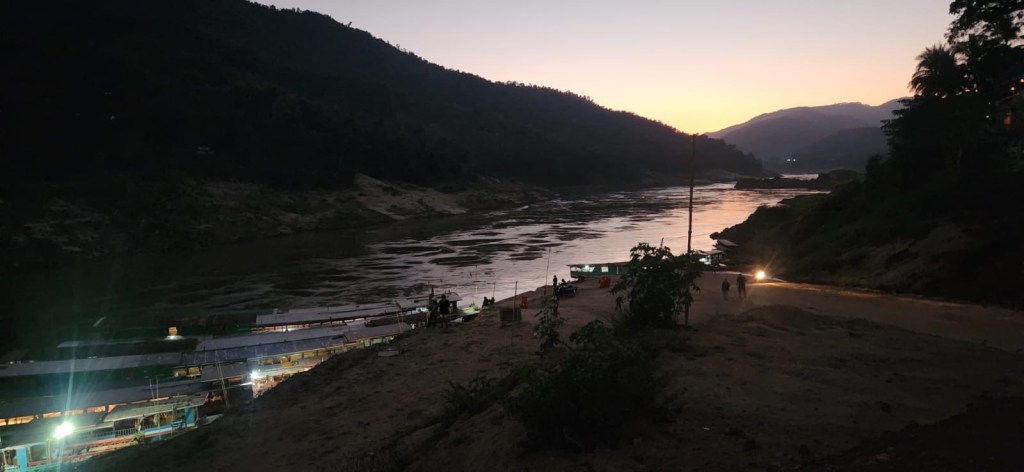
Sunset view of the slow boat pier in Pakbeng, Laos.

The next morning, we arrived early to the boat to secure good seats. The boat departed late due to a missing hotel key, but were soon cruising again past the beautiful lush landscapes, river villages, and even boarded a pig as a passenger.

Day 2 departing from Pakbeng.
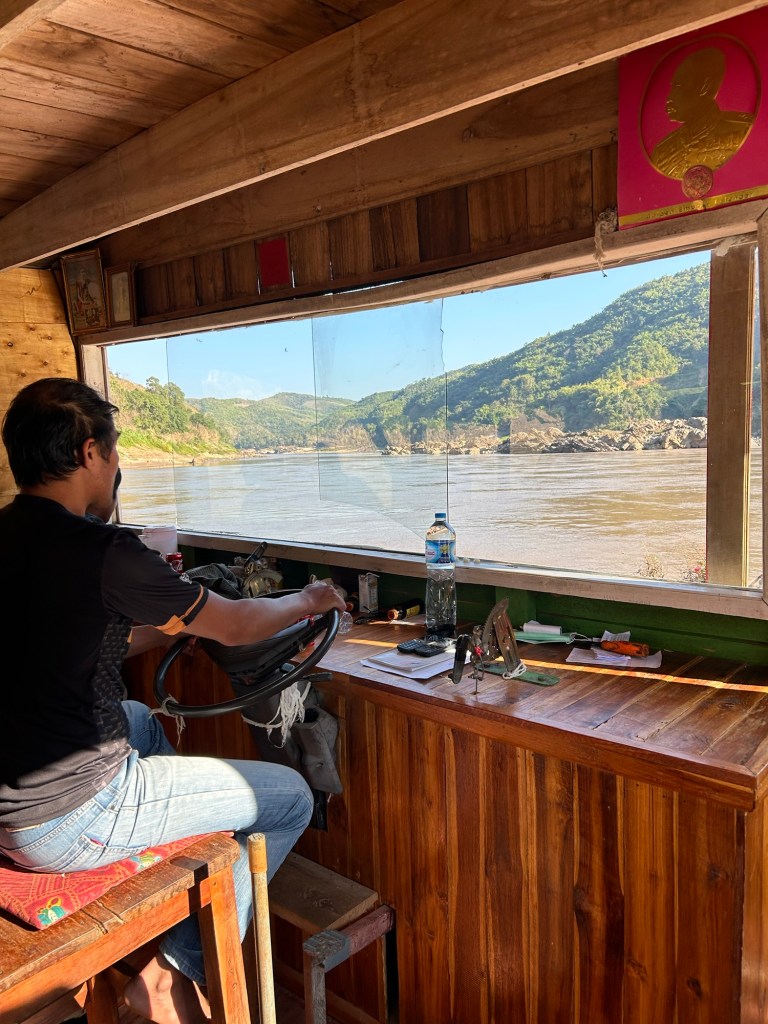
The wheelhouse.

Our slow boat journey ended when we arrived in Luang Prabang. We climbed the stairway and squeezed into an overcrowded tuk-tuk (14 people —a new record for us), and were brought downtown where we were dropped off and walked to our hotel.

The Hidden Dangers Beneath: Learning About UXOs in Laos 

The entire town of Luang Prabang is a UNESCO World Heritage Site, due to its unique blending of Lao culture and French colonial architecture that has been preserved throughout time. It was once the royal capital, whose history has been beautifully preserved through heritage houses and Buddhist traditional temples, as well as preserved Buddhist practices, which I will get more into below.

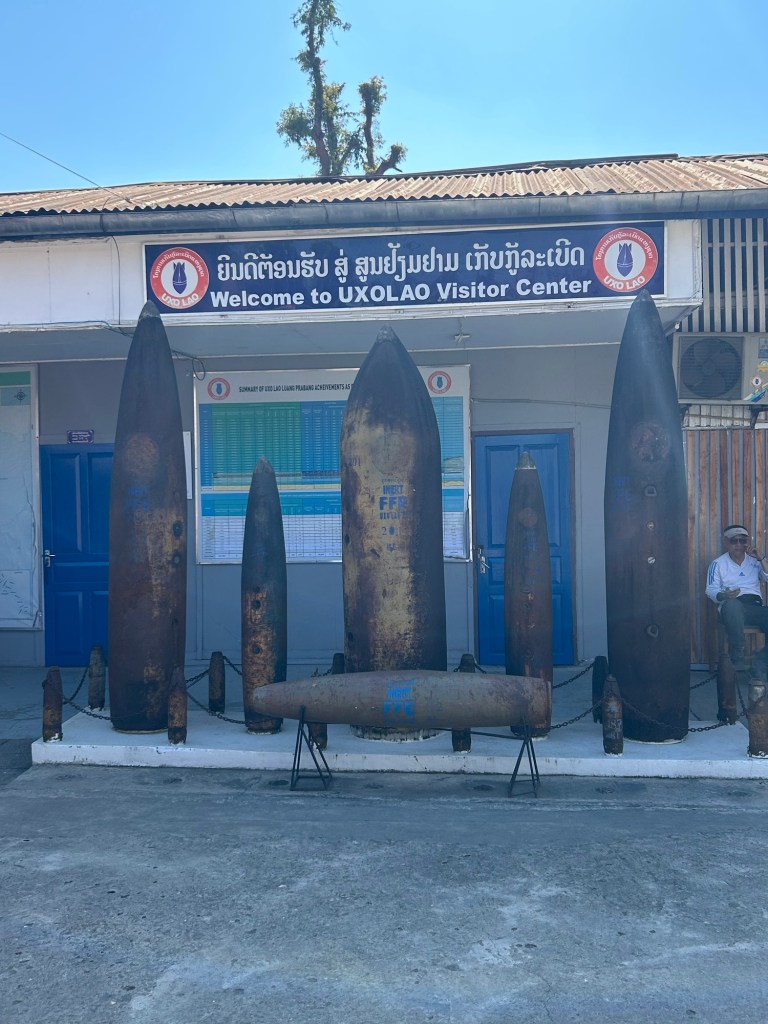
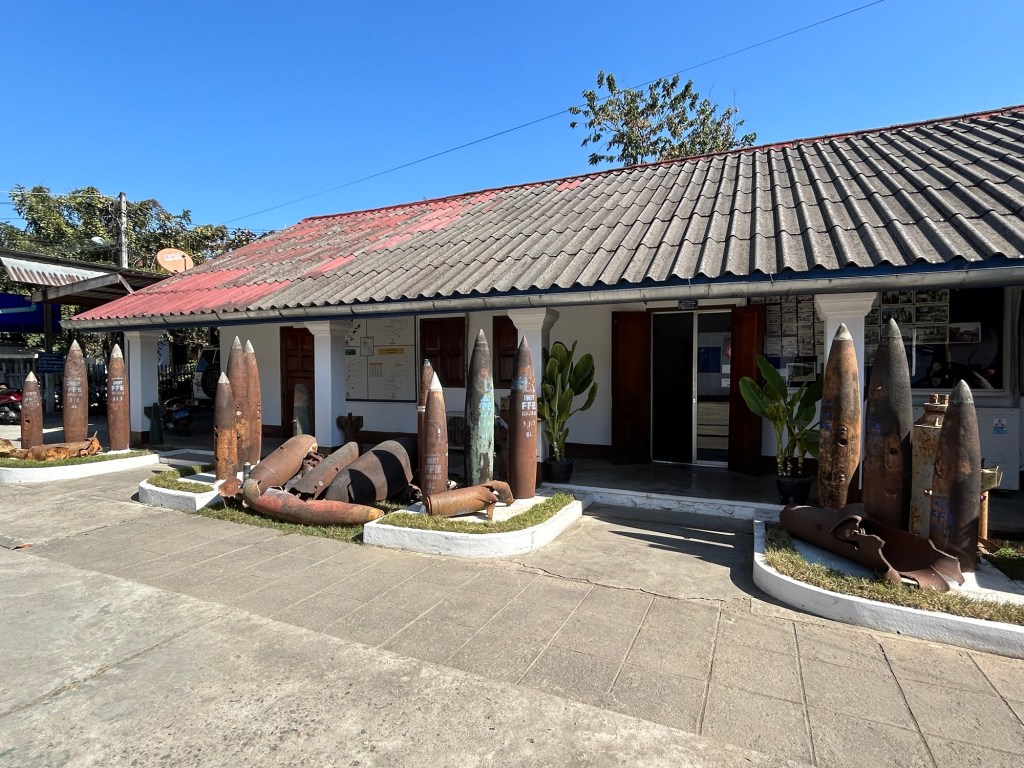
To truly connect with Luang Prabang, we wanted to understand its history, which is marked by both beauty and tragedy. We began by visiting the UXO Lao Visitor Centre, which is a museum dedicated to informing visitors about the dangers of unexploded ordnance (UXO) left from the Vietnam War. Here, we not only learned about the Vietnam War, but also about America’s Secret War. From 1964 to 1973, the U.S. dropped millions of bombs on Laos, making it the most heavily bombed country per capita in the world. Today, 80 million unexploded bombs remain, posing a deadly threat to citizens and rural communities throughout Laos.

UXO Lao Visitor Centre, Luang Prabang.

The museum highlighted the ongoing dangers associated with UXOs; millions remain buried under homes, on farmlands, and around schools. Today, the Secret War continues to have economic impacts on Laos, including the costly removal process of UXOs and the lack of investment due to the contaminated land. Efforts to clear UXOs are slow but making progress, helping bring safety and economic opportunities to affected areas. Visiting the museum was both eye-opening and heartbreaking, reminding us of the lasting impact of war on communities and the resilience of the Lao people. We also learned about the educational initiatives undertaken by the Laos government to support safety education regarding UXOs for children, families and communities.

Bombs dropped by United States on Laos during the Secret War at the UXO Laos Military Museum in Luang Prabang.

Buddhist Tradition in Luang Prabang

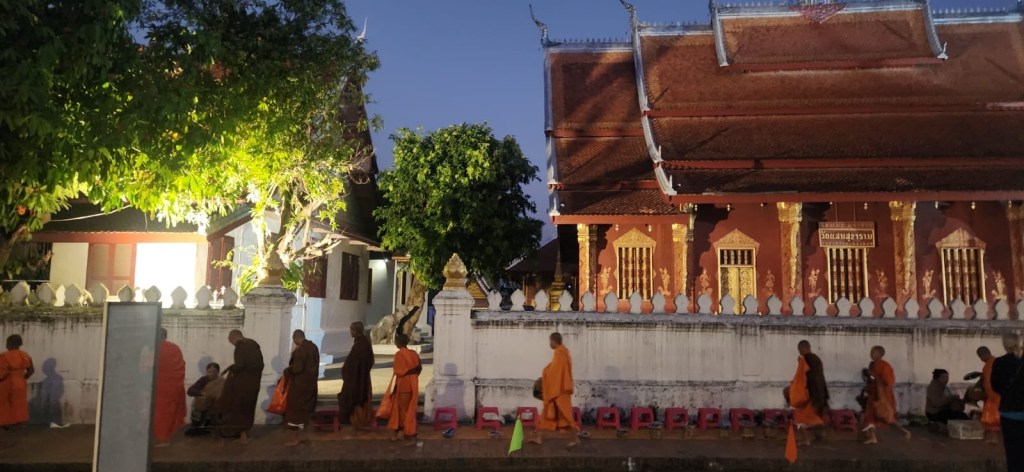
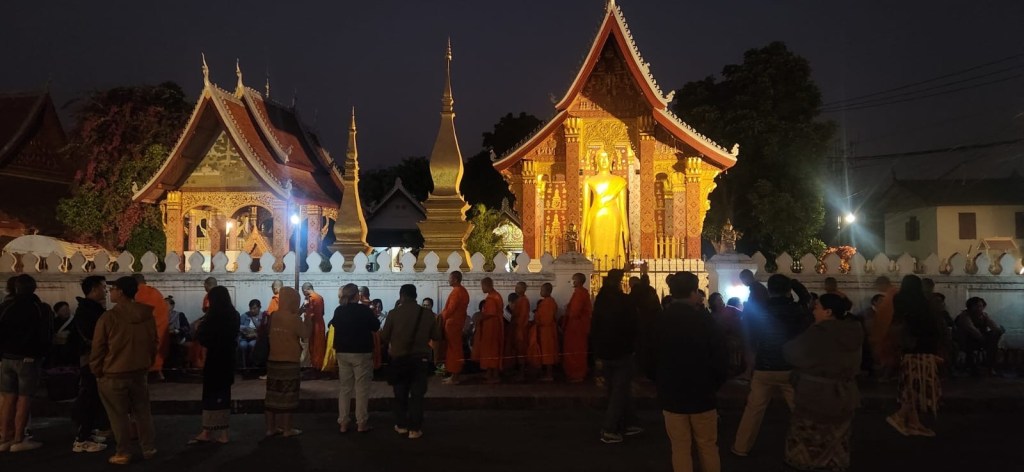
Almsgiving ceremony, Luang Prabang.

Luang Prabang has preserved the centuries old sacred almsgiving ceremony. This ceremony is a sacred Buddhist tradition, where monks and their novices collect food offerings from devoted locals and respectful visitors. The monks do not ask for food, rather they silently receive it as part of their spiritual practice of humility, which is then shared within the monastery and with the poor.

Almsgiving ceremony, Luang Prabang.

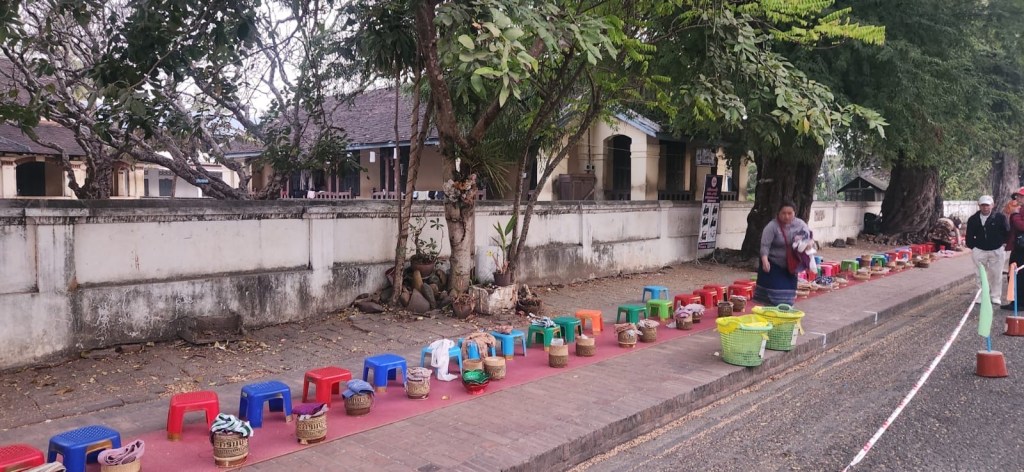
Locals set up the carpets and chairs, and on the morning of, the roads and sidewalks are also blocked off.

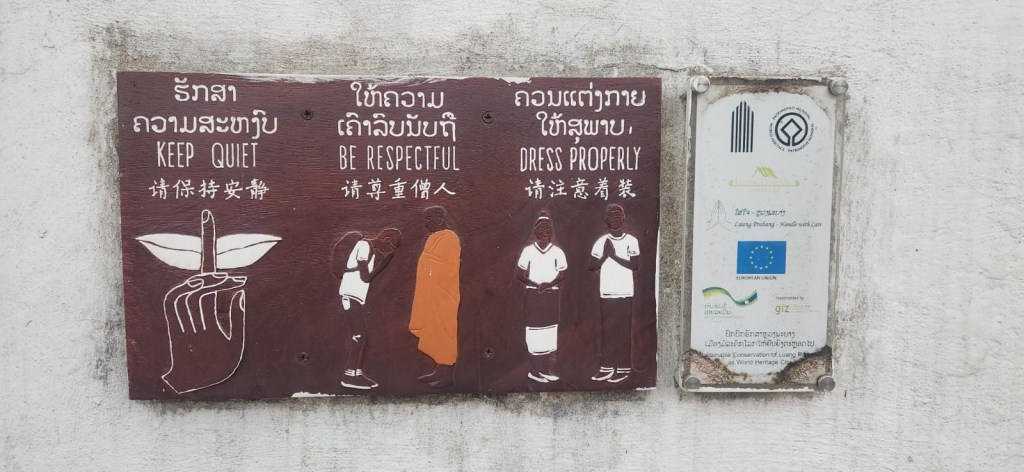
With the ceremony gathering much attraction from tourists, these signs (below) were posted throughout town. We witnessed several tourists not following these guidelines and being very disrespectful, which was disappointing. However, learning about this ceremony, the relationship between the local community and the Monks, and how this practice is rooted in gratitude, humility and detachment from material possessions, provides a lesson we could all learn from in regard to selflessness, generosity and compassion.

Exploring Luang Prabang: Food Markets, Temples, Museums, and History

Eating street food in Luang Prabang.

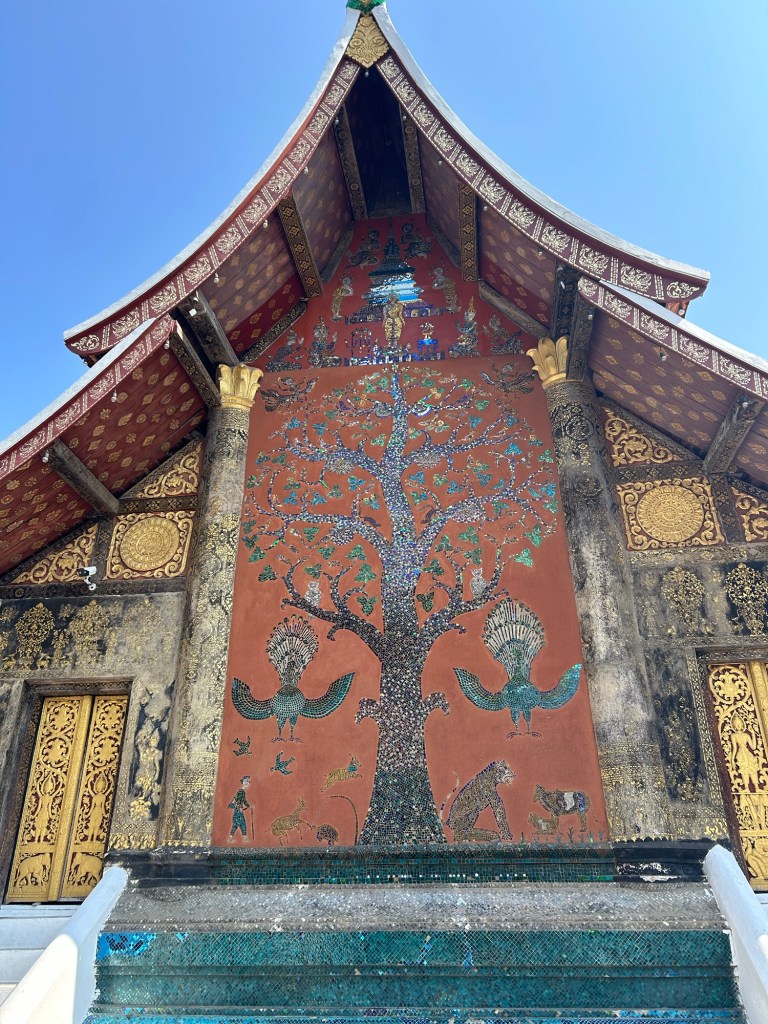
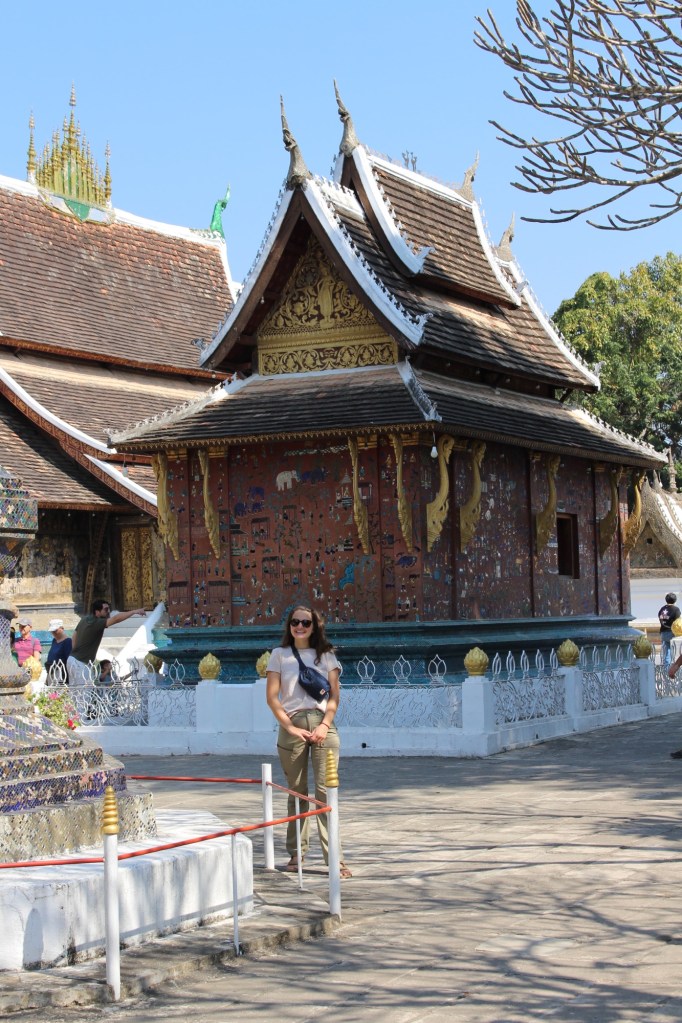
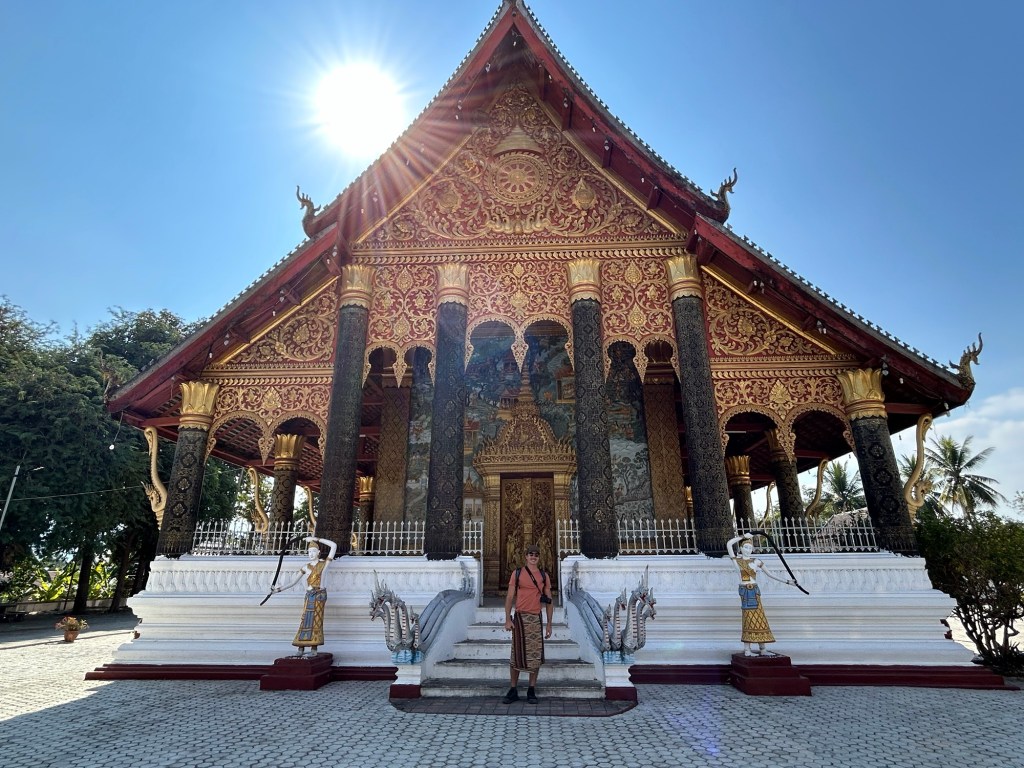
We explored some of Luang Prabang’s most iconic temples, including Wat Xieng Thong, a former royal temple known for its golden mosaics and the “Tree of Life” on its back wall. We also visited Wat Nong Sikhounuang and Wat Mahathat, each showcasing the city’s strong Buddhist heritage.

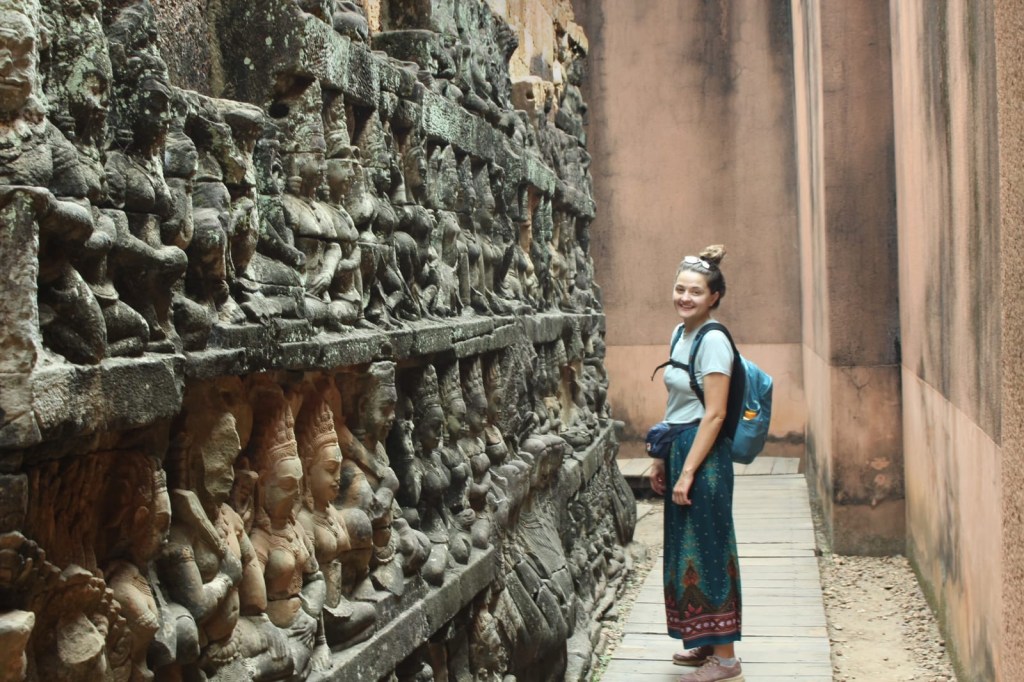
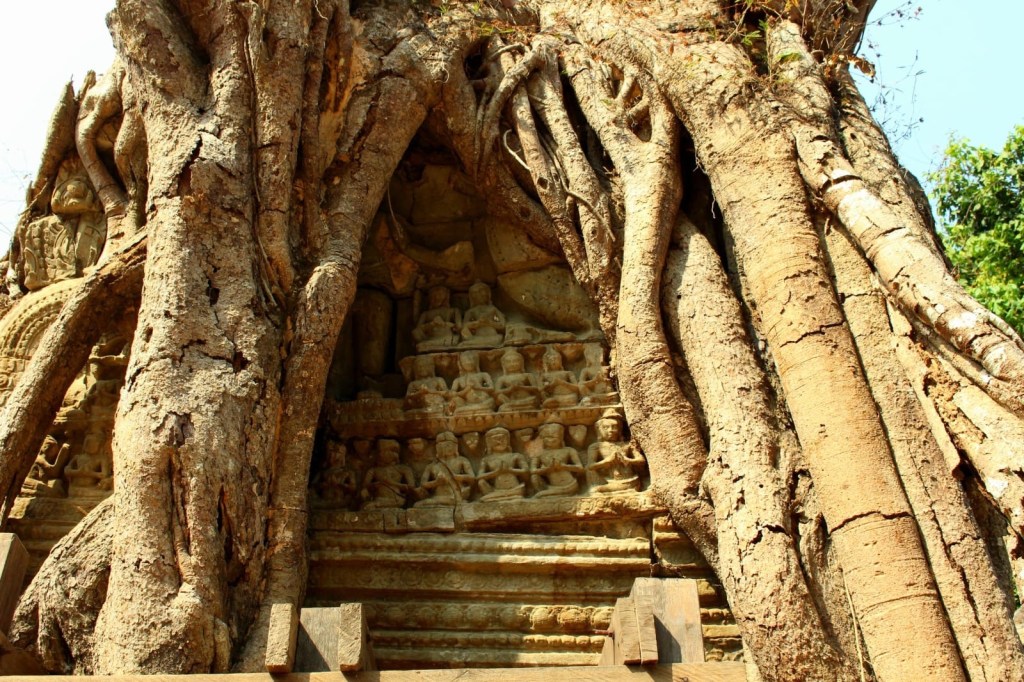
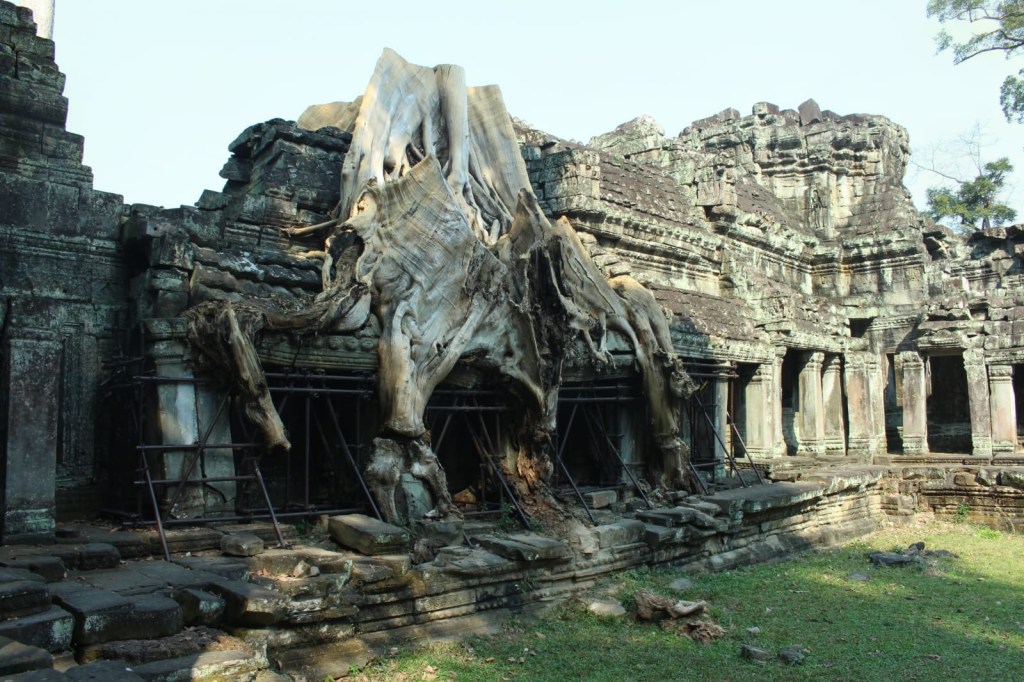
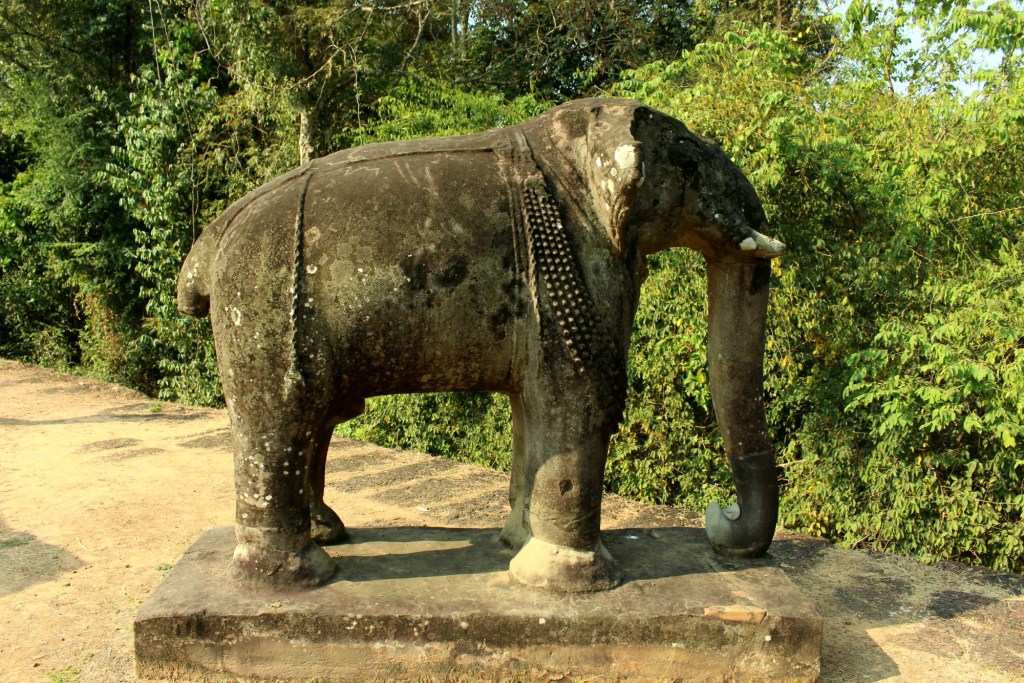
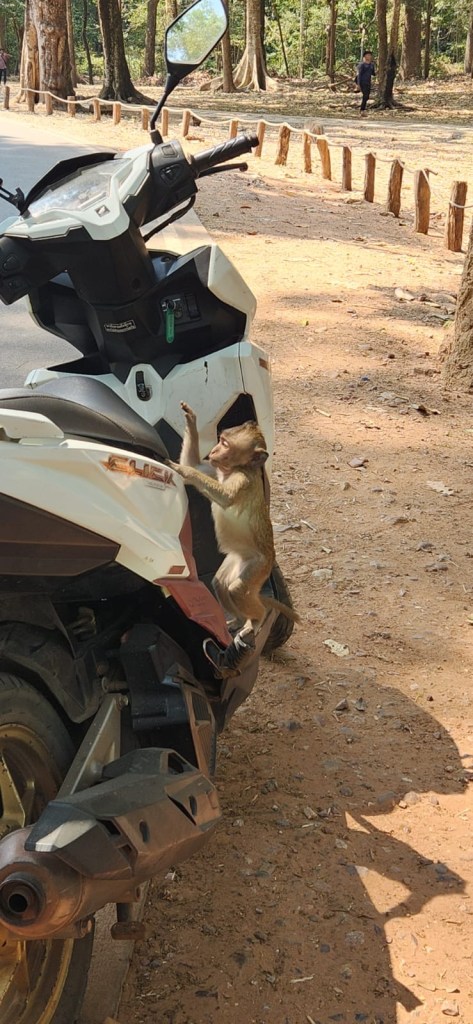
One of the biggest surprises of our visit to Angkor was realizing just how vast the complex is. What may seem “close” together was actually a sprawling network of temples, roads, and towering walls that required scooters or vehicles to navigate. Along the way, we passed checkpoints ensuring visitors had valid passes and occasionally spotted monkeys along the road. At one point, I had a monkey on my scooter, then 2, who would not leave! The best part of starting early was exploring in relative solitude—by mid-morning, the crowds started to build.

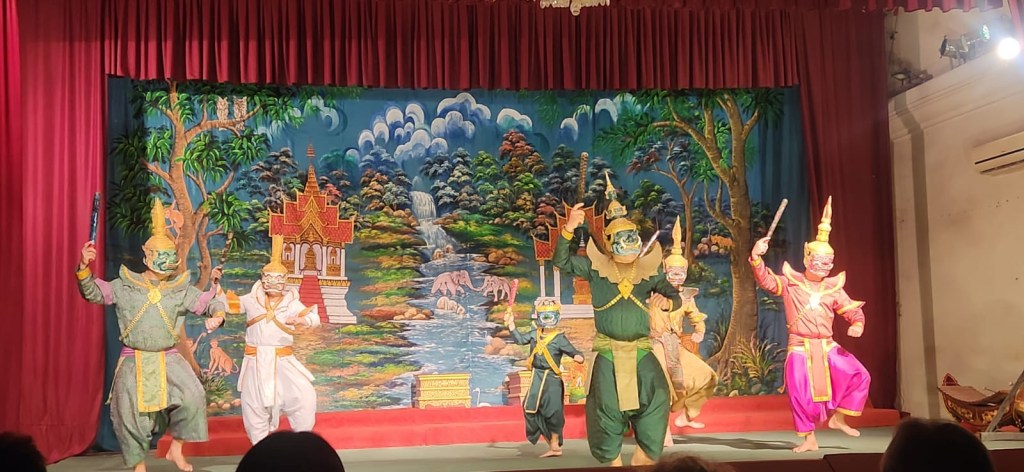
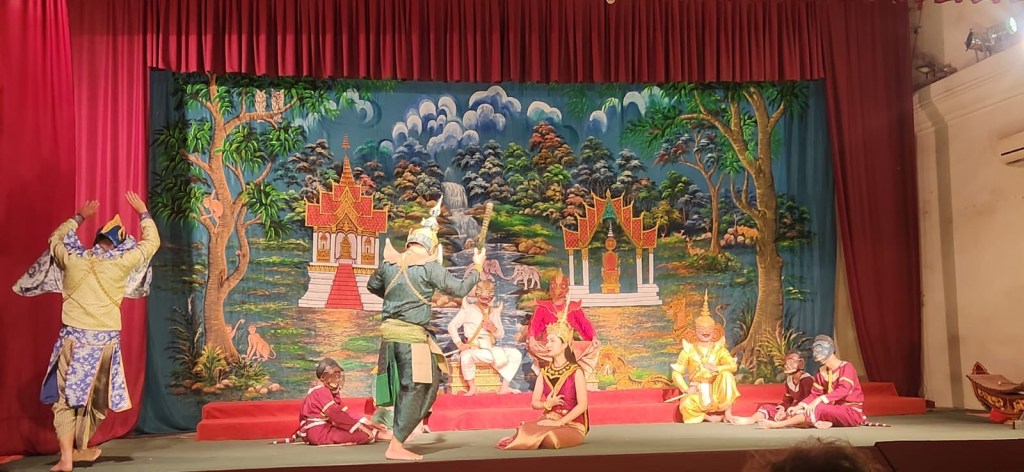
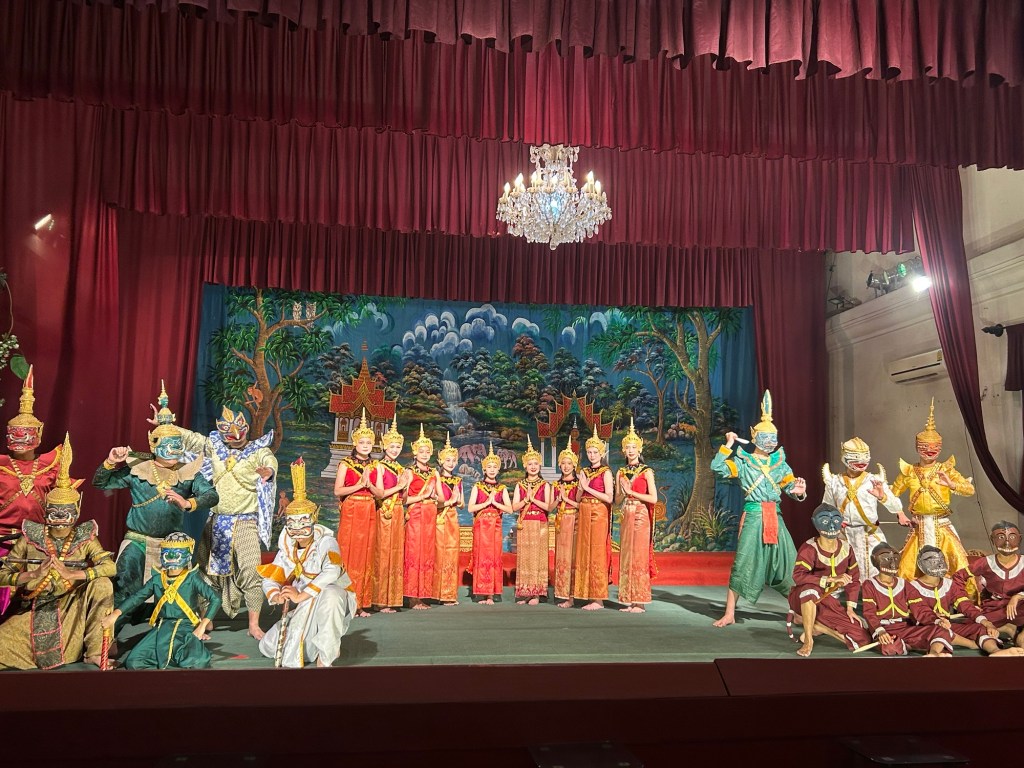
A highlight was touring the former Royal Palace, now the National Museum. Built in 1904, it housed two kings before being converted into a museum after the monarchy’s overthrow in 1975. The royal Palace included the Royal Theatre, where we enjoyed an evening ballet performance, which told a traditional Lao story.

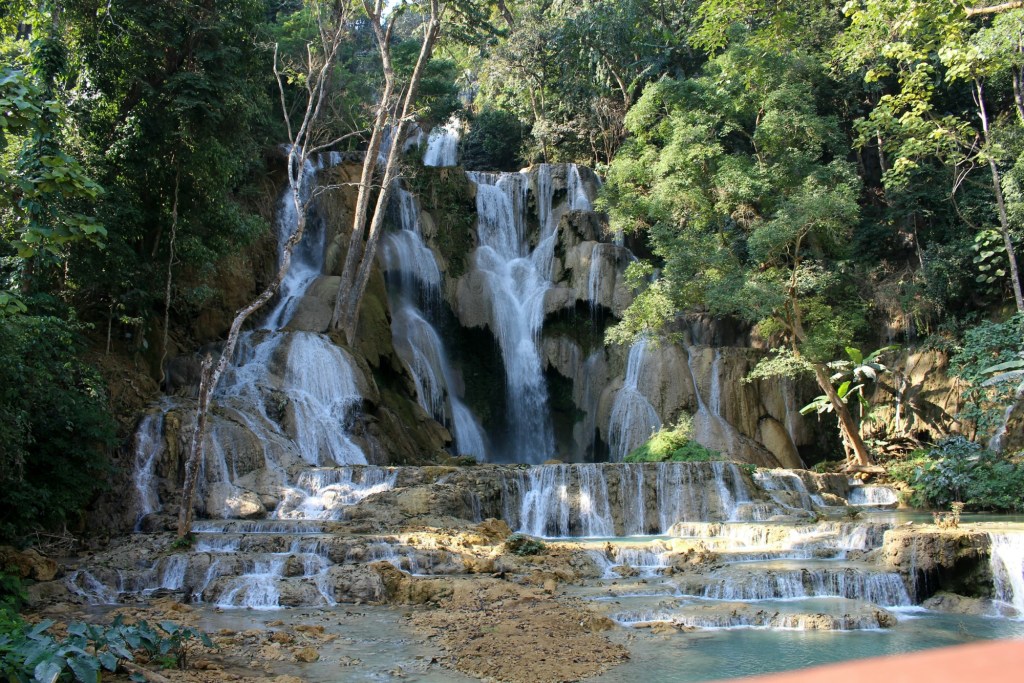
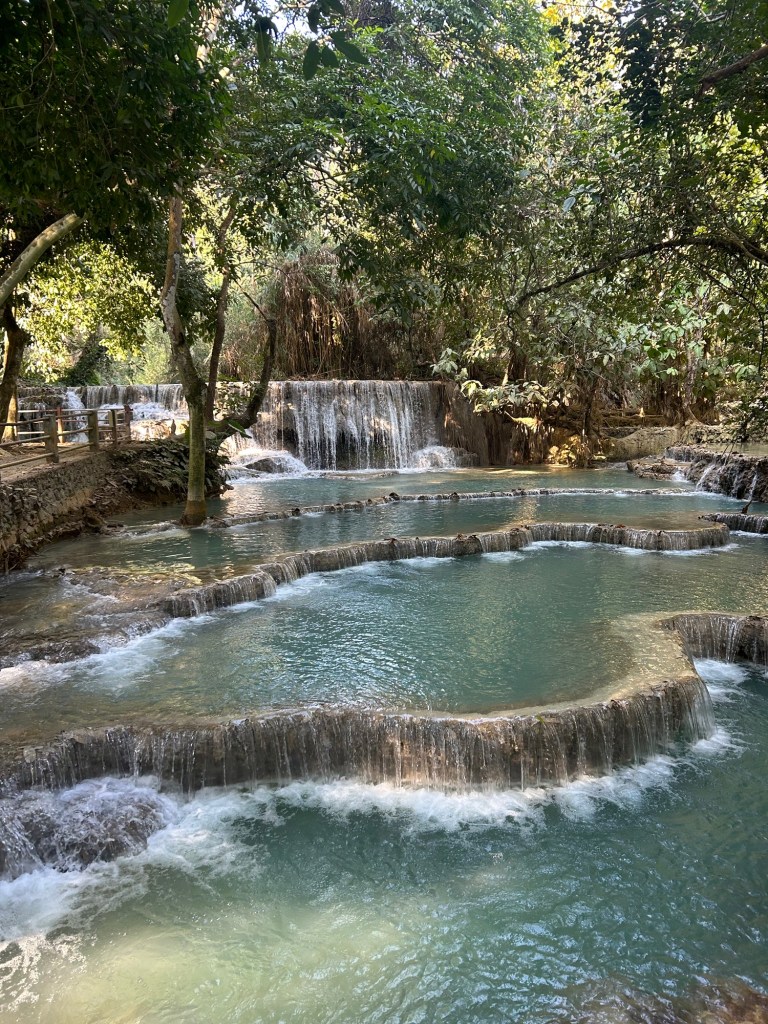
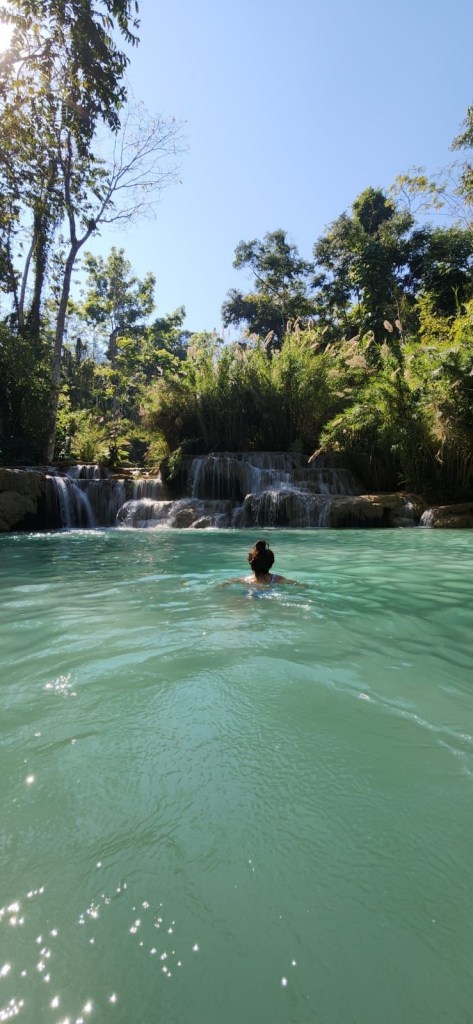
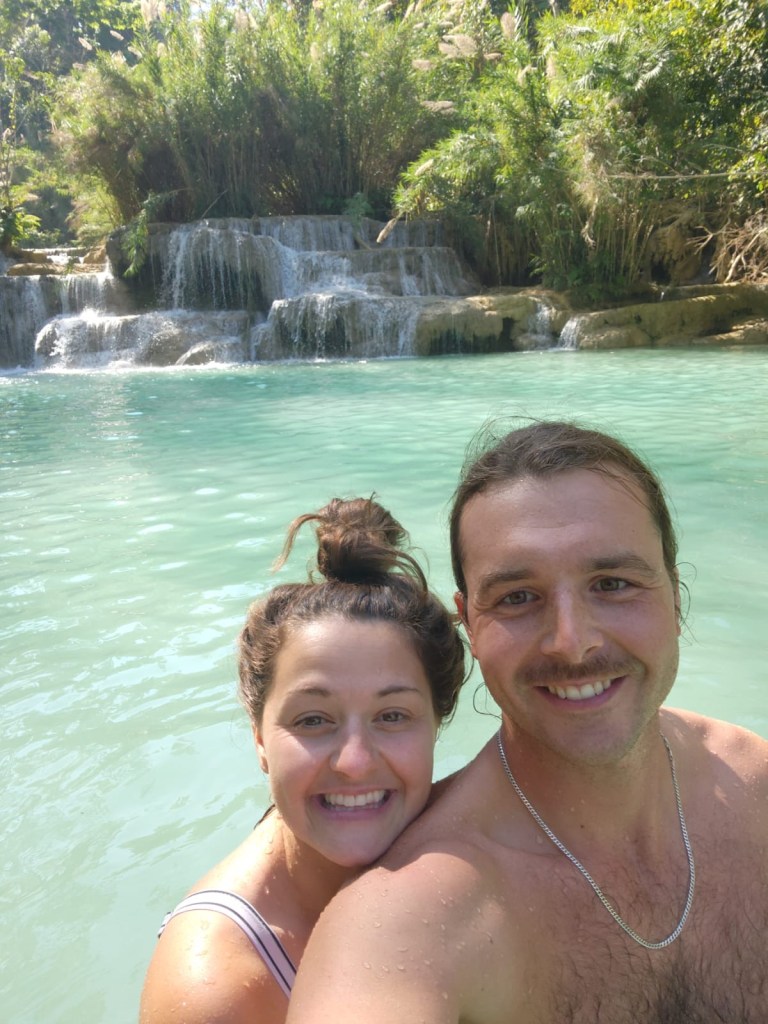
Beyond the city, we embarked on an early morning journey to the Kuang Si Waterfall. We rented scooters and drove through the morning fog for a little over one hour. The ride there took us through misty valleys, rice terraces, and winding mountain roads. As we neared the park, the fog cleared and we were gifted with stunning views of the countryside.

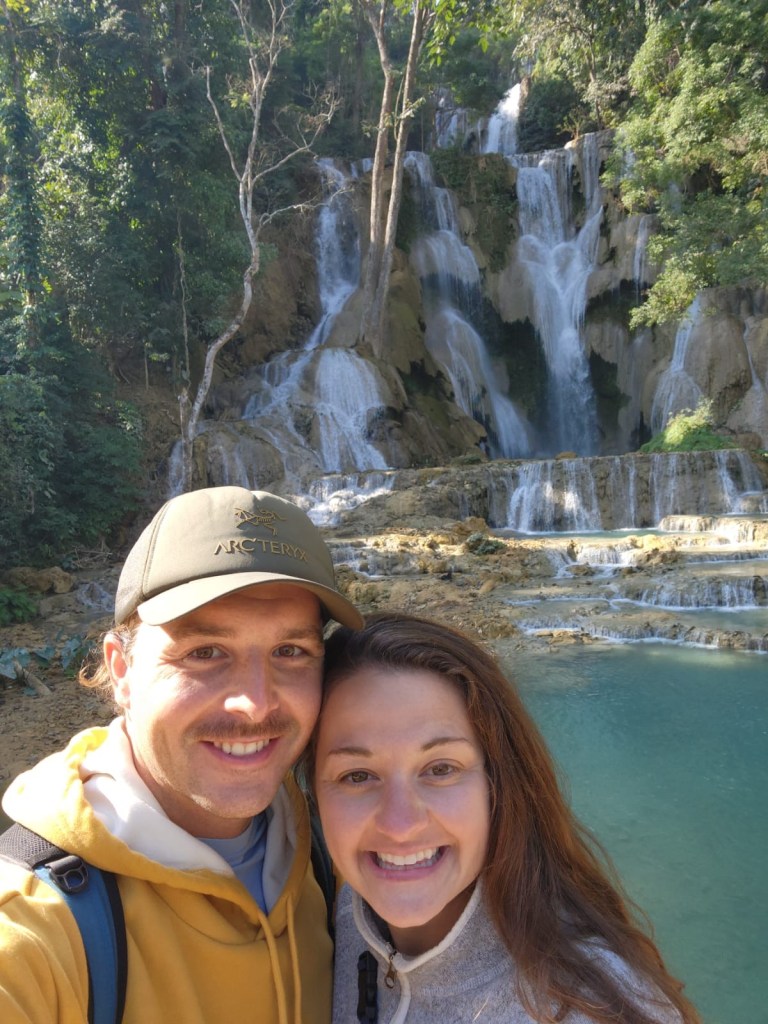
Kuang Si Waterfall

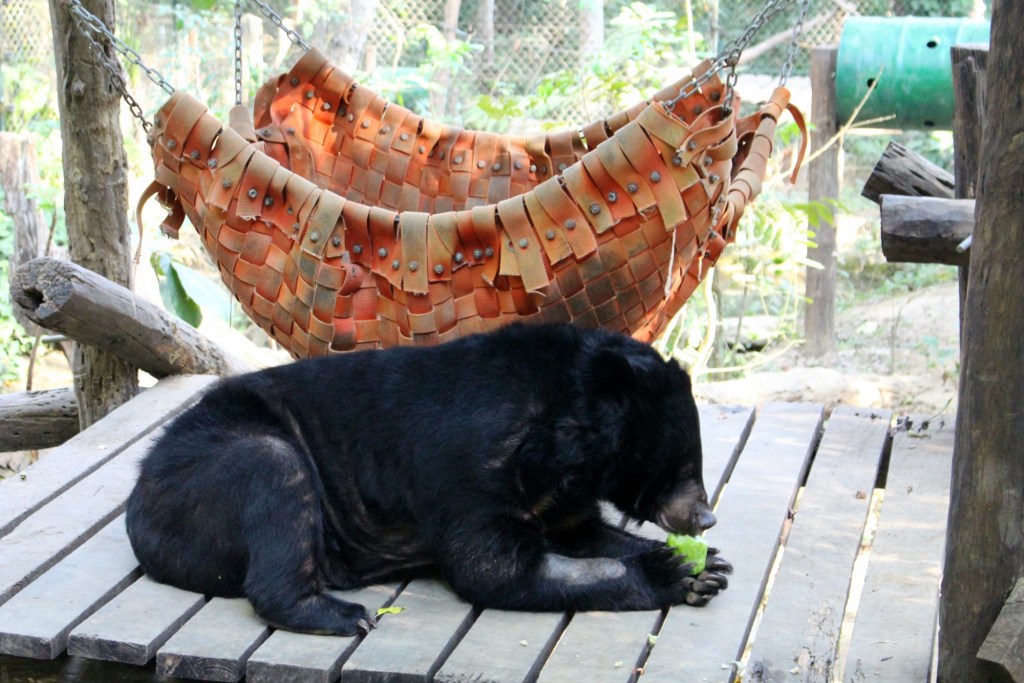
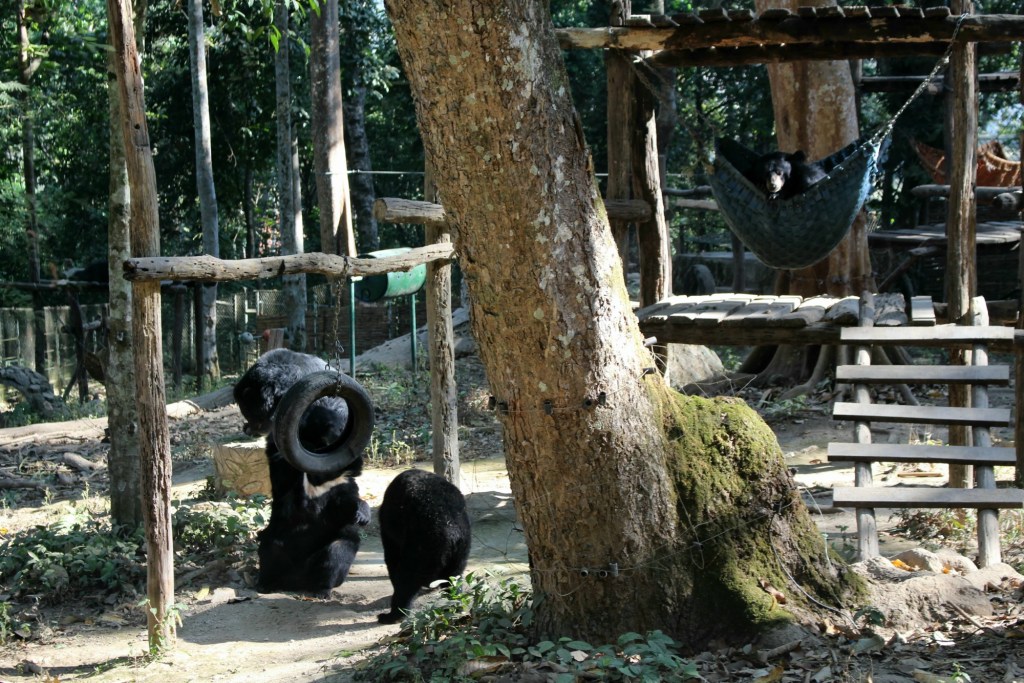
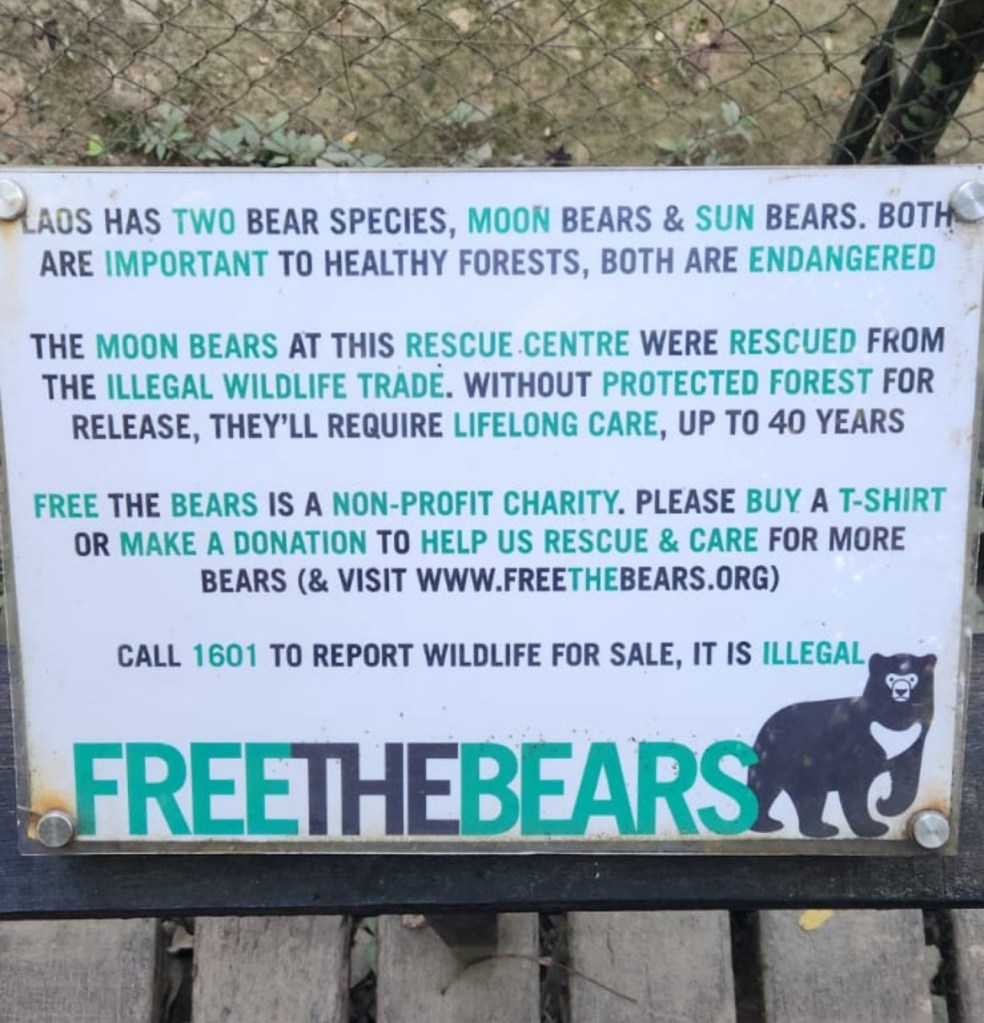
At the Kuang Si Waterfall, we passed the Tat Huang Bear Sanctuary, which was built in 2003 in partnership with the Laos Department of Forestry to house rescued bears from the illegal wildlife trade.

Bears at the Tat Huang Bear Sanctuary

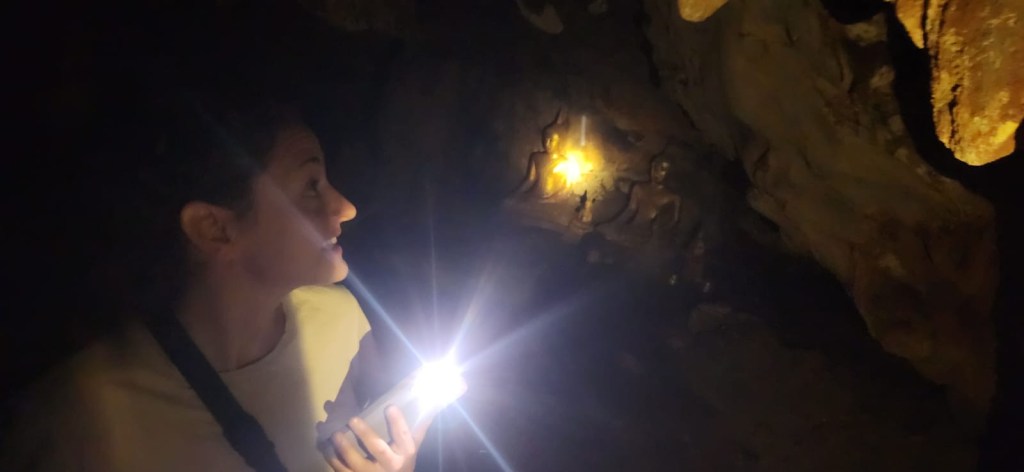
As we continued, we hiked our way up to the top, and continued until we found a cave with Buddhist relics and the spring that fed the waterfall.

Downstream from Kuang Si waterfall

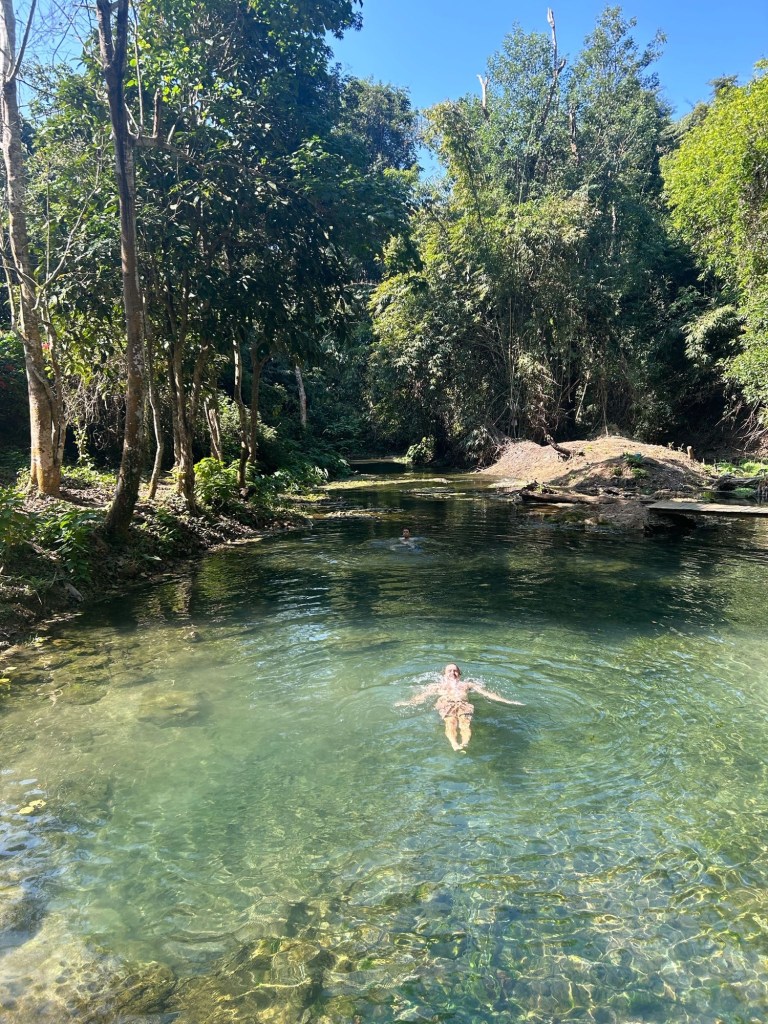
After swimming in the spring, we made our way down to the lower pools, where we again, enjoyed the chilly, crystal-clear water.

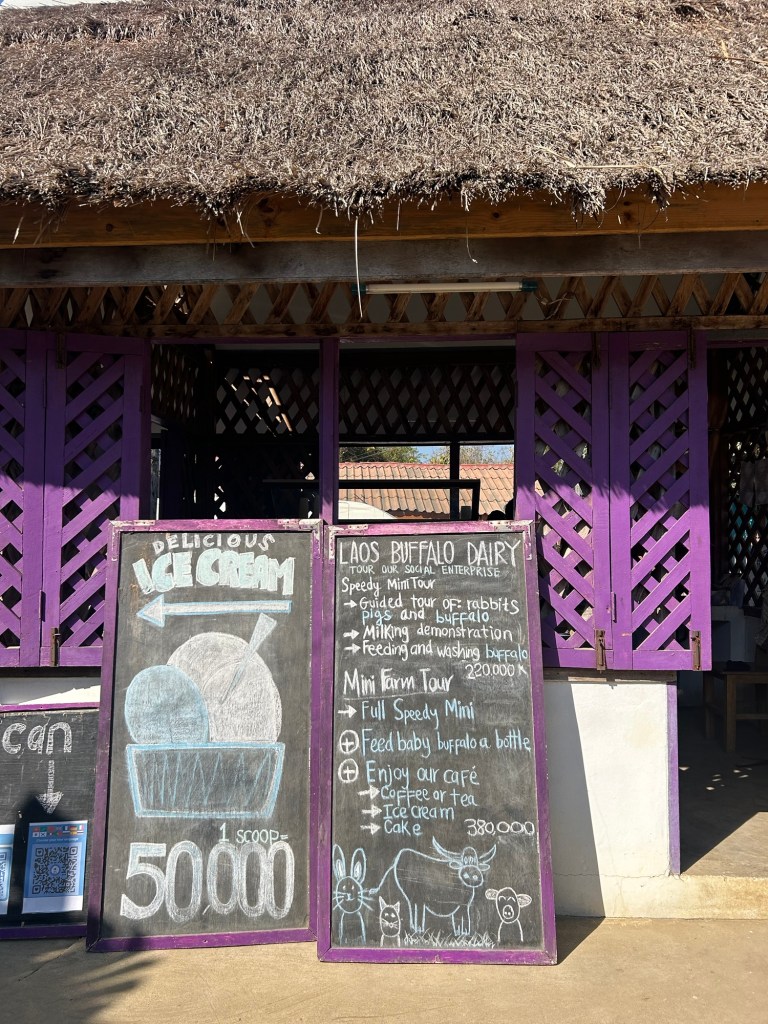
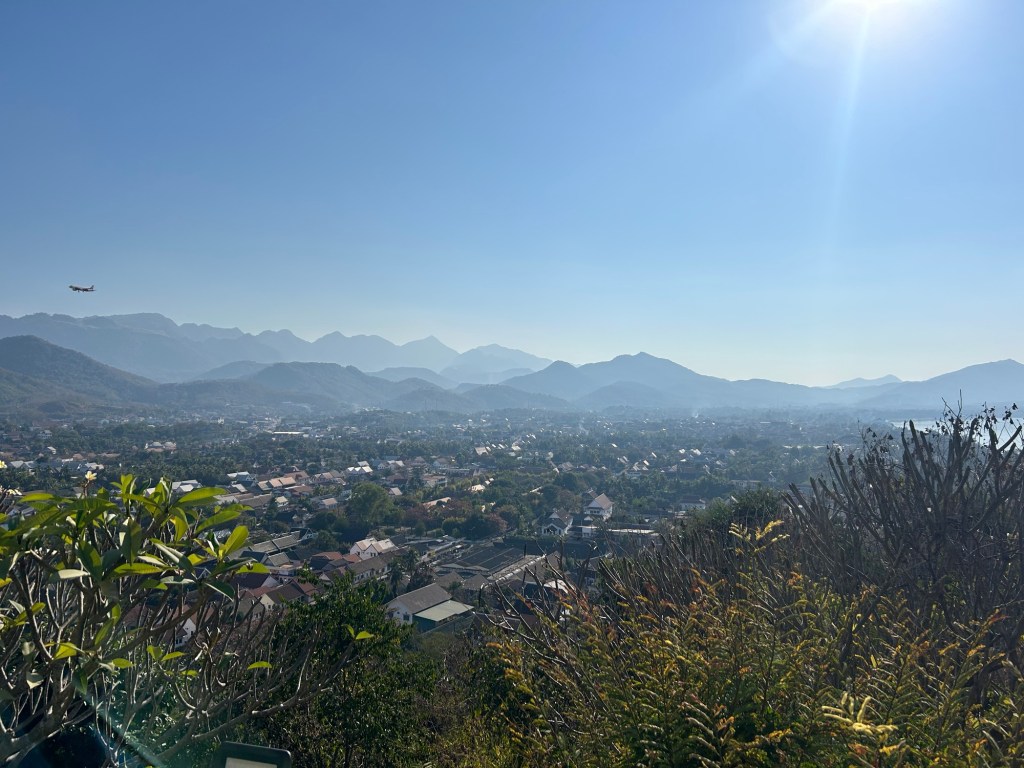
On the way back, we stopped at a buffalo dairy farm for ice cream, and ended the day with a hike up Mount Phousi, offering panoramic views of Luang Prabang.

Rice Farming Experience

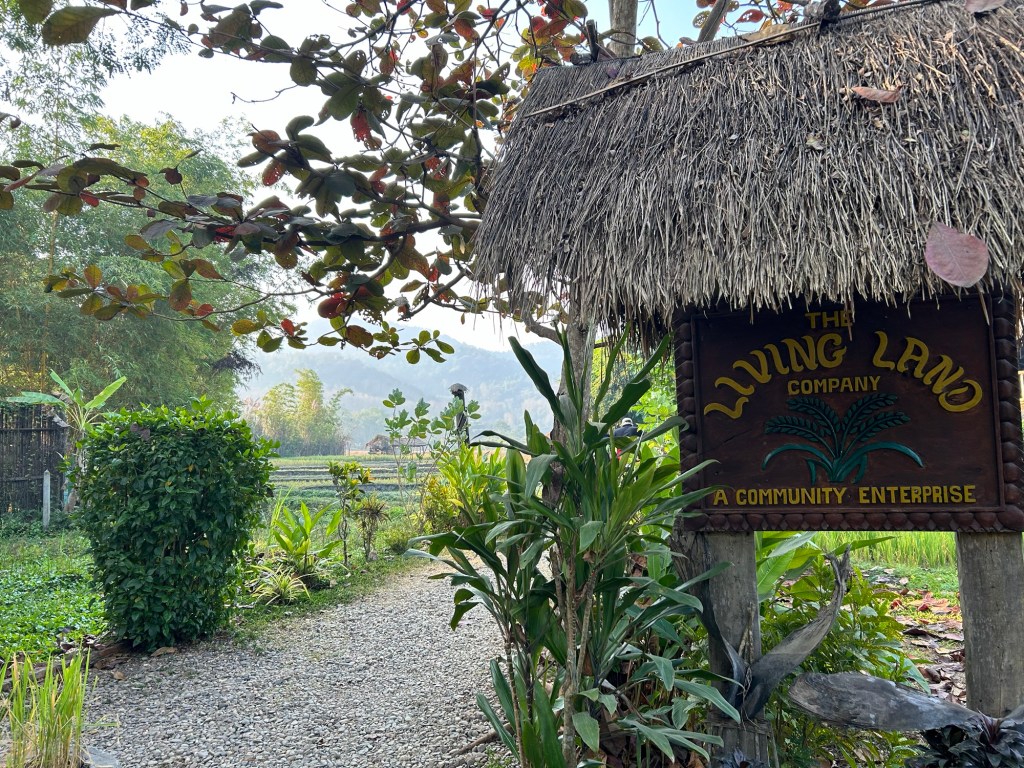
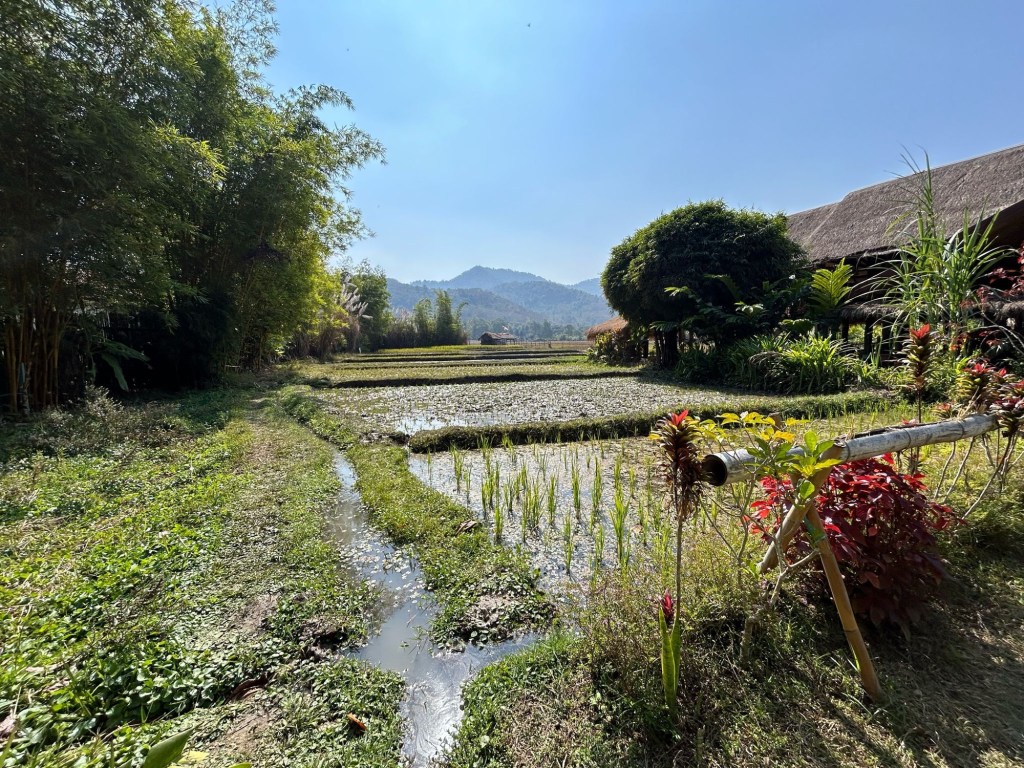
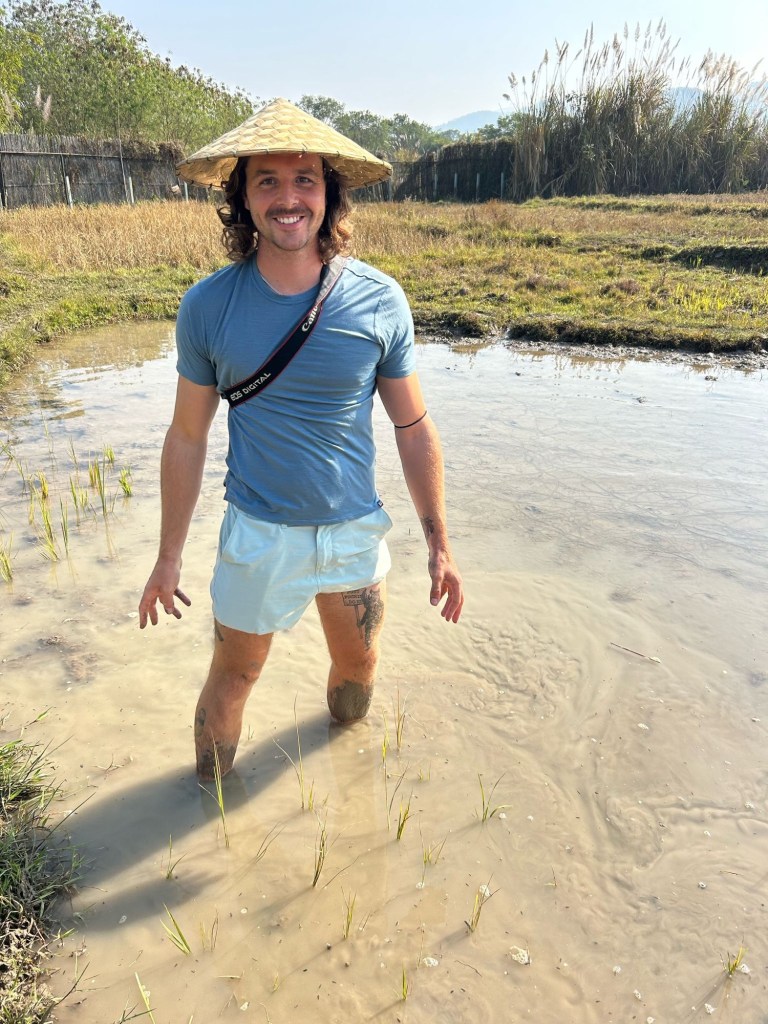
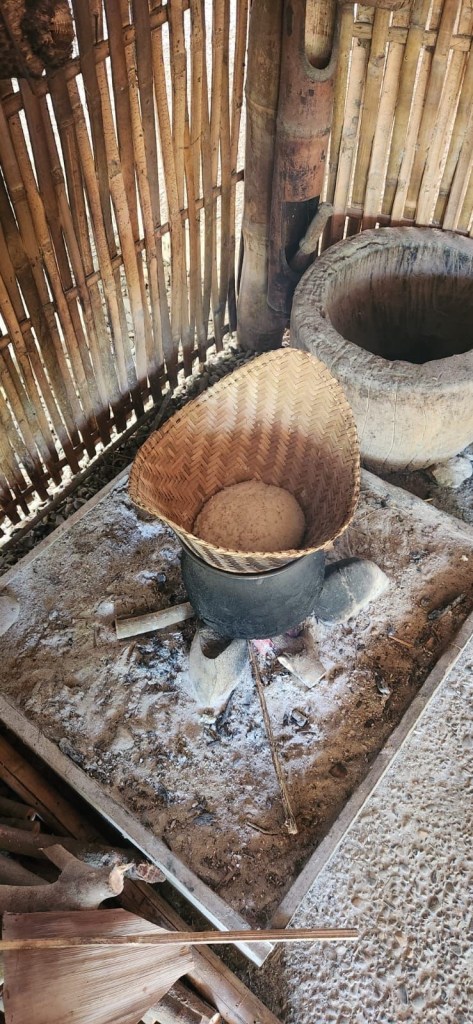
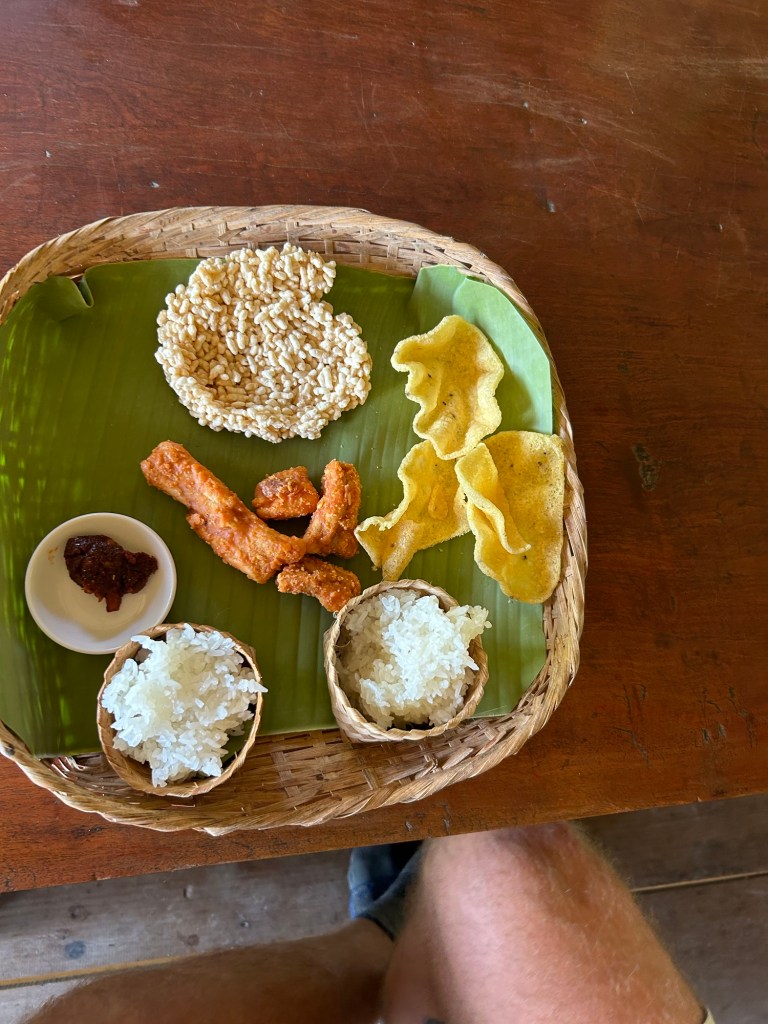
We visited an organic rice farm called The Living Land Company, for an immersive experience in traditional rice farming. Here, we were walked through the 14-step process of rice farming, which included planting seedlings, plowing fields with Susan the buffalo, learning how rice is harvested and processed into flour and noodles, and steamed the traditional Laos way. We also enjoyed fresh sugarcane juice that we helped to squeeze from the plant using the traditional tool, and ate rice-based treats.

Adventure and Scenic Beauty in Vang Vieng

After exploring the cultural and historical Luang Prabang, we took the train to Vang Vieng. Traditionally a farming town, but known since the late 1990s as a rowdy party town for backpackers. The town has been revamped as an ecotourist travel destination, however, in November 2024, was highlighted in the news for the tragic deaths of 6 travellers, linked to a suspected mass methanol poisoning. There is a new documentary produced by 60 Minutes Australia called “Deadly Laos methanol poisoning that terrified the world,” which can be found on YouTube.

Our time in Vang Vieng was spent exploring the ecotourism side — a good balance between adventure-filled activities and relaxation, and we got in many hiking and scootering kilometres.

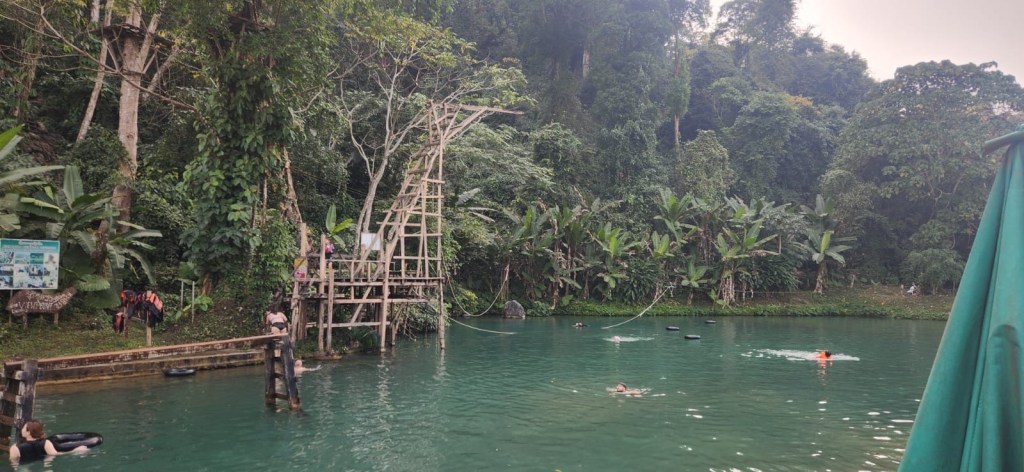
You may have heard of Iceland’s Blue Lagoon, however, Vang Vieng also has 6 Blue Lagoons, which can be found on the “Blue Lagoon Loop,” a driving loop with several jut offs that take you down rural dirt roads to scenic natural swimming holes. The more popular lagoons have swinging ropes, slides, bamboo rafts and tubes available to use at each stop.

Blue Lagoon #2

On the loop, there are also many hiking opportunities, we chose to tackle the Big Pha Ngern Viewpoint, leading to three scenic peaks with panoramic views of the surrounding limestone mountains. The climb was steep, but the reward was well worth it – especially at the highest peak, where we overlooked the vast forests and jagged cliffs. From there, we climbed on the scooters and we stopped at three Blue Lagoons (Lagoon 1, 2 and 3). We spent a couple of hours at Lagoon #3 taking turns swinging from the rope swings and swimming in the refreshing turquoise water.

Lookout 1 on the Big Pha Ngern hike

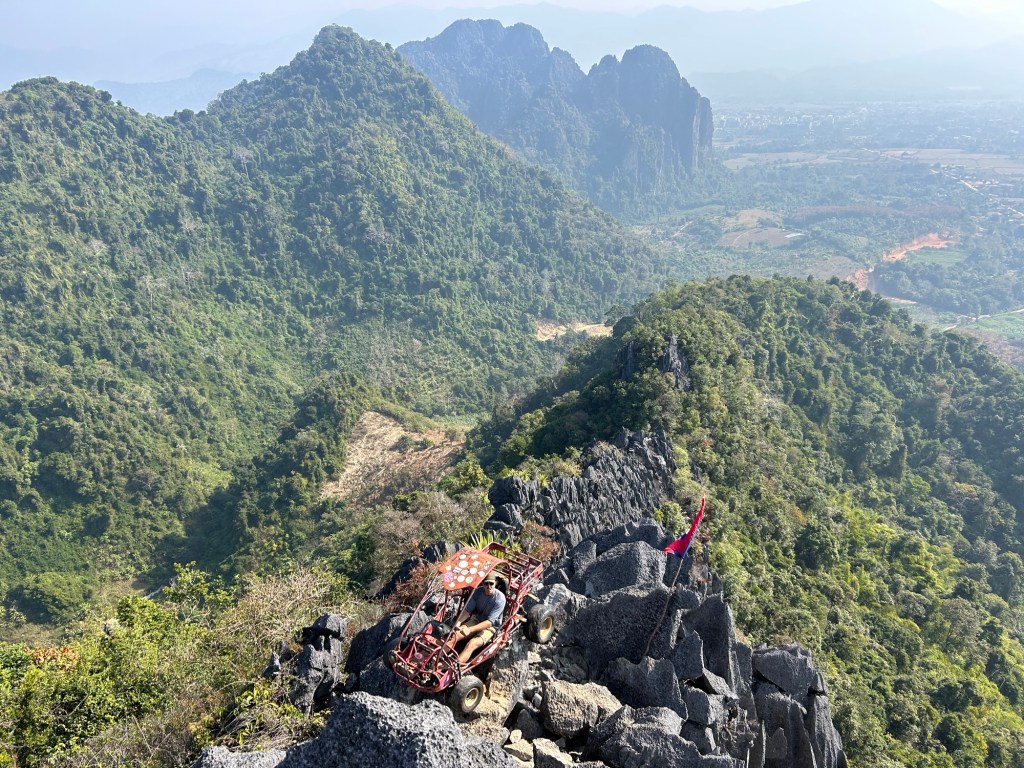
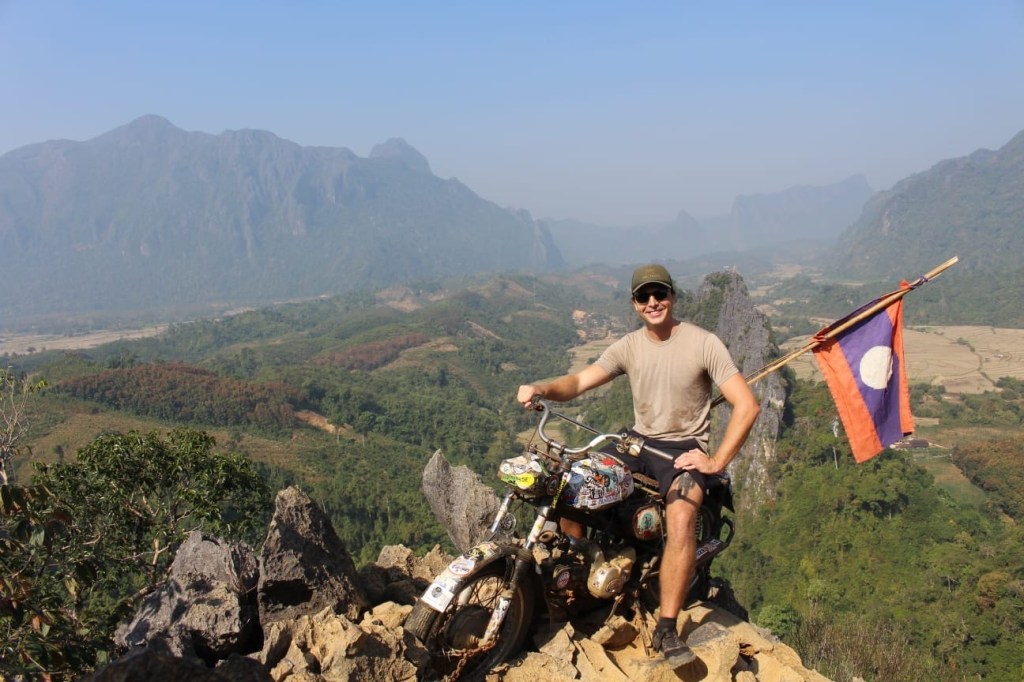
On a separate day, we ventured back around the loop to complete the Nam Xay Viewpoint, an iconic hike known for the motorbikes perched at the summit. We made it to the top where we took in breathtaking 360-degree views before continuing on the Vang Vieng scenic loop, a 26km journey through rural Laos. This was also a reminder to stay early, as the trail was very busy.

Nam Xay Viewpoint

Vang Vieng Nam Song River Adventures

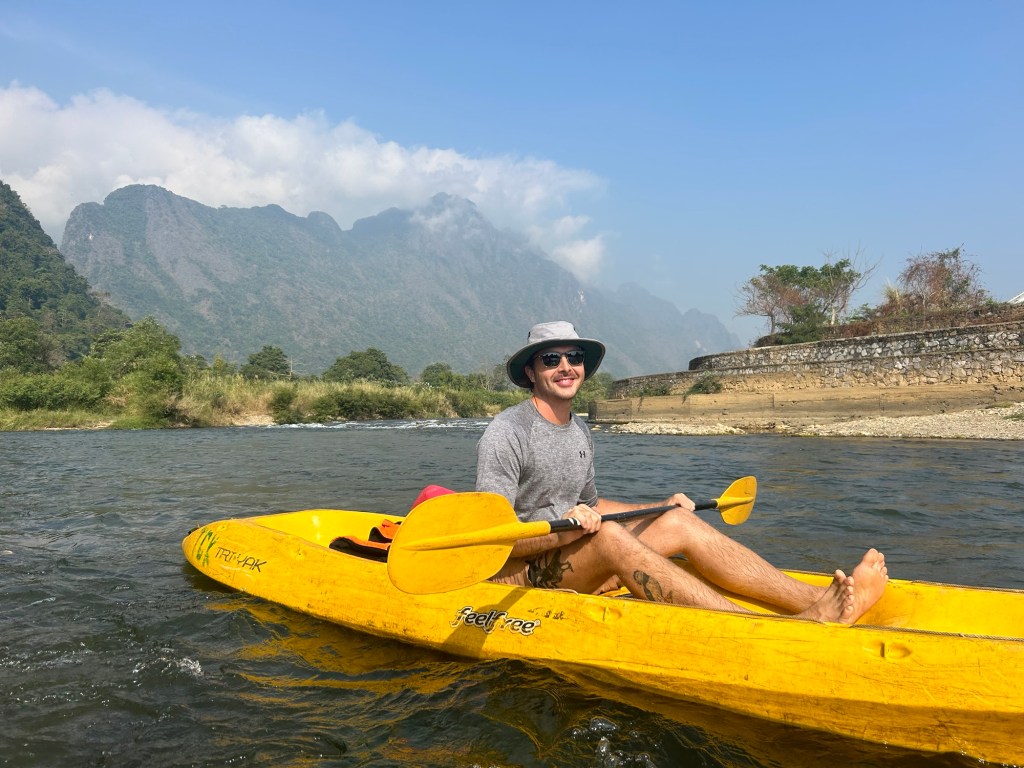
We explored the Nam Song River twice. First, we kayaked 8km downstream, passing through a few kilometres of forests with gentle rapids, before eventually reaching the many riverside bars that Vang Vieng is known for. It was quiet, as they were still closed for the morning.

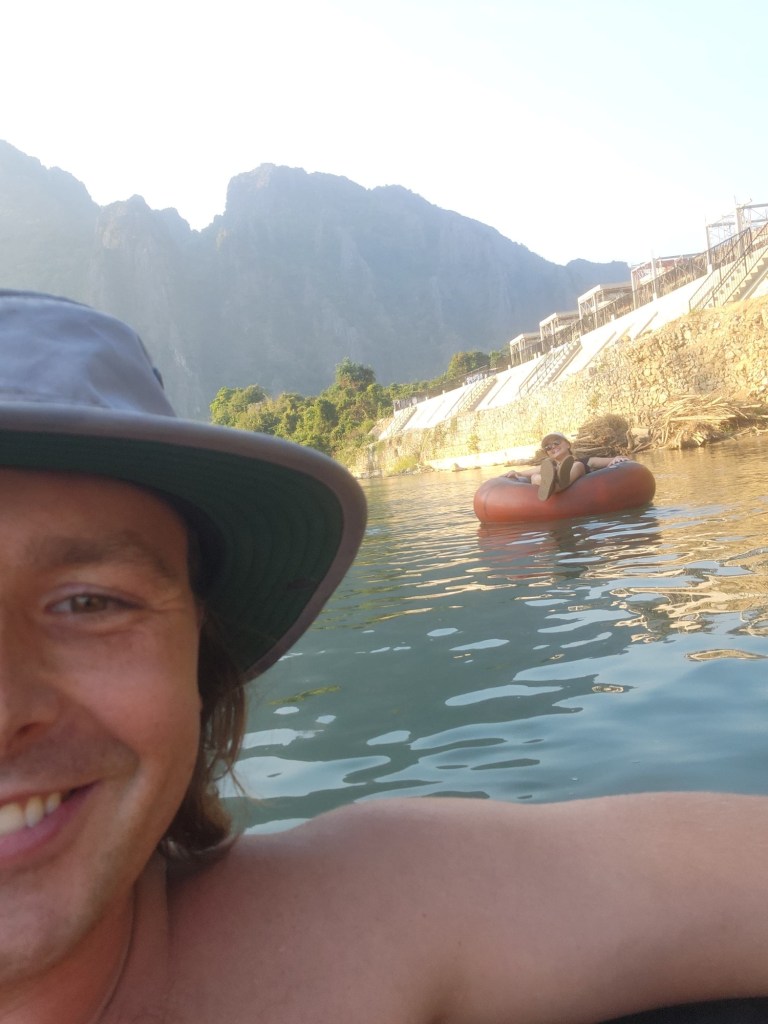
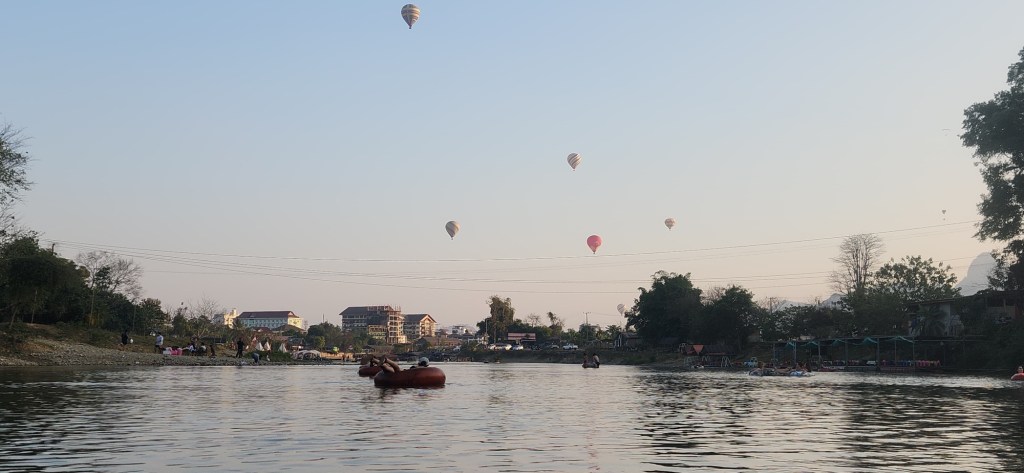
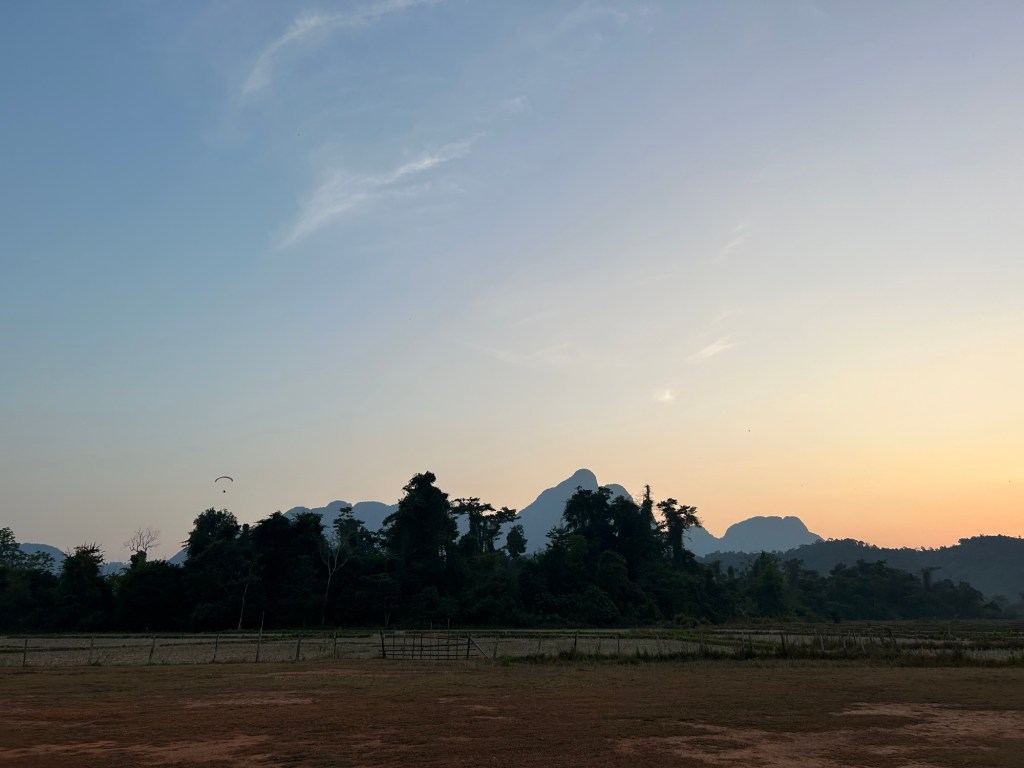
The second trip was a more laid-back experience, as we joined the famous “tipsy tubing” scene. Slowly floating down the river, wielding several drinks, and stopping at a bar along the way, we made it back to town just as the sun was setting. We watched hot air balloons and paramotorists take to the skies above us for their sunset flights.

Taking Flight: Paramotoring 

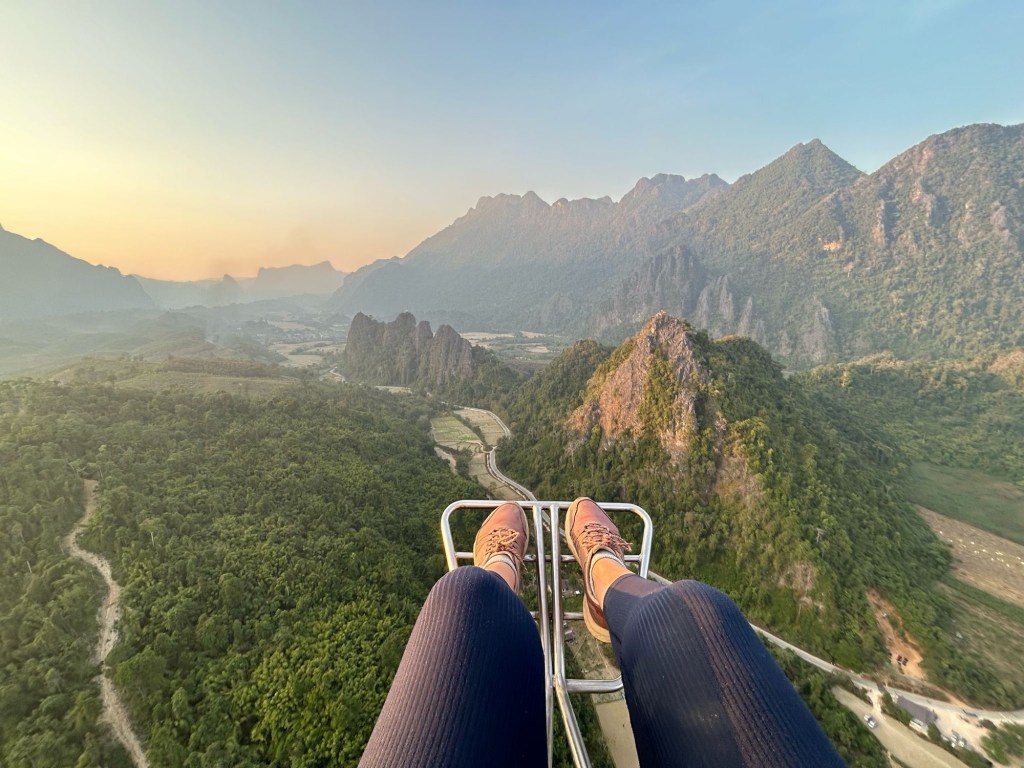
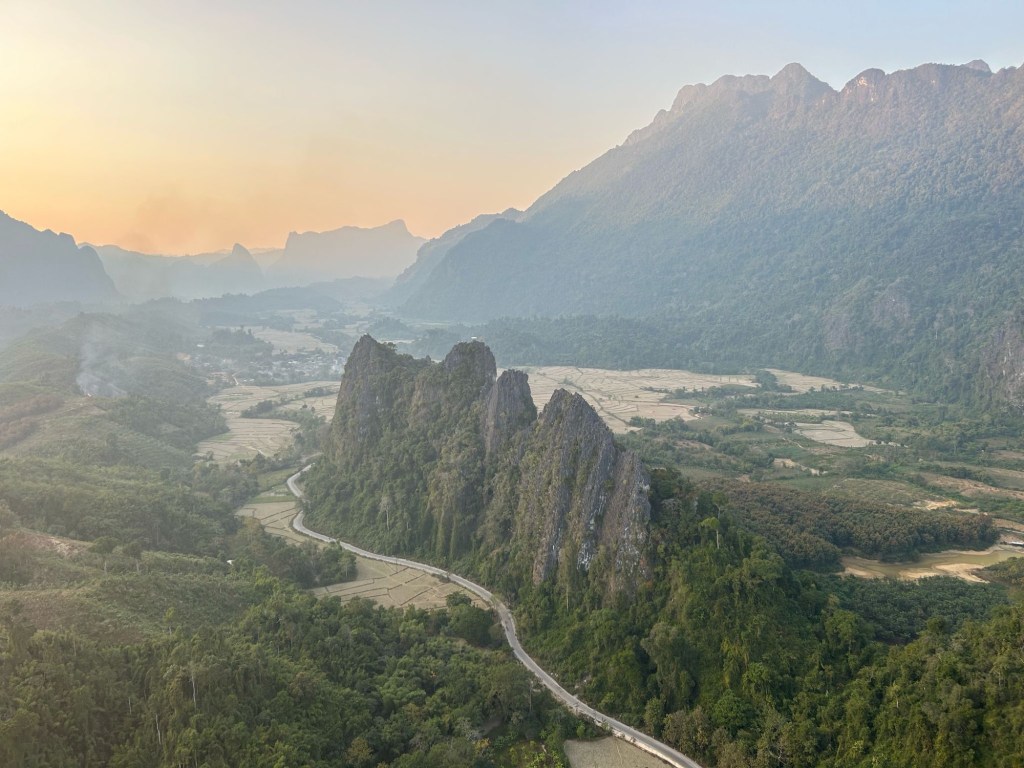
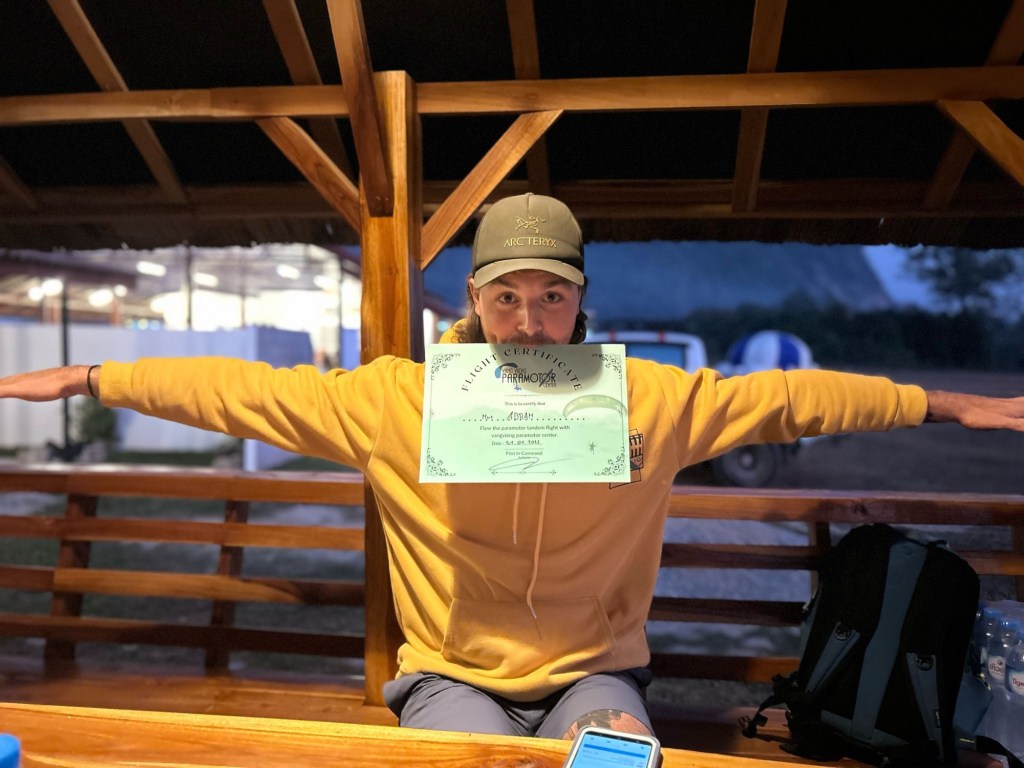
I had heard of paragliding but never paramotoring, The adrenaline junkie (Mat) wanted to do this, so we took to the skies for a (surprisingly) peaceful paramotoring experience at sunset. The scariest part was the first 15 seconds of take off which happened so quickly, and then we were up gliding above the karst formations.

I went first and then Mat went up. As we were in the sky, we watched as hot air balloons rose over the golden horizon, and overlooked Vang Vieng and the mountains at sunrise, it was very beautiful.

Mat post paramotoring receiving our flight certificate.

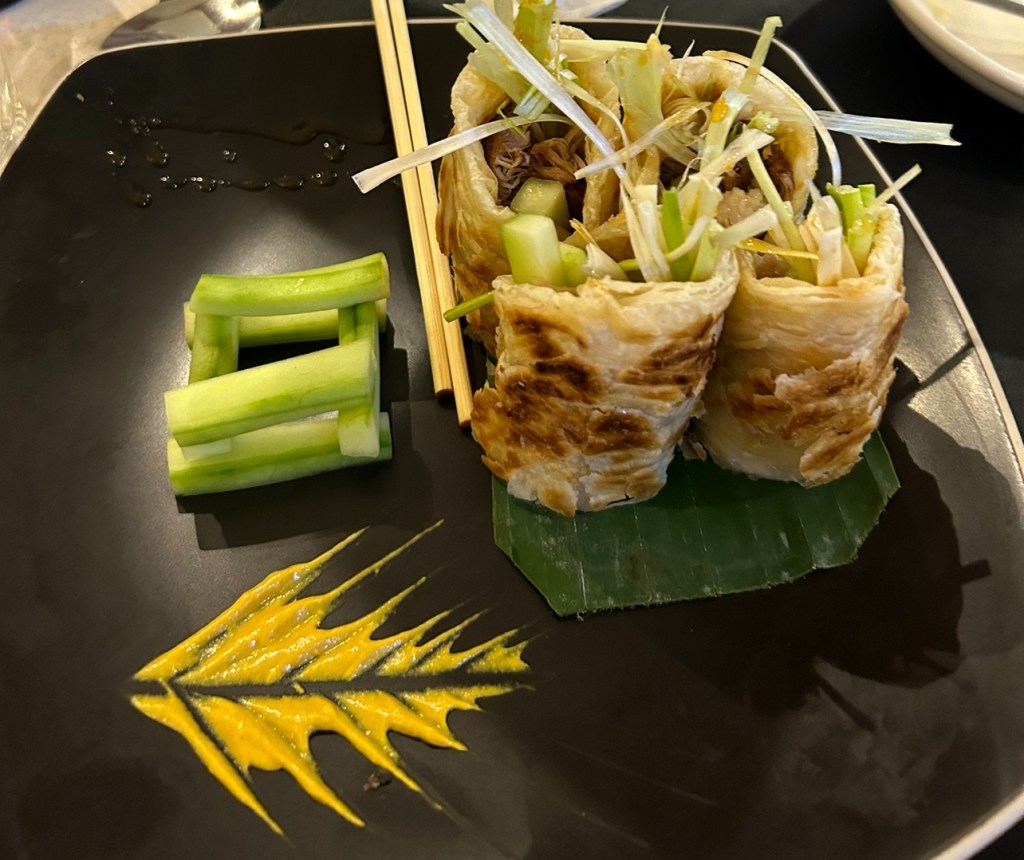
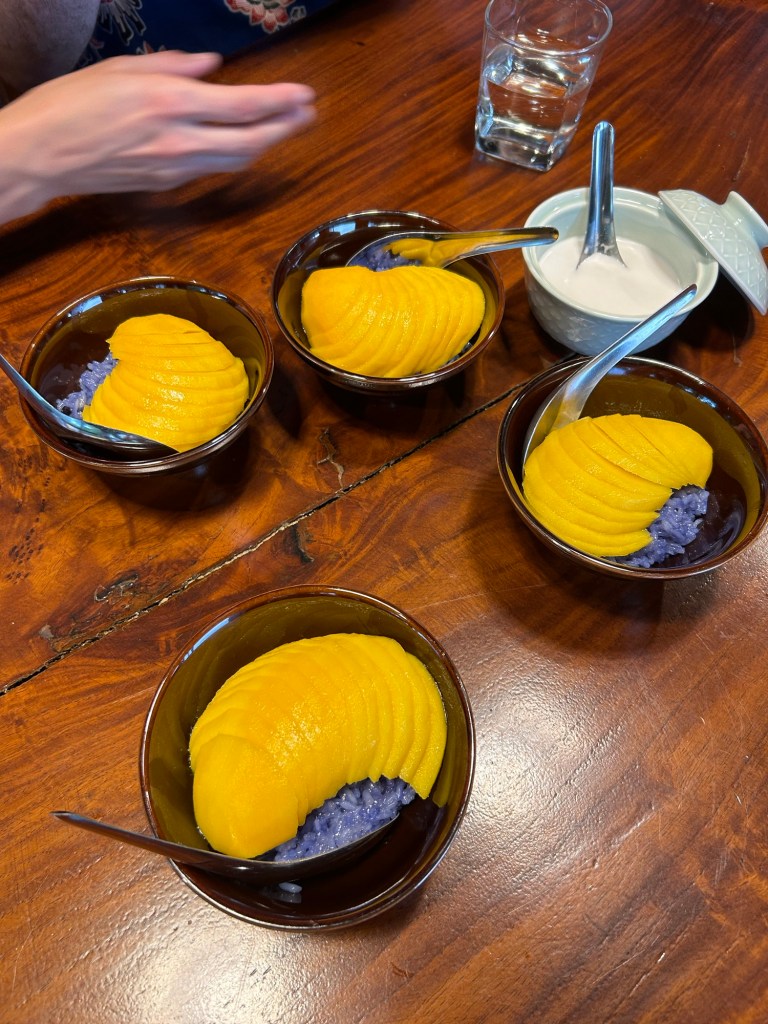
A final Vang Vieng shout out to Happy Mango restaurant for serving the most delicious duck spring rolls & mango sticky rice, still drooling thinking about those!

Vientiane: Exploring the Capital City

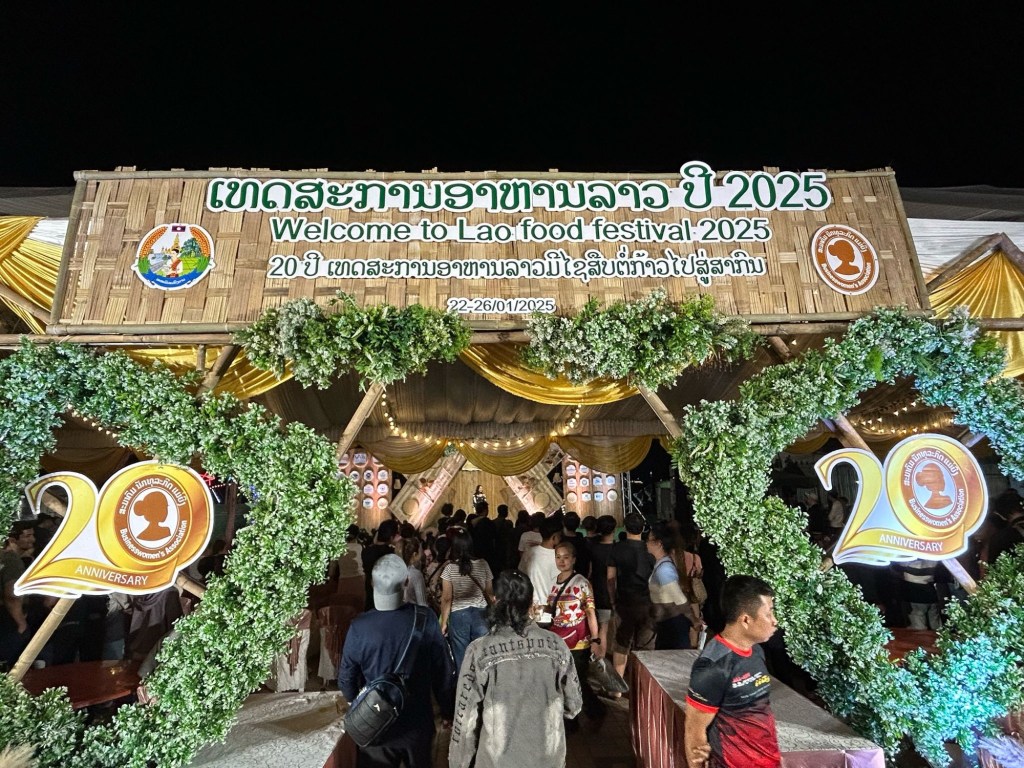
Our time in Vientiane, the modern capital of Laos, was spent taking in the history, culture, and local cuisine. We arrived by train and explored the city, heading to the night market and quickly stumbling upon the Lao Food Festival, an annual event showcasing traditional Lao cuisine, fusion dishes, and handicrafts.

2025 Laos Food Festival in Vientiane.

2025 Laos Food Festival in Vientiane.

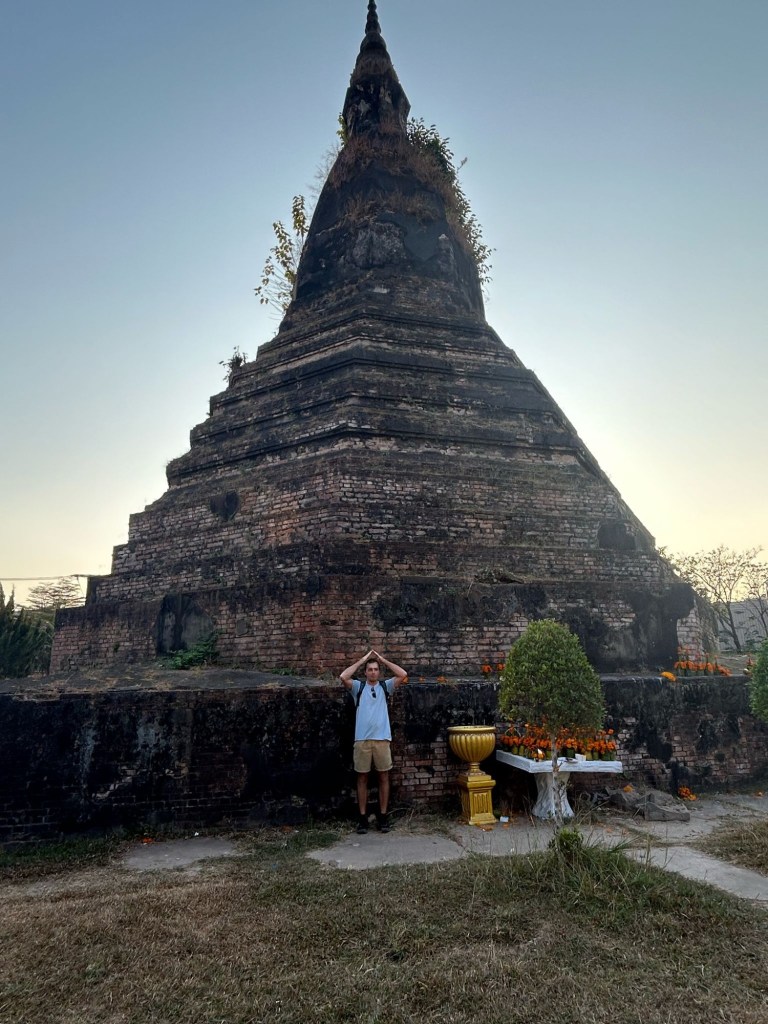
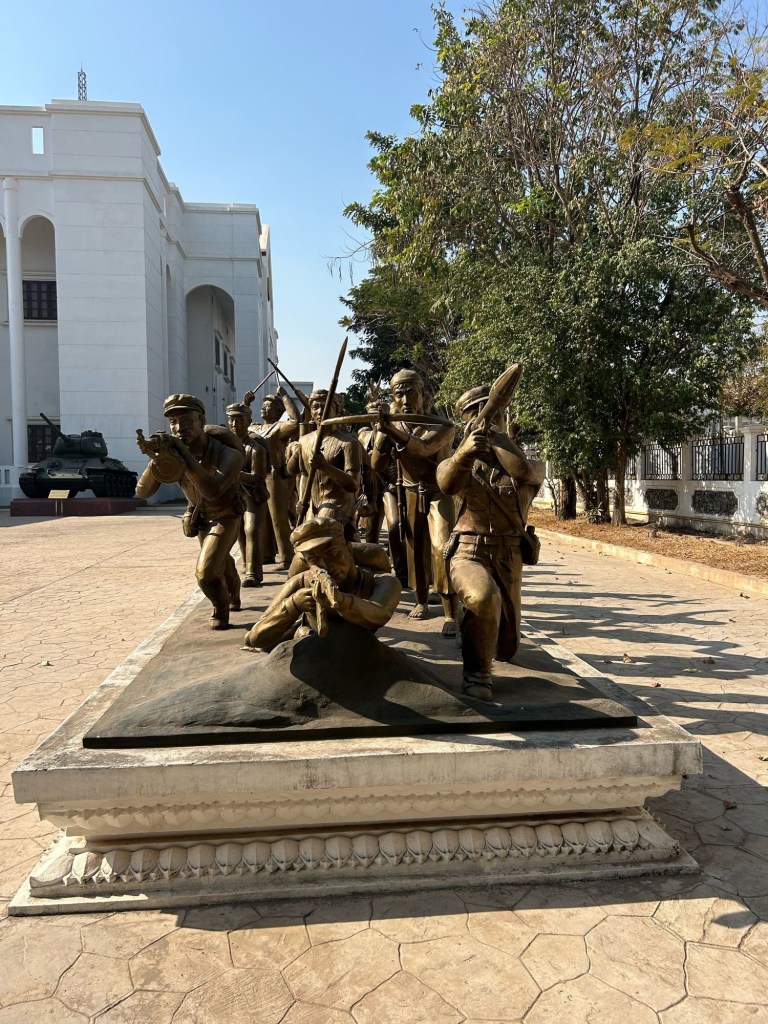
Exploring Vientiane by scooter, we visited the Lao National Museum, Pha That Luang, and the Lao People’s Army History Museum, where we saw military relics and UXO from the Secret War. We climbed the Patuxay Victory Monument for city views and stopped by the legendary That Dam Stupa. A sobering highlight was the COPE Visitor Centre, where we continued our learning about the lasting impacts of unexploded bombs and the efforts to support victims.

Lao National Museum, Vientiane.
That Dam Stupa, Vientiane.
Lao People’s Army History Museum, Vientiane.

Pakse: The Bolaven Motorcycle Loop

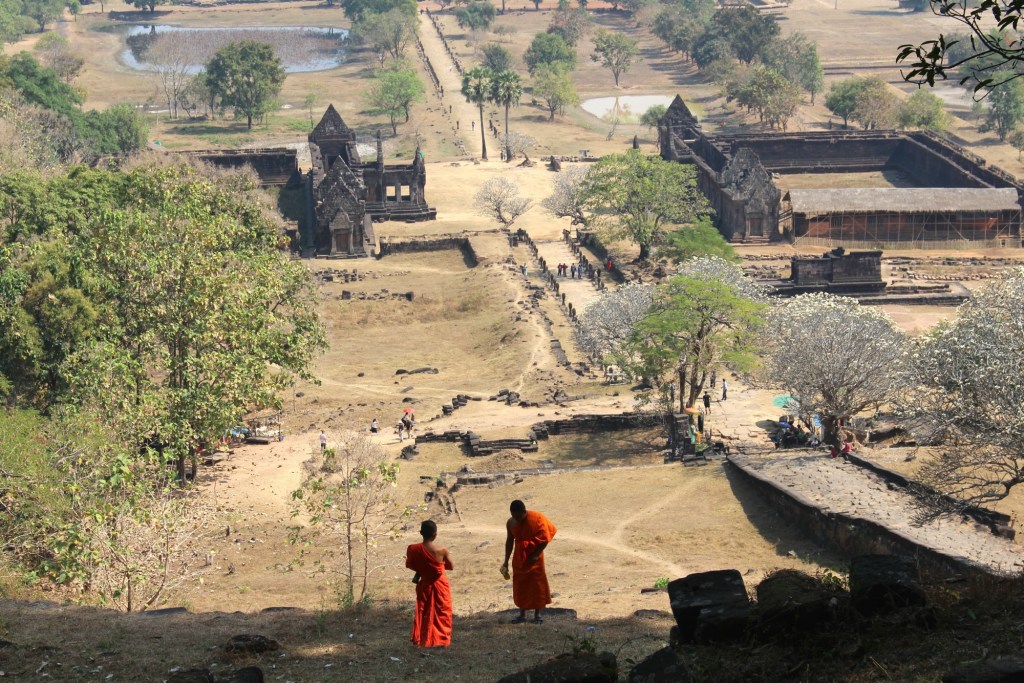
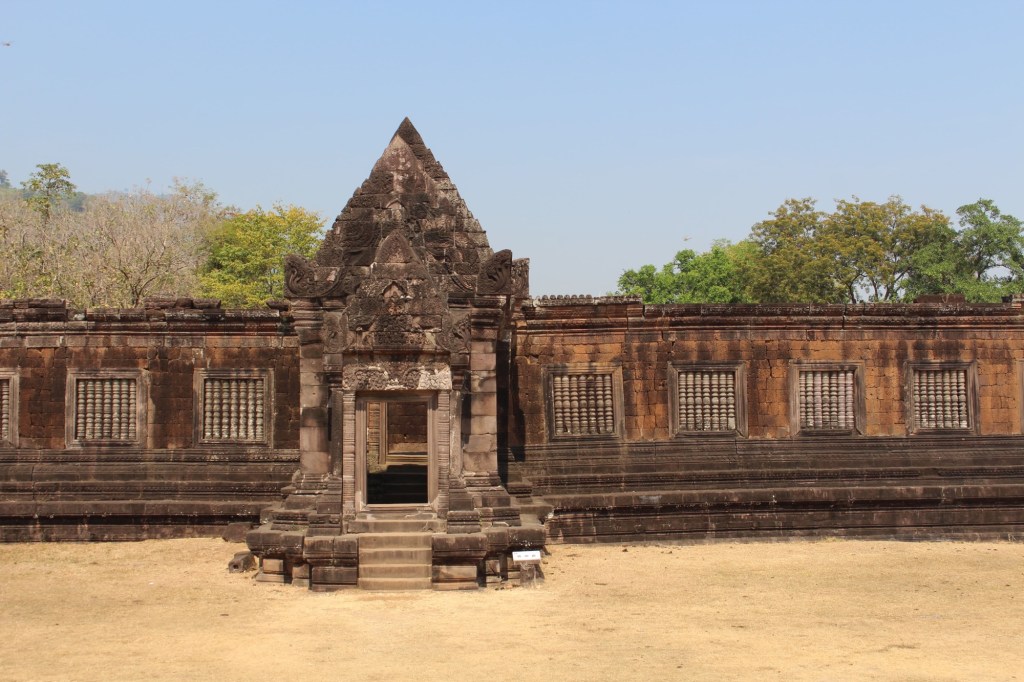
From Pakse, we set off on the Bolaven Motorcycle Loop, a three-day journey through Laos’ countryside. But with a day to kill before starting the loop, we took a ride out to Champasak to explore Wat Phou, a 5-7th century Hindu temple predating Angkor Wat.

Monks at Wat Phou Temple, Champasak province Laos.
Wat Phou Temple, Champasak Province, Laos.

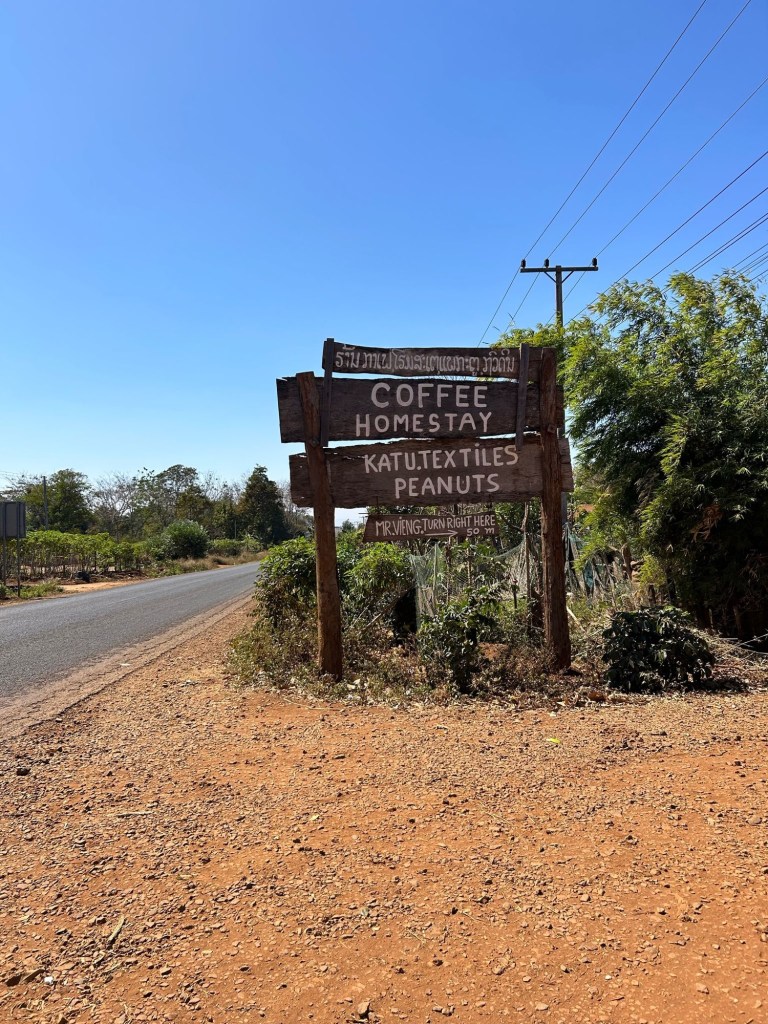
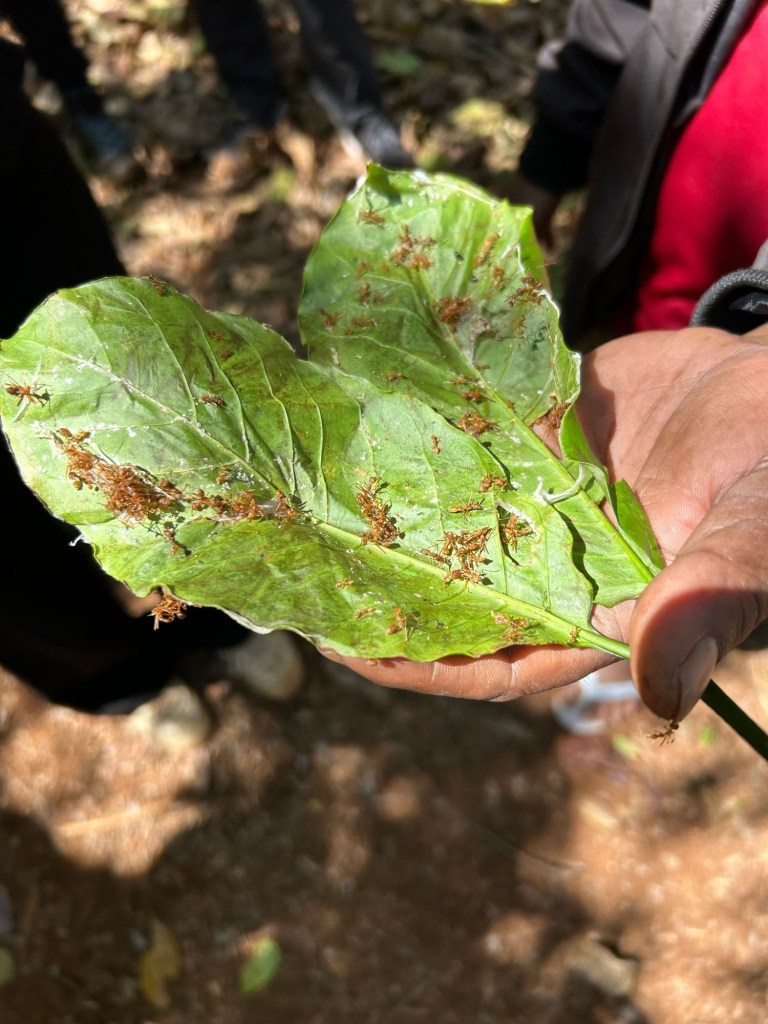
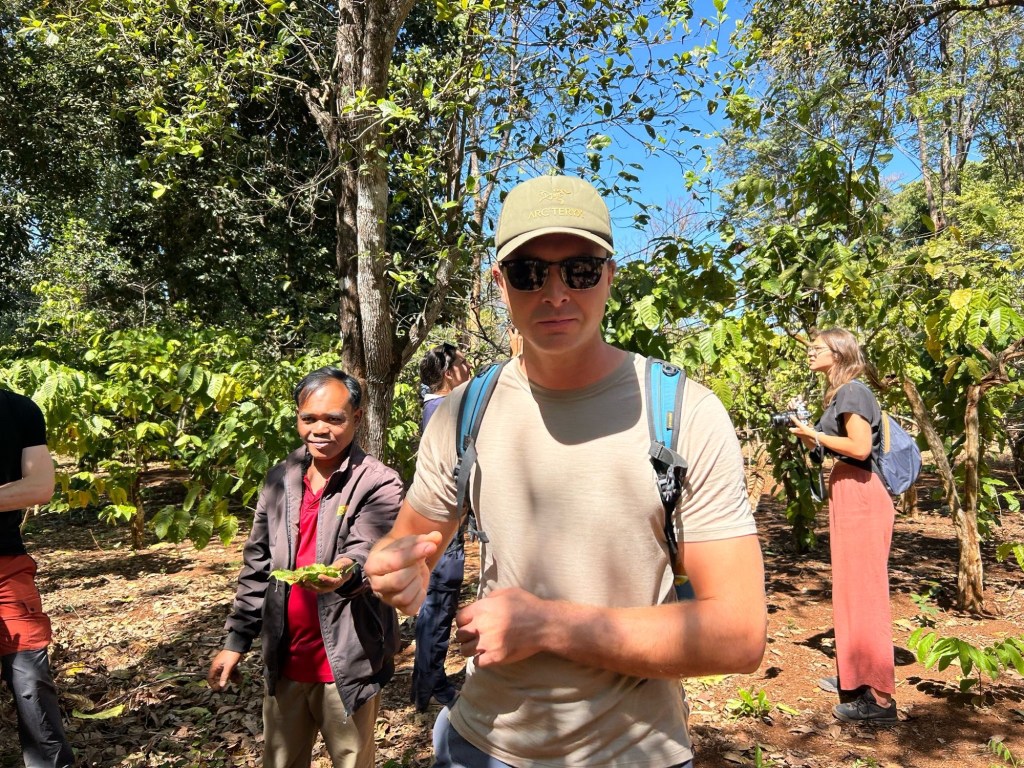
The Bolaven motorcycle loop is a 200km loop on the outskirts of Pakse, known for its many waterfalls and coffee plantations. The plateau was formed millions of years ago by volcanic activity, creating the region’s fertile soil, which is perfect for growing the world-renowned Laos coffee. We started with a coffee tour at Mr. Vieng’s Homestay, learning about local Katu culture (and even trying live red ants). That night, we camped at Fandee Island, hiking to a secluded waterfall for a swim.

Mr. Viang’s Homestay, for a coffee tour.
Red ants to be eaten.
Mat sampling red ants.
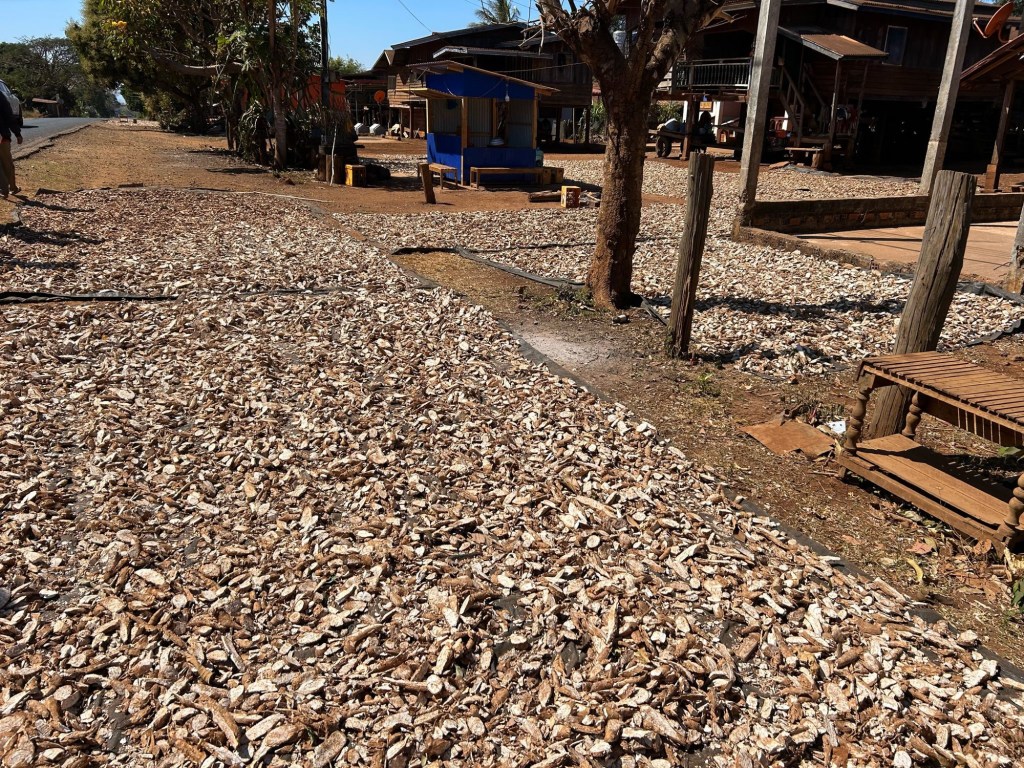
Drying cassava root.
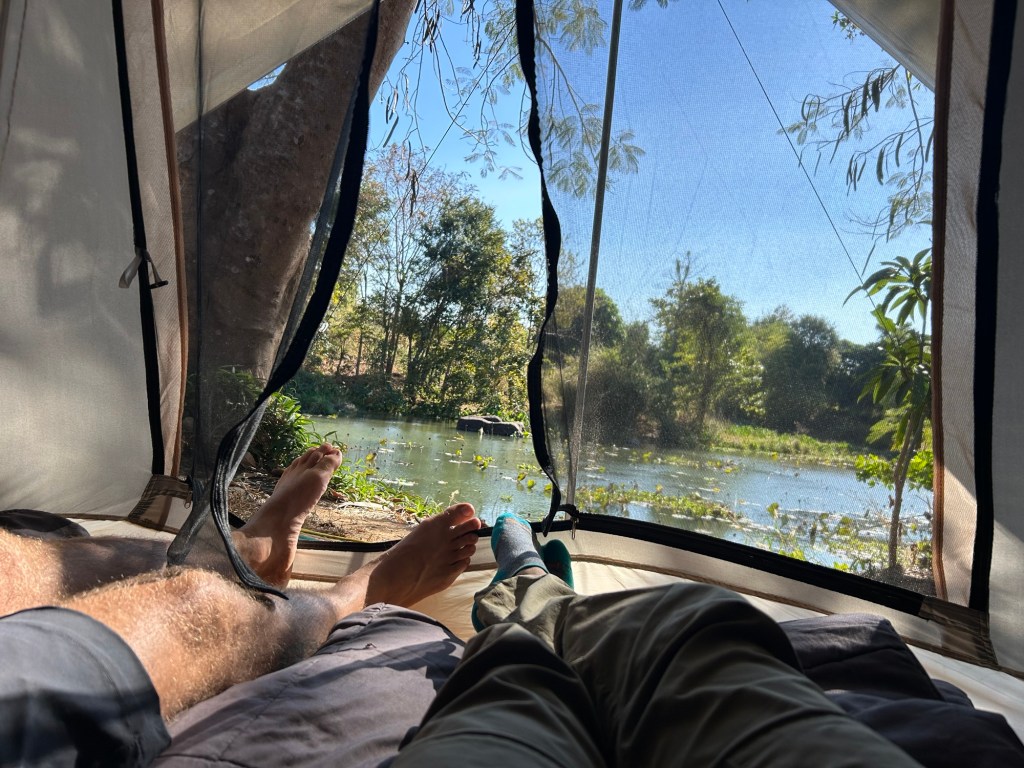
Camping on Fandee Island.
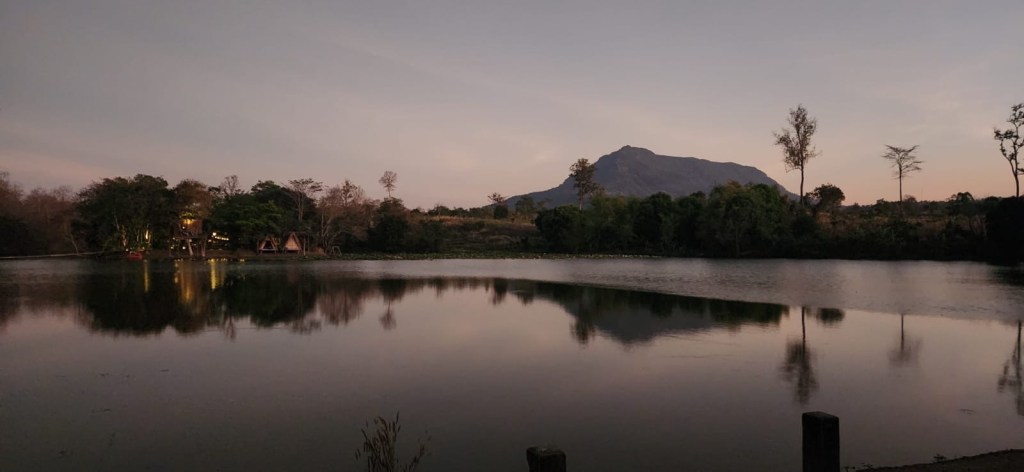
Fandee Island.
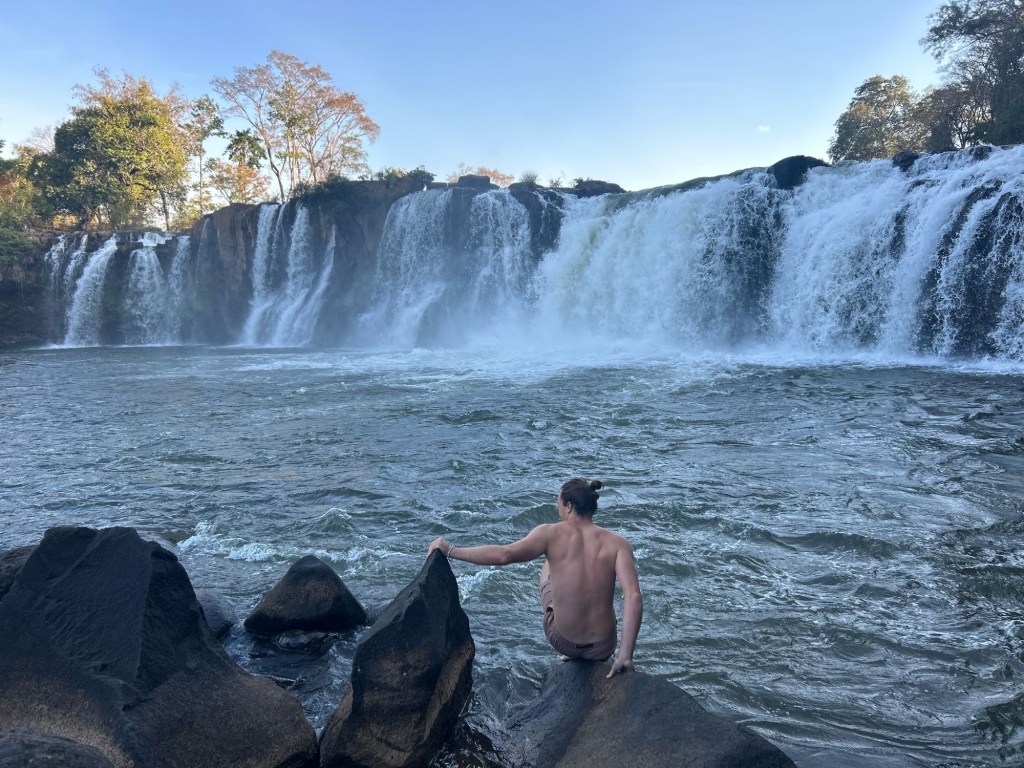
Swimming at Tad Lo waterfall
Evening walk in Tad Lo Village.

Day two included another coffee tour at Captain Hook’s plantation, and an optional detour through the countryside. The scenery on the detour was stunning, and the roads were very quiet as all of the larger cars were stuck on the bridge, where a truck and car wedged themselves together trying to turn, but we were able table to sneak by on our bikes.

On our final day, we swam in waterfalls, ventured off-road to a remote Buddhist temple, and zip-lined over Tad Fane which is the tallest waterfall in Laos.

Si Phan Don or the 4000 Islands 

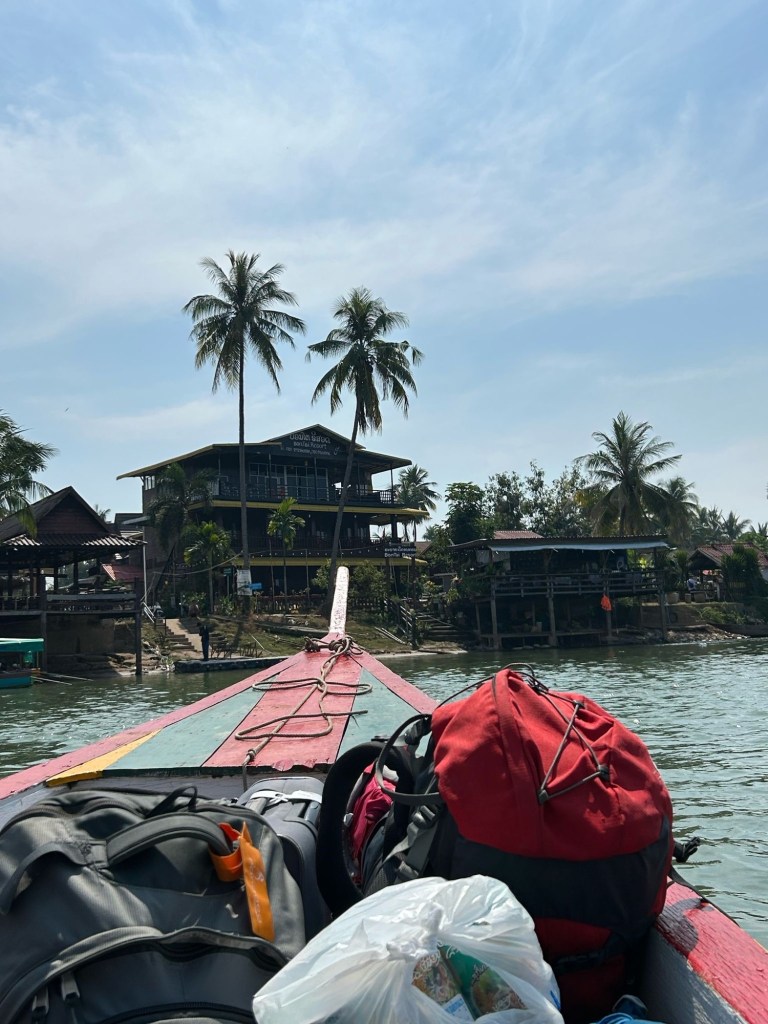
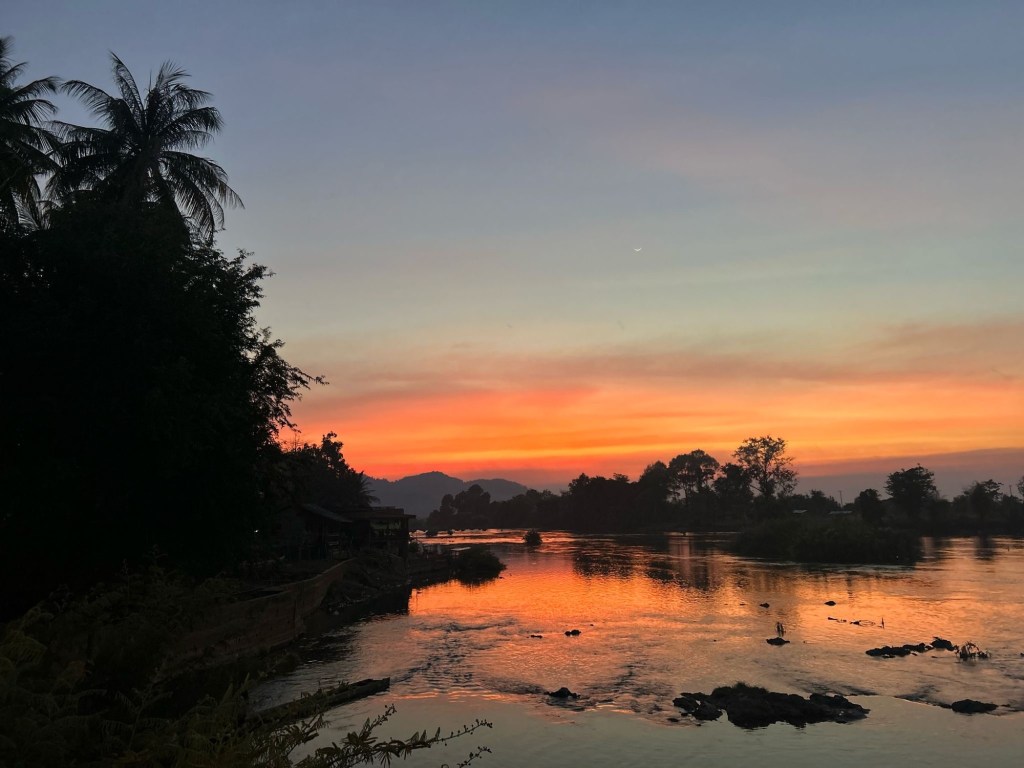
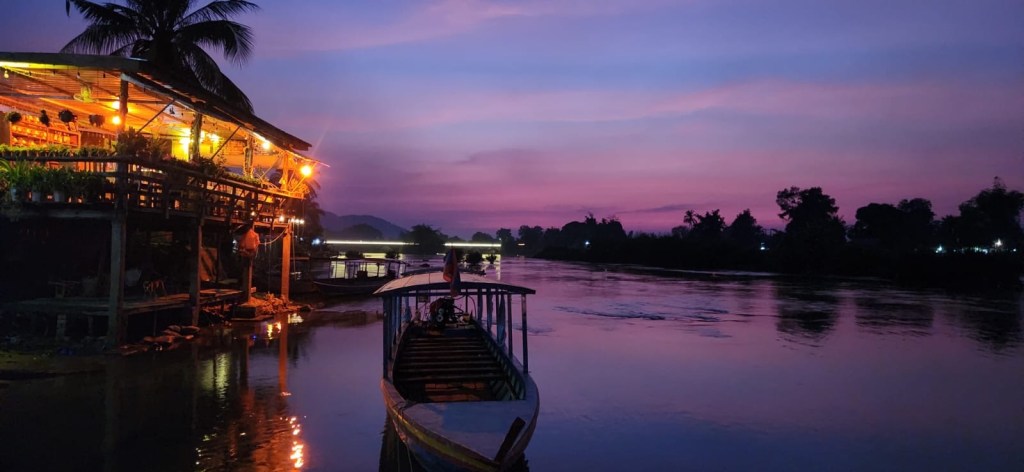
After weeks of busy travel, we finally arrived at the 4000 Islands, a peaceful destination with thousands of small islands near the Cambodia border, and along the Mekong River in southern Laos. We chose to stay on Don Khone island, a quieter option compared to the busier Don Det. Although being near the port meant a constant hum of boat engines, the sunsets over the river from our balcony made it all worth it. The laid-back island life provided the perfect respite after our adventures so far.

Sunsets on Don Khone Island.
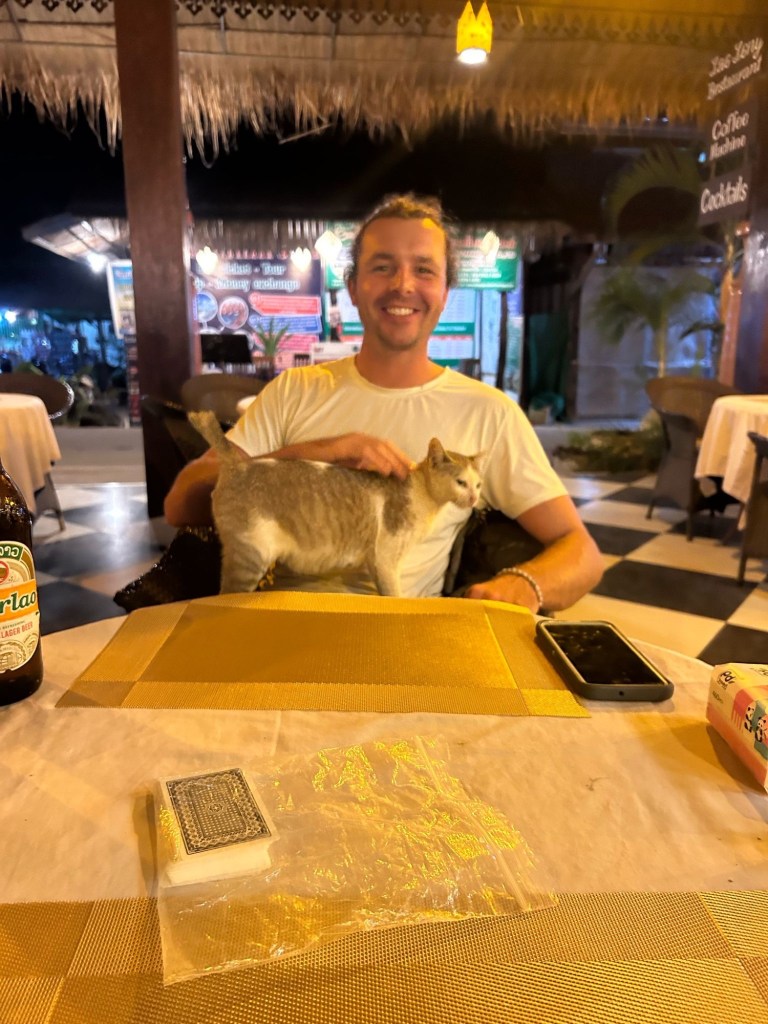
A pregnant mama cat that would only let Mat touch her.

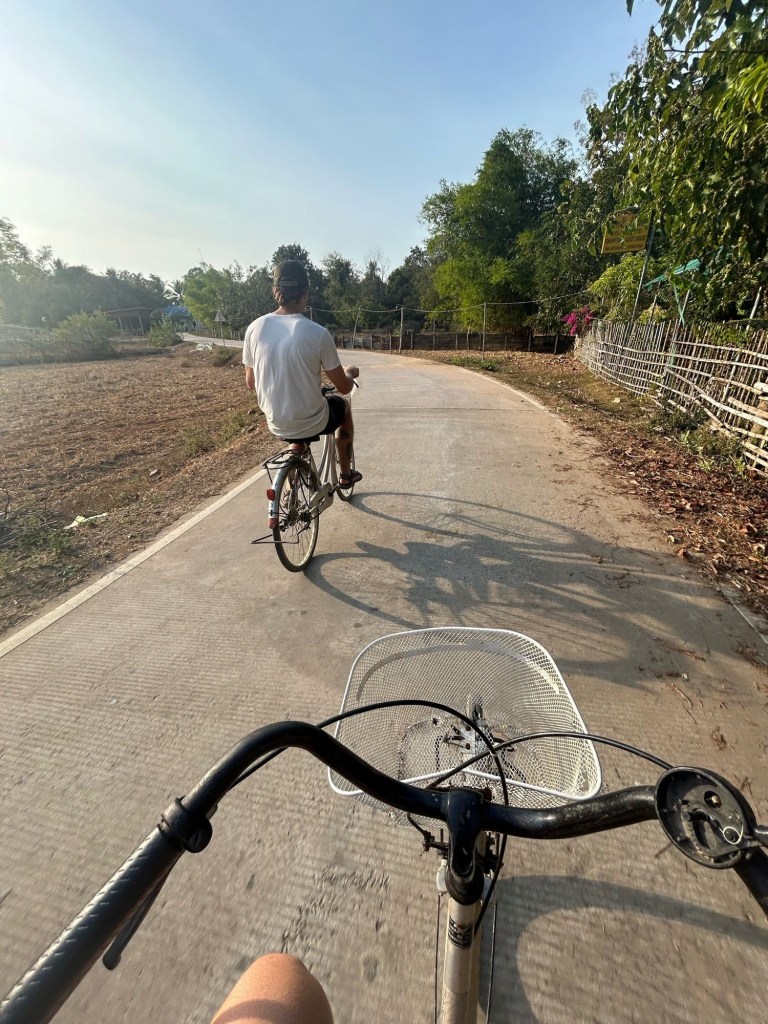
We rented bicycles and set off to explore Don Khone and Don Det. Our rides took us past rice fields, through local villages, and down dusty paths that led to hidden waterfalls. Li Phi Falls was particularly breathtaking— with its cascading waters and suspension bridges offering a close-up view of the mighty Mekong rapids. A detour to play mini-golf on Don Det added some fun, and we ended each evening with a stunning sunset and a treat of mango sticky rice.

After our time on Don Khone, we boarded a boat back to the mainland to start our journey to Cambodia.

Journey to Cambodia

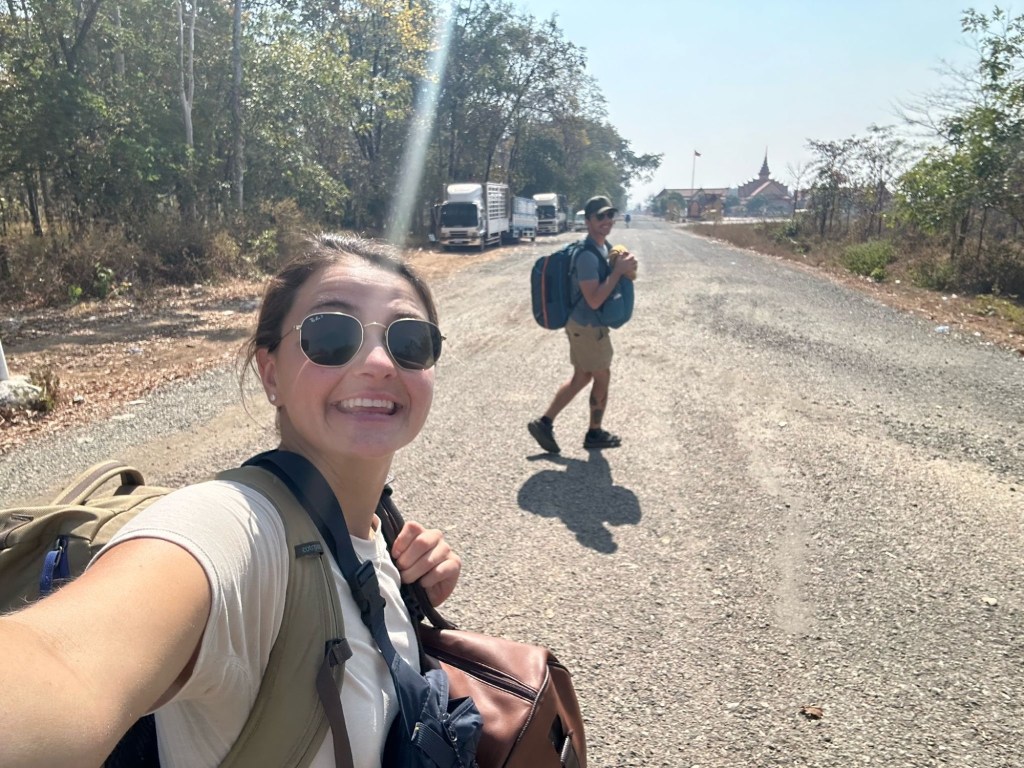
Walking to the Cambodian border.

Our journey began with a boat ride back to the mainland, followed by a short drive to the Laos-Cambodian border. We had spent all our Laos kip, only to find out we needed to pay an “exit fee” at the border. Luckily, we still had Thai baht, and after crossing into Cambodia, we ran into another issue—there were no ATMs at the border! An impromptu motorbike ride to track down cash added some excitement to our day. Once we sorted everything out, we endured a six-hour bus ride through smoke-filled landscapes and rural villages before finally reaching Siem Reap.

Siem Reap Cambodia: The Gateway to Angkor Wat

Siem Reap is best known for its ancient temples, but beyond Angkor Wat, we found Siem Reap to be a city rich in history, very artsy and bustling. Our visit took us through a mix of powerful historical sites, vibrant markets, and hidden local gems that revealed a deeper side of Cambodia.

We started our time here visiting Wat Thmei, also known as the Wat Thmei Killing Field, in Siem Reap, Cambodia. It was a sobering but essential stop, offering an unfiltered look at the country’s past and the resilience of the Cambodian people.

The remains of Cambodian victims found on the Siem Reap Killing Field, where mass executions took place during the reign of the Khmer Rouge.

In contrast, Siem Reap’s markets brought a sense of warmth and creativity. The Fair Trade Village and Made in Cambodia Market showcased beautifully handcrafted goods—woven textiles, intricate jewelry, and locally sourced spices—all made by Cambodian artisans.

A visit to the Angkor National Museum helped us connect the dots between Cambodia’s ancient and modern history. The vast collection of Khmer artifacts, including Buddhist and Hindu sculptures, offered a fascinating glimpse into the country’s spiritual and artistic heritage. Travel tip: most of the time it’s worth it to pay for the audio guide at a museum. While we skipped the audio guide, looking back, it would have been nice to have it to navigate the extensive exhibits, as there was a lot of reading.

We also found small moments of joy—like unexpectedly discovering that Starbucks in Cambodia serves chai lattes, and had almond milk.

Finally, we found a chai latte!

Exploring Angkor: Sunrise, Temples, and the Jungle’s Embrace

Angkor Wat was once the capital of the Khmer Empire, a civilization that ruled much of Southeast Asia from the 9th to the 15th centuries. Today, there remains over 1000 temples, ranging from rubble piles to the incredibly constructed and preserved Angkor Wat.

With a three-day pass to the Angkor temples, we set out before dawn, waking at 4:50 am and on a mission to catch the famous sunrise over looking the Angkor Wat temple. We drove our scooters through the quiet streets of Siem Reap to Angkor Wat. It was pitch black around the temple, and I had imagined a peaceful sunrise with a small crowd, but when we arrived, thousands of people had already gathered by the lake, with their phones in hand, ready to capture the moment. Despite the smoggy sky delaying the sunrise, the golden light finally emerged, casting a soft glow over the ancient stonework.

Angkor Wat at sunrise.

Visiting the Angkor Wat temple was an experience unlike any other temple complex we’ve visited. As we explored the vast complex, the intricate Buddhist carvings, towering statues, grand architecture, and pure size of the place was truly breathtaking.

Angkor Wat at sunrise.

After spending a few hours at Angkor Wat, we set out for Angkor Thom, and then to Prasat Preah Khan.

Riding our scooters through the Victory Gate, one of five entrances to the Angkor Wat complex, we continued to the Terrace of the Elephants, lined with beautifully carved elephant statues. The heat was relentless by midday, but we pressed on to one of our favorite stops—Bayon Temple. Known for its stone faces carved into the temple towers.

Our final stop of the day was Ta Prohm, a temple famously overtaken by the jungle. Towering trees, including strangler figs and massive kapok trees, woven through the ancient stone, their roots wrapping around the temple. Nature and history entwined in an eerie yet beautiful balance.

After hours under the scorching sun, we called it a day and found a spot that made gluten-free pizza. What a treat!

Exploring More Temples

Our second day of temple-hopping took us deeper into the Angkor complex, starting with Pre Rup, a towering 10th-century temple believed to have been a crematorium. Its grand architecture made it Mat’s favorite of the day. From there, we visited Eastern Mebon, a similar structure adorned with intricate carvings and guardian elephants at each corner.

We also visited Neak Poan, a unique temple surrounded by a man-made lake that was restored in 2007. Its central temple sits within a set of four smaller ponds, creating a striking reflection of ancient Khmer engineering. Nearby, we explored the Krol Ko temple before heading to Prasat Ta Keo, the tallest temple we had climbed so far, built in a stepped pyramid style.

The tree from Lora Croft: Tomb Raider, in the Ta Prohn Temple.
Lora Croft: Tomb Raider.

Meeting Cambodia’s Hero Rats

Large parts of Cambodia remain covered in undetonated land mines, a result of decades of war. We visited the Apopo Center, a nonprofit that trains rats to detect landmines. These specially trained African pouch rats play a vital role in clearing them. Unlike metal detectors, which sense all metal debris, these rats detect only TNT, allowing them to cover an area the size of a football field in just 30 minutes—work that would take a human with a metal detector up to four days. Some of the bombs detonate with only 3kg of weight, the rats all weigh between 1-2 kg which ensures they never trigger the explosives, and there has been a 100% survival rate in their operations.

We met Ratana, one of the hero rats, and watched as she demonstrated his work, sniffing out TNT and receiving treats as a reward. We also got to hold one of the highly trained hero rats. Before leaving, we watched a video about the impact of these incredible animals in Cambodia and beyond.

Kampot

With limited time in Phnom Penh, we squeezed in an ambitious 12+ hour excursion to Kampot and Kep, including 6+ hours of driving. We left Phnom Penh at 7:30 AM, picking up a South Korean family along the way.

One of my bucket list experiences was visiting a Kampot pepper farm, as Kampot pepper is world-renowned. We toured La Plantation, learning about the process of growing black, white, red, and long pepper, sampling teas, and spicess.

We also stopped at the salt fields, which we were told are the only salt fields in the country, and learned the process of collecting sea salt. Here, water from the sea is drained into man made ditches which have been flattened. In the dry season, the heat from the sun evaporates the water and the salt is crystallized and collected by workers who fill baskets with it. The salt is then stored in the neighbouring sheds before being brought to the factory by a tractor for processing and is then sold and exported.

Our final stop was downtown Kampot, where we had 40 minutes to explore the riverside and local shops before starting the three-hour drive back to Phnom Penh. While exhausting, the trip was a fascinating mix of history, culture, and food.

Phnom Penh

We visited the Royal Palace, wandering through its ornate buildings and admiring the large mural depicting Khmer stories and traditions. After leaving, we spontaneously ended up on a tuktuk tour, which led us to Silk Island, where we learned about the intricate process of silk-making, from feeding silkworms mulberry leaves to weaving the delicate threads and to making finished products such as scarves.

Silk worms feasting on mulberry leaves.
Silk worm cocoons.
Finished silk.

We also visited several small temples and stupas before heading back to the city, stopping at the Gold Temple and Wat Phnom, the iconic temple that gave Phnom Penh its name.

Tuol Sleng Genocide Museum

Originally a secondary school, this site was transformed by the Khmer Rouge into a high-security prison and interrogation center known as S-21. Between 1975 and 1979, thousands of detainees—accused of counter-revolutionary activities—were tortured and executed here. Today, it serves as a museum and memorial, preserving the memory of those who suffered during Cambodia’s brutal genocide. One of the most emotional parts of our trip was visiting the Tuol Sleng Genocide Museum, the former S-21 prison, and attempting to comprehend the unimaginable suffering that happened here. At the end of our tour, we were very fortunate to meet 2 of the children who survived this atrocity, purchasing a signed copy of their book. (Out of the 20 000+ people sent to S-21, there were only 11 people to leave alive)

Tuol Sleng Genocide Centre and the Killing fields

At Tuol Sleng (S21), detainees were systematically interrogated and tortured to extract confessions or reveal alleged conspiracies. Once deemed “enemies of the state,” these victims were taken out of S21 under heavy guard—often in groups—and transported to the Killing Fields. At these execution sites, such as Choeung Ek near Phnom Penh, they were executed and their bodies buried in mass graves as part of the Khmer Rouge’s brutal regime.

For the tour of Choeung Ek killing fields, we started at the entrance—symbolically where prisoners would have first arrived—and followed their tragic path step by step.

We saw the spot where trucks delivered prisoners in the dead of night. When executions became too frequent, prisoners were forced to wait until the following evening for their fate. Guns were not used—only handheld tools—to keep noise to a minimum. To further drown out the sounds of suffering, loud generators and revolutionary music blasted through the night, masking the screams of those being murdered.

We walked past mass graves, including one holding 450 victims, another containing 166 headless bodies, believed to be opposition soldiers, and a grave for women and children. One of the most haunting sites was the Killing Tree, where babies and young children were brutally murdered.

The tour ended at the memorial stupa, where the recovered bones and clothing remnants of the victims are kept as a resting place. We then explored the museum and watched a documentary on the history of the Killing Fields.

This was an eye-opening and deeply emotional experience, reminding us of the horrors that can unfold when fear and hatred take control. It’s easy to think, “This could never happen to me or in my country,” but history has shown that it can—and does. Places like this exist to ensure we remember and speak out against injustice whenever and wherever we see it.

Our Time in Cambodia

Although our time in Cambodia was shorter than in other destinations, it was a journey of discovery—riding scooters through ancient temples rich in history, gaining a deeper understanding of the Cambodian genocide under Pol Pot, exploring pepper and salt fields, and developing a greater appreciation for the things we often take for granted.

Next stop, Vietnam!

Entry # 5: Thailand

40 Days in Thailand: From Bustling Bangkok to the Tranquil North

It is hard to imagine that a short 40 days ago, we were boarding a flight from Johannesburg to Bangkok, but here we are! Our time in Thailand was a whirlwind of both adventure and relaxation.

Our 40-day adventure in our trip to Thailand began in the countries largest city and bustling capital, Bangkok. Immediately we were captivated by the cities energetic streets, historic temples & deep rooted history.

We were also captivated by local markets, delicious foods, the kindness of the Thai people, and the traffic — where motorbikes whizzed between cars and people.

From Bangkok, we slowed things down to island time on an island called Koh Yao Noi, which is located on the Andaman sea, between Phuket and Krabi. Koh Yao Noi translates to, “Small Long Island,” in Thai, and is quite an accurate description of the islands shape. Off the beaten path, and with far less tourists and bustle than Bangkok, we immediately loved the pace here. 

After this, we joined a 5 day liveaboard scuba dive trip, exploring some of the most beautiful dive sites around Khao Lak and the Similan Islands, where we spent our days exploring vibrant coral reefs, unexpected currents, and witnessed some incredible marine life. 

As the year came to a close, we celebrated New Year’s Eve in Phuket, which is one of Thailands most visited cities. We visited the heart of the islands nightlife, Patong Beach, for a massive beach party, where the skies glowed with fireworks, lanterns and the moon, as we counted down the time to the new year ahead.

Our final days here were spent in the northern region where we flew from Phuket to Chiang Mai, and visited the cities of Chiang Mai, Pai, and Chiang Rai. The North was a change from the beautiful beaches, tropical climate, crystal clear waters of the south, and were replaced with mountainous terrain, lush forests and rivers. 

Join us as we recount our journey through this incredible country, where every corner offered a new adventure, a new flavor, and a deeper connection to its rich history and warm people.

Bangkok

After weeks of hiking and trekking in South Africa, we used the first few days of our time in Bangkok for some much needed r&r aka massages and pool time. Before my brother and sister in law arrived, we had a few days to explore the city, so we spent much of our time at the spa, exploring the city by foot, going to markets, eating and shopping. 

Eating dumplings at Ding Tai Fung, which was ranked in the New York Times as one of the world’s top 10 restaurants on January 17, 1993. The year we were born!

One of our highlights from Bangkok was immersing ourselves in the cities bustling markets. We found that markets are not just for shopping in Bangkok, but are an integral part of the cities culture offering a window into people’s lives and were an essential part of the Bangkok experience. Including the Chatuchak Weekend Market, which is only open on weekends and hosts approximately 15,000 stalls. We walked through alleyways lined with handicrafts, street food, spices, fresh produce clothing, art, and many other items. It was unbelievable to witness the sheer scale of the market—endless rows of stalls, countless vendors selling everything from clothes to trinkets, and mass numbers of shoppers weaving through it all, creating an atmosphere that was both overwhelming and exciting.

Siamese cat paintings at the Dhevi Bangkok Hotel.

Traffic in Bangkok is a fascinating and chaotic experience. The streets are busy, with people crowding the sidewalks, and the roads are filled with tuktuks, motorbikes, cars and busses. Especially during rush hour, the roads are blocked and traffic seems to come to a slow moving procession. What stands out most for us was the sea of motorbikes which weave in and out of lanes, dodging traffic and zooming by. We quickly realized that if we wanted to get anywhere during rush hour, it would need to be by Skytrain, subway, or by motorbike. We had a plan to visit the China Town, and decided to use our handy “Grab” app, which is identical to Uber, to order 2 motorbikes. We weaved in and out of lanes, dodged traffic, and went way too fast, and even witnessed an accident on the way home.

In Chinatown, we ate at our first ever Michelin Bib Gourmand street food rated restaurant called Nai Ek Roll Noodle. I got their signature dish Guay skin (rolled rice noodle soup with crispy pork), and it was delicious!

Family Joins the Adventure:

We had saved much of the touristy explorations for Bangkok until my brother and sister-in-law arrived, which was a few days after us. We had an epic 8 days together!

Our first stop was exploring Bangkoks rich history, culture and architecture, where we visited the Grand Palace, a stunning complex that has been the seat of Thai kings for centuries. The Grand Palace is decorated with gold-covered spires, and home to the revered Emerald Buddha.

From there, we ventured to other historical temples like Wat Pho, home to the immense Reclining Buddha.

Khlong is the Thai word for a canal or waterway. Khlongs are often man made or natural waterways that serve various purposes, such as irrigation, transportation, and trade. Today, khlongs still play an important role in local life, especially in traditional flowing markets, where boats travel along to sell goods. We travelled to the Taling Chan Floating market, which ended up being the only day of the week it was closed! Here, we boarded a long-tail boat and travelled down the narrow canals to a nearby market where we docked and got to explore by foot, before boarding the boat again and continuing on our journey. This was a very neat glimpse into Bangkok, a traditional glimpse into the water-based life that has shaped the city for centuries.

Fish food we purchased to feed the large catfish in the canal.

We also attended the Jodds Fair night market, known for its diverse, and often trendy food offerings. This market in particular is known for its wide selection of food stalls, and we witnessed someone purchasing a “squid shot,” which was a live squid from a fish tank eaten live, with the ink dripping into a cup and all over their face. We were here over the holidays so the market was decorated with Christmas holiday décor, and it was very beautiful!

We also attended a Muay Thai match at Rajadamnern Stadium, a fascinating glimpse into Thailand’s national sport. Muay Thai is a traditional Thai martial art, that uses the bodies natural weapons: fists, elbows, knees and shins. We watched 6 matches, and witnessed enthralled crowds, shouting locals, and an overall exciting experience.

Repping our matching themed outfits for the fights! Muay Thai shirts & elephant pants.

Despite a few surprises, such as closed attractions, the city’s energy and variety kept us engaged at every turn.

Living on Island Time in Koh Yao Noi

After leaving the bustling city of Bangkok, we flew to Phuket and made our way to the island of Koh Yao Noi. A quick transfer to the pier and a scenic speedboat ride brought us to this serene island.

The pier was just a short walk from our cozy Airbnb, a beautiful wooden structure raised on stilts with open floorboards, through which we could watch the tide rise and fall, and a balcony offering an incredible view of the local fishing village and the Andaman sea.

On Koh Yao Noi, we lived on island time, and scooters were our main mode of exploration. We cruised the island’s winding roads, discovering hidden beaches, lush landscapes, and the charm of the local Thai villages. Dining on authentic Thai cuisine became a daily highlight, with fresh, flavorful meals at every turn, primarily our daily pad Thai indulgence. 

One of the most memorable days was spent island hopping. Starting early, we boarded a wooden longboat and set out to explore the surrounding islands. The journey took us to breathtaking spots like Koh Hong, where we hiked to a 360-degree viewpoint, swam in turquoise waters, and navigated the occasional jellyfish sting.

We witnessed swimming monkeys on Koh Kah and enjoyed a beach picnic of chicken and egg fried rice on Koh Nork. 

Mina’s cooking class: We arranged to participate in a cooking class, where we were able to pre-select 1 appetizer, 2 main dishes, a dessert, and a drink that we would like to prepare. Our menu of choice included: vegetable spring rolls, sweet & sour chicken, chicken pad Thai, mango sticky rice and Thai tea (Mina also added a curry fish for us). Once we arrived, we were presented with our chalkboard menu written in Thai, where Mina introduced us to the ingredients we’d be using, explaining that Thai cooking often relies on feeling rather than precise measurements.

After touring the kitchen, we began by preparing fresh ingredients like vegetables, fruits, and spices. We grated a coconut to make coconut cream and milk, which we then added to steamed rice, turning it purple with a flower infusion. We followed a “ingredient wheel” for dishes like Pad Thai and green curry, learning to make the curry paste using a mortar and pestle.

We also made vegetable spring rolls, sweet and sour chicken, and Pad Thai, cooking each dish step by step with Mina’s guidance. Our meal was served to us, while overlooking the beautiful ambience of the lush greenery that surrounded Mina’s kitchen.

After enjoying our meal, we were served mango sticky rice and each gifted a copy of Mina’s cookbook, with her families recipes.

Back on Koh Yao Noi, we balanced adventure with relaxation. While the boys went fishing one morning, Cheryl and I attended a drop-in yoga class and then went to the beach and spent time soaking up the island’s peaceful atmosphere.

Evenings were spent watching sunsets, sipping cocktails and beers at Sai, and laughing over games of Uno.

Koh Yao Noi offered a perfect blend of exploration, relaxation, and unique experiences—an ideal start to our time in Southern Thailand and an amazing time spent with family making memories of a lifetime.

Khao Lak: Diving Liveaboad 

After an unforgettable week on Koh Yao Noi, we said our goodbyes to Blake and Cheryl and headed back to Phuket to begin the next chapter of our adventure. From there, we boarded our liveaboard for a thrilling diving trip off the coast of Khao Lak.

Before our first ever night dive!
Night diving shot from the boat.

We spent an unforgettable five days on the boat, returning on Christmas Day. Over the course of 18 dives, we encountered an incredible array of marine life, including barracuda, clownfish nestled in anemones, lobsters, sea turtles, shrimp, nudibranchs, a seahorse, and a cuttlefish, while also navigating the challenges of some very tough surge and current. We took part in our first-ever night dive and met wonderful people from around the world. On Christmas Eve, we celebrated with new friends under the stars at sea, spotting a bryde whale swimming and breaching in front of the boat, and a cloud shaped like a stingray. Despite battling seasickness, the experience was nothing short of amazing.

After returning to Khao Lak on Christmas Day, we took time to relax and recuperate from the dives over the next few days. We spent our days unwinding, visiting the local night market, the occasional mojito, soaking up the sun at the beach, and making plans for the next leg of our journey. It was the perfect balance of adventure and relaxation, a memorable way to spend the holiday season.

Missing our kitties on Christmas!

Phuket & NYE

After Khao Lak, we continued our journey to Phuket, eager to explore the island’s vibrant culture and stunning beaches. We spent our time in Phuket beach hopping and exploring the island on scooters. The roads were often busy and chaotic here, making the rides a little more nerve wracking at times, but we enjoyed snorkelling the beaches and exploring the local areas. 

We spent New Year’s Eve in Phuket at Patong Beach for their annual NYE beach party. The beach was busy with people, food stalls, fireworks exploding in every direction, and a live DJ.

NYE burgers at a place called Big Boys’ Burger Club, Patong Beach.

Throughout the night, thousands of people flooded the streets and the beach, leaving the beach so crowded that by countdown time, we were shoulder to shoulder with little room to wiggle by.

We seen thousands of lanterns float up into the night sky, each one carrying a wish for the year ahead. The fireworks display was incredible, and got a little wild, as fireworks could be purchased by anyone so they were getting launched from every direction on the beach, and lit lanterns at times fell back into busy crowds, so we left the beach soon after midnight. We had an incredible evening, which also featured 10pm foot massages, leaving us very relaxed heading into the new year!

Exploring Northern Thailand: Adventures in Chiang Mai, Pai, and Chiang Rai 

Streets of Pai, Thailand were dotted with glowing lanterns lighting up the night sky, and the roadway.

We left behind the tropical climate and southern coastlines for mountainous terrain, lush forests and rivers. For our Northern Thailand trip, we boarded a flight from Phuket to Chiang Mai, where we met up with some of our pals from home!

Reunion drinks!

Chiang Mai

Our adventure in northern Thailand began the moment we arrived in Chiang Mai. After catching up with Shannon and André, we tackled a local hike known as the Wat Pha Lat Trail, or the Monk’s Trail, which winds through a wooded hillside to a serene Buddhist temple.

Trekking up the Wat Pha Lat Trail in Chiang Mai.

We also had the chance to meet another fellow Iqalummiut in Chiang Mai, who was traveling with a friend, and enjoyed a lovely dinner together at a restaurant called Dash Teak House. Here, the owner and menu creator came to the table and helped us order our appetizers and main dishes. We shared everything and it was so delicious.

Dinner at Dash Teak House with some fellow Iqalummiut!

Road Trip to Pai

The start of our road trip to Pai!

The four of us decided to take a road trip to the charming town of Pai, nestled in the mountains of northern Thailand. The journey itself was an adventure, as we navigated the legendary Route 1095 known for the famous 762 curves—a winding, dizzying stretch of road. Along the way we took a pit stop at the Mok Fa Waterfall, to stretch our legs, dip our toes in the water and take in the scenic area.

Mok Fa Waterfall on the way from Chiang Mai to Pai.

Some of the highlights of our trip to Pai with Shannon and André included playing games late into the evening, eating at the night market, and sharing travel stories from all of our adventures thus far. We explored the local area, starting with a visit to Wat Phra That Mae Yen temple, where we climbed the towering white stairs and were rewarded with breathtaking views of Chiang Mai.

Overlooking Pai atop the stairs of the Wat Phra That Mae Yen temple.

At Pai Canyon, known for its unique rock formations, created by centuries of erosion,  we walked down some of the winding sandy pathways and steep cliffs, taking in the beautiful surrounding valley and lush landscapes.

Views from Pai Canyon.

We played disc golf and tried our hand at bamboo mini golf, both courses created by the owner, Jim. He gave us a tour of the courses and even joined us for our round of bamboo golf, which was similar to mini putt but with bamboo sticks as clubs and tennis balls as golf balls—an inventive and fun challenge on a course that was once a rice terrace, with each hole gradually descending one level reflecting the old stepped flat field on a hillside.

Playing disc golf at Pai Bamboo Mini Golf.
Bamboo mini putt.

Most evenings, we ventured to the Pai Night Market, where we feasted on delicious local food and desserts, including mango sticky rice.

Pai’s night market. Each evening, the road gets blocked off at 5:00pm, and the street comes alive with vendors serving food, selling clothing and crafts and lots of other goodies.

Some highlights also included a visit to the Santichon Village, a charming Chinese-style village that offers a glimpse into traditional life. We rode a human-powered wooden Ferris wheel, sampled macadamia nuts, and enjoyed the simple pleasures of the village before heading to the Nam Lod Caves.

Riding the Yunnan Swing.

The caves, about a 1.5-hour drive from Pai. We toured three caves, which included taking a bamboo raft through cave passages, while listening to bats screech and chirp from above. The most impressive moment came at dusk when we witnessed the daily return of 300,000 birds returning to the caves, three of us being pooped on by the birds, which is a sign of good luck, so we told ourselves!

Taking a bamboo raft to explore the third cave in the Nam Lod Cave.

The following day was more laid-back, beginning with a visit to the Kho Ku So Bamboo Bridges, an elevated walkway leading to a peaceful forest temple. Afterward, we strolled through the Pai Night Market once again and ended the evening with board games at the hotel.

Kho Ku So Bamboo Bridge, an 800m bamboo walkway over rice fields and up to a small temple.

We had a fantastic time in Pai, and concluded our road trip by venturing back on the 1095 route, completing the 762 turns, and bidding farewell to André and Shannon.

Chiang Rai

Ending our trip in Chiang Mai with a bout of food poisoning made the 3.5-hour bus ride quite an experience, but we made it! Despite feeling a bit under the weather, we had one full day to explore the city, and we packed it with adventure. We rented scooters and set off to discover Chiang Mai’s many wonders. Our first stop was Wat Rong Suea Ten, the stunning Blue Temple, known for its striking sapphire-colored exterior and intricate gold details.

After, we headed to the Baan Dam Museum, which is also known as the Black House. This museum was designed by renowned artist Thawan Duchanee, and features dark wooden buildings filled with art made from animal skins, bones, and other materials. Each display takes place throughout the property in several different buildings.

Next, we visited Wat Huay Pla Kang, a temple that overlooks the city and is home to a giant statue of the Goddess of Mercy. We took an elevator up into the statue, where we enjoyed panoramic views of the surrounding area. We also visited the White Temple (Wat Rong Khun), a stunning all-white Buddhist temple.

We found our first cat cafe! A calm little cafe in the heart of town, where furry feline friends roamed freely, jumping in laps and on tables. We also witnessed several cats trying to sample delicious looking desserts. Mat made a new friend in a snuggly Sphynx cat we named avocado, it selected him, and ran right to his lap and stayed for a long while! While I tried to sit still and summon a cat for snuggles, my plan did not succeed, although I did manage to pet several!

Avocado.

We visited the Garden of Reeds, which hosted Chiang Rai’s annual Flower and Art Festival. While we missed the big event, we still got to see the beautifully curated garden which had roses, tulips, and cacti filling the space.

We spent our final evening in Chiang Rai at the Sunday Night Food Market, dropped off our scooters and prepared for an early departure the next morning.

Chiang Rai Flower Festival in Reeds Park

We crossed the border from Thailand into Laos by bus, where we boarded the slow boat and started off down the Mekong River heading to Luang Prabang —but that’s a story for next time!

Entry #4: South Africa

We could not have asked for a better final few weeks on the African continent, than the time we spent in South Africa. There is something magical about this country, not just because we were here over the December holiday season, but because it checked every box for us: solo road tripping no guide this time, hiking, ocean swims, coastal views, wildlife sightings, mountainous terrain and adventure filled days). Join us here as we retrace our 22 day road trip from Johannesburg to Cape Town.

Johannesburg

On day 1, we landed and picked up our rental car in Johannesburg, and planned to take our time driving to Cape Town. We had a general idea of the route we wanted to take, some of the activities we wanted to do during our road trip, but didn’t set anything in stone booking wise as we wanted the freedom to make adjustments to our schedule as we travelled. 

Our starting destination was the city of Johannesburg, or as the locals say, “Joburg,” and is South Africa’s largest city. We stayed right downtown in the heart of the city in Sandton, by Nelson Mandela Square, which is a tribute dedicated to Nelson Mandela. We spent our time in Joburg getting familiar with driving on the opposite side of the road we are accustomed to, eating delicious food, playing disc golf and learning about South Africa’s history, which we felt was an important place to start our trip.

On our first full-day we visited the Apartheid Museum. This was a powerful first stop for us, as it allowed us a glimpse into the past, and history of South Africa and the apartheid regime. Here, we learned about apartheid, which translates to “apartness” in Afrikaans, and was an oppressive system of racial segregation and discrimination which governed South Africa from 1948 until 1994. We learned about the collective efforts and resistance that took place throughout this time to this oppressive system, and the emergence of powerful and influential leaders who called for equality and unification of the South African State, including Nelson Mandela, Desmond Tutu, and several other activists. This was a powerful and important way to begin our trip.

Disc golf 

If you know us, then you probably know we are avid disc golfers. If you don’t know what disc golf is or you have never played, I highly encourage you to check it out and download the Udisc app. We used our handy UDisc app to find a local disc golf course in Joburg. We didn’t have any discs, so we found a shop online that sold discs, which ended up being located inside a gated community— which was an experience in itself. The high-security entrance process included scanning our car, checking the trunk, and verifying entrance codes we were given to enter, a safety measure we were told was to ensure everyone’s safety and to prevent kidnappings. After buying a disc each, we headed to the course which was on a horse farm – throwing over ponds, around horse jumps, walking through huge pine cone covered fields and tall grasses and we played the entire 21 hole course. On the final hole, my disc landed in the middle of a mud pond, I was in favour of leaving it there forever, but Mat was brave and retrieved it!

Exploring Golden Gate Highlands National Park & Clarens

Our next destination was a small village nestled into the Maluti Mountains, located a short drive from the Golden Gate Highlands National Park. The Golden Gate Highlands National Park is known for their sandstone formations, and scenic hikes. We parked the car and set off from the Glen Reenen Rest Camp, where we trekked three short trails with a variety of landscapes and views.

We began with the Boekloof Trail, descending to join the Echo Ravine Trail, a path surrounded by towering rock walls and echoing sounds. Afterward, we completed the 45-minute Mushroom Rock Trail, where the sandstone formations shaped like a giant mushroom hung over our heads. Altogether, the hikes took about two hours and were a nice break from driving. 

After we did some hiking, we then decided to complete the two driving loops available in the park. The first loop was called the Blesbok Loop, and as we drove we passed wildebeest and the stunning scenery of the Maluti Mountains, and met a nice couple (who own a game reserve) and whom gave us some beef biltong to try (a popular South African snack made of dried cured meat). The second trail was called the Oribi Loop, which included a stop at the park’s Vulture Feeding Project. We walked up a path to a viewing building where we opened the door, stepped inside, and had no idea just on the other side of the building were vultures feeding on two fresh carcasses of a horse and wildebeest. This project was introduced in an attempt to increase the vulture population, by providing a safe habitat for them, and was very cool to see – especially as dusk hit and we started to see wild dogs come and surround the carcasses from all angles.

We stayed in a small town named Clarens, and it happened to be the weekend, when they have a beautiful Saturday morning market. We walked around, purchased some local cherries and were on our way to the Drakensberg Mountains.

Dreamy Hikes in the Drakensberg Mountains

Off to the Drakensberg mountains we went! Mat, chose a hike (via the AllTrails app) which was an “off the beaten path” trail in a remote nature reserve. We left the main road to a gravel road, where we drove for about 30 minutes until we arrived and seen an isolated open gate leading to tall grasses and a forgotten road. In front of us was another gate leading to a newer resort, where we were stopped by staff who insisted we speak with the owner for permission to access the nature reserve. After a 20-minute search, we finally located “Adventure Dave”—only to find out he didn’t own the land, and we were free to hike.

Views from along the trail.

The hike led to a grave site of a Portuguese explorer from the 1800s. We began our hike on the road, quickly veering into an off-road, grassy trail/pathway. After about 4.5km we neared the gravesite, the weather quickly took a turn. We heard loud thunderclaps overhead, and the sky darkened, with picturesque bolts of lightning shooting from the clouds around the mountains. The storm was fast approaching, so we had no other option than to run through the grassy terrain to beat the storm. We made it safely back to the car, spotting 1 snake on the trail.

Grassy filled terrain. Mat navigated as I diligently kept an eye for anything slithering.

An Unexpected Trip to Lesotho

Lesotho is an entirely land locked country surrounded by South Africa, and is the world’s highest country, being the only independent state 1000m above sea level. Our hostel was offering a guided trip to Lesotho (a country I had not heard of prior), we thought this would be an amazing opportunity, so we decided to tag along. The drive brought us through the lush Drakensberg mountains, game reserves, small communities, and to a beautiful country.

We drove until we reached the South African border, then continued a short distance to the Lesotho border. After clearing customs (a small seacan style building as an official border stop is being constructed), we met a local teacher who took us to a nearby school. The school was small and quaint, and offers free education for children primary school age. However, we learned that many students are unable to afford the fees associated with high school, and thus, are unable to attend school after their primary years. For those who can afford to continue their schooling, we were told some children must walk up to 2 hours round trip both ways to and from school each day.

After our school visit, we then hiked up a local mountain, where we visited a traditional home made of cow dung, tasted corn-based beer, explored cave drawings by the San people, and ate our lunch at the mountains peak overlooking Lesotho. The San People drawings depicted animals and symbols, providing insight into the lives of the first inhabitants of South Africa, reaching back to 1500 years ago.

After lunch with a breathtaking view, we continued through pine-covered hills to discover more San drawings and were offered a traditional meal of “pop” (maize served like polenta) and spinach. Our journey also led us to a traditional healer, who shared her story of how she became a healer and how she serves the community.

A Walk to the Tallest Waterfall in the World – Tugela Falls

We continued our journey through the Drakensberg mountains. The next day, we had an early wake up, as we wanted to arrive at the trail head for 7am to miss the daily 2pm thunderstorms. We had an early wake-up at 3:45 AM to begin our journey to the Witsieshoek Mountain Lodge, arriving around 5:30 AM. After a quick breakfast, we set off in a 4×4 vehicle on a bumpy, 45-minute drive to the trailhead. We began hiking around 7 AM.

The first part of the hike was steep, and we shed layers as we ascended the bricked trail. We reached a viewpoint with stunning views of the lush green surroundings and local mountains. Continuing on, we encountered sections with steel ladders, foot holders, and chains to help navigate steep ledges. At one point, Mat let out a loud scream while climbing a ladder, and I feared the worst—only to learn he was joking (there were selective words chosen).

After the second ladder section, we reached a smaller waterfall and continued towards a historic house, called the “Natal Mountain Club,” built in 1930. We then made our way up to a higher vantage point for views of the world’s tallest waterfall.

Mat splashed in the water as we explored the area before beginning our descent. By this time, thunder started to rumble in the distance, signalling the approaching afternoon storms. We finished the hike by 12:30 PM, 1.5 hours ahead of schedule but managed to get on an earlier shuttle to bring us back to our car. We treated ourselves to smoothies, and reflected on the beautiful sceneries of the Drakensberg Mountains.

San People Art Drawings

Our final hike in the Drakensberg mountains. The Bushman Paintings or San rock art, were produced by the San people, an indigenous group native to South Africa, and their rock art can still be found in numerous caves around the region. Hoping to see San rock art, we found a hike on a trail called the Game Pass Shelter, which offers a guided tour by a park ranger to see preserved pieces of the San people’s rock art  providing a glimpse into their spiritual beliefs, daily life and connection with nature. 

To get here, we drove through winding roads, and small towns through the Drakensberg mountain range. The potholes on these roads were some of the trickiest I’ve endured while driving, but we made it though! Upon arriving, we checked in and met our guide, Rafiel. He suggested we watch a video about the “Bushmen” or San people and their rock art, which was both informative and emotional, including stories from archaeologists who discovered these ancient paintings, and the difficulties the San people have went though to preserve their culture.

After the video, we began our hike along a gradually ascending trail through the mountains. We passed an overhanging cliff with a waterfall and a bridge before tackling a steeper ascent towards the San People rock art site. On our way up, we spotted a baboon. At the top, we explored the rock cliffs which were covered in beautiful depictions of the rock art, which could date back thousands of years. Rafiel shared insights about the artwork, and we had time to take some photographs before we descended back to the trail head. 

Road Trippin’

After our time in the Drakensberg mountains, we continued our road trip, slowly making our way to Cape Town. The next stop was a town called Durban.

Durban

Durban Botanical Garden – the oldest running botanical garden in Africa.

In Durban, we visited a beautiful botanical garden celebrating its 175th year, making it the oldest standing botanical garden in Africa. Although the full Christmas light display wouldn’t begin until December 6th, we saw some lights already lit up during the setup. The park was peaceful, and quite large, though most plants hadn’t bloomed yet, except for in the vibrant Japanese garden. We spotted Egyptian geese and Spoonbill birds at the pond. After a rest, we walked to the beach, where we went swimming and passed by some beautiful sand art creations.

Beach sand art in Durban.

Port Edward

Attention coffee lovers, this is a place you would love! Beaver Creek Coffee Estate in Port Edward was quite the farm, not only serving coffee, but surrounded by clearly marked biking and hiking trails. We arrived late in the day so we weren’t able to hike (we did stop for some mini putt at a place called Mac Banana which is also a hidden gem) and sampled various blends and bought two bags. The estate, nestled among winding vineyard roads, offered bottomless coffee for 30 Rand (>$3 CAD).

Driving from Port Elizabeth to Patensie: we drove to see the Big Pineapple, a massive pineapple structure on a farm with a museum and rooftop lookout. After buying some pineapple juice and receiving a free pineapple, we drove to Addo Elephant Nature Reserve for a self-drive safari. Though it was a quiet time of day, we still spotted tortoises, zebra, warthogs, eland, and a few elephants. As the sun set, we saw more elephants feeding on grass and other animals along the way.

Elephants in Addo Elephant National Park.
Heartbeast

The Big Pineapple in Bathurst, South Africa

Patensie & the Dragon Fruit Farm

Next, we drove to the Dragon Fruit Farm, our accomodations were nestled into a valley in Patensie, known for their production of citrus fruits and this specific farm, for its dragon fruit production. After stopping for gas in a small town, we navigated through some GPS issues and arrived at the farm around dusk. The property was beautiful, nestled into a green valley surrounded by farm fields protected by electric fencing.

Our morning views from the Dragon Fruit farm airbnb.

The following day, we started our day hiking through the Dragon Fruit Farm, exploring the property which spans an entire valley called Keurkloof. The owners, who’ve had the land for 20 years, cultivate dragon fruit (though not in season). The surrounding area is known for its production of citrus plants. We crossed several streams on our walk, reached a bat cave with lots of bats making noise inside a dark corridor which also had an incredibly strong odor, and then we navigated through tall grasses and sandy trails, spotting snake slither marks along the way (as well as snake #3 & 4 of the trip). We spent the afternoon playing backgammon while sitting around a fire, and relaxed into the evening. This was a peaceful and serene gem tucked away in the Keurkloof valley.

A field in the Keurkloof valley.
We picked these huge fresh lemons for our water.
This big guy was playing peekaboo behind the washroom blinds.
This little guy was hiding under my sandals.

We started the following day at the Dragon Fruit Farm, encountering a large spider hiding behind the washroom curtain and a small scorpion hiding under my sandal in the kitchen. Before departing, we asked our host for any suggestions or tips on where to stop along our drive to Plettenberg, she suggested a coffee shop called Padlangs, a bridge off of the N2 highway overlooking a stunning canyon  and the Tsitsikamma Visitor Centre to see the “Big Tree.” We did all of these activities, including stopping to see the “Big Trees,” which were massive Yellowwood trees, over 1,000 years old.

Canyon views from a bridge along the Garden Route.

Tsitsikamma National Park

The famous Yellowwood – national tree of South Africa.

The Tsitsikamma National Park is a protected area on the Garden Route, Western & Eastern Cape South Africa. We decided to stop at the Storms River Mouth Rest Camp to hike a renowned trail called the Waterfall Trail. We decided to do a day hike here, but hikers can also opt in to do a 5 day 60km trek, however, we opted for the 6km coastal hike which took us through forests and along rocky cliffs, offering beautiful ocean views. We reached the waterfall, where a river flowed over the mountain and into the sea, and enjoyed the ocean spray before heading back.

Whale Watching

Plettenberg was filled with adventure and local markets featuring homemade goodies, chocolates, GF muffins, vegan smoothies, and so much more. We began with a dolphin and whale-watching tour. After getting geared up at the marina, we boarded a small speedboat, pushed into the water by a tractor, and quickly spotted bottlenose dolphins swimming alongside us. The weather turned rainy, and we ventured into rougher waters in search of whales, but were met with large waves. We drove closer to shore, and we eventually found a seal colony with over 6,000 seals, surrounding us as far as the eye could see (and the nose could smell).

After the tour, we grabbed smoothies and walked along the beach before heading to Old Nicks Market, known for its Wednesday vendors selling food, homemade trinkets, and local art. We explored the market and visited the Mungo store, which produces organic cotton and linen using traditional methods.

In the afternoon, we went canyoning (or kloofing), which involved abseiling down waterfalls, cliff jumping, ziplining, and swimming through narrow canyons. The adventure was exhilarating, and we finished the day with some thrift shopping before a delicious dinner in Plettenberg Bay.

Oudtshoorn

We left Plettenberg Bay, after a morning walk on the beach, and we drove to Oudtshoorn, stopping in Knysna for thrift shopping, beach views, and gas. Oudtshoorn, known for ostrich farming, was hot and dry. We booked a 3pm tour at Safari Ostrich Farm and, after a slight GPS mishap, arrived just in time.

The farm has over 1,000 ostriches, with different breeds from Kenya, Zimbabwe, and South Africa. The tour, including a tractor ride, was an educational tour about ostrich farming, including feeding the birds and learning about their development stages. The museum provided an overview of the history on the popularity of ostrich feathers in the early 1900s and the shift to using ostriches for food and leather.

Afterward, we enjoyed a quaint dinner at Nostalgie Restaurant, where we tried ostrich meat before retreating to our peaceful cabin by a private lake. The cabin was located in a remote region of Outshoorn, we were the only guests for the 4 cabins so we had the entire lake to ourselves. We took a kayak ride to a bird inhabited island, and we fell asleep to the glow and crackle of a wood fireplace. 

Standing on ostrich eggs!

Meerkat Morning

We woke up early for a 4:30 am start to observe meerkats. After a brief coffee and orientation, we were split into two groups, one of which drove to a different location. We drove, and walked into a remote field, each towing along a lawn chair in hand. When we arrived to a location in the middle of the field surrounded by small burrowing holes, we set up the chairs and quietly waited for the meerkats to emerge.

After 25 minutes, the first meerkat appeared, followed by others, including six adorable babies. Our guide shared details about their social structure, dominance battles, and how the mother is the dominant leader. After observing their morning routine, we packed up and headed to the beach in Mossel Bay. After some time by the water, we drove to Gansbaai for a local seafood dinner and prepared for shark diving the next day.

Shark Diving

The day started with a 9 am briefing at Shark Lady Adventures in Gansbaai. After gearing up, we boarded the boat for our shark cage dive. When we arrived, the cage was lowered into the water, and secured to the side of the boat. Bait was used to attract the sharks, and they arrived swiftly after the boat stopped. We saw 4-5 sharks during our dive. The water was cold at first but became manageable as we waited for the sharks to come close. Afterward, we visited the African penguin sanctuary, and stopped by De Kelders for a scenic viewpoint. Our day ended in Hermanus, known for whale watching, where we explored the coastal area, had gelato, and continued our journey to Cape Town.

Cape Town

We started the day at the Oranjezicht City Farm Market, offering a wide range of local handmade, gluten-free, vegan, and homemade food, drinks, and goods. We then drove to Stellenbosch to try disc golf, but found the course without nets or tees, so we visited a local brewery and its weekend market instead. After picking up our laundry, we walked around Cape Town for the Christmas lights festival, which attracted 80,000 people. The event culminated in a grand light display, marking its 55th year.

Wine Country:

We got to ride the wine tram through Franshhoek! We took a scenic wine tour in Stellenbosch and Franschhoek, starting at Tokara Wine Estate with wine tasting.

Then, we traveled by tram to Rickety Bridge for lunch and more wine sampling. A tractor ride took us to Grand Provence winery for additional tastings. Although we missed a reservation, we were allowed to taste at another vineyard.

We concluded the day at Drakenstein Correctional Centre, where Nelson Mandela was released, followed by a thoughtful discussion on race, apartheid, and land redistribution.

Kirstenbosch Botanical Garden:

We explored Kirstenbosch National Botanical Garden with an informative walking tour led by a guide knowledgeable about birds and plants. Afterward, we visited Boulder Beach to see penguins during their molting season.

We then ventured to Table Mountain National Park, where we saw ostriches, springboks, and a tortoise, reaching the most south-western point of the African continent, Cape of Good Hope. The drive back included a stop for handmade crafts, followed by dinner and a scenic route to our hotel in Camps Bay.

Final day in Cape Town:

We began the day with smoothies before heading to Table Mountain. Table Mountain is an iconic flat topped mountain in Cape Town and is now one of the new Seven Wonders of Nature, and is a UNESCO World Heritage Site. We took the gondola to the top and explored the trail network atop the mountain. We eventually chose a trail which we discovered was closed due to a fire.

We were already well into this trail, when a helicopter flew overhead, and continued to circle us. We walked quickly and continued to a popular trail, saw the famous “diving board” landmark, and descended towards Camps Bay. The hike was tough on our legs, and we felt the burn for a few days!After a quick lunch, we drove to Lion’s Head, a very accessible hike in Cape Town, with amazing views, and only about 2.5km each way.

This was a very gradual ascent, with sturdy ladders to reach the summit, and very rewarding and spectacular views of Cape Town and the surrounding area. Soon after we made it to the top, the wispy clouds quickly rolled in. We also visited Signal Hill, then returned to Oranjezicht Market for gluten-free treats and biltong. We ended the day with dinner at the V&A Waterfront, burgers, and a drive to Adderley Street to see the Christmas lights.

As we bid farewell to South Africa and our incredible African adventures, we’re off to Southeast Asia, where we’ll be joined by my brother & sister-in-law, and we’ll spend the next month, including Christmas & New Years in Thailand!

Entry #3: Uganda

Standing on the Equator line in Uganda along the Masaka – Mbarara highway in a small town called Kayabwe.

We said goodbye to our two friends in Nairobi (layover from Zanzibar), and made it to Uganda! soon as we arrived, our driver shared with us why Uganda is referred to as, “The Pearl of Africa,” and by the end of our trip, we completely understood. The land itself is beautiful and diverse, ranging from rolling hills, to farm fields, mountain ranges, to flowing water in rivers and beautiful scenic lakes. The wildlife was incredible (you’ll read more about this below), and the people we met were warm and welcoming, willing to share their culture and stories with us.

So, buckle up (pun intended). Our third blog entry is a bit longer, covering the highlights of our 17-day road trip through this stunning country. I will highlight some of the key events/activities we did along the way. 

A pit stop along the way to purchase pineapples freshly picked from the fields just behind where the photo was taken.

We arrived at our first hotel, ViaVia in Entebbe. This was the starting point to our road trip, and we spent the day exploring the local area, and planning for our road trip (and watching the monkeys swing from trees and run by our room).

We organized our road trip through a company called Road Trip Africa, which gives the option of renting your own car, and the option of opting to have a guide/driver for the trip. We rented a Toyota Hilux, and chose to hire a guide/driver as we were unsure about the route, road conditions, and wanted to both be able to enjoy the safaris & game drives. There were both pros and cons to having hired a driver. The pros? Freedom to enjoy the views and wildlife without worrying about driving; the downside? A bit less flexibility with timing and personalities.

 Lake Mburo

Our road trip officially started at Lake Mburo, where we camped right on the lake’s edge, surrounded by grazing warthogs and hippos grunting nearby. In the first evening, one hippo came so close to our fire & car/tent we had to take shelter in our car briefly. By nightfall, hippos wandered around the tents! The next day we did a walking safari. We started the walk in the swamp area trying to spot the famous Showbill bird (no luck but keep reading). We then went to another area of the park and spotted buffalo, zebra and walked through the giraffes—including a newborn still trailing its umbilical cord.

Searching for Shoebills!
Walking alongside these gentle giants.

Gorilla Trekking in Bwindi Impenetrable National Park

We arrived in Rashaga, in preparation for our Gorilla trekking experience. We spent the night in Rashaga at the Rashaga Gorilla lodge. To get to the gorilla tracking orientation,  we took a side road off the mountain main road, which led us through twisty turny roads, with sheer cliffs & drops (our guide/driver Joshua really kept the speed up on these tight corners). Down the cliffs, and around, we were surrounded by vegetation, plants and people doing manual labour such as farming, brick making, quarrying and logging. We attempted a community walk, however, it was so rainy we had to turn back. We were privileged to see a local show of singing and dancing by a group of ladies at our hotel in the evening.

We woke up at Rushaga Gorilla Lodge and drove the 5 minutes to the meeting point for orientation. We were assigned the Mucunfuzi family (15 gorillas including a 5 day old baby). We drove to the trail head, hiked approximately 2 hours with a guide and 2 rangers and found the trackers who walked us through a bush to find the gorilla family. They were in a hidden bush area and all came out within 10 minutes of our arrival, they were social, playful and quite jovial. There was a 5 day old baby in mom’s protective arms, which was adorable. Overall, this was an amazing experience, and we highly recommended doing this once if you plan to visit Uganda!

Mount Sabinyo 

A photo of Mount Sabinyo from the roadside.

Thinking about this hike now makes my feet and hands sweaty; it was not for the faint of heart. We were escorted by a guide and 2 armed rangers, due to the potential of interactions with aggressive water buffalo and mountain elephants. We began the trek, which was a gradual incline through vegetation, bamboo forests, over man-made walkways, and wet swamp area, which flattened for a short while.  We made it to the base of Sabinyo after approximately 3km, our guide referred to this point  as, “the warm up,” of the hike (we were already sweating).

It was absolutely a warm up because the rest of the hike was strenuous, steep, and filled with ladders, dewy and wet terrain and heights (I have a gentle fear of heights). On the incline up, we had some great views before the clouds snuck in, however, we had moments throughout where the sun tried to peak through with brief glimpses of the scenery beyond.

There were 30+ wooden ladders added onto the trail for both ascending + descending, we took the same route. Mount Sabinyo has three peaks, and to get to each peak, the stairs got steeper (did not think this was possible) and more treacherous. Had it been raining, this experience could have been very dangerous. It took us 4 hours to summit. The incline was very steep, we were climbing rickety ladders, some decaying and if you mis-stepped or fell, you would fall down the entire cliff of the mountain.

The final peak was something else entirely. It was probably 10 minutes straight up a constructed ladder, with some rungs missing, some with rotting wood). We made it to the top and stood in 3 countries at once (Uganda, Rwanda, and the Democratic Republic of Congo). This was very neat! We ate lunch in the DR of Congo, then it was time to head back down the mountain. The descent also took us approximately 4 hours, and was difficult at times finding footing on the ladders, slippery mud, rocks, and much of the walking paths for the three peaks was approximately 2 meters wide. It was a test of endurance, but an incredible experience to look back on now, and we are thankful that we did it!

We received some certificates for completing the trek, and I’ll be holding onto this one for sure!

Queen Elizabeth National Park

We spent two nights camping in Queen Elizabeth National Park. Our morning game drive was very quiet, we were greeted in the park by elephants, and had some other wildlife sightings including one leopard, lots of warthogs, elephants, zebra, and a few others. In the afternoon, we did the Kazinga channel boat safari, and this was amazing! We were in a small boat, putting beside floating hippos, bathing elephants, crocodiles, and an abundance of birds, including the King Fischer bird (3 different species). 

An elephant welcoming us into Queen Elizabeth National Park.
A group of hippos next to the boat.

We ended the day camping at the Engiri Game Lodge. When we arrived back to camp, an elephant was stomping its way through camp!We listened to wildlife bristle in the bushes, elephants call from the trees directly beside the tents, and animals claw and rustle throughout the night.

Chimpanzee Tracking & Kibale

We then went to the Kibale National Park for a Chimp tracking hike/activity. We went to the visitors centre, got a quick briefing, and drove with our guide and 2 additional armed rangers (again for protection in case of interactions with water buffalo or elephants) to the trail and started our trek. We were bush whacking from the beginning, and walked though the forest while the guide radioed with the trackers guiding us to the potential location of the chimpanzees. The chimps were moving continuously, so we had to change direction a few times. When we found them, they were on the ground moving quickly. When we found them again, they were climbing the trees and high in the trees eating and moving around.

Slowly, they made their way down and we got to witness the chimpanzees interacting in their natural world, and it was quite amazing. After one hour with the chimps, we started our walk back and did a total of 8km. The forest floor was muddy and we were pushing through twigs, vines, branches and leaves the entire time (not many thorns). This was another lovely adventure!

After chimpanzee tracking, we also did a community hike – we met with a local guide who led us through a shortened version of what usually is a 3 hour swamp hike. We did the 40 minute swamp hike as we finished our chimp trek later in the day and wanted to do the local banana gin and coffee tasting. We exited the swamp trail, into what we found out were coffee trees. We found a man surrounded by crops, ready to give us a demonstration of his banana gin making, (and a tasting). He used his hands to mix and mash banana with grasses, which created a very sweet tasting water. We drank the banana juice. We also sampled his banana beer, and single & double distilled banana gin.

We continued our walk and stopped at a home, where we were given a coffee production demonstration which were picked directly from  her backyard. She pounded the coffee beans out of their shells, sifted the beans, and then roasted them on a fire. After, the coffee beans were pounded into the ground coffee. We sampled the coffee and her locally grown peanuts (which we purchased, and then were later stolen by 2 sneaky baboons who jumped in our car and left with them).

Murchison Falls

We started our time in Murchison Falls with a night safari drive (very cool). We picked up a ranger, and then drove to the park entrance. We sat out the car windows and held the roof rafters with flashlights hoping to spot some wildlife (with the goal of spotting nocturnal animals), and we were able to spot: a crocodile with its mouth open beside a small pond, giraffes, mongoose, so many antelope, buffalo, and a 6 foot long python slithering across the road. It was a neat experience to do a night drive, looking for the sparkle of animal eyes in the distance. 

We also did a morning game safari drive, where we seen a tree climbing lion, and several giraffes, zebra, elephant, and others. 

In the afternoon, we took a boat safari ride on the Nile River to see the base of Murchison Falls. Along the way, we passed by several hippos, crocodiles, Goliath Herron, African fish eagles, so many African darter birds which looked like snakes in the water with their thin necks, giant kingfisher birds, and a whole group of red throated bee eaters on a wall with their nests, it was beautiful.

A boat view of Murchison Falls.
A hike view of Murchison Falls.

Rhino Tracking in Ziwa Rhino and Wildlife Ranch 

Mat’s favourite animal is the rhino, and if you want to see him all giddy, take him to see rhinos!  

🌙 Night safari 

We began our time here at Ziwa with a night safari walk (yes, walking around at night with one ranger, and one flashlight to share between Mat and I in rhino-land, leopard land, and lots of other creatures land). 8pm finally rolled around and we were off, starting from the camp area, through the grass, we seen water buck, antelope, warthogs, and then we made it to the road, where we spotted some zebras in a neighbouring field. Our guide had us stop and watch fireflies in the open field, which lite the night sky so beautifully (the field was actually one of the most breathtaking sights I have seen and was such a calm and serene moment). We walked through the forest, thick branches, deep grasses at times, through brush. We did not see many animals inside the forest, but heard bush buck (sounds like a dog bark). And then we heard the purr of a leopard twice in a row but didn’t see it (wow very cool though). We made it back to camp and went to bed early to prepare for tomorrow’s adventure!

☀️ Sunrise Shoebill Walk

A snoozy/sleepy rhino waiting for morning to come.

We signed up for a morning Shoebill walk which we ended up having the same guide for (Simon Paul) he was amazing. The night before we had us “speak to nature” by staying silent for a few minutes, lights off, in the dark, just listening to nature and the bugs on the trail. We started our drive to the swamp area where Simon felt the Shoebills would be. On the way, we seen a ranger at the gate where we had to exit to get to the swamp area. We were told to shut off the car engine and pull over as there was a rhino sleeping (I guess the rhinos do not like the cars and will charge). We waited approximately 20-30 minutes for the rhino to wake up, he arose, went on his way, and then we continued on to the Shoebill trek. When we got to the swampy area off the trail we drove, through bushes and grassy areas until we made it to an area where we parked the car and started our hike. We seen 2 Shoebills on our walk! The first was further away, and the second flew to a tree top and modelled for us to get some great shots! I often wonder how many snakes we passed by in the swamp or on these thick grassy hikes (and then quickly move on so as not to think about it).

An action shot of us waiting for the rhino to wake, so we could pass through the gate.
A Shoebill posing for the camera!

🦏 Rhino Tracking 

Mama & baby rhino.

We got matched with ranger Simon for our third adventure together (we were pumped, he is so great). On our walk, we spotted 10 rhinos in total! First, a solo rhino, next a small group, and finally another group which had a 1 month old baby (horn not grown yet). Another amazing experience!

⛺️ In our campsite, we had a fenced off area to keep the rhinos out (the warthogs made their way in to eat the grasses). We also, had an escort walking us to the campsite after dark because of the potential of “rhino sightings,” which we were hopeful for, but didn’t see any on our first night. As soon as 8:30pm rolled around, we finally got our evening visitors! We spotted a rhino walking into the campsite and quickly noticed 2 other rhinos directly beside our tent on the other side of the fence (1 slept there for a couple of hours). Throughout the next few hours, we seen other rhinos come and walk beside the fence or take a quick rest, and continue on their way. We sat around the fire and watched the shadows of rhinos; with a couple and their son whom were also camping. 

Kampala City

Kampala is a hustling and bustling city! The boda bodas (motorbikes) outnumber cars and are the quickest way to get around. Traffic is wild! We did a city tour, which is offered as a guided tour but we opted to make our own itinerary. In our final day in Kampala, we found a mall, went to the movie theatres, watched the “Red One,” and relaxed for our flight tomorrow.

Old Kampala Taxi Park.
The Ugandan Independence Monument symbolizes Uganda’s independence from British colonialism.
A view of the stairwell from the top of the minaret – Gadaffi Mosque.

Next stop: South Africa for a self-drive road trip from Johannesburg to Cape Town 🗺️. 

Entry #2 Tanzania & Zanzibar

We have spent the last 3 weeks in Tanzania & Zanzibar surrounded by breathtaking landscapes, incredible wildlife, and the turquoise waters of the Indian Ocean. Tanzania was an adventure, from climbing Mount Kiliminjaro, safari’ng (is that a word?) through the Serengeti, and relaxing on the beaches of Zanzibar. 

Summiting Kilimanjaro

We began our time in Tanzania with a 2 day stay in Arusha. We spent our time relaxing at a beautiful brick house air b and b, gathering the final materials we needed for our trek. Mount Kilimanjaro stands at 19,340 ft or 5,896m, and is known to be challenging due to the drastic increase in altitude/elevation, which can cause altitude sickness.

The journey up Mount Kilimanjaro was a test of endurance and spirit. Hiking through diverse landscapes, from lush rainforests to barren, rocky terrain, was beautiful. We went “pole pole” (which means slowly slowly in Swahili), and with every step, the air grew thinner, but the motivation grew stronger, pushing us to reach the “Rooftop of Africa.”

Summit day was by far the most challenging day, as we awoke at 11pm, ate and started our headlamps hoping they wouldn’t run out of batteries (we had extras but still) and guide us to the summit.We passed by other hikers coming down the mountain, some receiving oxygen support, some exhausted and struggling with the altitude. We met an amazing group of 11 strangers who became friends, and all stood at the summit at sunrise together, which was a surreal moment — a view that words can hardly capture. After summiting, we descended back to camp, had a 1 hour nap and then hiked additional 7km down the mountain where we camped. Our final day was a continued descent, where we ended up back in the forest, passing by monkeys.

This was an incredible experience and we are very thankful to have met an incredible group of people along the way! A group of folks who hiked the mountain alongside us were hiking to raise funds for a charity in the UK called Camphill Village Trust, and if you’re interested, you can check out their website and donate via the link https://www.camphillvillagetrust.org.uk/donate/donation/.

Safari

After descending from Kilimanjaro, we headed into the wild for a safari adventure alongside 2 friends from home. We started our safari with a flat tire, and then a broken fuel line, and quickly realized our driver, Peter, was a jack of all trades and that this was going to be a real adventure.

On safari, Peter guided us through Tarangire National Park, the Serengeti, Ngorongoro Crater and Lake Manyara.

We seen the big 5, and were lucky to see the start of the zebra and wildebeest migration through the Serengeti (so many zebras & so many wildebeests & so little words, this was truly amazing). Unanimously, our favourite part of the safari was the Serengeti, where our tent (Serengeti Pure Luxury Camp) was nestled into the Serengeti, and each night we were greeted by different wildlife, including African buffalo, elephant, zebra & wildebeest and lion.

While driving the Serengeti and throughout the safari, we spotted a lion in a tree & lions lounging  under trees (once with a freshly killed wildebeest), herds of elephants, leopards, giraffes, hippos and many beautiful birds (the helmeted Guinea fowl being a fan favourite). Each day, we ended our safari reminiscing about how amazing the days had been. This trip would not have been the same without our driver Peter, who was an expert in all things Safari, Landrover and wildlife related. We organized our safari through Home Villa Arusha and highly recommend Hillary who did an amazing job planning our safari & time in Arusha.

Unwinding on Zanzibar’s Shores:

Zanzibar welcomed us with white sandy beaches, clear turquoise waters, and a laid-back atmosphere that was perfect after our safari adventure. We wandered Stone Town’s winding streets, tried food from a local bakery and made it to our first hotel. We explored local markets, went for a bike ride and simply relaxed by the ocean. We travelled to Nungwi for our second hotel. Our days on the island gave us the chance to reflect, rejuvenate, and take in the beauty of Zanzibar with wonderful friends.

What’s next?

From Kilimanjaro’s summit to the shores of Zanzibar, Tanzania has been an amazing adventure. We’ve had such wonderful hospitality and each step of this journey has been something new and exciting for us. Our next stop is a 15 day road trip through Uganda! 

Welcome

Hi everyone, 

We’re excited to share that we’ve started a blog to document our year of travels! 🌍 From exploring Africa to adventuring through Southeast Asia and beyond, we’ll be sharing our adventures, experiences, tips, and stories along the way.

If you’d like to follow our journey, keep track of what we’re up to or want to see our faces because you miss seeing us, stop by here! We’ll be posting semi-regularly about the places we visit, the people & creatures we meet, and the lessons we learn. 

We’d love to have you along for the ride!

Entry #1: Egypt

Egypt is a bucket list destination for us, with rich history, from the Ancient Civilization to the present day. There are so many historical sites, museums, temples, etc that we spent time exploring, and ended our time here with a relaxing 8 days on a beach or in the water. Each location we visited has a rich history, and we found it astounding how many artifacts have been so well preserved since the times of the Ancient Egyptian civilization. 

The Pyramids of Giza

Cairo

The Great Sphinx, Cairo

We spent 5 days in this beautiful, and bustling city. When we arrived in Cairo, we immediately experienced the driving culture of Egypt, which is much different than anything we’ve experienced! We spent our time exploring the iconic pyramids, including Saqqara, which is noted as the oldest pyramid in history, the iconic Pyramids of Giza (which we could see from our hotel), and the Great Sphinx of Giza. We also spent time at museums in Cairo, seeing the amazing collection of artifacts dating back thousands of years, from statues of pharaohs to intricately designed jewelry, and seeing mummies, preserved in a way that allowed us to witness the ancient rituals of life and death.

We also visited the city of Alexandria, exploring the Catacombs of Kom el Shoqafa, it is amazing to think of how many historical monuments have been found and how many are left uncovered under the sand to this day!

Catacombs of Kom el Shoqafa
Qaitbay Citadel, Alexandria

Luxor

Luxor

After our time in Cairo, we took a 10 hour bus ride to Luxor, which took us from the hustle and bustle of a busy Cairo, through desert landscapes, and to Luxor, which is nestled in the banks of the Nile River. Luxor was once the capital of the Egyptian empire, and we visited a collection of tombs, monuments and temples. We also did a sunrise hot air balloon ride over Luxor, where we seen the Valley of Kings and Queens and, the Nile River, and the city of Luxor from above.

Hot air ballooning over Luxor
Luxor Temple

Aswan

We took a car from Luxor to Aswan, and were dropped off at a ferry port as our hotel was on Elephantine Island. We ferried to the island and found our hotel, nestled quaintly in a welcoming and inviting Nubian village. Across from our hotel was the Aswan Botanical Garden (we love a Botanical garden), we found a local who was willing to boat us across & pick us up, and spent much of our time exploring the island (after peak sun, because the weather was +40 degrees every day). We ate delicious beef & vegetable tajen, and enjoyed the views of the Nile. For one day, we also took a 3 hour bus ride to Abu Simbel Temples, near the border of Sudan. The temples were moved to avoid rising water levels caused by the construction of the Aswan High Dam, and the reconstruction is quite amazing to see in person. Overall, Aswan was a quieter and slower paced portion of our trip.

Aswan Botanical Garden
Abu Simbel Temples
Abu Simbel Temples

Sharm El Sheikh

We finally reached the beach & diving portion of our Egypt experience! We arrived at our hotel, and were pleasantly surprised there are cats everywhere who live here, are well fed & are friendly! We spent 5 days diving with Circle Divers in Sharm El Sheikh. If you are looking to dive the Red Sea, we highly recommend them. We completed some courses & got in 13 dives, each day was sunny skies & 33+ degrees. We seen lots of amazing sea life, including corals, sea turtles, rays, parrot fish etc etc. This portion of our trip was definitely a highlight of our Egypt adventure!

Hotel cats!
Diving off the shores of Sharm El Sheikh
Eagle Ray, Diving at Ras Za’Atar

Next up, we head to Tanzania!