Our Journey Through Laos
The Laos People’s Democratic Republic, pronounced “Lao” by locals, stole our hearts from the moment we arrived. Despite visiting many of the bigger and perhaps more “touristy” cities in Laos (Luang Prabang, Vang Vieng and Vientiane), we found our experience here felt very authentic, and much less touristy than some of the other destinations we’ve travelled. From boating down the Mekong River to exploring winding mountain roads on a scooter, Laos was unforgettable experience off the beaten path.
Our Slow Boat Journey down the Mekong River:
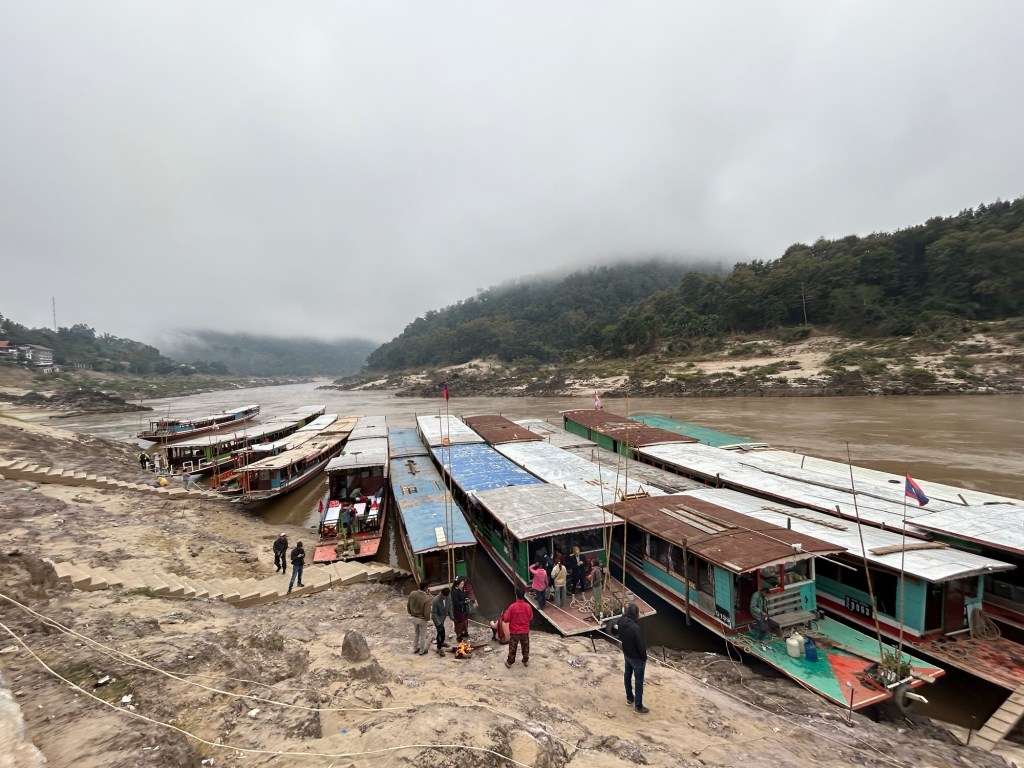
We planned to start our time in Laos with a two-day slow boat trip down the Mekong River, travelling from Huay Xai (on the border with Thailand) to Luang Prabang. I had been battling a case of food poisoning for a few days, which lingered as we prepared for our journey to Laos, but managed to pull things together for the journey.
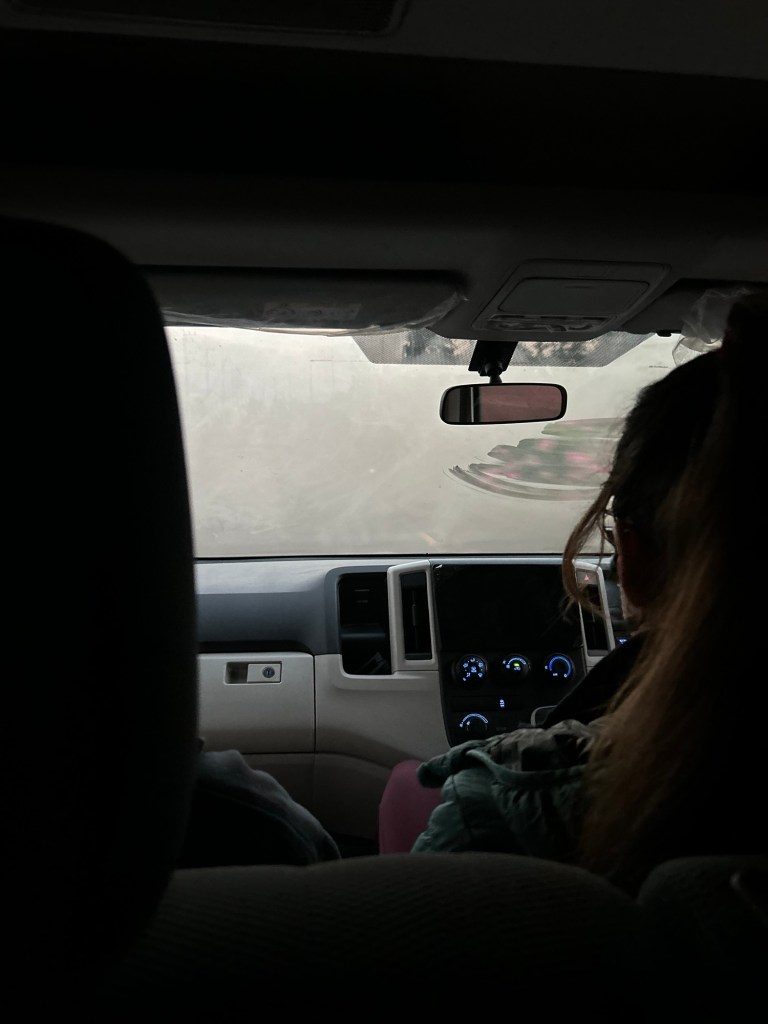
Our adventure began with an early morning pickup from our hotel in Chiang Rai, Thailand. It was a chilly morning, and the windshield of the van quickly became completely fogged over. Our driver, unfazed, sped down the road, occasionally scrubbing a small circle on the glass with his hand to peek through so he could see the road ahead. Despite our attempts to provide suggestions on how to defog the window properly, he seemed content with his improvised solution, leaving the rest of us gripping our seats and hoping for the best.
The journey to Huay Xai, Laos required us to take 3 separate buses before reaching the slow boat port. The first bus took us to the Chiang Khong border, where we disembarked, got our exit stamps, and boarded a shuttle to the Huay Xai border in Laos, where we got our visas, and hopped onto our third bus, which took us to the slow boat pier—our gateway to the next leg of our journey.
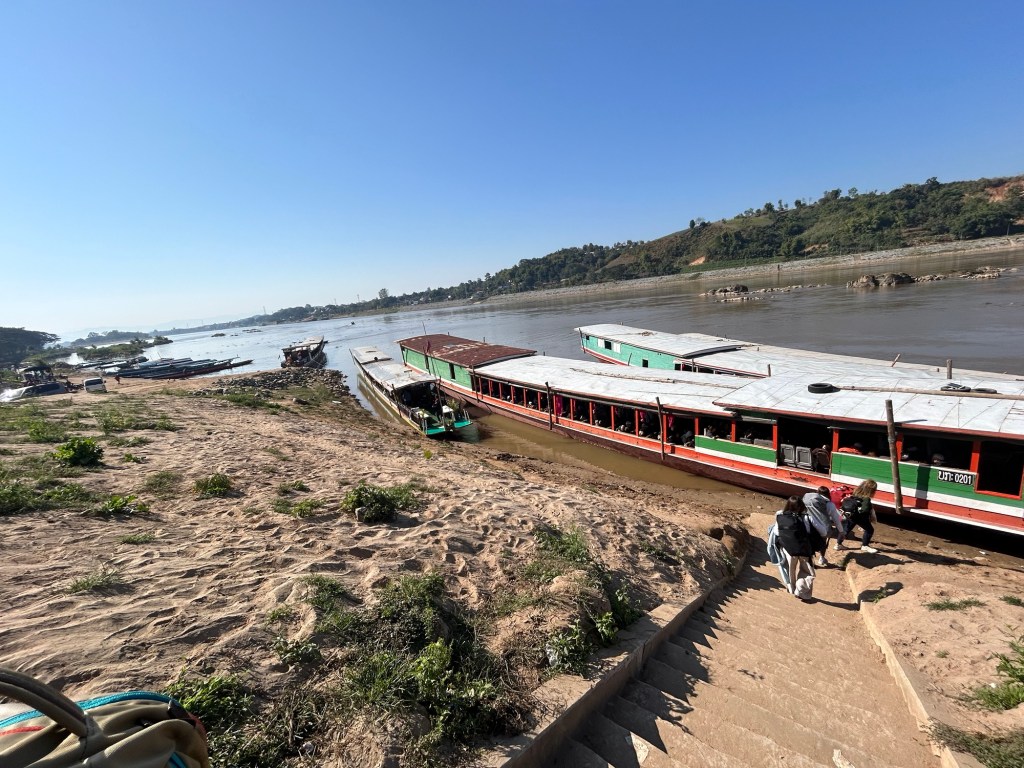
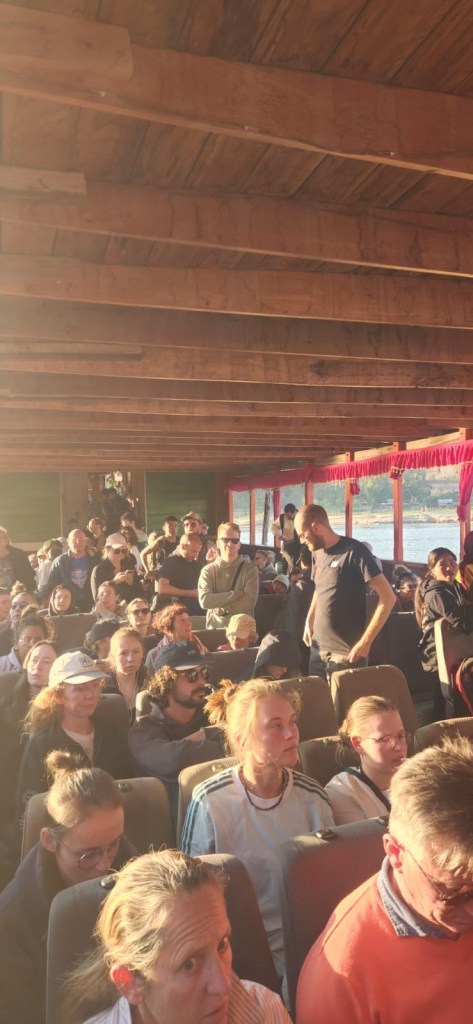
At the pier, we were given 10 minutes to collect some last-minute supplies before rushing to secure seats on the slow boat to Pakbeng, where we’d be staying for the night. When we arrived to the boat, it was nearly full, packed with people and repurposed car seats crammed closely together.
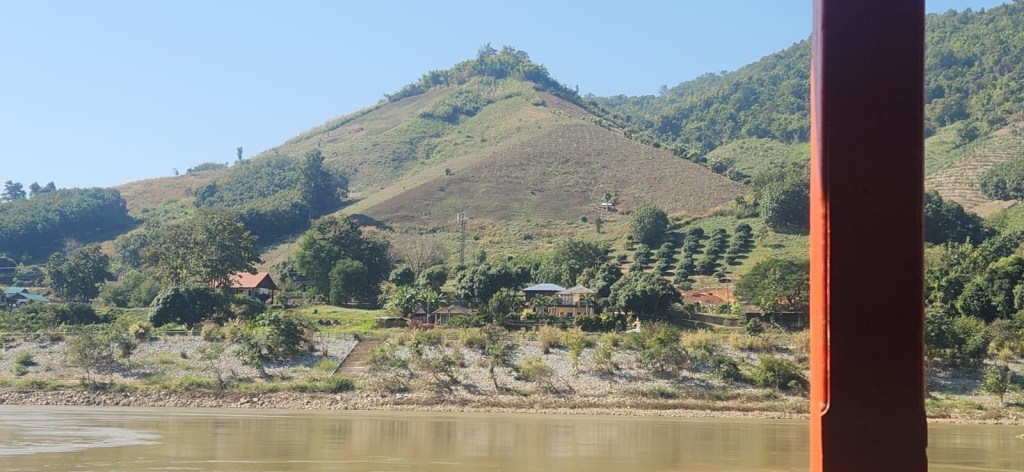
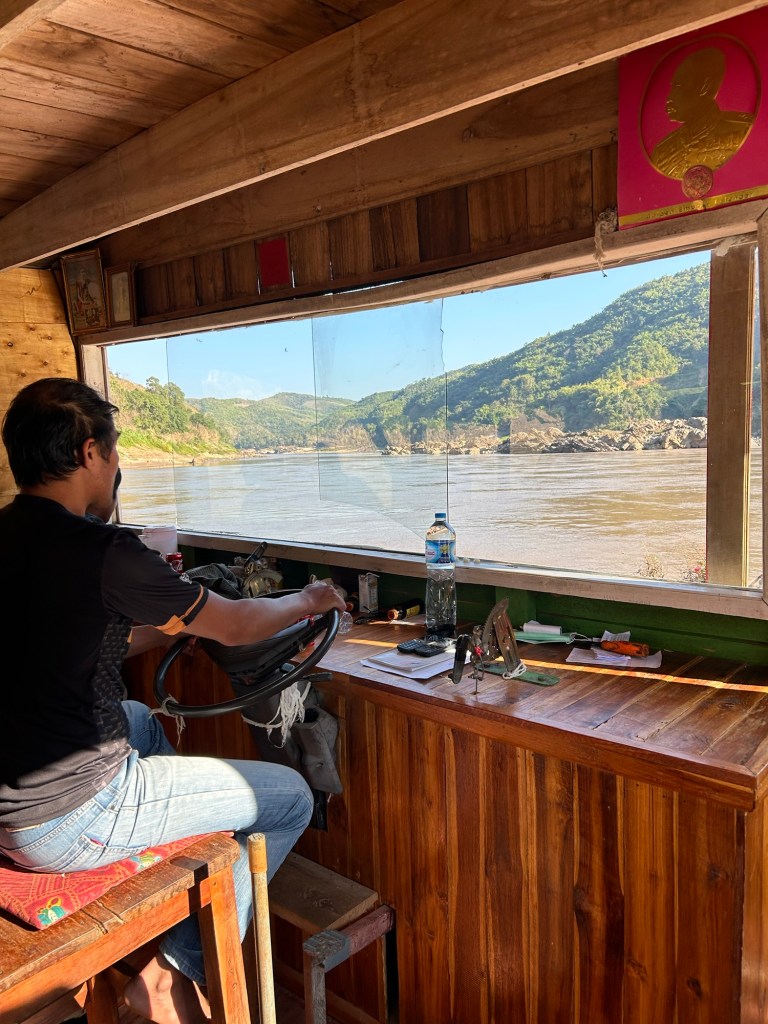
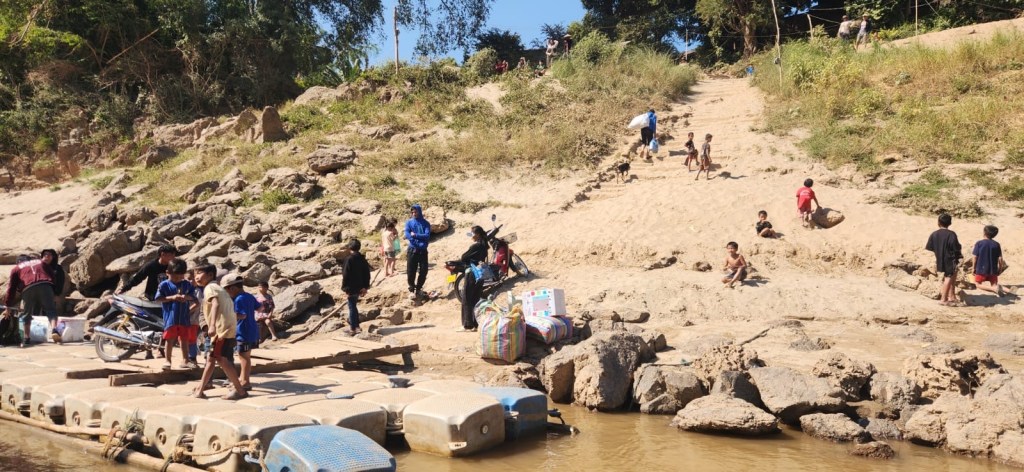
The six-hour ride took us through breathtaking scenery, past remote villages, and alongside locals using the Mekong River for their daily lives. It was very evident how the river (past and present) serves as a vital transportation route, carrying people, food, and necessities to communities that dot its shorelines. As we drifted down the river, we saw fishermen casting their nets, rods propped along the shore, and children playing at the water’s edge, some children even captaining small boats. Along the way, we stopped at villages where locals would quickly hop on, weaving through the narrow aisle to sell homemade treats, snacks, and drinks.
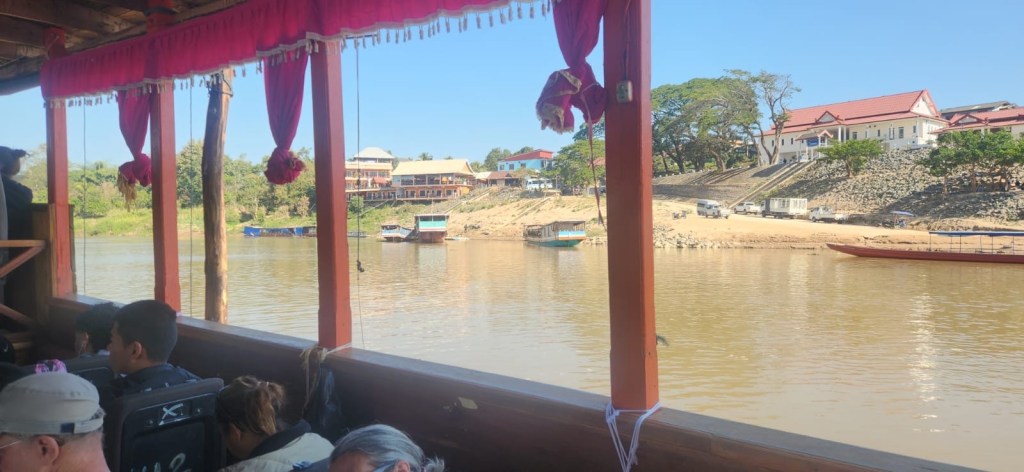
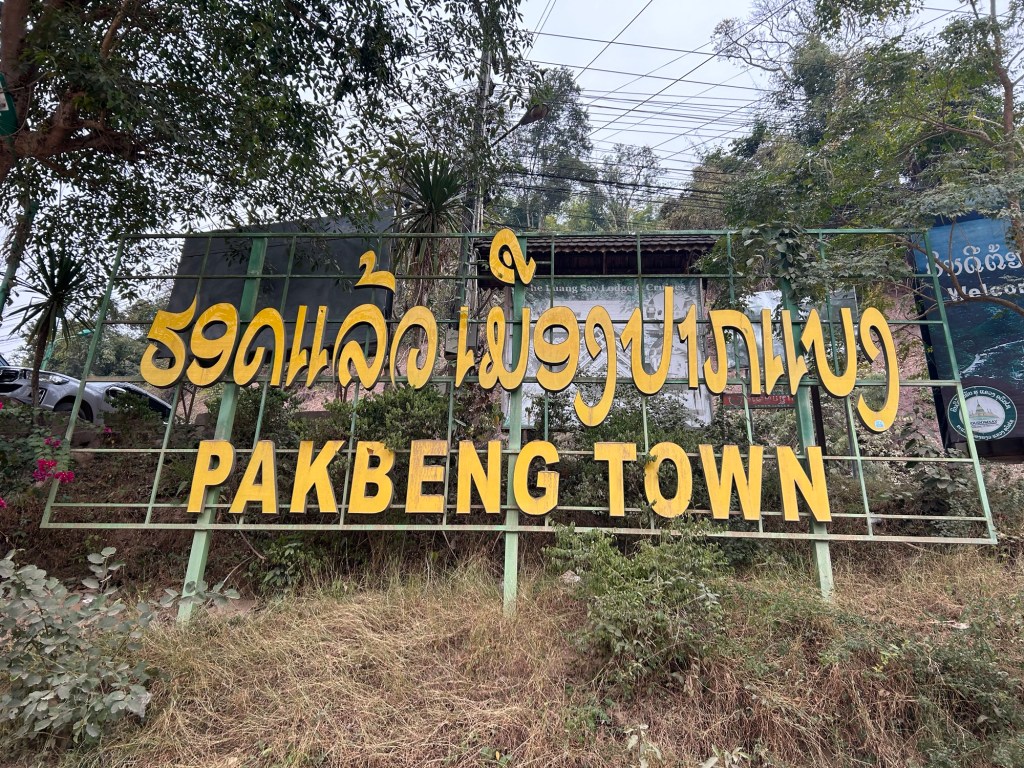
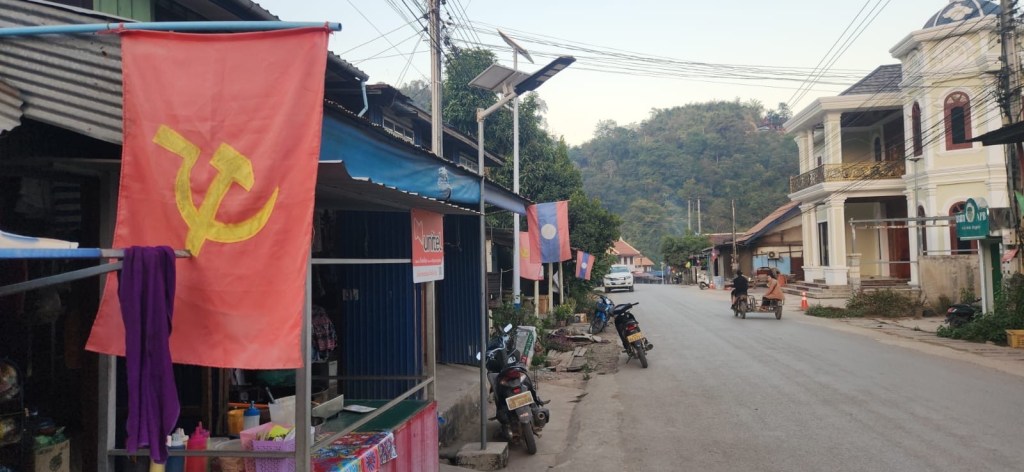
We reached Pakbeng, where we explored the small riverside town by foot, before resting for the night.
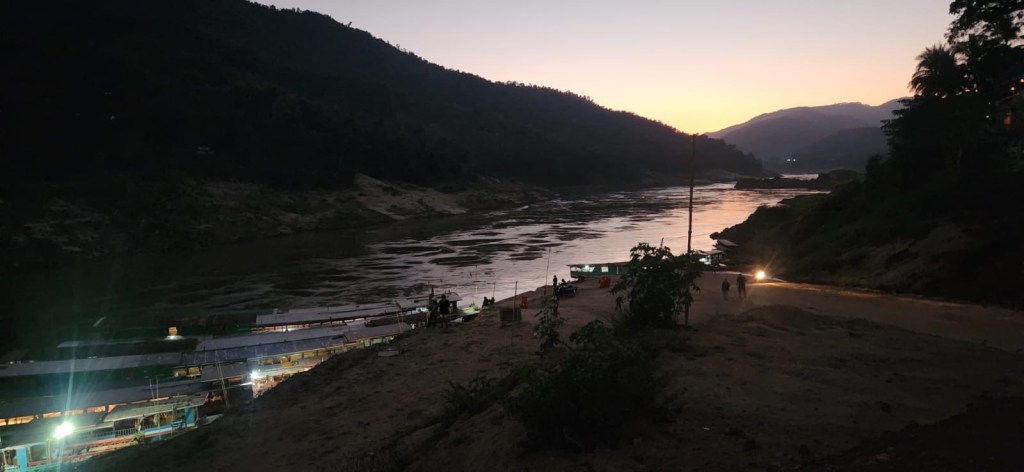
The next morning, we arrived early to the boat to secure good seats. The boat departed late due to a missing hotel key, but were soon cruising again past the beautiful lush landscapes, river villages, and even boarded a pig as a passenger.
Our slow boat journey ended when we arrived in Luang Prabang. We climbed the stairway and squeezed into an overcrowded tuk-tuk (14 people —a new record for us), and were brought downtown where we were dropped off and walked to our hotel.
The Hidden Dangers Beneath: Learning About UXOs in Laos
The entire town of Luang Prabang is a UNESCO World Heritage Site, due to its unique blending of Lao culture and French colonial architecture that has been preserved throughout time. It was once the royal capital, whose history has been beautifully preserved through heritage houses and Buddhist traditional temples, as well as preserved Buddhist practices, which I will get more into below.
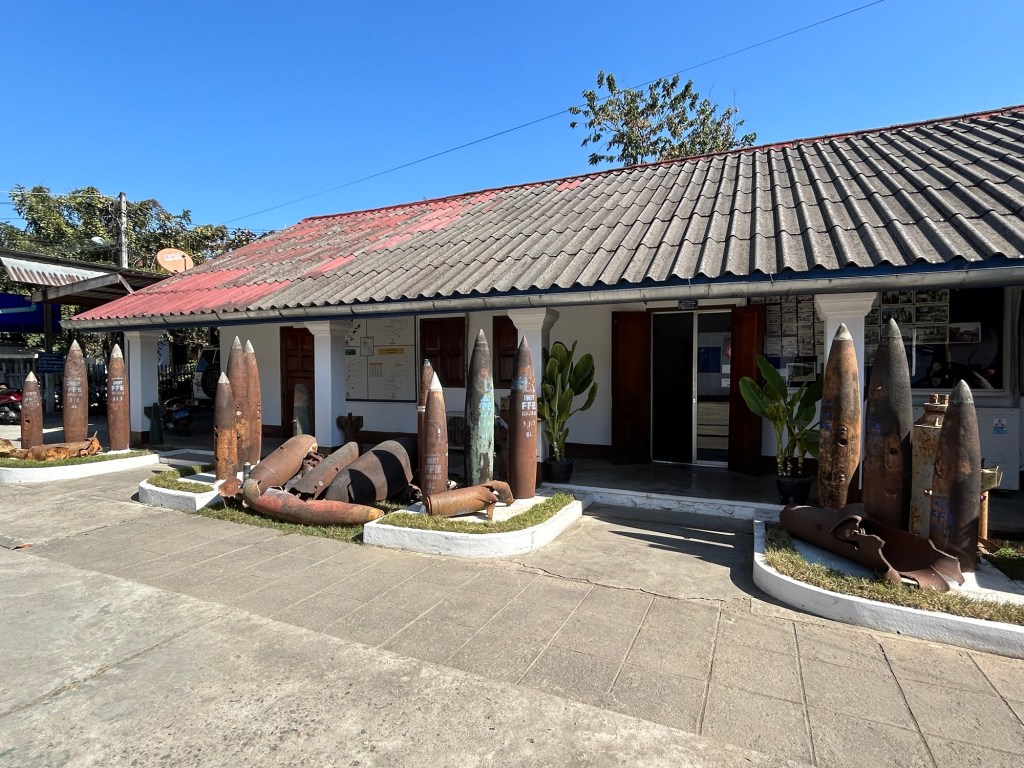
To truly connect with Luang Prabang, we wanted to understand its history, which is marked by both beauty and tragedy. We began by visiting the UXO Lao Visitor Centre, which is a museum dedicated to informing visitors about the dangers of unexploded ordnance (UXO) left from the Vietnam War. Here, we not only learned about the Vietnam War, but also about America’s Secret War. From 1964 to 1973, the U.S. dropped millions of bombs on Laos, making it the most heavily bombed country per capita in the world. Today, 80 million unexploded bombs remain, posing a deadly threat to citizens and rural communities throughout Laos.
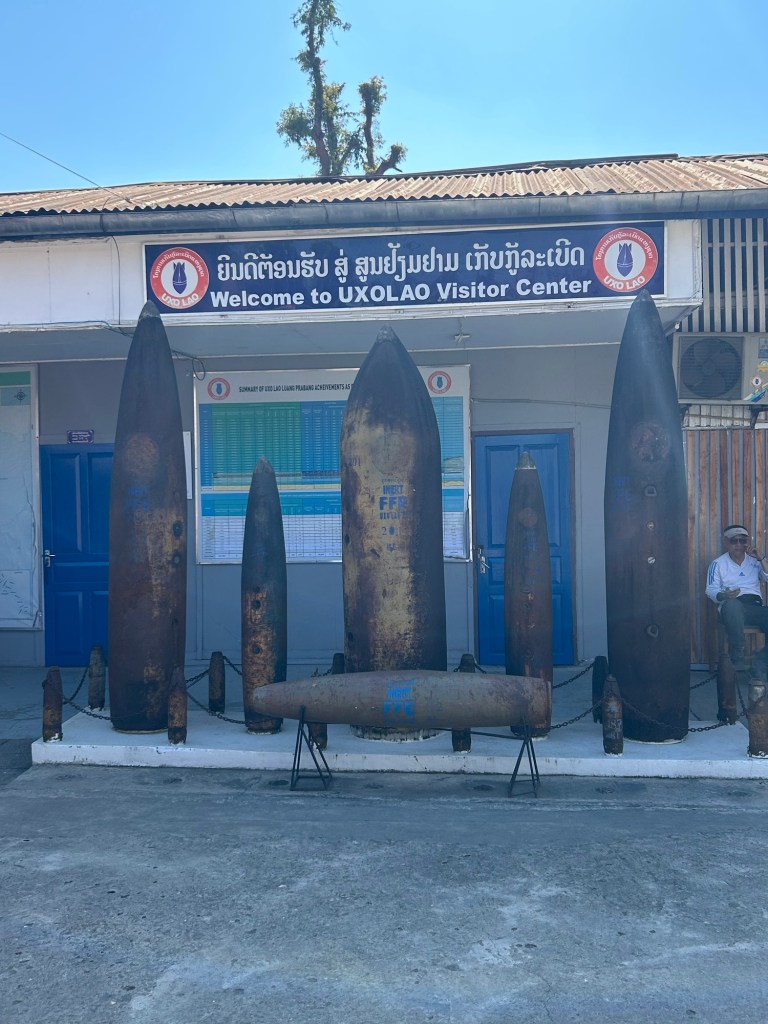
The museum highlighted the ongoing dangers associated with UXOs; millions remain buried under homes, on farmlands, and around schools. Today, the Secret War continues to have economic impacts on Laos, including the costly removal process of UXOs and the lack of investment due to the contaminated land. Efforts to clear UXOs are slow but making progress, helping bring safety and economic opportunities to affected areas. Visiting the museum was both eye-opening and heartbreaking, reminding us of the lasting impact of war on communities and the resilience of the Lao people. We also learned about the educational initiatives undertaken by the Laos government to support safety education regarding UXOs for children, families and communities.
Buddhist Tradition in Luang Prabang
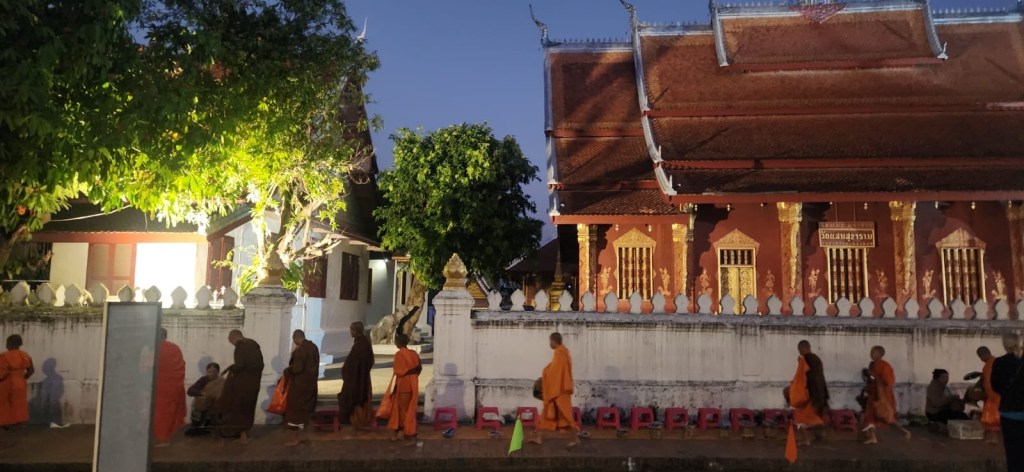
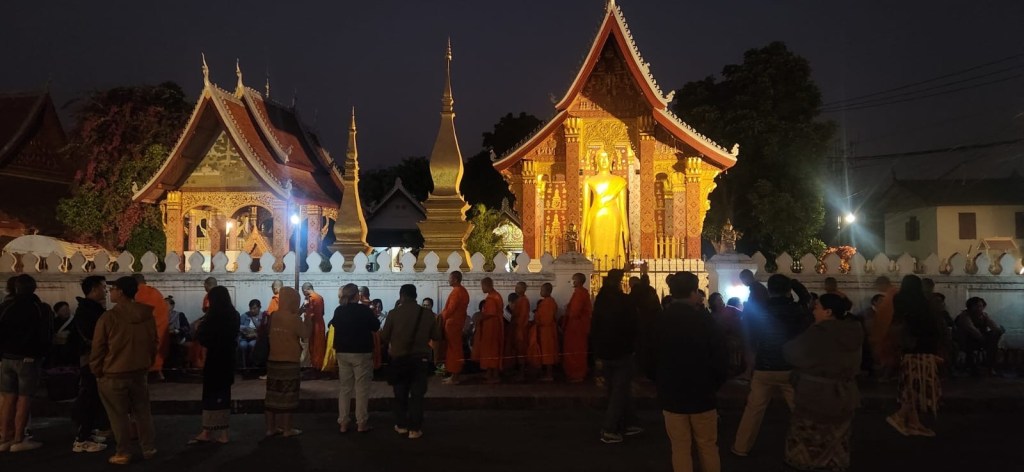
Luang Prabang has preserved the centuries old sacred almsgiving ceremony. This ceremony is a sacred Buddhist tradition, where monks and their novices collect food offerings from devoted locals and respectful visitors. The monks do not ask for food, rather they silently receive it as part of their spiritual practice of humility, which is then shared within the monastery and with the poor.
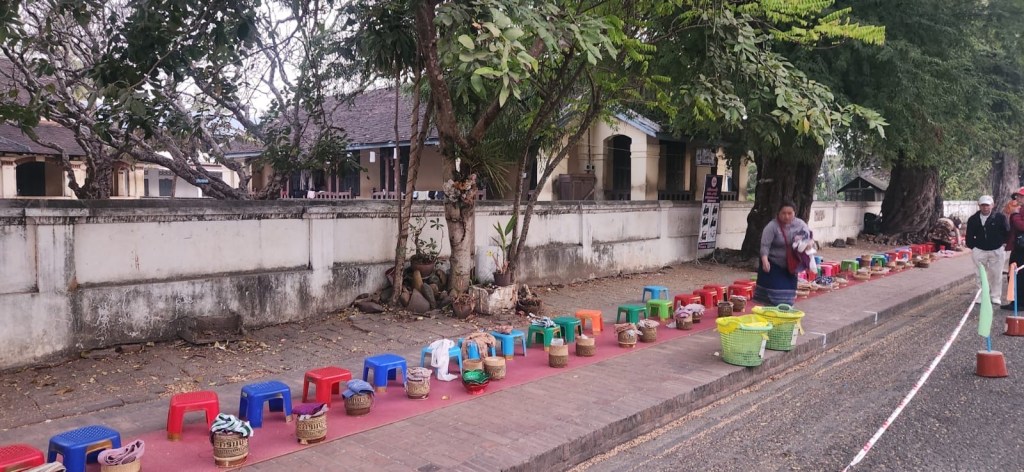
Locals set up the carpets and chairs, and on the morning of, the roads and sidewalks are also blocked off.
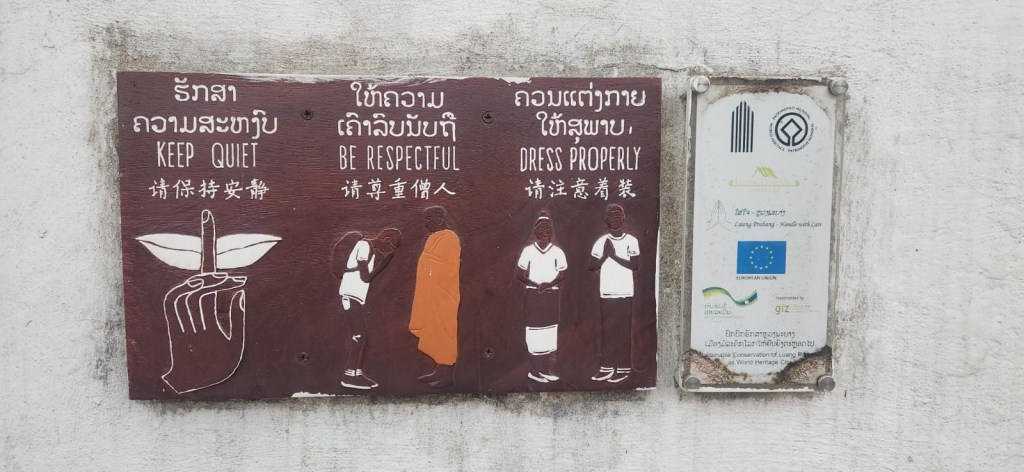
With the ceremony gathering much attraction from tourists, these signs (below) were posted throughout town. We witnessed several tourists not following these guidelines and being very disrespectful, which was disappointing. However, learning about this ceremony, the relationship between the local community and the Monks, and how this practice is rooted in gratitude, humility and detachment from material possessions, provides a lesson we could all learn from in regard to selflessness, generosity and compassion.
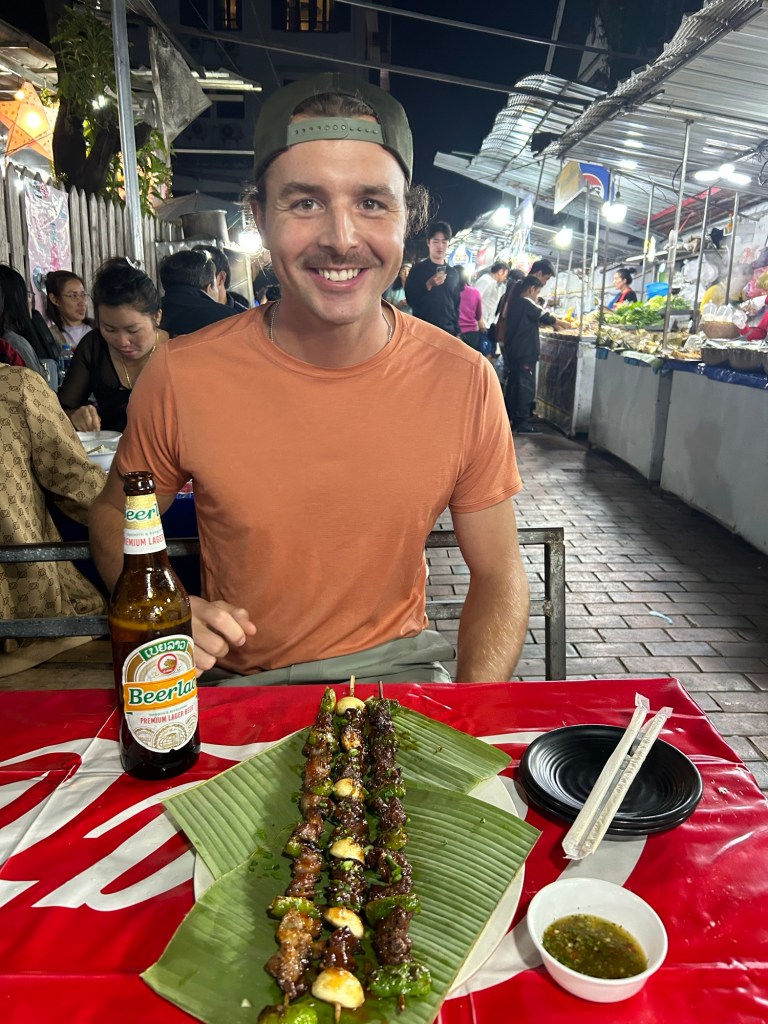
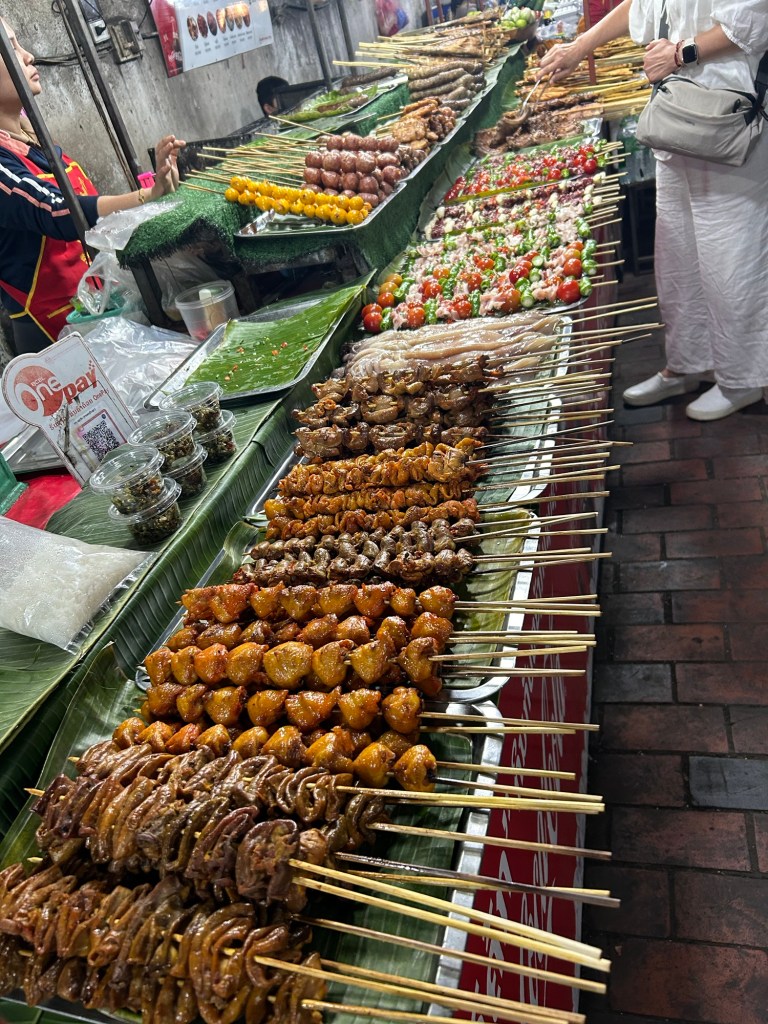
Exploring Luang Prabang: Food Markets, Temples, Museums, and History
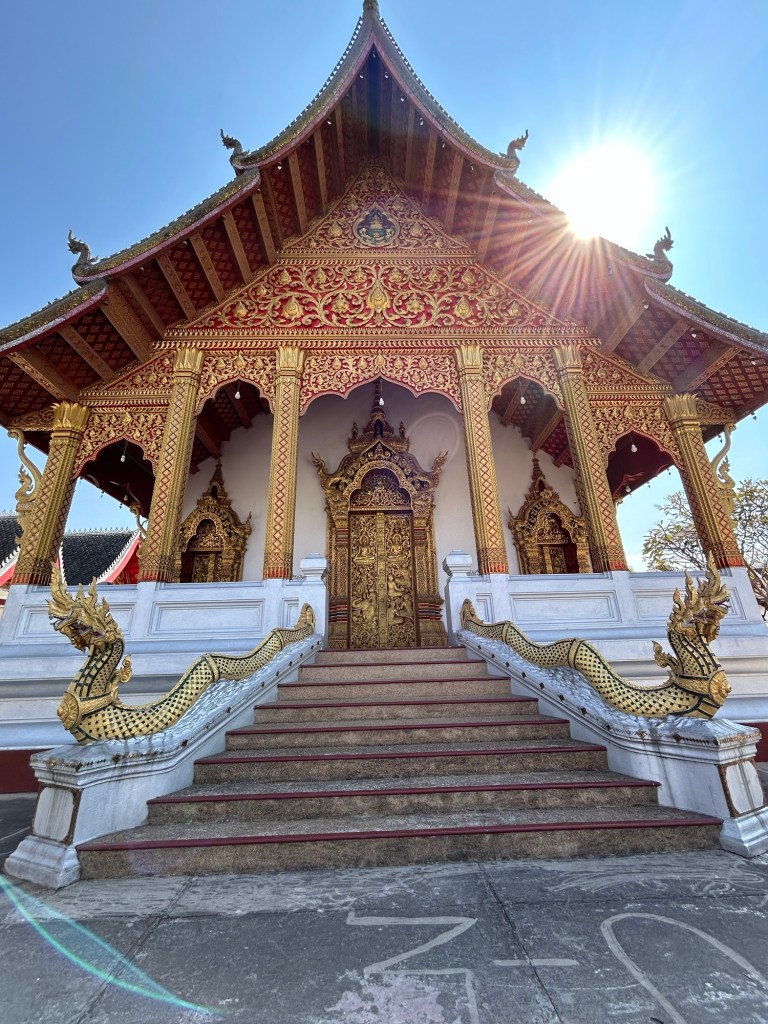
We explored some of Luang Prabang’s most iconic temples, including Wat Xieng Thong, a former royal temple known for its golden mosaics and the “Tree of Life” on its back wall. We also visited Wat Nong Sikhounuang and Wat Mahathat, each showcasing the city’s strong Buddhist heritage.
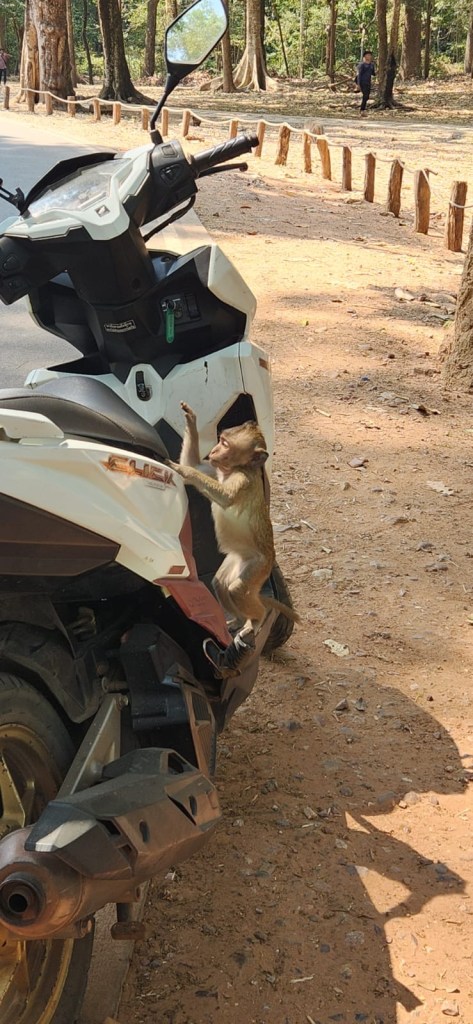
One of the biggest surprises of our visit to Angkor was realizing just how vast the complex is. What may seem “close” together was actually a sprawling network of temples, roads, and towering walls that required scooters or vehicles to navigate. Along the way, we passed checkpoints ensuring visitors had valid passes and occasionally spotted monkeys along the road. At one point, I had a monkey on my scooter, then 2, who would not leave! The best part of starting early was exploring in relative solitude—by mid-morning, the crowds started to build.
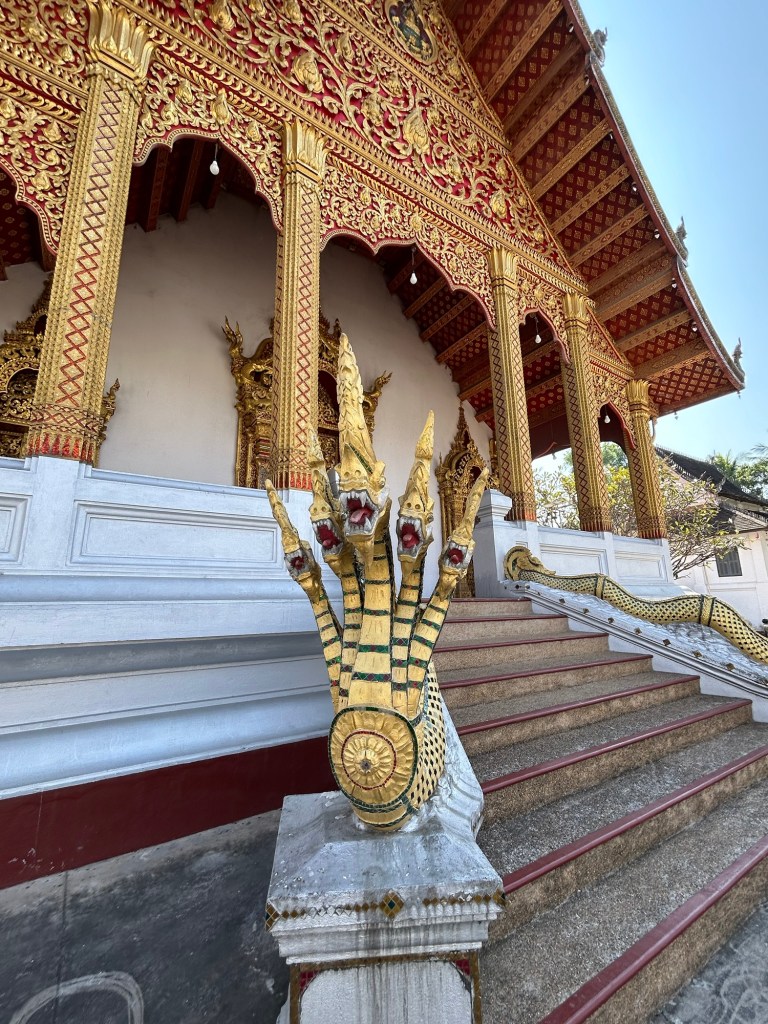
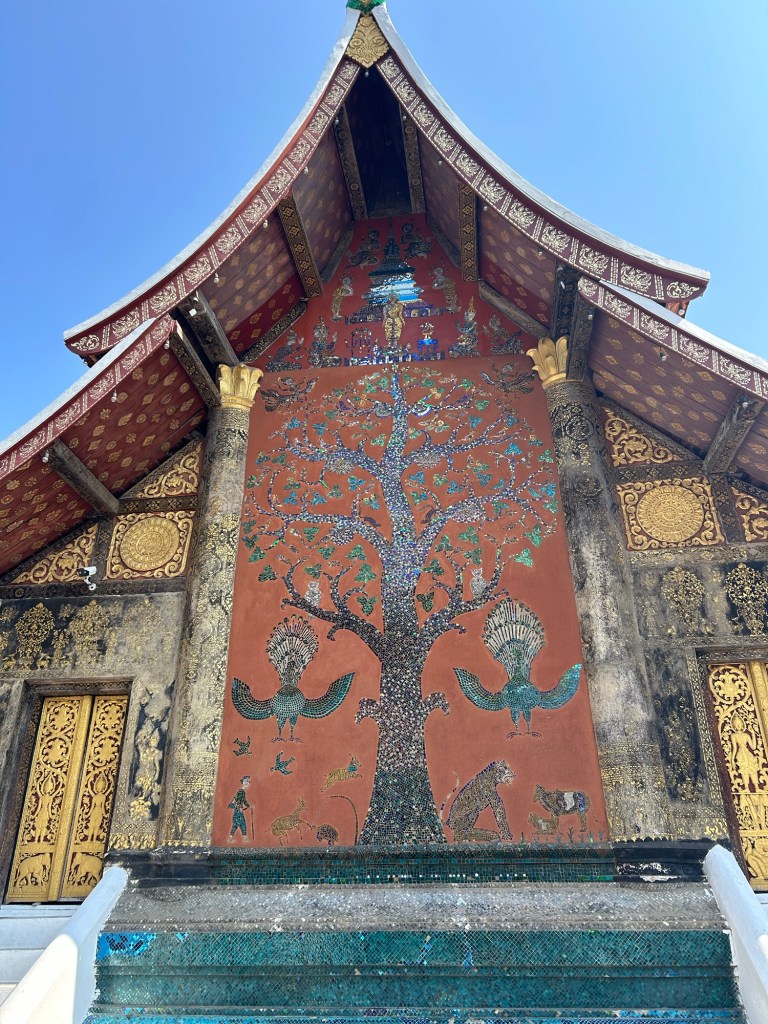
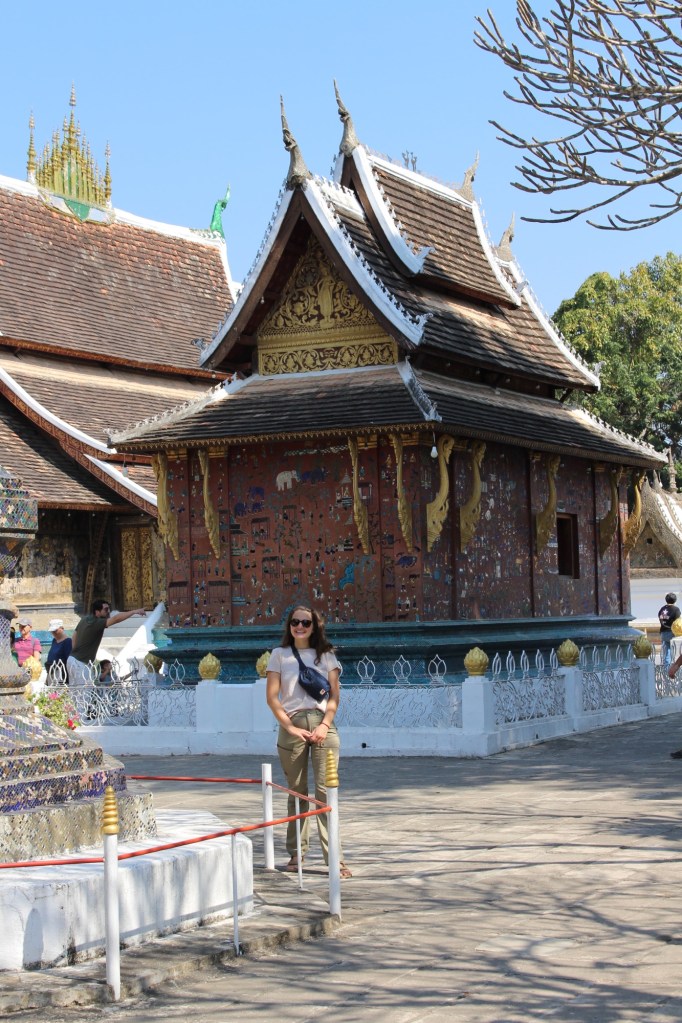
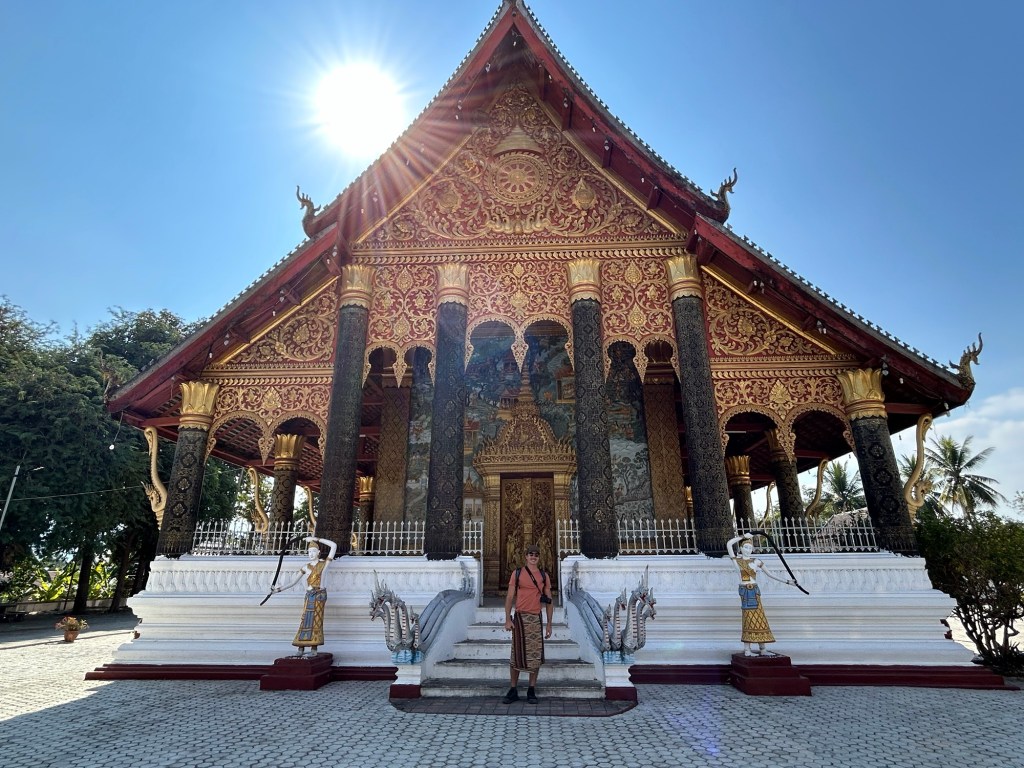
A highlight was touring the former Royal Palace, now the National Museum. Built in 1904, it housed two kings before being converted into a museum after the monarchy’s overthrow in 1975. The royal Palace included the Royal Theatre, where we enjoyed an evening ballet performance, which told a traditional Lao story.
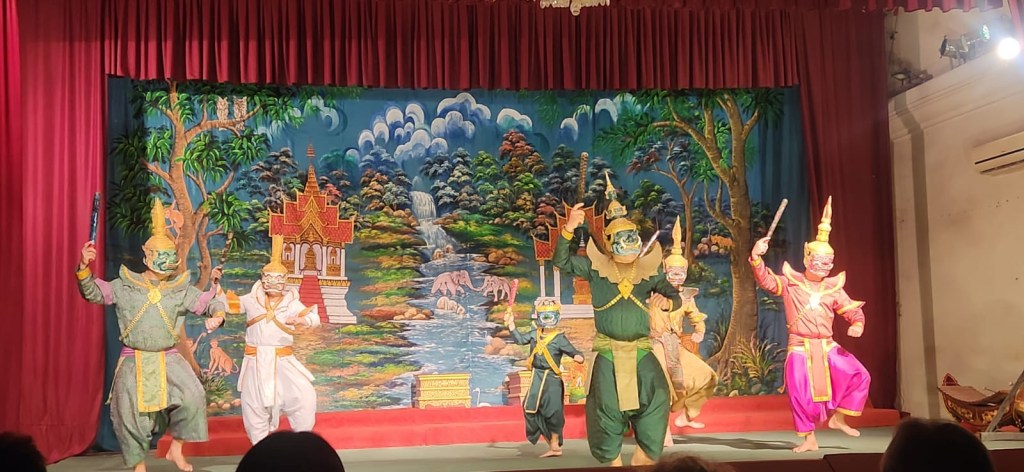
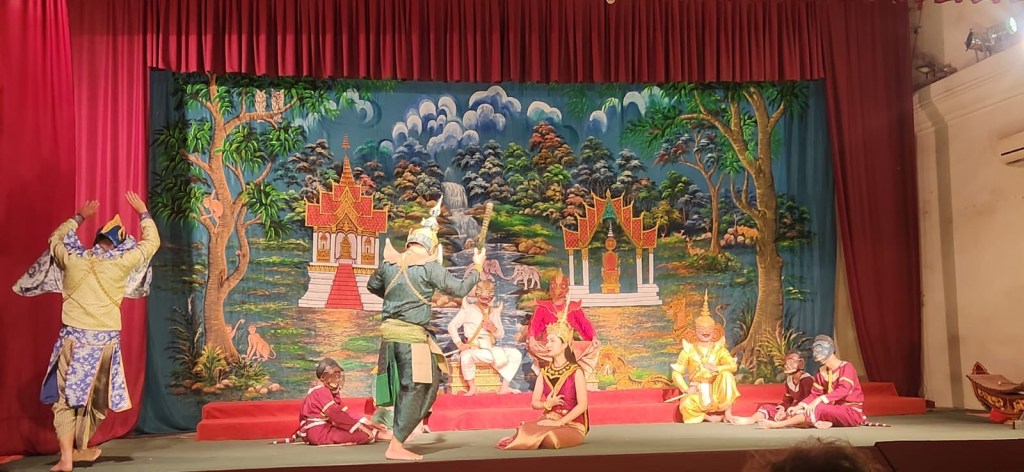
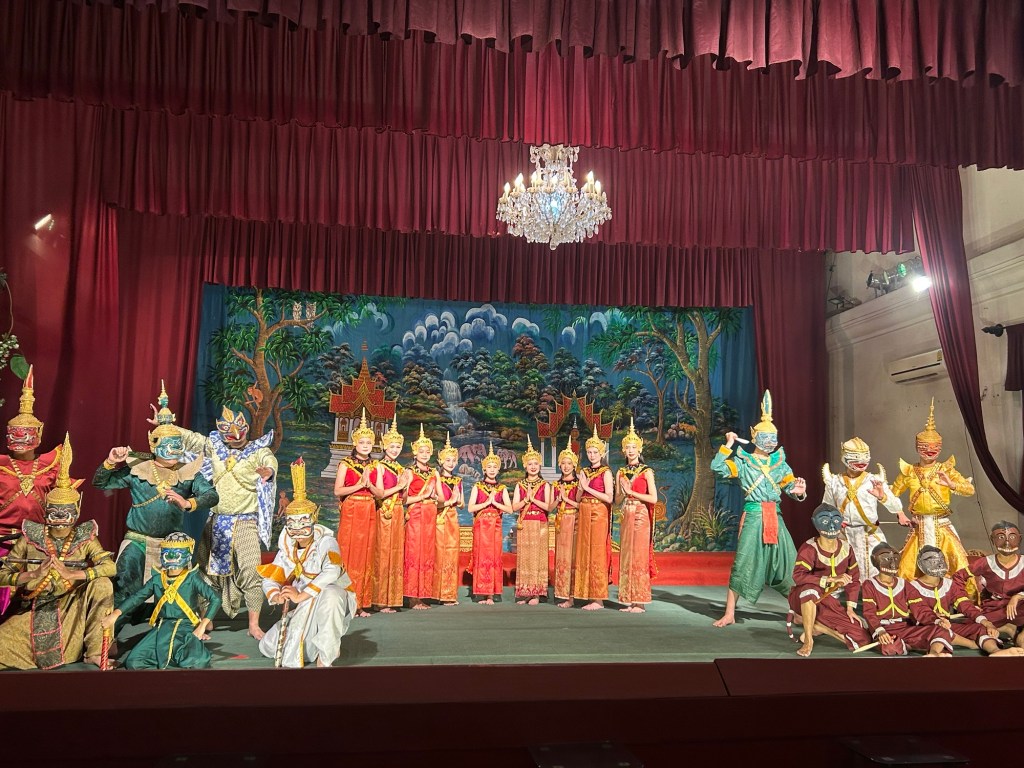
Beyond the city, we embarked on an early morning journey to the Kuang Si Waterfall. We rented scooters and drove through the morning fog for a little over one hour. The ride there took us through misty valleys, rice terraces, and winding mountain roads. As we neared the park, the fog cleared and we were gifted with stunning views of the countryside.
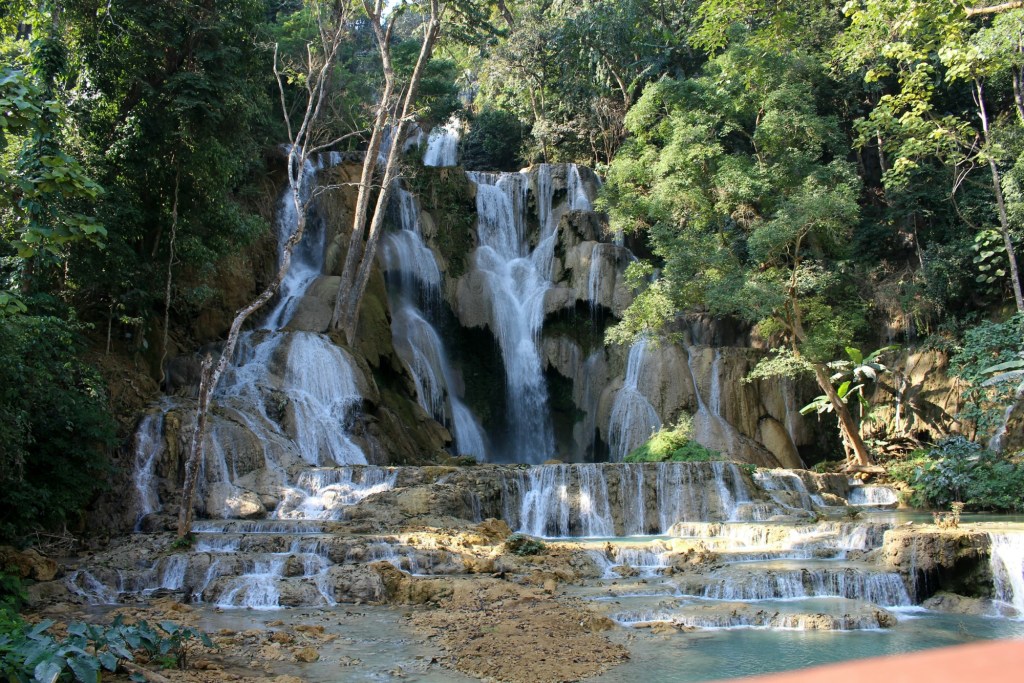
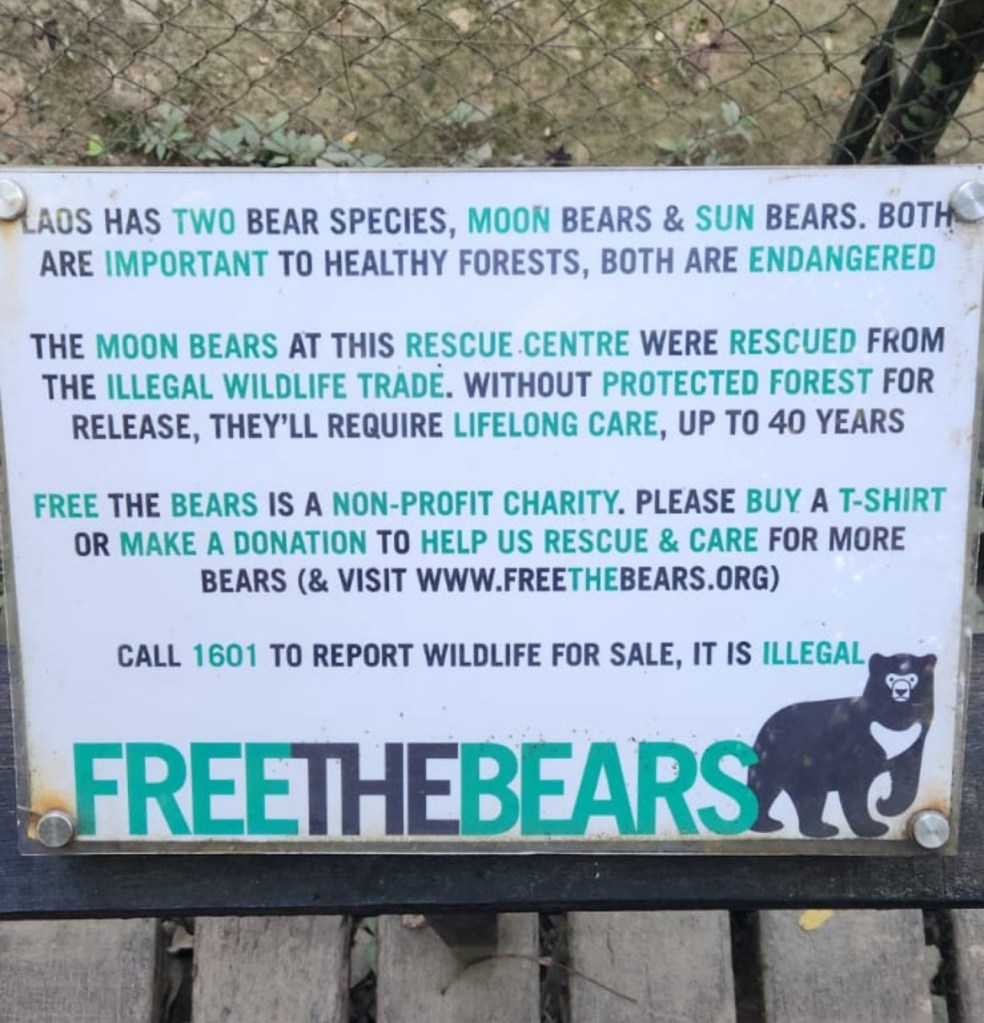
At the Kuang Si Waterfall, we passed the Tat Huang Bear Sanctuary, which was built in 2003 in partnership with the Laos Department of Forestry to house rescued bears from the illegal wildlife trade.
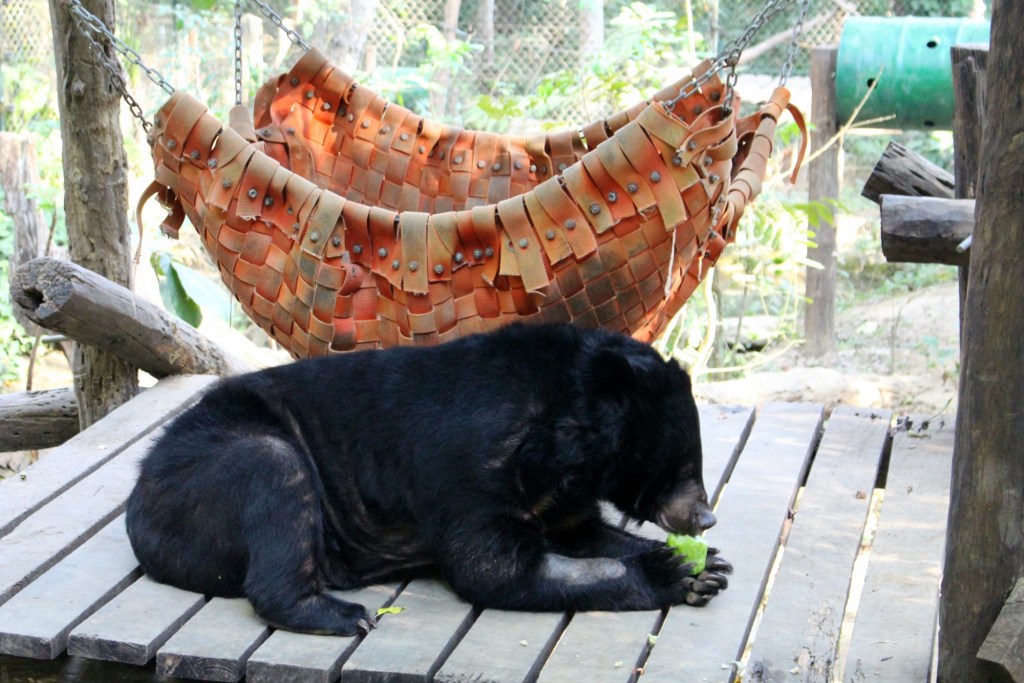
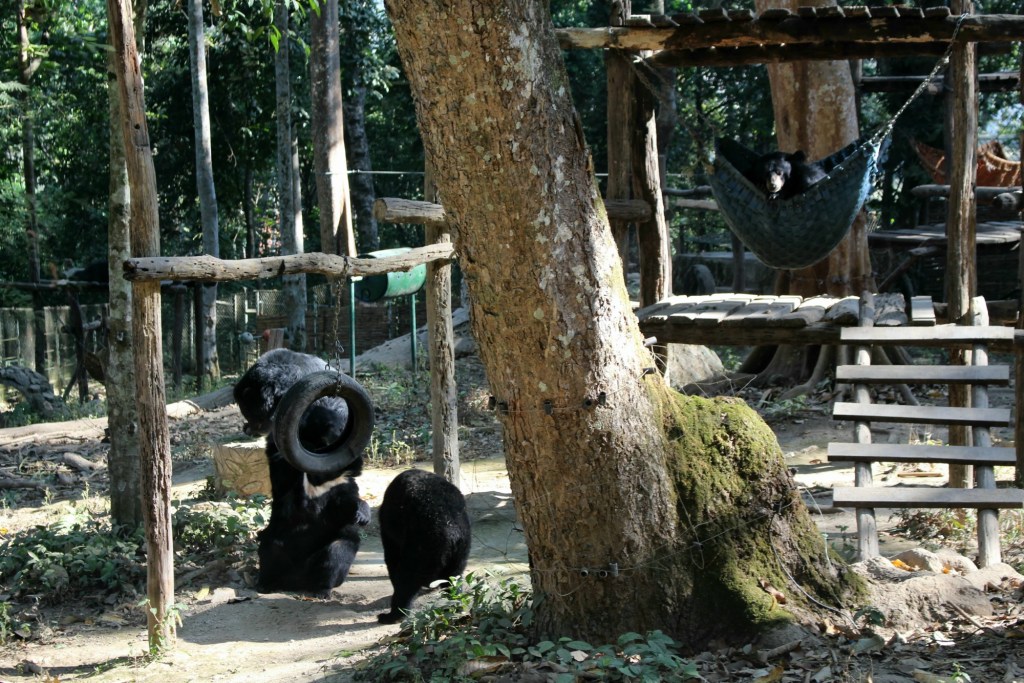
As we continued, we hiked our way up to the top, and continued until we found a cave with Buddhist relics and the spring that fed the waterfall.
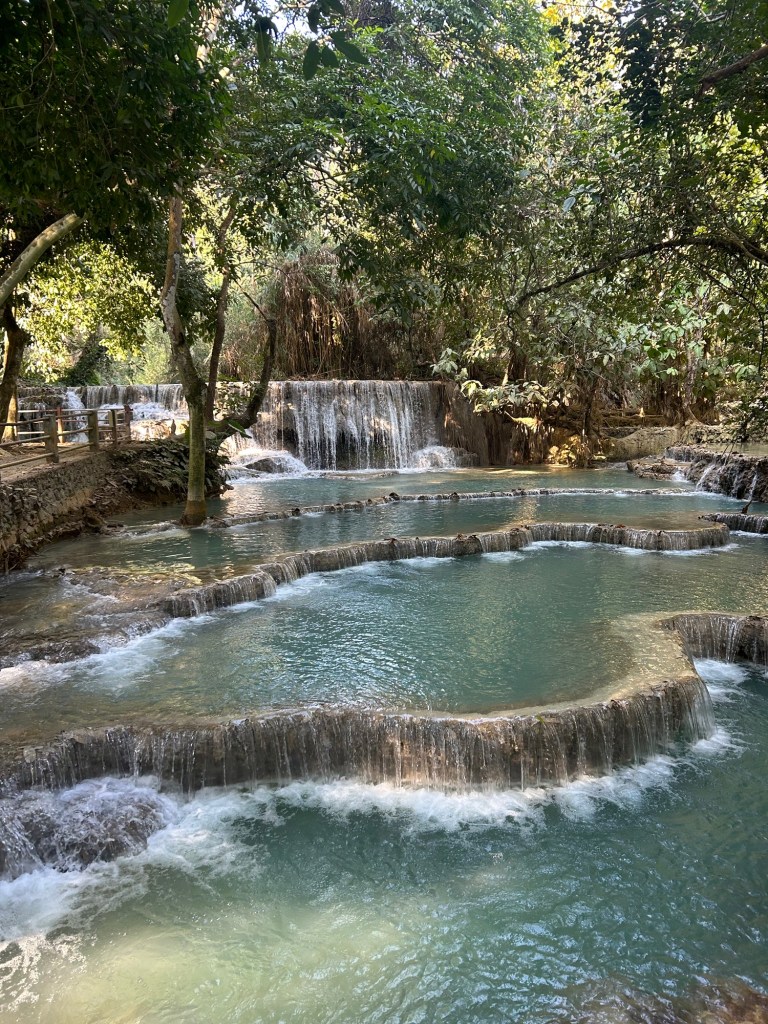
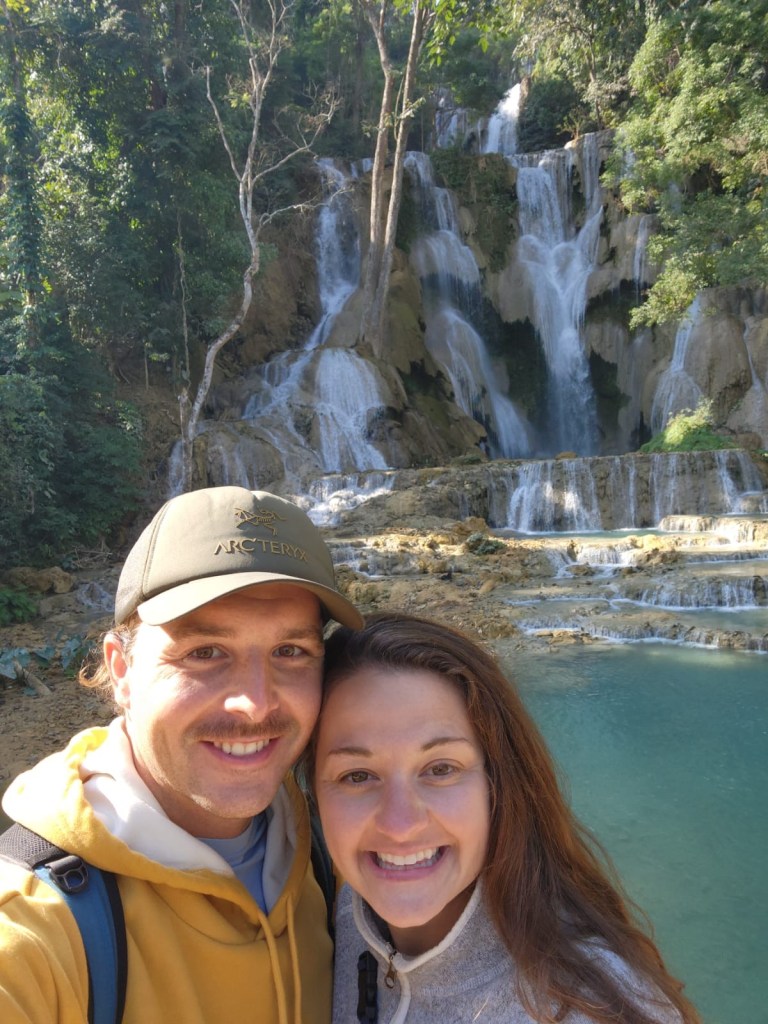
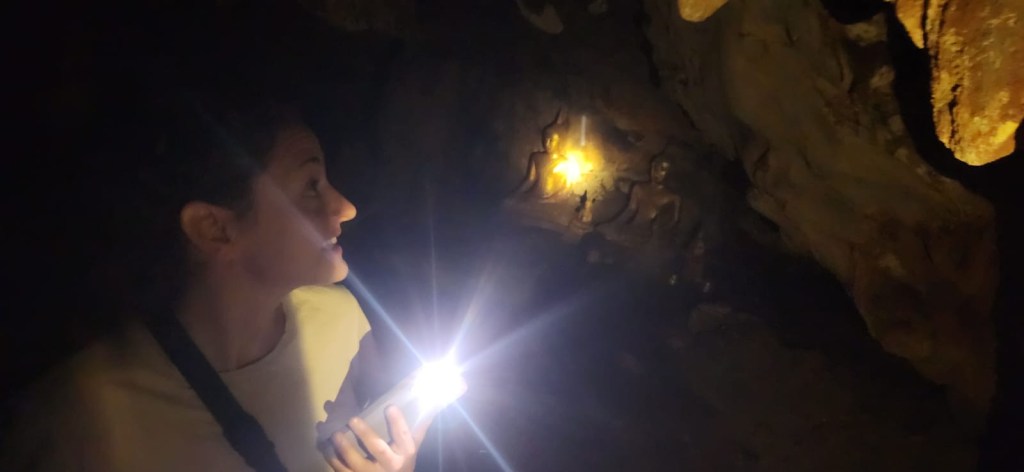
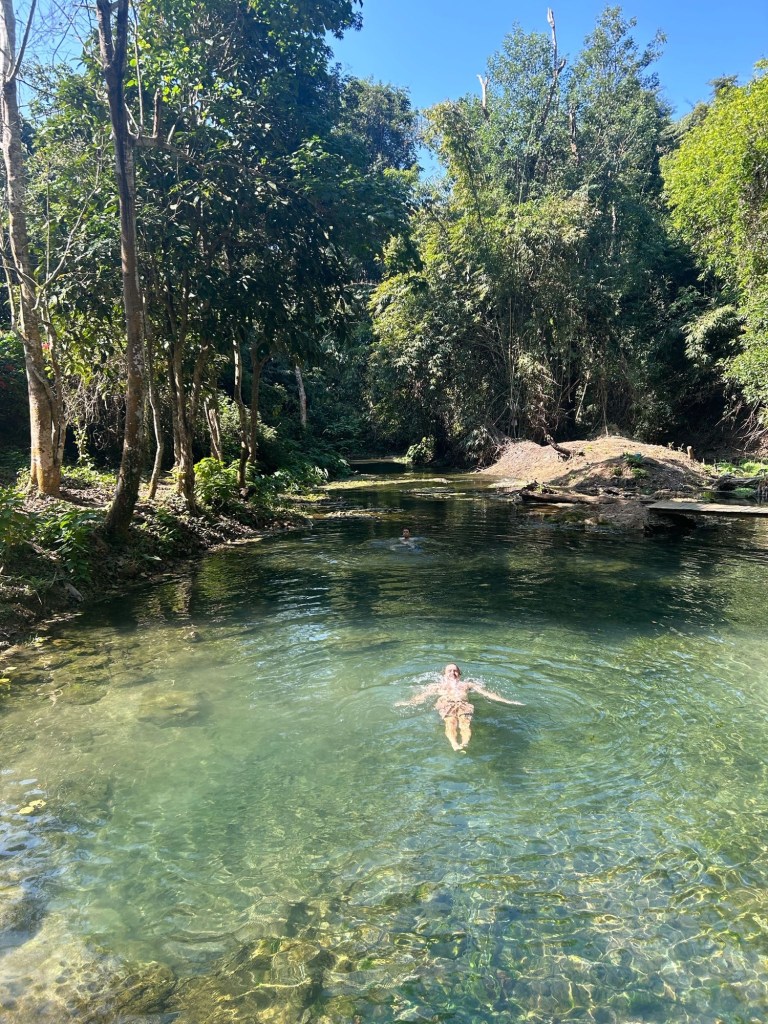
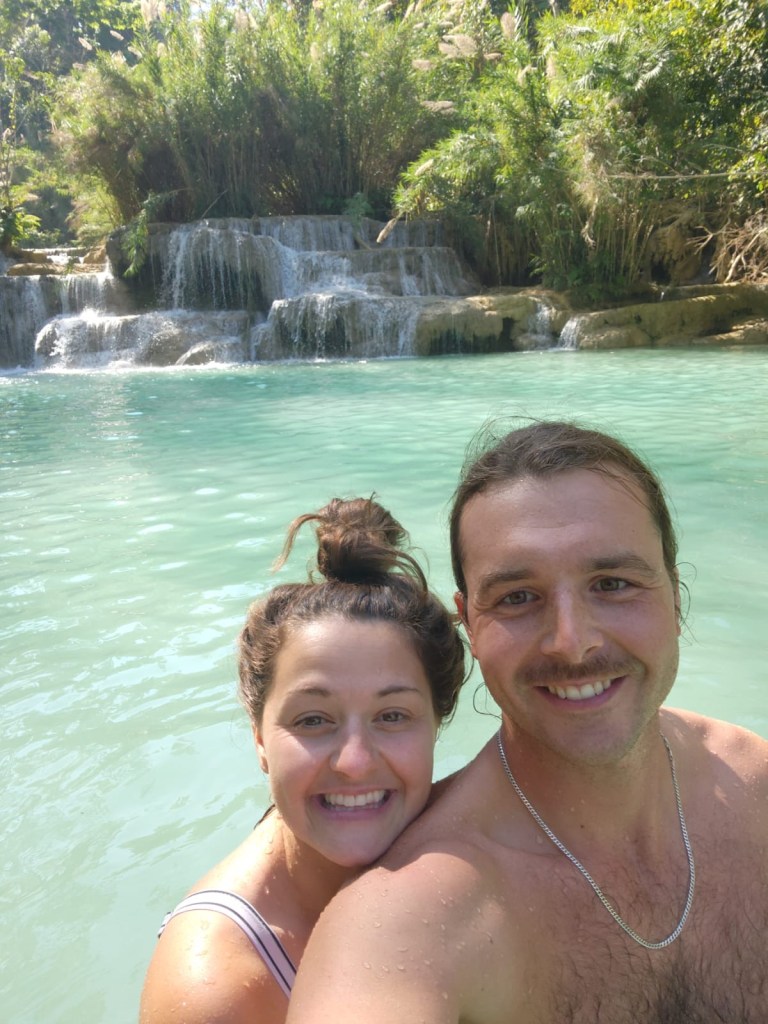
After swimming in the spring, we made our way down to the lower pools, where we again, enjoyed the chilly, crystal-clear water.
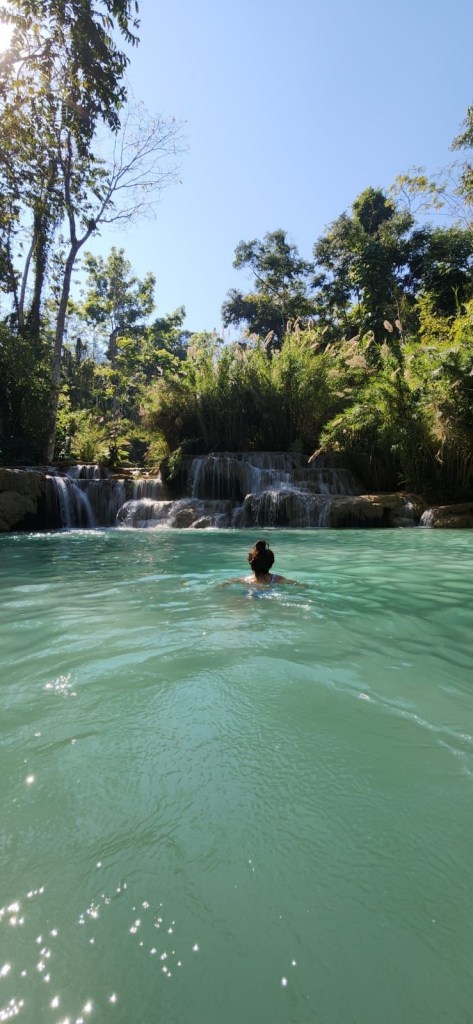
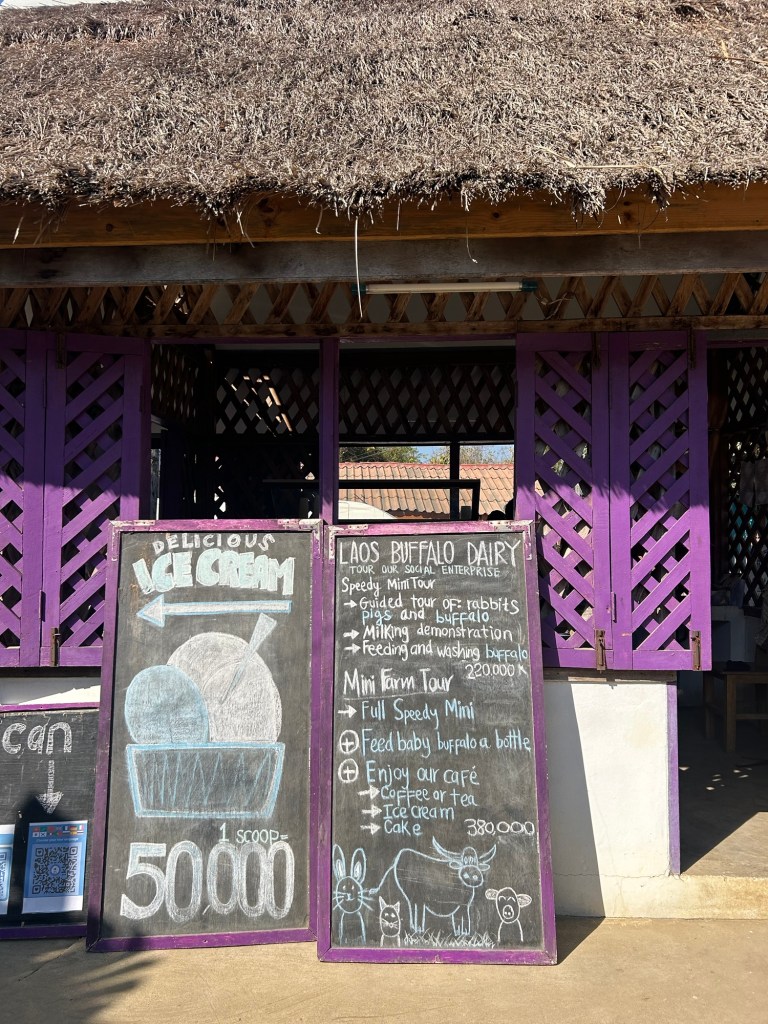
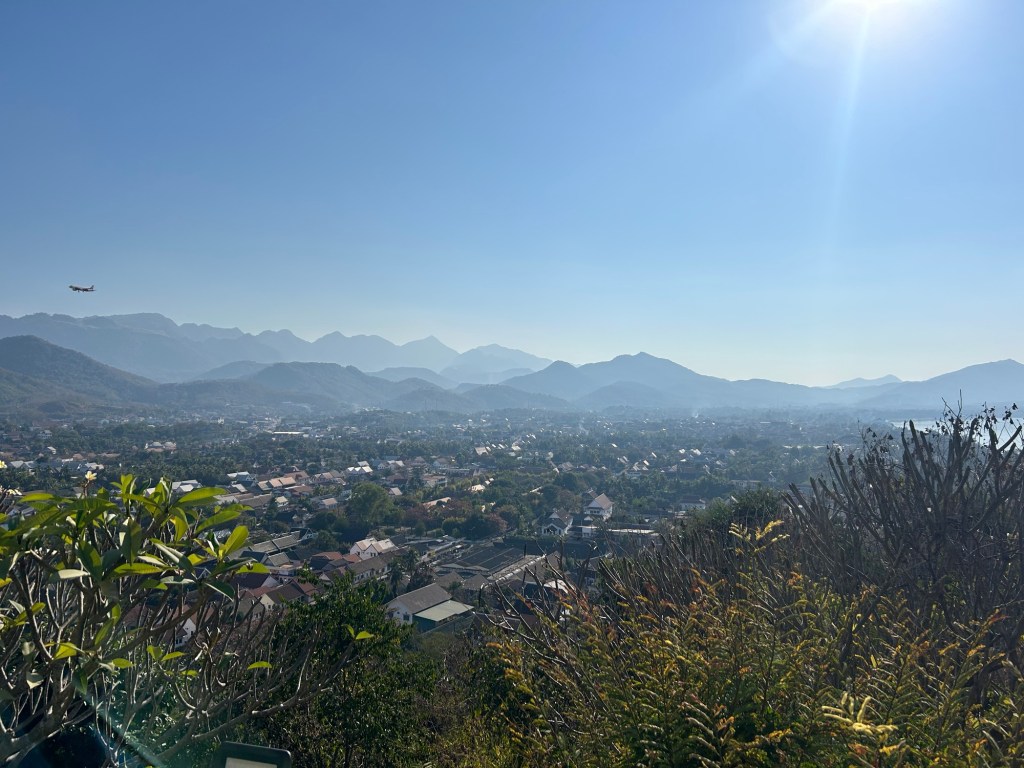
On the way back, we stopped at a buffalo dairy farm for ice cream, and ended the day with a hike up Mount Phousi, offering panoramic views of Luang Prabang.
Rice Farming Experience
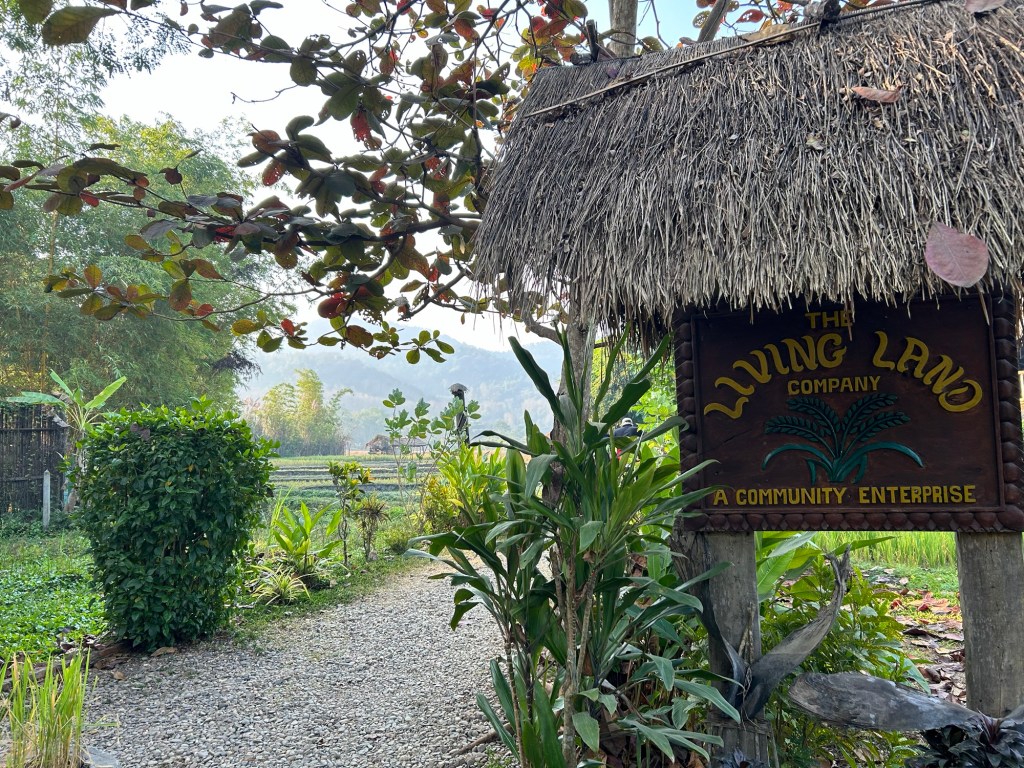
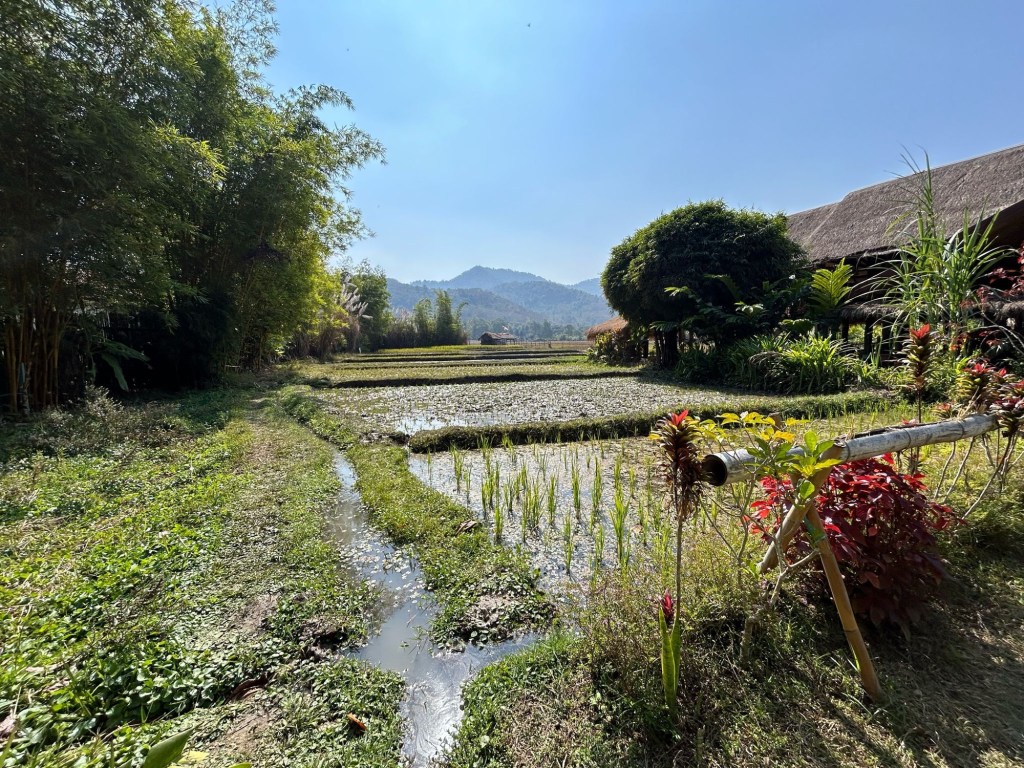
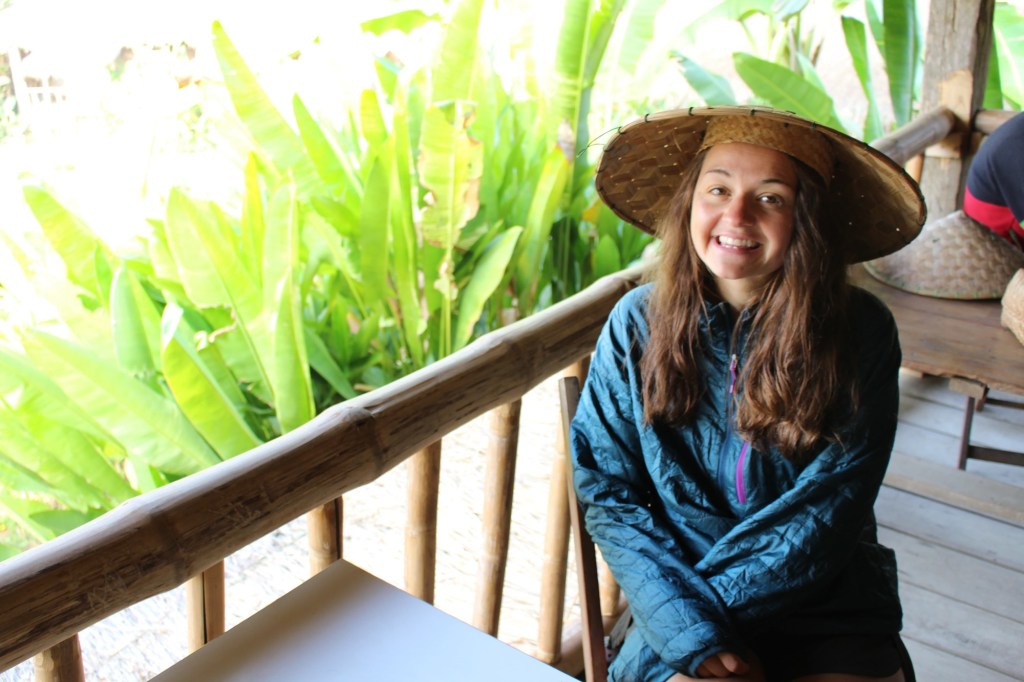
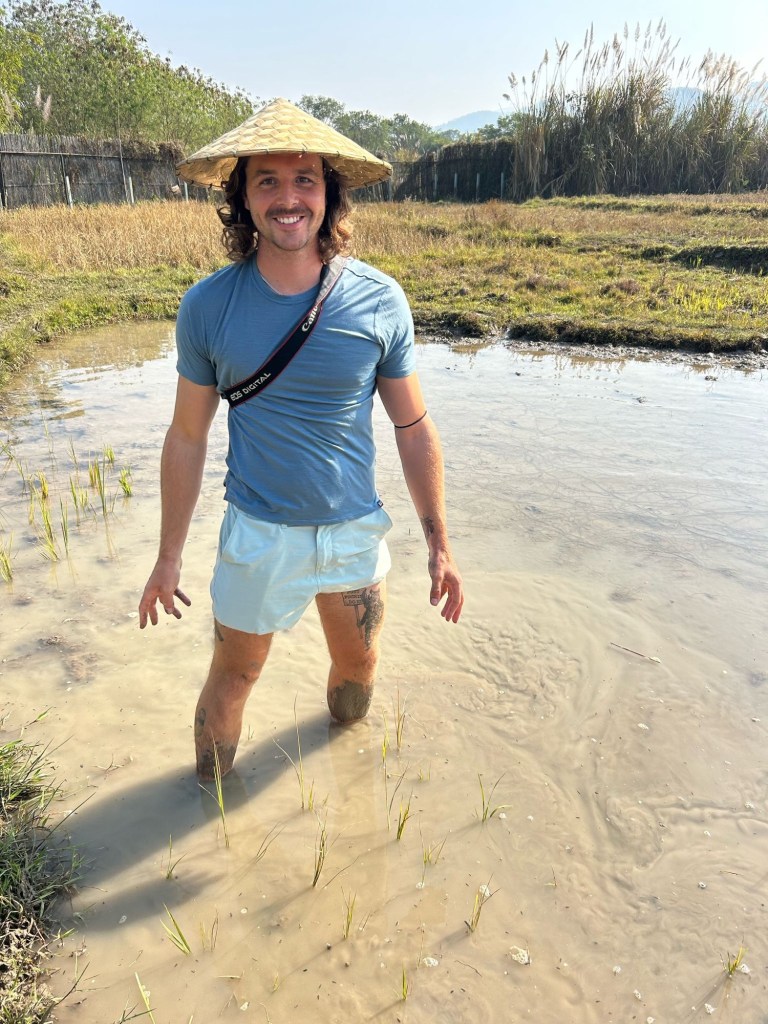
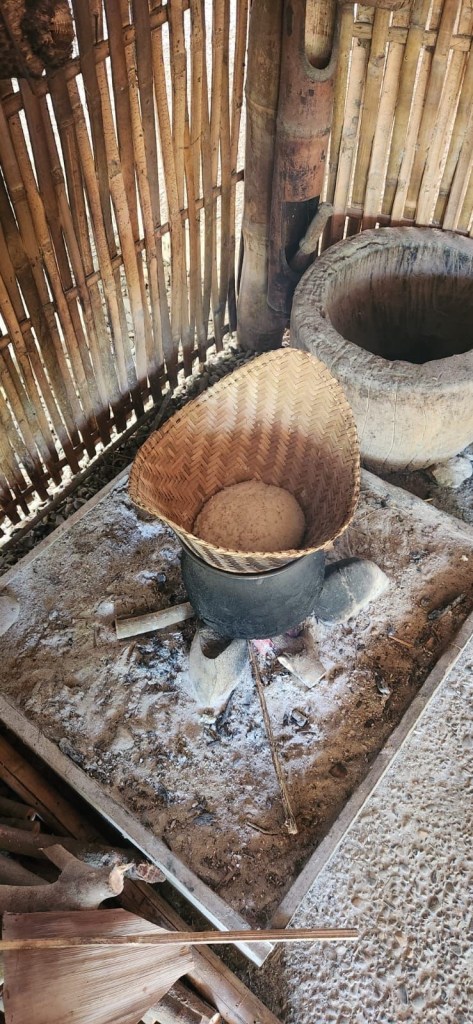
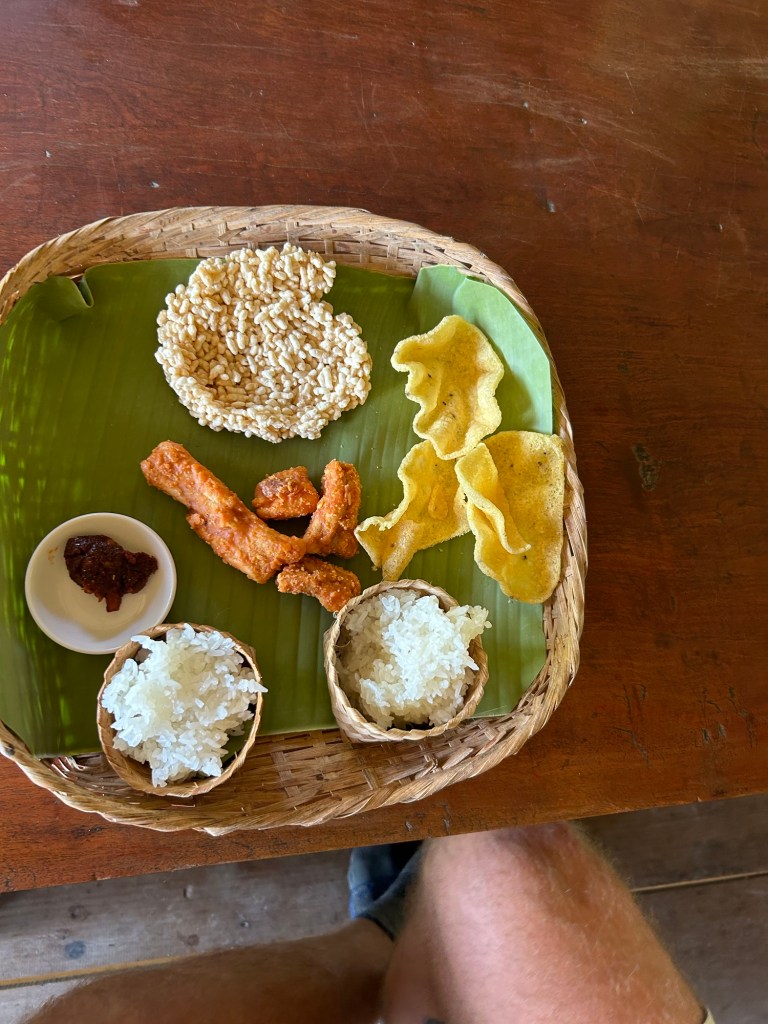
We visited an organic rice farm called The Living Land Company, for an immersive experience in traditional rice farming. Here, we were walked through the 14-step process of rice farming, which included planting seedlings, plowing fields with Susan the buffalo, learning how rice is harvested and processed into flour and noodles, and steamed the traditional Laos way. We also enjoyed fresh sugarcane juice that we helped to squeeze from the plant using the traditional tool, and ate rice-based treats.
Adventure and Scenic Beauty in Vang Vieng
After exploring the cultural and historical Luang Prabang, we took the train to Vang Vieng. Traditionally a farming town, but known since the late 1990s as a rowdy party town for backpackers. The town has been revamped as an ecotourist travel destination, however, in November 2024, was highlighted in the news for the tragic deaths of 6 travellers, linked to a suspected mass methanol poisoning. There is a new documentary produced by 60 Minutes Australia called “Deadly Laos methanol poisoning that terrified the world,” which can be found on YouTube.
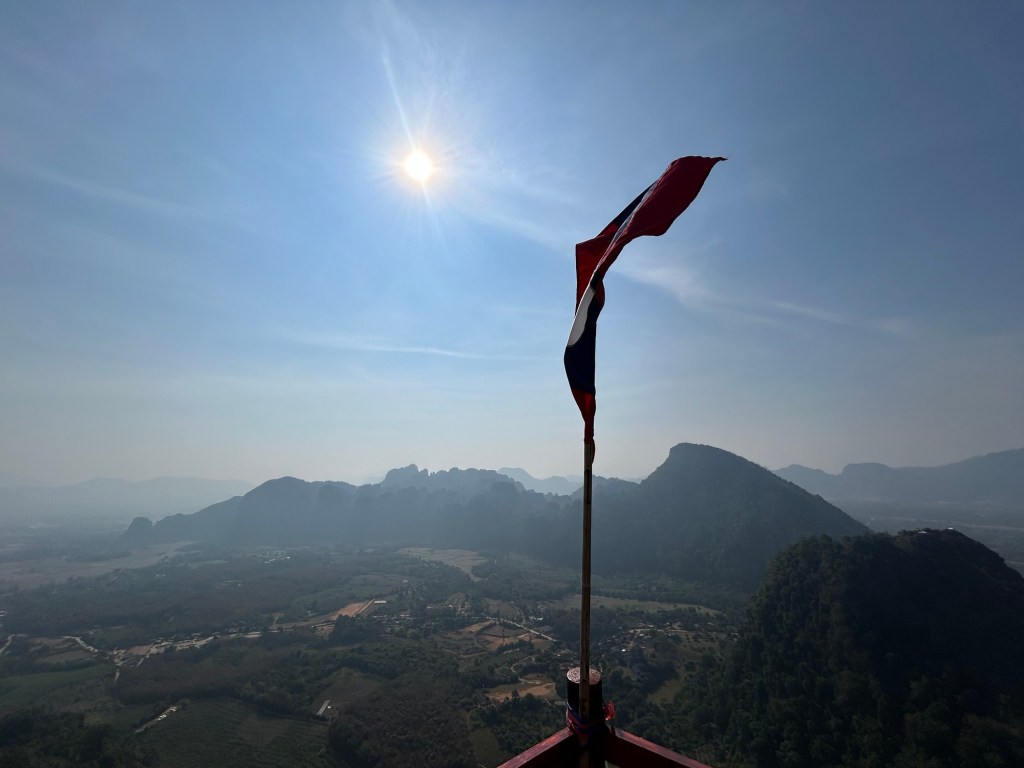
Our time in Vang Vieng was spent exploring the ecotourism side — a good balance between adventure-filled activities and relaxation, and we got in many hiking and scootering kilometres.
You may have heard of Iceland’s Blue Lagoon, however, Vang Vieng also has 6 Blue Lagoons, which can be found on the “Blue Lagoon Loop,” a driving loop with several jut offs that take you down rural dirt roads to scenic natural swimming holes. The more popular lagoons have swinging ropes, slides, bamboo rafts and tubes available to use at each stop.
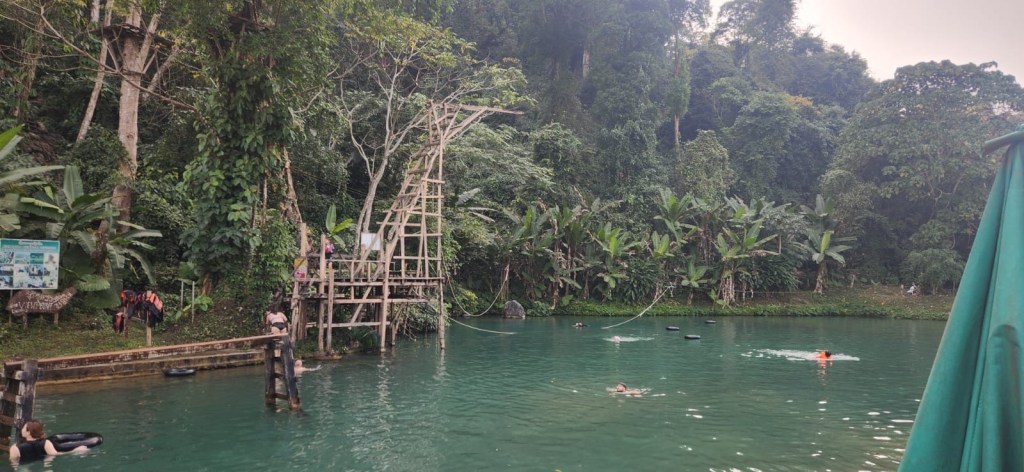
On the loop, there are also many hiking opportunities, we chose to tackle the Big Pha Ngern Viewpoint, leading to three scenic peaks with panoramic views of the surrounding limestone mountains. The climb was steep, but the reward was well worth it – especially at the highest peak, where we overlooked the vast forests and jagged cliffs. From there, we climbed on the scooters and we stopped at three Blue Lagoons (Lagoon 1, 2 and 3). We spent a couple of hours at Lagoon #3 taking turns swinging from the rope swings and swimming in the refreshing turquoise water.
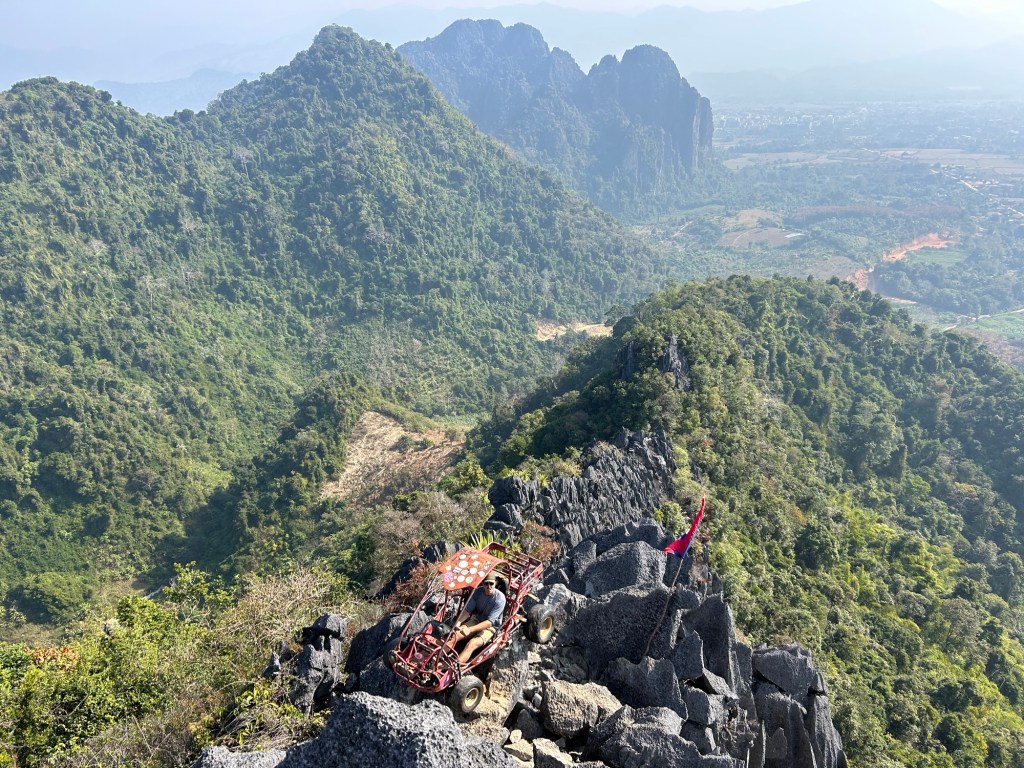
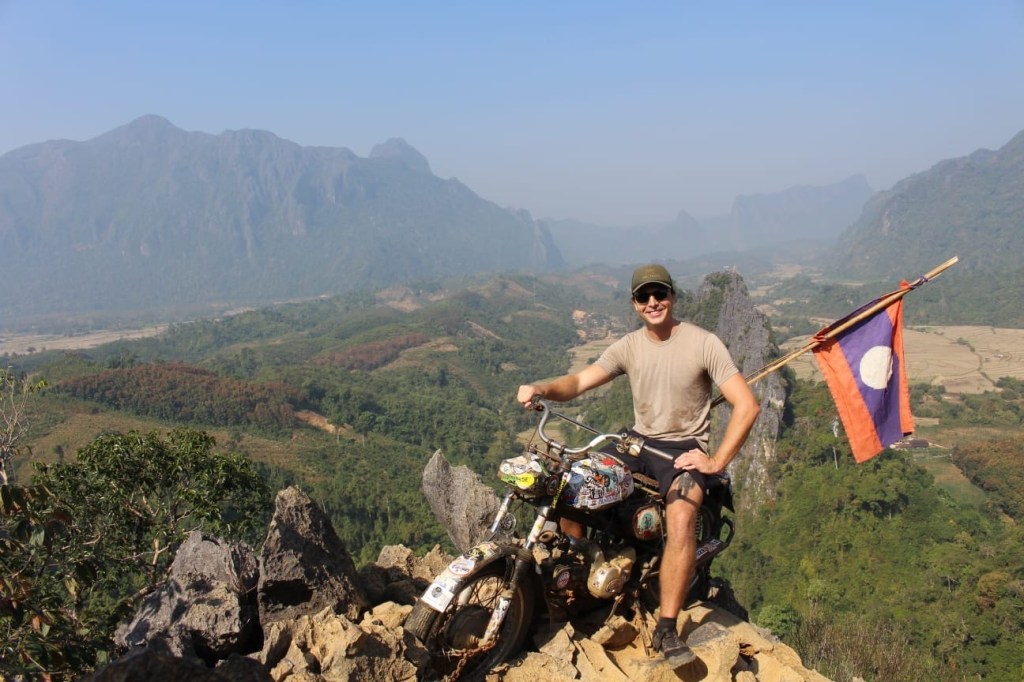
On a separate day, we ventured back around the loop to complete the Nam Xay Viewpoint, an iconic hike known for the motorbikes perched at the summit. We made it to the top where we took in breathtaking 360-degree views before continuing on the Vang Vieng scenic loop, a 26km journey through rural Laos. This was also a reminder to stay early, as the trail was very busy.
Vang Vieng Nam Song River Adventures
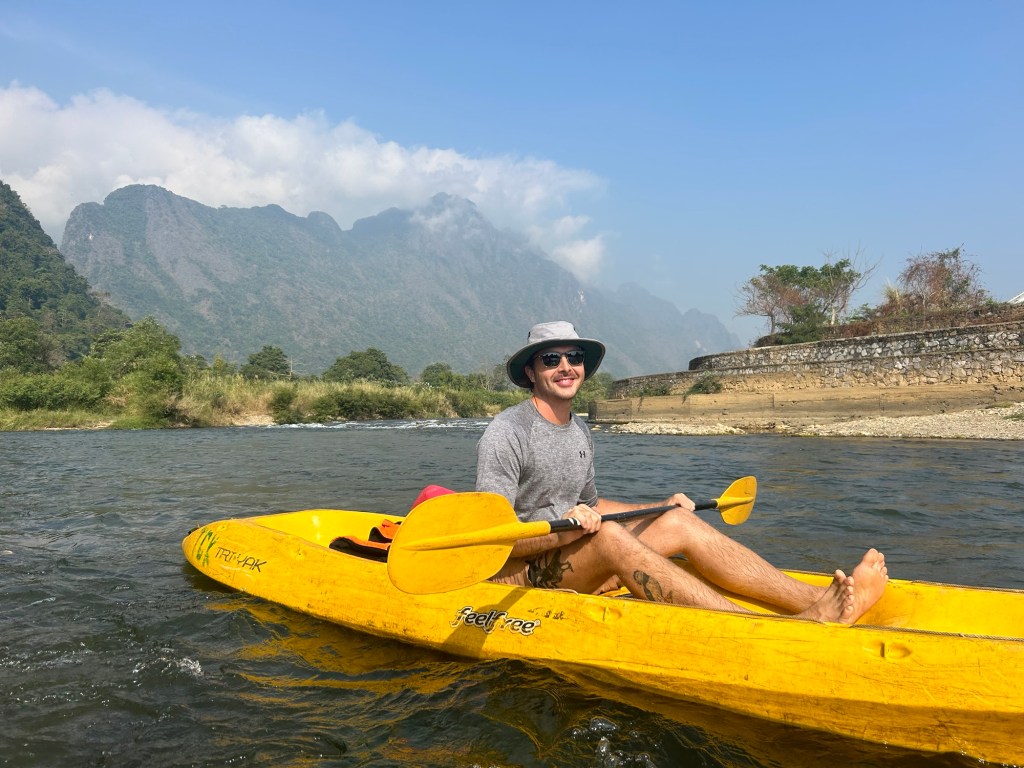
We explored the Nam Song River twice. First, we kayaked 8km downstream, passing through a few kilometres of forests with gentle rapids, before eventually reaching the many riverside bars that Vang Vieng is known for. It was quiet, as they were still closed for the morning.
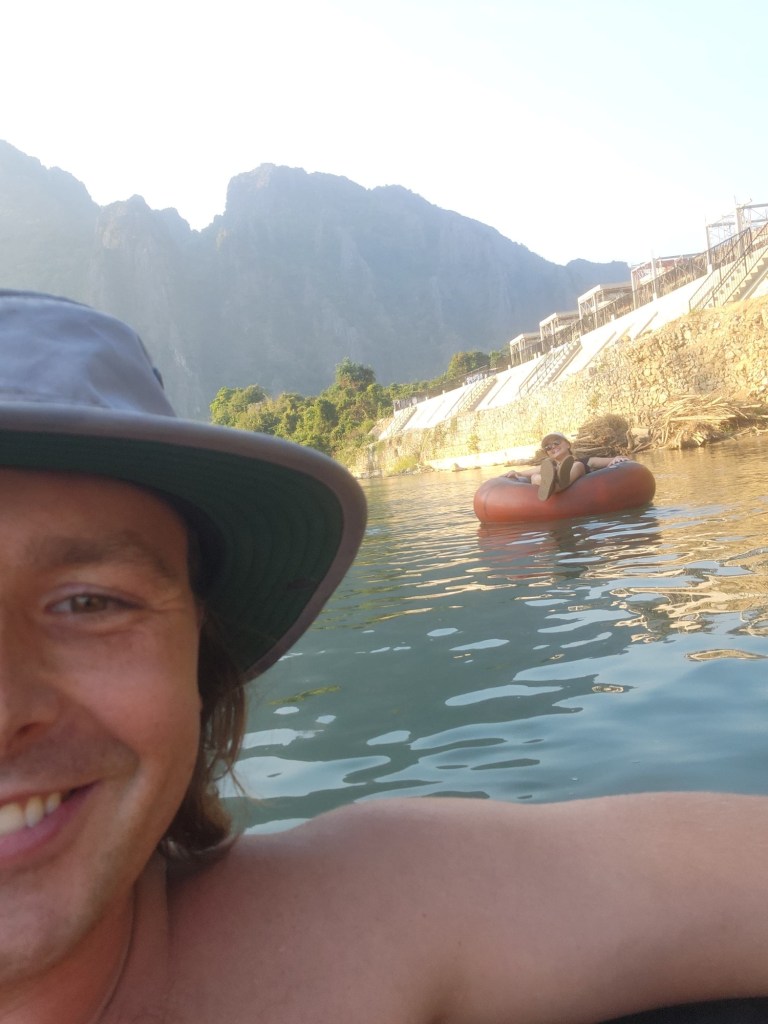
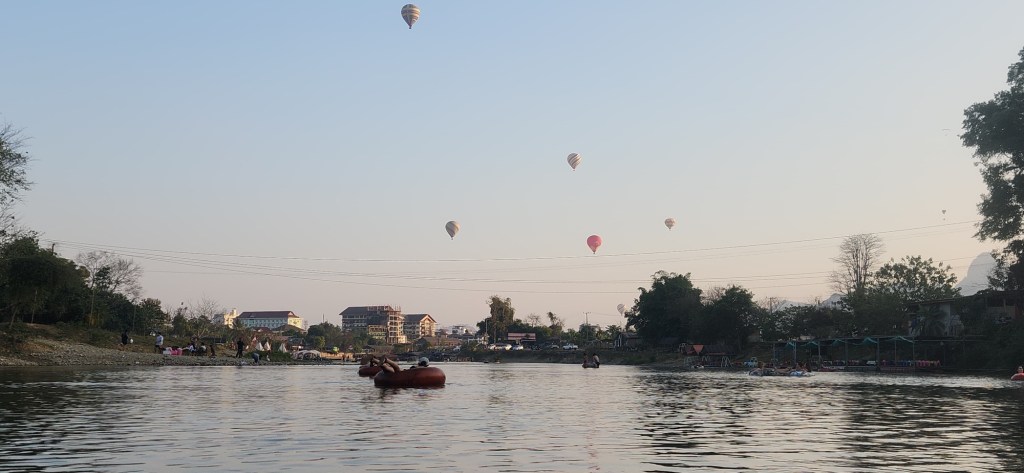
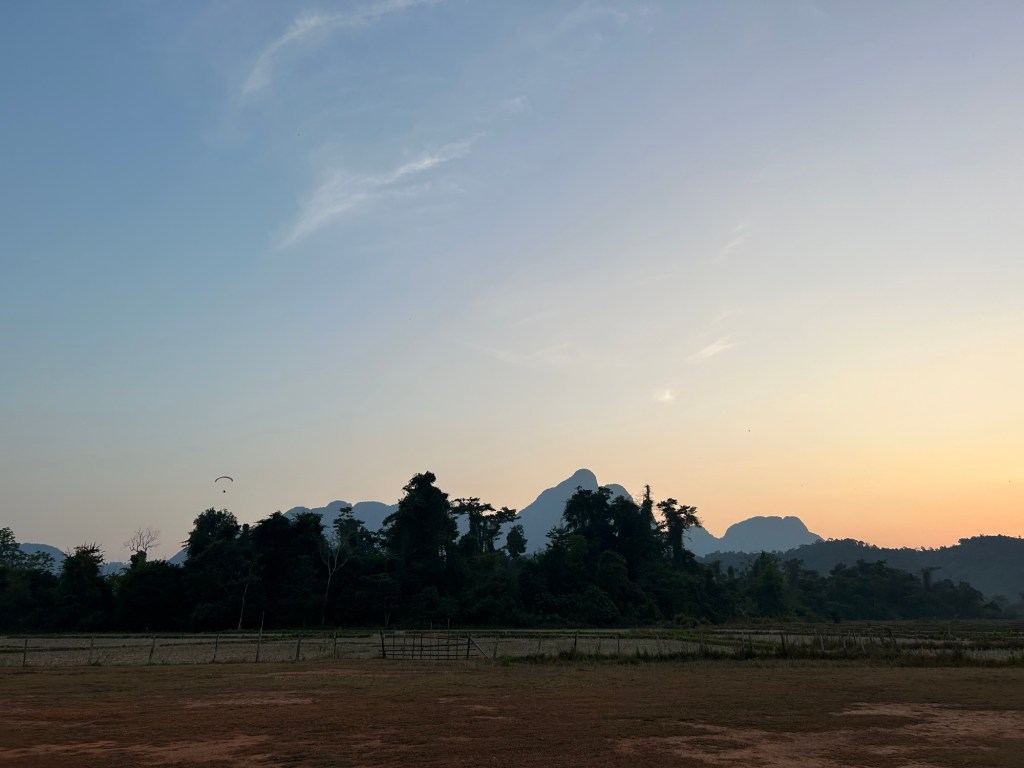
The second trip was a more laid-back experience, as we joined the famous “tipsy tubing” scene. Slowly floating down the river, wielding several drinks, and stopping at a bar along the way, we made it back to town just as the sun was setting. We watched hot air balloons and paramotorists take to the skies above us for their sunset flights.
Taking Flight: Paramotoring
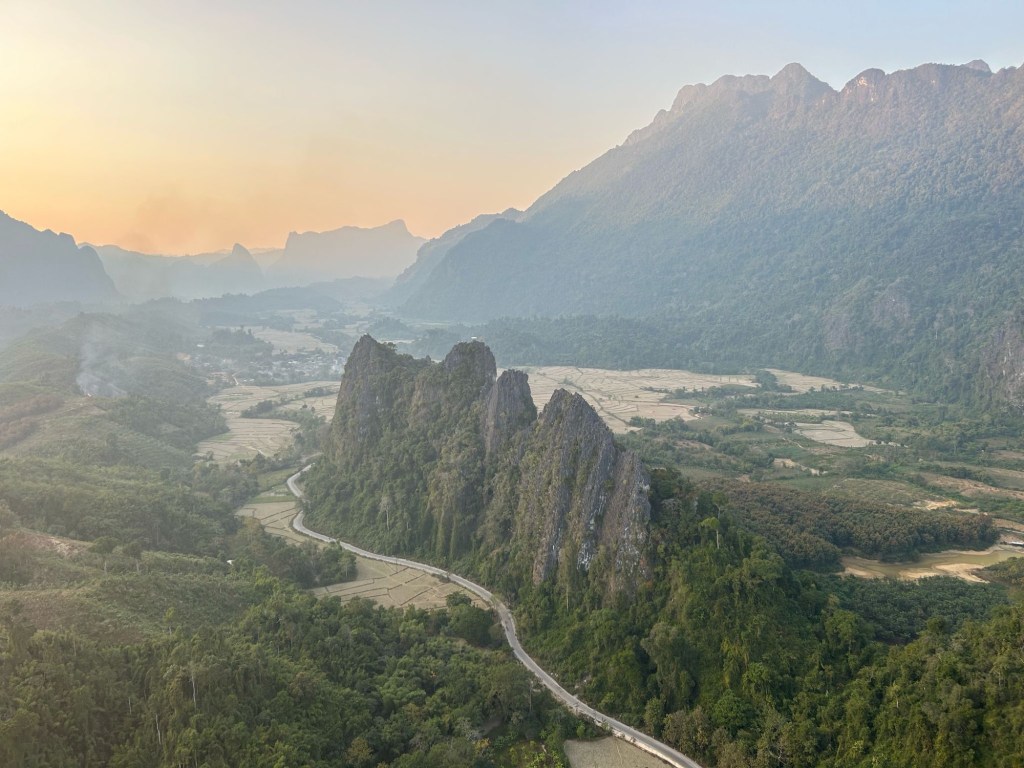
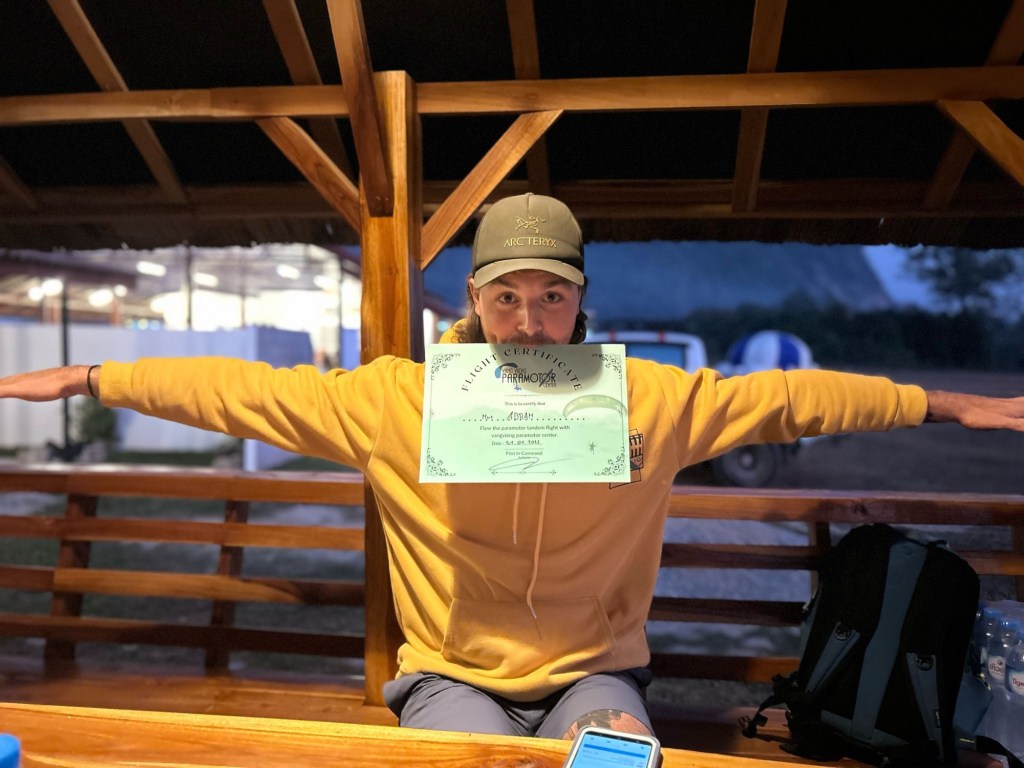
I had heard of paragliding but never paramotoring, The adrenaline junkie (Mat) wanted to do this, so we took to the skies for a (surprisingly) peaceful paramotoring experience at sunset. The scariest part was the first 15 seconds of take off which happened so quickly, and then we were up gliding above the karst formations.
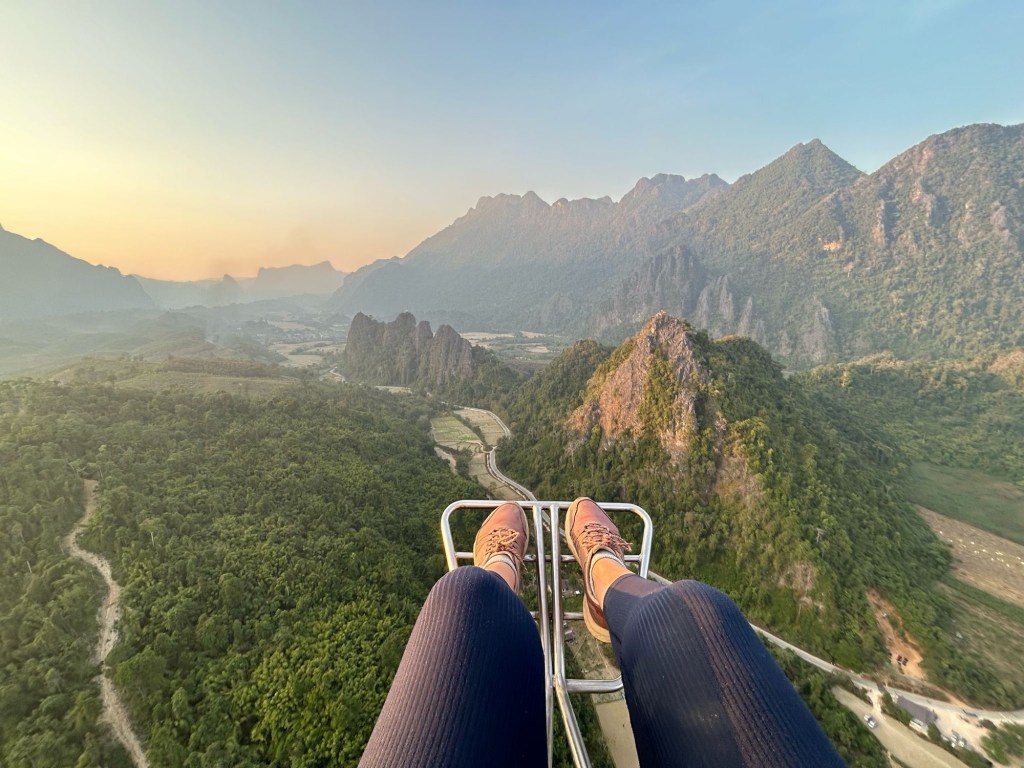
I went first and then Mat went up. As we were in the sky, we watched as hot air balloons rose over the golden horizon, and overlooked Vang Vieng and the mountains at sunrise, it was very beautiful.
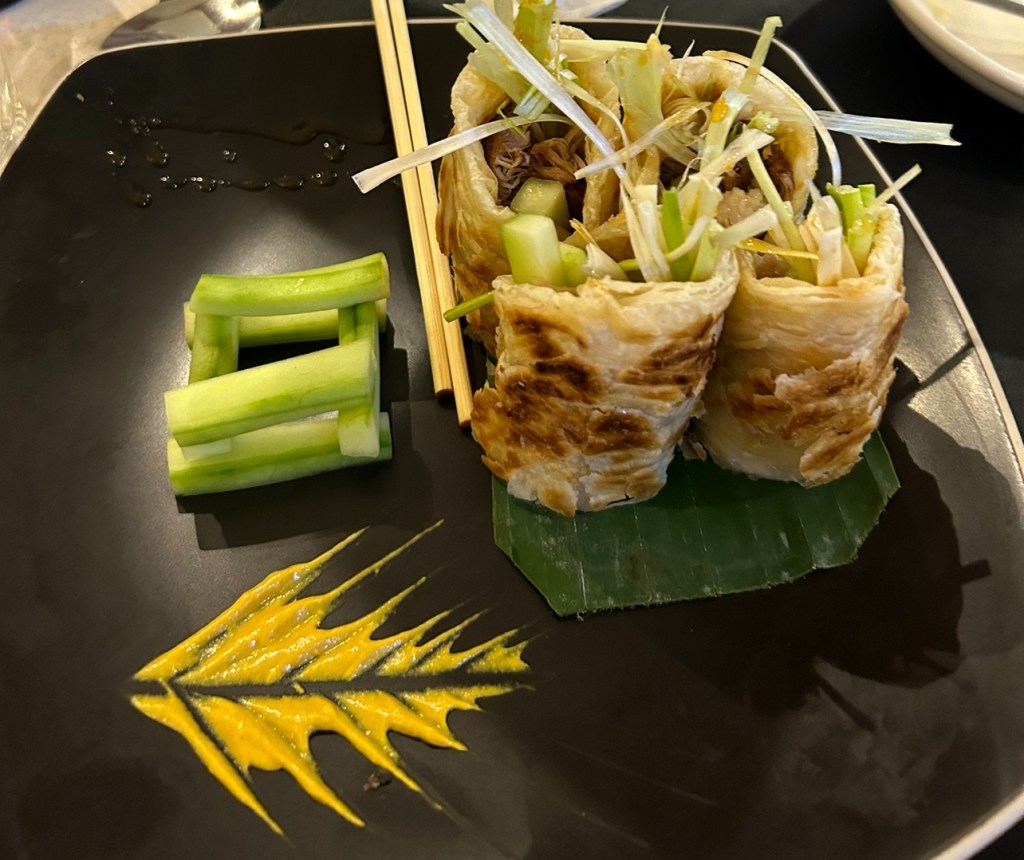
A final Vang Vieng shout out to Happy Mango restaurant for serving the most delicious duck spring rolls & mango sticky rice, still drooling thinking about those!
Vientiane: Exploring the Capital City
Our time in Vientiane, the modern capital of Laos, was spent taking in the history, culture, and local cuisine. We arrived by train and explored the city, heading to the night market and quickly stumbling upon the Lao Food Festival, an annual event showcasing traditional Lao cuisine, fusion dishes, and handicrafts.
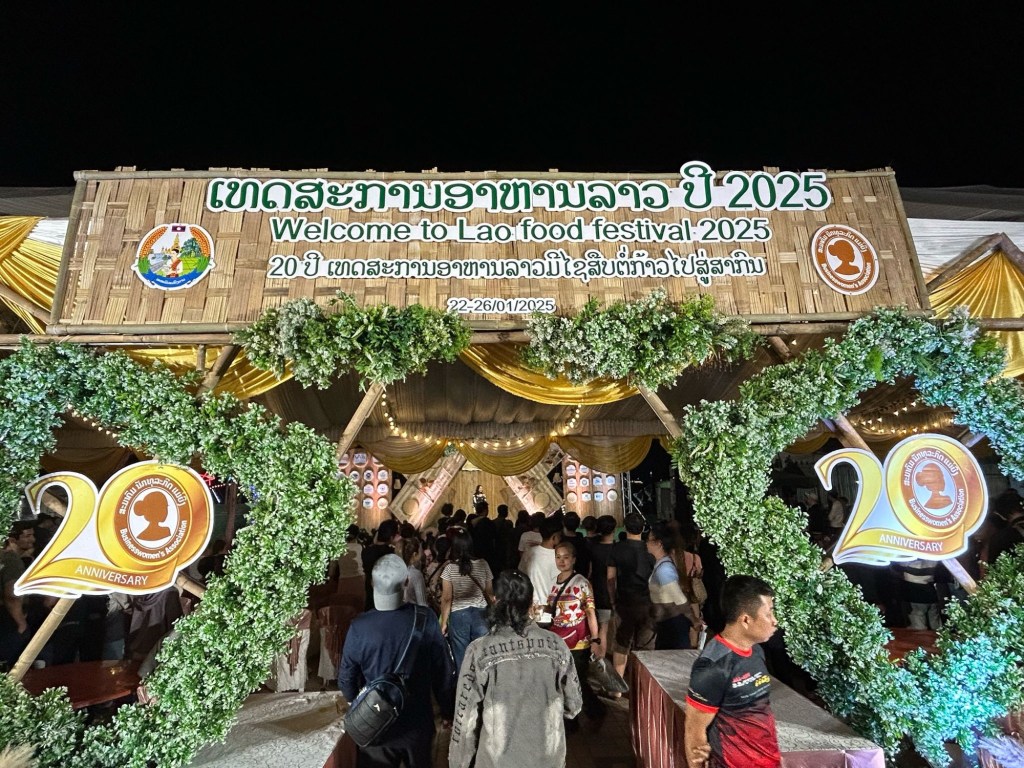
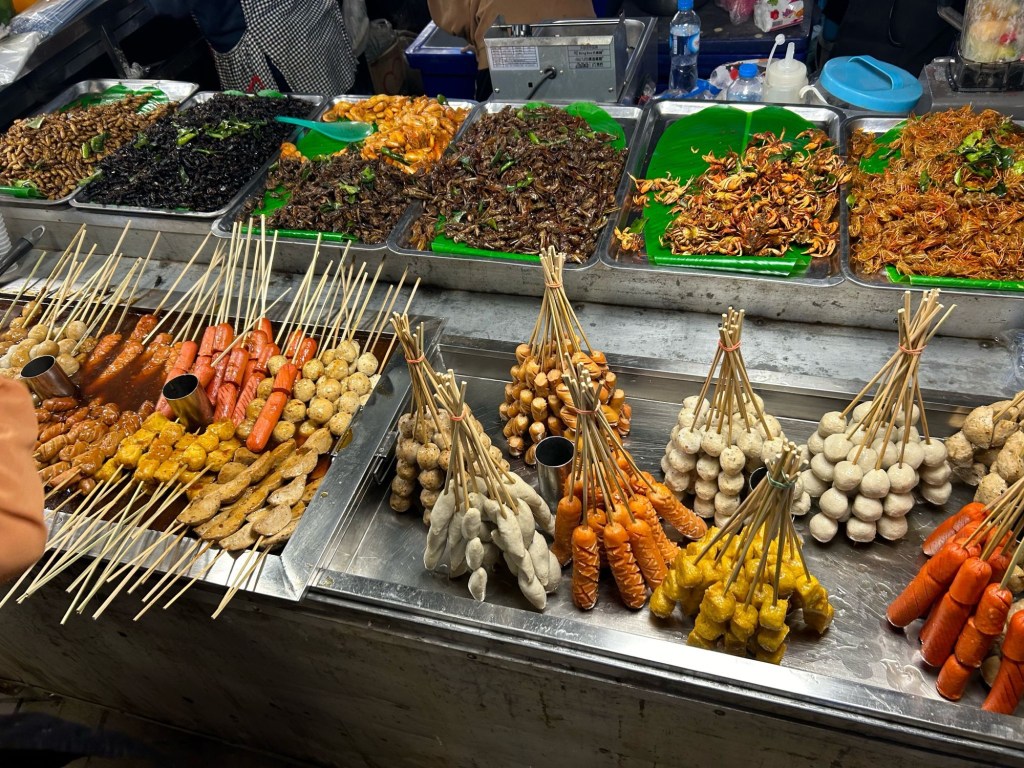
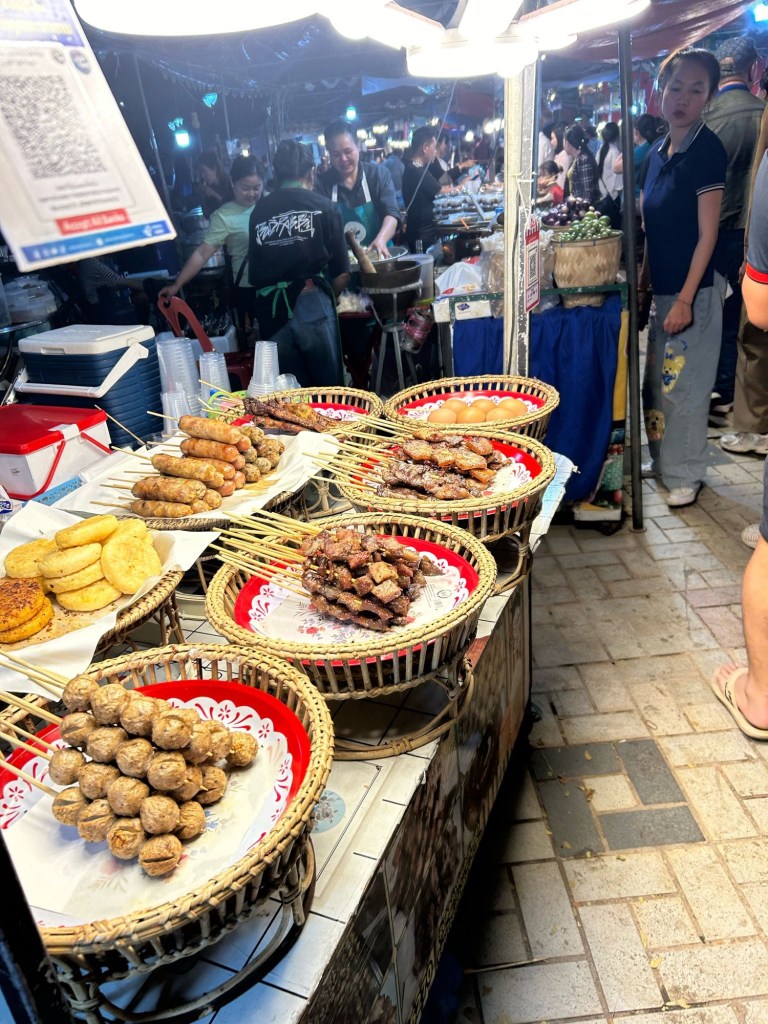
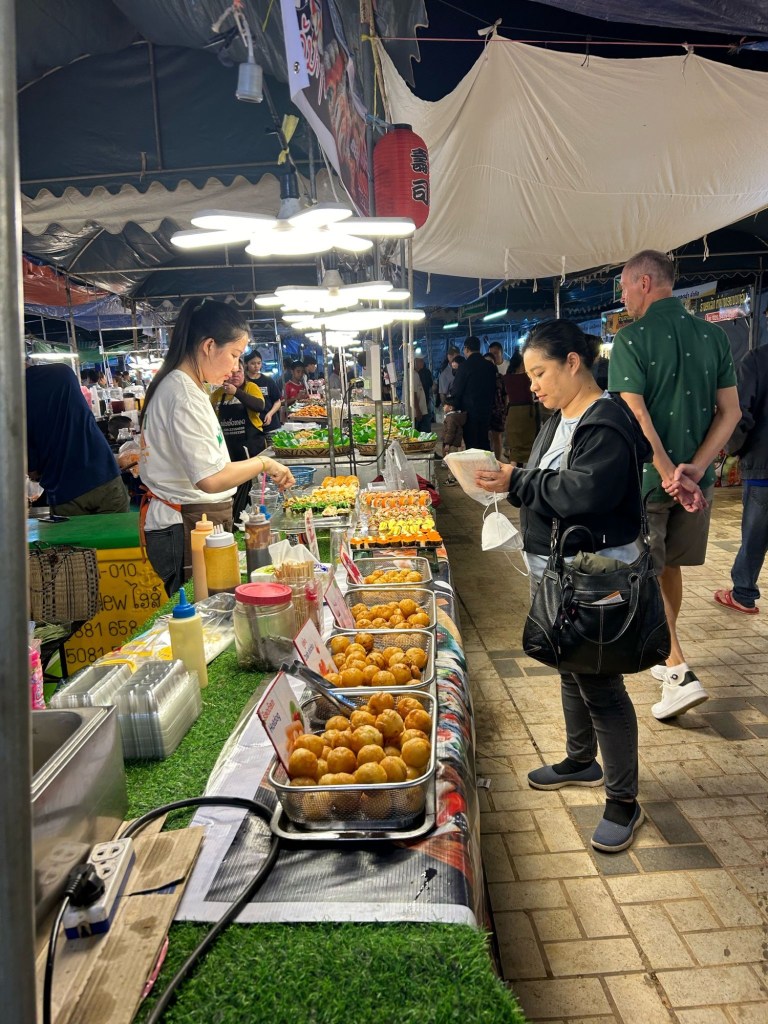
2025 Laos Food Festival in Vientiane.
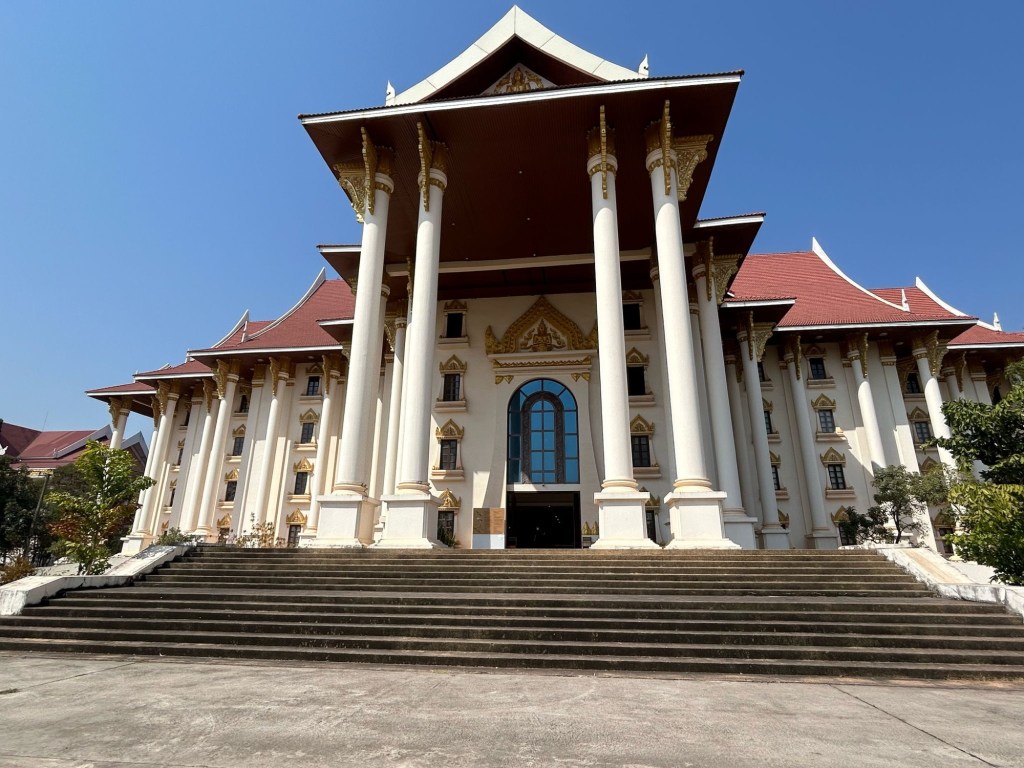
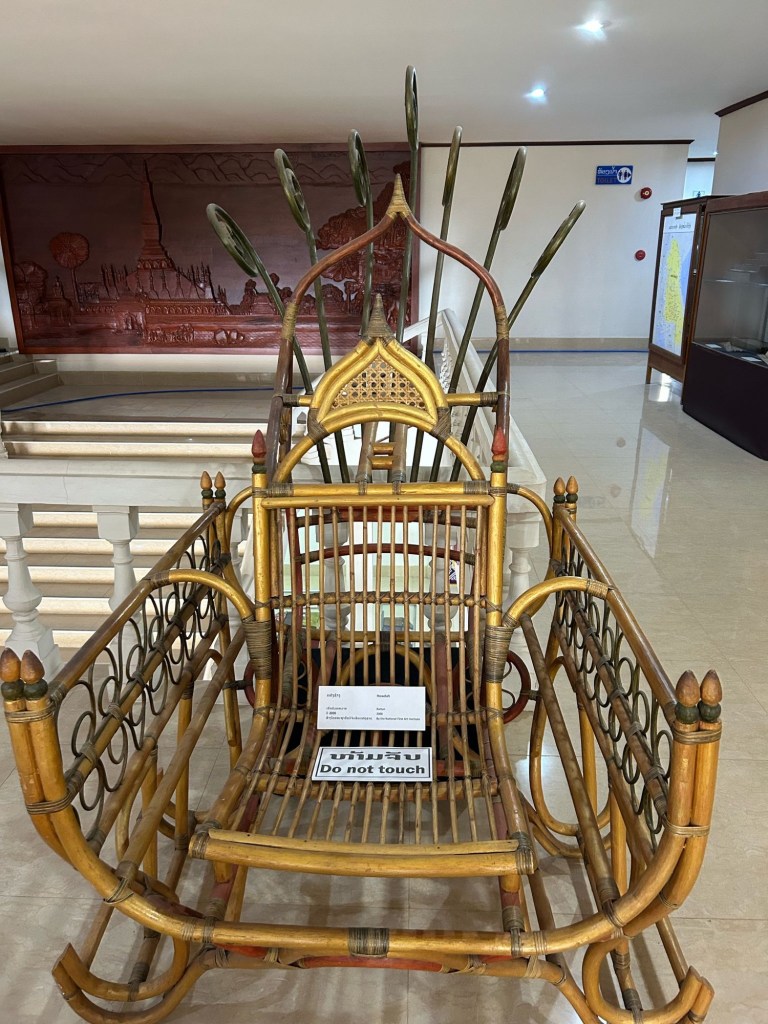
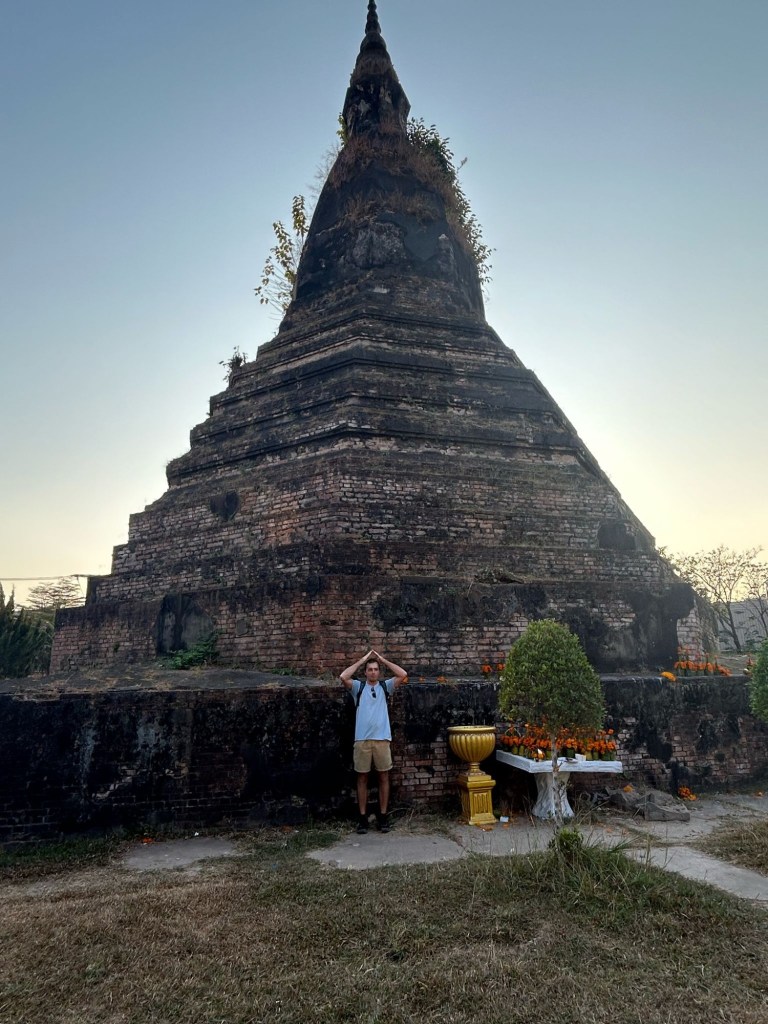
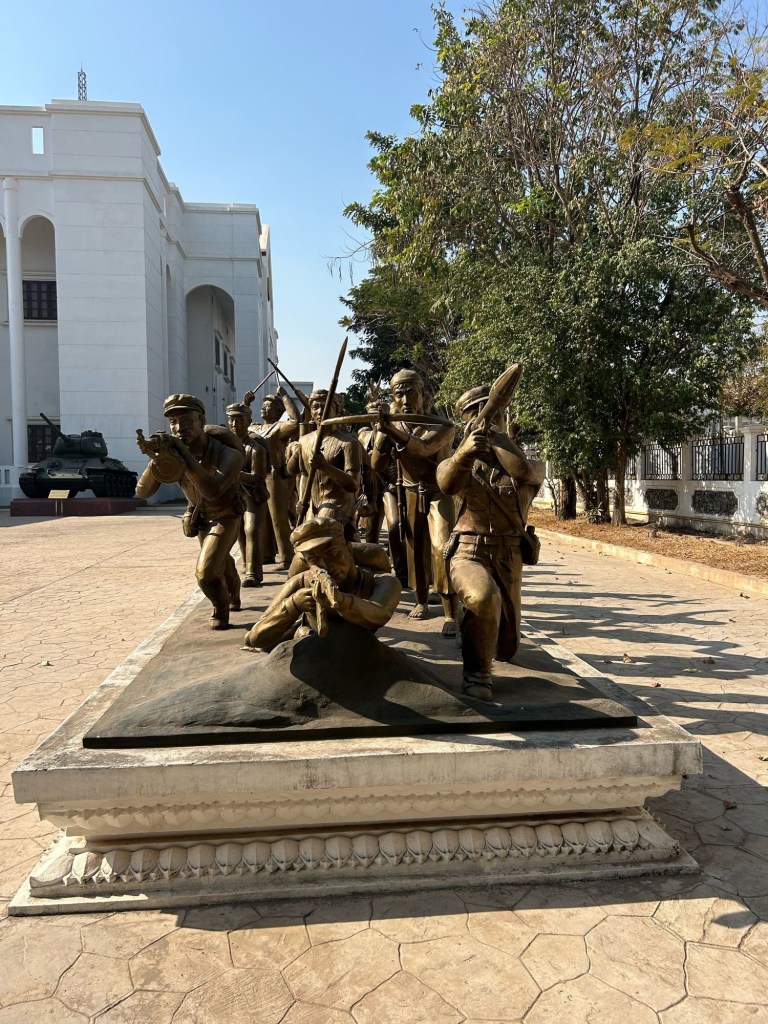
Exploring Vientiane by scooter, we visited the Lao National Museum, Pha That Luang, and the Lao People’s Army History Museum, where we saw military relics and UXO from the Secret War. We climbed the Patuxay Victory Monument for city views and stopped by the legendary That Dam Stupa. A sobering highlight was the COPE Visitor Centre, where we continued our learning about the lasting impacts of unexploded bombs and the efforts to support victims.
Pakse: The Bolaven Motorcycle Loop
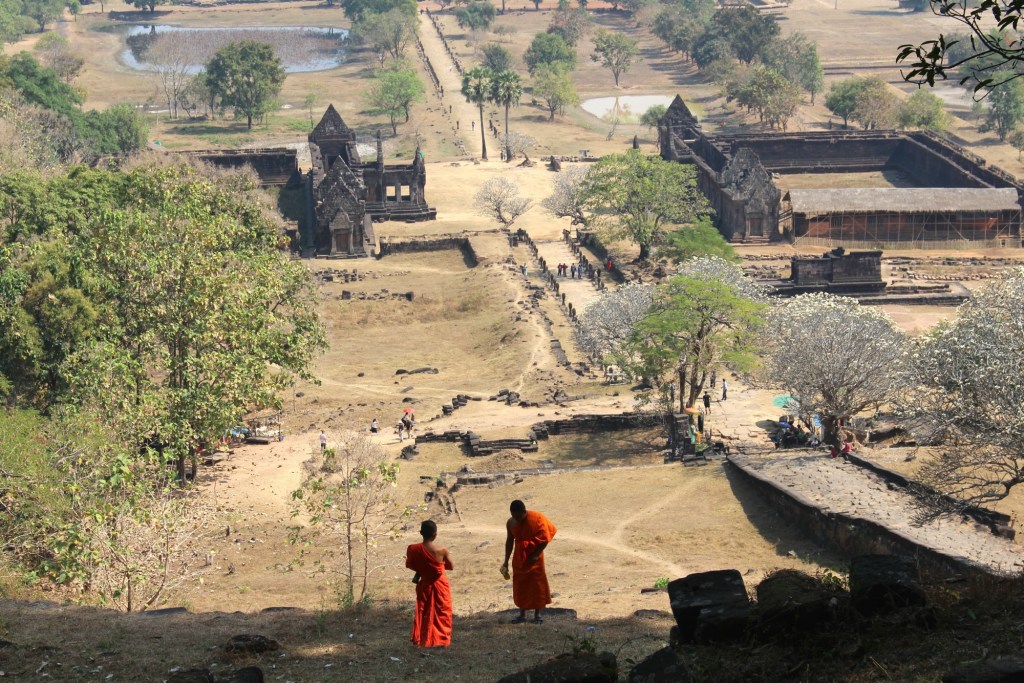
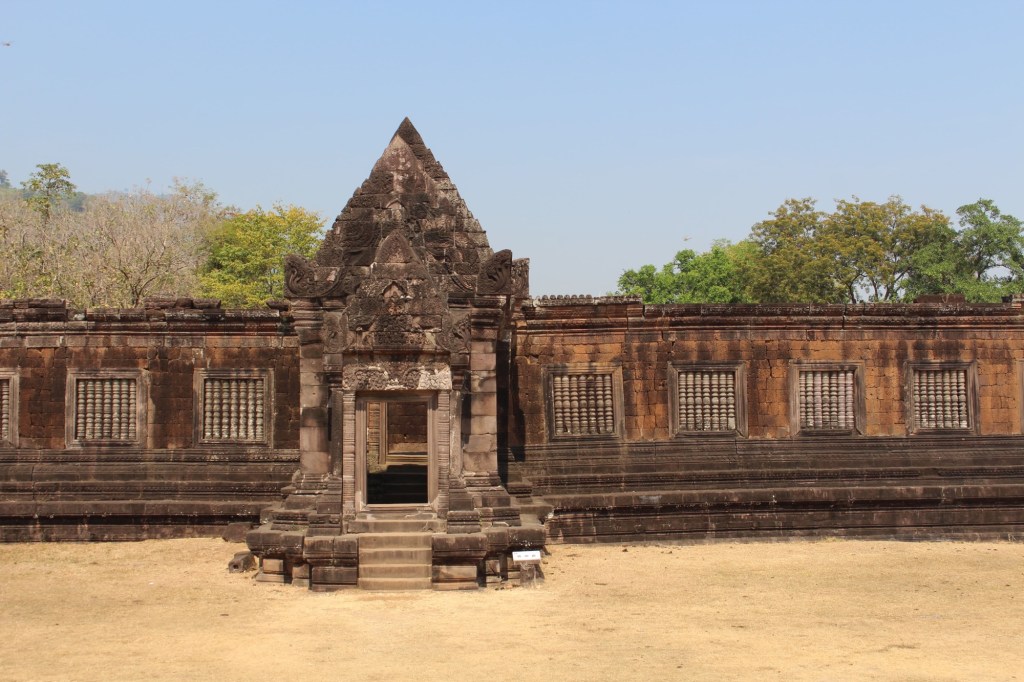
From Pakse, we set off on the Bolaven Motorcycle Loop, a three-day journey through Laos’ countryside. But with a day to kill before starting the loop, we took a ride out to Champasak to explore Wat Phou, a 5-7th century Hindu temple predating Angkor Wat.
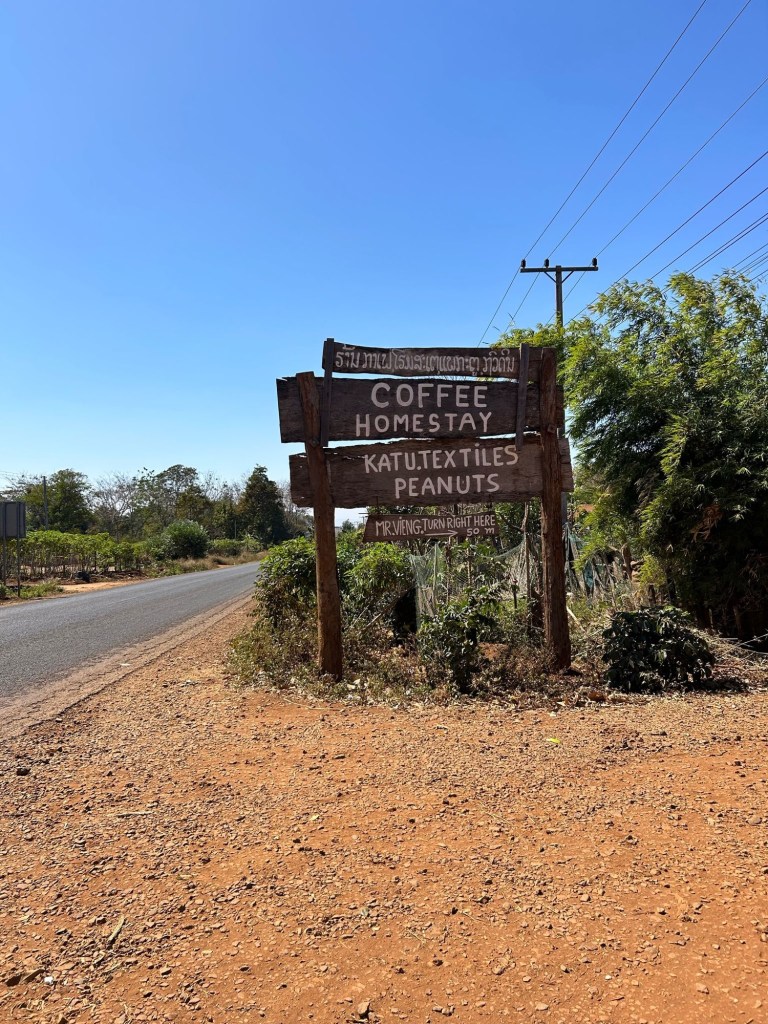
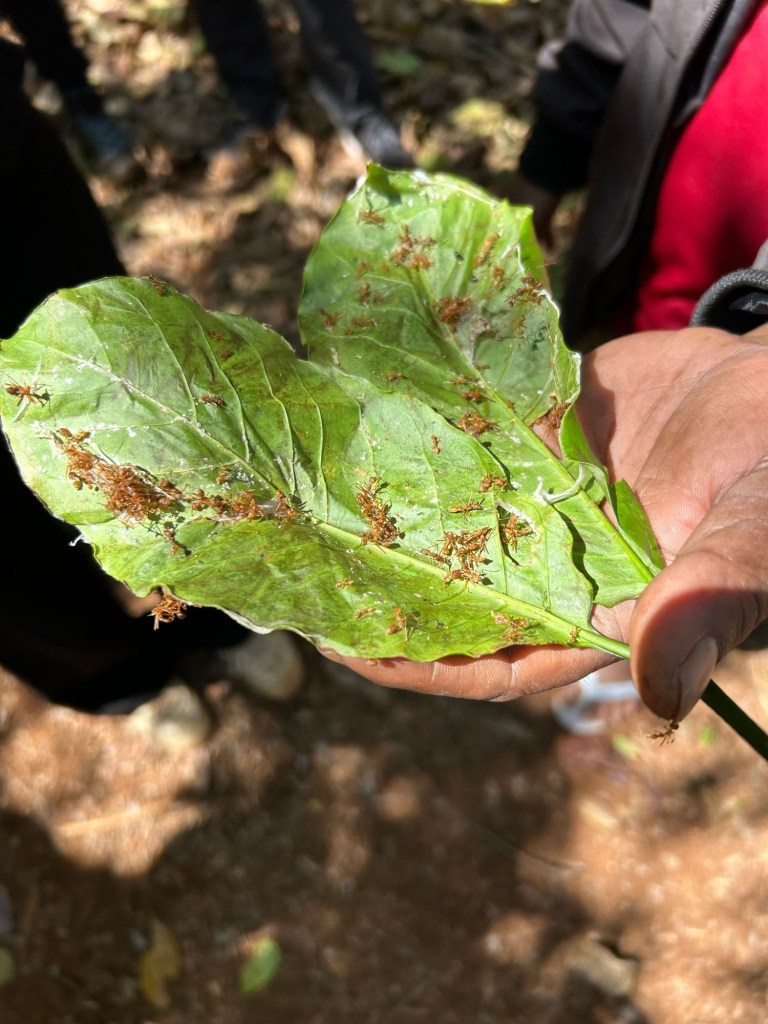
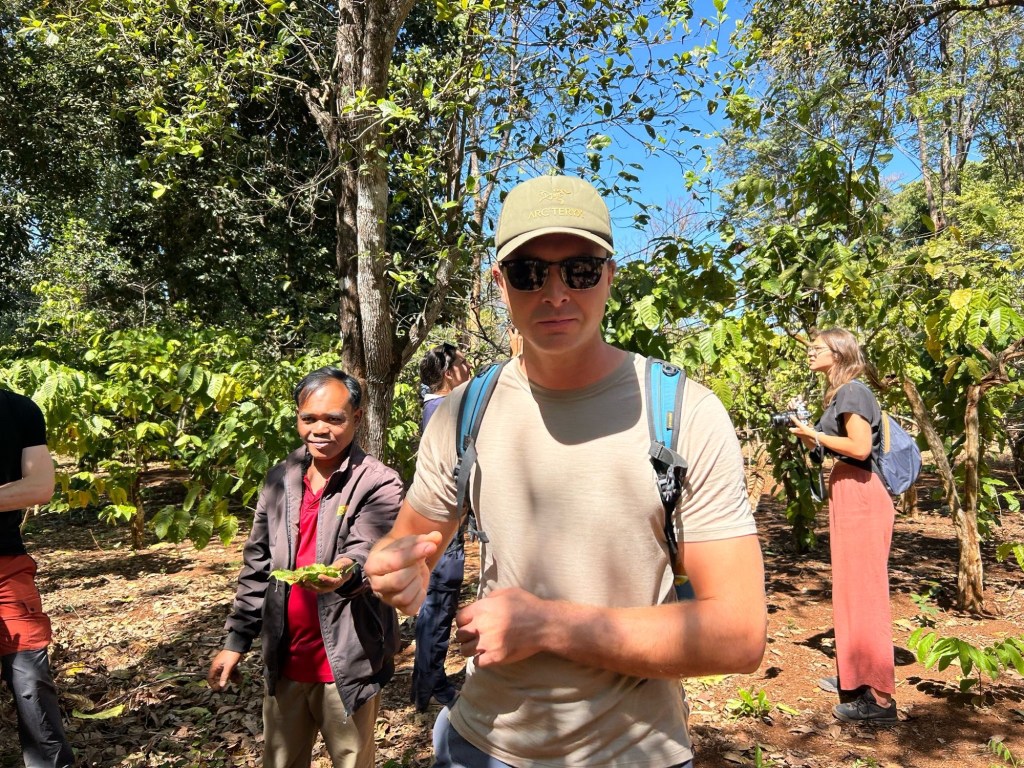
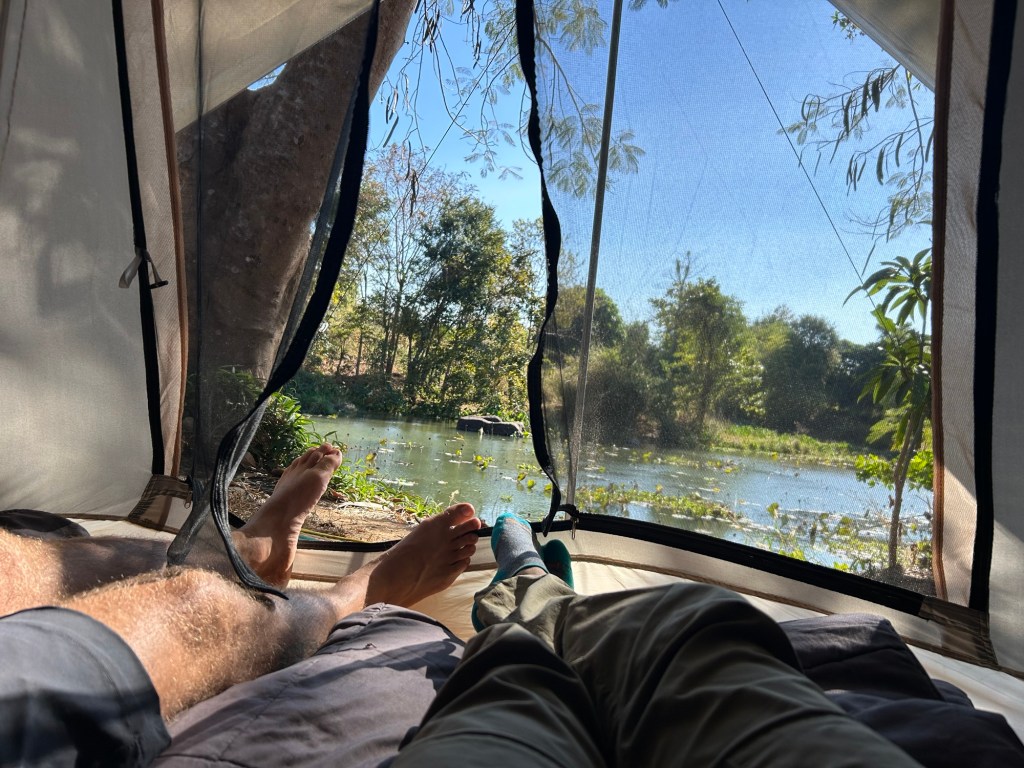
The Bolaven motorcycle loop is a 200km loop on the outskirts of Pakse, known for its many waterfalls and coffee plantations. The plateau was formed millions of years ago by volcanic activity, creating the region’s fertile soil, which is perfect for growing the world-renowned Laos coffee. We started with a coffee tour at Mr. Vieng’s Homestay, learning about local Katu culture (and even trying live red ants). That night, we camped at Fandee Island, hiking to a secluded waterfall for a swim.
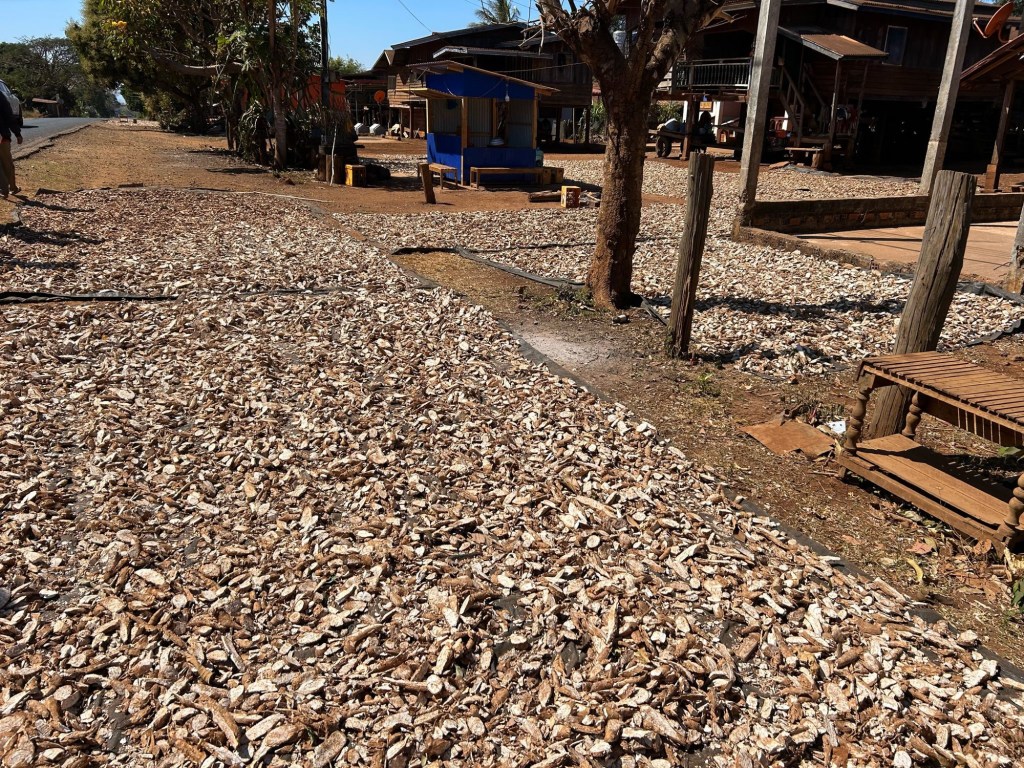
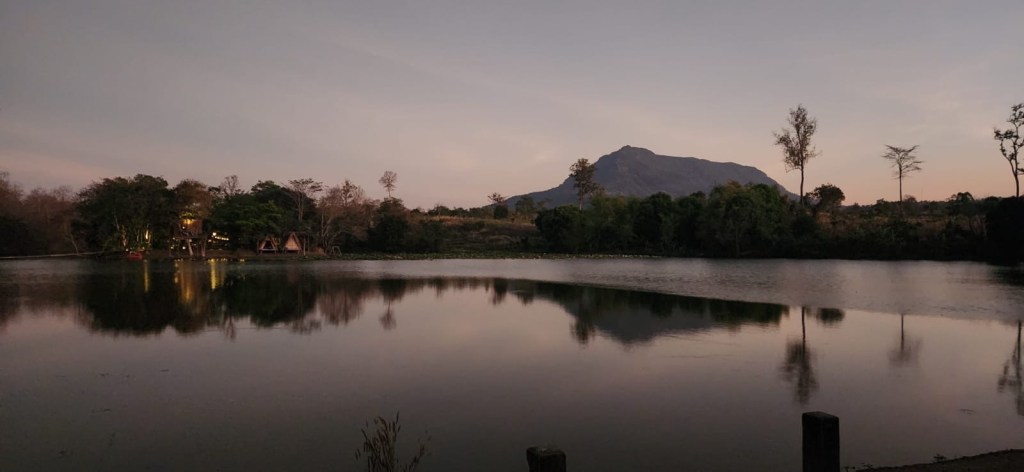
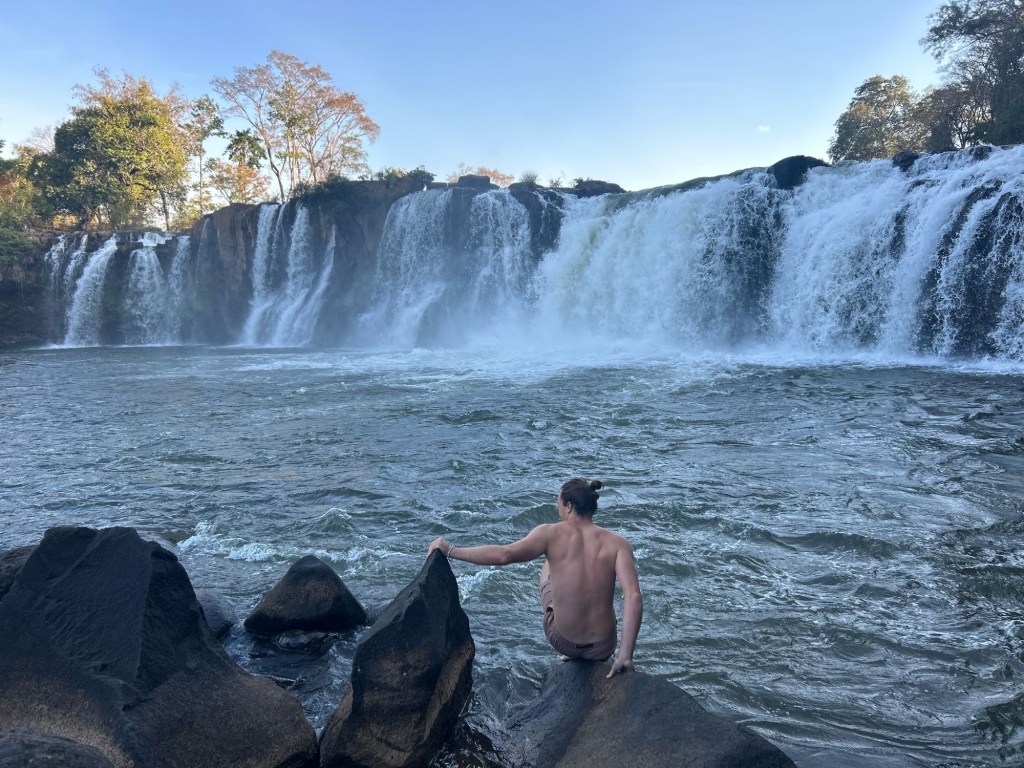
Day two included another coffee tour at Captain Hook’s plantation, and an optional detour through the countryside. The scenery on the detour was stunning, and the roads were very quiet as all of the larger cars were stuck on the bridge, where a truck and car wedged themselves together trying to turn, but we were able table to sneak by on our bikes.
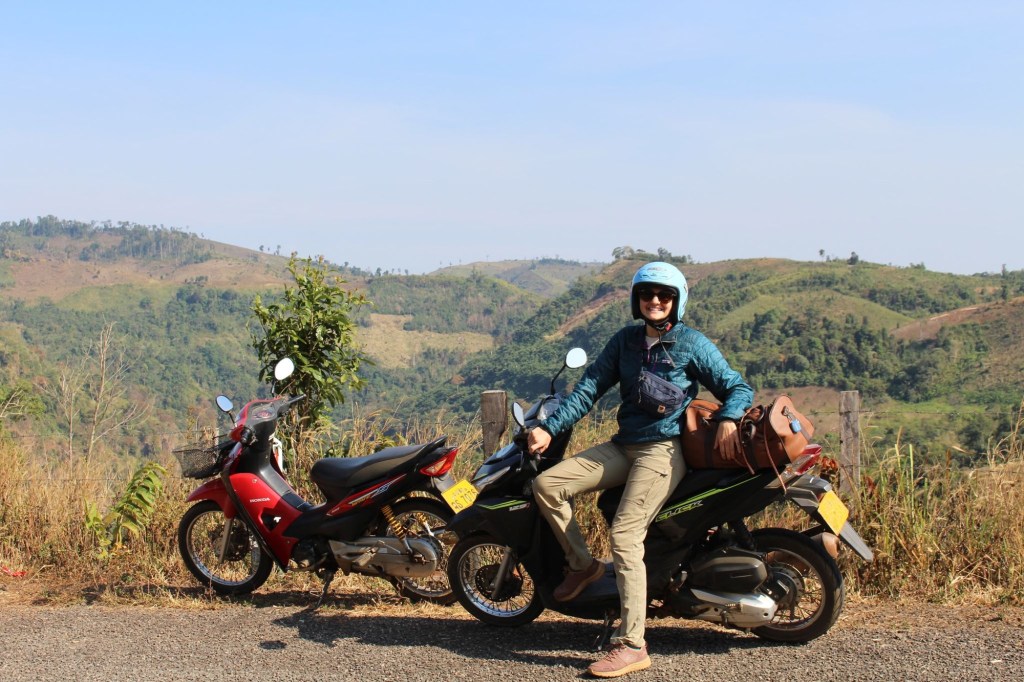
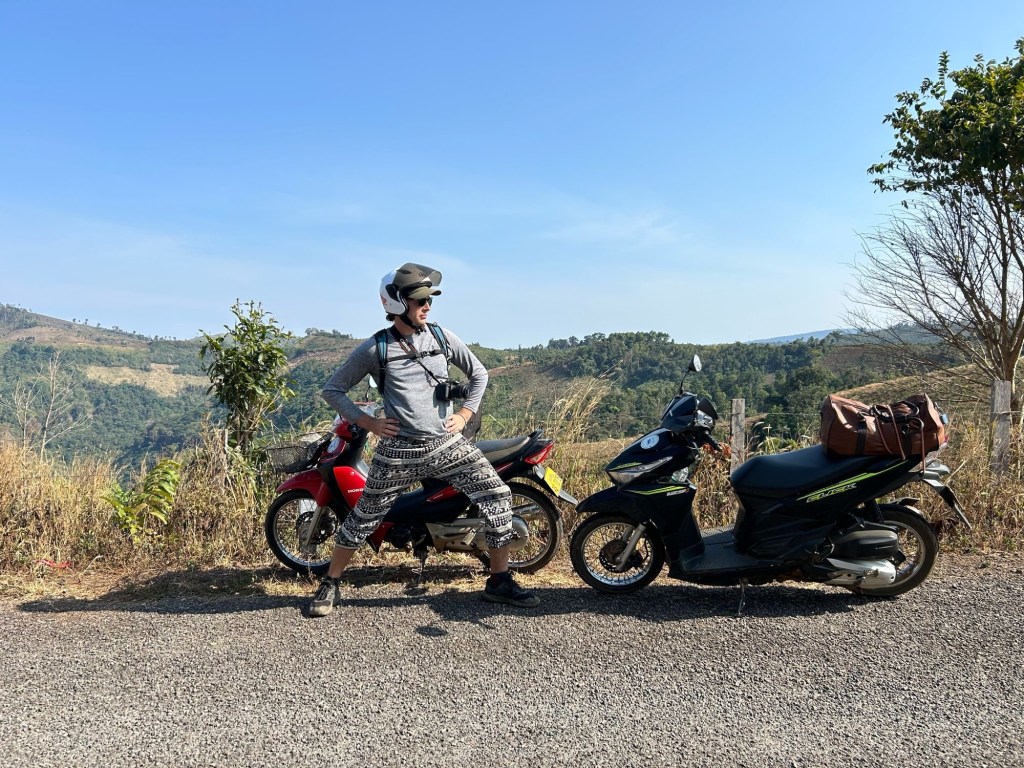
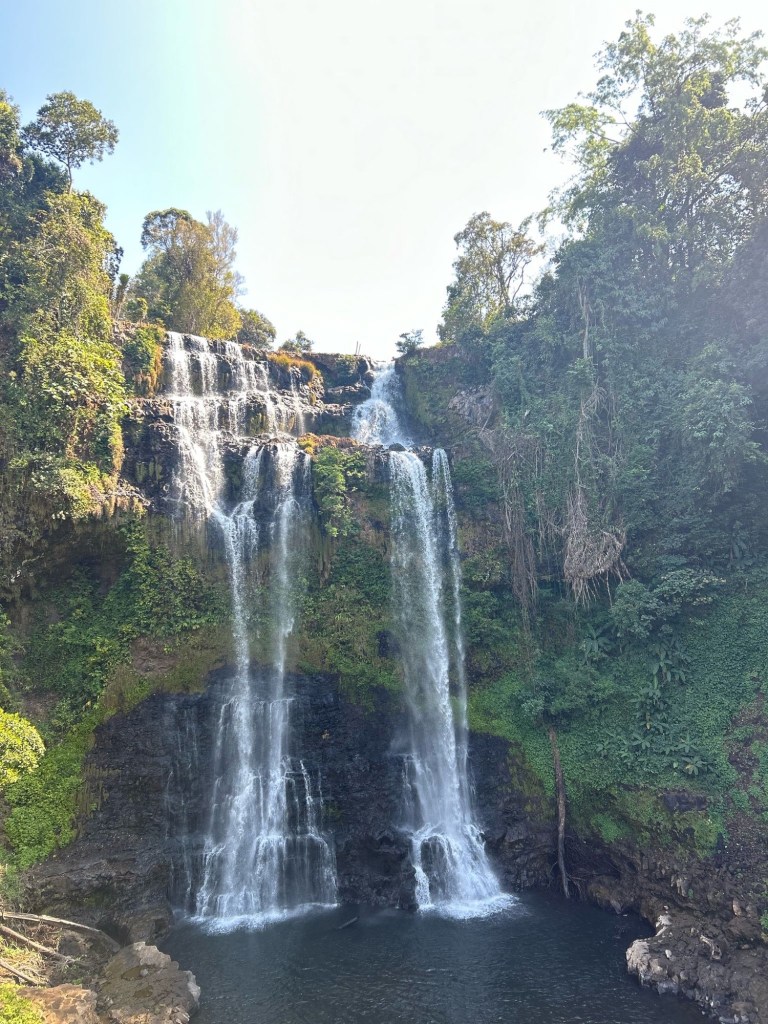
On our final day, we swam in waterfalls, ventured off-road to a remote Buddhist temple, and zip-lined over Tad Fane which is the tallest waterfall in Laos.
Si Phan Don or the 4000 Islands
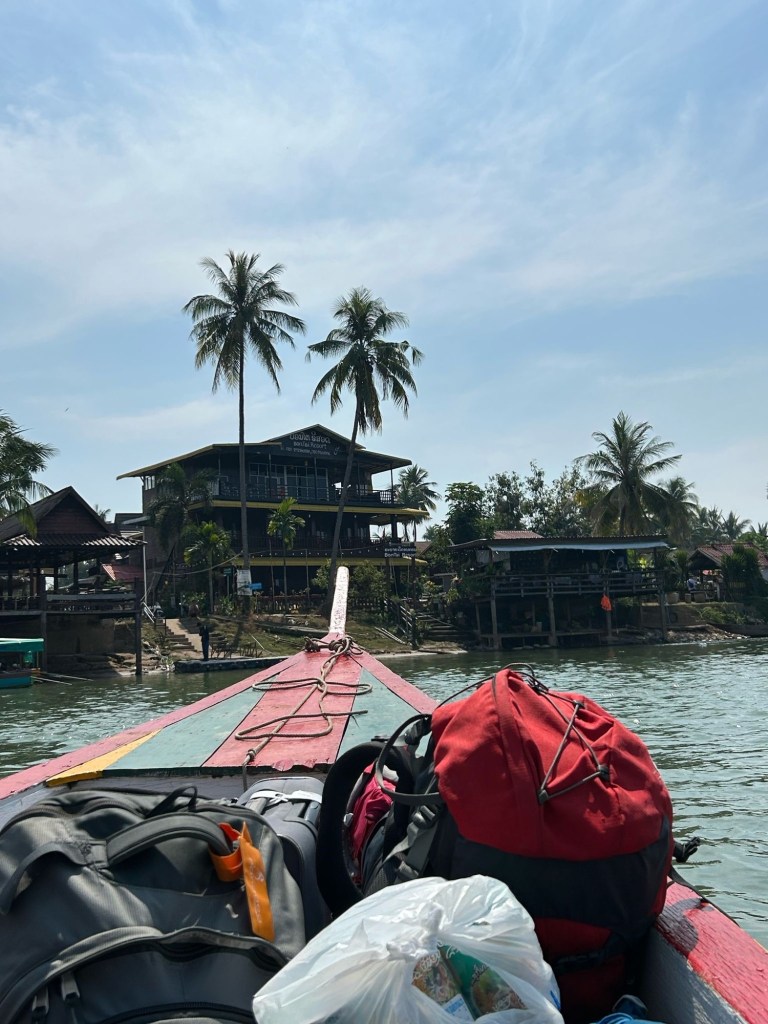
After weeks of busy travel, we finally arrived at the 4000 Islands, a peaceful destination with thousands of small islands near the Cambodia border, and along the Mekong River in southern Laos. We chose to stay on Don Khone island, a quieter option compared to the busier Don Det. Although being near the port meant a constant hum of boat engines, the sunsets over the river from our balcony made it all worth it. The laid-back island life provided the perfect respite after our adventures so far.
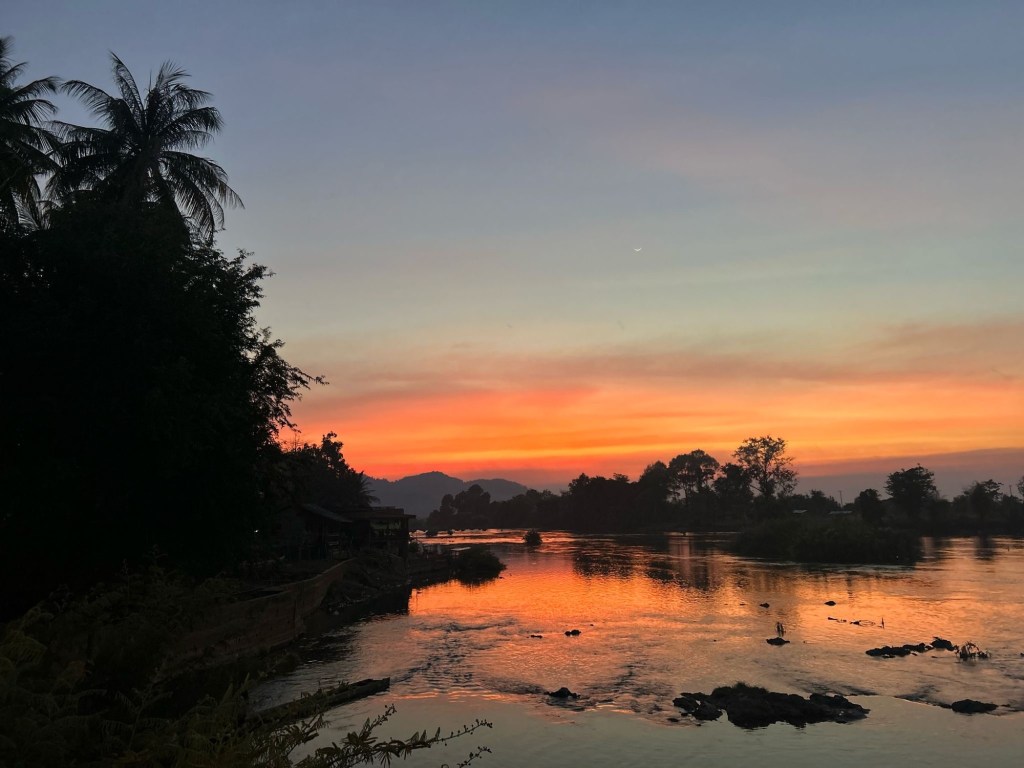
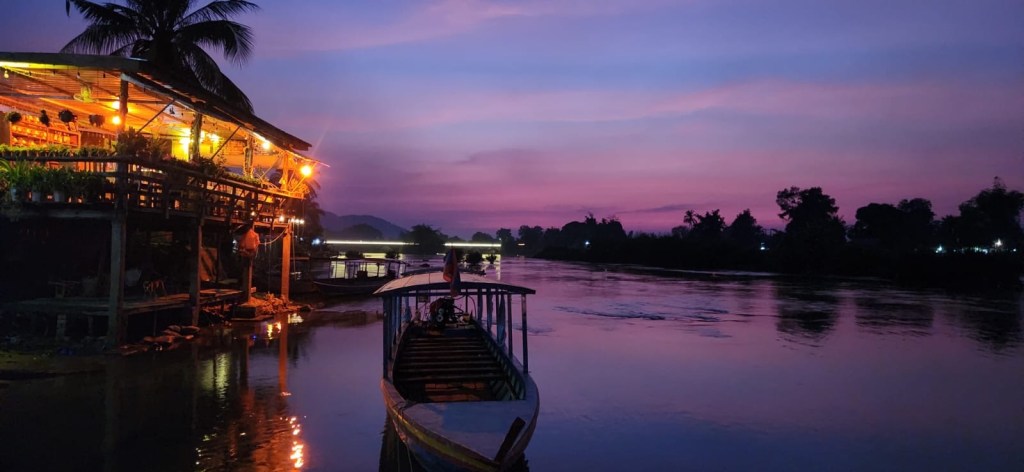
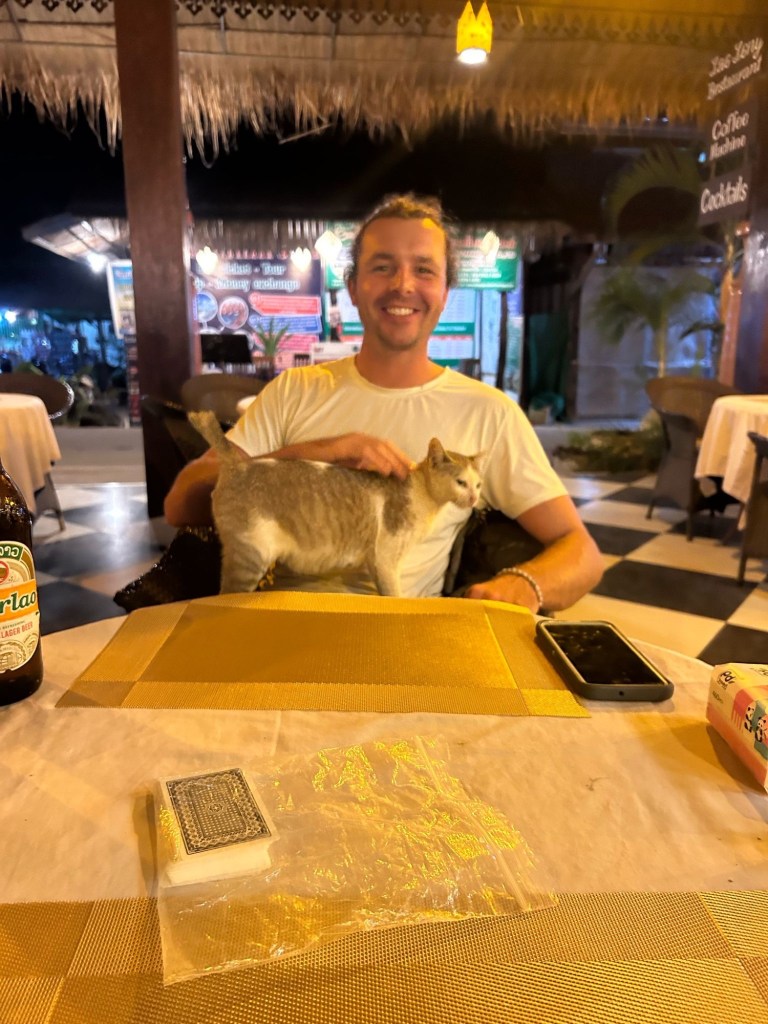
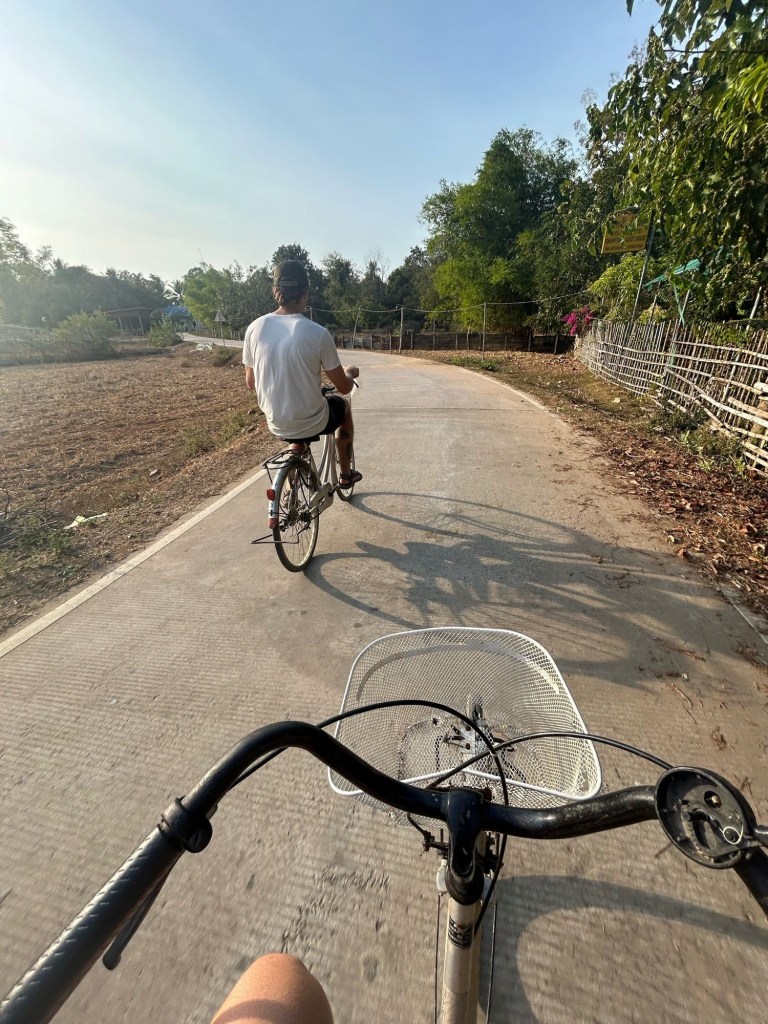
We rented bicycles and set off to explore Don Khone and Don Det. Our rides took us past rice fields, through local villages, and down dusty paths that led to hidden waterfalls. Li Phi Falls was particularly breathtaking— with its cascading waters and suspension bridges offering a close-up view of the mighty Mekong rapids. A detour to play mini-golf on Don Det added some fun, and we ended each evening with a stunning sunset and a treat of mango sticky rice.
After our time on Don Khone, we boarded a boat back to the mainland to start our journey to Cambodia.
Journey to Cambodia
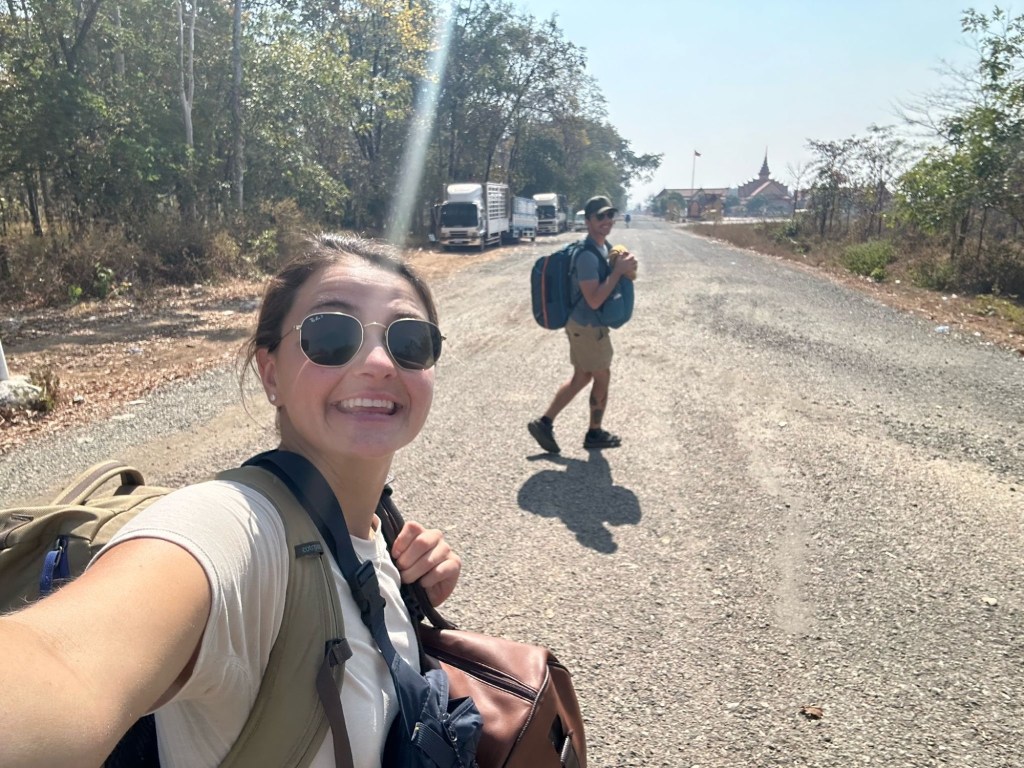
Our journey began with a boat ride back to the mainland, followed by a short drive to the Laos-Cambodian border. We had spent all our Laos kip, only to find out we needed to pay an “exit fee” at the border. Luckily, we still had Thai baht, and after crossing into Cambodia, we ran into another issue—there were no ATMs at the border! An impromptu motorbike ride to track down cash added some excitement to our day. Once we sorted everything out, we endured a six-hour bus ride through smoke-filled landscapes and rural villages before finally reaching Siem Reap.
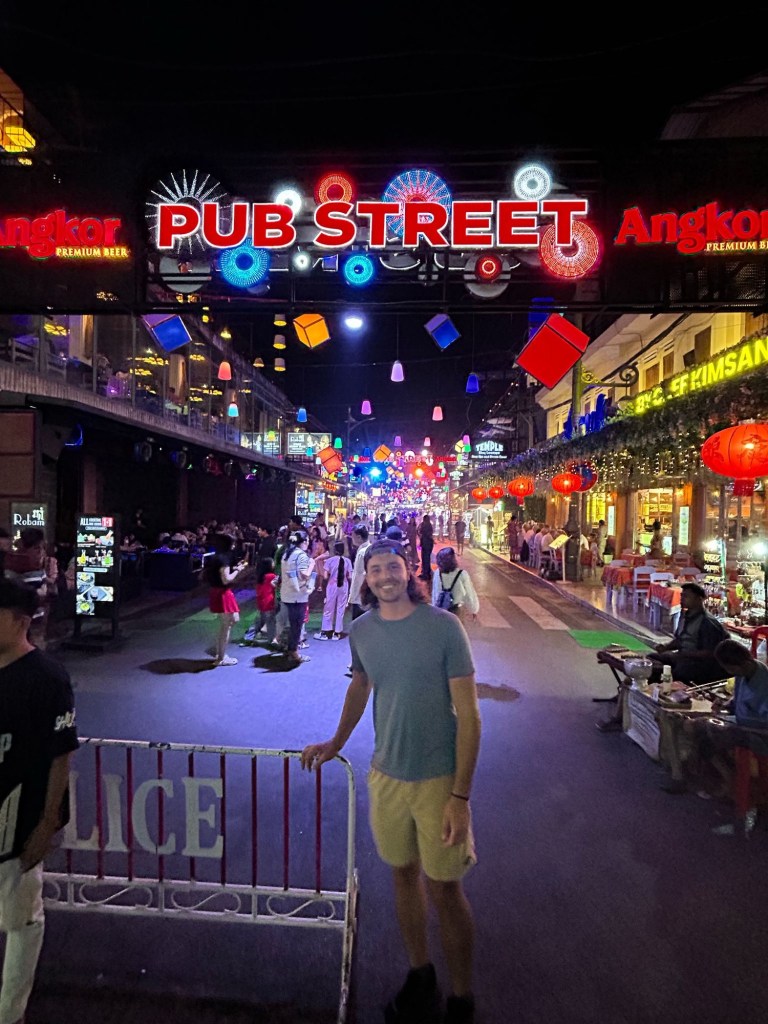
Siem Reap Cambodia: The Gateway to Angkor Wat
Siem Reap is best known for its ancient temples, but beyond Angkor Wat, we found Siem Reap to be a city rich in history, very artsy and bustling. Our visit took us through a mix of powerful historical sites, vibrant markets, and hidden local gems that revealed a deeper side of Cambodia.
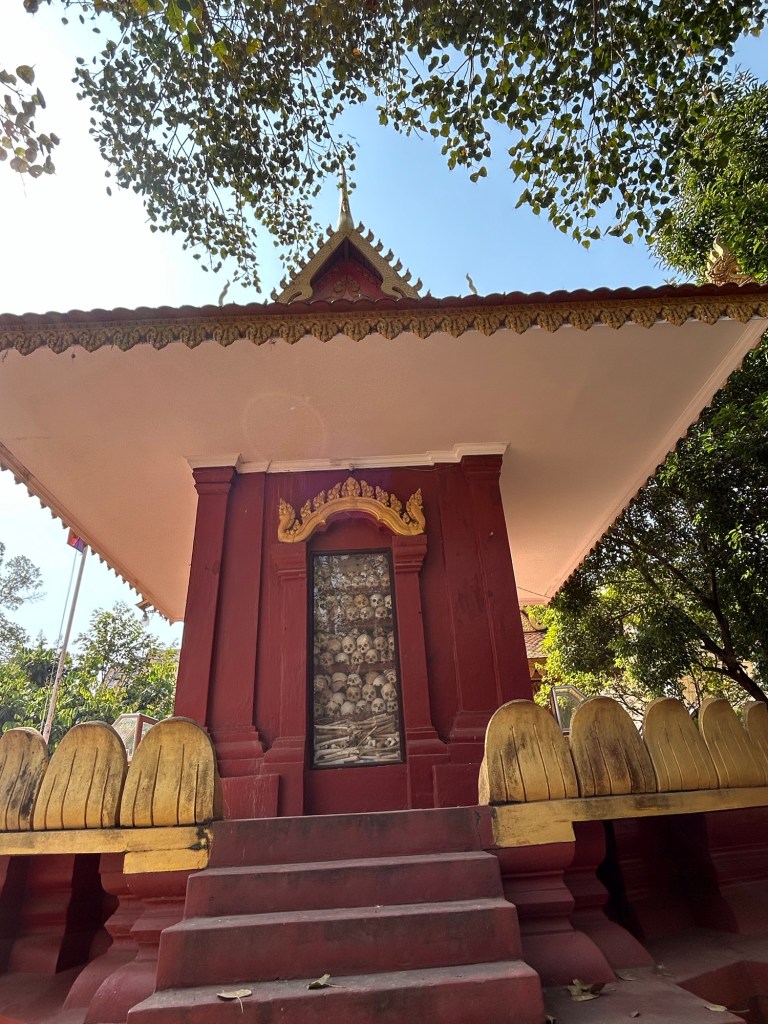
We started our time here visiting Wat Thmei, also known as the Wat Thmei Killing Field, in Siem Reap, Cambodia. It was a sobering but essential stop, offering an unfiltered look at the country’s past and the resilience of the Cambodian people.
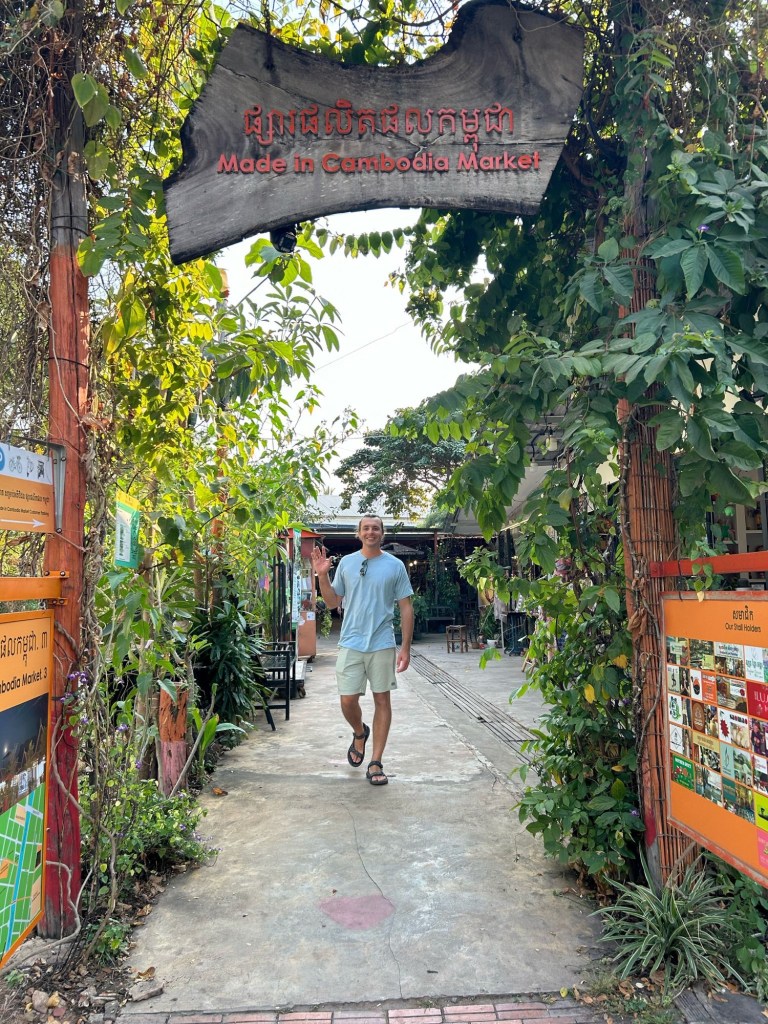
In contrast, Siem Reap’s markets brought a sense of warmth and creativity. The Fair Trade Village and Made in Cambodia Market showcased beautifully handcrafted goods—woven textiles, intricate jewelry, and locally sourced spices—all made by Cambodian artisans.
A visit to the Angkor National Museum helped us connect the dots between Cambodia’s ancient and modern history. The vast collection of Khmer artifacts, including Buddhist and Hindu sculptures, offered a fascinating glimpse into the country’s spiritual and artistic heritage. Travel tip: most of the time it’s worth it to pay for the audio guide at a museum. While we skipped the audio guide, looking back, it would have been nice to have it to navigate the extensive exhibits, as there was a lot of reading.
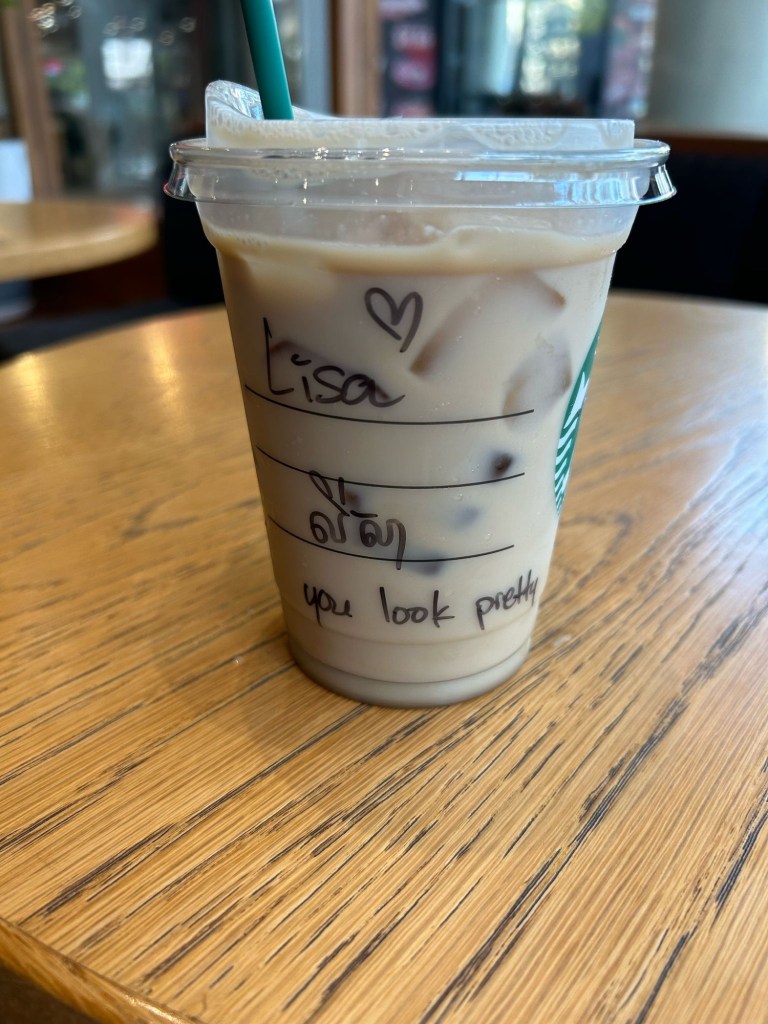
We also found small moments of joy—like unexpectedly discovering that Starbucks in Cambodia serves chai lattes, and had almond milk.
Exploring Angkor: Sunrise, Temples, and the Jungle’s Embrace
Angkor Wat was once the capital of the Khmer Empire, a civilization that ruled much of Southeast Asia from the 9th to the 15th centuries. Today, there remains over 1000 temples, ranging from rubble piles to the incredibly constructed and preserved Angkor Wat.
With a three-day pass to the Angkor temples, we set out before dawn, waking at 4:50 am and on a mission to catch the famous sunrise over looking the Angkor Wat temple. We drove our scooters through the quiet streets of Siem Reap to Angkor Wat. It was pitch black around the temple, and I had imagined a peaceful sunrise with a small crowd, but when we arrived, thousands of people had already gathered by the lake, with their phones in hand, ready to capture the moment. Despite the smoggy sky delaying the sunrise, the golden light finally emerged, casting a soft glow over the ancient stonework.
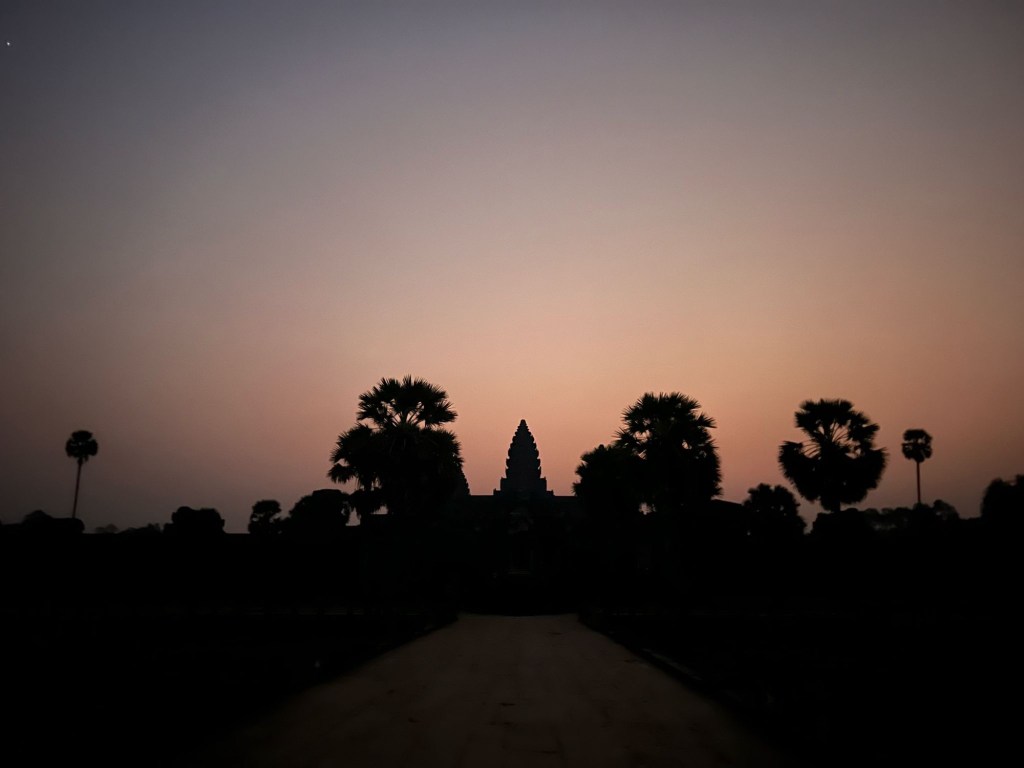
Visiting the Angkor Wat temple was an experience unlike any other temple complex we’ve visited. As we explored the vast complex, the intricate Buddhist carvings, towering statues, grand architecture, and pure size of the place was truly breathtaking.
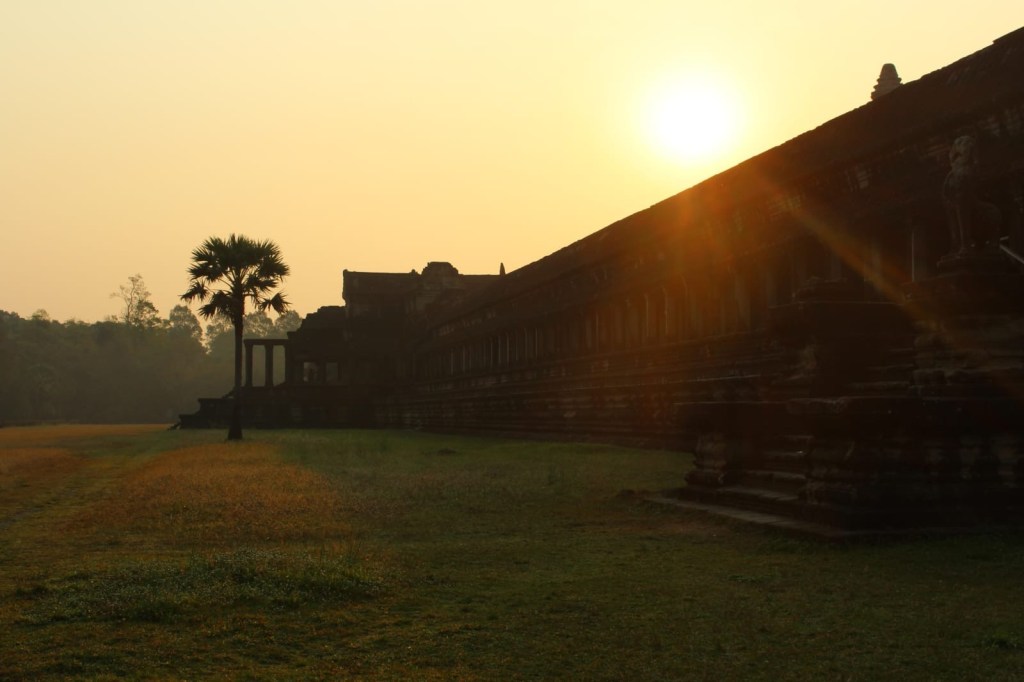
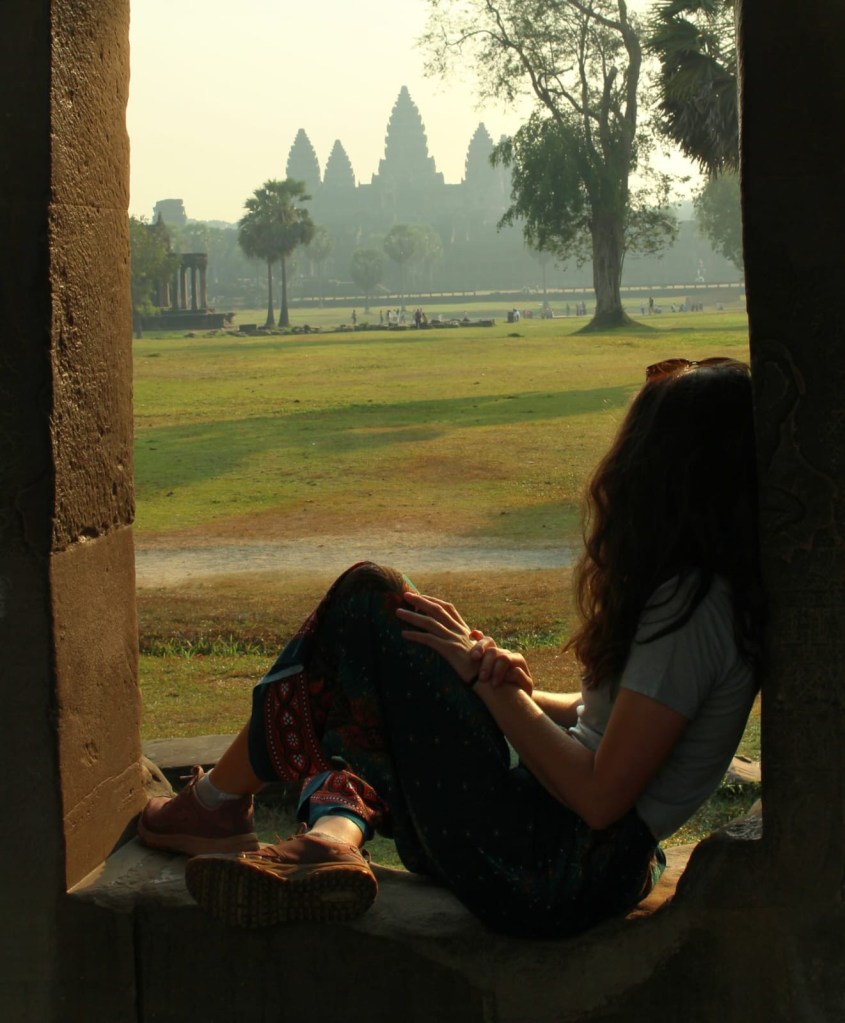
After spending a few hours at Angkor Wat, we set out for Angkor Thom, and then to Prasat Preah Khan.
Riding our scooters through the Victory Gate, one of five entrances to the Angkor Wat complex, we continued to the Terrace of the Elephants, lined with beautifully carved elephant statues. The heat was relentless by midday, but we pressed on to one of our favorite stops—Bayon Temple. Known for its stone faces carved into the temple towers.
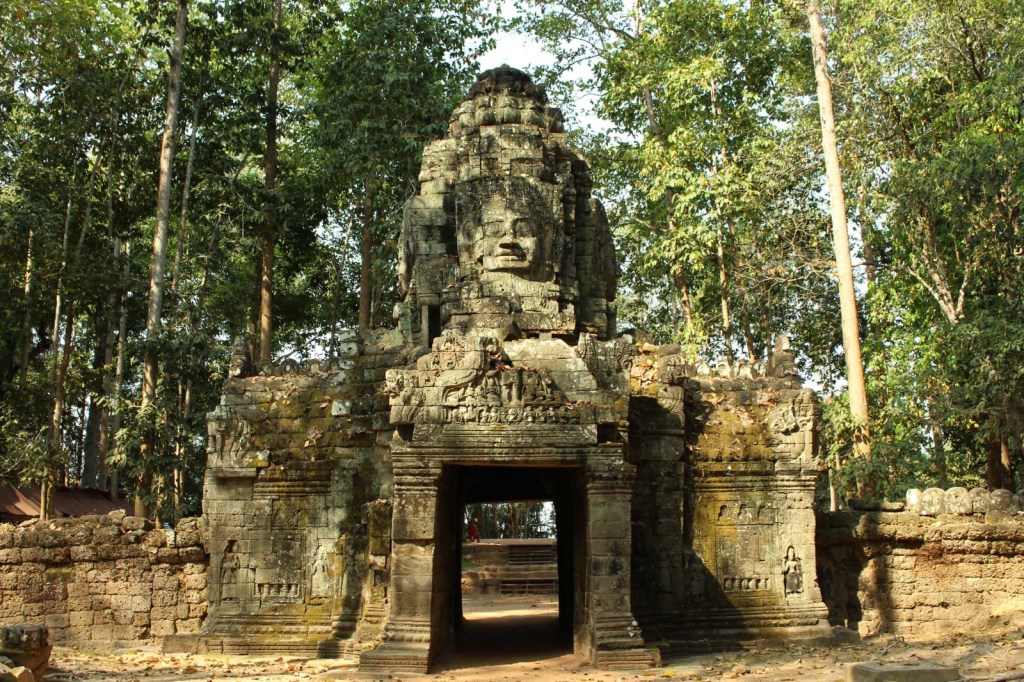
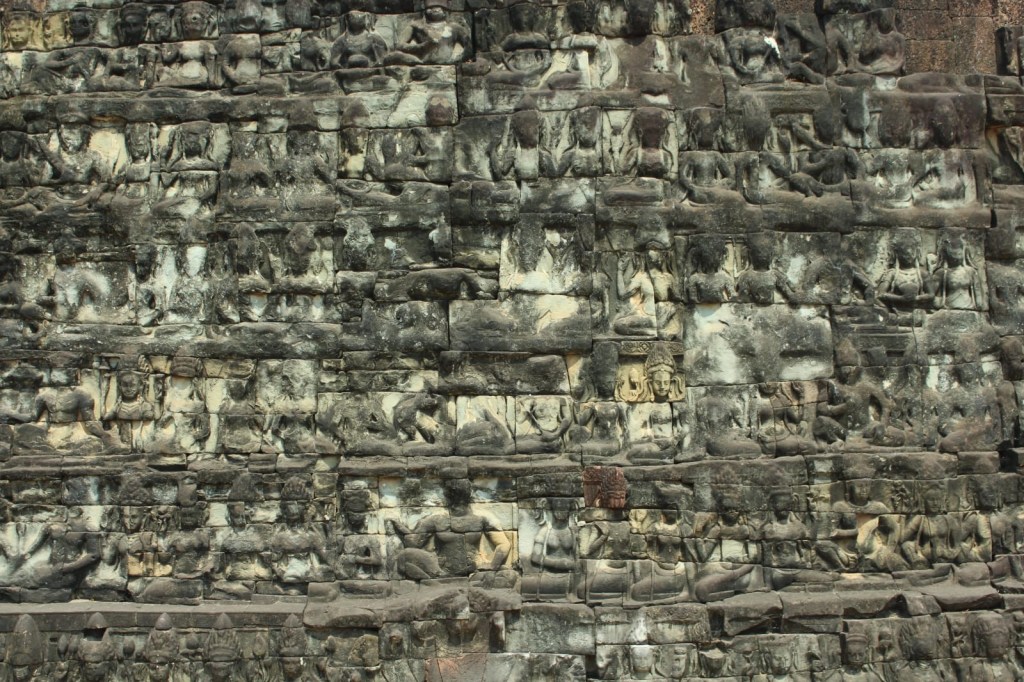
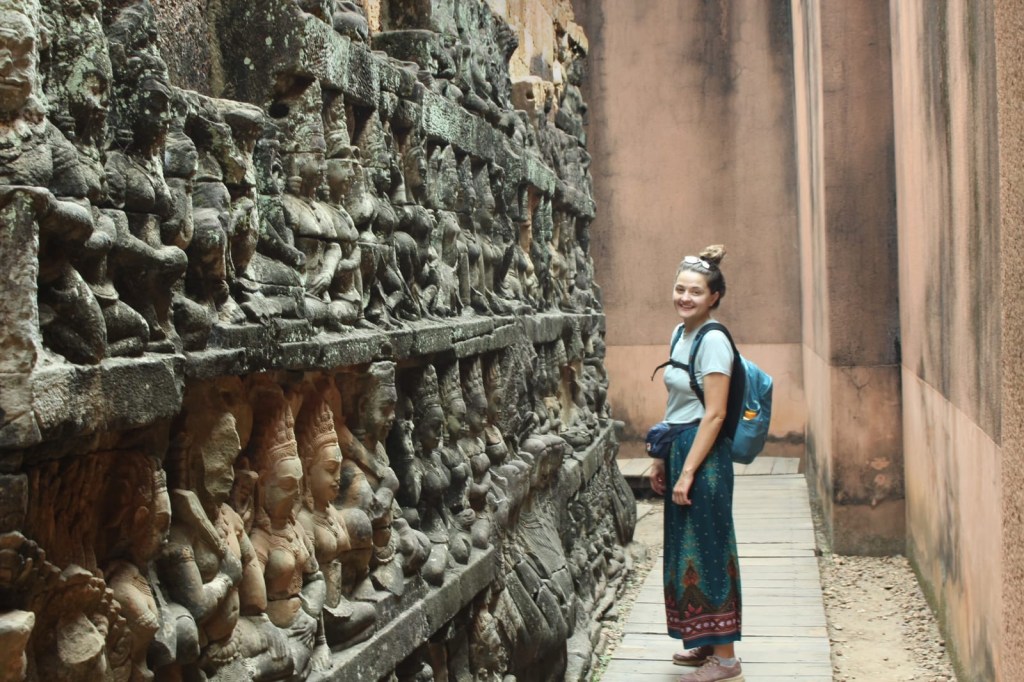
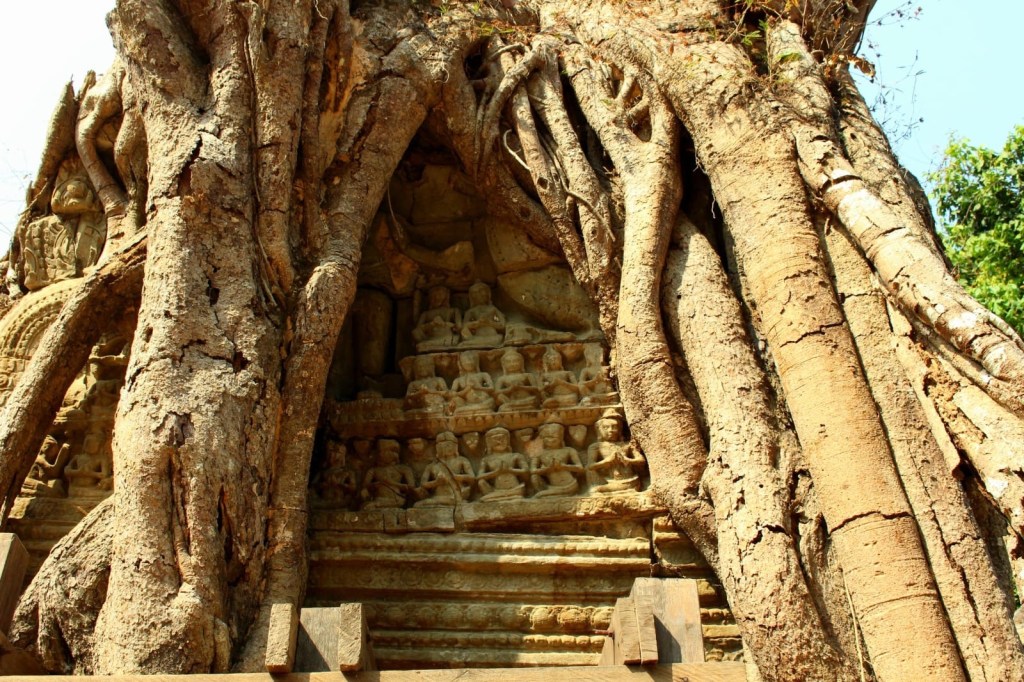
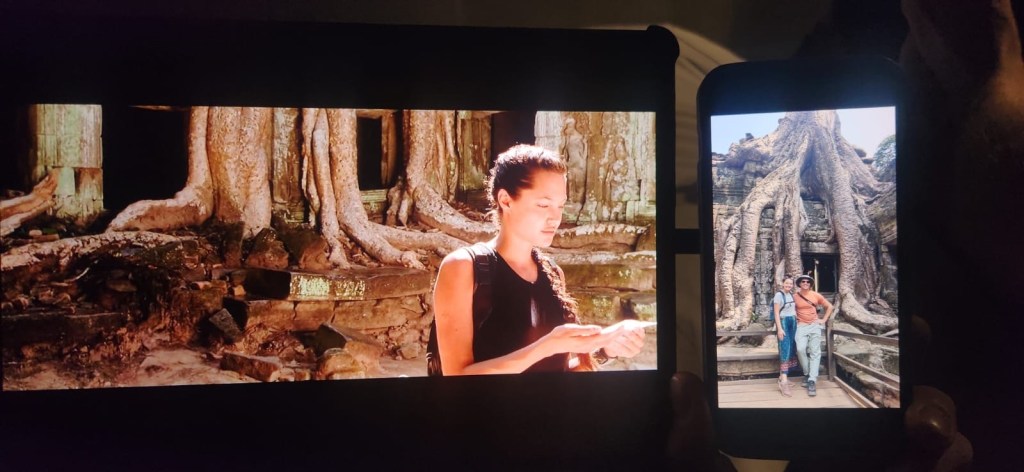
Our final stop of the day was Ta Prohm, a temple famously overtaken by the jungle. Towering trees, including strangler figs and massive kapok trees, woven through the ancient stone, their roots wrapping around the temple. Nature and history entwined in an eerie yet beautiful balance.
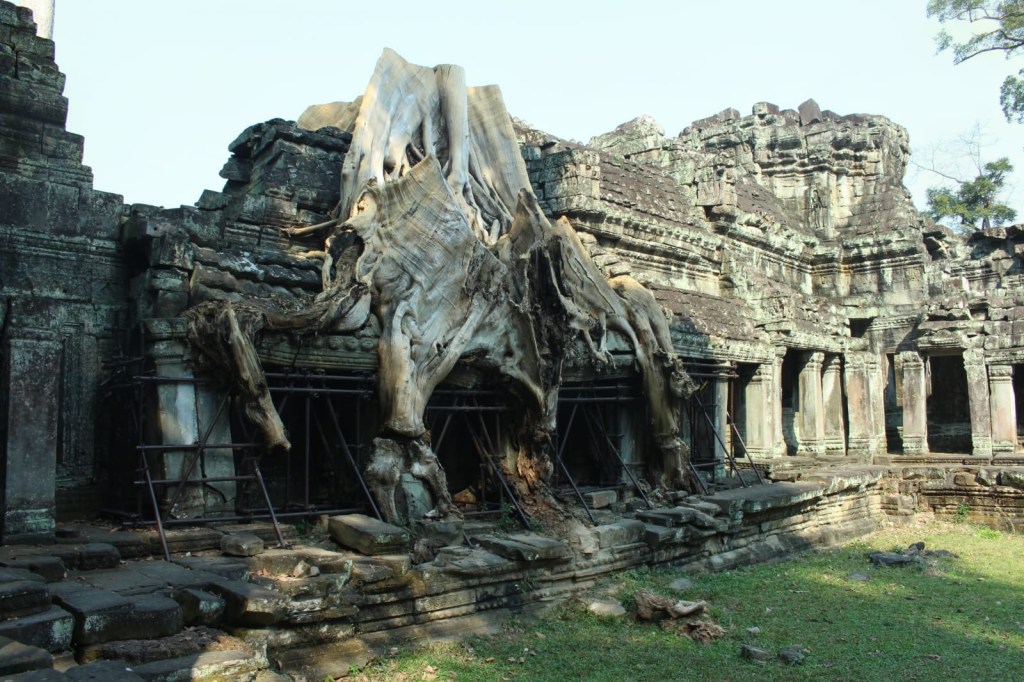
After hours under the scorching sun, we called it a day and found a spot that made gluten-free pizza. What a treat!
Exploring More Temples
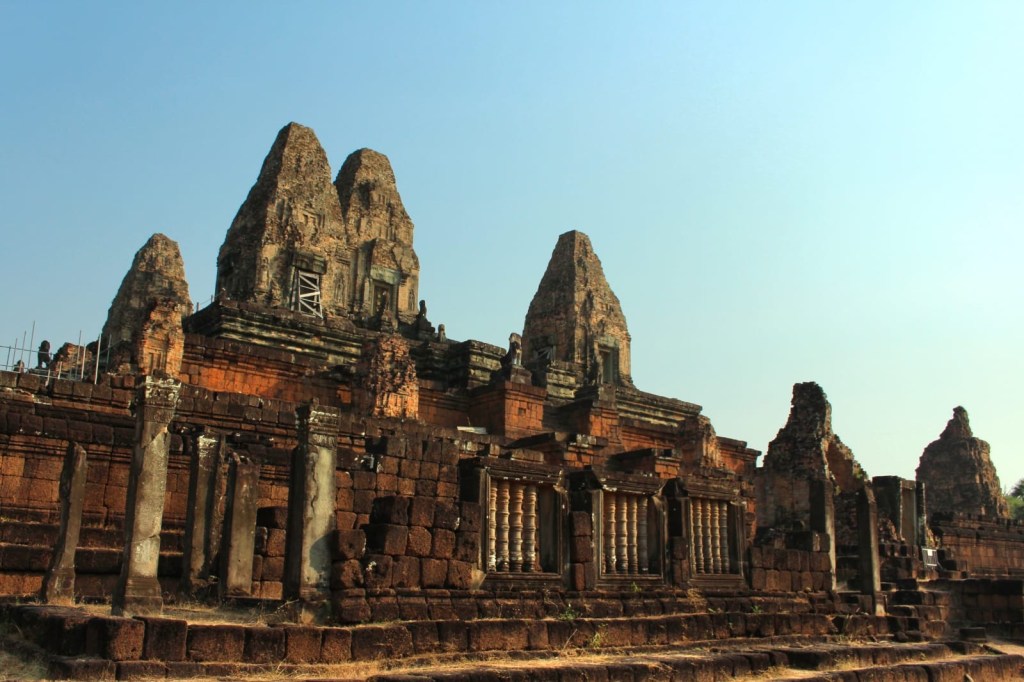
Our second day of temple-hopping took us deeper into the Angkor complex, starting with Pre Rup, a towering 10th-century temple believed to have been a crematorium. Its grand architecture made it Mat’s favorite of the day. From there, we visited Eastern Mebon, a similar structure adorned with intricate carvings and guardian elephants at each corner.
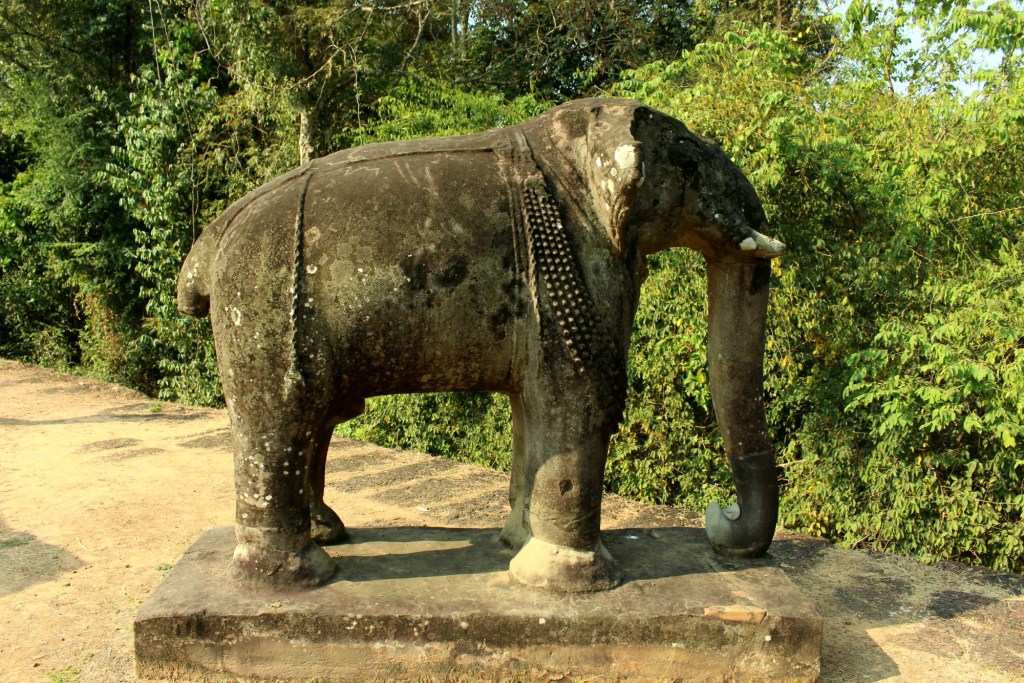
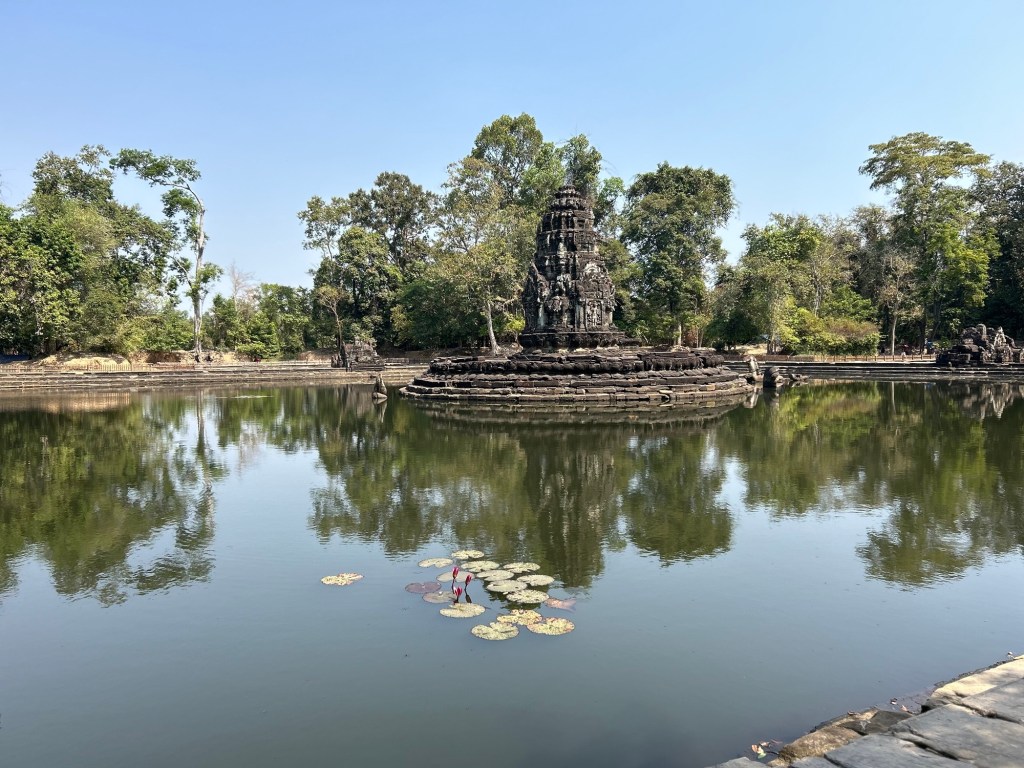
We also visited Neak Poan, a unique temple surrounded by a man-made lake that was restored in 2007. Its central temple sits within a set of four smaller ponds, creating a striking reflection of ancient Khmer engineering. Nearby, we explored the Krol Ko temple before heading to Prasat Ta Keo, the tallest temple we had climbed so far, built in a stepped pyramid style.
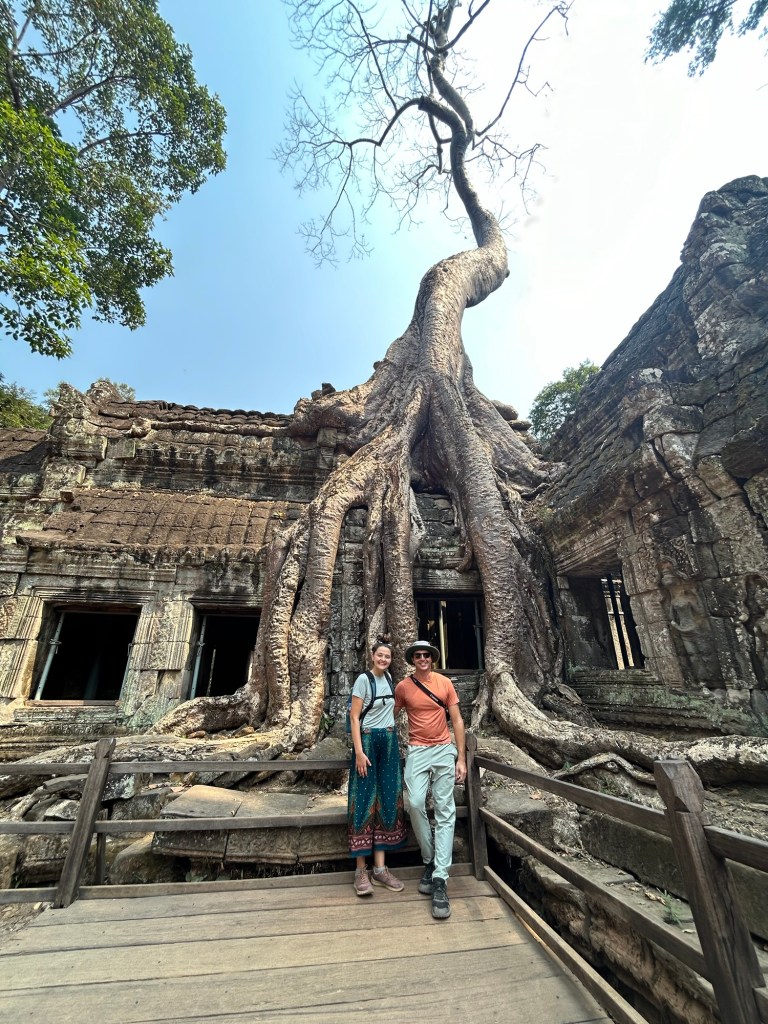
Meeting Cambodia’s Hero Rats
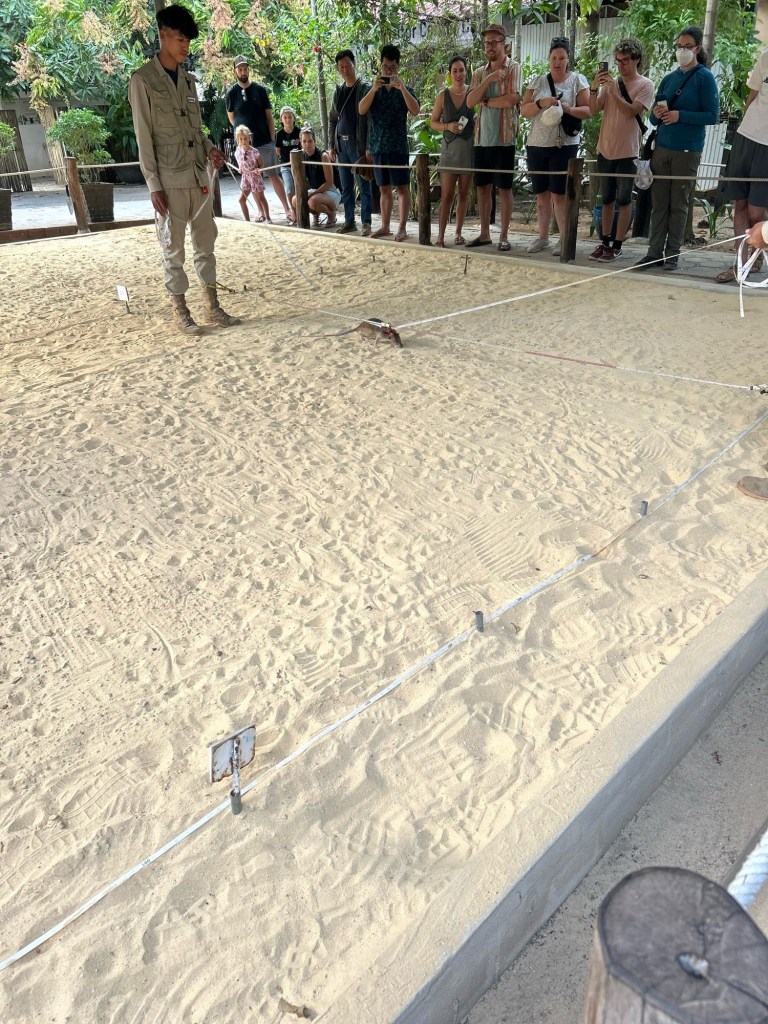
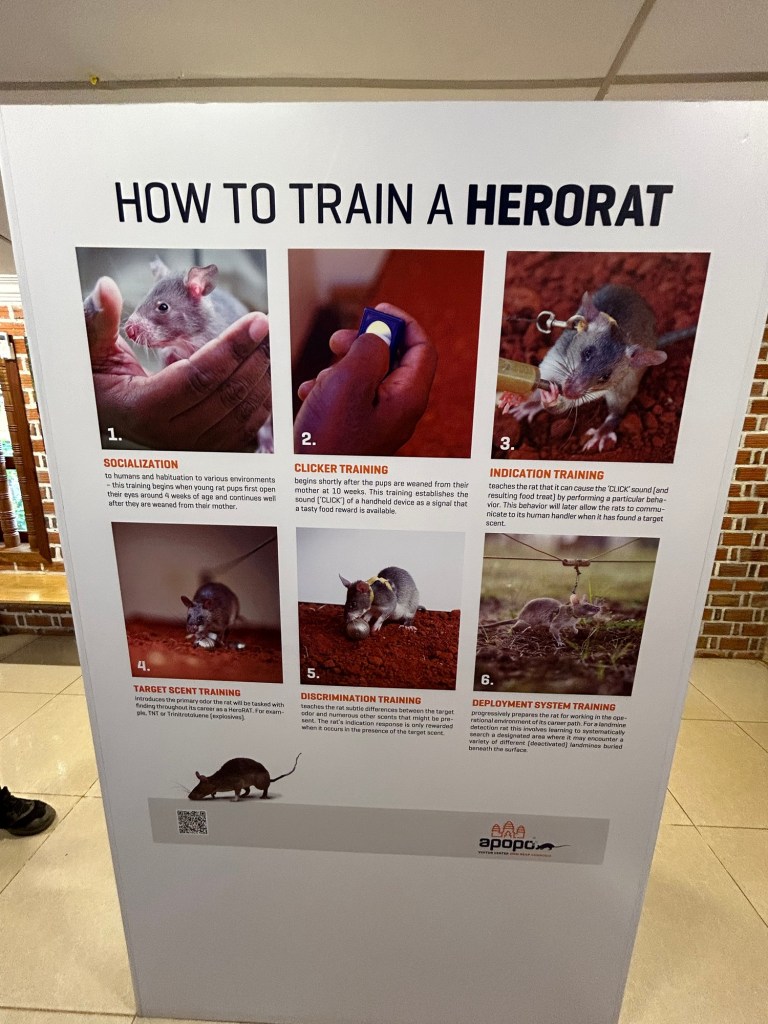
Large parts of Cambodia remain covered in undetonated land mines, a result of decades of war. We visited the Apopo Center, a nonprofit that trains rats to detect landmines. These specially trained African pouch rats play a vital role in clearing them. Unlike metal detectors, which sense all metal debris, these rats detect only TNT, allowing them to cover an area the size of a football field in just 30 minutes—work that would take a human with a metal detector up to four days. Some of the bombs detonate with only 3kg of weight, the rats all weigh between 1-2 kg which ensures they never trigger the explosives, and there has been a 100% survival rate in their operations.
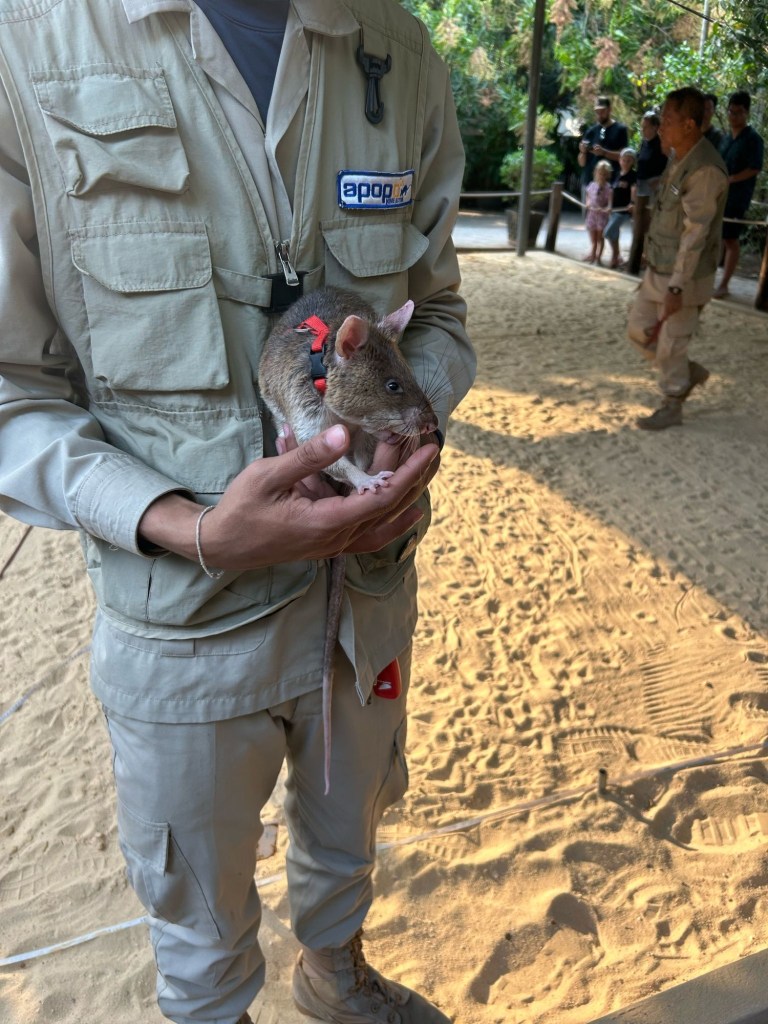
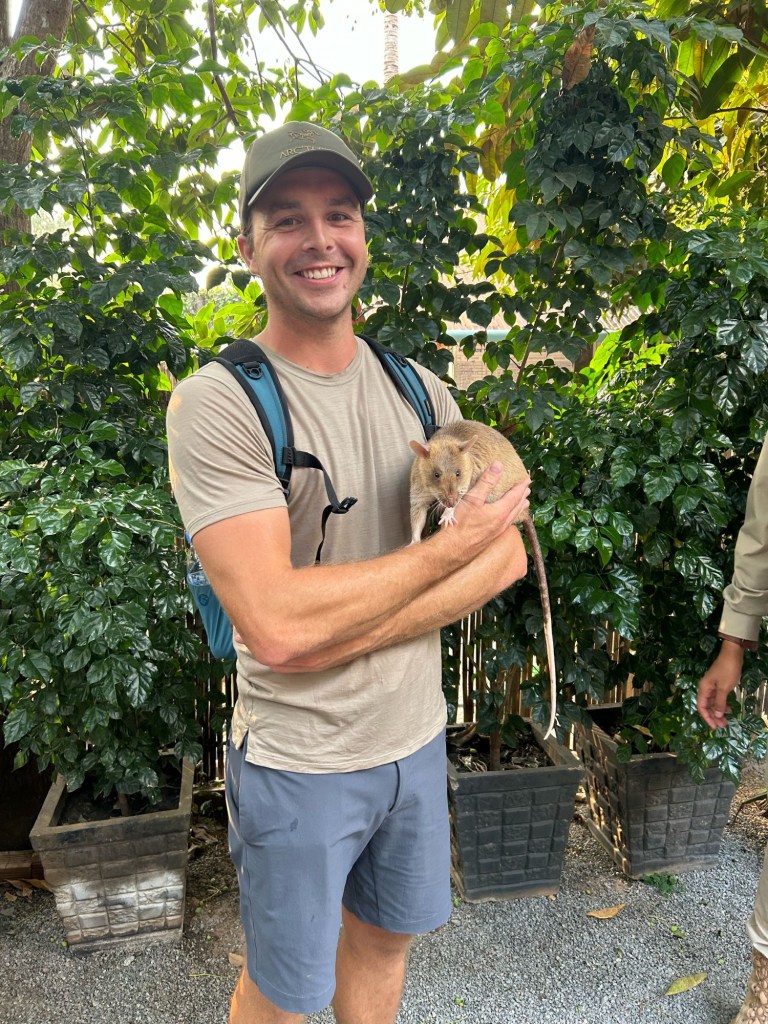
We met Ratana, one of the hero rats, and watched as she demonstrated his work, sniffing out TNT and receiving treats as a reward. We also got to hold one of the highly trained hero rats. Before leaving, we watched a video about the impact of these incredible animals in Cambodia and beyond.
Kampot
With limited time in Phnom Penh, we squeezed in an ambitious 12+ hour excursion to Kampot and Kep, including 6+ hours of driving. We left Phnom Penh at 7:30 AM, picking up a South Korean family along the way.
One of my bucket list experiences was visiting a Kampot pepper farm, as Kampot pepper is world-renowned. We toured La Plantation, learning about the process of growing black, white, red, and long pepper, sampling teas, and spicess.
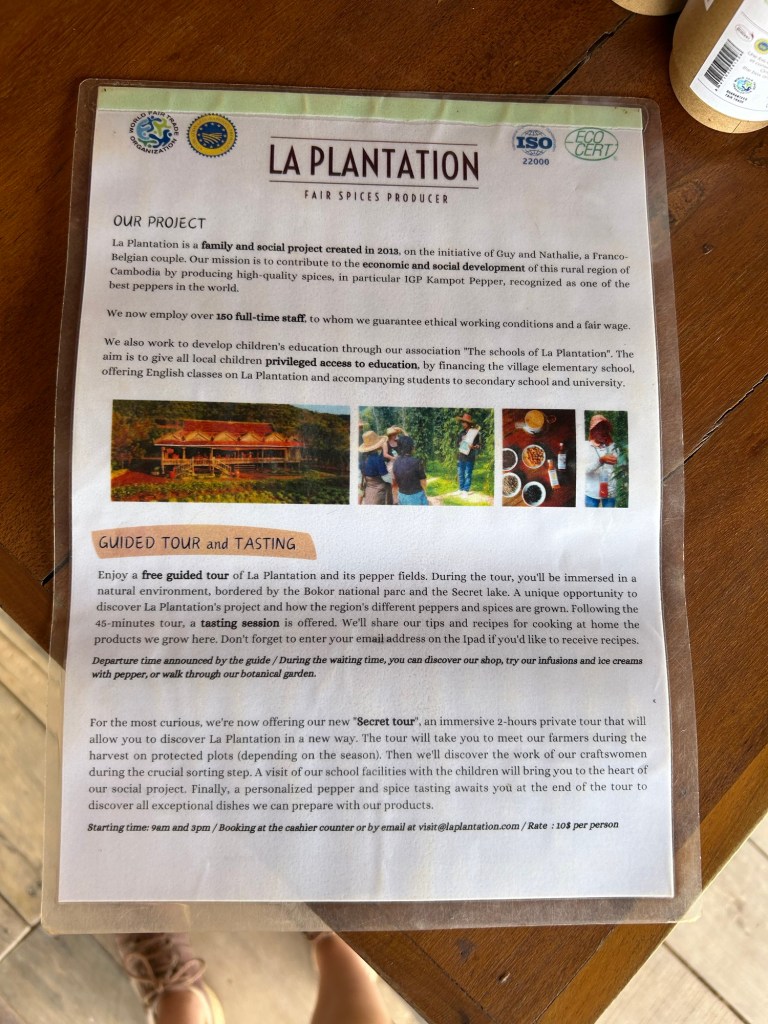
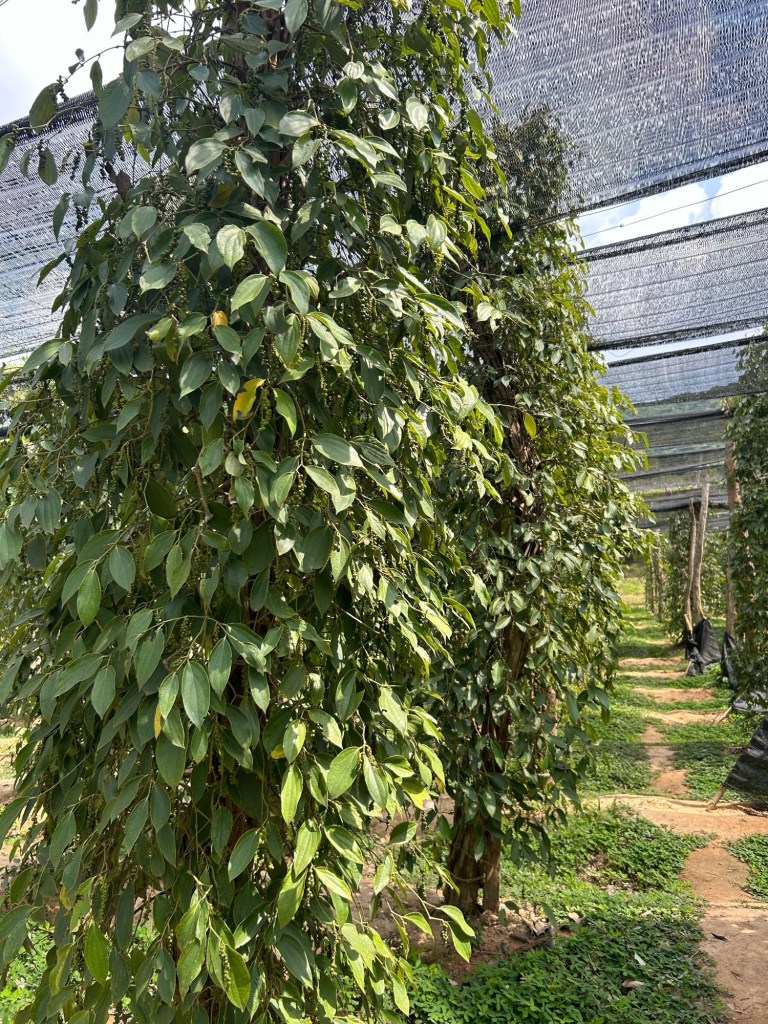
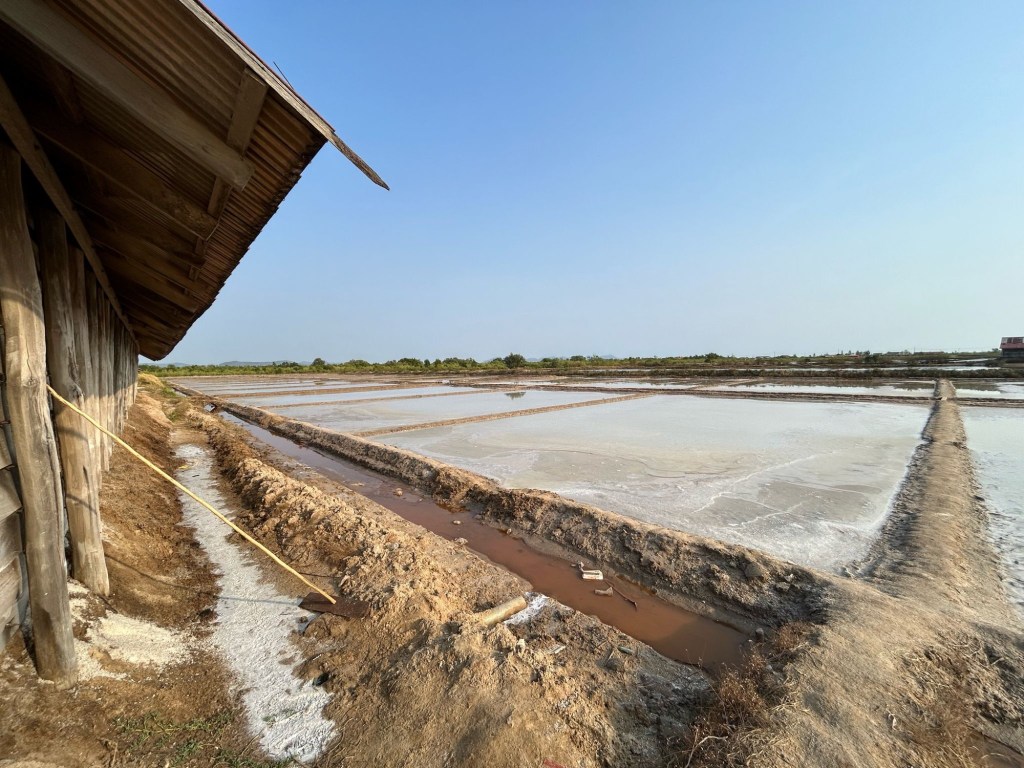
We also stopped at the salt fields, which we were told are the only salt fields in the country, and learned the process of collecting sea salt. Here, water from the sea is drained into man made ditches which have been flattened. In the dry season, the heat from the sun evaporates the water and the salt is crystallized and collected by workers who fill baskets with it. The salt is then stored in the neighbouring sheds before being brought to the factory by a tractor for processing and is then sold and exported.
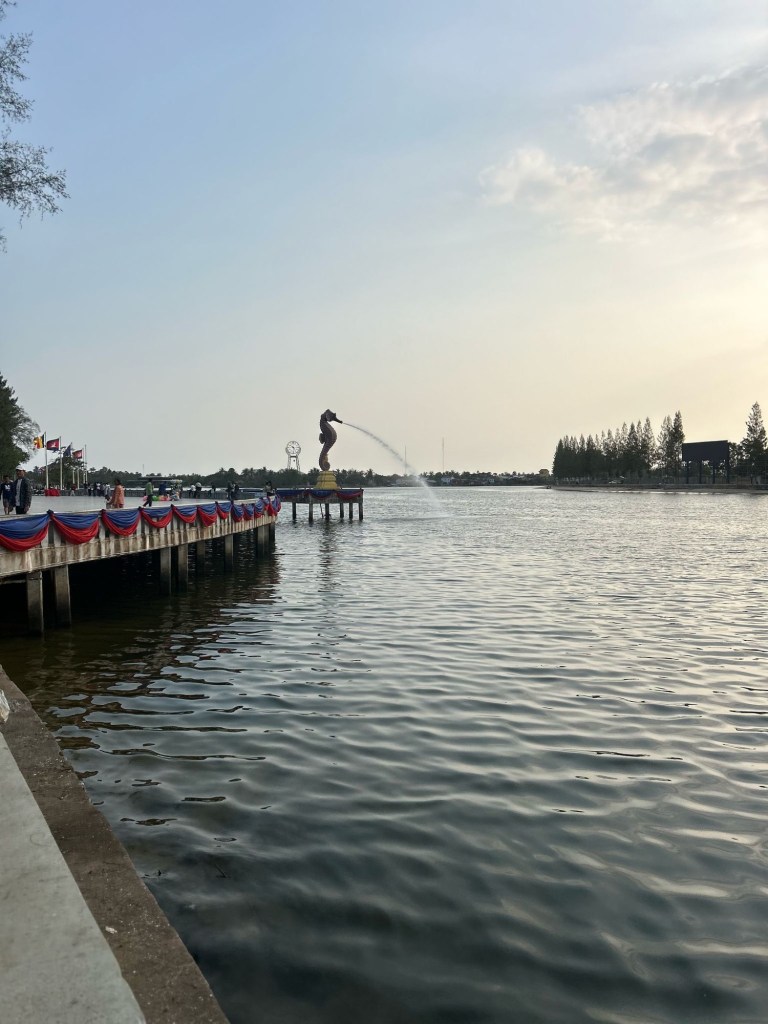
Our final stop was downtown Kampot, where we had 40 minutes to explore the riverside and local shops before starting the three-hour drive back to Phnom Penh. While exhausting, the trip was a fascinating mix of history, culture, and food.
Phnom Penh
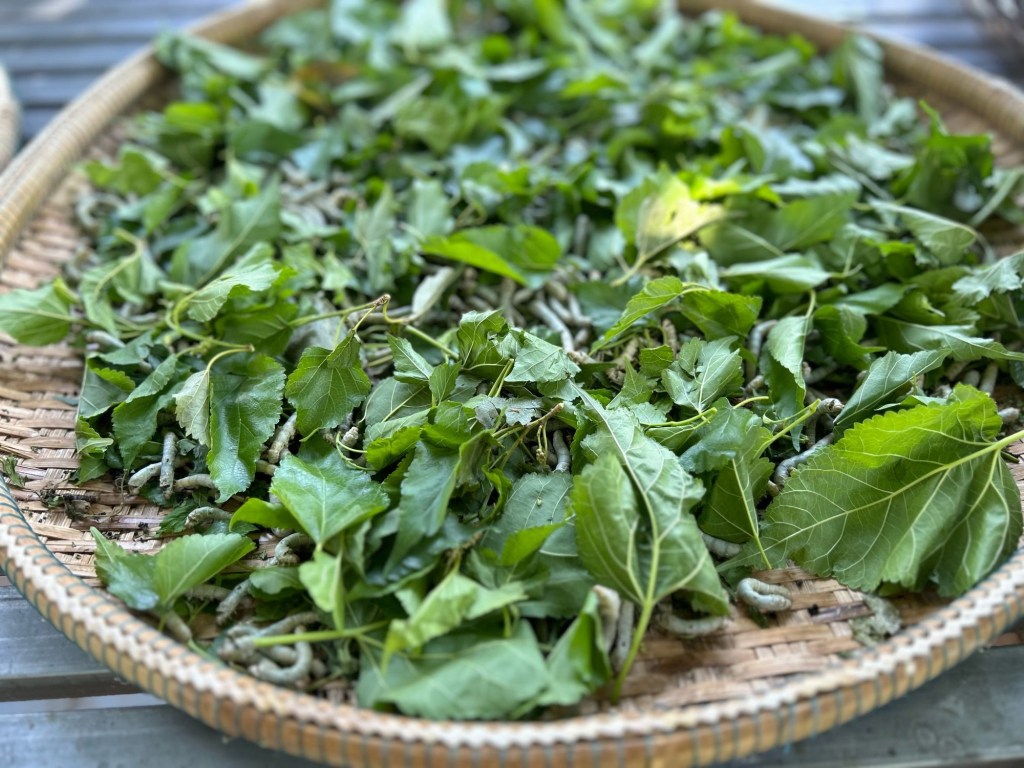
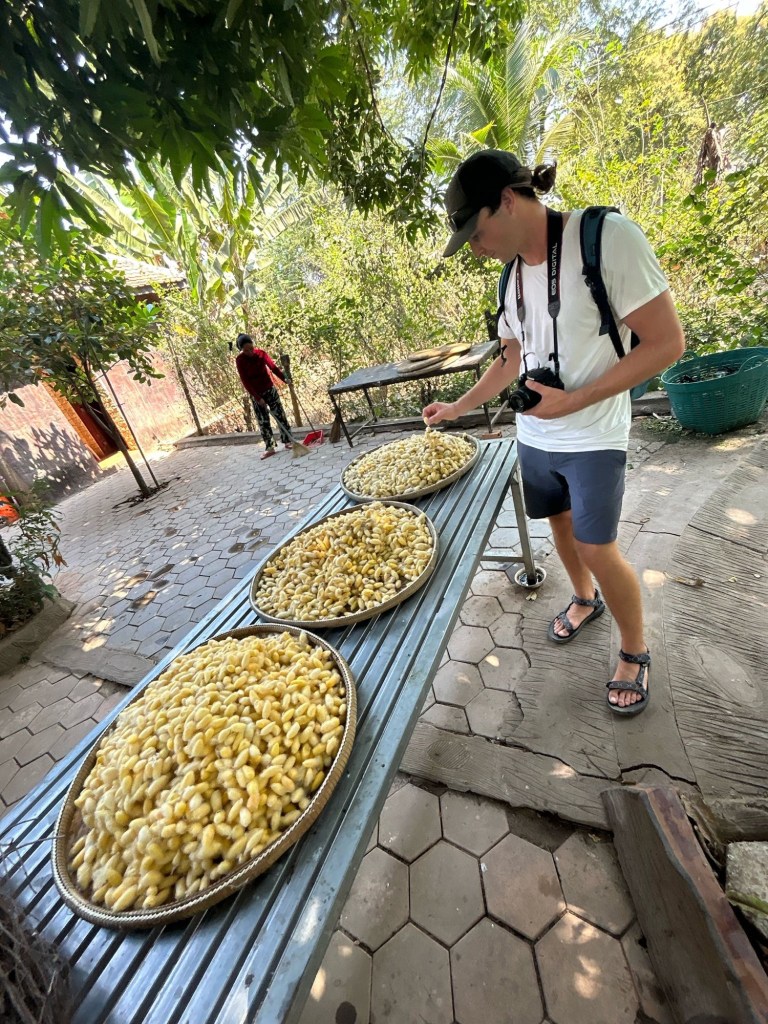
We visited the Royal Palace, wandering through its ornate buildings and admiring the large mural depicting Khmer stories and traditions. After leaving, we spontaneously ended up on a tuktuk tour, which led us to Silk Island, where we learned about the intricate process of silk-making, from feeding silkworms mulberry leaves to weaving the delicate threads and to making finished products such as scarves.
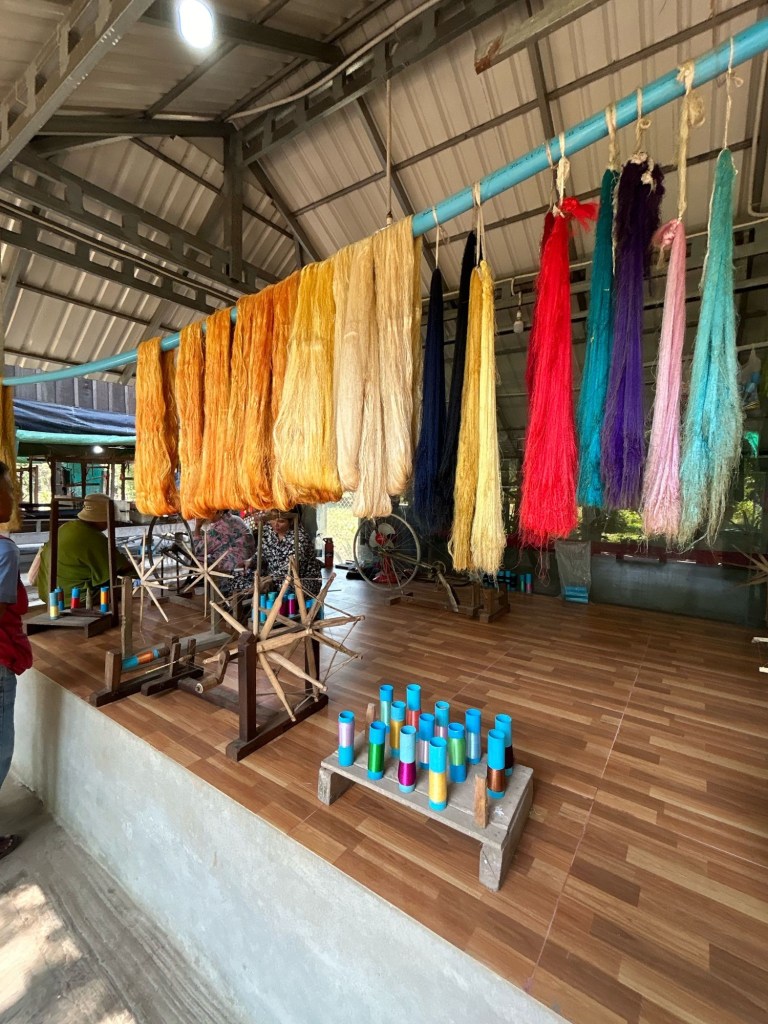
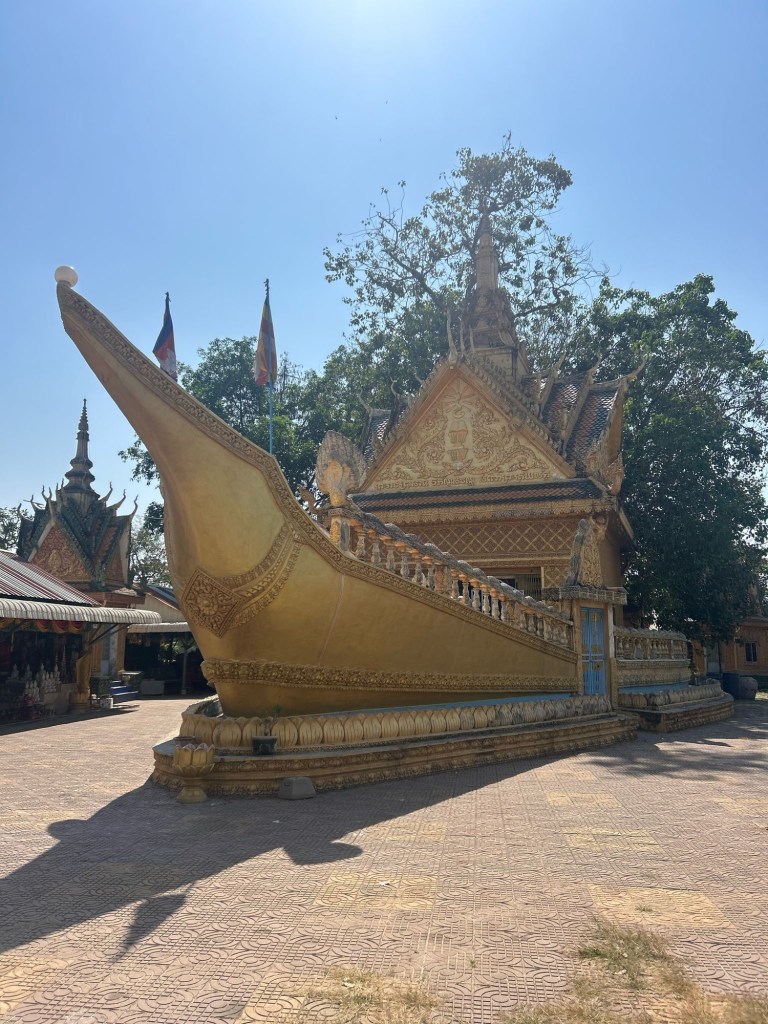
We also visited several small temples and stupas before heading back to the city, stopping at the Gold Temple and Wat Phnom, the iconic temple that gave Phnom Penh its name.
Tuol Sleng Genocide Museum
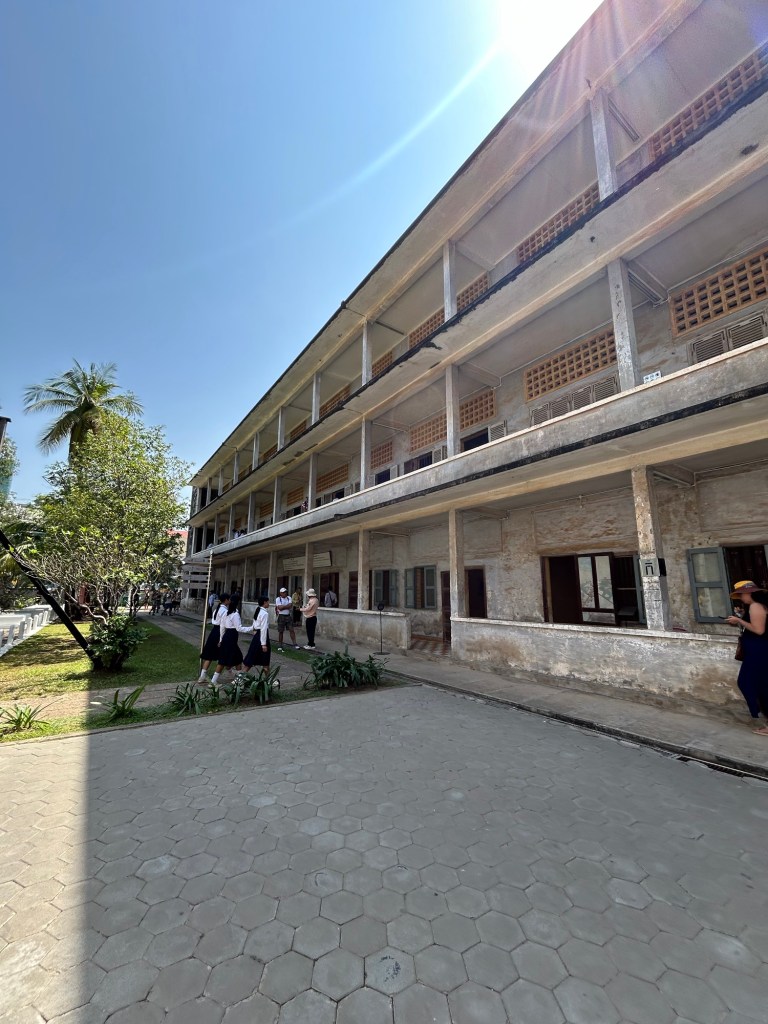
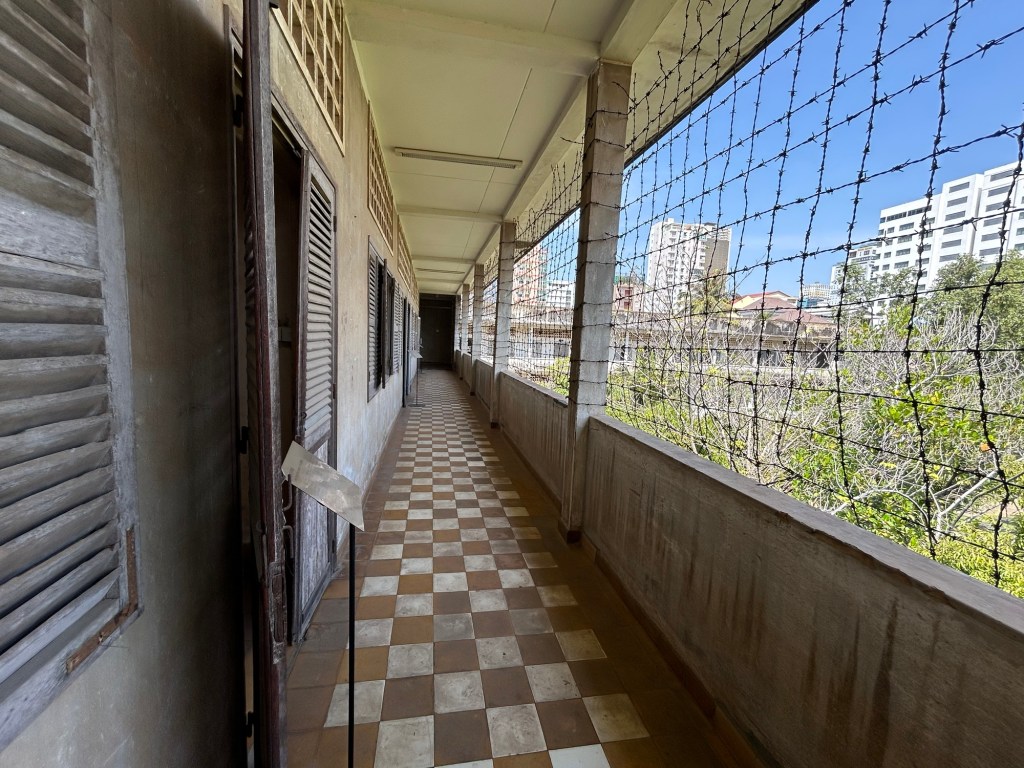
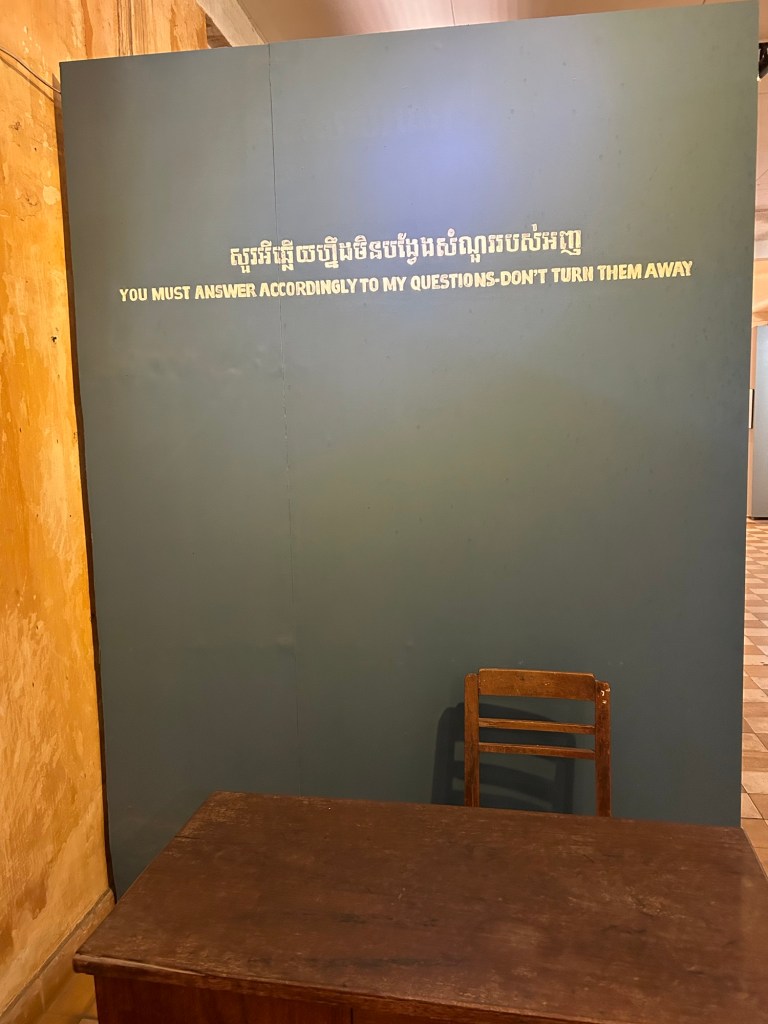
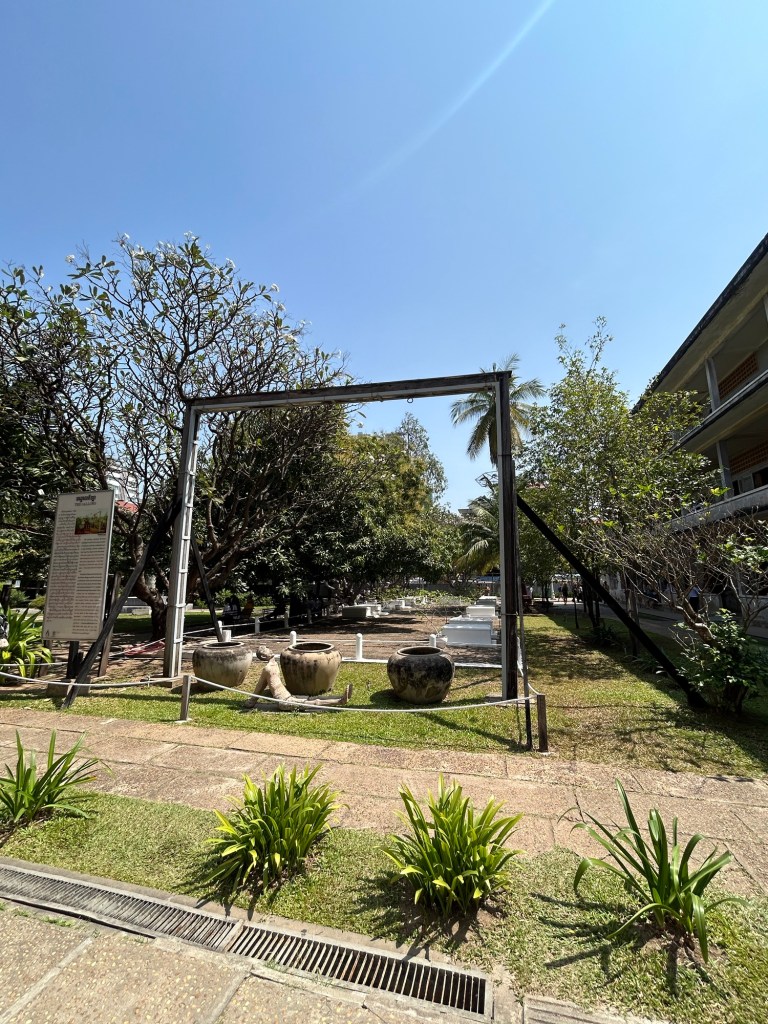
Originally a secondary school, this site was transformed by the Khmer Rouge into a high-security prison and interrogation center known as S-21. Between 1975 and 1979, thousands of detainees—accused of counter-revolutionary activities—were tortured and executed here. Today, it serves as a museum and memorial, preserving the memory of those who suffered during Cambodia’s brutal genocide. One of the most emotional parts of our trip was visiting the Tuol Sleng Genocide Museum, the former S-21 prison, and attempting to comprehend the unimaginable suffering that happened here. At the end of our tour, we were very fortunate to meet 2 of the children who survived this atrocity, purchasing a signed copy of their book. (Out of the 20 000+ people sent to S-21, there were only 11 people to leave alive)
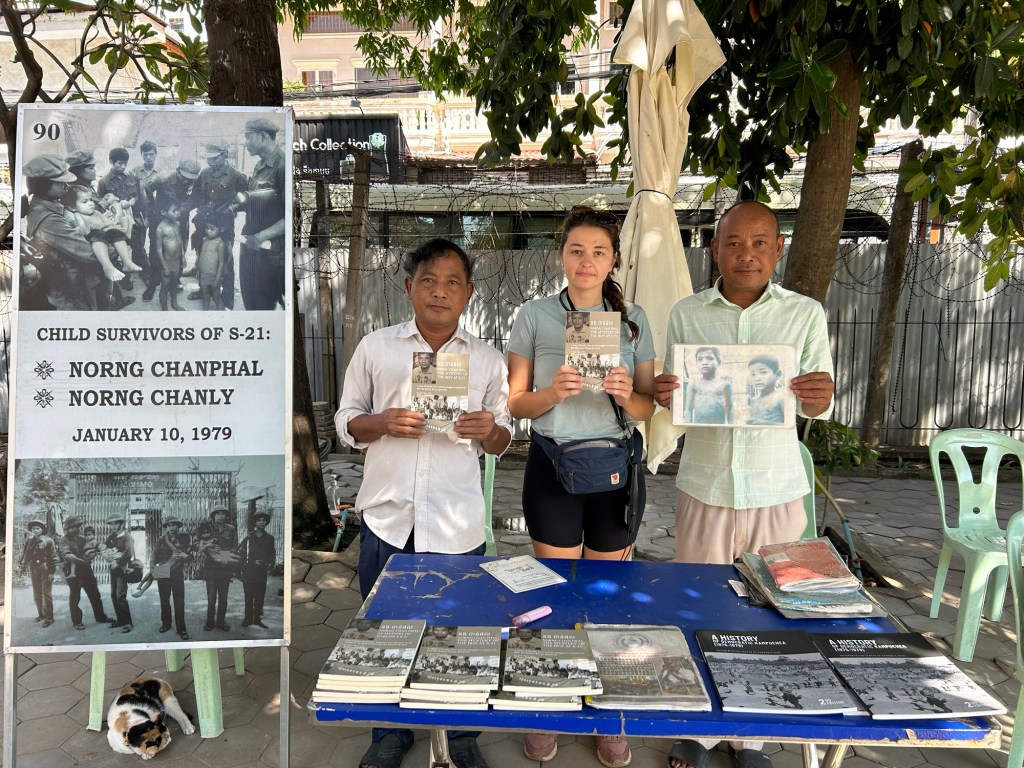
Tuol Sleng Genocide Centre and the Killing fields
At Tuol Sleng (S21), detainees were systematically interrogated and tortured to extract confessions or reveal alleged conspiracies. Once deemed “enemies of the state,” these victims were taken out of S21 under heavy guard—often in groups—and transported to the Killing Fields. At these execution sites, such as Choeung Ek near Phnom Penh, they were executed and their bodies buried in mass graves as part of the Khmer Rouge’s brutal regime.
For the tour of Choeung Ek killing fields, we started at the entrance—symbolically where prisoners would have first arrived—and followed their tragic path step by step.
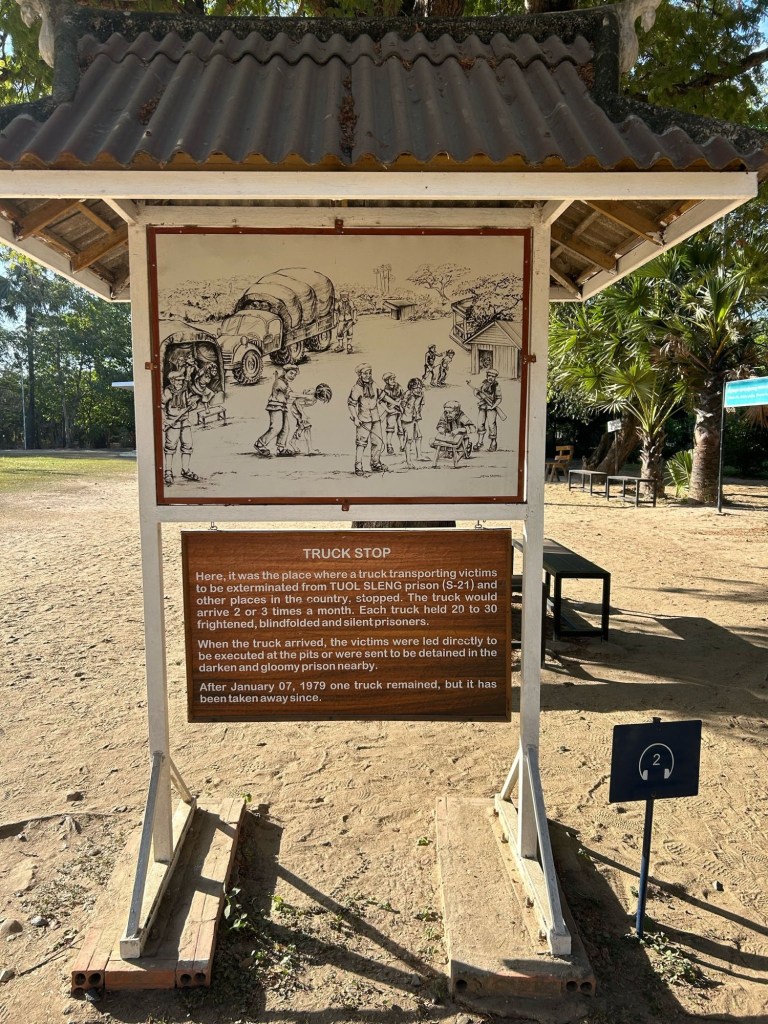
We saw the spot where trucks delivered prisoners in the dead of night. When executions became too frequent, prisoners were forced to wait until the following evening for their fate. Guns were not used—only handheld tools—to keep noise to a minimum. To further drown out the sounds of suffering, loud generators and revolutionary music blasted through the night, masking the screams of those being murdered.
We walked past mass graves, including one holding 450 victims, another containing 166 headless bodies, believed to be opposition soldiers, and a grave for women and children. One of the most haunting sites was the Killing Tree, where babies and young children were brutally murdered.
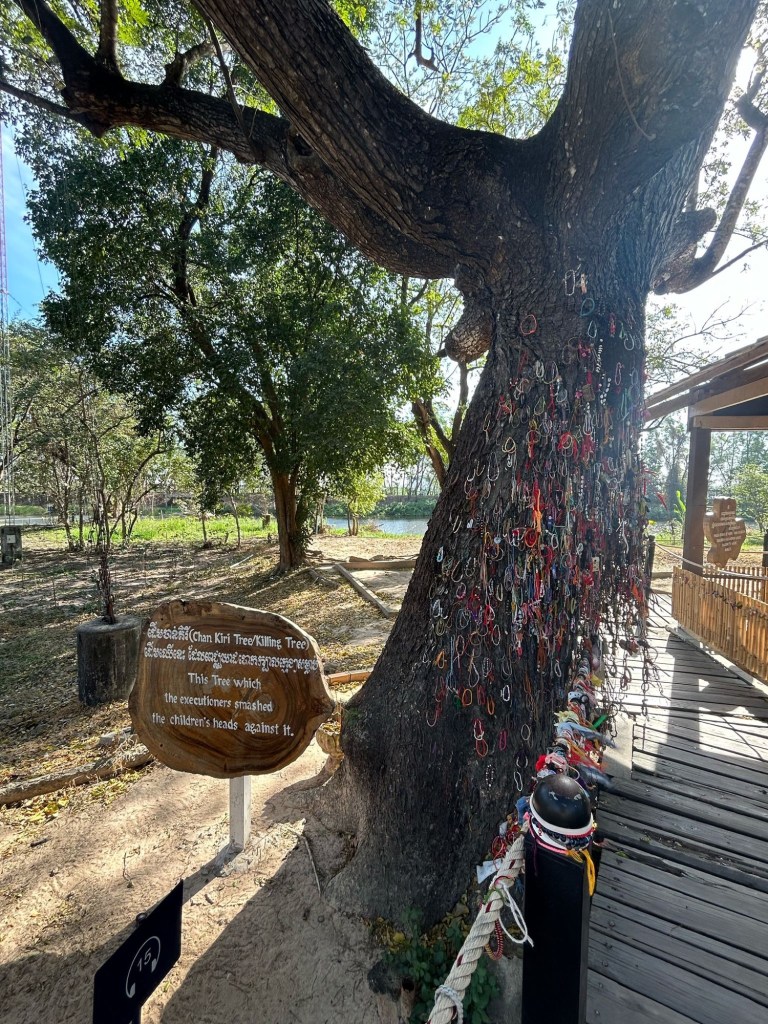
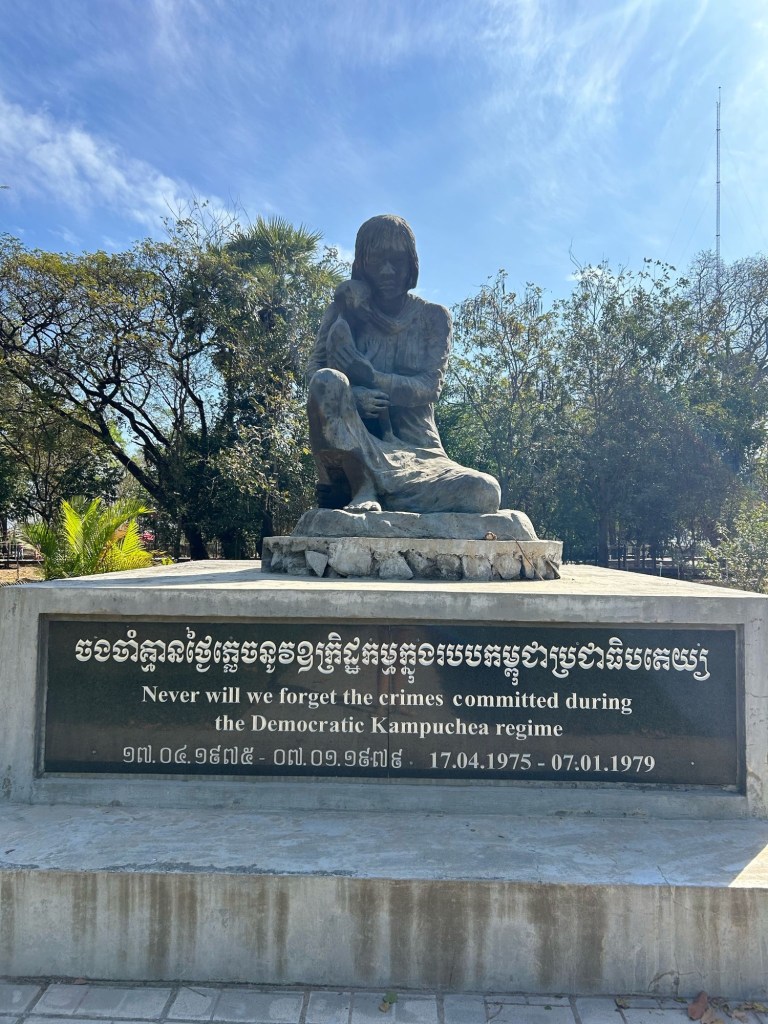
The tour ended at the memorial stupa, where the recovered bones and clothing remnants of the victims are kept as a resting place. We then explored the museum and watched a documentary on the history of the Killing Fields.
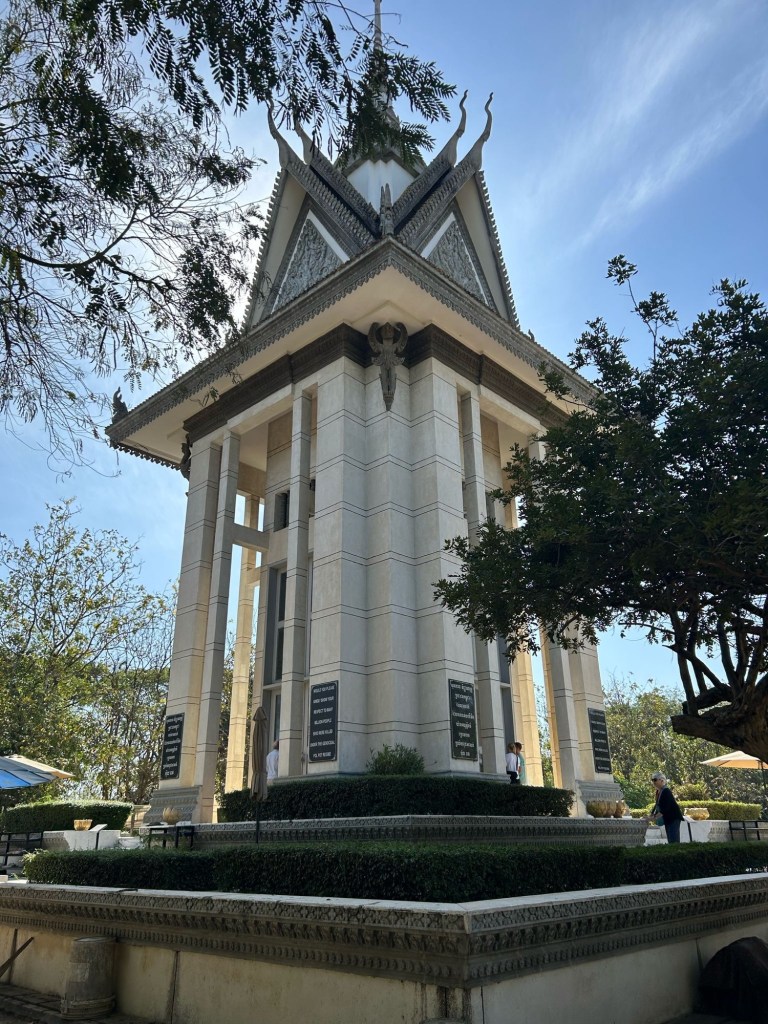
This was an eye-opening and deeply emotional experience, reminding us of the horrors that can unfold when fear and hatred take control. It’s easy to think, “This could never happen to me or in my country,” but history has shown that it can—and does. Places like this exist to ensure we remember and speak out against injustice whenever and wherever we see it.
Our Time in Cambodia
Although our time in Cambodia was shorter than in other destinations, it was a journey of discovery—riding scooters through ancient temples rich in history, gaining a deeper understanding of the Cambodian genocide under Pol Pot, exploring pepper and salt fields, and developing a greater appreciation for the things we often take for granted.

 Roam With Us