We could not have asked for a better final few weeks on the African continent, than the time we spent in South Africa. There is something magical about this country, not just because we were here over the December holiday season, but because it checked every box for us: solo road tripping no guide this time, hiking, ocean swims, coastal views, wildlife sightings, mountainous terrain and adventure filled days). Join us here as we retrace our 22 day road trip from Johannesburg to Cape Town.
Johannesburg
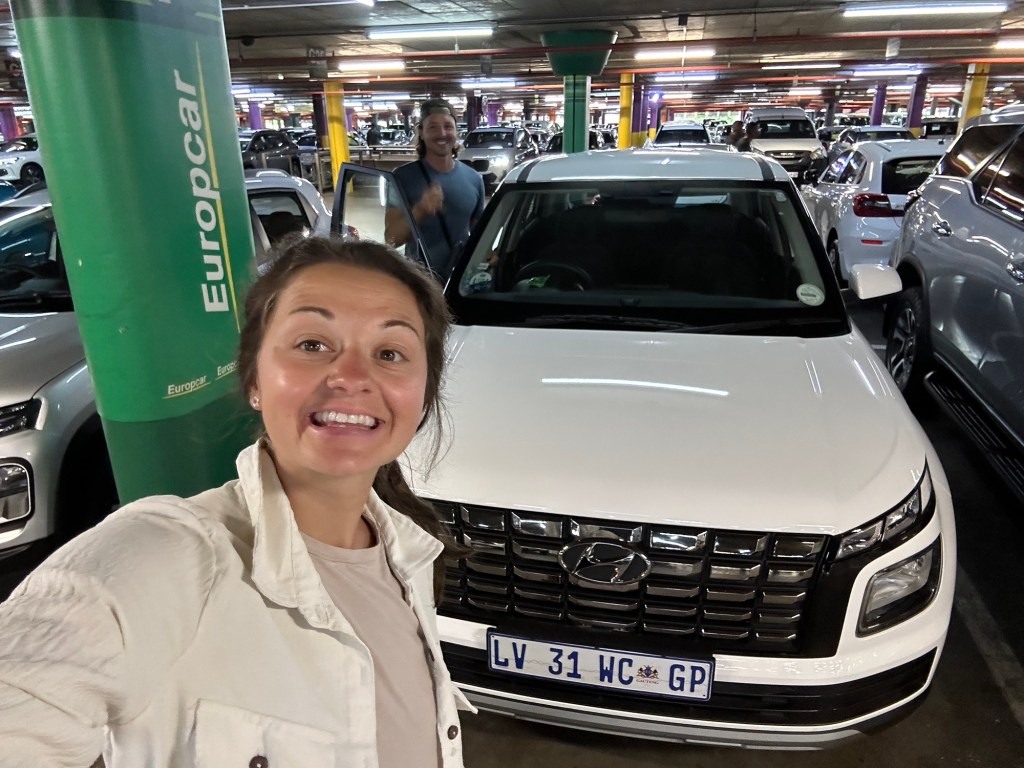
On day 1, we landed and picked up our rental car in Johannesburg, and planned to take our time driving to Cape Town. We had a general idea of the route we wanted to take, some of the activities we wanted to do during our road trip, but didn’t set anything in stone booking wise as we wanted the freedom to make adjustments to our schedule as we travelled.
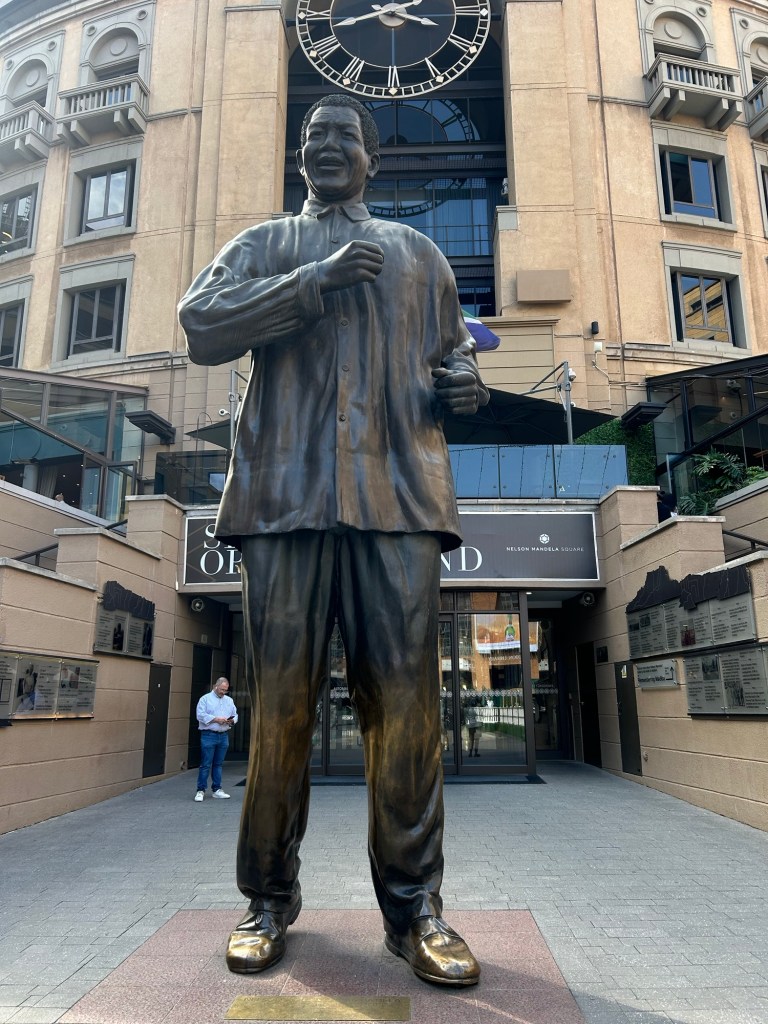
Our starting destination was the city of Johannesburg, or as the locals say, “Joburg,” and is South Africa’s largest city. We stayed right downtown in the heart of the city in Sandton, by Nelson Mandela Square, which is a tribute dedicated to Nelson Mandela. We spent our time in Joburg getting familiar with driving on the opposite side of the road we are accustomed to, eating delicious food, playing disc golf and learning about South Africa’s history, which we felt was an important place to start our trip.
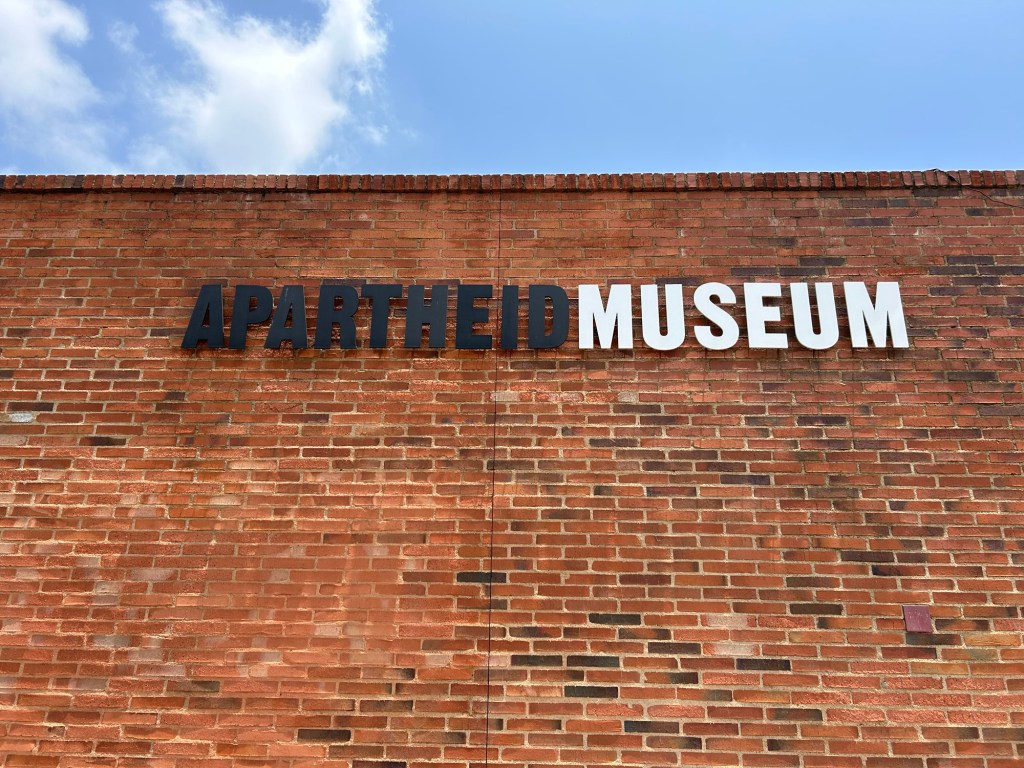
On our first full-day we visited the Apartheid Museum. This was a powerful first stop for us, as it allowed us a glimpse into the past, and history of South Africa and the apartheid regime. Here, we learned about apartheid, which translates to “apartness” in Afrikaans, and was an oppressive system of racial segregation and discrimination which governed South Africa from 1948 until 1994. We learned about the collective efforts and resistance that took place throughout this time to this oppressive system, and the emergence of powerful and influential leaders who called for equality and unification of the South African State, including Nelson Mandela, Desmond Tutu, and several other activists. This was a powerful and important way to begin our trip.
Disc golf
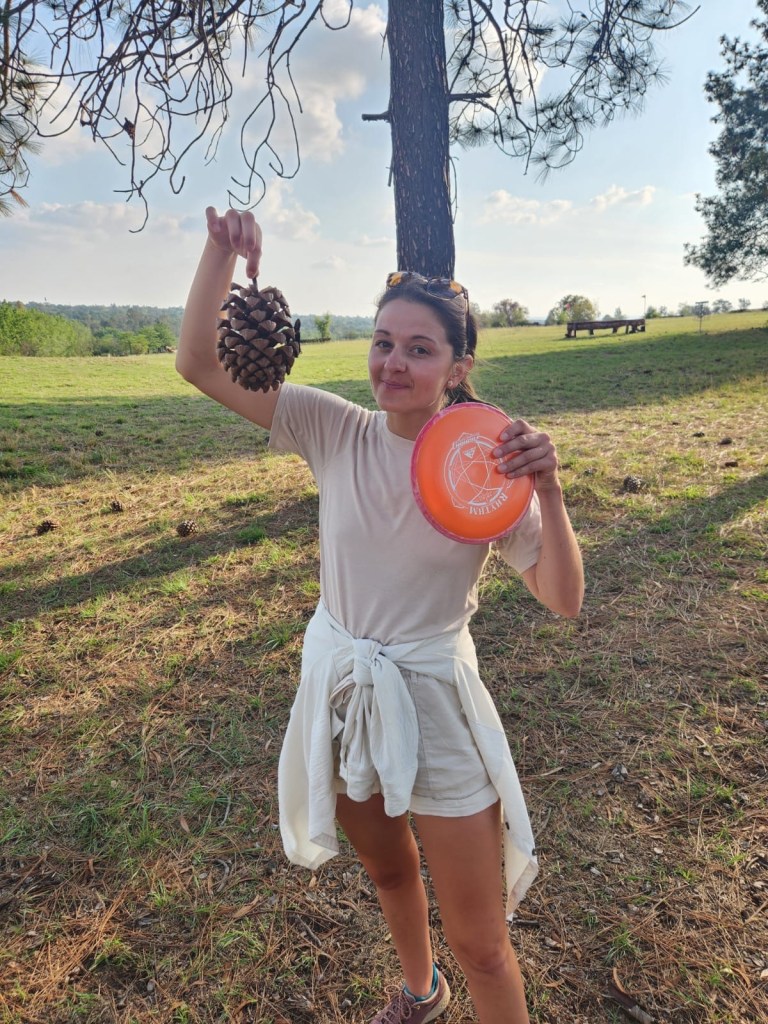
If you know us, then you probably know we are avid disc golfers. If you don’t know what disc golf is or you have never played, I highly encourage you to check it out and download the Udisc app. We used our handy UDisc app to find a local disc golf course in Joburg. We didn’t have any discs, so we found a shop online that sold discs, which ended up being located inside a gated community— which was an experience in itself. The high-security entrance process included scanning our car, checking the trunk, and verifying entrance codes we were given to enter, a safety measure we were told was to ensure everyone’s safety and to prevent kidnappings. After buying a disc each, we headed to the course which was on a horse farm – throwing over ponds, around horse jumps, walking through huge pine cone covered fields and tall grasses and we played the entire 21 hole course. On the final hole, my disc landed in the middle of a mud pond, I was in favour of leaving it there forever, but Mat was brave and retrieved it!
Exploring Golden Gate Highlands National Park & Clarens
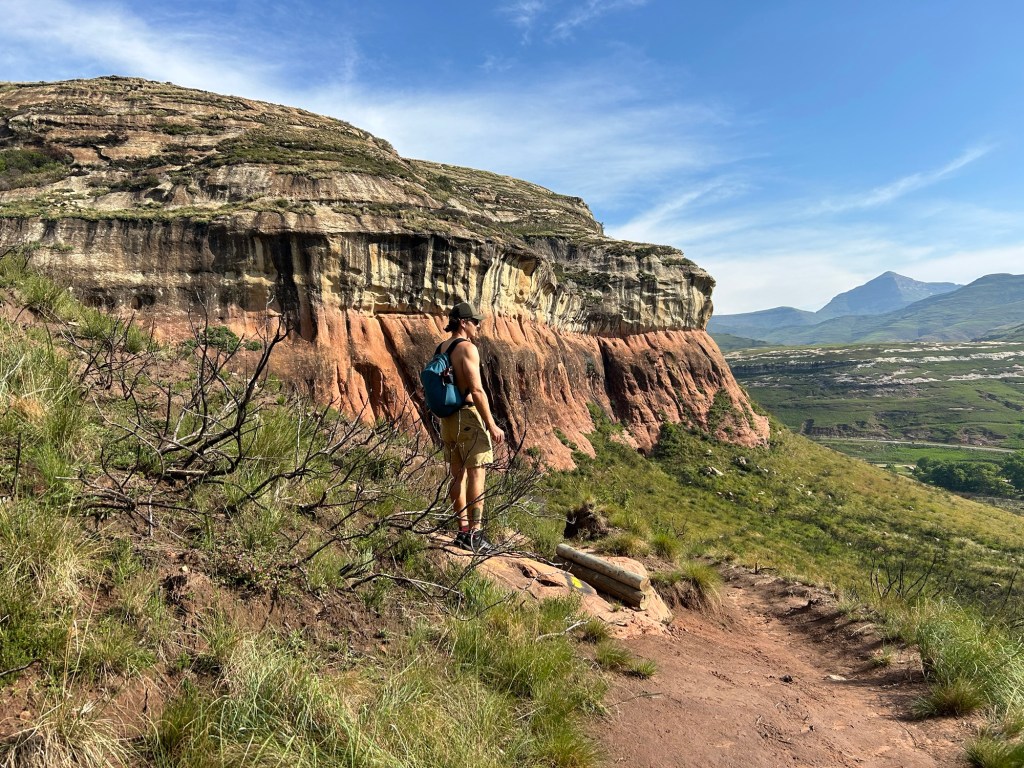
Our next destination was a small village nestled into the Maluti Mountains, located a short drive from the Golden Gate Highlands National Park. The Golden Gate Highlands National Park is known for their sandstone formations, and scenic hikes. We parked the car and set off from the Glen Reenen Rest Camp, where we trekked three short trails with a variety of landscapes and views.
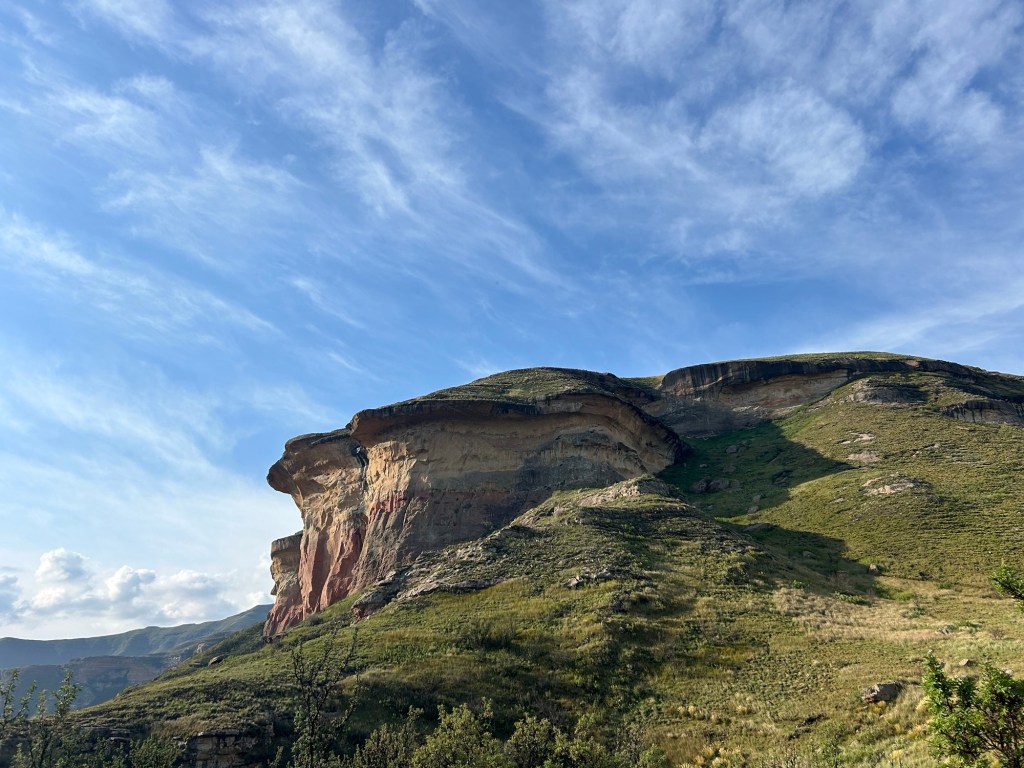
We began with the Boekloof Trail, descending to join the Echo Ravine Trail, a path surrounded by towering rock walls and echoing sounds. Afterward, we completed the 45-minute Mushroom Rock Trail, where the sandstone formations shaped like a giant mushroom hung over our heads. Altogether, the hikes took about two hours and were a nice break from driving.
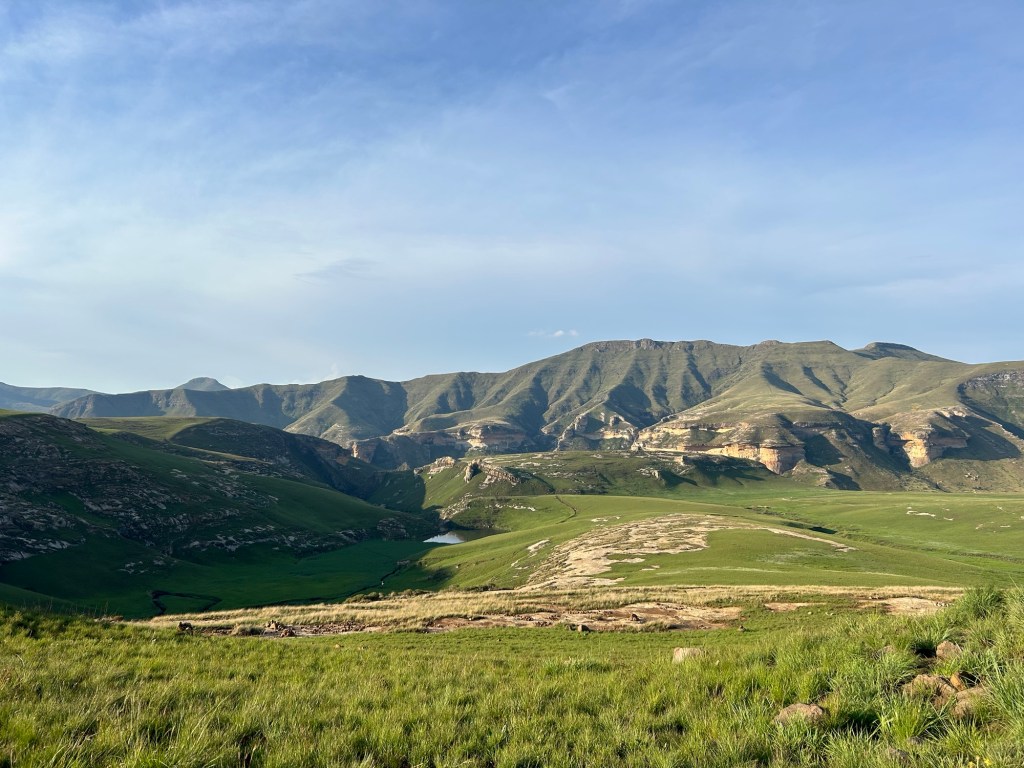
After we did some hiking, we then decided to complete the two driving loops available in the park. The first loop was called the Blesbok Loop, and as we drove we passed wildebeest and the stunning scenery of the Maluti Mountains, and met a nice couple (who own a game reserve) and whom gave us some beef biltong to try (a popular South African snack made of dried cured meat). The second trail was called the Oribi Loop, which included a stop at the park’s Vulture Feeding Project. We walked up a path to a viewing building where we opened the door, stepped inside, and had no idea just on the other side of the building were vultures feeding on two fresh carcasses of a horse and wildebeest. This project was introduced in an attempt to increase the vulture population, by providing a safe habitat for them, and was very cool to see – especially as dusk hit and we started to see wild dogs come and surround the carcasses from all angles.
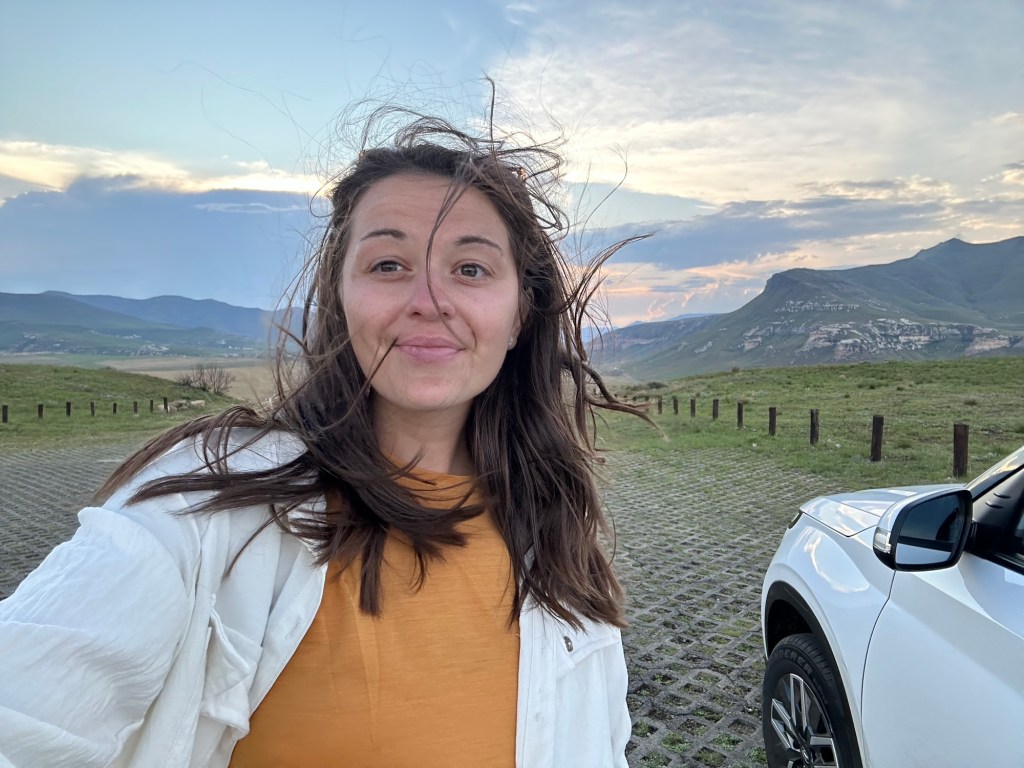
We stayed in a small town named Clarens, and it happened to be the weekend, when they have a beautiful Saturday morning market. We walked around, purchased some local cherries and were on our way to the Drakensberg Mountains.
Dreamy Hikes in the Drakensberg Mountains
Off to the Drakensberg mountains we went! Mat, chose a hike (via the AllTrails app) which was an “off the beaten path” trail in a remote nature reserve. We left the main road to a gravel road, where we drove for about 30 minutes until we arrived and seen an isolated open gate leading to tall grasses and a forgotten road. In front of us was another gate leading to a newer resort, where we were stopped by staff who insisted we speak with the owner for permission to access the nature reserve. After a 20-minute search, we finally located “Adventure Dave”—only to find out he didn’t own the land, and we were free to hike.
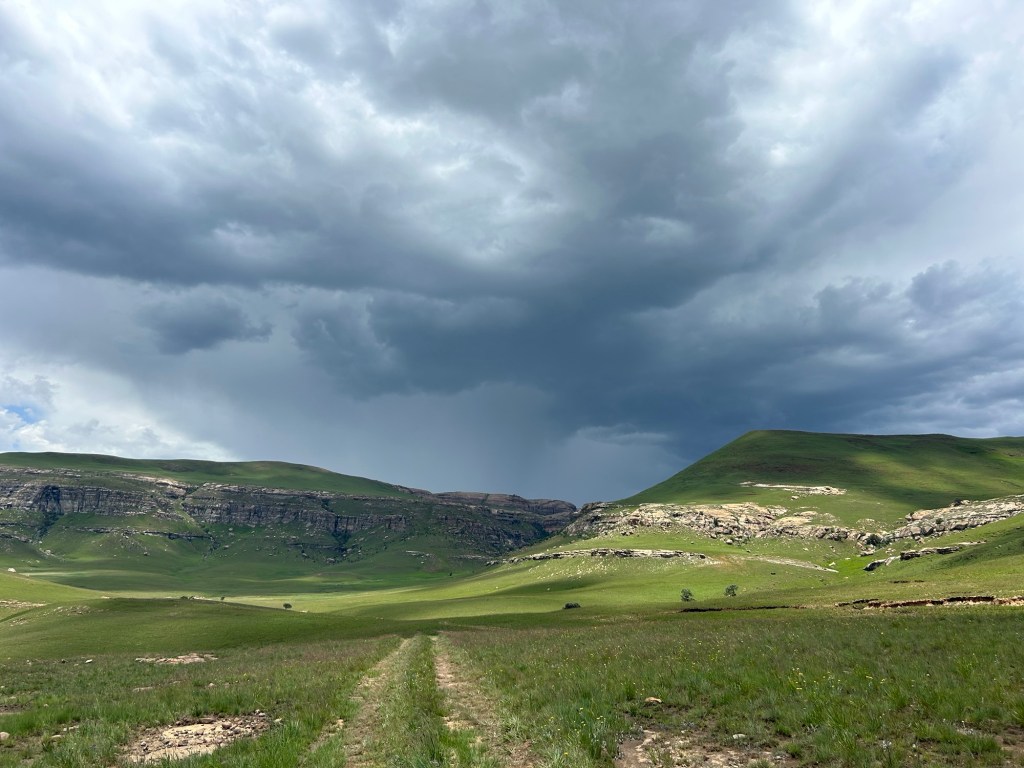
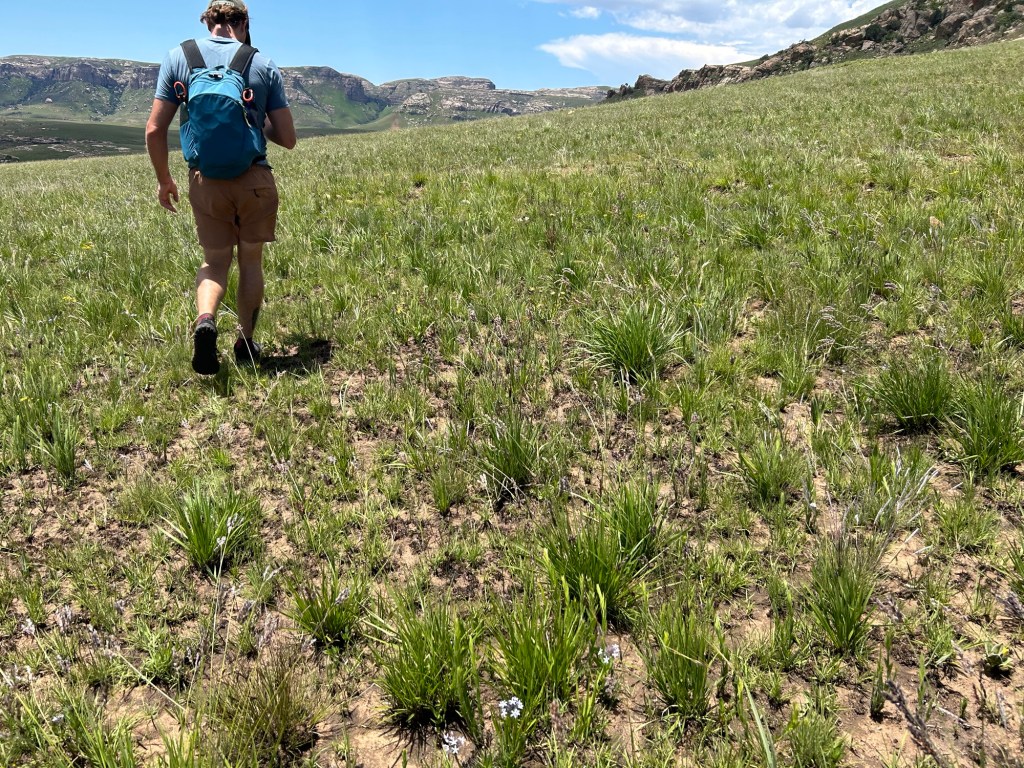
The hike led to a grave site of a Portuguese explorer from the 1800s. We began our hike on the road, quickly veering into an off-road, grassy trail/pathway. After about 4.5km we neared the gravesite, the weather quickly took a turn. We heard loud thunderclaps overhead, and the sky darkened, with picturesque bolts of lightning shooting from the clouds around the mountains. The storm was fast approaching, so we had no other option than to run through the grassy terrain to beat the storm. We made it safely back to the car, spotting 1 snake on the trail.
An Unexpected Trip to Lesotho
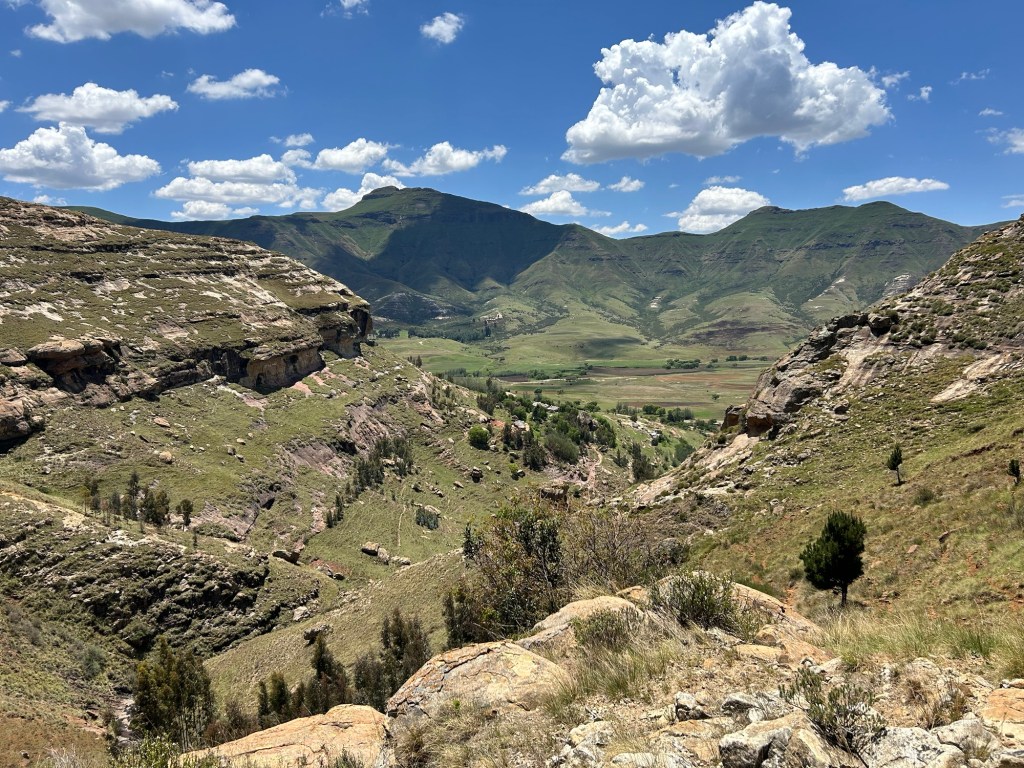
Lesotho is an entirely land locked country surrounded by South Africa, and is the world’s highest country, being the only independent state 1000m above sea level. Our hostel was offering a guided trip to Lesotho (a country I had not heard of prior), we thought this would be an amazing opportunity, so we decided to tag along. The drive brought us through the lush Drakensberg mountains, game reserves, small communities, and to a beautiful country.
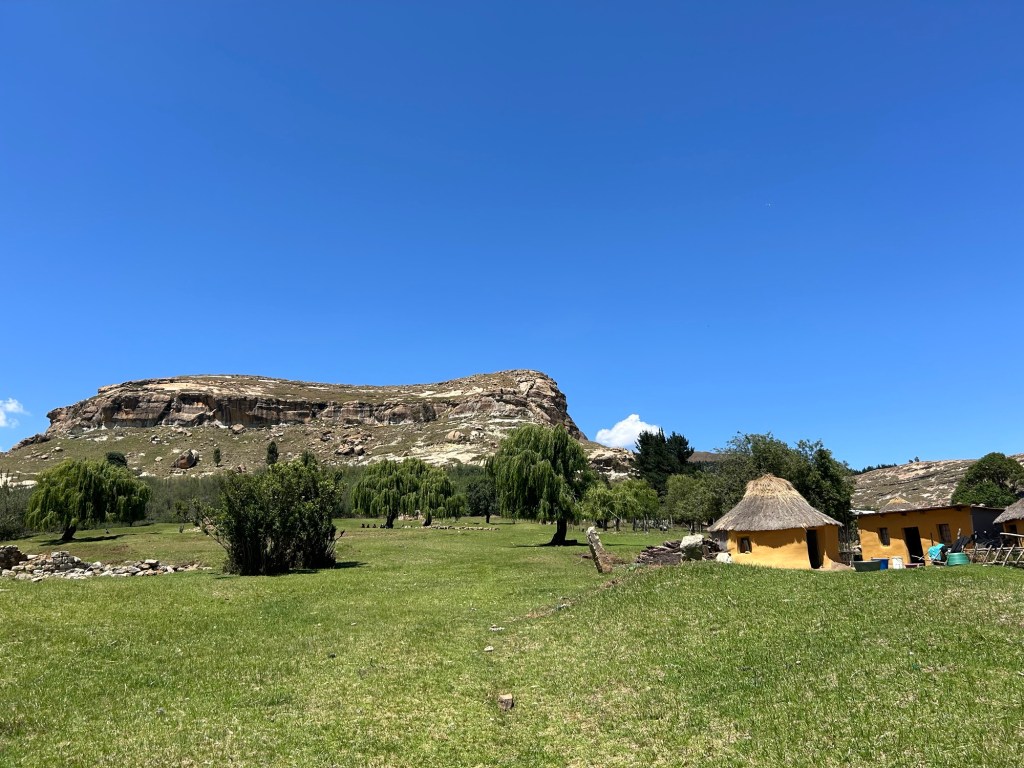
We drove until we reached the South African border, then continued a short distance to the Lesotho border. After clearing customs (a small seacan style building as an official border stop is being constructed), we met a local teacher who took us to a nearby school. The school was small and quaint, and offers free education for children primary school age. However, we learned that many students are unable to afford the fees associated with high school, and thus, are unable to attend school after their primary years. For those who can afford to continue their schooling, we were told some children must walk up to 2 hours round trip both ways to and from school each day.
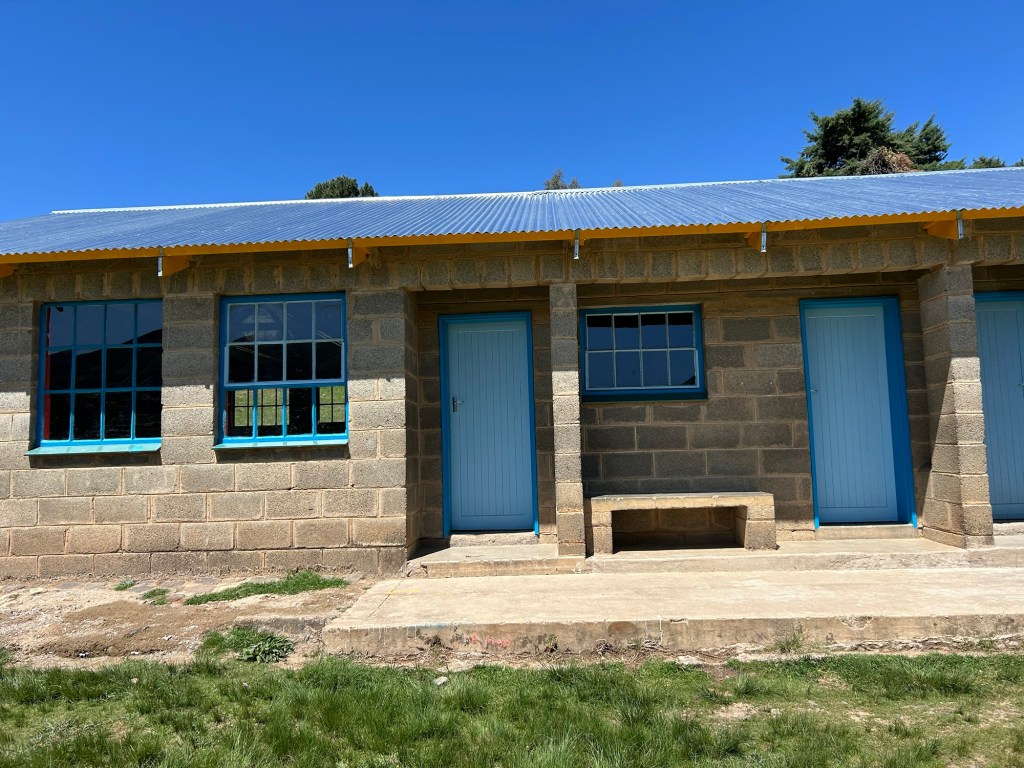
After our school visit, we then hiked up a local mountain, where we visited a traditional home made of cow dung, tasted corn-based beer, explored cave drawings by the San people, and ate our lunch at the mountains peak overlooking Lesotho. The San People drawings depicted animals and symbols, providing insight into the lives of the first inhabitants of South Africa, reaching back to 1500 years ago.
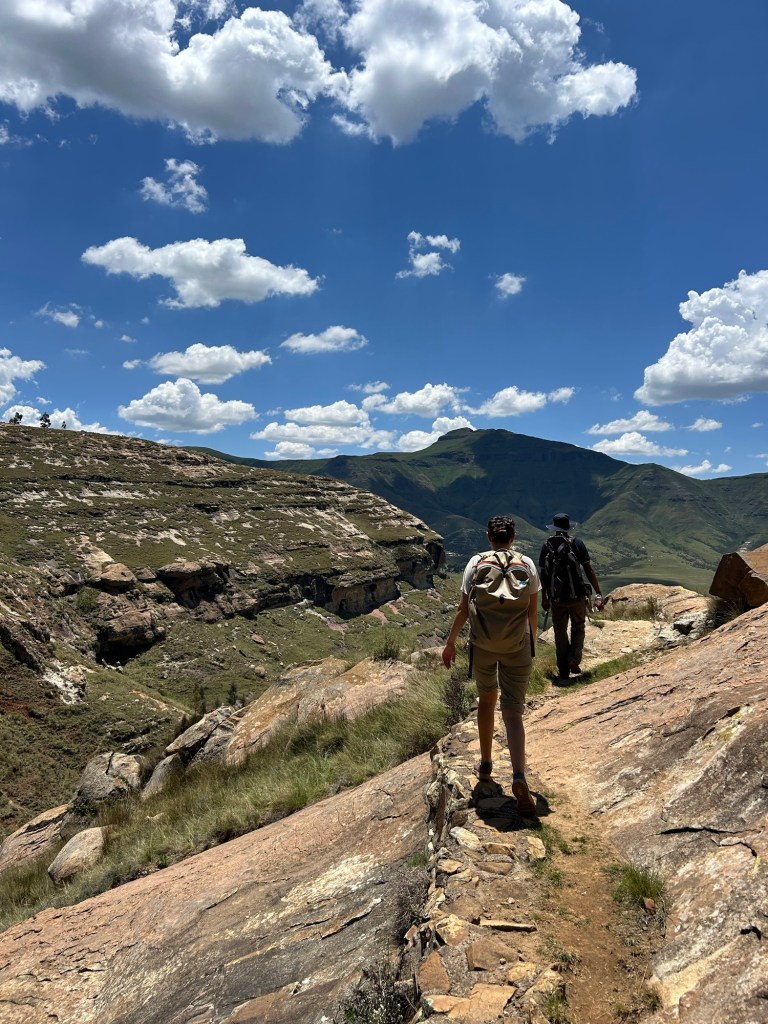
After lunch with a breathtaking view, we continued through pine-covered hills to discover more San drawings and were offered a traditional meal of “pop” (maize served like polenta) and spinach. Our journey also led us to a traditional healer, who shared her story of how she became a healer and how she serves the community.
A Walk to the Tallest Waterfall in the World – Tugela Falls
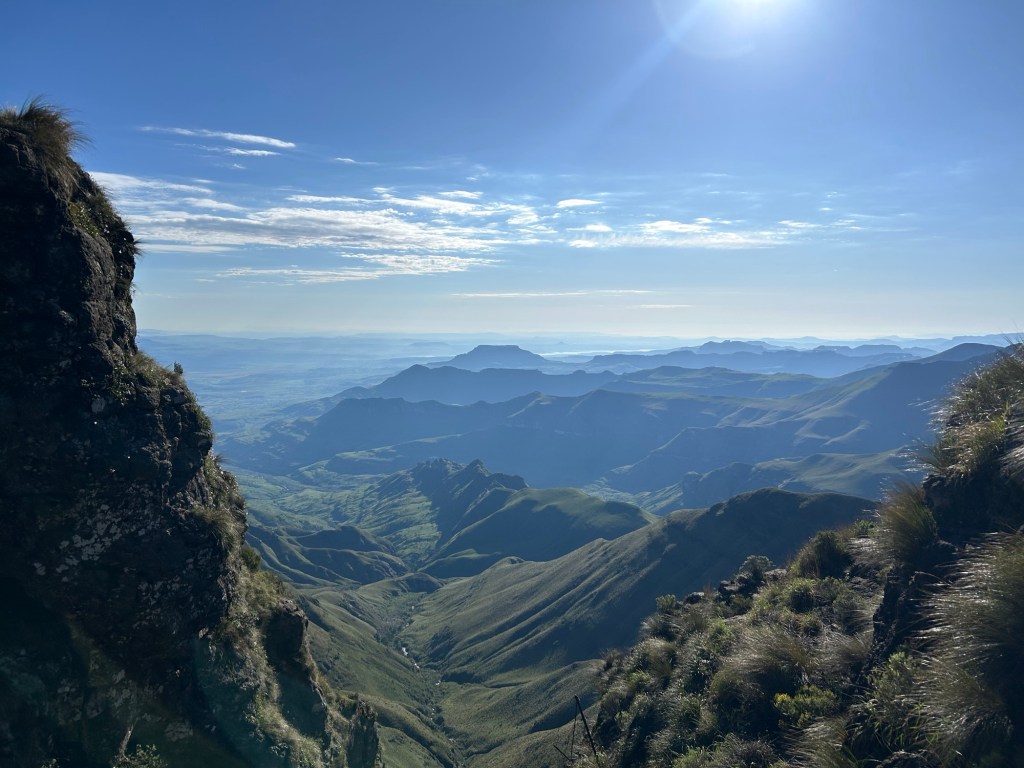
We continued our journey through the Drakensberg mountains. The next day, we had an early wake up, as we wanted to arrive at the trail head for 7am to miss the daily 2pm thunderstorms. We had an early wake-up at 3:45 AM to begin our journey to the Witsieshoek Mountain Lodge, arriving around 5:30 AM. After a quick breakfast, we set off in a 4×4 vehicle on a bumpy, 45-minute drive to the trailhead. We began hiking around 7 AM.
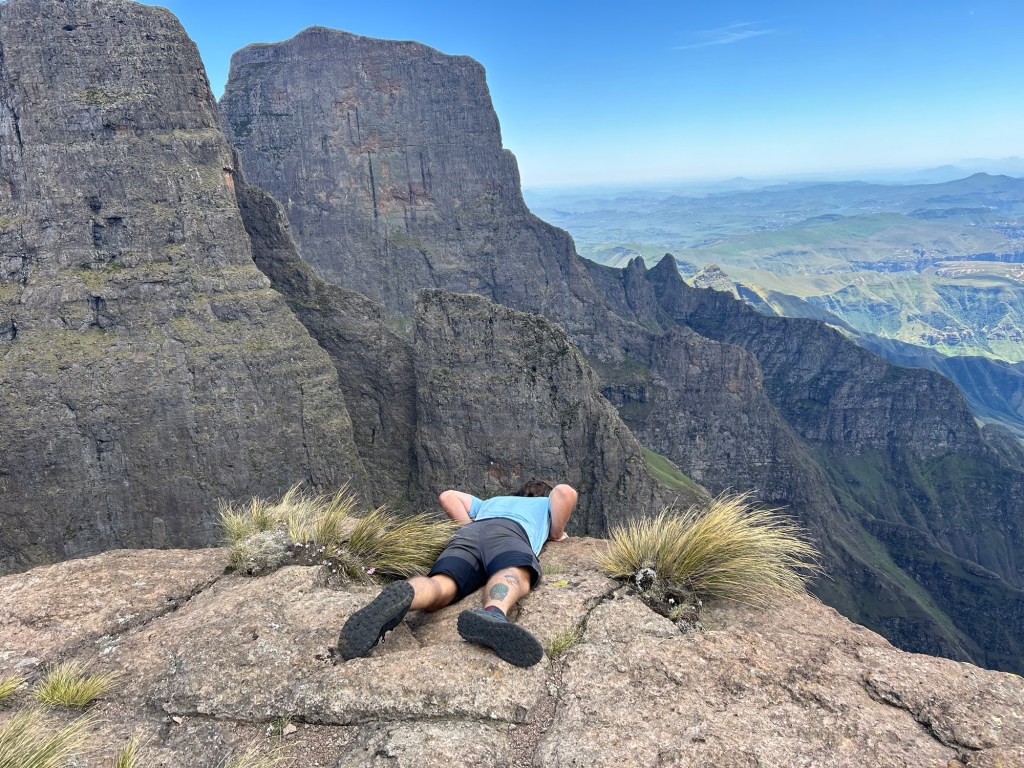
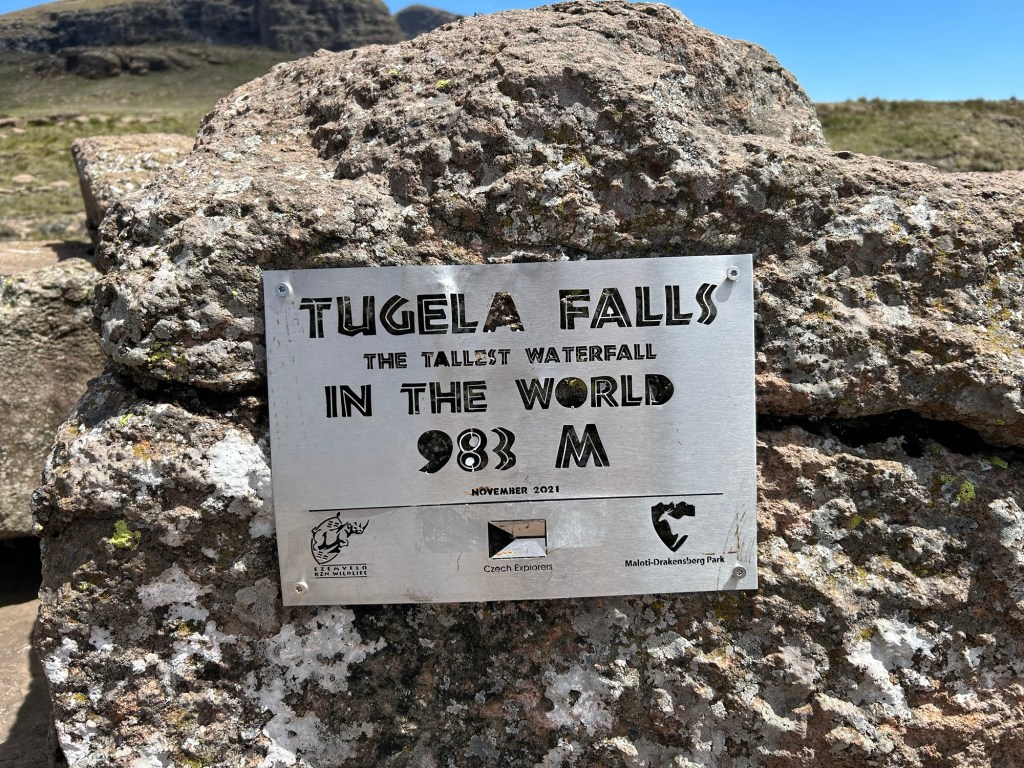
The first part of the hike was steep, and we shed layers as we ascended the bricked trail. We reached a viewpoint with stunning views of the lush green surroundings and local mountains. Continuing on, we encountered sections with steel ladders, foot holders, and chains to help navigate steep ledges. At one point, Mat let out a loud scream while climbing a ladder, and I feared the worst—only to learn he was joking (there were selective words chosen).
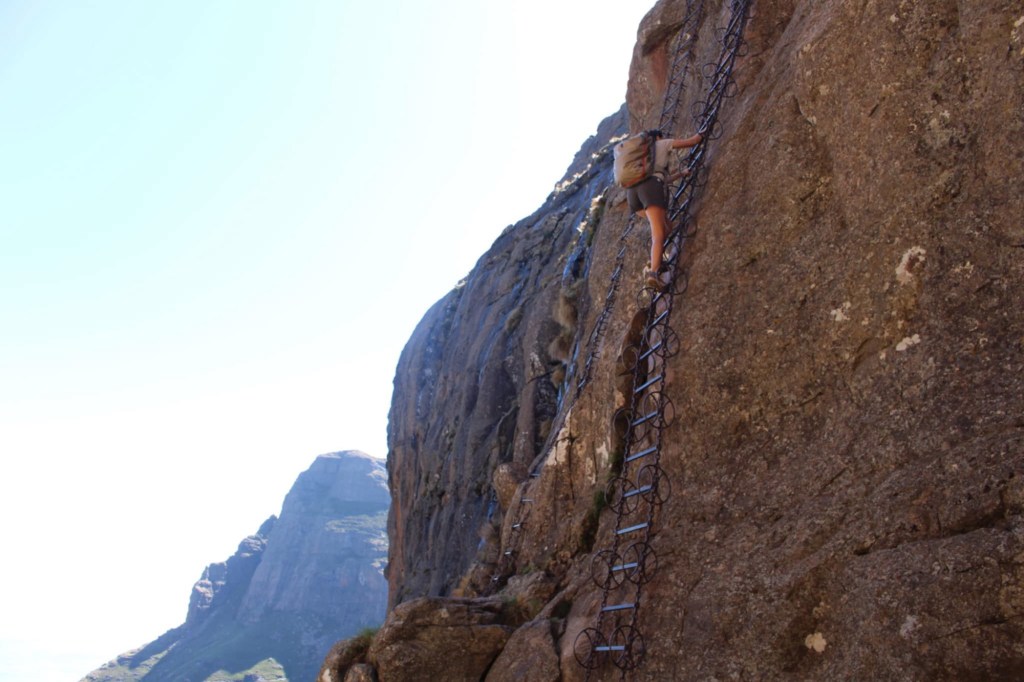
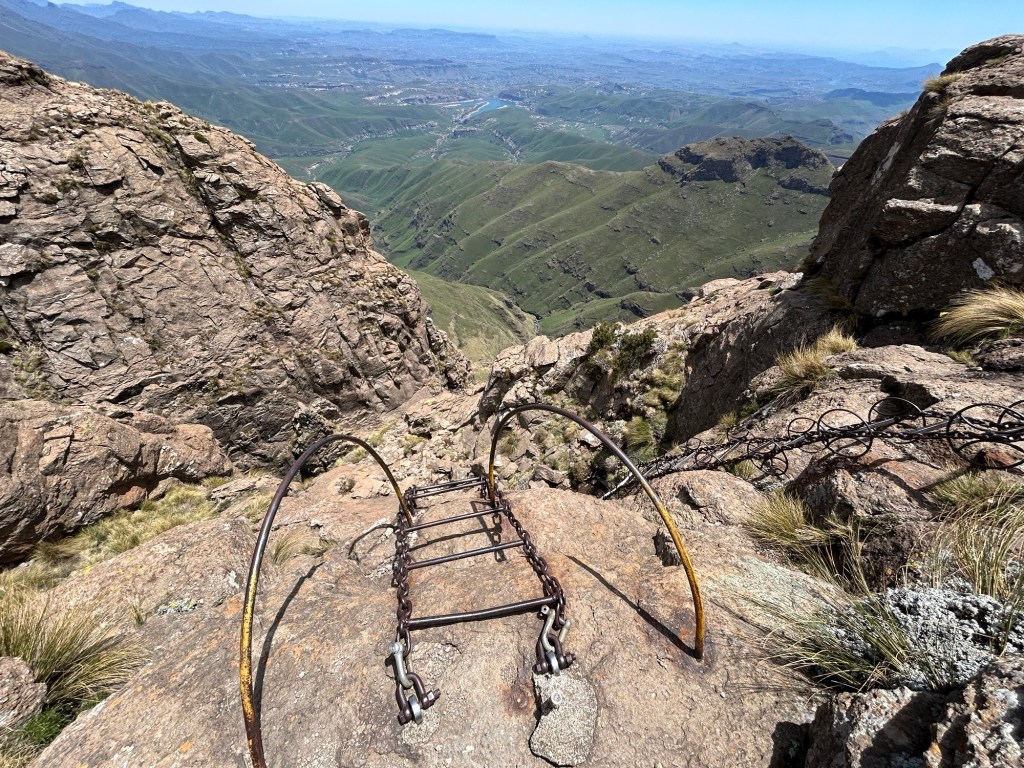
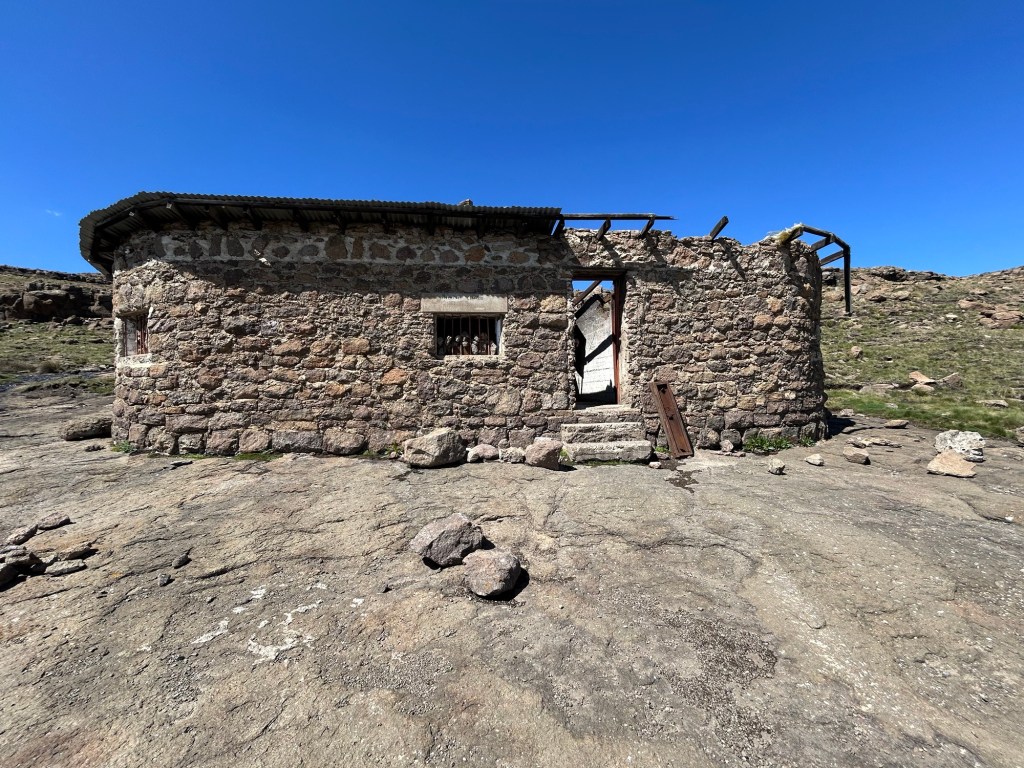
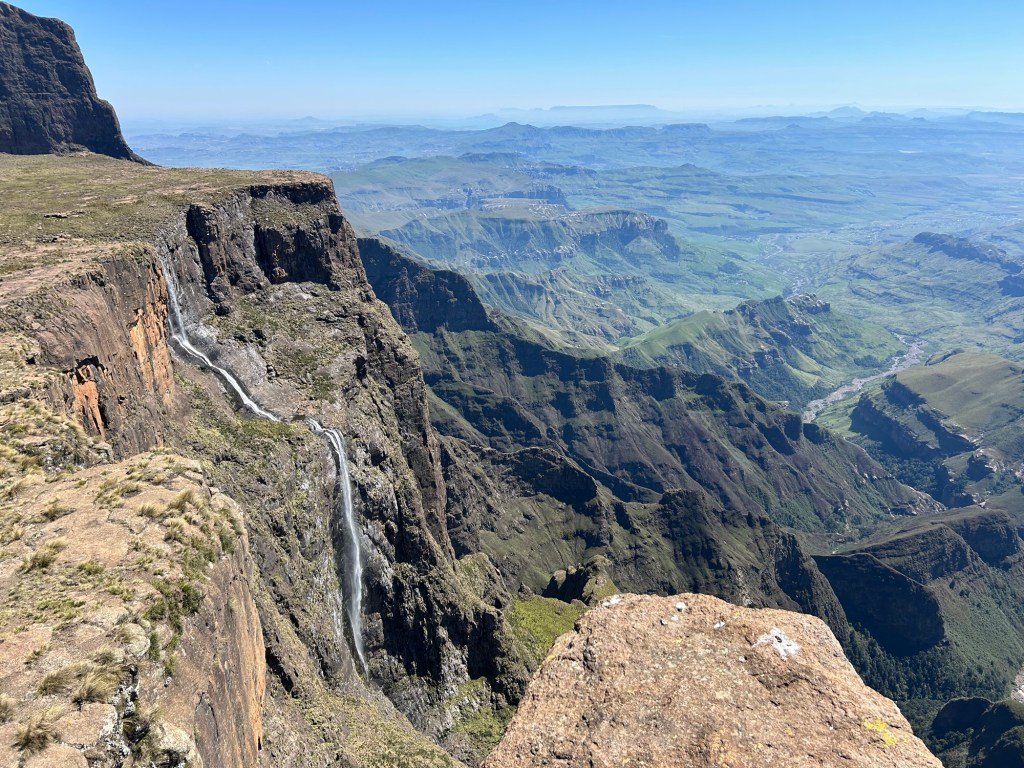
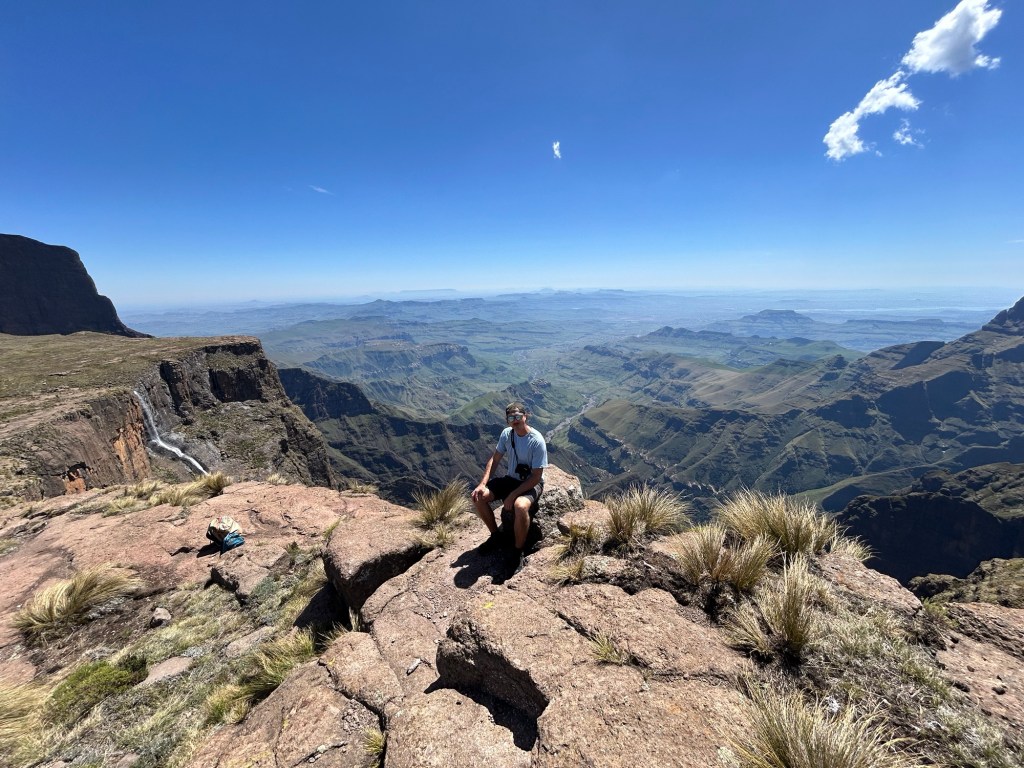
After the second ladder section, we reached a smaller waterfall and continued towards a historic house, called the “Natal Mountain Club,” built in 1930. We then made our way up to a higher vantage point for views of the world’s tallest waterfall.
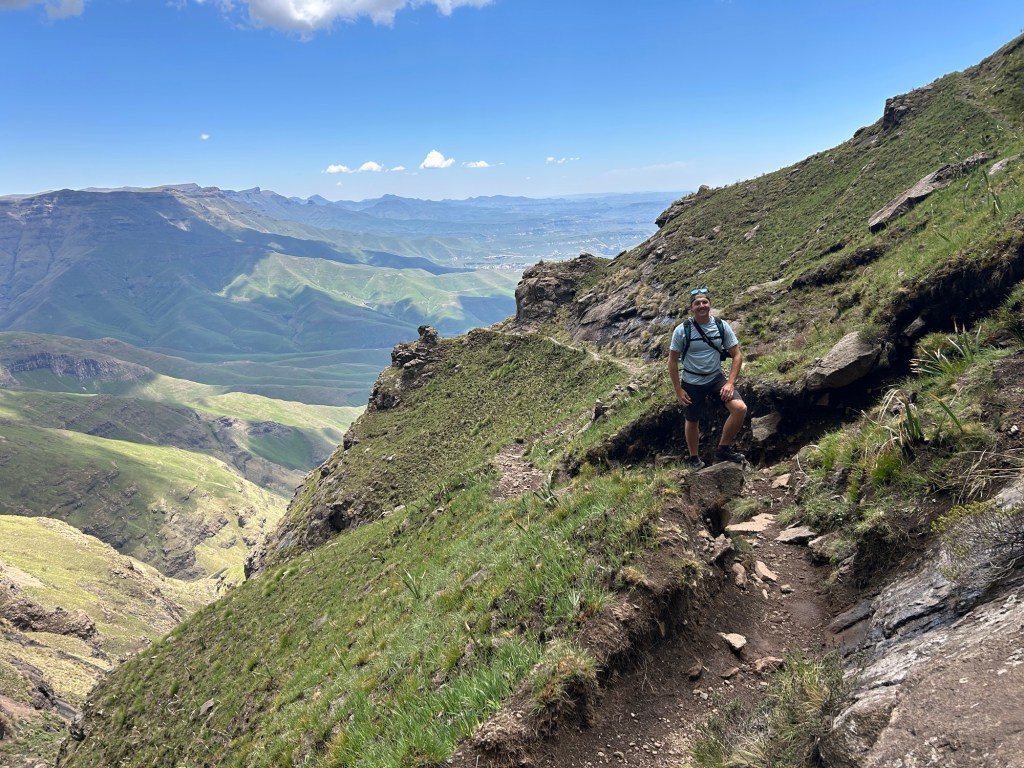
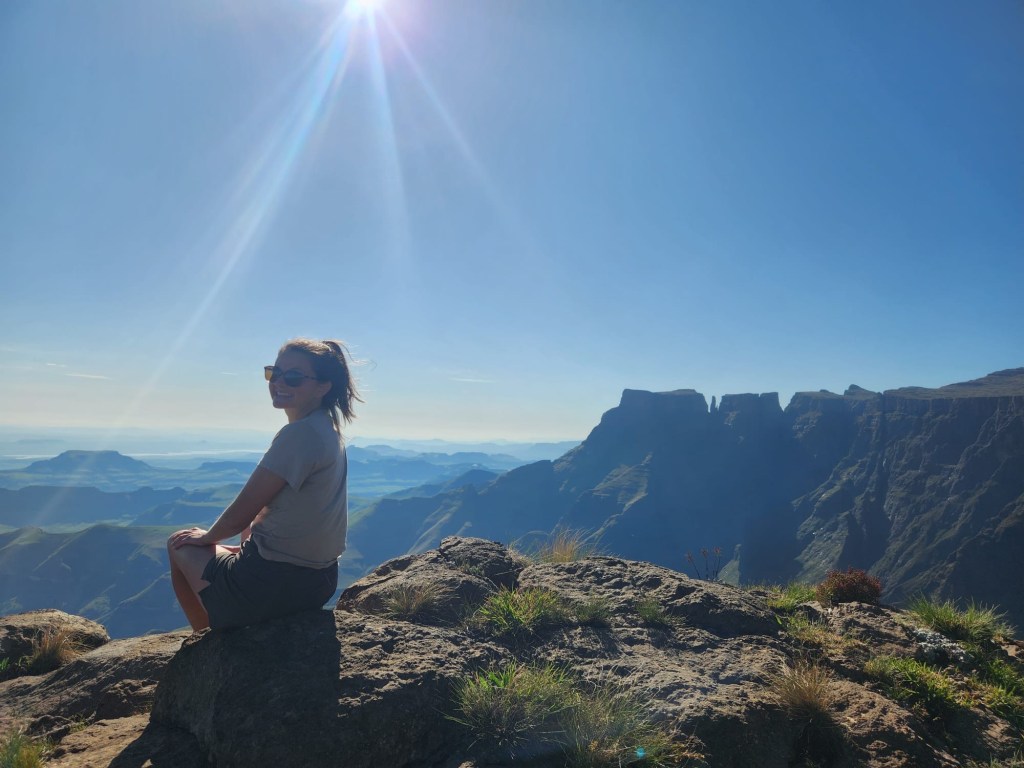
Mat splashed in the water as we explored the area before beginning our descent. By this time, thunder started to rumble in the distance, signalling the approaching afternoon storms. We finished the hike by 12:30 PM, 1.5 hours ahead of schedule but managed to get on an earlier shuttle to bring us back to our car. We treated ourselves to smoothies, and reflected on the beautiful sceneries of the Drakensberg Mountains.
San People Art Drawings
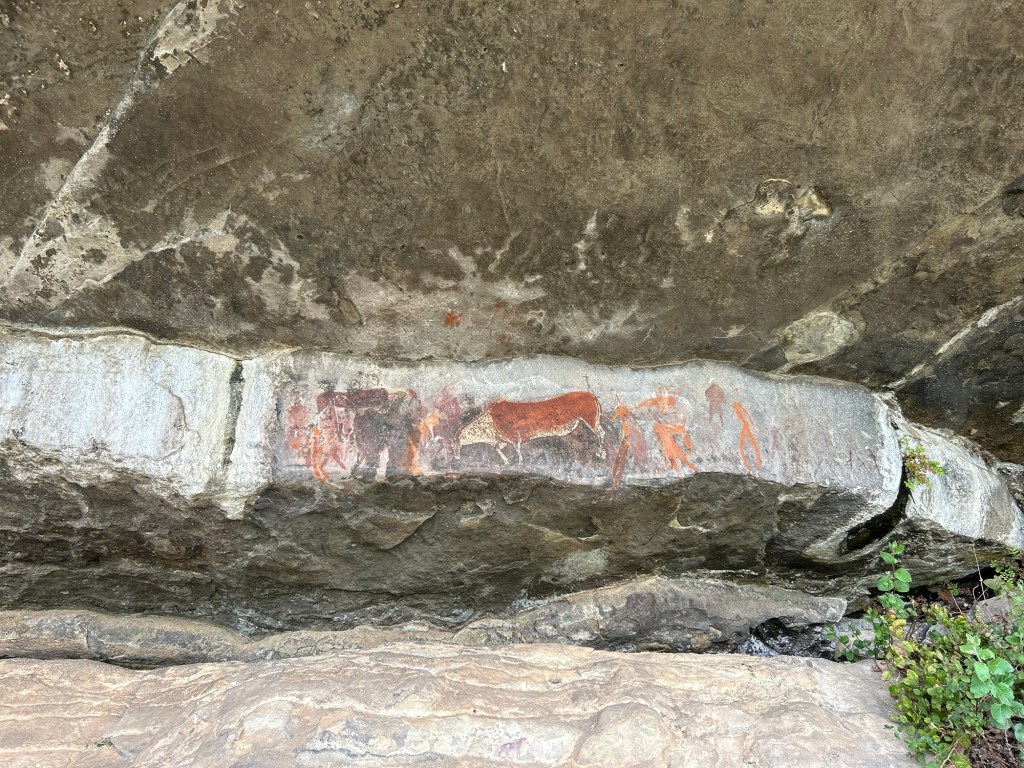
Our final hike in the Drakensberg mountains. The Bushman Paintings or San rock art, were produced by the San people, an indigenous group native to South Africa, and their rock art can still be found in numerous caves around the region. Hoping to see San rock art, we found a hike on a trail called the Game Pass Shelter, which offers a guided tour by a park ranger to see preserved pieces of the San people’s rock art providing a glimpse into their spiritual beliefs, daily life and connection with nature.
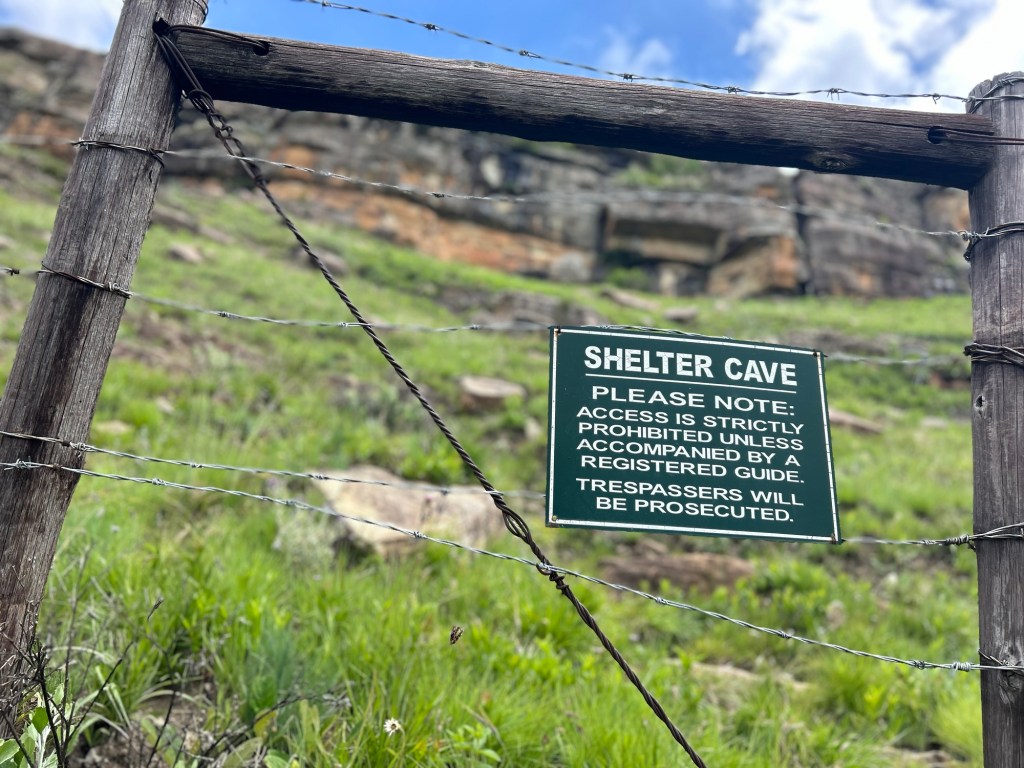
To get here, we drove through winding roads, and small towns through the Drakensberg mountain range. The potholes on these roads were some of the trickiest I’ve endured while driving, but we made it though! Upon arriving, we checked in and met our guide, Rafiel. He suggested we watch a video about the “Bushmen” or San people and their rock art, which was both informative and emotional, including stories from archaeologists who discovered these ancient paintings, and the difficulties the San people have went though to preserve their culture.
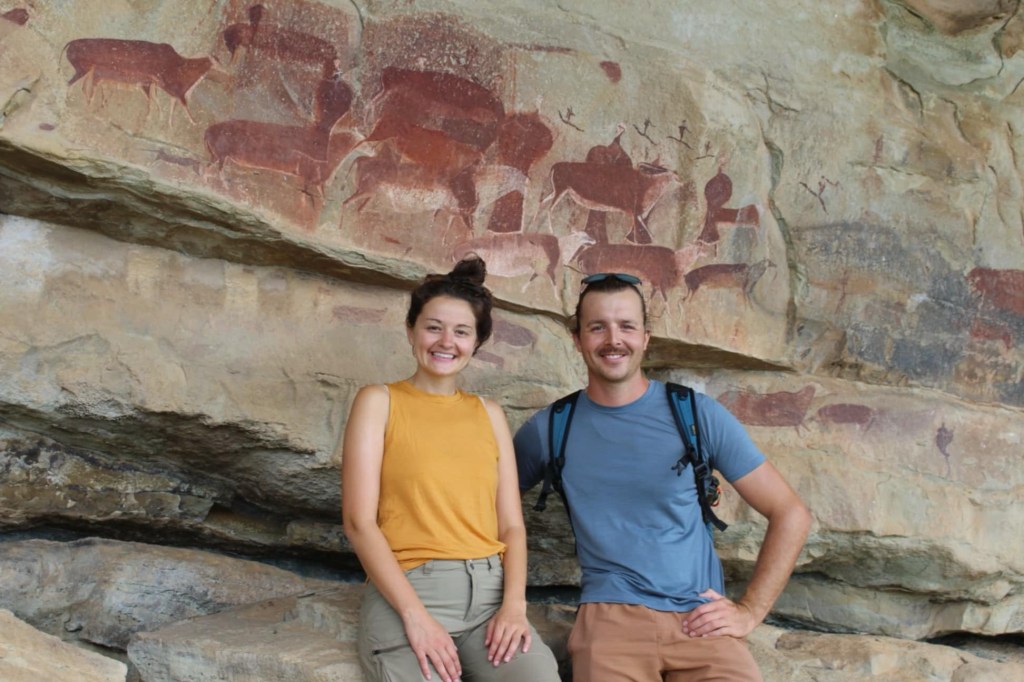
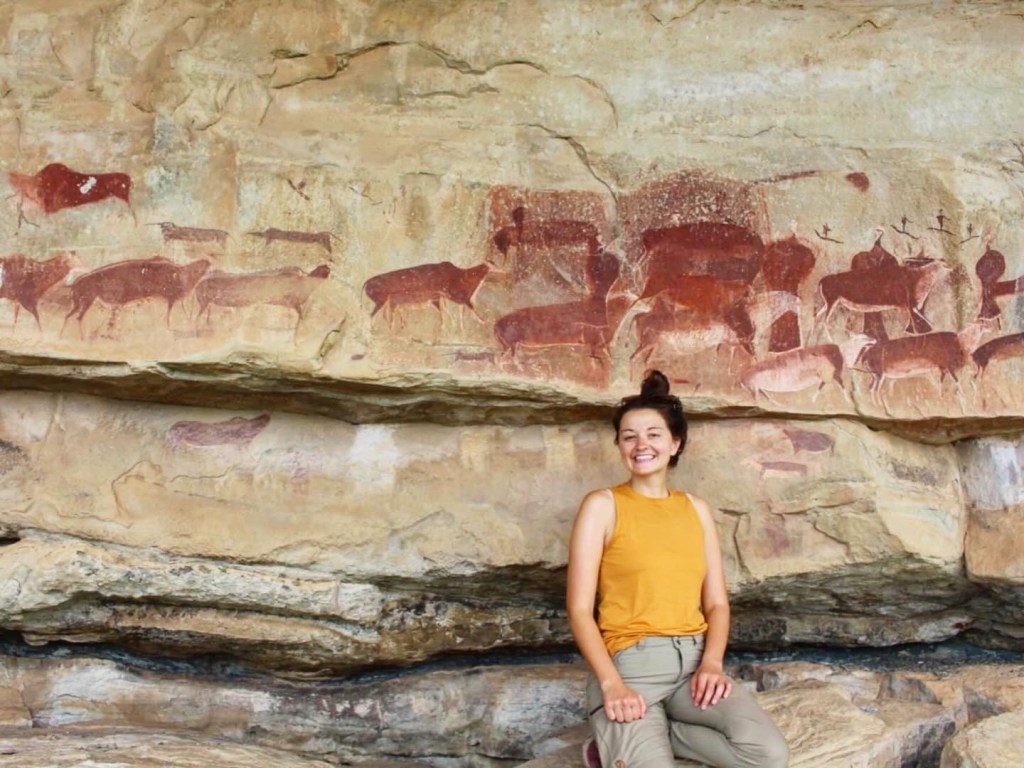
After the video, we began our hike along a gradually ascending trail through the mountains. We passed an overhanging cliff with a waterfall and a bridge before tackling a steeper ascent towards the San People rock art site. On our way up, we spotted a baboon. At the top, we explored the rock cliffs which were covered in beautiful depictions of the rock art, which could date back thousands of years. Rafiel shared insights about the artwork, and we had time to take some photographs before we descended back to the trail head.
Road Trippin’
After our time in the Drakensberg mountains, we continued our road trip, slowly making our way to Cape Town. The next stop was a town called Durban.
Durban
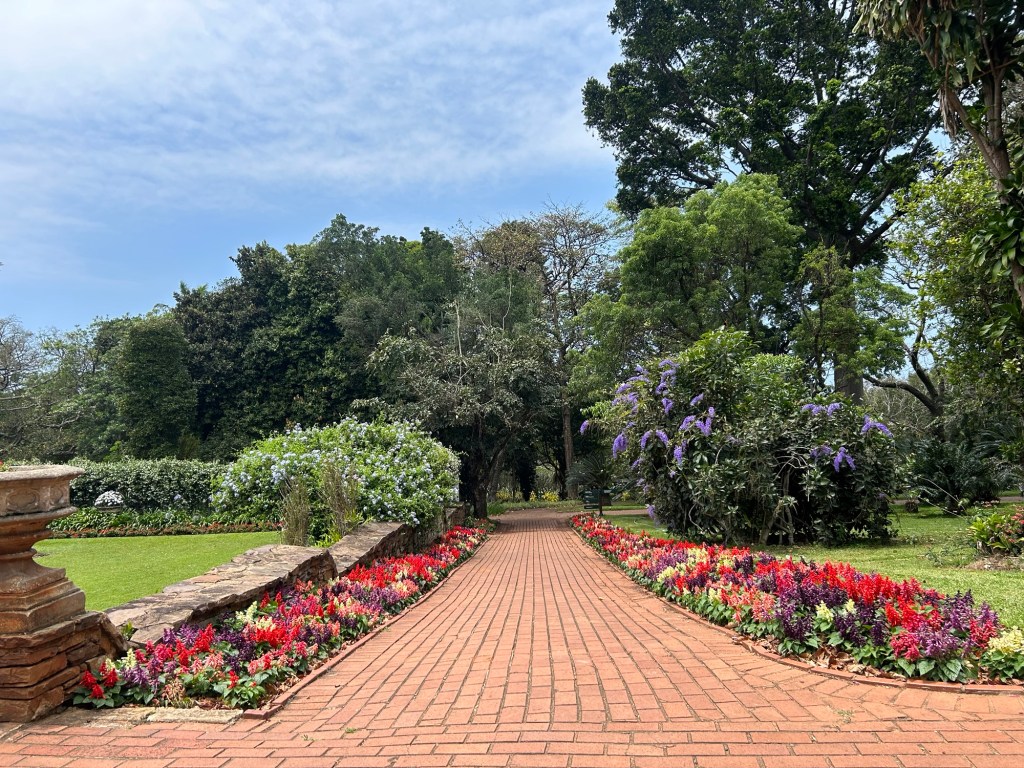
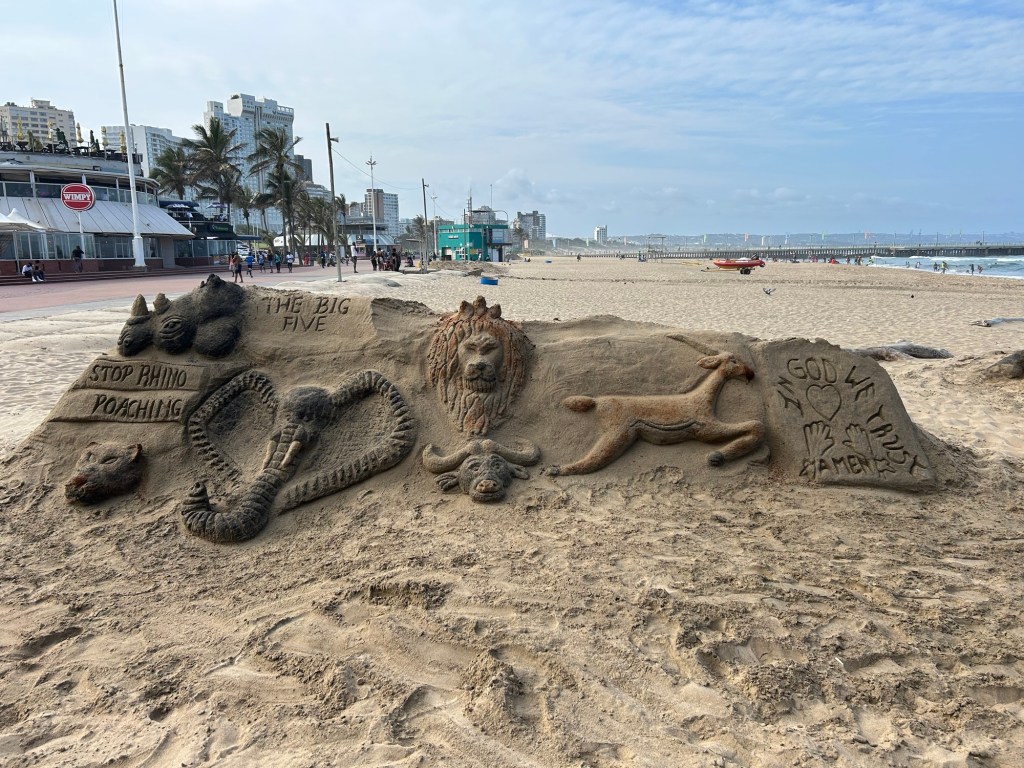
In Durban, we visited a beautiful botanical garden celebrating its 175th year, making it the oldest standing botanical garden in Africa. Although the full Christmas light display wouldn’t begin until December 6th, we saw some lights already lit up during the setup. The park was peaceful, and quite large, though most plants hadn’t bloomed yet, except for in the vibrant Japanese garden. We spotted Egyptian geese and Spoonbill birds at the pond. After a rest, we walked to the beach, where we went swimming and passed by some beautiful sand art creations.
Port Edward
Attention coffee lovers, this is a place you would love! Beaver Creek Coffee Estate in Port Edward was quite the farm, not only serving coffee, but surrounded by clearly marked biking and hiking trails. We arrived late in the day so we weren’t able to hike (we did stop for some mini putt at a place called Mac Banana which is also a hidden gem) and sampled various blends and bought two bags. The estate, nestled among winding vineyard roads, offered bottomless coffee for 30 Rand (>$3 CAD).
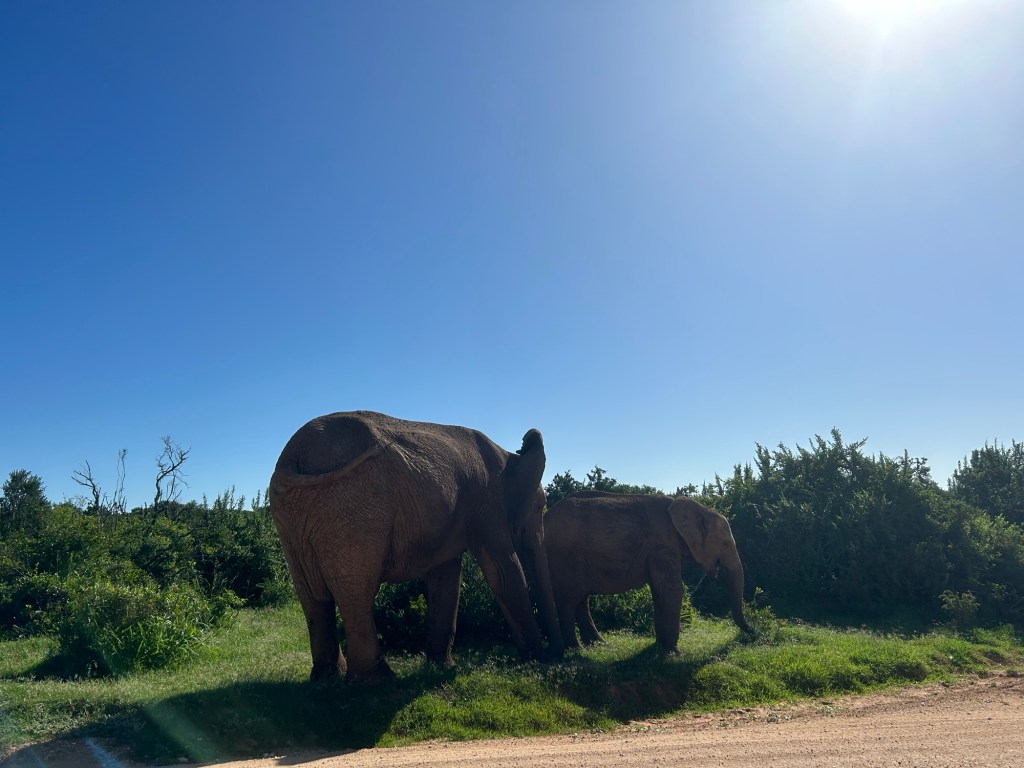
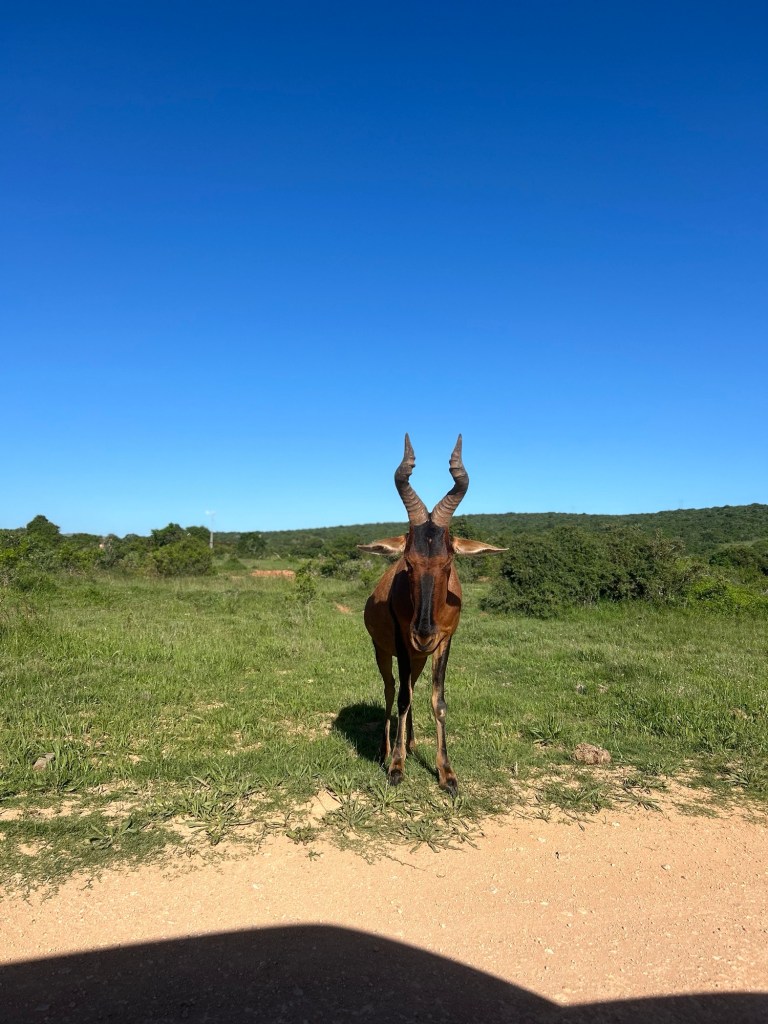
Driving from Port Elizabeth to Patensie: we drove to see the Big Pineapple, a massive pineapple structure on a farm with a museum and rooftop lookout. After buying some pineapple juice and receiving a free pineapple, we drove to Addo Elephant Nature Reserve for a self-drive safari. Though it was a quiet time of day, we still spotted tortoises, zebra, warthogs, eland, and a few elephants. As the sun set, we saw more elephants feeding on grass and other animals along the way.
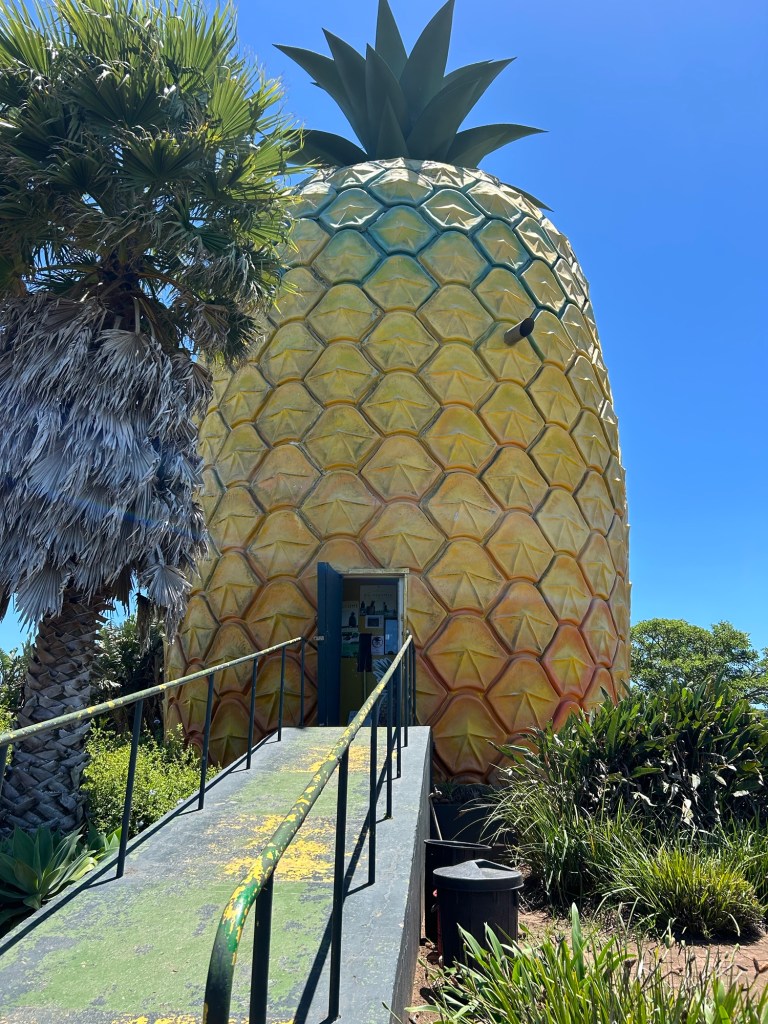
Patensie & the Dragon Fruit Farm
Next, we drove to the Dragon Fruit Farm, our accomodations were nestled into a valley in Patensie, known for their production of citrus fruits and this specific farm, for its dragon fruit production. After stopping for gas in a small town, we navigated through some GPS issues and arrived at the farm around dusk. The property was beautiful, nestled into a green valley surrounded by farm fields protected by electric fencing.
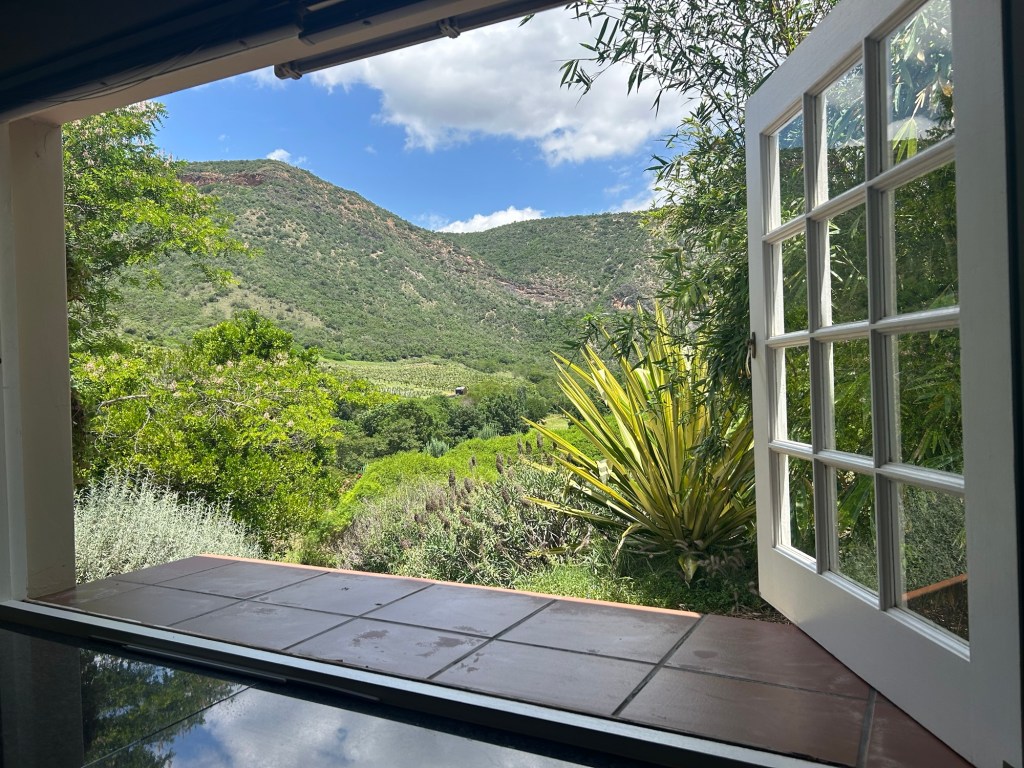
The following day, we started our day hiking through the Dragon Fruit Farm, exploring the property which spans an entire valley called Keurkloof. The owners, who’ve had the land for 20 years, cultivate dragon fruit (though not in season). The surrounding area is known for its production of citrus plants. We crossed several streams on our walk, reached a bat cave with lots of bats making noise inside a dark corridor which also had an incredibly strong odor, and then we navigated through tall grasses and sandy trails, spotting snake slither marks along the way (as well as snake #3 & 4 of the trip). We spent the afternoon playing backgammon while sitting around a fire, and relaxed into the evening. This was a peaceful and serene gem tucked away in the Keurkloof valley.
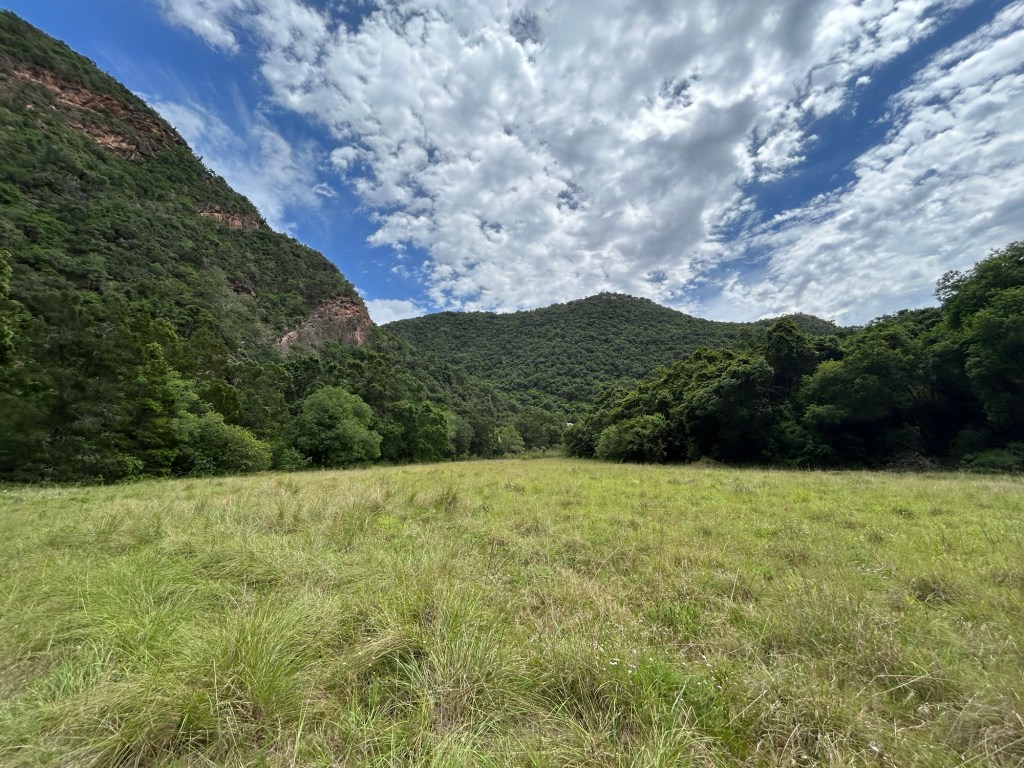
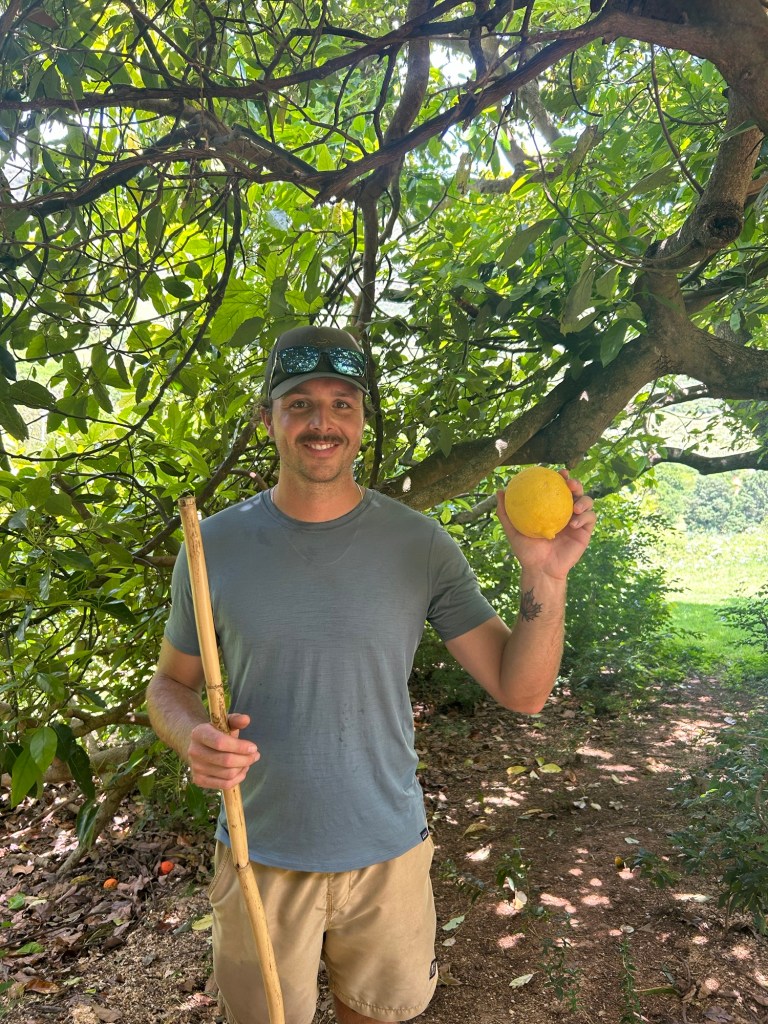

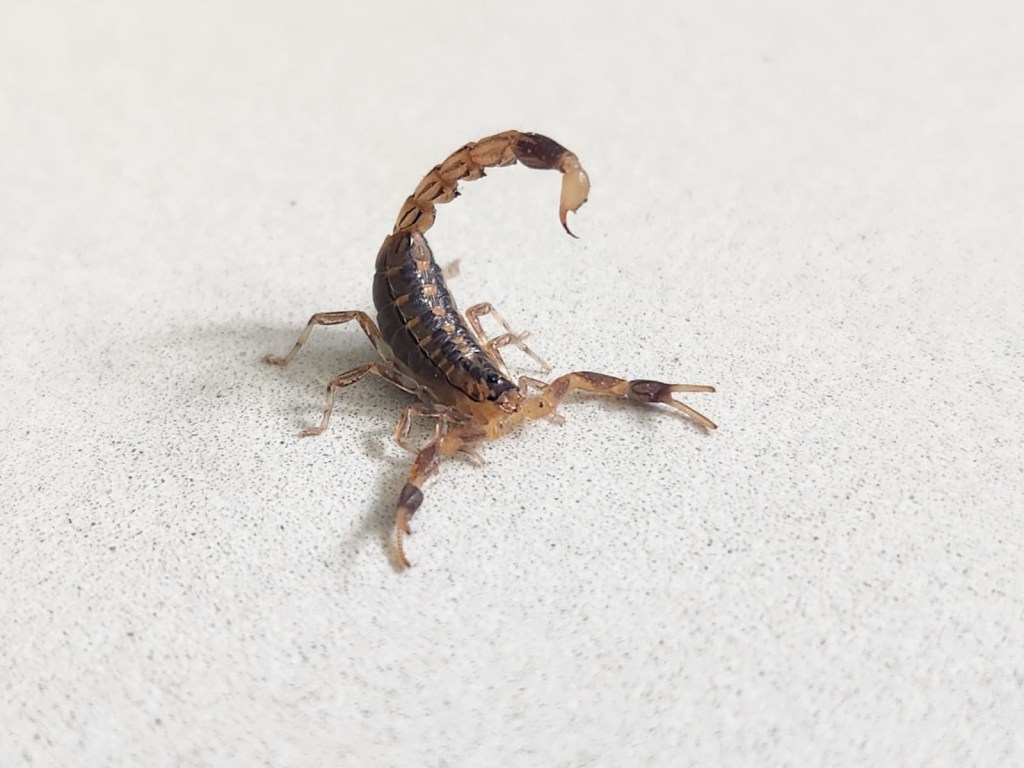
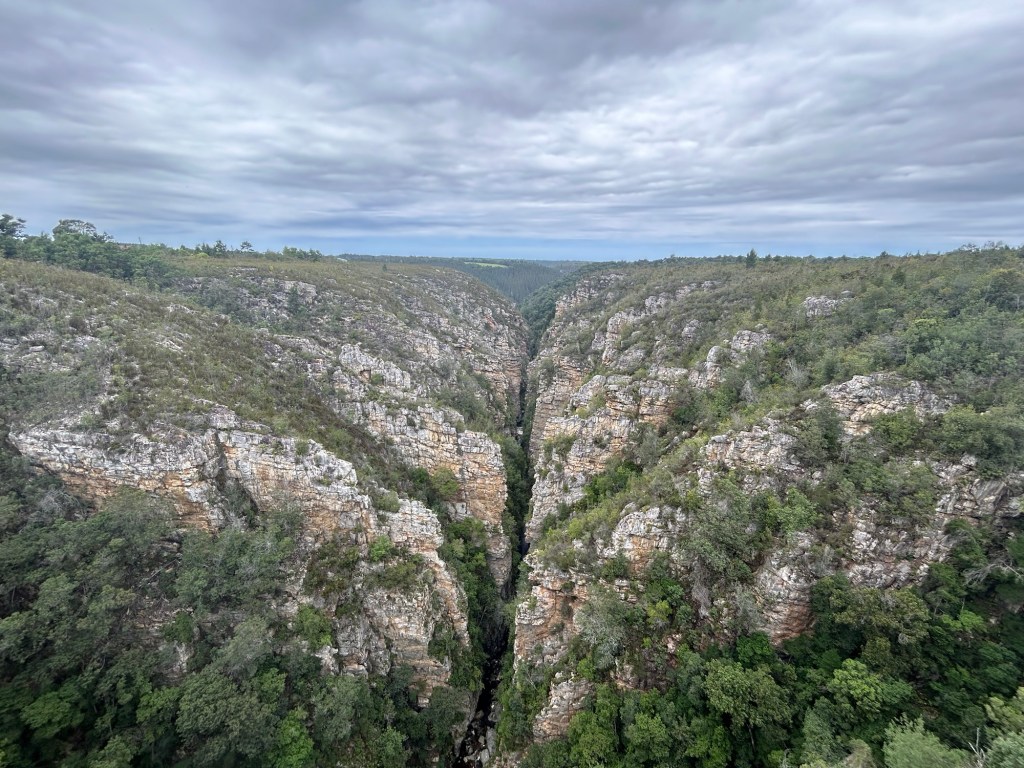
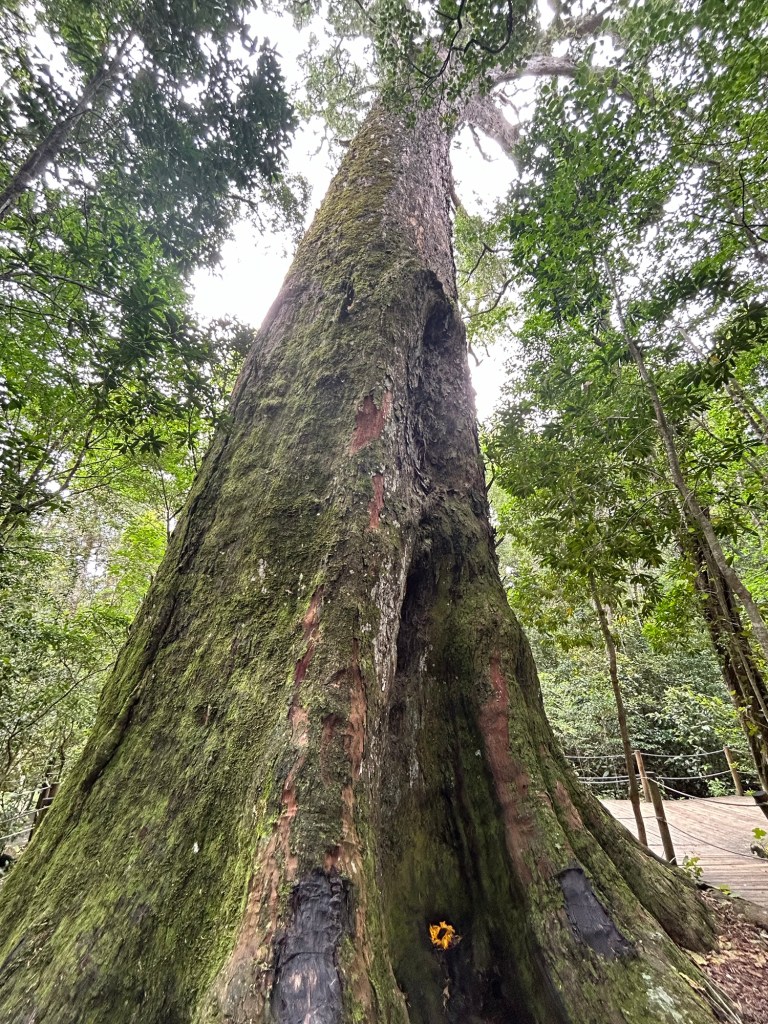
We started the following day at the Dragon Fruit Farm, encountering a large spider hiding behind the washroom curtain and a small scorpion hiding under my sandal in the kitchen. Before departing, we asked our host for any suggestions or tips on where to stop along our drive to Plettenberg, she suggested a coffee shop called Padlangs, a bridge off of the N2 highway overlooking a stunning canyon and the Tsitsikamma Visitor Centre to see the “Big Tree.” We did all of these activities, including stopping to see the “Big Trees,” which were massive Yellowwood trees, over 1,000 years old.
Tsitsikamma National Park
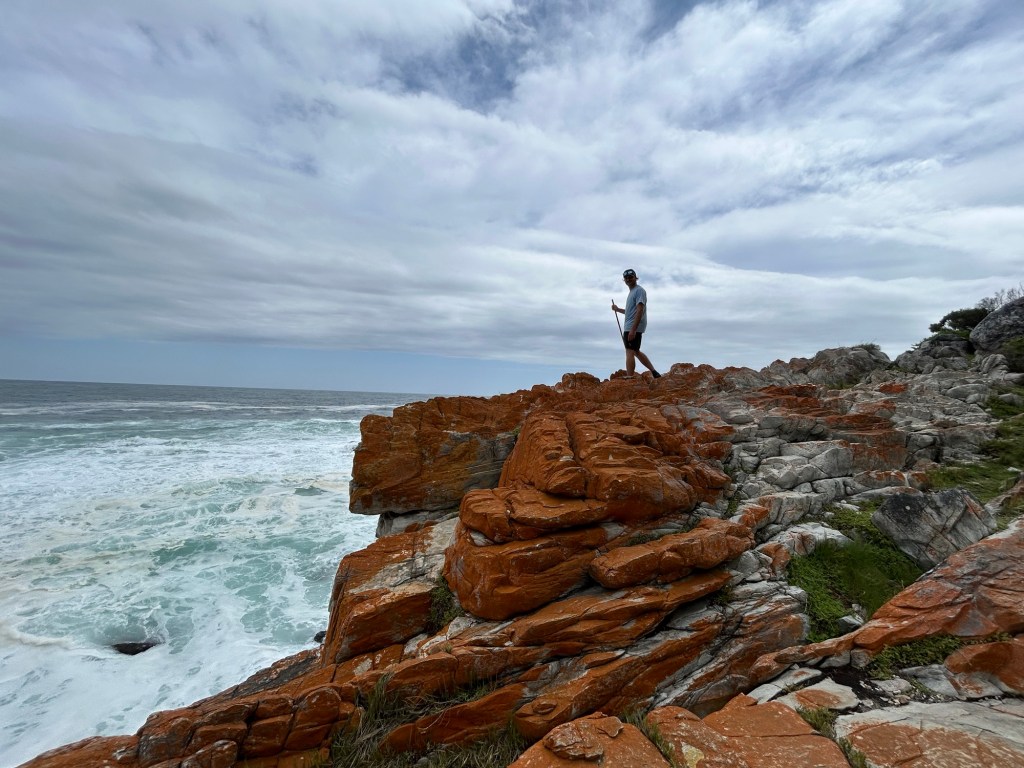
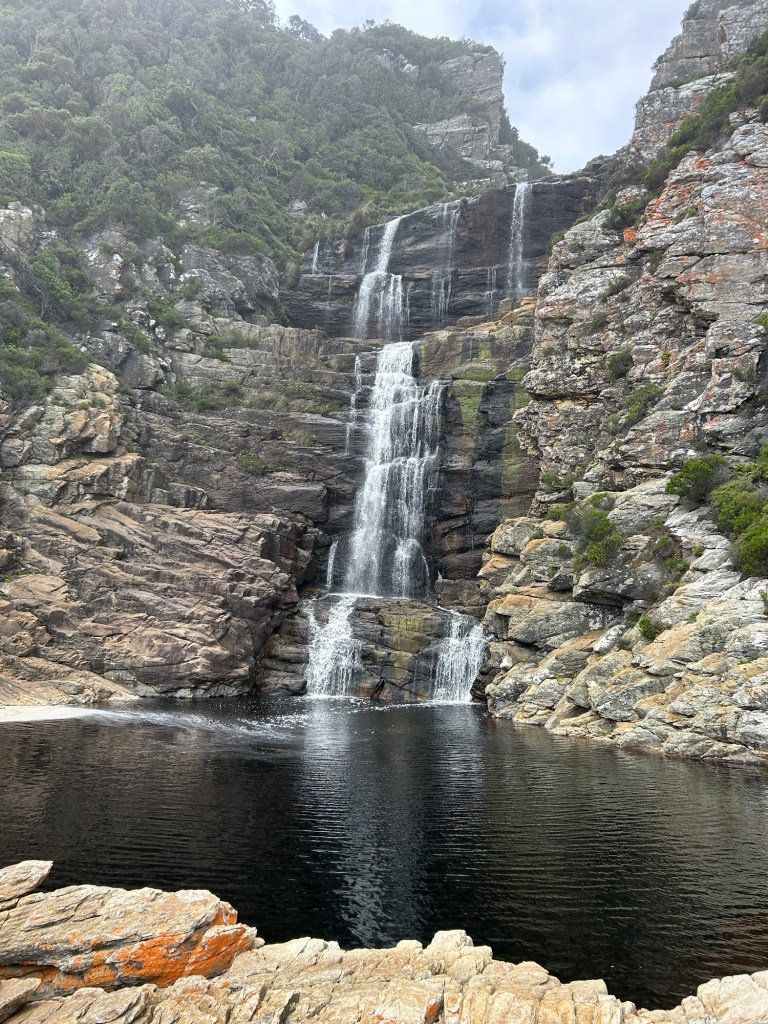
The Tsitsikamma National Park is a protected area on the Garden Route, Western & Eastern Cape South Africa. We decided to stop at the Storms River Mouth Rest Camp to hike a renowned trail called the Waterfall Trail. We decided to do a day hike here, but hikers can also opt in to do a 5 day 60km trek, however, we opted for the 6km coastal hike which took us through forests and along rocky cliffs, offering beautiful ocean views. We reached the waterfall, where a river flowed over the mountain and into the sea, and enjoyed the ocean spray before heading back.
Whale Watching
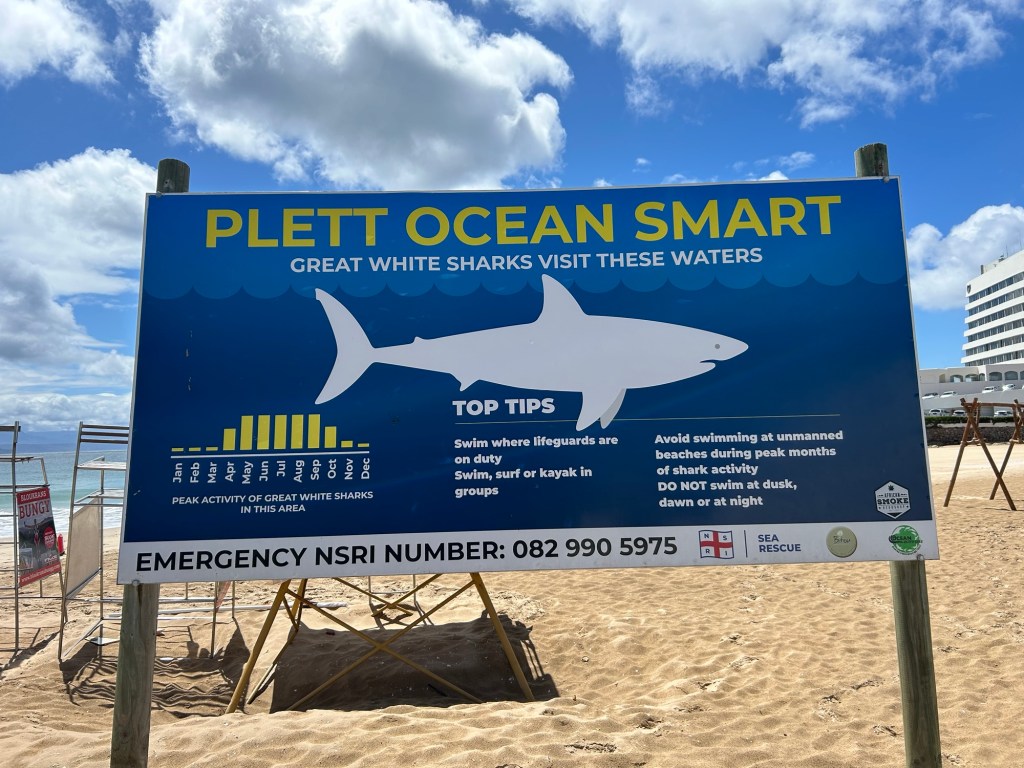
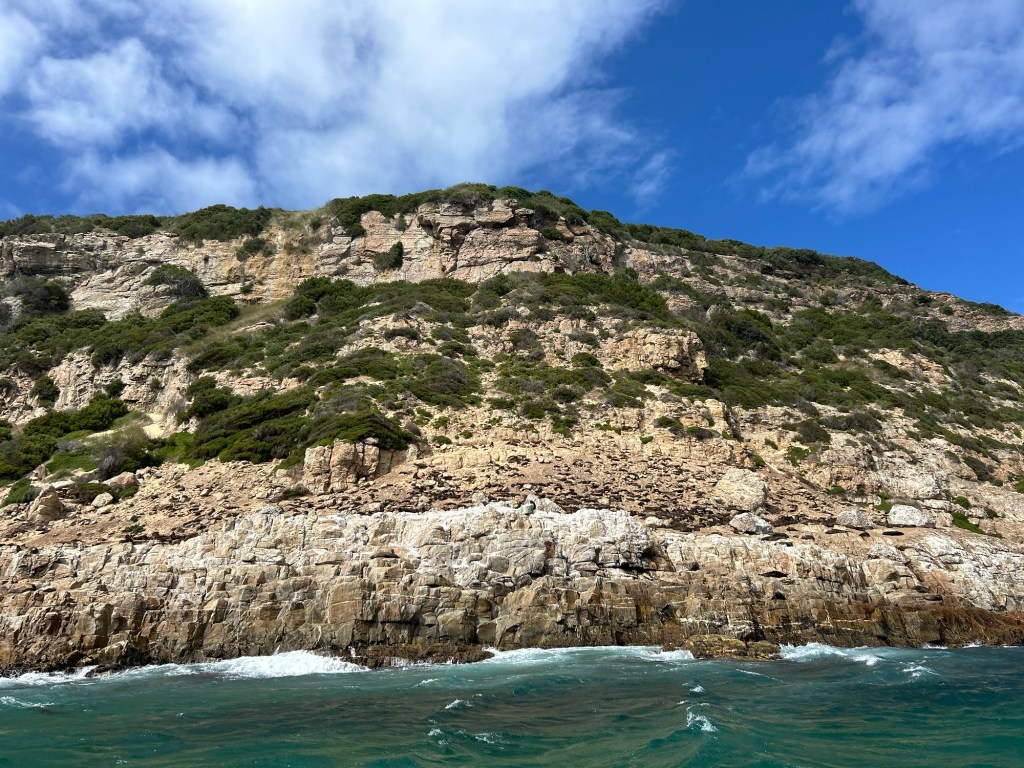
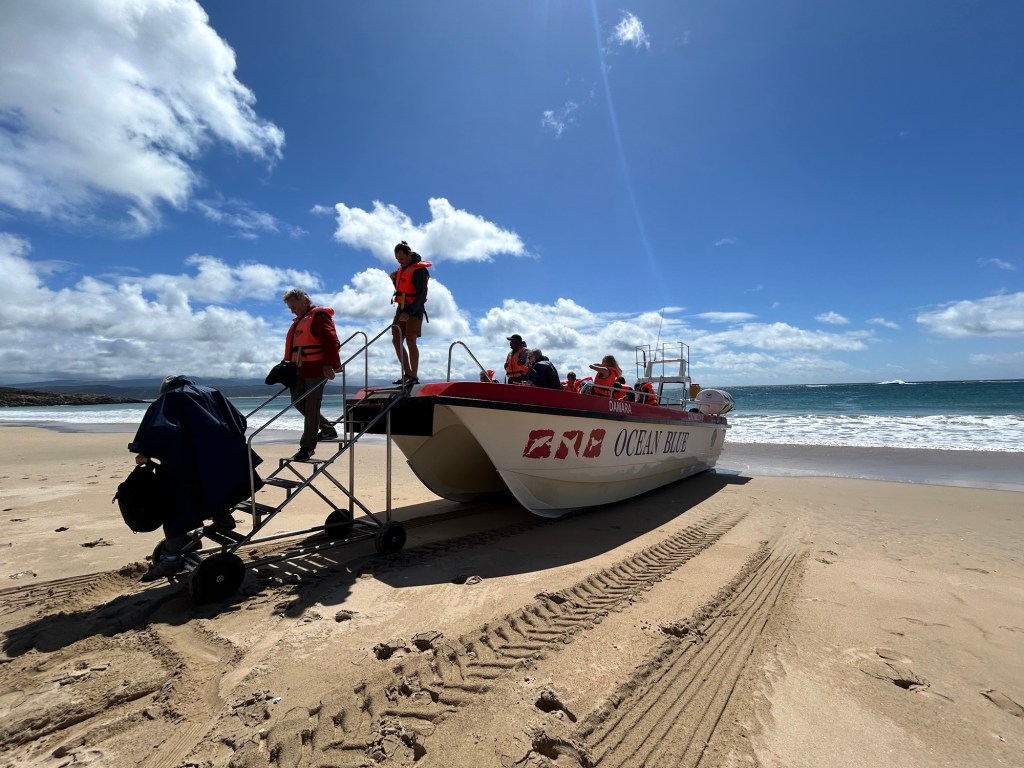
Plettenberg was filled with adventure and local markets featuring homemade goodies, chocolates, GF muffins, vegan smoothies, and so much more. We began with a dolphin and whale-watching tour. After getting geared up at the marina, we boarded a small speedboat, pushed into the water by a tractor, and quickly spotted bottlenose dolphins swimming alongside us. The weather turned rainy, and we ventured into rougher waters in search of whales, but were met with large waves. We drove closer to shore, and we eventually found a seal colony with over 6,000 seals, surrounding us as far as the eye could see (and the nose could smell).
After the tour, we grabbed smoothies and walked along the beach before heading to Old Nicks Market, known for its Wednesday vendors selling food, homemade trinkets, and local art. We explored the market and visited the Mungo store, which produces organic cotton and linen using traditional methods.
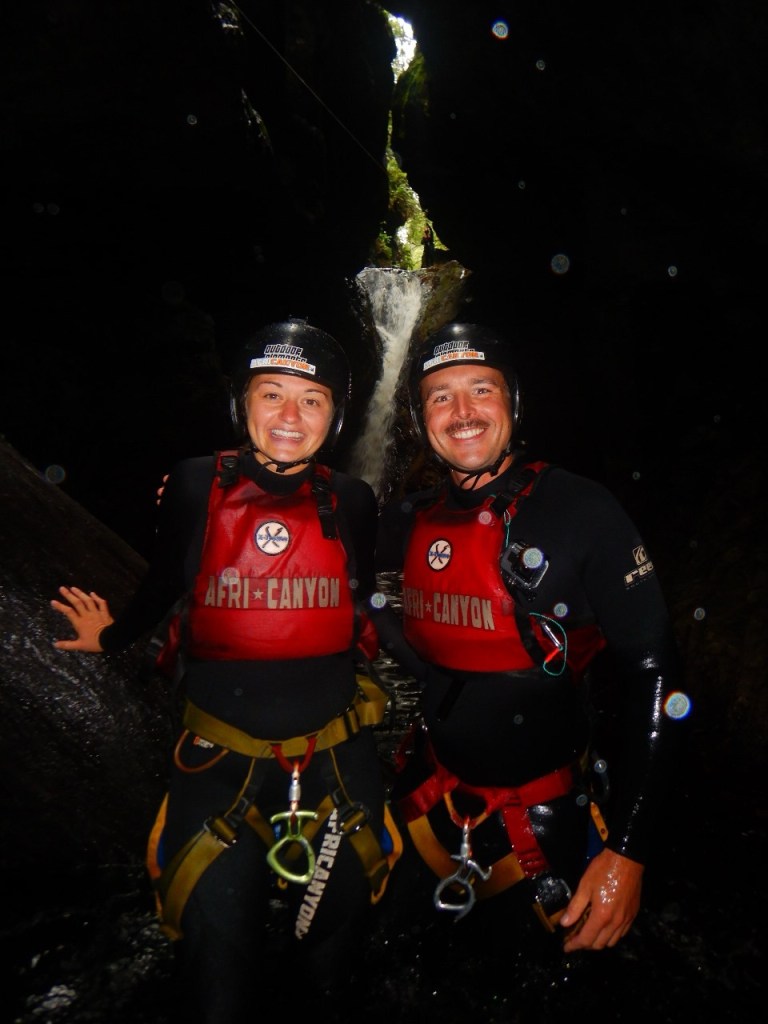
In the afternoon, we went canyoning (or kloofing), which involved abseiling down waterfalls, cliff jumping, ziplining, and swimming through narrow canyons. The adventure was exhilarating, and we finished the day with some thrift shopping before a delicious dinner in Plettenberg Bay.
Oudtshoorn
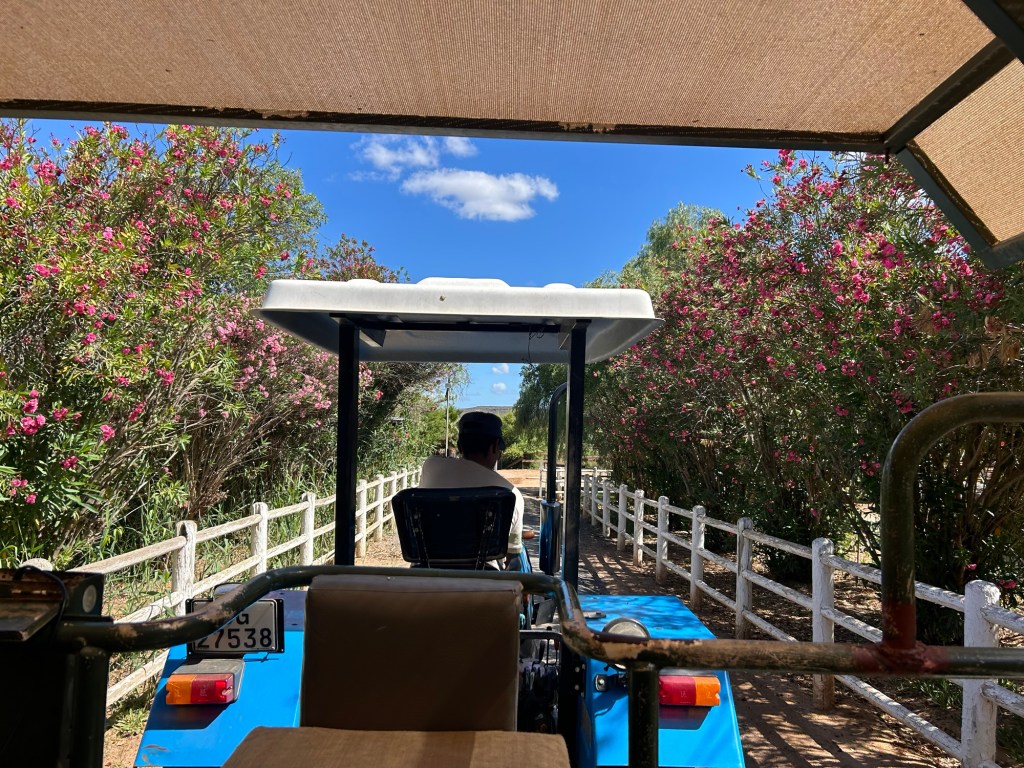
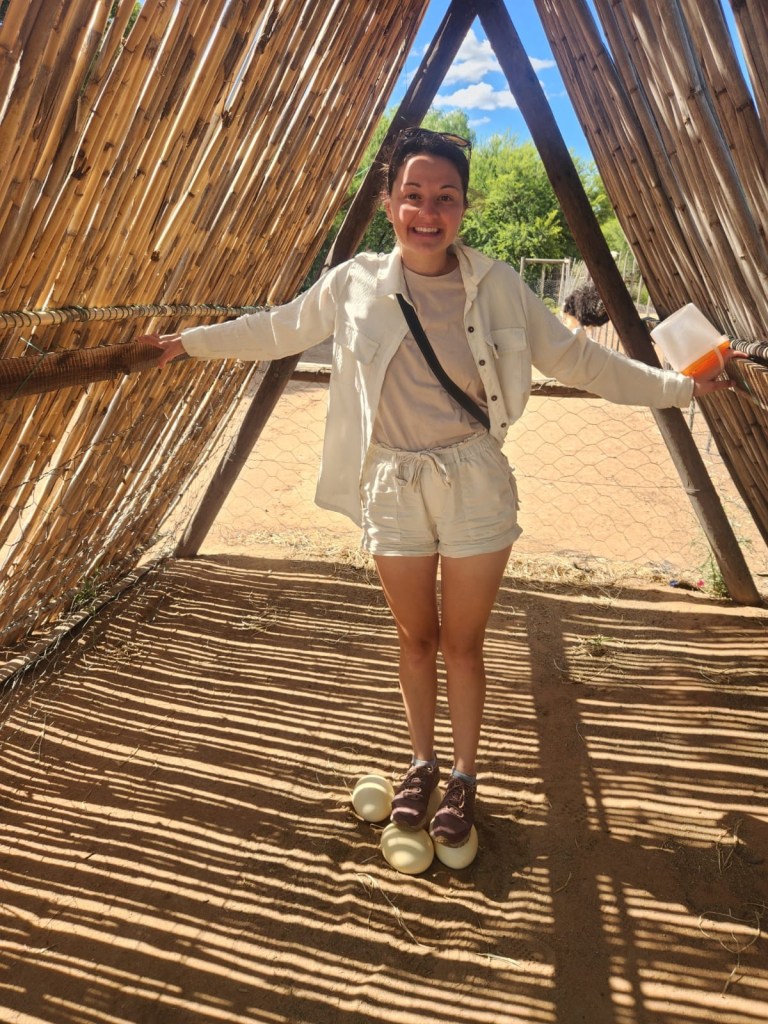
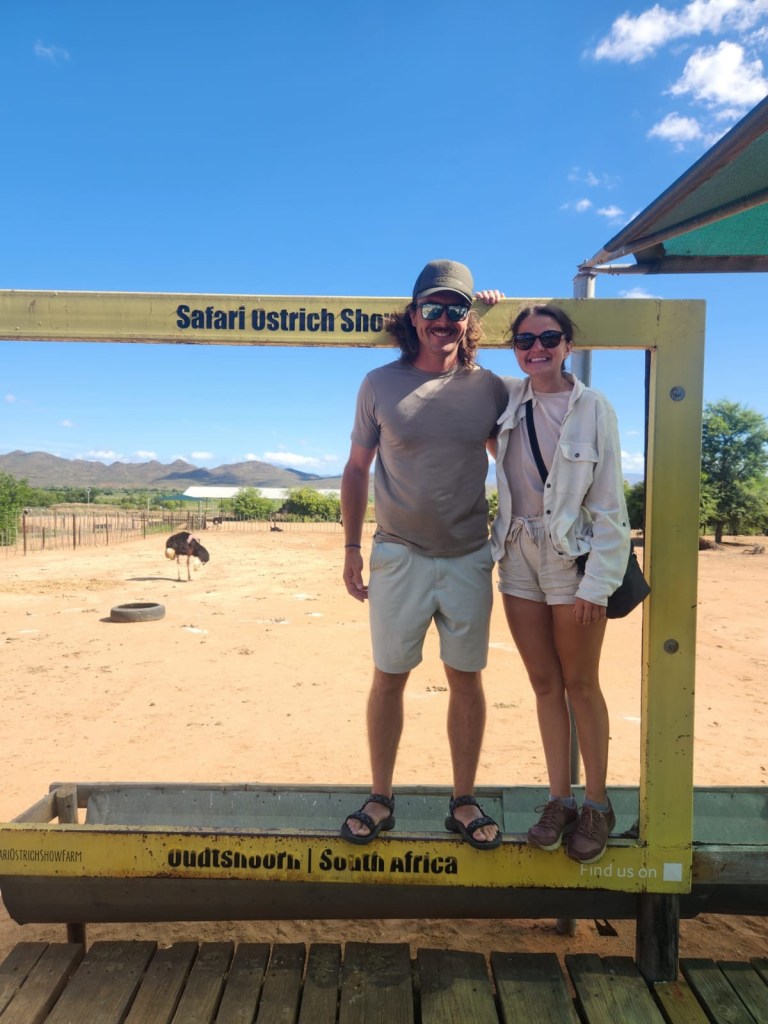
We left Plettenberg Bay, after a morning walk on the beach, and we drove to Oudtshoorn, stopping in Knysna for thrift shopping, beach views, and gas. Oudtshoorn, known for ostrich farming, was hot and dry. We booked a 3pm tour at Safari Ostrich Farm and, after a slight GPS mishap, arrived just in time.
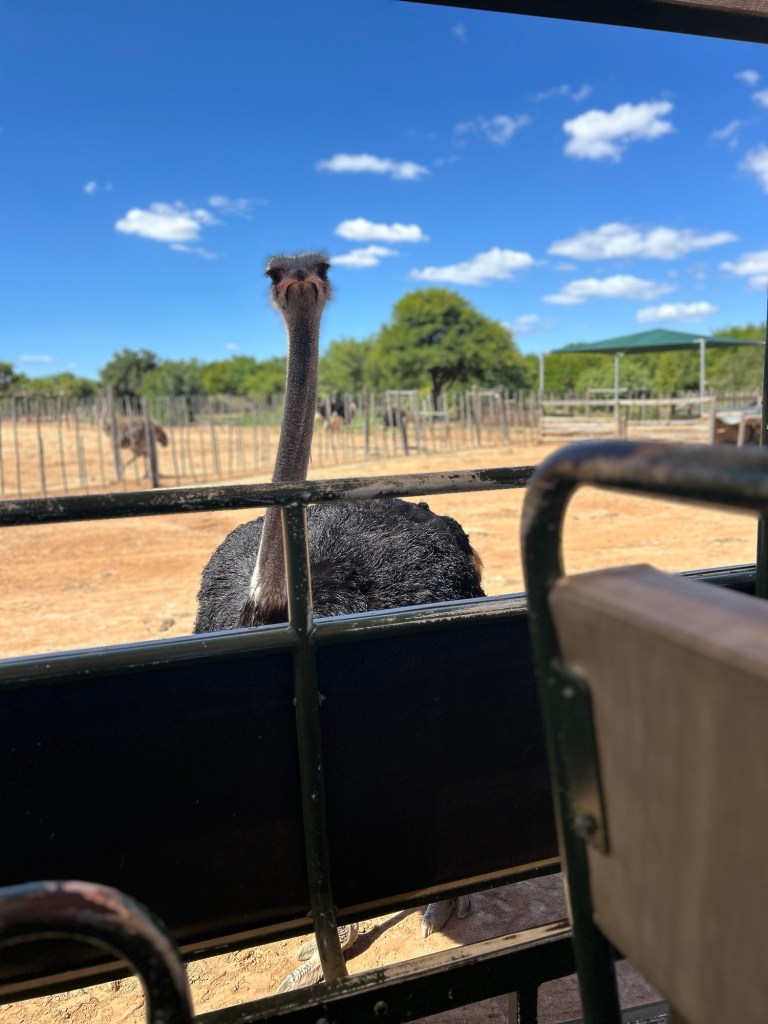
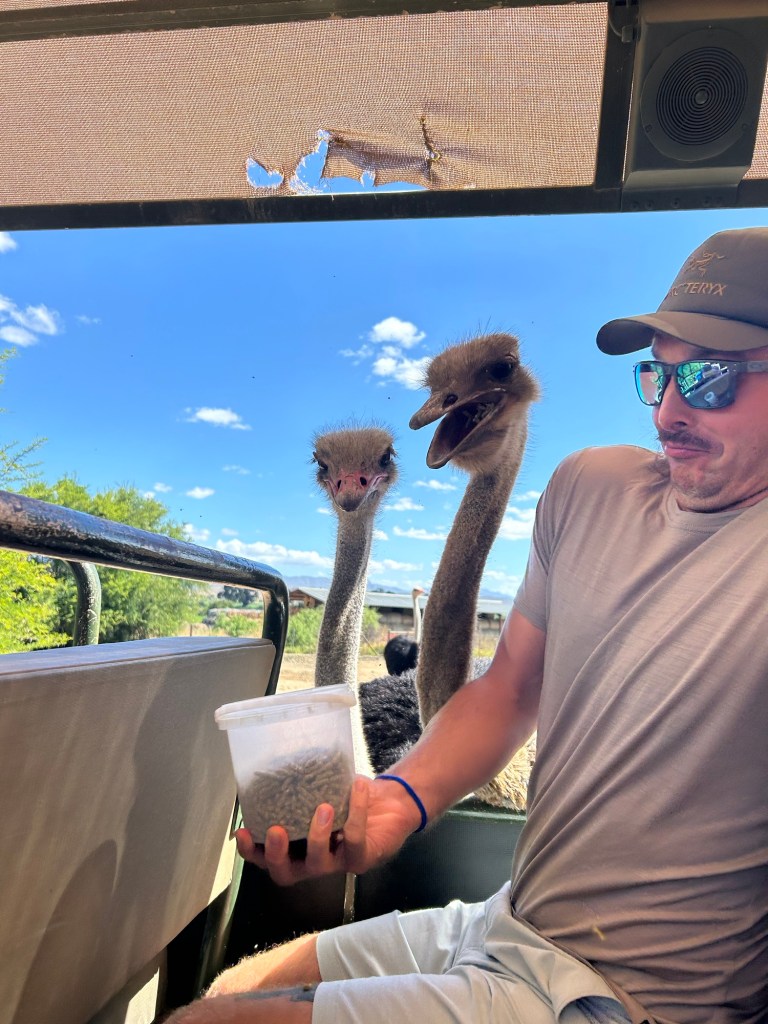
The farm has over 1,000 ostriches, with different breeds from Kenya, Zimbabwe, and South Africa. The tour, including a tractor ride, was an educational tour about ostrich farming, including feeding the birds and learning about their development stages. The museum provided an overview of the history on the popularity of ostrich feathers in the early 1900s and the shift to using ostriches for food and leather.
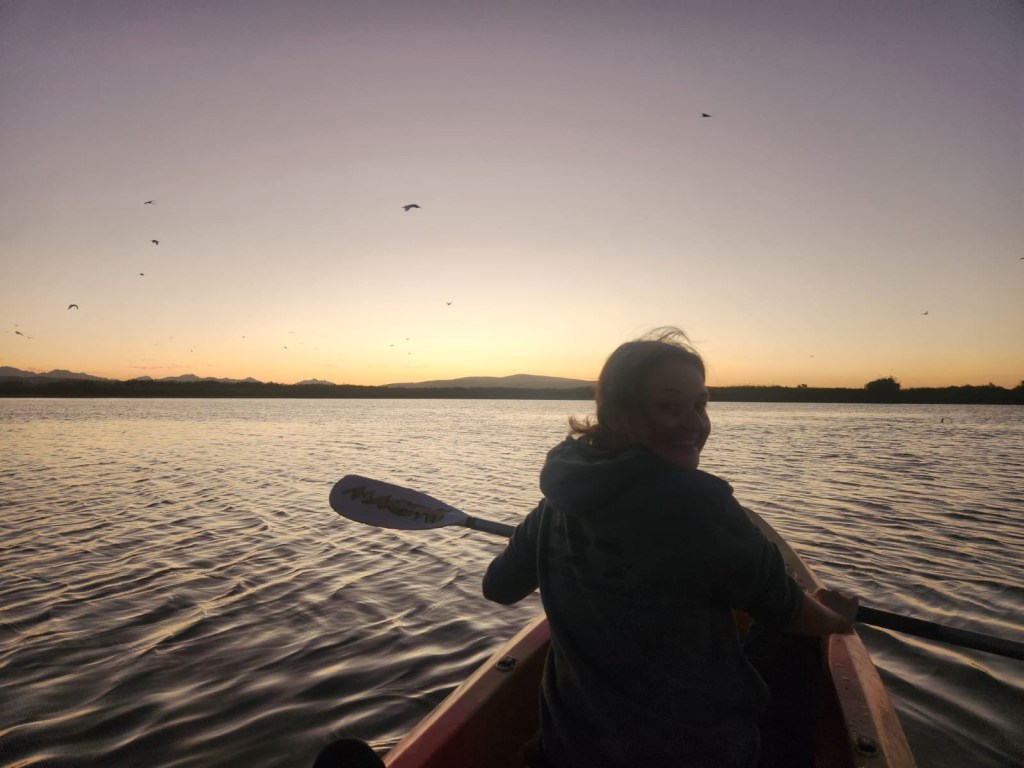
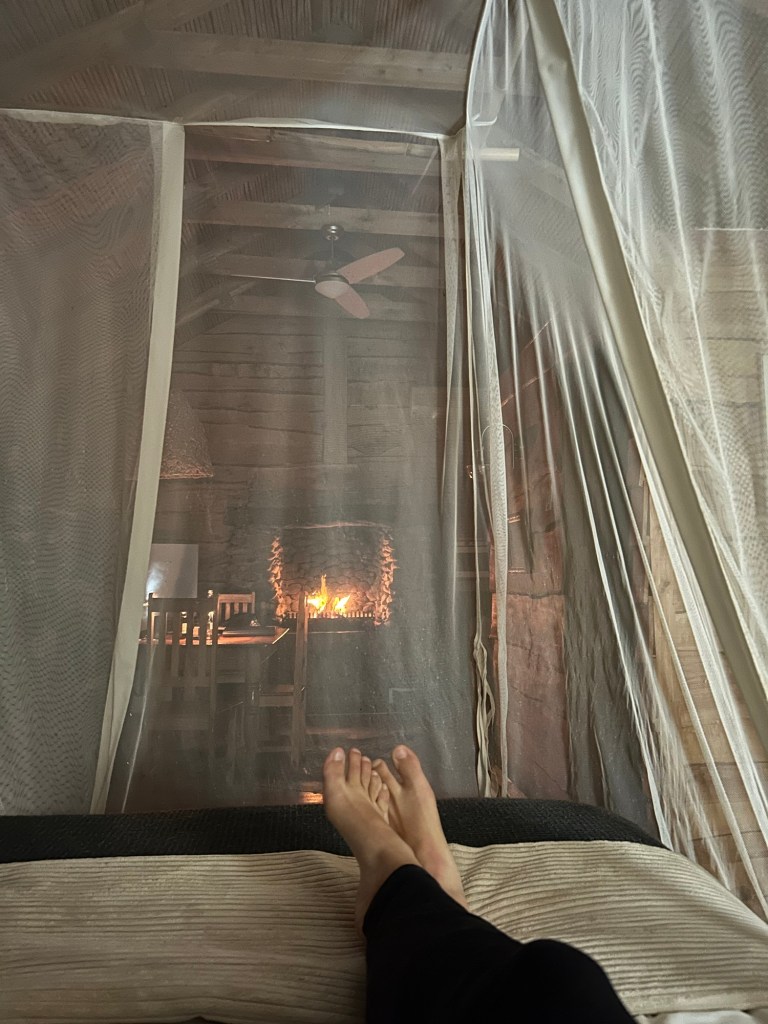
Afterward, we enjoyed a quaint dinner at Nostalgie Restaurant, where we tried ostrich meat before retreating to our peaceful cabin by a private lake. The cabin was located in a remote region of Outshoorn, we were the only guests for the 4 cabins so we had the entire lake to ourselves. We took a kayak ride to a bird inhabited island, and we fell asleep to the glow and crackle of a wood fireplace.
Meerkat Morning
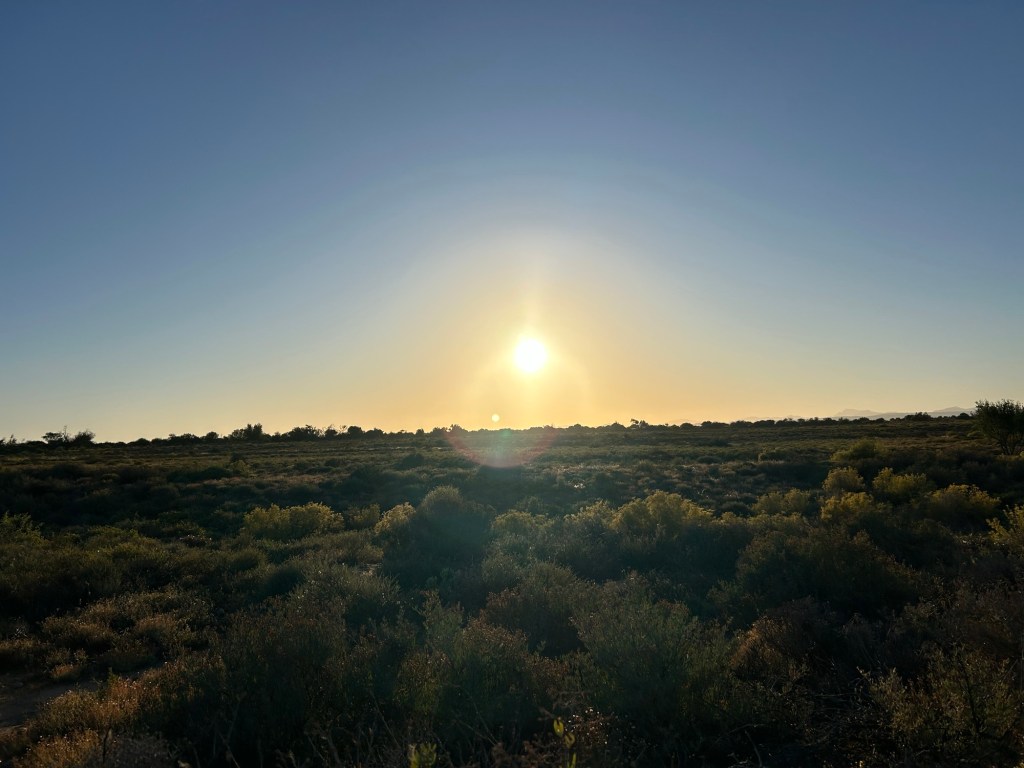
We woke up early for a 4:30 am start to observe meerkats. After a brief coffee and orientation, we were split into two groups, one of which drove to a different location. We drove, and walked into a remote field, each towing along a lawn chair in hand. When we arrived to a location in the middle of the field surrounded by small burrowing holes, we set up the chairs and quietly waited for the meerkats to emerge.
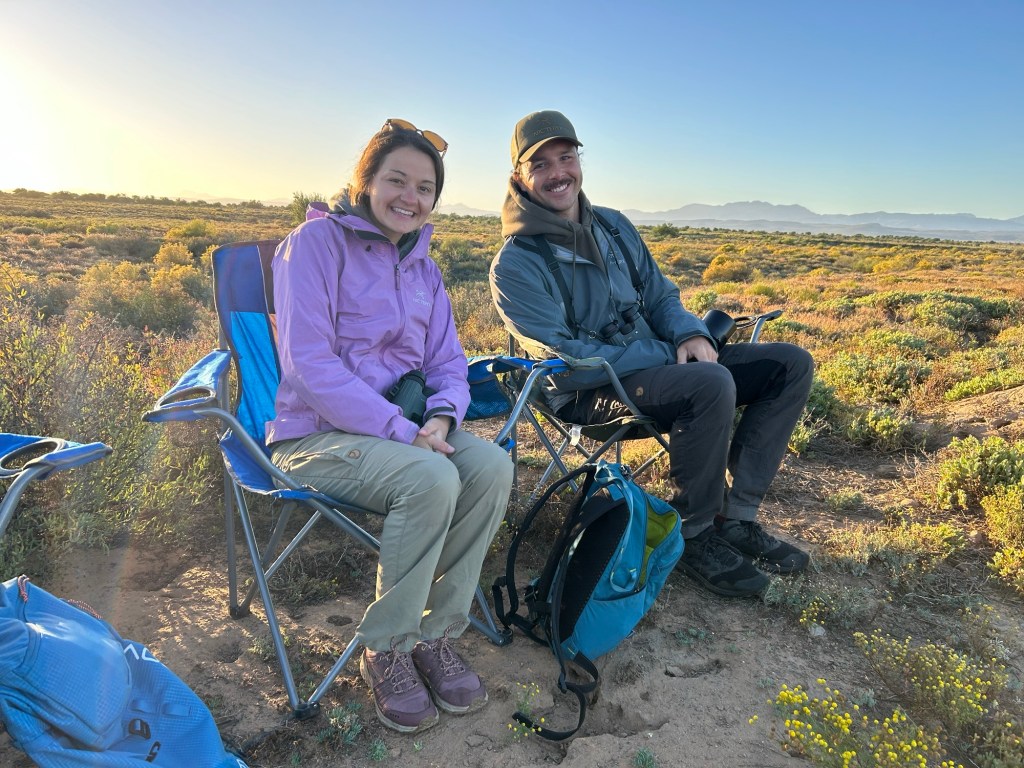
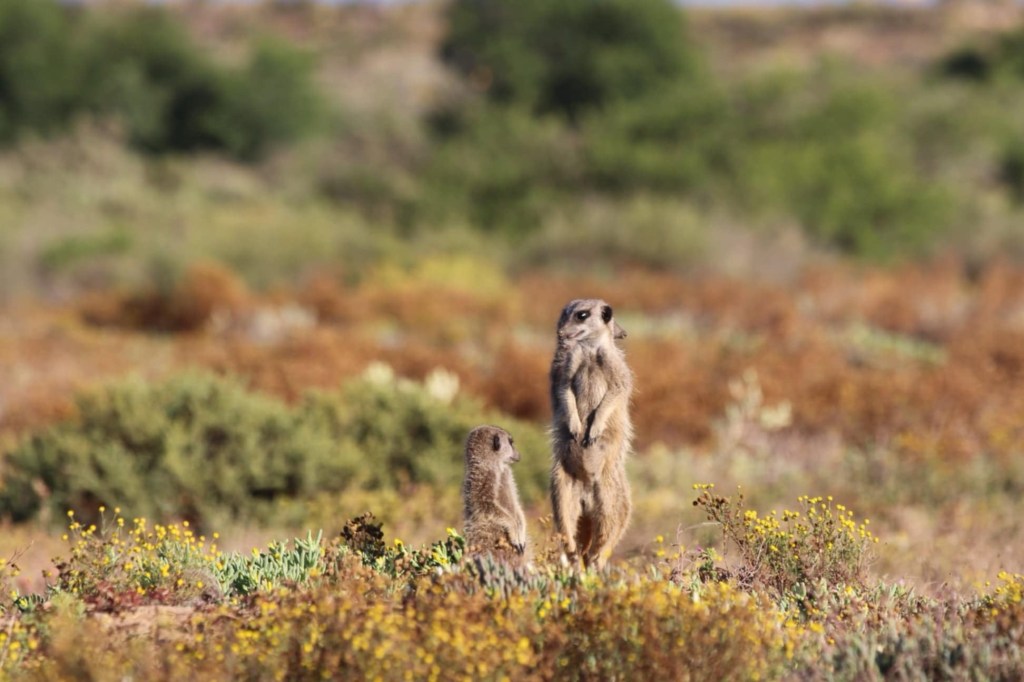
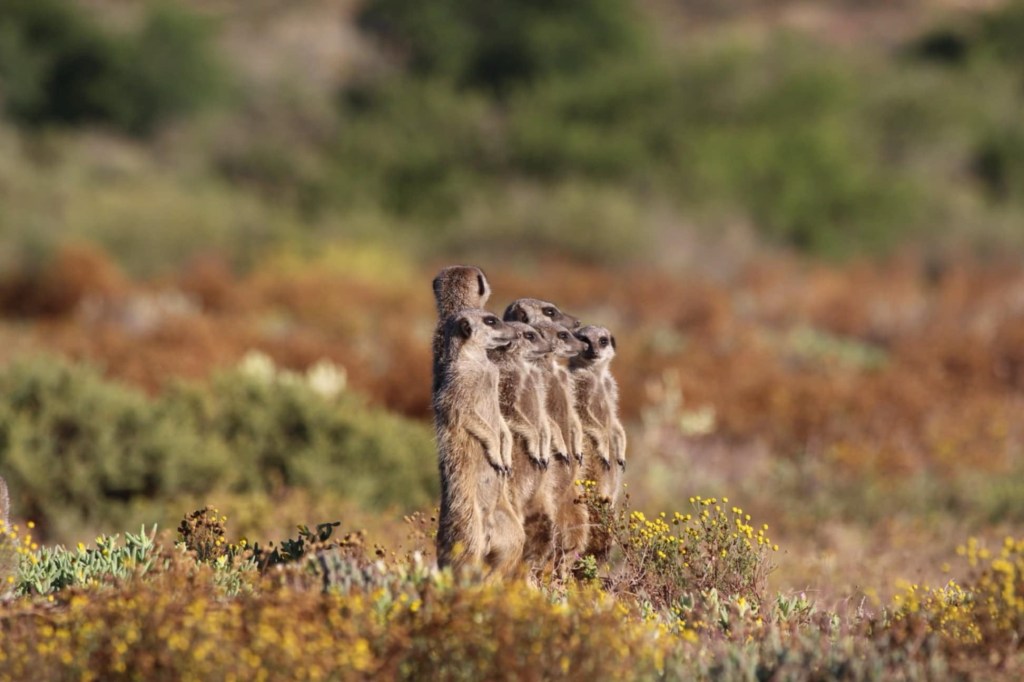
After 25 minutes, the first meerkat appeared, followed by others, including six adorable babies. Our guide shared details about their social structure, dominance battles, and how the mother is the dominant leader. After observing their morning routine, we packed up and headed to the beach in Mossel Bay. After some time by the water, we drove to Gansbaai for a local seafood dinner and prepared for shark diving the next day.
Shark Diving
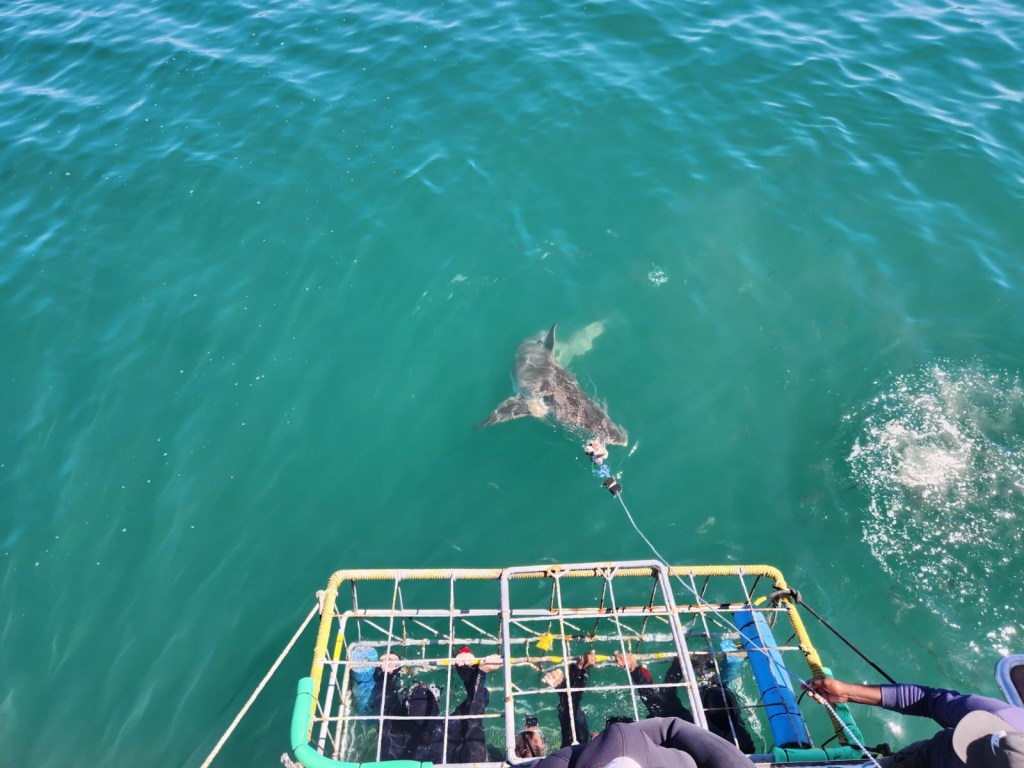
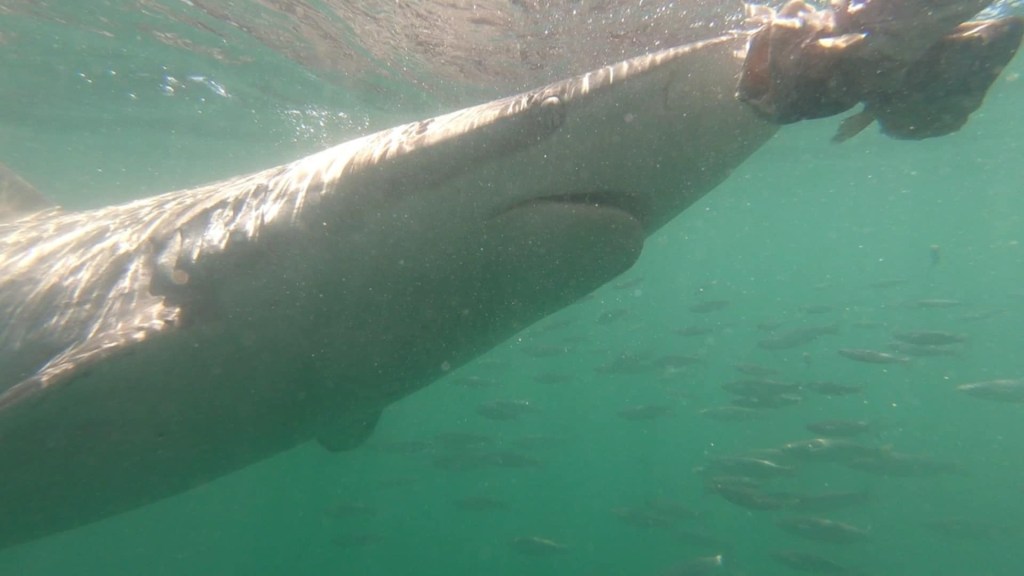
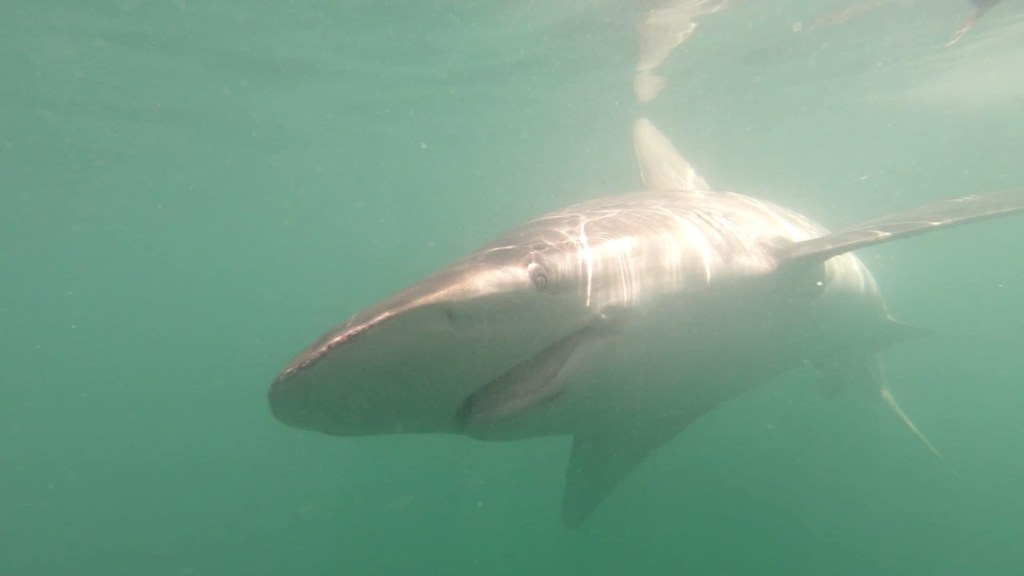
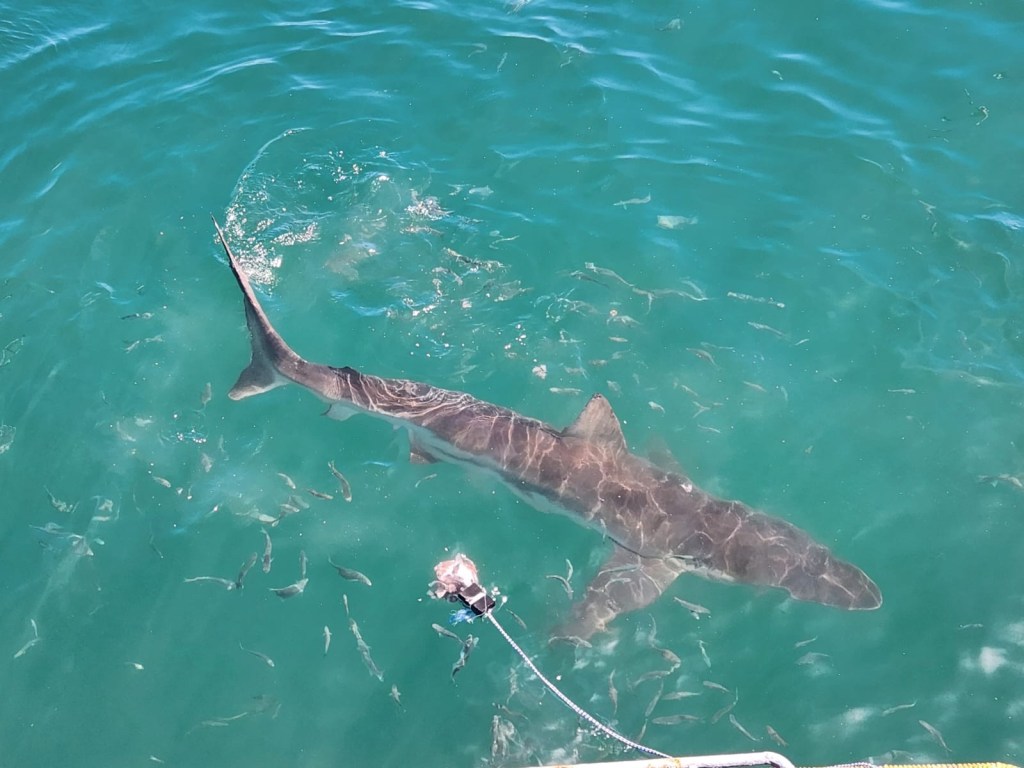
The day started with a 9 am briefing at Shark Lady Adventures in Gansbaai. After gearing up, we boarded the boat for our shark cage dive. When we arrived, the cage was lowered into the water, and secured to the side of the boat. Bait was used to attract the sharks, and they arrived swiftly after the boat stopped. We saw 4-5 sharks during our dive. The water was cold at first but became manageable as we waited for the sharks to come close. Afterward, we visited the African penguin sanctuary, and stopped by De Kelders for a scenic viewpoint. Our day ended in Hermanus, known for whale watching, where we explored the coastal area, had gelato, and continued our journey to Cape Town.
Cape Town
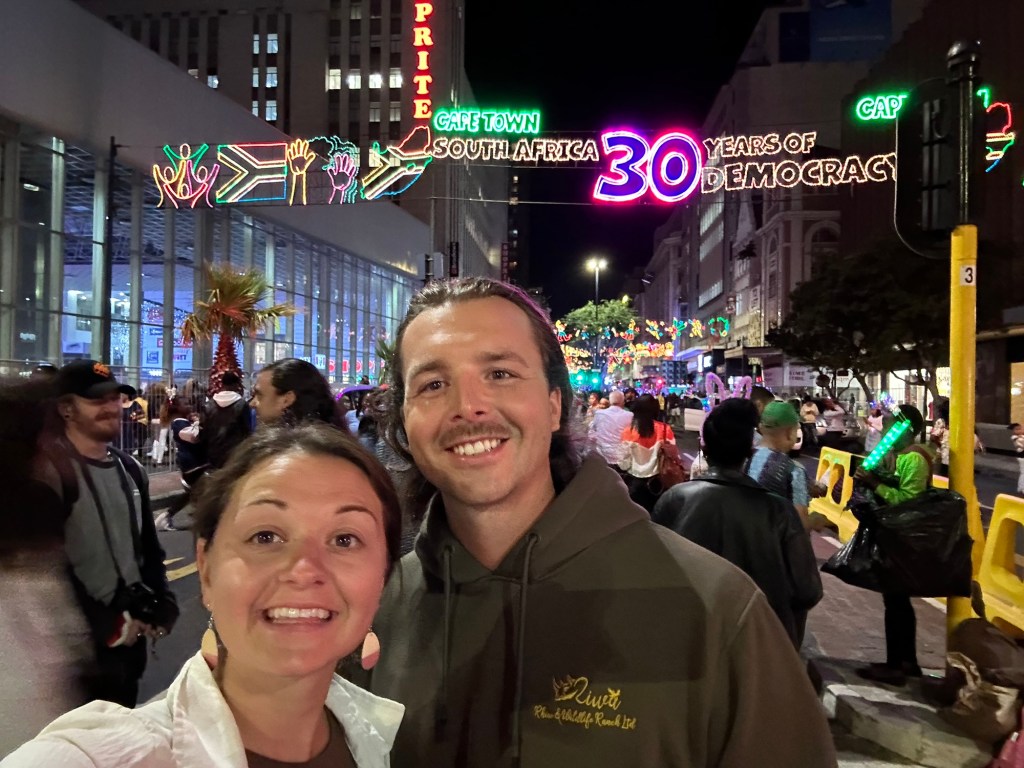
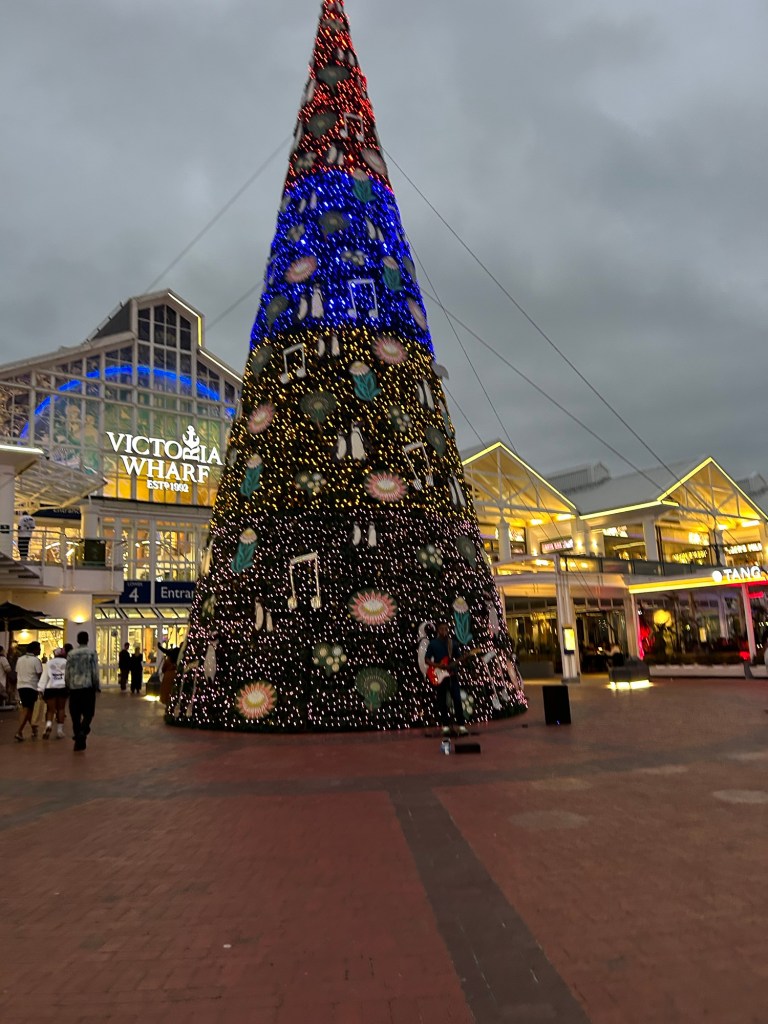
We started the day at the Oranjezicht City Farm Market, offering a wide range of local handmade, gluten-free, vegan, and homemade food, drinks, and goods. We then drove to Stellenbosch to try disc golf, but found the course without nets or tees, so we visited a local brewery and its weekend market instead. After picking up our laundry, we walked around Cape Town for the Christmas lights festival, which attracted 80,000 people. The event culminated in a grand light display, marking its 55th year.
Wine Country:
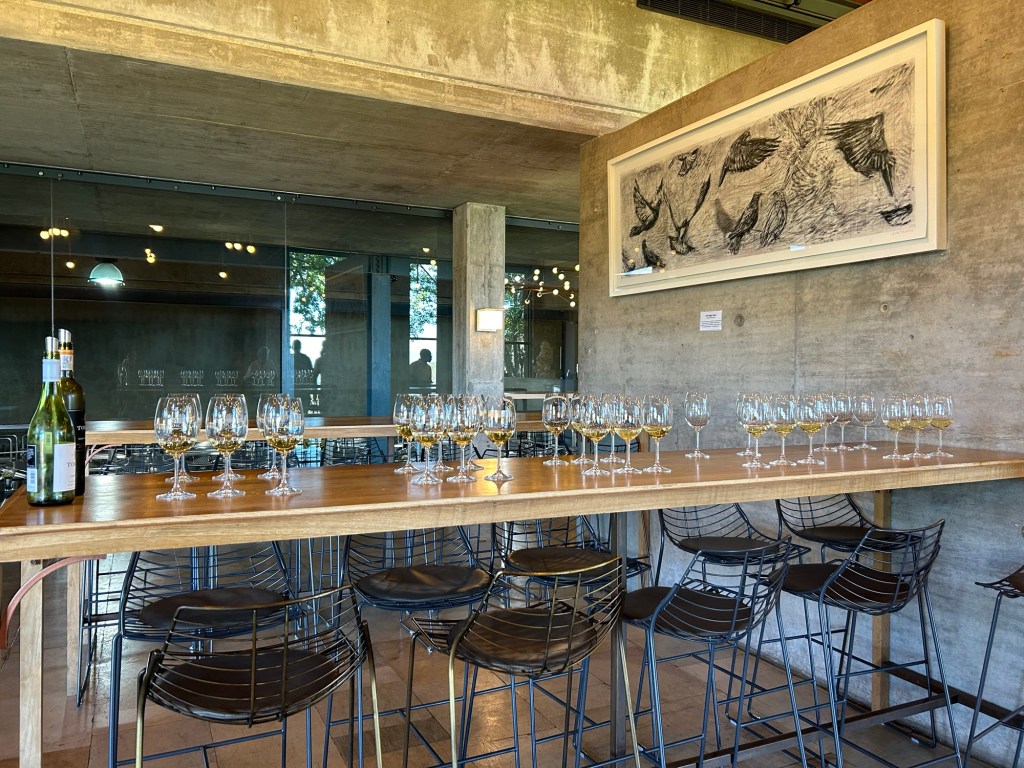
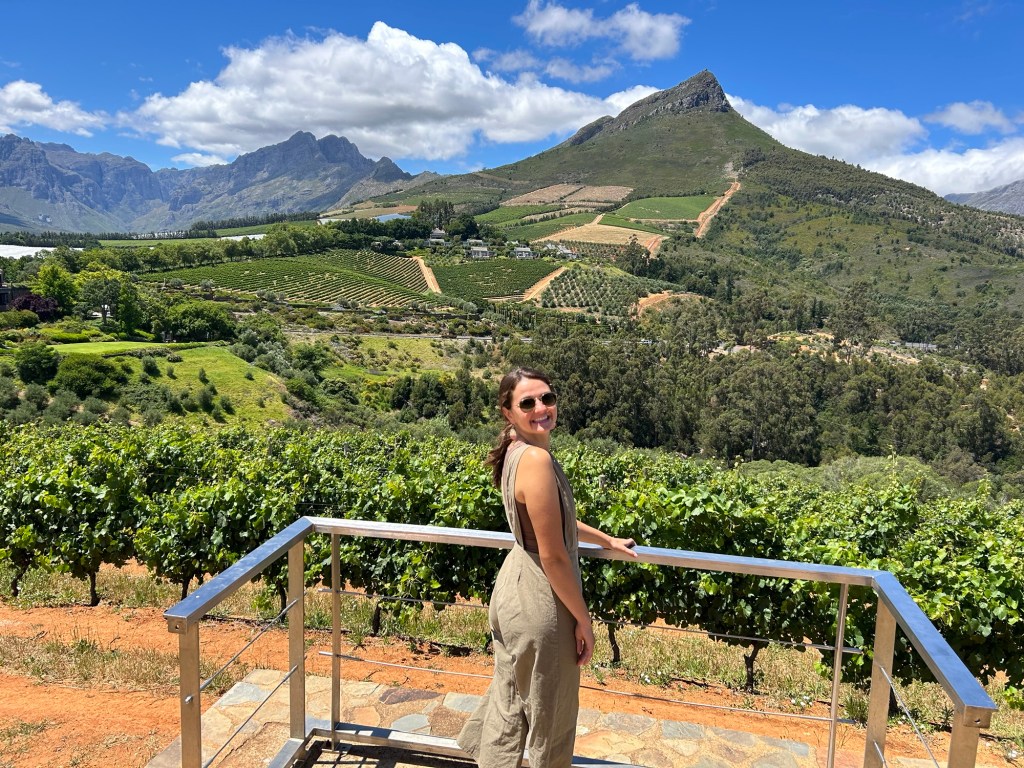
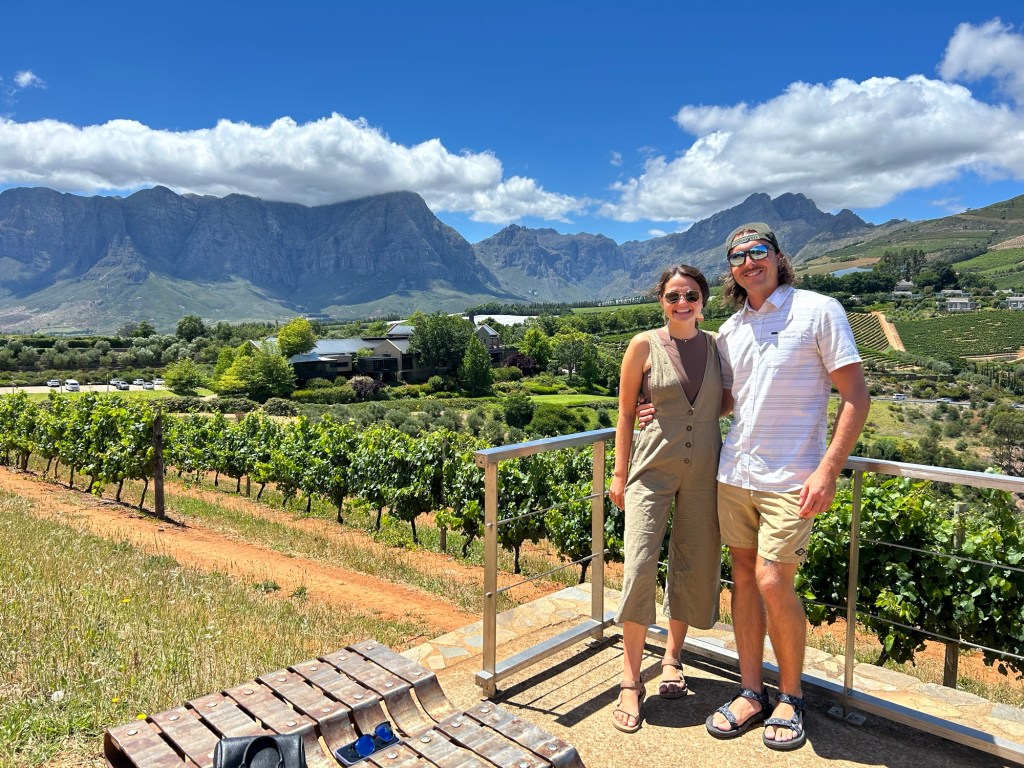
We got to ride the wine tram through Franshhoek! We took a scenic wine tour in Stellenbosch and Franschhoek, starting at Tokara Wine Estate with wine tasting.
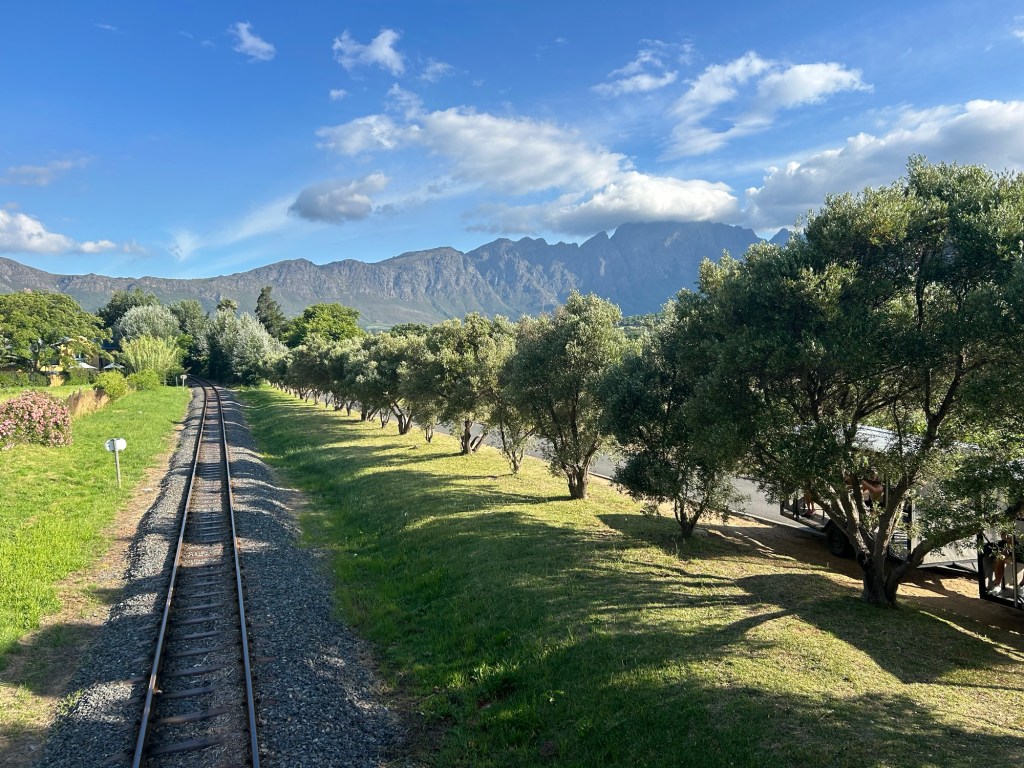
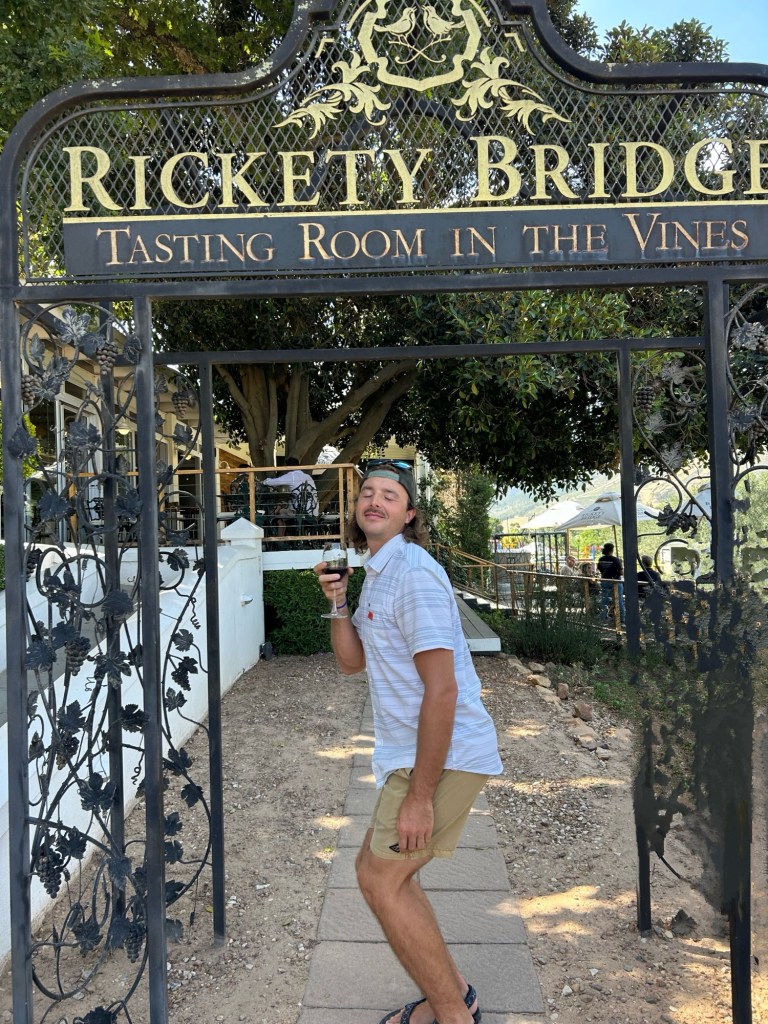
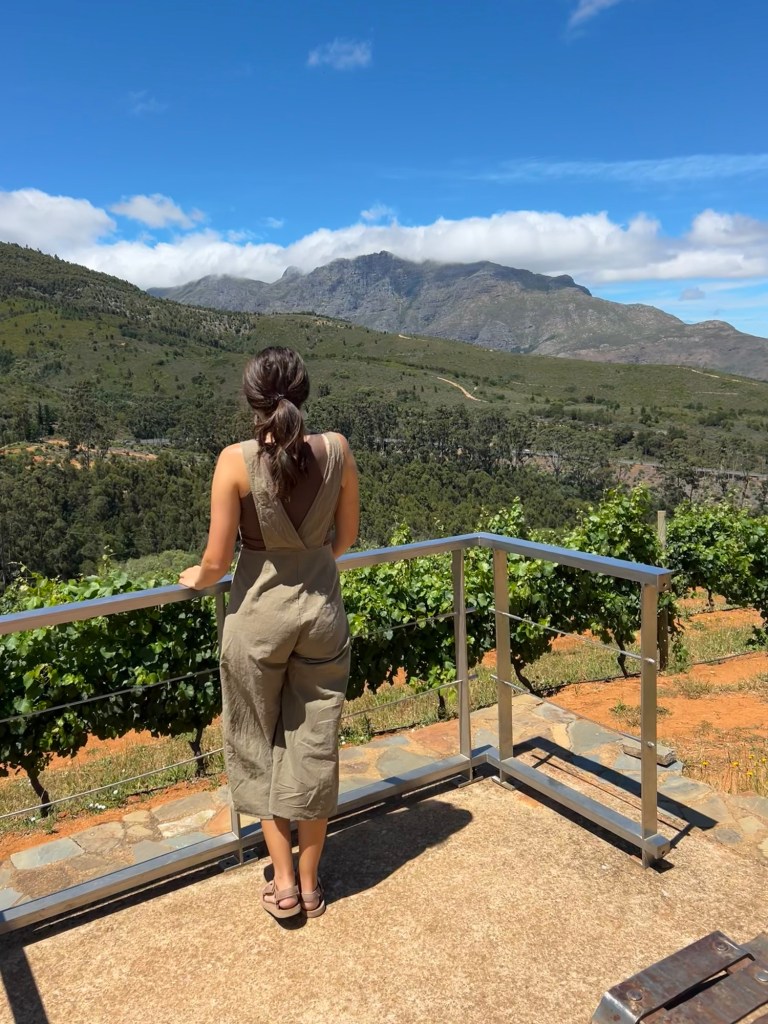
Then, we traveled by tram to Rickety Bridge for lunch and more wine sampling. A tractor ride took us to Grand Provence winery for additional tastings. Although we missed a reservation, we were allowed to taste at another vineyard.
We concluded the day at Drakenstein Correctional Centre, where Nelson Mandela was released, followed by a thoughtful discussion on race, apartheid, and land redistribution.
Kirstenbosch Botanical Garden:
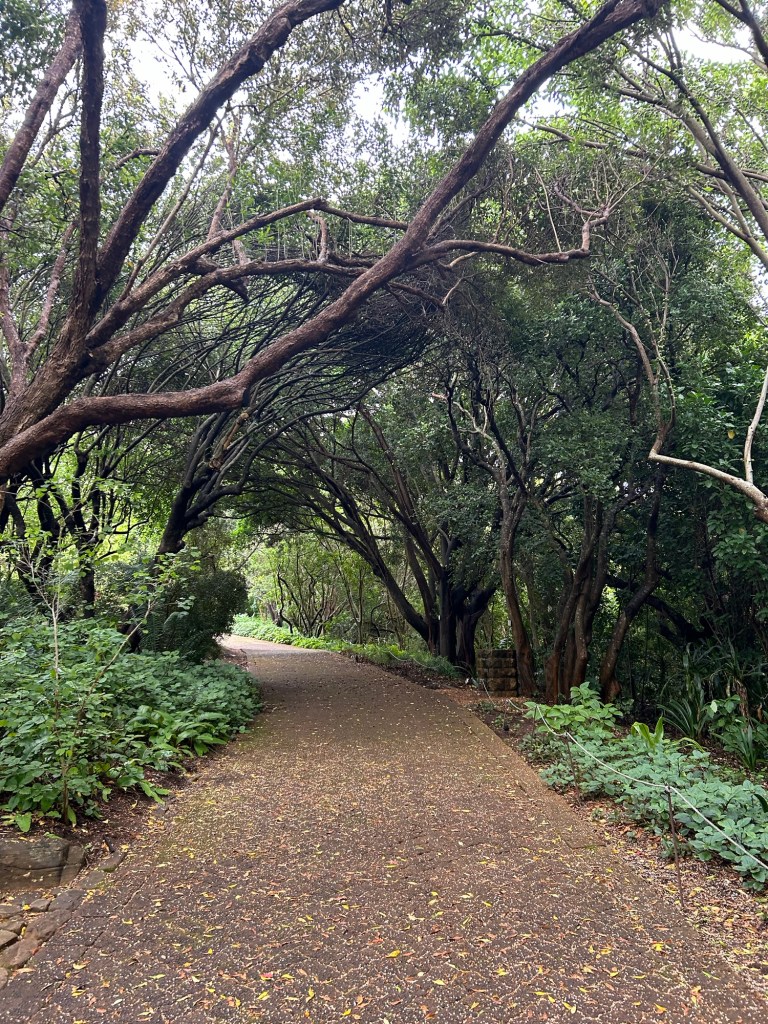
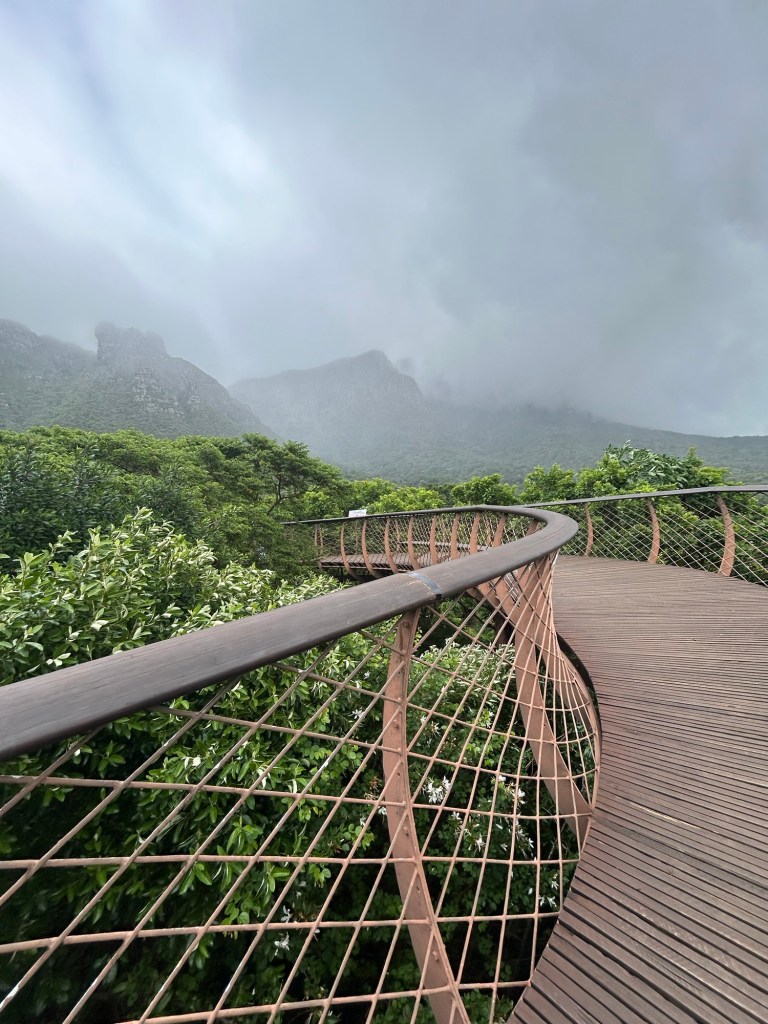
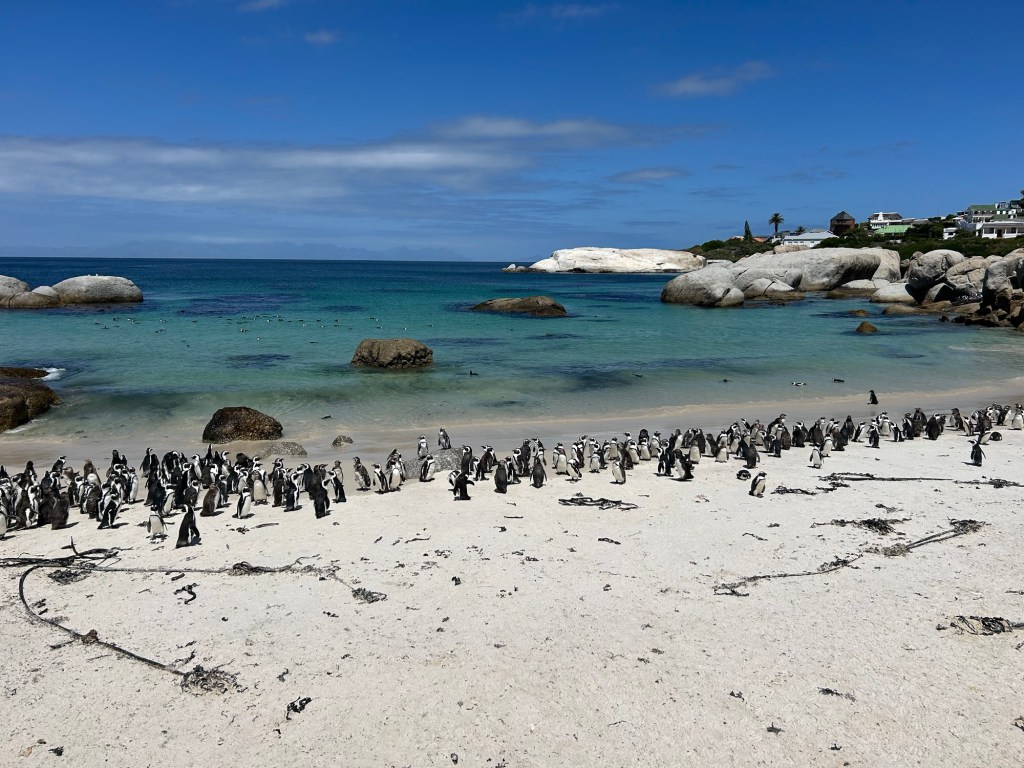
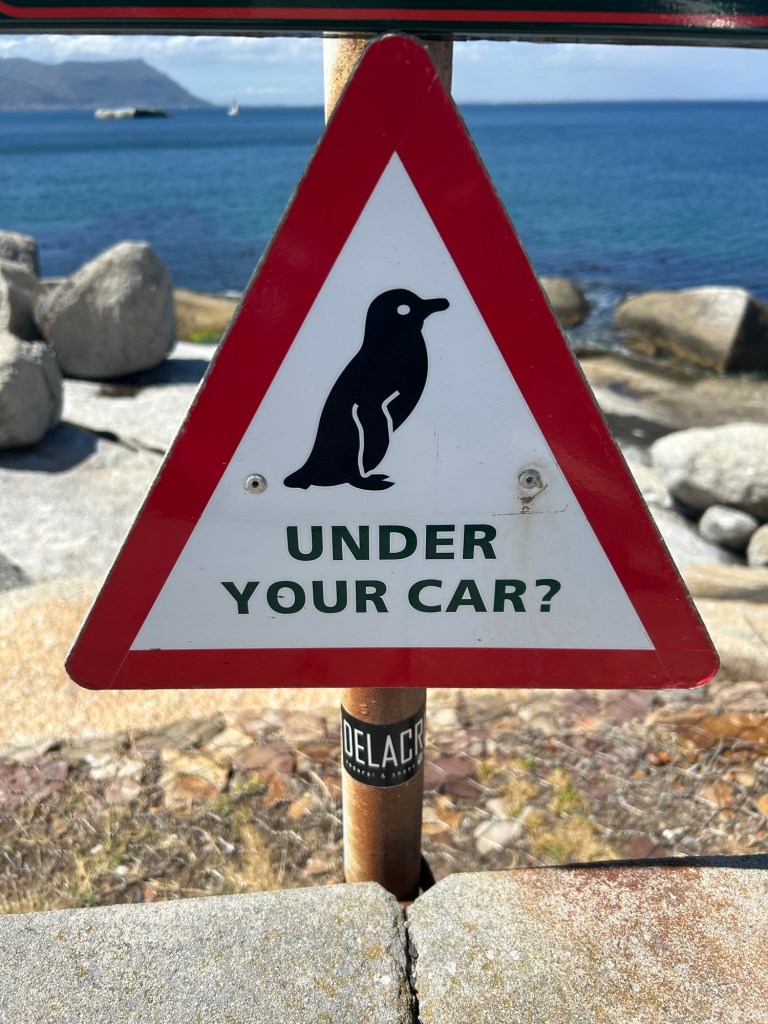
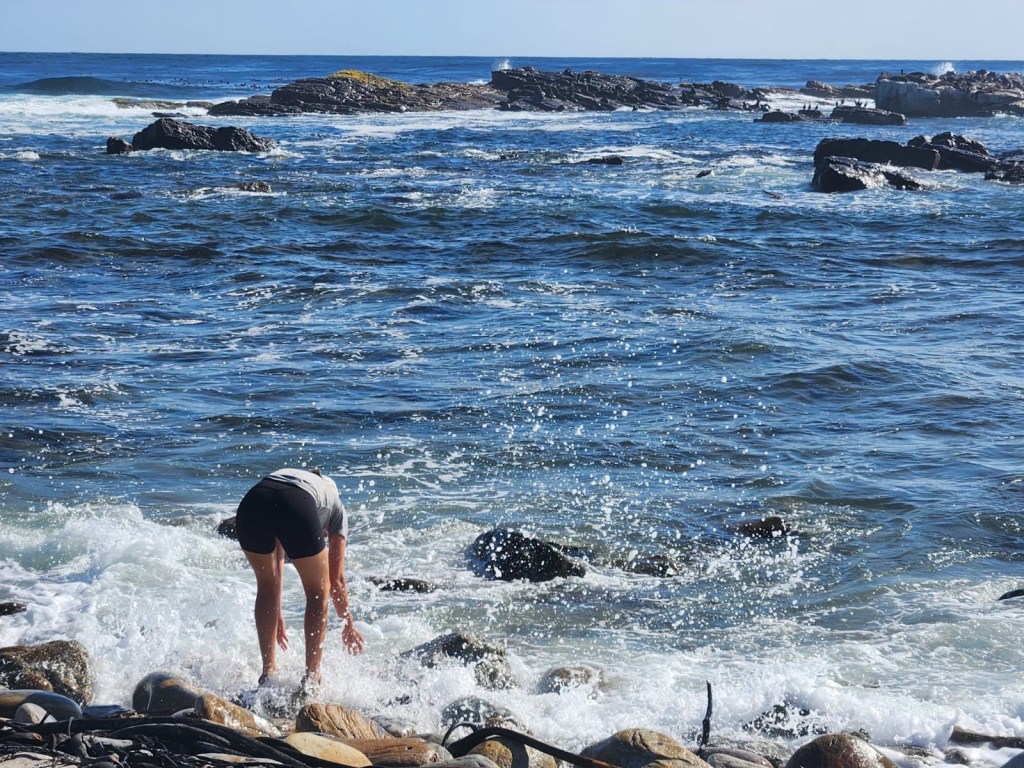
We explored Kirstenbosch National Botanical Garden with an informative walking tour led by a guide knowledgeable about birds and plants. Afterward, we visited Boulder Beach to see penguins during their molting season.
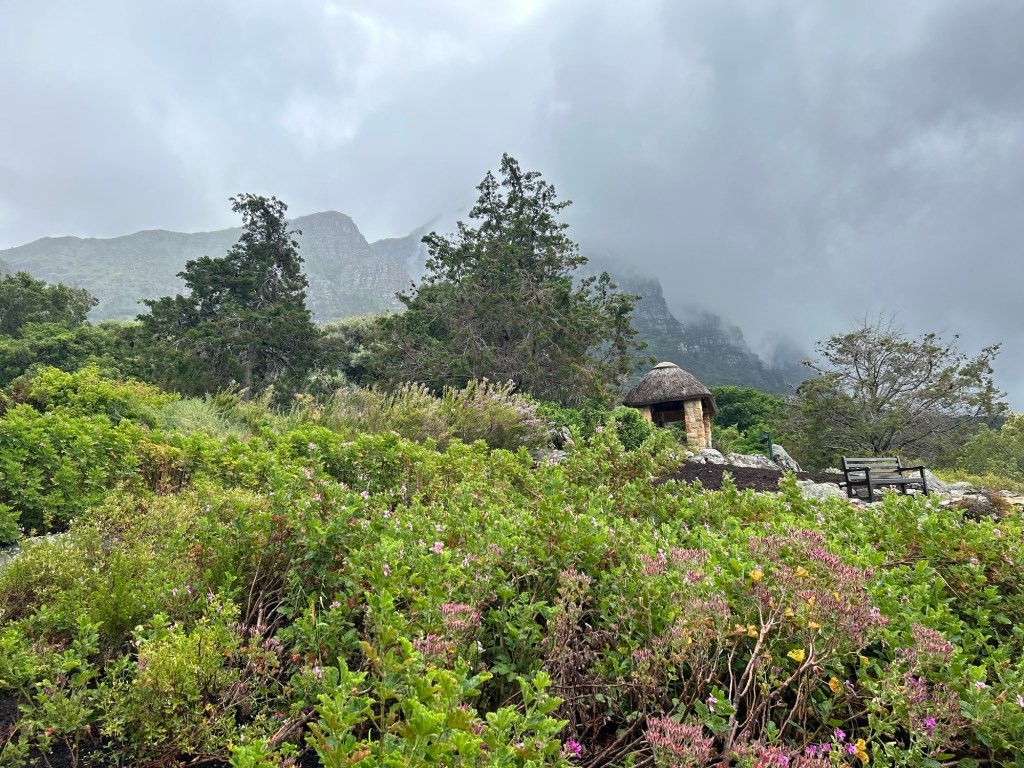
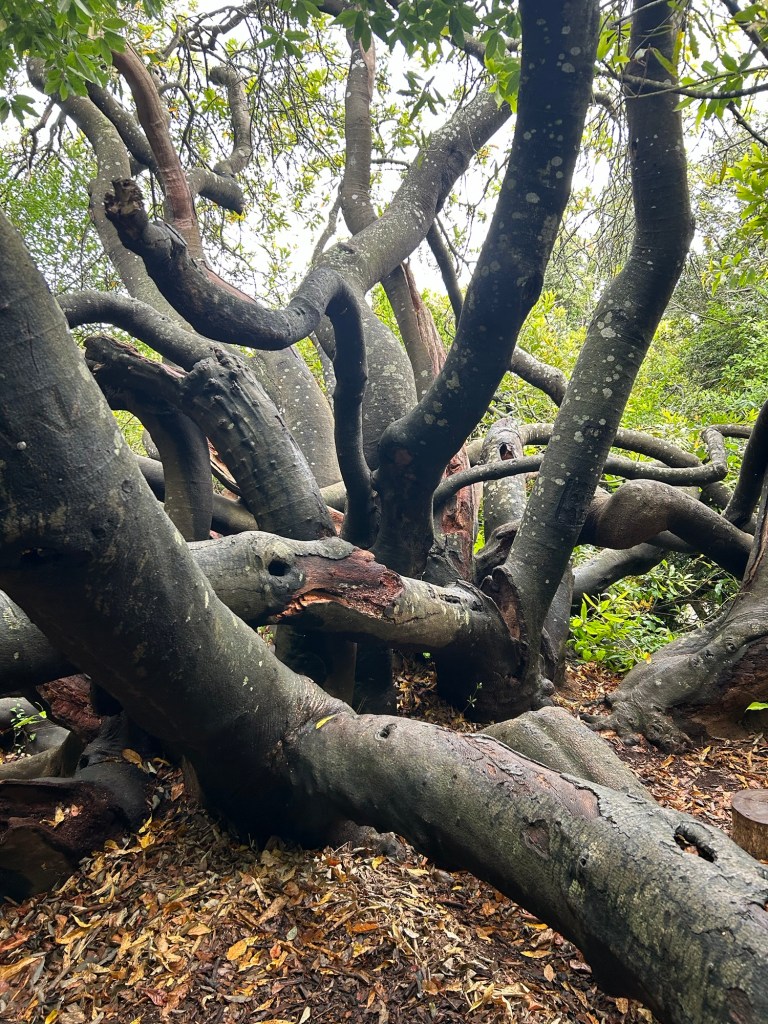
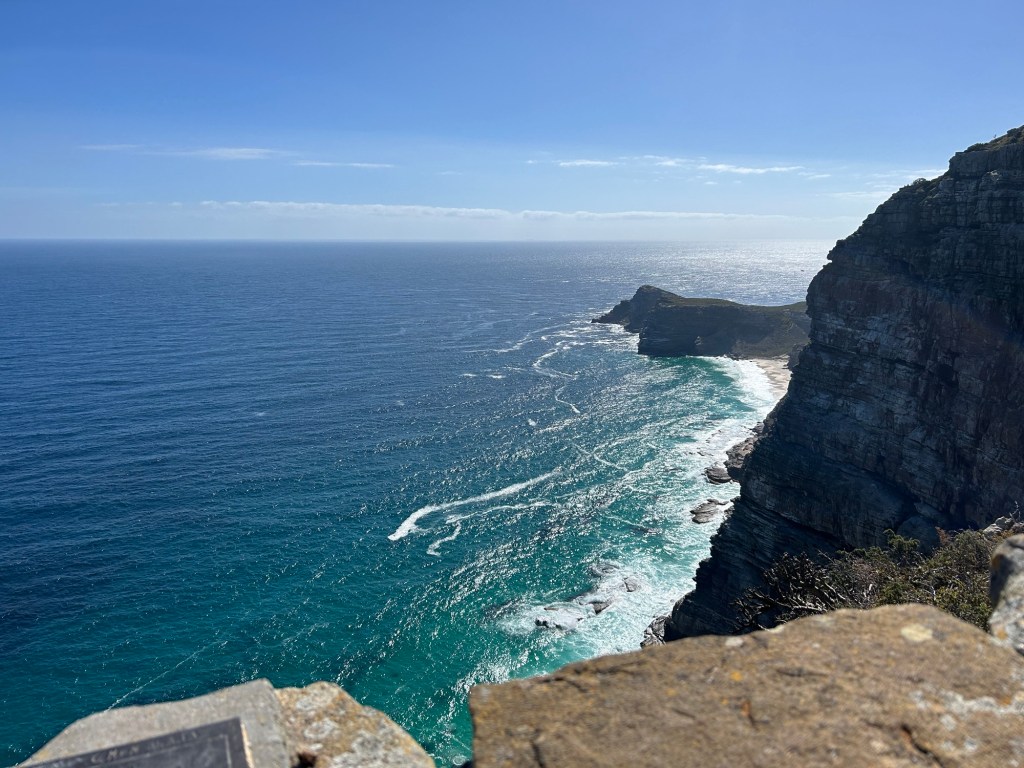
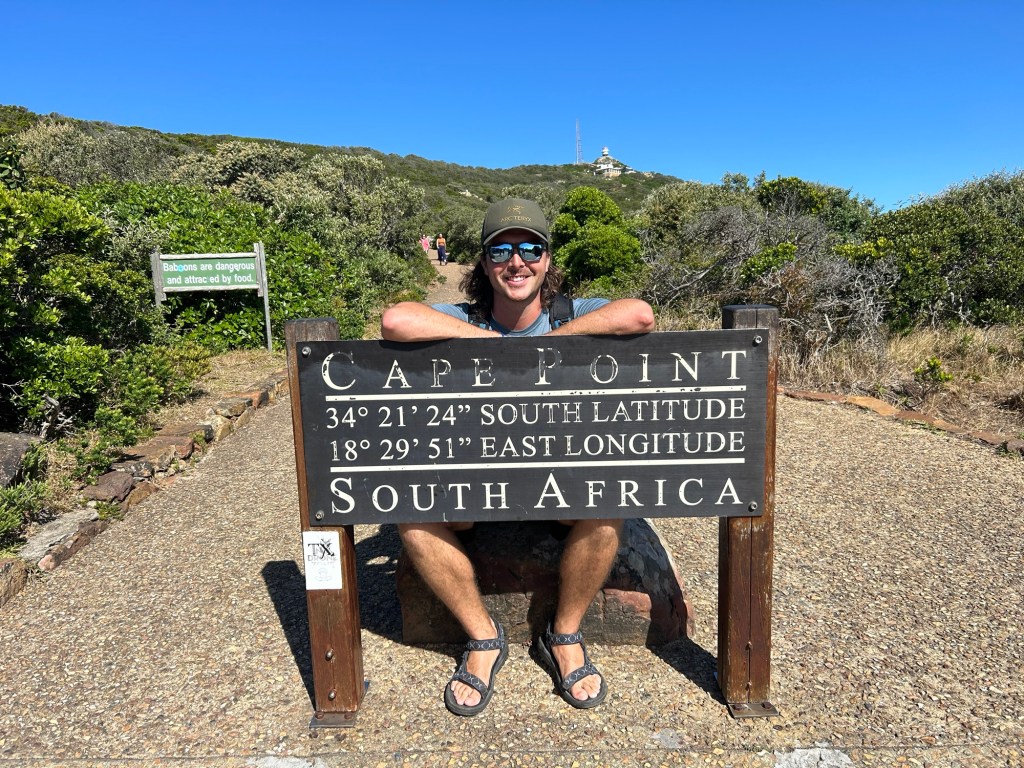
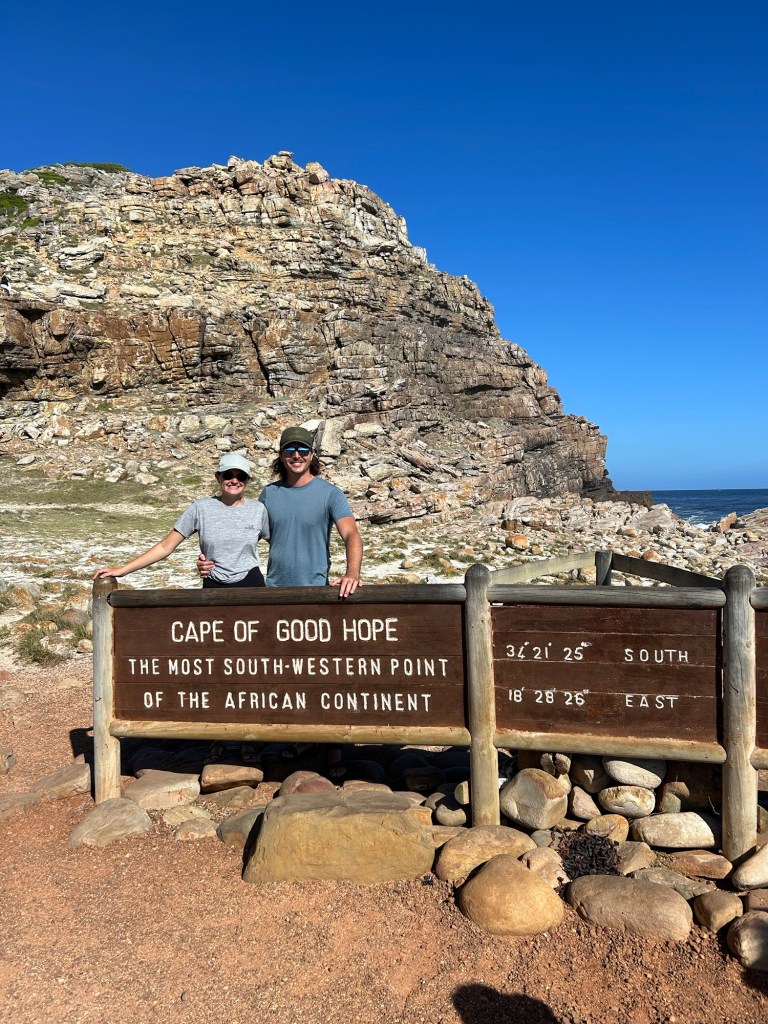
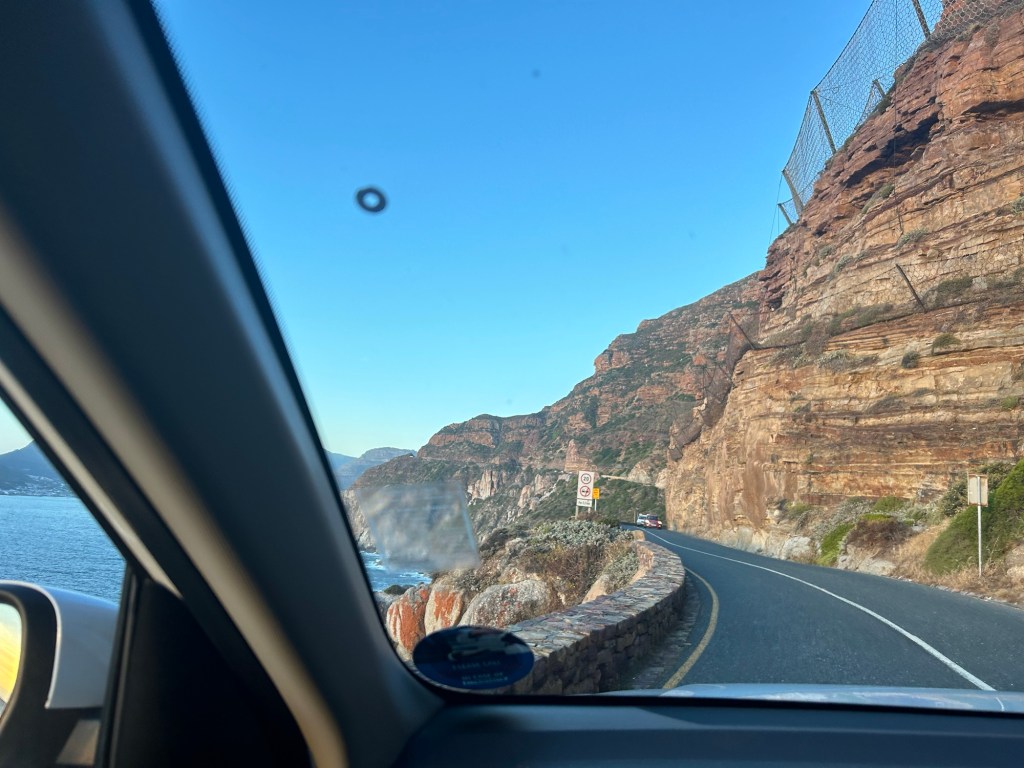
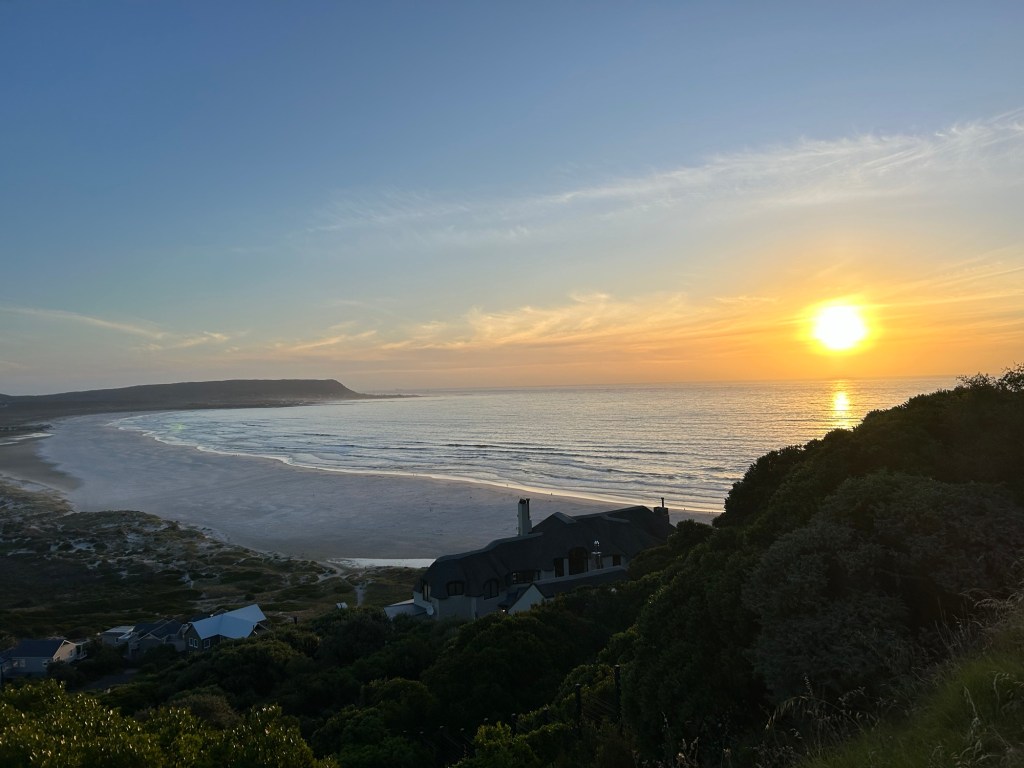
We then ventured to Table Mountain National Park, where we saw ostriches, springboks, and a tortoise, reaching the most south-western point of the African continent, Cape of Good Hope. The drive back included a stop for handmade crafts, followed by dinner and a scenic route to our hotel in Camps Bay.
Final day in Cape Town:
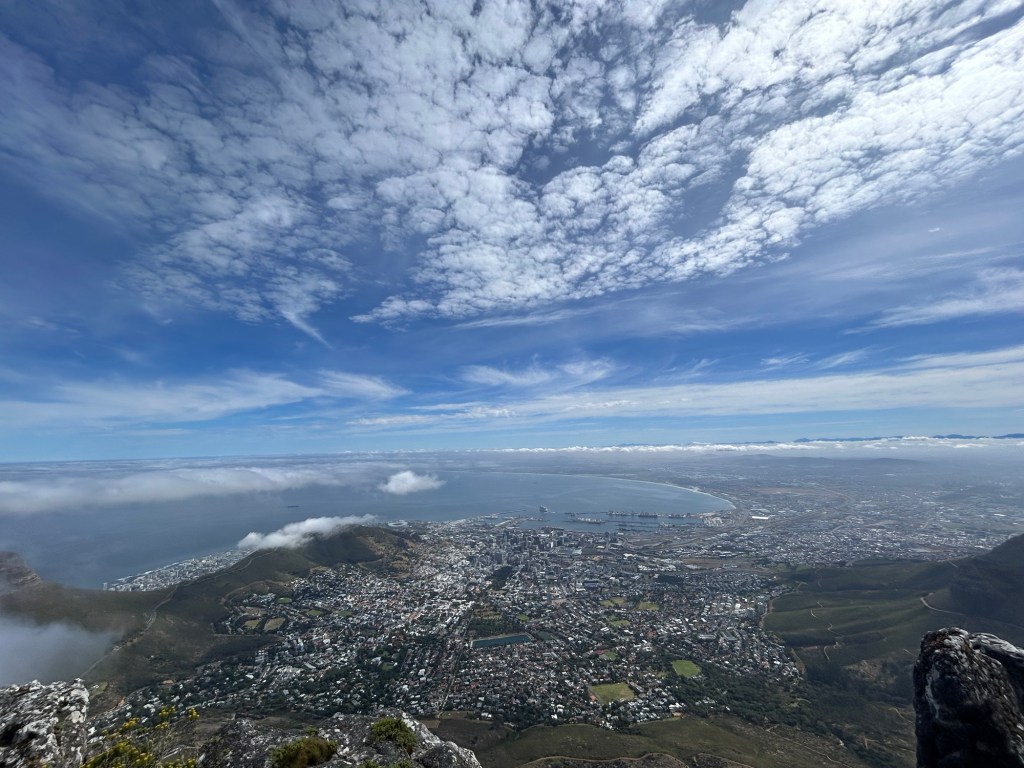
We began the day with smoothies before heading to Table Mountain. Table Mountain is an iconic flat topped mountain in Cape Town and is now one of the new Seven Wonders of Nature, and is a UNESCO World Heritage Site. We took the gondola to the top and explored the trail network atop the mountain. We eventually chose a trail which we discovered was closed due to a fire.
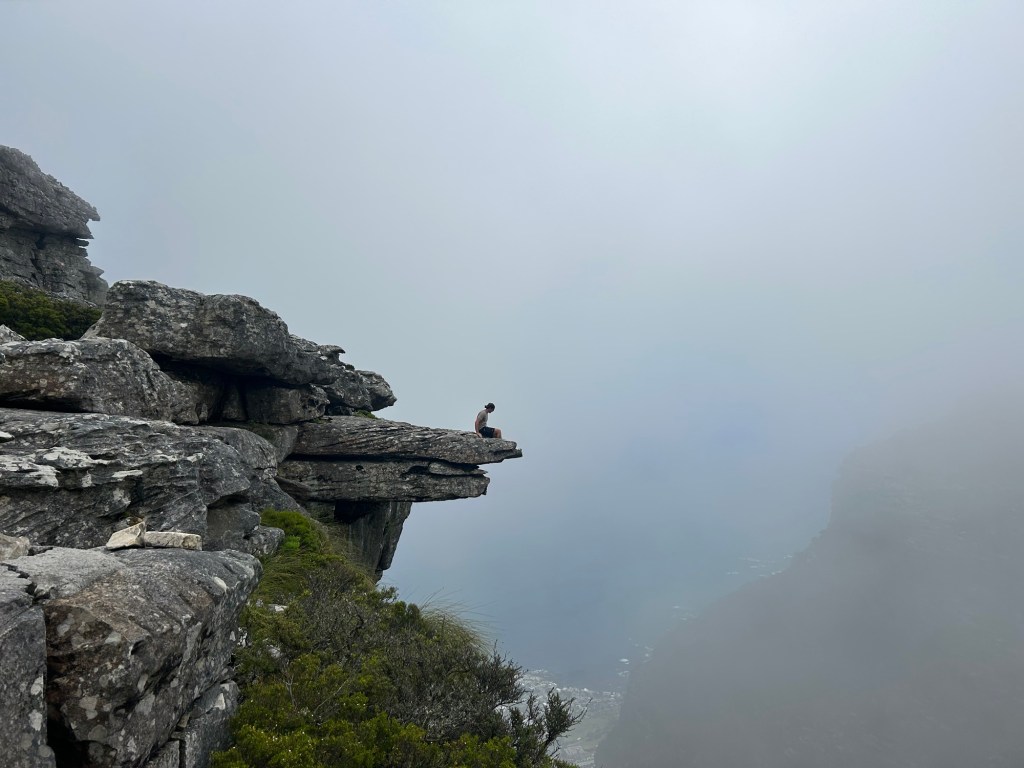
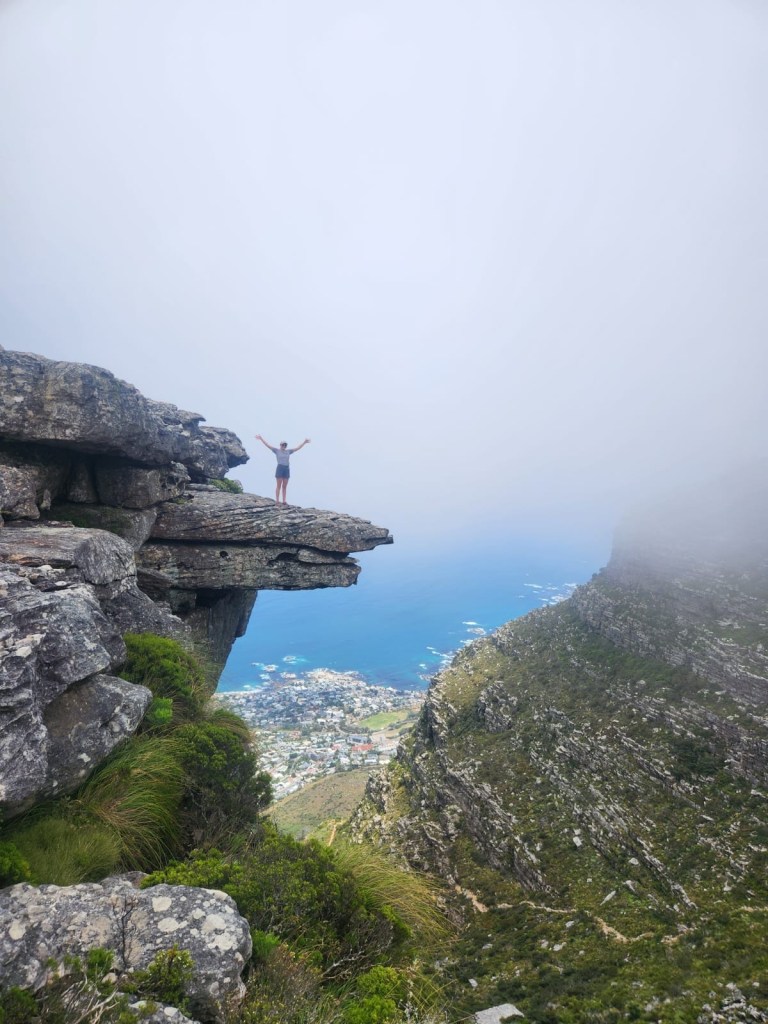
We were already well into this trail, when a helicopter flew overhead, and continued to circle us. We walked quickly and continued to a popular trail, saw the famous “diving board” landmark, and descended towards Camps Bay. The hike was tough on our legs, and we felt the burn for a few days!After a quick lunch, we drove to Lion’s Head, a very accessible hike in Cape Town, with amazing views, and only about 2.5km each way.
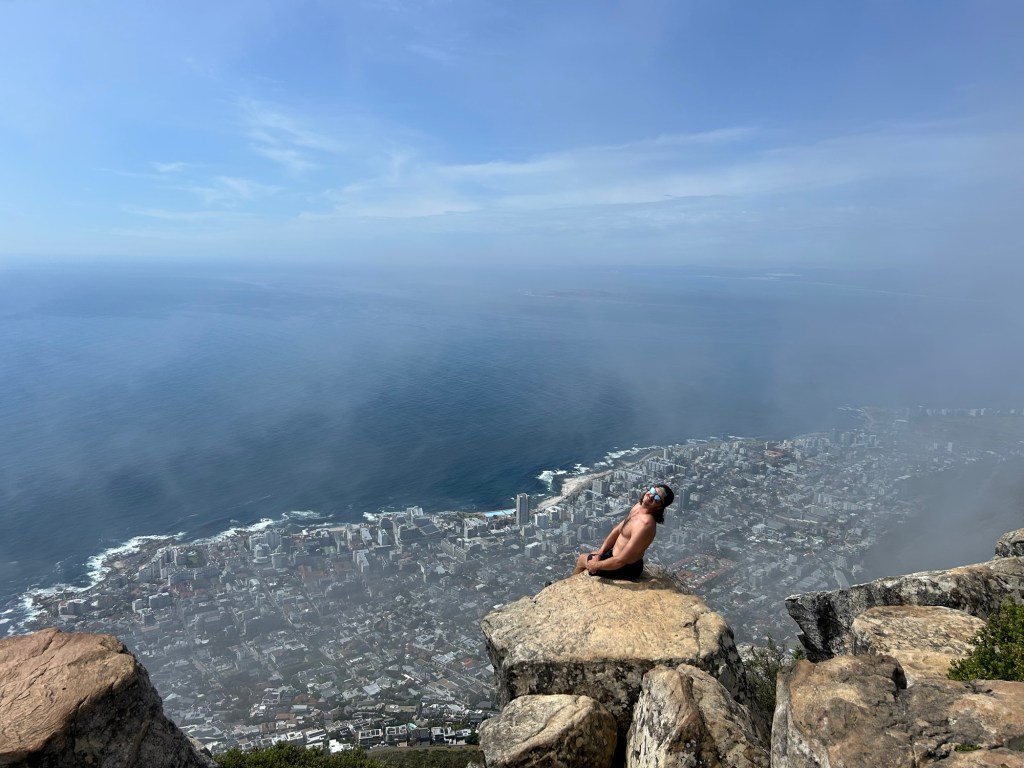
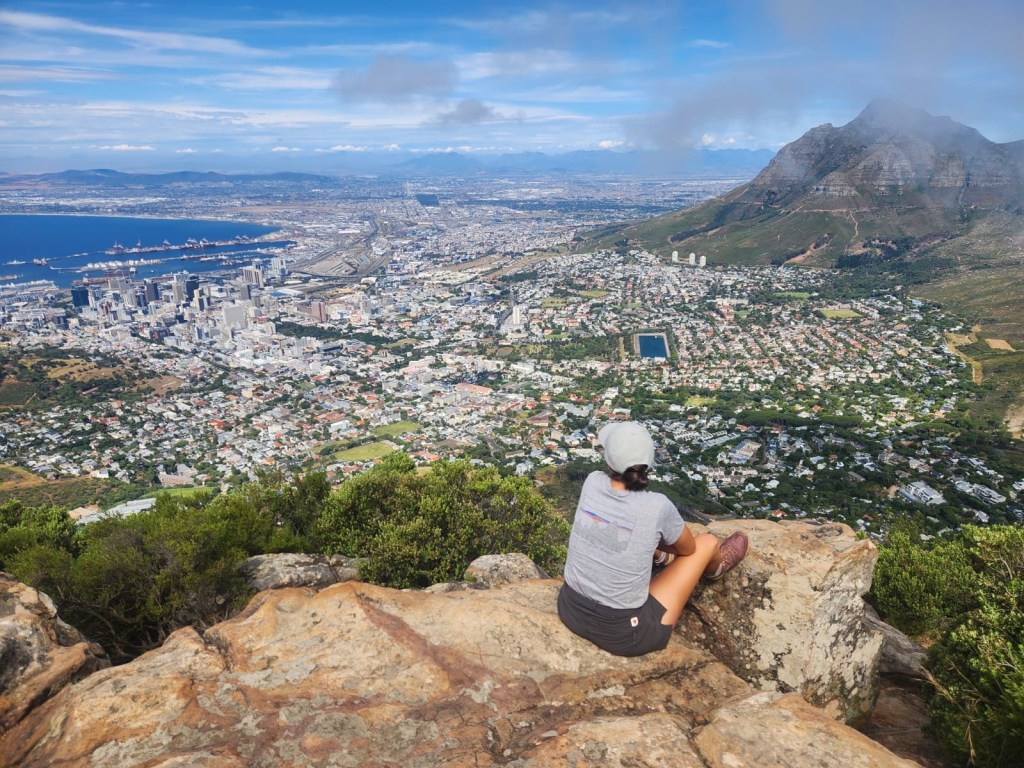
This was a very gradual ascent, with sturdy ladders to reach the summit, and very rewarding and spectacular views of Cape Town and the surrounding area. Soon after we made it to the top, the wispy clouds quickly rolled in. We also visited Signal Hill, then returned to Oranjezicht Market for gluten-free treats and biltong. We ended the day with dinner at the V&A Waterfront, burgers, and a drive to Adderley Street to see the Christmas lights.

 Roam With Us